


EMISCA

Collection Contents
18 results
-
-
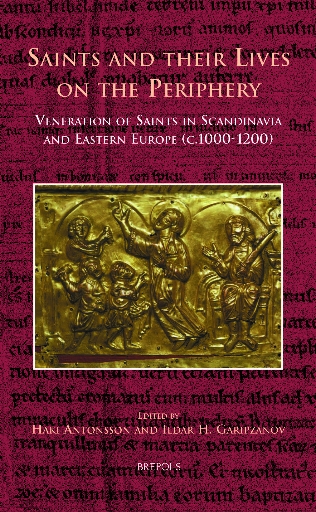
Saints and their Lives on the Periphery
show More to view fulltext, buy and share links for:Saints and their Lives on the Periphery show Less to hide fulltext, buy and share links for: Saints and their Lives on the PeripheryThis volume examines the cult of the saints and their associated literature in two peripheral regions of Christendom that were converted to Christianity around the turn of the first millennium, namely, Scandinavia and Eastern Europe. The thirteen authors focus on how cultures of sanctity were transmitted across the two regions and on the role that neighbouring Christian countries like England, Germany, and Byzantium played in that process. The authors also ask to what extent the division between Latin Christianity and Eastern Orthodoxy affected the early development of the cult of saints on the two peripheries. The first part of the book offers for the first time a comprehensive overview of the veneration of local and universal saints in Scandinavia and northern Rus’ from c. 1000 to c. 1200, with a particular emphasis on saints who were venerated in both regions. The second part presents examples of how some early hagiographic works produced on the northern and eastern peripheries borrowed, adapted, and transformed — i.e. contextualized — literary traditions from the Latin West and Byzantium.
-
-
-
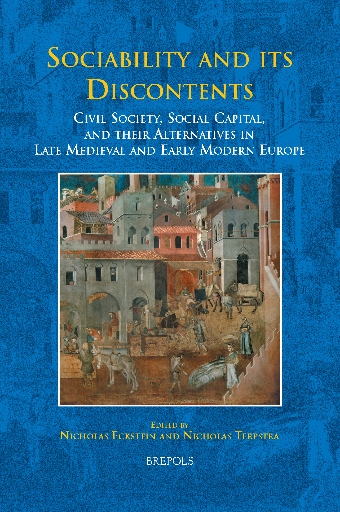
Sociability and its Discontents
show More to view fulltext, buy and share links for:Sociability and its Discontents show Less to hide fulltext, buy and share links for: Sociability and its DiscontentsThis volume advances our knowledge of continuing trends over the longue durée of European history. It also exposes many differences separating contemporaries from their medieval and early modern ancestors. In putting the concept of social capital to the test, the authors also expose the strengths, weaknesses, and limits of the ‘Putnam thesis’. The essays address fourteenth-century English fears of old-age neglect; childhood, friendship, scandal, and rivalry in Renaissance Florence; rebellion in an Italian village; social capital and signorial power in southern and north-central Italy; guild violence in Calvinist Ghent; civil society in early modern Bologna, Naples, and the Papal State; gender in High Renaissance Rome; and critical analyses of the transition from religious to secular sensibilities that scholars (following Jürgen Habermas) have identified in eighteenth-century Europe. In each case, the topic is considered in relation to recent theories of ‘social capital’: the informal, intangible bonds of trust upon which, social scientist Robert Putnam argues, every human community depends. The result is a series of highly original case-studies which reveal the workings of late medieval and early modern European society from new and often unexpected angles.
-
-
-

Survival and Discord in Medieval Society
show More to view fulltext, buy and share links for:Survival and Discord in Medieval Society show Less to hide fulltext, buy and share links for: Survival and Discord in Medieval SocietyThis book, a tribute to an exceptional scholar known for his broad-ranging interests, brings together the new work of students, friends, and colleagues of Prof. Dyer. The volume reflects his interests in the twin disciplines of history and archaeology and his ground-breaking work in medieval standards of living, social tensions, and town-country relations. The varied and stimulating essays presented in this volume examine a host of critical issues dealing with diet, settlement, employment opportunities, taxation, credit and debt, and the tensions felt in town and country alike which often exploded into full-scale revolt. This new work not only looks at these issues from the standpoint of new evidence and theoretical perspectives, but also imparts a strong sense of the controversy surrounding many of these central issues in medieval history, ranging from how well common people managed to live and reproduce to the nature of their relationships with each other and with their social superiors. The volume, in short, stimulates a vital reconsideration of many of the key concerns pertaining to the study of medieval societies.
-
-
-
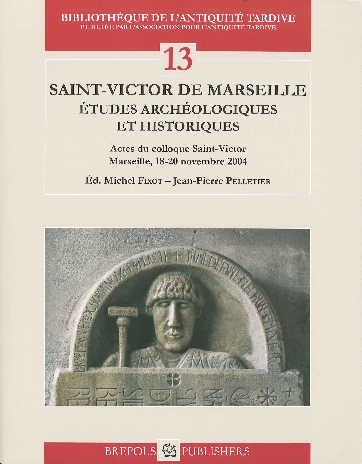
Saint-Victor de Marseille. Études archéologiques et historiques
show More to view fulltext, buy and share links for:Saint-Victor de Marseille. Études archéologiques et historiques show Less to hide fulltext, buy and share links for: Saint-Victor de Marseille. Études archéologiques et historiques[À l’origine de l’étude d’un monument qui reste emblématique de Marseille se présenta l’opportunité de programmes de restauration et de fouille. Un premier volume a répondu à la nécessité de rendre publics les résultats. La conjonction récente avec un moment historiographique paradoxalement sensible à l’histoire religieuse, en particulier à celle du monachisme, fut l’occasion de réunir des chercheurs, scrutateurs de sources diverses, afin de réaliser la confrontation si souvent invoquée de l’archéologie et de l’histoire. Ce fut l’objet du colloque réuni en novembre 2004 à Marseille, dans les locaux de l’ancien Alcazar transformé en bibliothèque. On se plaira à rappeler que ce fut la première grande manifestation scientifique qu’abrita le bâtiment qui venait d’être inauguré.
Pour paraphraser une formule restée célèbre dans l’esprit des médiévistes, existerait-t-il un Saint-Victor des archéologues et un Saint-Victor des historiens? C’est au lecteur de se forger sa propre idée. Sans doute l’écart existe-t-il, et, avant même d’aborder la phase interprétative des recherches, permet-il aussi de mesurer les lacunes de chacune des documentations disponibles. Au-delà du constat, les participants ont eu quand même conscience d’œuvrer pour une même histoire.
,At the origin of the study of a monument which remains very emblematic of Marseille, there was a programme of restoration and excavations. The outcome of the work was made public in a first volume. The recent conjunction with a trend in historiography surprisingly aware of religious history, in particular the history of monachism, enabled us to bring together scholars dealing with various sources in order to achieve the often called on conjunction between archaeology and history. That was the point of the conference held in November 2004 in Marseille. The venue was the old Alcazar music hall theatre transformed into the municipal library. It is gratifying to think that this was the first scientific seminar to be held in the new library, which had just been opened.
Paraphrasing a famous expression among medievalists: are there two Saint-Victor, one for archaeologists one for historians. It is up to the reader to make up his own mind. There is undoubtedly a discrepancy which even before adressing the interpretative conclusions of the research underlines the shortcomings of the respective documentation avalaible. Given this realization, the scholars present intimately felt they were writing the same history.
]
-
-
-

Sapientia et eloquentia
show More to view fulltext, buy and share links for:Sapientia et eloquentia show Less to hide fulltext, buy and share links for: Sapientia et eloquentiaThis book thrusts the reader into the intellectual turmoil of medieval Europe. In interrelated studies of largely unexplored material dating from the ninth through to the fourteenth centuries, the contributors explore changes in functions and forms of liturgical poetry and music, and of biblical interpretation.
Although the twelfth century constitutes the main focus, the phenomena dealt with here had roots in earlier times and remained in circulation in later centuries. The cultural heritage of the Carolingian intellectuals tied to the palace school of Charles the Bald is examined in a liturgical context. Forms and ideas from this period were reused and transformed in the twelfth century, as represented here by sequences, tropes, Abelard’s poetry, the Gloss to Lamentations, and ritual representations or ‘liturgical drama’. The two final chapters treat fourteenth-century uses and understandings of Boethius’s De institutione musica and the new genre of sequence commentaries, both dealing with later medieval views on music theory and liturgical poetry from an earlier period, thus connecting the end of the book to its beginning. The sections are interspersed with philosophical reflections on overriding themes of the contributions. The volume concludes with an anthology of poetic texts in Latin with English translations and musical transcriptions.
-
-
-
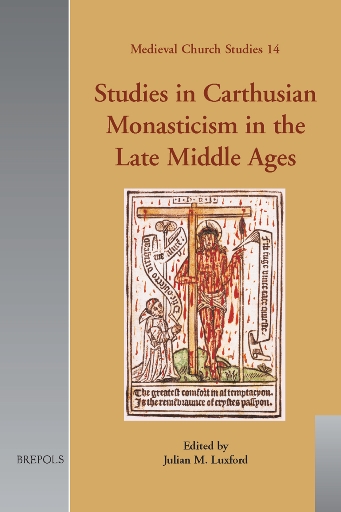
Studies in Carthusian Monasticism in the Late Middle Ages
show More to view fulltext, buy and share links for:Studies in Carthusian Monasticism in the Late Middle Ages show Less to hide fulltext, buy and share links for: Studies in Carthusian Monasticism in the Late Middle AgesThis volume focuses on aspects of Carthusian history and culture of the later Middle Ages, a period of growth and vitality within the order. There is a primary but not exclusive focus on the English Province, which to date has received at best unbalanced attention. While the fundamental ambitions and ideals of Carthusianism formulated, articulated, and lived by the disciples of St Bruno between the late eleventh and the thirteenth centuries changed very little, the fourteenth to sixteenth centuries witnessed developments stimulated by and often commensurate with the progress of external culture. In such areas as devotional practice, literature, art and architecture, patronage, and monastic-lay relations generally, the houses of the order grew increasingly sophisticated: in some cultural spheres Carthusians were in the vanguard. The late Middle Ages thus offer rich opportunities for assessment of how a religious organization defined and justified by essentially reactionary conventions responded to constant forinsec evolution.
The volume’s approach is multi-disciplinary, involving both senior and younger Carthusian scholars in investigation of the main facets of Carthusian life for which significant data survives. This permits a thorough analysis of the order’s character, one that reflects concern with synoptic understanding of medieval Carthusianism rather than partial assessment through a specifically devotional, literary, or more narrowly historical approach. Subject areas covered include the historical growth of individual Charterhouses, patronage of Carthusians by secular agents, Carthusian architecture and manuscript decoration, devotional practice, and textual culture.
-
-
-
Strategies of Writing
show More to view fulltext, buy and share links for:Strategies of Writing show Less to hide fulltext, buy and share links for: Strategies of WritingTrust is the basis of all social relations. It presupposes the concordance of word and deed. Trust is not created spontaneously, but requires a process of observation and socialization, and thus is culturally determined and subject to change. Writing may engender trust, and trust may be placed in written texts.
The contributions to this volume address the complex relationships between ‘trust’ and ‘writing’ in the Middle Ages. They deal with charters, historiography, letters, political communication, and the possibilities of trust in writing. Some of the questions addressed are: Does writing as a medium engender trust irrespective of the contents of the written text? Was trust in writing dependent on trust in an authority? Was the written form of the text meant to confer trust on its contents? Did rituals take place that were meant to enhance the text’s trustworthiness? Can changes be observed in the strategies of engendering trust? Was trust considered food for reflection in written texts? What was considered to constitute a breach of trust? The volume is dedicated to Michael Clanchy, whose work inspired much of its contents.
-
-
-
Stucs et décors de la fin de l’Antiquité au Moyen Âge (Ve-XIIe siècle)
show More to view fulltext, buy and share links for:Stucs et décors de la fin de l’Antiquité au Moyen Âge (Ve-XIIe siècle) show Less to hide fulltext, buy and share links for: Stucs et décors de la fin de l’Antiquité au Moyen Âge (Ve-XIIe siècle)Le stuc, un art à part entière
L’importance du stuc comme matériau et processus de décor a longtemps été ignorée. Les diverses contributions à ce colloque permettent, pour la première fois, d’en saisir la portée sur une longue durée. Avec ses origines antiques ou moyen-orientales, ses croisements avec la peinture ou la sculpture, sa diversité dans une grande partie de l’Europe, sa présence est désormais perçue comme permanente entre le iv e et le xii e siècle. Une meilleure connaissance de sa fabrication grâce à de nombreuses analyses en laboratoire, une relecture d’ensembles jusque-là peu étudiés comme Disentis, ou découverts par l’archéologie comme Vouneuil-sous-Biard, Bordeaux ou Arles-sur-Tech, illustrent mieux aujourd’hui cette conception particulière de l’art du relief transmise et sans cesse renouvelée depuis l’Antiquité tardive.
-
-
-
"Scribere sanctorum gesta"
show More to view fulltext, buy and share links for:"Scribere sanctorum gesta" show Less to hide fulltext, buy and share links for: "Scribere sanctorum gesta"Dans les études hagiographiques comme dans d’autres domaines de l’histoire médiévale, il s’avère indispensable de retourner aux sources, et d’abord aux manuscrits et aux œuvres qu’ils véhiculent. Le manuscrit ancre le texte dans un contexte particulier, informe sur les milieux dans lesquels il a été produit ou reçu, documente sur les stratégies qui ont présidé à sa diffusion. À qui sait lire les apparats critiques et les descriptions codicologiques, il apporte une moisson d’informations. Lorsqu’ils sont regroupés en ensembles — ensembles des exemplaires d’une même œuvre, ensembles des exemplaires d’une même collection, ensembles de collections apparentées —, les textes hagiographiques acquièrent un intérêt plus large encore, éclairant les champs culturel, social ou économique à la lumière de l’histoire de leur édition. En la matière, les travaux de Guy Philippart sont à placer au premier plan de la recherche des trente dernières années. Songeons à sa contribution fondamentale à la typologie des légendiers médiévaux, à la base de données «Légendiers latins», qui a donné naissance à la BHLms, et à l’Histoire internationale de la littérature hagiographique en cours de publication. C’est tout naturellement autour de la littérature hagiographique, en particulier les thèmes de l’écriture — de la réécriture — et de l’édition manuscrite des textes hagiographiques médiévaux, que quatre de ses anciens étudiants ont réuni une trentaine de spécialistes de renommée internationale. Le résultat? Une collection d’études qui aborde un large éventail de problématiques actuelles. Au-delà de l’hommage au chercheur et à l’enseignant, ce livre se veut aussi témoignage d’amitié.
-
-
-
Saints, Scholars, and Politicians
show More to view fulltext, buy and share links for:Saints, Scholars, and Politicians show Less to hide fulltext, buy and share links for: Saints, Scholars, and PoliticiansOver the past eighteen years, gender has become a major analytical tool in medieval studies. The purpose of this volume is to evaluate its use and to search for ways in which to improve and enhance its value. The authors address the question of how gender relates to other tools of medieval research. Several articles criticize the way in which an exclusive focus on gender tends to obscure the impact of other factors, for instance class, politics, economy, or the genre in which a source is written. Other articles address ‘wrong’ ways of using gender, for instance monolithic or anachronistic views of what constitutes differences between men and women. The intention is that this selection of case studies further establishes and enhances the indispensability of gender as an analytical tool within medieval studies.
The volume has been produced in recognition of the work of the Groningen medievalist, Anneke B. Mulder-Bakker, on the occasion of her sixty-fifth birthday. She is the person primarily responsible for introducing to the Netherlands gender as a legitimate and useful tool in medieval studies. The contributors are medievalists from a range of countries and different backgrounds. They were selected in order to test Dr Mulder-Bakker’s ideas on methodology and interdisciplinarity through a series of case-studies.
-
-
-
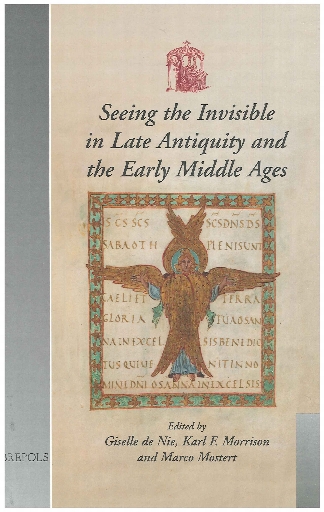
Seeing the Invisible in Late Antiquity and the Early Middle Ages
show More to view fulltext, buy and share links for:Seeing the Invisible in Late Antiquity and the Early Middle Ages show Less to hide fulltext, buy and share links for: Seeing the Invisible in Late Antiquity and the Early Middle AgesLimiting itself to the vital centuries when the late Roman West reshaped itself into a first “Europe”, the conference on which the volume is based explored the dominant understanding of human nature in that era: that human existence was both body (in the visible world of material things) and soul (in the invisible world of spirit). This was a legacy of pre-Christian elements handed down from Greek philosophy and the Hebrew Scriptures. Assimilating it to indigenous cultures in the Roman West, many alien to the ancient Mediterranean world, precipitated sea-changes in the conception of human psychology. Ensuing frictions sparked extraordinary expressions of creativity in words and visual images. It also created dangerously subversive disequilibria in the collective mentality within élites and between them and majority cultures. The papers in this volume investigate numerous configurations of a new culture taking shape in that volatile environment. They contribute to continuing debates about the cognitive co-ordination of words and pictorial images, and to cross-disciplinary dialogues in such disparate fields as art history, religious literature, mysticism, and cultural anthropology.
-
-
-
Scandinavia and Europe 800-1350
show More to view fulltext, buy and share links for:Scandinavia and Europe 800-1350 show Less to hide fulltext, buy and share links for: Scandinavia and Europe 800-1350This volume examines the various forms of contact between Scandinavia and the rest of Europe from 800 to 1350. It consists of twenty-five papers from international scholars specialising in archaeology, onomastics, literature, art history, epigraphy, religious history and linguistics. The volume is innovative in three respects: (i) in transcending conventional historical boundaries, by bringing together work on both the viking and medieval periods; (ii) by examining the ways in which mainland Europe influenced Scandinavia (e.g. kingship, law and social organization; and classical and continental literary traditions); and (iii) by synthesising all the material for an English-language readership for the first time. The broader timespan of investigation illustrates the changing nature of contact and the gradual integration of Scandinavia into European society: by 1350 Scandinavia was no longer a heathen outpost on the periphery of the known world, but an integral part of Western Christendom. The cultural impact of mainland Europe on Scandinavia, frequently mediated through religious channels, although less dramatic, is shown to have had a more significant long-term impact than the earlier viking raids. The volume is structured around the following sections: Historical and Archaeological Evidence for [Scandinavian] Contact with the British Isles; Evidence for the Linguistic Impact of Scandinavian Settlement; Evidence for the Impact of Christianity on Scandinavia; and Textual Evidence for Contact, Conflict, and Coexistence.
-
-
-

Seeing and Knowing
show More to view fulltext, buy and share links for:Seeing and Knowing show Less to hide fulltext, buy and share links for: Seeing and KnowingThe transmission of knowledge in clerical and academic settings of the later Middle Ages has been relatively well studied by traditional scholarship. But successes achieved in other subject-areas by the application of a set of methodologies grouped under the rubric of ‘gender studies’ may offer insights into medieval education. This approach invites a re-examination in gender-political terms of the definition of knowledge by clerical elites and the concomitant rejection from the category of ‘knowledge’ of many varieties of knowledge which did not coincide with their template. The ten articles of this volume focus both on the perennial valorization of the content and methods of clerical/academic education, on the limitation of venues for its transmission to sites from which women were categorically excluded, and, in terms of media for the transmission of knowledge, on the attendant restriction of the techniques and media considered valid for the storage, retrieval, and communication of knowledge to those that were current in these privileged sites.
The volume addresses the following issues: what varieties of knowledge were available to communities of women? What kinds of knowledge originated in or became characteristic of women’s communities? What techniques did women develop to preserve and transmit their knowledge? In what ways and with what success was women’s knowledge valorized, both by authors from within these communities and by ‘authoritative’ figures from outside? Under what circumstances could women become authoritative originators of and transmitters of knowledge?
-
-
-
Speculum Sermonis
show More to view fulltext, buy and share links for:Speculum Sermonis show Less to hide fulltext, buy and share links for: Speculum SermonisThe medieval sermon provides the focus for the first volume of Disputatio because it often expresses the concerns of various intellectual milieux, such as the university, Church or court, and attempts to convey those concerns to other parts of medieval society.
Speculum Sermonis is an anthology of essays about medieval sermons in the Christian East and West. It aims to reveal precisely how sermons inform different disciplines (for instance, social and Church history, literature, musicology) and how the methodologies of different disciplines inform sermons. Sermons can, for instance, provide evidence for a reconstruction of medieval liturgy; reciprocally, the field of liturgiology investigates sermons as one aspect of Church performance. The volume’s title image of the mirror and the reference to medieval specula convey the idea of multiple reflections: the sermons’ on culture and the disciplines’ on sermons. Because the contributors to Speculum Sermonis come from a variety of fields, the essays here collectively provide a rich historical and contemporary academic context for reading the medieval sermon.
In addition to essays from across the fields, a number of which establish conclusions transcending disciplinary boundaries, Speculum Sermonis includes an introduction defending interdisciplinary study of sermons and an authoritative bibliography covering both primary and secondary resources for medieval sermons. A unique feature of the volume is the inclusion of response papers to the essays in each of the sections, in the spirit of the book series title Disputatio.
-
-
-
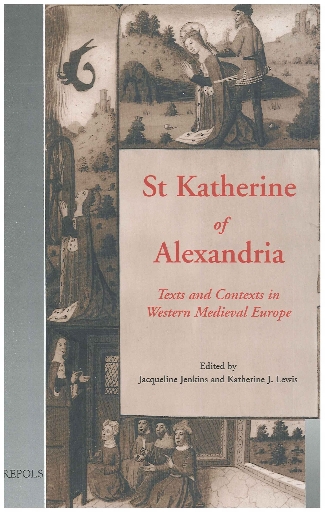
St Katherine of Alexandria
show More to view fulltext, buy and share links for:St Katherine of Alexandria show Less to hide fulltext, buy and share links for: St Katherine of AlexandriaSt Katherine of Alexandria was one of the most popular saints in medieval Europe. This book constitutes the first interdisciplinary collection of essays to explore her cult and the range of meanings which St Katherine embodied for her devotees. The essays between them consider a wide range of evidence, from visual representations (wall paintings, manuscript illuminations, stained glass, and seals), to literary texts (lives of the saint, prayers, hymns, devotional manuscripts, and breviaries) as well as documentary evidence (wills, chronicles, ecclesiastical records and antiquarian writings) and the physical remains of churches and chapels dedicated to St Katherine. These sources are interpreted as part of wider manifestations of devotion to the saint in England, France, Italy, Spain, Sweden, and Wales. The authors approach the cult from varying disciplinary and methodological perspectives, but all seek to uncover the various religious, social and cultural messages contained within the different versions of St Katherine which these particular texts and contexts offer. The volume as a whole therefore sheds light not only on devotion to St Katherine, but also on a much wider range of issues and ideologies governing the lives of her devotees and the societies in which they lived.
-
-
-
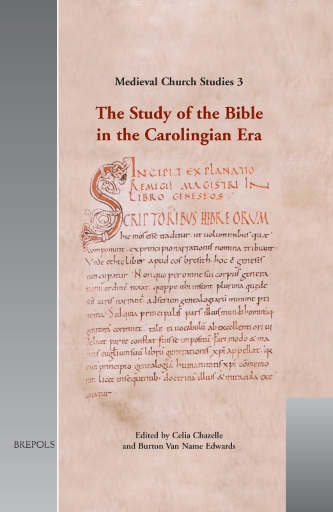
The Study of the Bible in the Carolingian Era
show More to view fulltext, buy and share links for:The Study of the Bible in the Carolingian Era show Less to hide fulltext, buy and share links for: The Study of the Bible in the Carolingian EraFrom the last quarter of the eighth until the beginning of the tenth century, Carolingian monasteries, cathedrals, and courts were the sites of a vigorous scholarship grounded in the study of sacred Scripture. The significance of Bible studies in this epoch is evident from the many extant Carolingian commentaries on virtually every book of the Old and New Testaments. More works of this kind survive from the period, often in multiple copies, than is true for any other genre of literature. Although scholars used to dismiss the Carolingian Bible commentaries as uncreative compilations of material borrowed from the Church Fathers, in recent years appreciation of these tracts’ essential creativity has grown significantly. In addition, there is now increased recognition of the degree to which the ‘exegetical’ culture nurtured within the Carolingian schools fertilized other aspects of contemporary intellectual and cultural endeavour.
The essays in this collection offer a fresh look at the range of biblical studies and their impact on diverse domains of Carolingian culture and learning. The bibliography provides a record of critical editions of Carolingian-era Bible commentaries and secondary scholarship in the field published within the last twelve years.
-
-
-

Sparks and Seeds
show More to view fulltext, buy and share links for:Sparks and Seeds show Less to hide fulltext, buy and share links for: Sparks and SeedsJohn Freccero is internationally renowned for his scholarship on Dante, Petrarch, Machiavelli, and other authors. Currently Professor of Italian and Comparative Literature at New York University, he has also taught at Yale, Stanford, Cornell, and Johns Hopkins. His numerous honors include Fulbright and Guggenheim fellowships and awards from the city of Florence and the Republic of Italy.
Despite the diverse expertise of their authors (fairly evenly divided between Italianists and scholars of English and Comparative Literature), all of the articles included in the volume appertain to Italian literature - from a literary analysis of Bonaventure’s Itinerarium to tracing the State of Maryland’s medieval Italian motto back through its English Renaissance sources. Many of the pieces are concerned with Dante directly, and several others dealing with medieval and Renaissance Italian subjects do so indirectly. Two articles are concerned with pre-modern cultural and literary implications of the history of science; the remainder trace the afterlife of medieval or Renaissance Italian motifs in modern culture. Despite the fact that the articles range from medieval scholasticism to twentieth-century cinema, this volume addresses applications of medieval and Renaissance Italian literature, influenced, above all, by the teaching and scholarship of John Freccero.
-
-
-
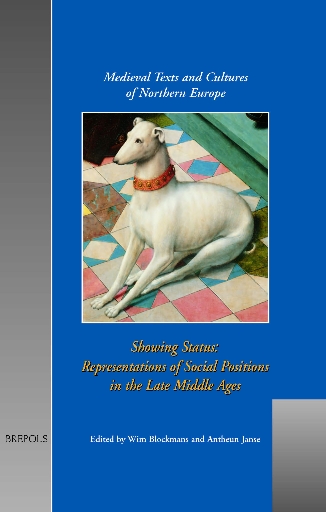
Showing Status
show More to view fulltext, buy and share links for:Showing Status show Less to hide fulltext, buy and share links for: Showing StatusHow did people in the late medieval period perceive and express social status? This volume brings together multi-disciplinary perspectives on representations of social difference in the Low Countries during a time of dynamic social change. The premise of the volume is that medieval social change may only be fully understood if hierarchies of wealth and power are examined alongside literary and artistic sources. Medieval texts and material culture expressed social standing and gave meaning to the experience of social change. The aim of the study is to recognise and translate the language of symbols used to encode and display status in the late Middle Ages.
-