


EMISCA

Collection Contents
8 results
-
-
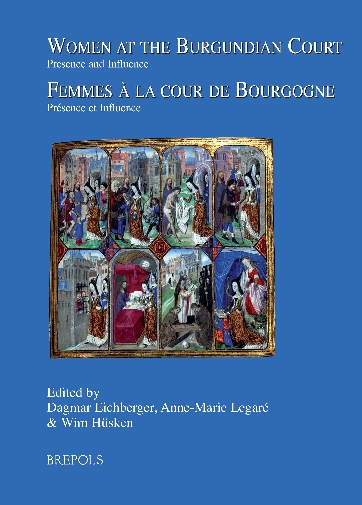
Women at the Burgundian Court: Presence and Influence
show More to view fulltext, buy and share links for:Women at the Burgundian Court: Presence and Influence show Less to hide fulltext, buy and share links for: Women at the Burgundian Court: Presence and InfluenceThis collection of essays charts the role of women at the Burgundian court by analysing the ways in which medieval women, such as Isabella of Portugal, Margaret of York, Mary of Burgundy, Margaret of Austria made an impact through their physical, moral and spiritual presence at court. During the absence of the prince these well-educated and internationally experienced spouses, mothers and aunts were put in charge of the courtly household or were in some cases appointed regent of the Netherlandish territories for a limited period of time. The youngest generation of women represented by the sisters and consorts of Charles V and Ferdinand I — now forming part of the extended family network — continued this tradition and took it to Germany, Spain, France and Portugal. The court developed into a kind of ‘gender laboratory’, in which women actively negotiated their position of power, thus consolidating their influence in politics, diplomacy, education and art.
-
-
-
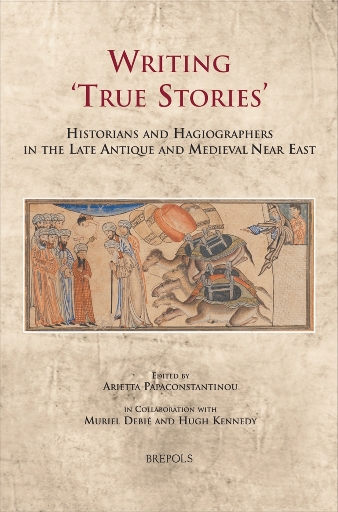
Writing ‘True Stories’
show More to view fulltext, buy and share links for:Writing ‘True Stories’ show Less to hide fulltext, buy and share links for: Writing ‘True Stories’The papers in this volume examine the interaction between history and hagiography in the late antique and medieval Middle East, exploring the various ways in which the two genres were used and combined to analyse, interpret, and re-create the past. The contributors focus on the circulation of motifs between the two forms of writing and the modifications and adaptations of the initial story that such reuse entailed. Beyond this purely literary question, the retold stories are shown to have been at the centre of a number of cultural, political, and religious strategies, as they were appropriated by different groups, not least by the nascent Muslim community. Writing ‘True Stories’ also foregrounds the importance of some Christian hagiographical motifs in Muslim historiography, where they were creatively adapted and subverted to define early Islamic ideals of piety and charisma.
-
-
-
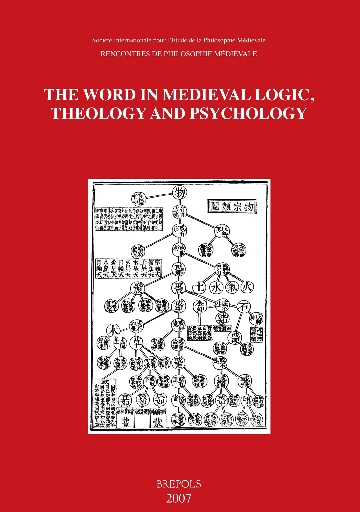
The Word in Medieval Logic, Theology and Psychology
show More to view fulltext, buy and share links for:The Word in Medieval Logic, Theology and Psychology show Less to hide fulltext, buy and share links for: The Word in Medieval Logic, Theology and PsychologyThe holding of the 2005 annual colloquium of the SIEPM in Kyoto, Japan, presented the opportunity to explore the very foundations of communication: the word in all its aspects. Whether mental concepts, as Aristotle had claimed, were the same for all people, whether from the East or the West; how these mental concepts were transformed into words; how words affected the concepts (e.g. in regard to the colour spectrum); how angels communicated with one another, and whether any words were appropriate for talking about God; whether words for things arise merely from convention, or have an essential relationship to what they describe; what exactly do the words for individuals, species and genera describe; why words can have powerful effects; what is the relationship between the inner word and the spoken word. The essays in this volume explore these questions largely from the texts of medieval Western philosophers and theologians from Boethius to Meister Eckhart, but some Hebrew and Arabic texts are also taken into consideration. The contexts range from the lively debates in the Parisian schools of the early twelfth century, through the subtle arguments of thirteenth and fourteenth century scholars, to mystical writings of the fifteenth century. Running as a thread through the essays are the translations and commentaries of Boethius on the Vetus logica of Aristotle, and the divine word of the Bible. The combination of contributions of Japanese scholars with both younger and more established scholars from the Western tradition ensures a rich and varied approach to this subject.
-
-
-
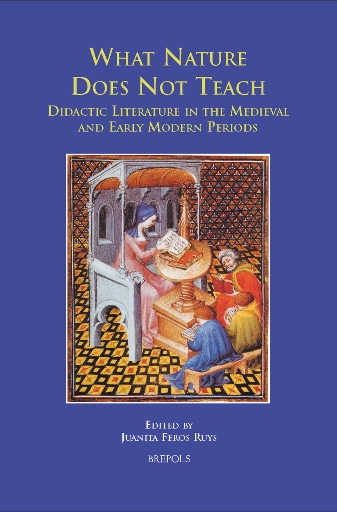
What Nature Does Not Teach
show More to view fulltext, buy and share links for:What Nature Does Not Teach show Less to hide fulltext, buy and share links for: What Nature Does Not TeachThis interdisciplinary study takes as its subject the multi-faceted genre of didactic literature (the literature of instruction) which constituted the cornerstone of literary enterprise and social control in medieval and early-modern Europe. Following an introduction that raises questions of didactic meaning, intent, audience, and social effect, nineteen chapters deal with the construction of the individual didactic voice and persona in the premodern period, didactic literature for children, women as the creators, objects, and consumers of didactic literature, the influence of advice literature on adult literacy, piety, and heresy, and the revision of classical didactic forms and motifs in the early-modern period. Attention is paid throughout to the continuities of didactic literature across the medieval and early-modern periods — its intertextuality, reliance on tradition, and self-renewal — and to questions of gender, authority, control, and the socially constructed nature of advice. Contributors particularly explore the intersection of advice literature with real lives, considering the social impact of both individual texts and the didactic genre as a whole. The volume deals with a wide variety of texts from the early Middle Ages to the eighteenth century, written in languages from Latin through the European vernaculars to Byzantine Greek and Russian, offering a comprehensive overview of this pervasive and influential genre.
-
-
-
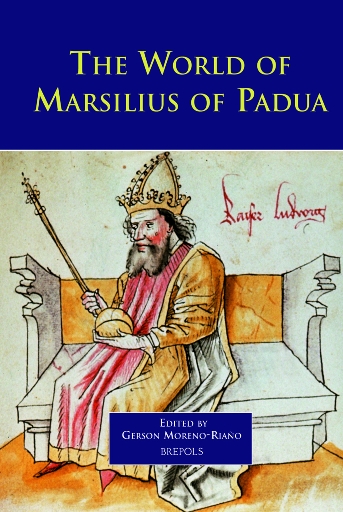
The World of Marsilius of Padua
show More to view fulltext, buy and share links for:The World of Marsilius of Padua show Less to hide fulltext, buy and share links for: The World of Marsilius of PaduaPerhaps no author of the Latin Middle Ages has been the subject of so much controversy and even vitriol than Marsilius of Padua (c. 1275-1342/43). As author of the notorious heretical tract, the Defensor Pacis, Marsilius became an infamous figure throughout the intellectual and political centres of Europe during his own lifetime. His magnum opus, a sharply pointed dissection of the damage done to earthly political life by the incursions of the papacy and a plea for conciliar ecclesiology, was repeatedly condemned during the fourteenth century and in later years. Yet the treatise continued to be disseminated and received translation into several vernacular languages. During the Reformation, Marsilius and his Defensor Pacis enjoyed another round of acclamation and denunciation, depending upon one’s confession. In July 2003, a group comprising many of the world’s most renowned scholars of medieval political thought gathered for a ‘Marsilius of Padua World Congress’. The contents of the present volume represent a compendium of innovative scholarly contributions to the understanding of Marsilius, his life and times, and his lasting impact on Western thought. Included are chapters that reflect a range of recent, ground-breaking research by both senior scholars and the future leaders in the field. After a general survey of the current state of scholarship on Marsilius, the volume divides into three thematically organized sections, covering a variety of historical, textual, methodological, theological, and theoretical questions. In all of the essays, readers will discover the wealth and complexity of Marsilius’s thought as well as the startling range of approaches and methods of interpretation taken in the study of his work. The volume’s selection of authors is international in scope and represents the first interdisciplinary scholarly collaboration in the field of Marsilian studies to occur in the twenty-first century.
-
-
-
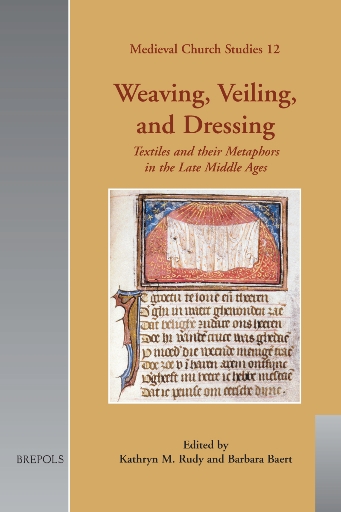
Weaving, Veiling, and Dressing
show More to view fulltext, buy and share links for:Weaving, Veiling, and Dressing show Less to hide fulltext, buy and share links for: Weaving, Veiling, and DressingChristianity is a religion of clothing. To become a priest or a nun is to take the cloth. The Christian liturgy is intimately bound with veiling objects and revealing them. Cloths hide the altar, making it all the more spectacular when it is revealed. Fragments of imported silk cradle the relic, thereby giving identity to the dessicated bone. Much of that silk came from the east, meaning that a material of Islamic origin was a primary signifier of sanctity in Christianity. Weaving, Veiling, and Dressing brings together twelve essays about text and textile, about silk and wool, about the formation of identity through fibre. The essays bring to light hitherto unseen material, and for the first time, establish the function of textiles as a culturally rich way to approach the Middle Ages. Textiles were omnipresent in the medieval church, but have not survived well. To uncover their uses, presence, and meanings in the Middle Ages is to reconsider the period spun, draped, clothed, shrouded, and dressed. Textiles in particular were essential to the performance of devotion and of the liturgy. Brightly dyed cloth was a highly visible maker of meaning. While some aspects of culture have been studied, namely the important tapestry industry, as well as some of the repercussions and activities of cloth guilds, other areas of textile studies in the period are yet to be studied. This book brings an interdisciplinary approach to new material, drawing on art history, anthropology, medieval text history, theology, and gender and performance studies. It makes a compelling miscellany exploring the nature of Christianity in the largely uninvestigated field of text and textile interplay.
-
-
-
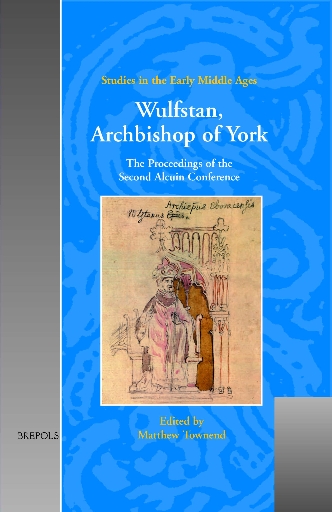
Wulfstan, Archbishop of York
show More to view fulltext, buy and share links for:Wulfstan, Archbishop of York show Less to hide fulltext, buy and share links for: Wulfstan, Archbishop of YorkMost famous for his harrowing ‘Sermon of the Wolf to the English’, Archbishop Wulfstan II of York (1002-23) has emerged in recent decades as one of the most important and influential figures in the late Anglo-Saxon church and state. This volume, which arises from a conference held in 2002 to mark the millennial anniversary of Wulfstan’s appointment as archbishop, is the first collection of essays to be devoted to this crucial figure. Its twenty contributors address the whole range of Wulfstan’s activities and writings, and supply not only an up-to-date survey of Wulfstan studies but also many new directions, discoveries, and insights. The studies within this volume variously explore Wulfstan’s preaching and law-making; his position in the late Anglo-Saxon church; the places and contexts in which he lived and worked; and, more generally, his learning, concerns, and ideas. The contributors, drawn from a variety of disciplines, bring together literary, historical, and art historical approaches to the study of Wulfstan, and a recurrent focus is on the extant manuscripts associated with him. Altogether, therefore, this volume provides a thorough and wide-ranging exploration of the life, works, and contexts of one of the most important of all Anglo-Saxons.
-
-
-
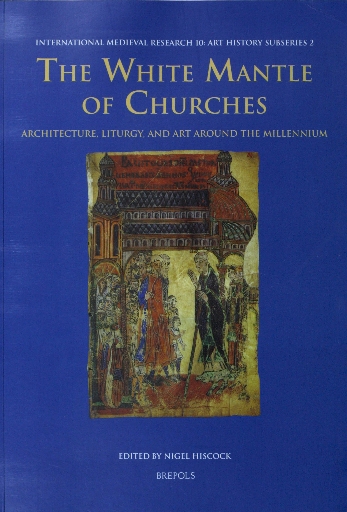
The White Mantle of Churches
show More to view fulltext, buy and share links for:The White Mantle of Churches show Less to hide fulltext, buy and share links for: The White Mantle of ChurchesWhen a monk living at the beginning of the last millennium described Europe ‘cladding itself everywhere in a white mantle of churches’, he precipitated several questions for historians to answer. Was there a surge in church-building at the time? If so, what were the causes of this, and what were the purposes? Does it help to explain our understanding of Romanesque architecture and art? Was there a connection between the ‘white mantle of churches’ and the millennium? Did people believe the world was coming to an end?
The supposition of apocalyptic expectations at the time was until recently dismissed as romantic myth, but the arrival of our new millennium has brought a revival in interest in the dawn of the second millennium, and new evidence of millennial fears. Yet millennial studies and architectural history largely continue to follow separate, parallel paths. This book therefore aims to add the architectural evidence to the millennial debate, and to examine this formative period in relation to the evolution of Romanesque architecture and art. As our own millennium gets under way with continuing hesitancy between European aspiration and national identity, it is also of interest to compare our time with the Europe of a thousand years ago.
-