EMISCA

Collection Contents
1 - 50 of 260 results
-
-
A Late Medieval Songbook and its Context: New Perspectives on the Chantilly Codex (Bibliothèque du Château de Chantilly, Ms. 564)
show More to view fulltext, buy and share links for:A Late Medieval Songbook and its Context: New Perspectives on the Chantilly Codex (Bibliothèque du Château de Chantilly, Ms. 564) show Less to hide fulltext, buy and share links for: A Late Medieval Songbook and its Context: New Perspectives on the Chantilly Codex (Bibliothèque du Château de Chantilly, Ms. 564)
-
-
-
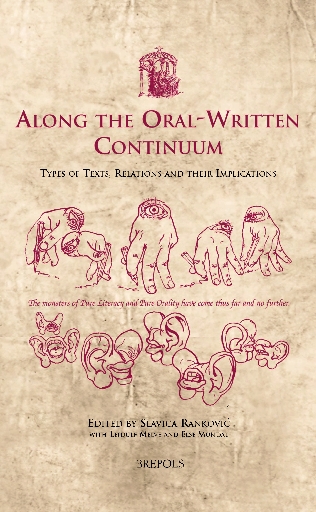
Along the Oral-Written Continuum
show More to view fulltext, buy and share links for:Along the Oral-Written Continuum show Less to hide fulltext, buy and share links for: Along the Oral-Written ContinuumEver since its introduction in the 1970s, Ruth Finnegan’s notion of the oral-written, or the oral-literate, continuum has served as one of the most effective means of dispelling the dichotomous understanding of the two principal media of communication in the Middle Ages. However, while often casually invoked, the concept has never been made a focus of study in its own right. The present volume is an attempt to place the oral-written continuum at the heart of discussion as an object of a head-on theoretical investigation, as a backdrop to distinct processes of acquisition of literacy in different European regions, and, indeed, as a tool for navigating the rugged landscape of verbal forms, exploring the complexity of oral-literary interrelationships that they manifest. The articles probe the concept with a variety of theoretical and methodological approaches, span diverse texts and genres, and involve a range of European cultural contexts, with special emphasis on Scandinavia and Northern Europe, but also reaching out to various other corners of the continent: from France, the Netherlands and England in the West, over Germany, Bohemia and Poland in the central region, to Serbia and Bosnia in the Southeast.
-
-
-
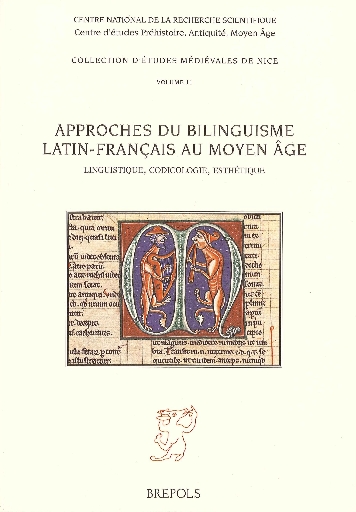
Approches du bilinguisme latin-français au Moyen Âge: linguistique, codicologie, esthétique
show More to view fulltext, buy and share links for:Approches du bilinguisme latin-français au Moyen Âge: linguistique, codicologie, esthétique show Less to hide fulltext, buy and share links for: Approches du bilinguisme latin-français au Moyen Âge: linguistique, codicologie, esthétiqueLe Moyen Âge a vu naître les langues romanes. L’émergence progressive de ces nouveaux systèmes linguistiques, puis leur accession à l’écrit et à la littérature, n’a pourtant pas rendu caduc l’usage du latin. Témoignent de cette résistance du latin la diglossie de nombreux locuteurs, auteurs ou copistes médiévaux, ainsi que le bilinguisme courant de leurs énoncés et de leurs productions textuelles. Ces phénomènes ont été éclairés et illustrés par d’abondants travaux dont l’apport est régulièrement signalé par les auteurs de ce volume.
L’originalité du présent recueil tient au fait qu’y sont analysées les modalités de cohabitation du latin et de la langue d’oïl dans les textes du Moyen Âge central et tardif. Cette réflexion collective, adossée à un souci permanent de définition théorique, se montre attentive à l’évolution chronologique, depuis les Psautiers bilingues du xii e siècle jusqu’aux imprimés du xvi e siècle. Elle est sensible aussi à des enjeux variables, depuis l’enseignement élémentaire de la grammaire ou du vocabulaire jusqu’à la mise en œuvre de dispositifs esthétiques complexes. En s’appuyant sur les témoins — pour la plupart manuscrits — qu’a pu susciter la double compétence linguistique médiévale, les auteurs du volume interrogent la conception des textes bilingues, leurs conditions d’élaboration, leur transmission, leur réception. L’insertion souvent discrète de fragments latins au sein de textes français, tout comme la présence plus rare de la langue d’oïl au sein de manuscrits latins, se lit alors comme un mode d’expression aussi raffiné que spontané, susceptible d’enrichir les usages prévus pour le texte enchâssant. Au-delà, l’ensemble de ces études permet d’entrevoir la conscience linguistique des locuteurs du Moyen Âge.
-
-
-
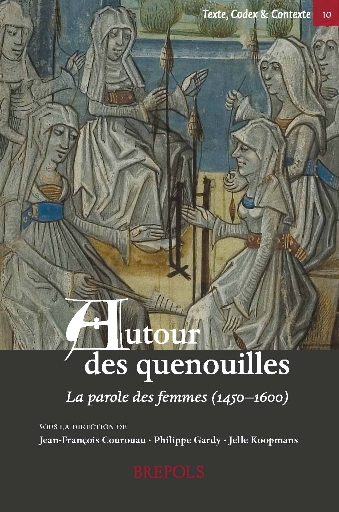
Autour des quenouilles: la parole des femmes (1450-1600)
show More to view fulltext, buy and share links for:Autour des quenouilles: la parole des femmes (1450-1600) show Less to hide fulltext, buy and share links for: Autour des quenouilles: la parole des femmes (1450-1600)Dans l’Europe de la fin du xv e siècle et du xvi e siècle, nombreux sont les textes qui font état d’un savoir spécifiquement détenu par les femmes, transmis entre elles de façon orale et constitué par un corps de croyances et de «recettes». L’émergence d’un tel «genre», au seuil des temps dits modernes, n’a jamais été analysée en tant que telle et l’objet de ce volume est de combler ce manque à travers l’étude d’œuvres produites dans différentes littératures d’Europe, des Flandres et d’Angleterre jusqu’à Valence et la Castille en passant par l’Occitanie.
-
-
-
Avicenna and his Legacy
show More to view fulltext, buy and share links for:Avicenna and his Legacy show Less to hide fulltext, buy and share links for: Avicenna and his LegacyThe centuries immediately following upon the monumental achievements of Avicenna (d. 1036) have been rightly characterized as a golden age of science and philosophy. Generation after generation scrutinized the Avicennan legacy, explicating and expanding upon the wealth of writings left by the master. Critical thinking in logic and astronomy, medicine and metaphysics spurred many new developments. This volume presents seventeen essays on Avicenna, his followers and his critics, many of whom are just now being introduced to western scholarship. The contributors to Avicenna and his Legacy include both established scholars as well as some of the best of the new generation.
-
-
-
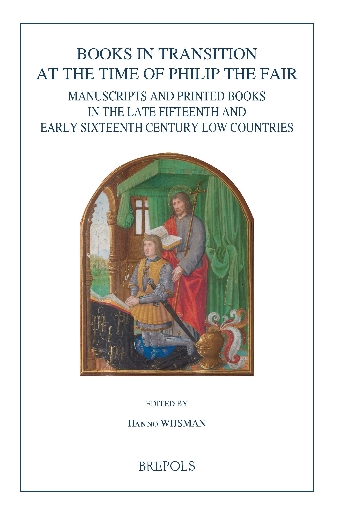
Books in Transition at the Time of Philip the Fair
show More to view fulltext, buy and share links for:Books in Transition at the Time of Philip the Fair show Less to hide fulltext, buy and share links for: Books in Transition at the Time of Philip the FairIn 2006, 500 years after his death, the Royal Library of Belgium organised an exhibition (curated by Bernard Bousmanne and Hanno Wijsman) revealing treasures from the era of Philip the Fair (1478-1506), last duke of Burgundy. This volume reunites most of the papers delivered at a conference held during the exhibition, increased with four new chapters. Ten specialists from Belgium, the Netherlands and the United States discuss the book market and its place in society in this transitional period when manuscripts and printed books were produced and used next to one another. The various chapters are illustrated with more than 70 reproductions, most of which formerly unpublished. The contributions are organised around five topics: Philip the Fair and his books, art in books, music in books, politics in books, the book market.
-
-
-
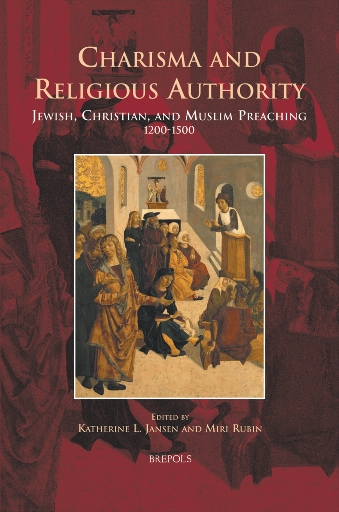
Charisma and Religious Authority
show More to view fulltext, buy and share links for:Charisma and Religious Authority show Less to hide fulltext, buy and share links for: Charisma and Religious AuthorityThis volume of essays concentrates on the effects of preaching in late medieval and early modern Europe, particularly through the concept of charisma, a term introduced into the discussion of religion and politics by Max Weber. Used by Weber, the term indicates the power of a person to move others to action, to animate and mobilize them. The late medieval and early modern periods witnessed the emergence of preachers who became powerful public figures central to the mobilization of populations towards religious reform or crusades. Such preachers were also enmeshed in civic life and the life of courts. Super-preachers like Bernardino of Siena and John of Capestrano shaped opinion on a wide range of issues: the ethics of business, marriage and gender relations, attitudes towards minorities, the poor and social responsibility, as well as the role of kings and other rulers in society. Preaching events were the mass media of the day, and in their wake could follow pogrom, lay revival, crusade, peace movement, or reconciliation within a faction-riven city. The power of these events was great and not merely confined to the Christian community. This volume introduces for the first time a comparative dimension which looks at the theme of charisma and religious authority in the Jewish, Christian, and Muslim preaching traditions.
-
-
-
Computus and its Cultural Context in the Latin West, AD 300-1200
show More to view fulltext, buy and share links for:Computus and its Cultural Context in the Latin West, AD 300-1200 show Less to hide fulltext, buy and share links for: Computus and its Cultural Context in the Latin West, AD 300-1200The scientific knowledge that Irish, English, and continental European scholars nurtured and developed during the years c. AD 500 to c. AD 1200 was assimilated, in the first place, from the wider Roman world of Late Antiquity. Time-reckoning, calendars, and the minute reckonings required to compute the date of Easter, all involved the minutiae of mathematics (incl. the original concept of ‘digital calculation’) and astronomical observation in a truly scientific fashion. In fact, the ‘Dark Ages’ were anything but dark in the fields of mathematics and astronomy.
The first Science of Computus conference in Galway in 2006 highlighted the transmission of Late Antique Mathematical Knowledge in Ireland & Europe, the development of astronomy in Early Medieval Ireland & Europe and the role of the Irish in the development of computistical mathematics. The proceedings of that conference should, therefore, appeal equally to those interested in the history of science in Ireland and Europe, and in the origins of present-day mathematical and astronomical ideas.
-
-
-

De Bono Communi. The Discourse and Practice of the Common Good in the European City (13th-16th c.)
show More to view fulltext, buy and share links for:De Bono Communi. The Discourse and Practice of the Common Good in the European City (13th-16th c.) show Less to hide fulltext, buy and share links for: De Bono Communi. The Discourse and Practice of the Common Good in the European City (13th-16th c.)Traditionally confined to the sphere of the State and of auctoritas, the phrase the “Common Good” is set to conquer the cities in the late Middle Ages and at the beginning of the Early Modern period. But can we compare a kingdom like France where the cities defend their “Common Good” by making reference to the interest and benefit of the Kingdom with principalities like Flanders where, despite their fierce desire for autonomy, the cities use the notion with much greater reservation than their Italian counterparts? This volume traces the intellectual and theoretical roots that have led to the emergence of the notion of the “Common Good” in the urban world of Western Europe by analysing the practical forms of its manifestations.
-
-
-
De l’espace aux territoires
show More to view fulltext, buy and share links for:De l’espace aux territoires show Less to hide fulltext, buy and share links for: De l’espace aux territoiresAu lieu d’une publication de plus sur l’espace — notion qui est un fourre-tout conceptuel —, une journée d’étude a été réunie à Poitiers les 8-9 juin 2006 sur le thème de la territorialité. Rassemblant, dans un cadre d’étude méditerranéen, des contributions qui abordent aussi bien le monde arabo-musulman que l’Occident méridional chrétien, cette rencontre visait à mieux cerner un phénomène essentiel dans l’histoire des sociétés complexes: les mécanismes de territorialisation, par lesquels les liens socio-politiques, les activités productives, les courants et les productions culturels et (plus classiquement) les constructions gouvernementales et administratives deviennent des systèmes spatiaux imbriqués, emboîtés et inter-connectés, avec une complexité qui constitue un défi à l’analyse historique.
Les auteurs des contributions rassemblées dans ce volume ont intégré l’analyse spatiale des géographes comme fondement de leur réflexion, dans une démarche transdisciplinaire, mais ils l’ont fait avec les moyens (limités par la nature des sources) des historiens. On trouvera ici des études, à différentes échelles, portant aussi bien sur les constructions idéelles de l’espace par les liturgistes ou les géographes médiévaux que sur les processus juridiques et matériels de la territorialisation, à partir de sources très variées requérant chacune une approche spécifique; mais toutes convergent pour une saisie globale de la territorialisation comme fondement des sociétés et des cultures médiévales — avec un espace conçu non pas comme un cadre, voire une simple toile de fond, mais comme un «ingrédient» majeur des processus.
Au moins pour l’Occident latin, la seconde moitié du Moyen Âge est privilégiée, pour des raisons historiques — la croissance démographique implique un poids croissant de l’homme et de ses activités dans l’espace matériel, notamment à l’échelle locale des communautés d’habitants — mais encore plus pour des raisons de sources; en effet, s’il est probable que les «topolignées» féodales sont plus fortement territorialisées que l’aristocratie impériale carolingienne, il reste à vérifier si l’agriculture, la centralité urbaine et l’encadrement des hommes ponctuaient moins fortement l’espace au haut Moyen Âge…
-
-
-
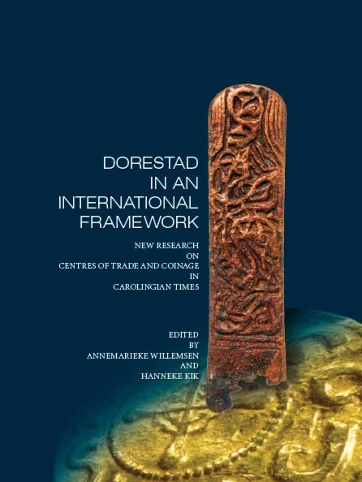
Dorestad in an international Framework
show More to view fulltext, buy and share links for:Dorestad in an international Framework show Less to hide fulltext, buy and share links for: Dorestad in an international FrameworkDorestad is a large, wealthy and internationally orientated harbour town from the Carolingian era excavated at the site of Wijk bij Duurstede in the middle of the Netherlands. In the 8th and 9th century AD it functioned as a junction in a network of Carolingian emporia or vici that covered most of present-day Europe. The past decade featured new research into the relations between these towns, their environmental and cultural context, the exchange of goods, coins and ideas, and the role of emperors and Vikings in their rise and fall. This publication contains the results of a scholarly congress in Leiden in June 2009, where renowned historians and archaeologists from eight countries presented studies into the Carolingian emporia, their material culture and their position in early medieval Europe, composed around Dorestad, the only emporium called ‘vicus famosus’ in contemporary sources.
-
-
-
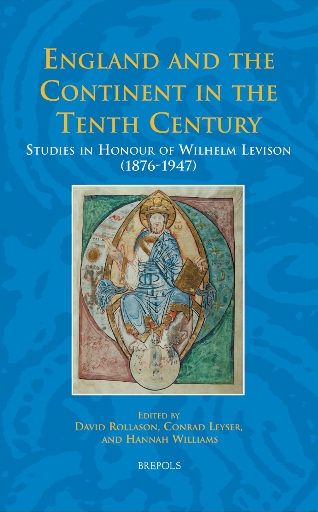
England and the Continent in the Tenth Century
show More to view fulltext, buy and share links for:England and the Continent in the Tenth Century show Less to hide fulltext, buy and share links for: England and the Continent in the Tenth CenturyDedicated as a memorial to the great historian of England and the Continent in the eighth century, Wilhelm Levison, this book provides the widest and most in-depth exploration to date of relations between England and the Continent during an equally crucial period, the tenth century. The volume, which comes out of a sustained collaboration between English and Continental universities, contains thematically arranged essays by established leading specialists and also by younger scholars. By building on the approaches used by Levison as well as other methods that have been developed in the decades since his death, these essays tackle a broad range of questions: What routeways and modes of contact linked England with the Continent? How similar were attitudes to rulership and dynastic strategies? How did the law, the working of government, and the organization and culture of the church differ between England and the Continent? How was the past seen and represented on the two sides of the English Channel? In answering these questions, this volume offers news ways of exploring the links and developing the comparison between England and the Continent in the century after the collapse of the Carolingian Empire, a formative period for the development of Europe.
-
-
-
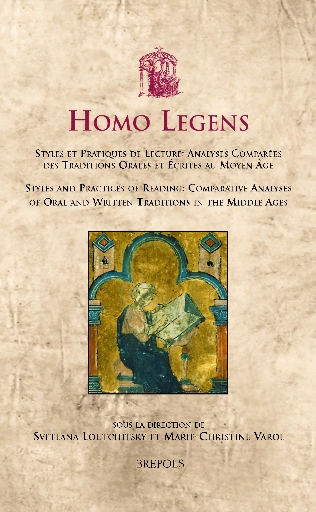
Homo Legens
show More to view fulltext, buy and share links for:Homo Legens show Less to hide fulltext, buy and share links for: Homo LegensHow can we uncover the traces of oral culture in medieval sources when the oral matter we possess survives only in written form? Is it the case that only the written persists while the oral is lost? What was the status of orality in medieval society? The studies in this volume (five chapters in French and two in English) examine the links between the oral and the written traditions in medieval literature. They do this by means of the analysis of literary sources from very diverse backgrounds, both geographically and linguistically speaking: the investigation ranges from medieval Spain, through the Byzantine Empire and the Crusader states, to late medieval and early modern Turkey. This interdisciplinary enquiry by an international group of scholars enables us to define the modes of transmission of medieval texts and how they were memorized as well as to decipher how they were read and appropriated. In addition, the book suggests a methodological basis for research into indices of orality and for analysis of the intertextual links between literary works. This enquiry, undertaken within the framework of the international Homo Legens project, provides an efficacious tool for the study of the practices of reading and writing.
-
-
-
La Parenté déchirée: les luttes intrafamiliales au Moyen Âge
show More to view fulltext, buy and share links for:La Parenté déchirée: les luttes intrafamiliales au Moyen Âge show Less to hide fulltext, buy and share links for: La Parenté déchirée: les luttes intrafamiliales au Moyen ÂgeNous, médiévistes, insistons, trop souvent peut-être, sur la cohésion du groupe familial. Nous le percevons ainsi dans la force de sa solidarité, dans la rigidité de ses structures d’encadrement et dans la rigueur de l’obéissance à l’aîné. Son harmonie sortirait même renforcée de sa lutte contre des parentèles rivales. Une telle vision ne manque assurément pas de fondements. Pourtant, les sources révèlent aussi les conflits internes à une famille, qui interviennent, en premier lieu, dans l’axe de la filiation. Les tensions entre, d’une part, le père ou l’oncle paternel et, d’autre part, ses fils ou neveux sont souvent mentionnées par les sources. Elles répondent au conflit intergénérationnel, exacerbé dans l’aristocratie guerrière par l’adoption des valeurs du jeune (juvenis). À classe d’âge égale, les luttes entre frères ou entre cousins reproduisent souvent le même schéma juvénile, car elles opposent les cadets à l’aîné pour la conquête du pouvoir et du patrimoine. En second lieu, l’axe de l’alliance reproduit autant d’affrontements entre «belles-familles». Paradoxalement, l’élément religieux peut introduire le germe de la discorde. En prônant la conversion au détriment d’anciennes pratiques, la vocation religieuse ou le libre choix du conjoint, le christianisme est parfois à l’origine de tensions à l’intérieur de la famille. La charité qu’il préconise est supérieure au lien du sang. Elle valorise l’individu au détriment de structures d’encadrement, parmi lesquelles le cousinage et le lignage sont les premières touchées. Elle bouleverse, enfin, les pratiques de la parenté, l’exercice de la violence et leurs représentations littéraires ou iconographiques.
-
-
-

Laments for the Lost in Medieval Literature
show More to view fulltext, buy and share links for:Laments for the Lost in Medieval Literature show Less to hide fulltext, buy and share links for: Laments for the Lost in Medieval LiteratureThis is a collection of essays on the subject of lament in the medieval period, with a particular emphasis on parental grief. The analysis of texts about pain and grief is an increasingly important area in medieval studies, offering as it does a means of exploring the ways in which cultural meanings arise from loss and processes of mourning. The international scholars who come together to produce this volume discuss subjects as diverse as lament psalms in Old and Middle English, medieval Latin laments, mourning in Anglo-Saxon literature, mourning through objects, medieval art and archaeology, Old French poetic elegy, skaldic poetry, medieval women’s writing, Old Polish drama, English massacre plays, and Middle English nativity lyrics.
-
-
-
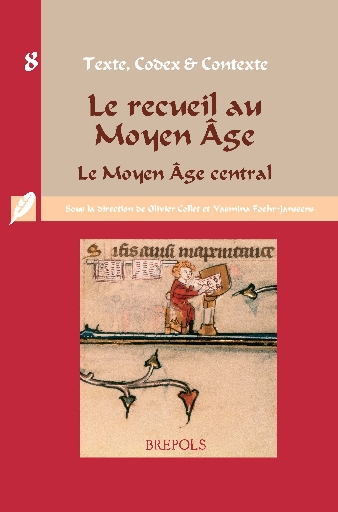
Le recueil au Moyen Âge
show More to view fulltext, buy and share links for:Le recueil au Moyen Âge show Less to hide fulltext, buy and share links for: Le recueil au Moyen ÂgeDe la redécouverte de notre ancienne littérature aux années 1990, peu de travaux systématiques ont été consacrés au phénomène de la mise en recueil durant le moyen âge central. Époque des premières collections livresques et surtout de la somme, le XIIIe siècle se caractérise toutefois par l’emprise d’un geste unificateur sur la production manuscrite. Une large part de la transmission écrite, littéraire et savante, est marquée par l’apparition de vastes corpus textuels répondant à un projet de regroupement ou de rassemblement plus ou moins raisonné.
Depuis une dizaine d’années, la communauté scientifique a marqué un regain d’intérêt pour ces questions qui figurent au cœur des préoccupations de la «nouvelle philologie». Axée sur une meilleure prise de conscience de la dimension matérielle des œuvres et des résonances directes de leur transcription, l’étude actuelle du fait littéraire ne manque pas en effet de s’interroger sur les implications et les conséquences de cette pratique, intimement liée aux traditions vernaculaires.
-
-
-
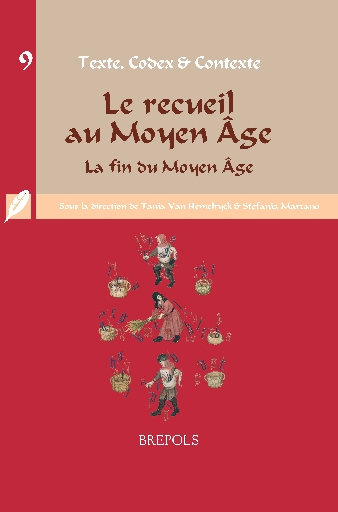
Le recueil au Moyen Âge
show More to view fulltext, buy and share links for:Le recueil au Moyen Âge show Less to hide fulltext, buy and share links for: Le recueil au Moyen ÂgeDans la lignée du volume sur L’écrit et le manuscrit (Texte, Codex & Contexte, 1) la question du recueil poursuit l’étude des interactions entre le codex, la conscience de l’auteur et le lecteur à la fin du Moyen Âge. Pourtant déterminant, l’espace matériel du recueil est souvent négligé par la critique qui se penche sur les éditions de pièces isolées de leur contexte.
Des manuscrits d’auteurs aux recueils d’œuvres diverses, les contributions rassemblées dans ce volume considèrent le geste d’ordonnancement qui préside à la genèse de ces nouvelles manifestations littéraires. Fruit du 3e colloque international du Groupe de recherche sur le moyen français de l’Université catholique de Louvain (10, 11 et 12 mai 2007), l’ouvrage offre une synthèse actuelle et des éclairages modernes sur le recueil à la fin du Moyen Âge par le biais d’études littéraires, linguistiques et codicologiques.
-
-
-
L’école de Saint-Victor de Paris
show More to view fulltext, buy and share links for:L’école de Saint-Victor de Paris show Less to hide fulltext, buy and share links for: L’école de Saint-Victor de ParisEn 1108, Guillaume de Champeaux, abandonne la direction de l’école cathédrale de Paris pour mener avec quelques étudiants une vie d’ermite sur les pentes alors désertes de la Montagne Sainte-Geneviève. En quelques dizaines d’années, le groupe de scholares devient une puissante abbaye de chanoines réguliers et l’une des écoles les plus remarquables de l’occident médiéval, par la stabilité d’une longue lignée de maîtres, la diversité des domaines où ils se sont illustrés et l’étendue de leur fécondité jusqu’à la fin du Moyen Âge. Neuf siècles après la fondation de Saint-Victor de Paris, cette fécondité multiforme continue d’étonner. Quel est donc le secret du rayonnement qu’à travers Hugues, Adam, André, Richard, Thomas Gallus et bien d’autres l’abbaye parisienne a exercée dans l’histoire des méthodes pédagogiques, des bibliothèques, des sciences et techniques, de la géographie, de l’historiographie, de l’exégèse biblique, de la systématisation théologique, de la réception du pseudo-Denys, de la spiritualité, de la poésie liturgique, de la pastorale et de la discipline du comportement? Quels sont les causes, les moyens et les relais de cette influence? Comment se décline-t-elle selon les siècles, les milieux touchés et les genres pratiqués? En décernant à Saint-Victor un rôle d’initiateur dans toutes ces régions de la vie intellectuelle ou religieuse, les historiens sont-ils prisonniers d’une erreur de perspective, cèdent-ils à un effet de mode, ou bien y eut-il réellement un «miracle victorin»?
-
-
-
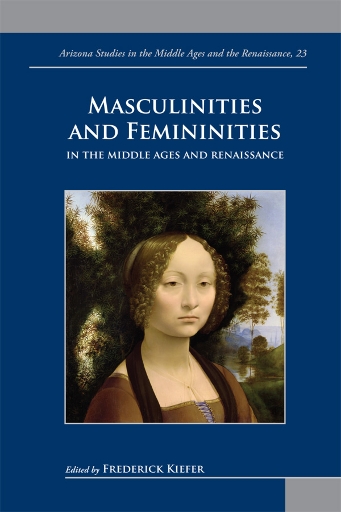
Masculinities and Femininities in the Middle Ages and Renaissance
show More to view fulltext, buy and share links for:Masculinities and Femininities in the Middle Ages and Renaissance show Less to hide fulltext, buy and share links for: Masculinities and Femininities in the Middle Ages and RenaissanceGender issues have been a persistent topic of investigation in European culture for more than a millennium. Today, perhaps no topic is of more immediate interest to students and scholars than sexual identity. If earlier eras imagined the categories of male and female as fixed, our own age has come to believe that notions of gender are, to a considerable extent, constructed by society and thus necessarily unstable. Using current understandings of sexuality, the contributors to this collection examine afresh such diverse works as Augustine’s Confessions, the Old English Beowulf, the French Richard Coer de Lyon, German mæren, Chrétien’s Yvain, writings by Wyclif and other Lollards, the poetry of Aemelia Lanyer, and an Italian portrait by Leonardo da Vinci. As the authors of this collection demonstrate, these thinkers persistently challenged the status quo, questioning assumptions felt as facts. In turn, they demonstrate how the medieval and Renaissance writers who are the subject of these essays helped prepare the way for understanding masculinity and femininity as masculinities and femininities.
-
-
-
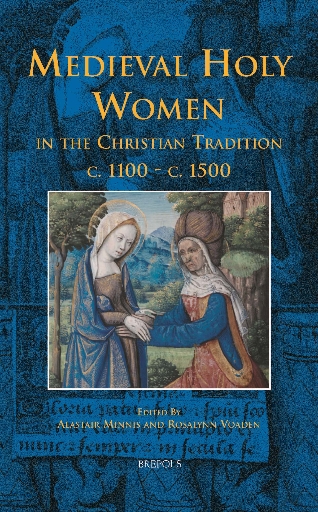
Medieval Holy Women in the Christian Tradition c.1100-c.1500
show More to view fulltext, buy and share links for:Medieval Holy Women in the Christian Tradition c.1100-c.1500 show Less to hide fulltext, buy and share links for: Medieval Holy Women in the Christian Tradition c.1100-c.1500Medieval Holy Women in the Christian Tradition offers the first wide-ranging study of the remarkable women who contributed to the efflorescence of female piety and visionary experience in Europe between 1100 and 1500. This volume offers essays by prominent scholars in the field which extend the boundaries of our previous knowledge and understanding of medieval holy women. While some essays provide new perspectives on the familiar names of the unofficial canon of mulieres sanctae, many others bring into the spotlight women less familiar now, but influential in their own time and richly deserving of scholarly attention. The five general essays establish a context for understanding the issues affecting female religious witness in the later Middle Ages. The geographical arrangement of the volume allows the reader to develop an awareness of the particular cultural and religious forces in seven different regions and to recognize how these influenced the writing and reception of the holy women of that area. Seventeen major figures have essays devoted exclusively to each of them; in addition, the survey chapters on each region introduce the reader to many more. The extensive bibliographies which follow each chapter encourage further reading and study.
Alastair Minnis was Director of the Centre for Medieval Studies and Head of the Department of English at the University of York, and is currently Douglas Tracy Smith Professor of English at Yale University. A Fellow of the Medieval Academy of America and of the English Association, he is the author of six monographs and the editor or co-editor of fifteen further volumes.
Rosalynn Voaden (D.Phil., University of York, UK) is the author of God’s Words, Women’s Voices, and is the editor or co-editor of several volumes in the field. She was a Research Fellow at St Anne’s College, Oxford, and is currently Associate Professor of English at Arizona State University.
-
-
-
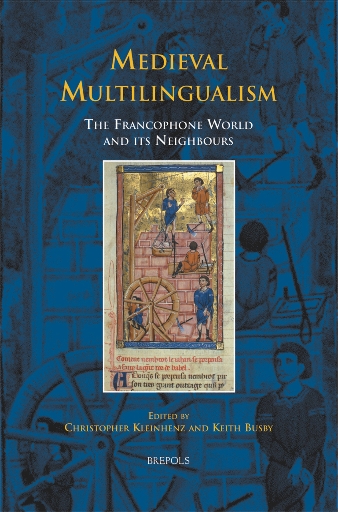
Medieval Multilingualism
show More to view fulltext, buy and share links for:Medieval Multilingualism show Less to hide fulltext, buy and share links for: Medieval MultilingualismThis volume contains essays on various aspects of multilingualism in medieval France, Italy, England, and the Low Countries. The fifteen contributions discuss the use of the different vernaculars and Latin in both literary and non-literary contexts, showing how cultural and social factors determined the choice of language for a particular purpose or type of text. The role of French in non-French contexts is a major theme of these essays: in the British Isles after the Norman Conquest, in Italy as a response to the need for mainly secular types of literature which did not exist in Italian, and in the Low Countries by virtue of geographic contiguity and change of rulers. Special attention is paid in the French context to the use of French and Occitan in areas of the South. Some essays examine specific cases or text-corpora, while others examine questions of multilingualism from more theoretical, linguistic, and rhetorical points of view. Together, they form an invaluable introduction to the topic of medieval multilingualism, illustrated by meticulously executed case-studies, which future work in the area will have to take into account.
-
-
-

Mettre en prose aux XIVe-XVIe siècles
show More to view fulltext, buy and share links for:Mettre en prose aux XIVe-XVIe siècles show Less to hide fulltext, buy and share links for: Mettre en prose aux XIVe-XVIe sièclesLoin de concerner uniquement romans et poèmes épiques — comme le ferait penser l’étude magistrale de Georges Doutrepont (1939) —, le phénomène «mise en prose» a touché aux xiv e-xvi e siècles tous les genres littéraires: vies de saints, œuvres de dérivation biblique, traités de dévotion, nouvelles, pièces de théâtre, voire la traduction en prose française de poèmes antérieurs en langue étrangère. Revisités depuis une trentaine d’années grâce à de nombreuses éditions critiques et à des études surtout littéraires, ces «nouveaux» textes méritaient une réflexion plus articulée: c’est ce qui a fait l’objet du iii e Colloque de l’aiemf (Association Internationale pour l’Étude du Moyen Français), qui s’est tenu à Gargnano del Garda — Università degli Studi di Milano, du 28 au 31 mai 2008. Les contributions réunies ici analysent donc des œuvres très diverses, de trois points de vue: linguistique, philologique, littéraire.
-
-
-
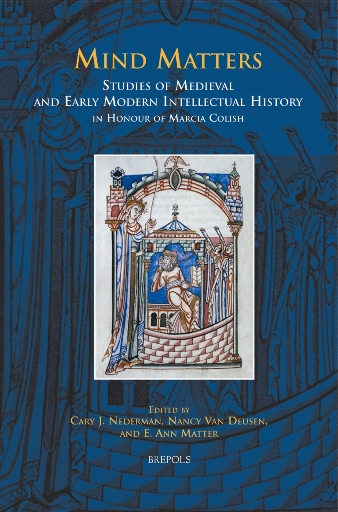
Mind Matters
show More to view fulltext, buy and share links for:Mind Matters show Less to hide fulltext, buy and share links for: Mind MattersMarcia Colish is one of the most influential scholars of the history of medieval and early modern thought, the author of numerous books and scores of articles in the field, as well as a pioneering President of the Medieval Academy of America. This volume honours her accomplishments with papers by her many colleagues, friends, and former students, who are themselves prominent scholars from across a range of disciplines. The chapters are diverse chronologically and topically, yet they are all stimulated by themes that Prof. Colish has explored during her long and distinguished career. They address the richness of European intellectual history between the twelfth and the sixteenth centuries, treating the multiple heritages of philosophy, theology, political theory, historiography, classical reception, and many other subjects to which her scholarship extends. The volume demonstrates the power of ideas in the development of European history generally, revealing that the careful study of the works of the ‘mind’ does indeed ‘matter’.
-
-
-
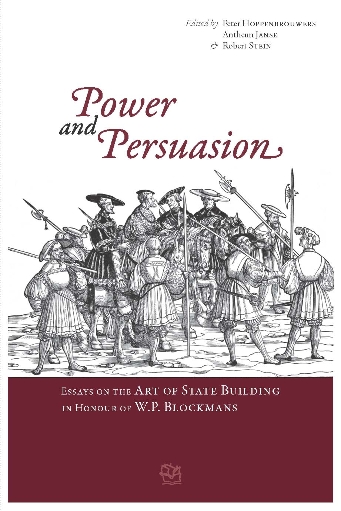
Power and Persuasion
show More to view fulltext, buy and share links for:Power and Persuasion show Less to hide fulltext, buy and share links for: Power and PersuasionThe transformation of the myriad of medieval kingdoms, principalities, local lordships, city-‘states’ and peasant ‘republics’ into ‘modern’ states, claiming some measure of sovereignty, remains one of the core themes of European history, because it goes to the very heart of how we see Europe in our own time. Some 20 leading experts cast new light on various aspects of this process, such as political communication, foreign diplomacy, dynastic self-representation, political economy, national identities, and military resources. The articles are a tribute to the prominent medieval historian, Wim Blockmans, on the occasion of his retirement as professor of medieval history at Leiden University and rector of the Netherlands Institute for Advanced Study in the Humanities and Social Sciences (nias) at Wassenaar.
-
-
-
Raban Maur et son temps
show More to view fulltext, buy and share links for:Raban Maur et son temps show Less to hide fulltext, buy and share links for: Raban Maur et son tempsLe colloque organisé à Lille et Amiens en 2006, à l’occasion du 1150e anniversaire de la mort de Raban Maur, complète une série de manifestations consacrées à trois personnalités majeures du haut Moyen Âge: de Bède le Vénérable (colloque de Lille et Amiens, 2002) à Alcuin (colloque de Tours, 2004) et à Raban qui devait à ce dernier son surnom de Maur, la filiation intellectuelle est manifeste. Celui que, depuis les temps modernes, on orne du titre de praeceptor Germaniae fut l’un des plus éminents personnages de la société carolingienne, par sa culture et par son rang: ce membre de l’aristocratie de la vallée du Main et du Rhin moyen enseigna à l’abbaye de Fulda, l’un des principaux foyers d’étude et des plus importants établissements monastiques du monde franc, dont il fut ensuite l’abbé (822-842) avant d’être promu archevêque de Mayence (847-856) et, par conséquent, premier prélat du royaume de Louis le Germanique. C’est à la diversité des compétences de Raban, à la fois pasteur, gestionnaire et fin lettré, que sont consacrés les actes de ce colloque interdisciplinaire.
L’analyse des relations entre Raban et les évêques de son temps montre combien ce tenant du parti impérial était attaché à l’héritage de Charlemagne, bien que son horizon s’avère moins large que ne le suggère son appartenance à l’élite «d’Empire». Par ses œuvres, Raban s’imposa comme un poète et un maître. Son intérêt ne se portait pas seulement vers la culture latine, mais aussi vers la culture et la langue vernaculaires; de même, il avait des connaissances en médecine. Plusieurs contributions sont consacrées à son œuvre exégétique, à sa diffusion manuscrite et à la teneur de ses commentaires (certains sont intemporels, d’autres s’avèrent en prise directe avec la vie politique). Les analyses, menées par des historiens et des philologues, illustrent la diversité des approches possibles, complétées par une étude du Psautier glosé de Fulda. La vie de Raban était rythmée par la liturgie, dans une église à l’image du Temple de Salomon, devant servir à l’édification du temple intérieur — ce à quoi contribuait la présence de reliques. L’étude de la consécration des autels et des tituli composés à cet effet montre que Raban avait une conception très protocolaire de la répartition des apôtres, martyrs et bienheureux, qui traduit sa conscience aiguë de la communion des saints. L’abbé de Fulda fut un théoricien de la société carolingienne, comme le prouve l’analyse de son idéologie du don. Il était sensible aux aspects tout pragmatiques de la vie sociale et l’on peut déceler chez lui une humanité dont témoignent ses prises de position en matière de droit.
-
-
-
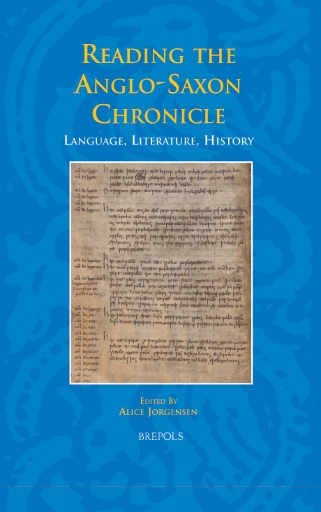
Reading the Anglo-Saxon Chronicle
show More to view fulltext, buy and share links for:Reading the Anglo-Saxon Chronicle show Less to hide fulltext, buy and share links for: Reading the Anglo-Saxon ChronicleThe Anglo-Saxon Chronicle is among the earliest vernacular chronicles of Western Europe and remains an essential source for scholars of Anglo-Saxon and Norman England. With the publication in 2004 of a new edition of the Peterborough text, all six major manuscript versions of the Chronicle are now available in the Collaborative Edition. Reading the Anglo-Saxon Chronicle therefore presents a timely reassessment of current scholarly thinking on this most complex and most foundational of documents.
This volume of collected essays examines the Anglo-Saxon Chronicle through four main aspects: the production of the text, its language, the literary character of the work, and the Chronicle as historical writing. The individual studies not only exemplify the different scholarly approaches to the Chronicle but they also cover the full chronological range of the text(s), as well as offering new contributions to well-established debates and exploring fresh avenues of research. The interdisciplinary and wide-ranging nature of the scholarship behind the volume allows Reading the Anglo-Saxon Chronicle to convey the immense complexity and variety of the Chronicle, a document that survives in multiple versions and was written in multiple places, times, and political contexts.
-
-
-
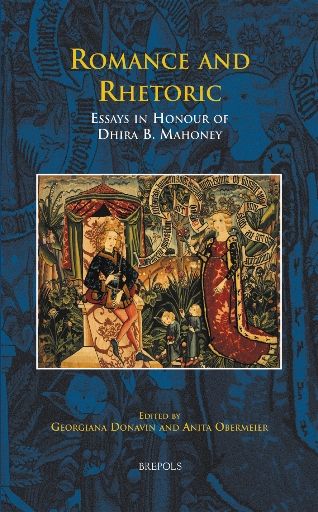
Romance and Rhetoric
show More to view fulltext, buy and share links for:Romance and Rhetoric show Less to hide fulltext, buy and share links for: Romance and RhetoricThis volume honours the academic career of Professor Dhira B. Mahoney, recently retired from the Department of English at Arizona State University, who is well known for her rhetorical readings of medieval literature. Professor Mahoney’s scholarship employs rhetorical theory in readings of late medieval literature, particularly prologues and epilogues, women’s writings, and Arthuriana. As a response to her work, Romance and Rhetoric offers rhetorical readings of a variety of literary pieces from the late Middle Ages, especially for those authors and genres on which Professor Mahoney has published. Its collected essays provide interdisciplinary studies of art, social and literary history, manuscript transmission, and women’s studies in relation to texts in Middle English, Latin, German, and French. In particular, the essays in this volume focus on the writings of courtly authors such as Chaucer, Lydgate, Malory, Guillaume de Machaut, Christine de Pizan, Chrétien de Troyes, and others. In keeping with the ancient tradition of analysing rhetorical principles in the structure of an art work, they also examine the rhetoric of the manuscript art connected to these authors and the genres in which they wrote. This volume thus fills a gap in medieval literary scholarship, as it evaluates with scrutiny how rhetorical teachings or medieval poetic strategies inform the writing of romances.
-
-
-
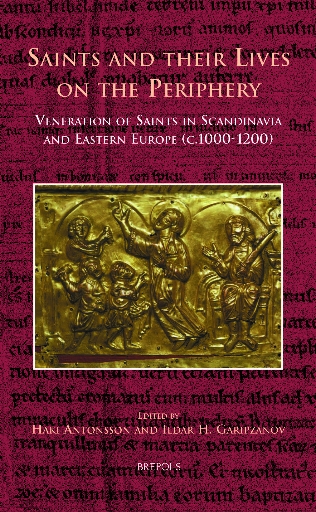
Saints and their Lives on the Periphery
show More to view fulltext, buy and share links for:Saints and their Lives on the Periphery show Less to hide fulltext, buy and share links for: Saints and their Lives on the PeripheryThis volume examines the cult of the saints and their associated literature in two peripheral regions of Christendom that were converted to Christianity around the turn of the first millennium, namely, Scandinavia and Eastern Europe. The thirteen authors focus on how cultures of sanctity were transmitted across the two regions and on the role that neighbouring Christian countries like England, Germany, and Byzantium played in that process. The authors also ask to what extent the division between Latin Christianity and Eastern Orthodoxy affected the early development of the cult of saints on the two peripheries. The first part of the book offers for the first time a comprehensive overview of the veneration of local and universal saints in Scandinavia and northern Rus’ from c. 1000 to c. 1200, with a particular emphasis on saints who were venerated in both regions. The second part presents examples of how some early hagiographic works produced on the northern and eastern peripheries borrowed, adapted, and transformed — i.e. contextualized — literary traditions from the Latin West and Byzantium.
-
-
-
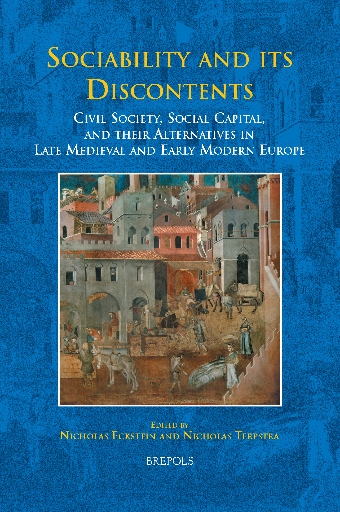
Sociability and its Discontents
show More to view fulltext, buy and share links for:Sociability and its Discontents show Less to hide fulltext, buy and share links for: Sociability and its DiscontentsThis volume advances our knowledge of continuing trends over the longue durée of European history. It also exposes many differences separating contemporaries from their medieval and early modern ancestors. In putting the concept of social capital to the test, the authors also expose the strengths, weaknesses, and limits of the ‘Putnam thesis’. The essays address fourteenth-century English fears of old-age neglect; childhood, friendship, scandal, and rivalry in Renaissance Florence; rebellion in an Italian village; social capital and signorial power in southern and north-central Italy; guild violence in Calvinist Ghent; civil society in early modern Bologna, Naples, and the Papal State; gender in High Renaissance Rome; and critical analyses of the transition from religious to secular sensibilities that scholars (following Jürgen Habermas) have identified in eighteenth-century Europe. In each case, the topic is considered in relation to recent theories of ‘social capital’: the informal, intangible bonds of trust upon which, social scientist Robert Putnam argues, every human community depends. The result is a series of highly original case-studies which reveal the workings of late medieval and early modern European society from new and often unexpected angles.
-
-
-

Survival and Discord in Medieval Society
show More to view fulltext, buy and share links for:Survival and Discord in Medieval Society show Less to hide fulltext, buy and share links for: Survival and Discord in Medieval SocietyThis book, a tribute to an exceptional scholar known for his broad-ranging interests, brings together the new work of students, friends, and colleagues of Prof. Dyer. The volume reflects his interests in the twin disciplines of history and archaeology and his ground-breaking work in medieval standards of living, social tensions, and town-country relations. The varied and stimulating essays presented in this volume examine a host of critical issues dealing with diet, settlement, employment opportunities, taxation, credit and debt, and the tensions felt in town and country alike which often exploded into full-scale revolt. This new work not only looks at these issues from the standpoint of new evidence and theoretical perspectives, but also imparts a strong sense of the controversy surrounding many of these central issues in medieval history, ranging from how well common people managed to live and reproduce to the nature of their relationships with each other and with their social superiors. The volume, in short, stimulates a vital reconsideration of many of the key concerns pertaining to the study of medieval societies.
-
-
-
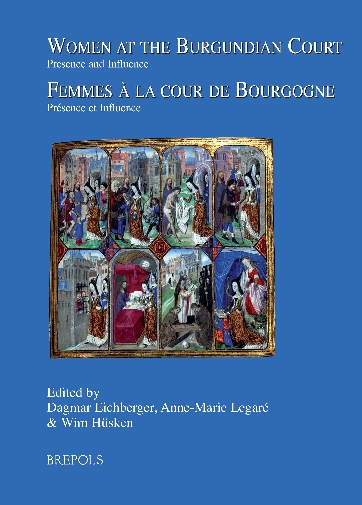
Women at the Burgundian Court: Presence and Influence
show More to view fulltext, buy and share links for:Women at the Burgundian Court: Presence and Influence show Less to hide fulltext, buy and share links for: Women at the Burgundian Court: Presence and InfluenceThis collection of essays charts the role of women at the Burgundian court by analysing the ways in which medieval women, such as Isabella of Portugal, Margaret of York, Mary of Burgundy, Margaret of Austria made an impact through their physical, moral and spiritual presence at court. During the absence of the prince these well-educated and internationally experienced spouses, mothers and aunts were put in charge of the courtly household or were in some cases appointed regent of the Netherlandish territories for a limited period of time. The youngest generation of women represented by the sisters and consorts of Charles V and Ferdinand I — now forming part of the extended family network — continued this tradition and took it to Germany, Spain, France and Portugal. The court developed into a kind of ‘gender laboratory’, in which women actively negotiated their position of power, thus consolidating their influence in politics, diplomacy, education and art.
-
-
-
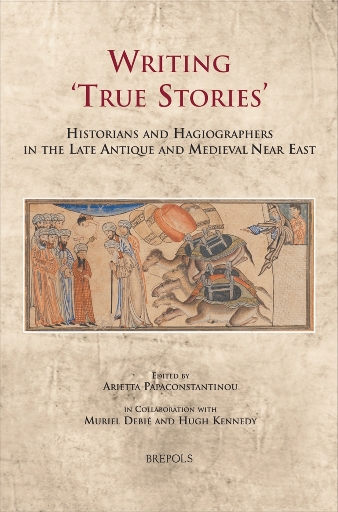
Writing ‘True Stories’
show More to view fulltext, buy and share links for:Writing ‘True Stories’ show Less to hide fulltext, buy and share links for: Writing ‘True Stories’The papers in this volume examine the interaction between history and hagiography in the late antique and medieval Middle East, exploring the various ways in which the two genres were used and combined to analyse, interpret, and re-create the past. The contributors focus on the circulation of motifs between the two forms of writing and the modifications and adaptations of the initial story that such reuse entailed. Beyond this purely literary question, the retold stories are shown to have been at the centre of a number of cultural, political, and religious strategies, as they were appropriated by different groups, not least by the nascent Muslim community. Writing ‘True Stories’ also foregrounds the importance of some Christian hagiographical motifs in Muslim historiography, where they were creatively adapted and subverted to define early Islamic ideals of piety and charisma.
-
-
-
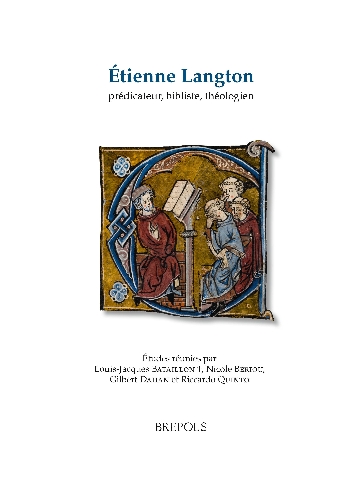
Étienne Langton, prédicateur, bibliste, théologien
show More to view fulltext, buy and share links for:Étienne Langton, prédicateur, bibliste, théologien show Less to hide fulltext, buy and share links for: Étienne Langton, prédicateur, bibliste, théologienÉtienne Langton est probablement un homme-clé dans l’histoire du Moyen Âge. Son implication politique à la tête de l’Église d’Angleterre, en tant qu’archevêque de Canterbury, est bien connue, de même que son rôle dans la promulgation de la Magna Carta, qui s’efforce de trouver une solution aux crises qui secouent le pays. Cependant, tout en proposant des aperçus novateurs sur l’action politique d’Étienne Langton, la plus grande partie des études recueillies dans ce volume examinent les œuvres de celui qui était considéré comme l’un des principaux maîtres de son temps (il a enseigné à Paris durant plus de deux décennies). Il a en effet brillamment illustré les trois volets de l’enseignement des sciences sacrées, tels que les définit Pierre le Chantre, lire, disputer, prêcher. Lire, c’est étudier l’Écriture sainte; Étienne Langton a commenté la quasi-totalité des livres bibliques, en sachant à la fois recueillir toute la tradition qui le précède et ouvrir des voies nouvelles: le point est fait ici sur son herméneutique et sur ses méthodes d’exégèse, avec des études sur des livres bibliques précis, mais aussi sur son commentaire d’un texte majeur de la génération précédente, l’Histoire scolastique de Pierre le Mangeur. Disputer, c’est discuter des thèmes doctrinaux; il s’agit d’un travail théologique, avant même que la théologie ne soit définie comme une science à part entière et Étienne Langton illustre les genres principaux de la «somme» et de la «question», en mettant au service de ses analyses ses compétences particulières en matière de sciences du langage. Enfin, Étienne Langton a laissé un nombre impressionnant de sermons, dont la richesse thématique est grande et qui fournissent également des éléments précieux sur l’état de l’Église. À la charnière du xii e et du xiii e siècle, Étienne Langton pose les bases de ce que sera la culture universitaire du xiii e siècle et apparaît ainsi comme un auteur à la fois important et attachant.
-
-
-
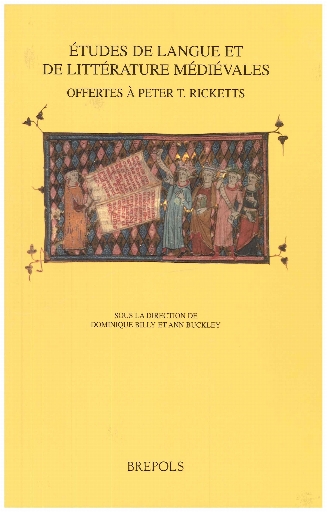
Études de langue et de littérature médiévales offertes à Peter T. Ricketts à l’occasion de son 70ème anniversaire
show More to view fulltext, buy and share links for:Études de langue et de littérature médiévales offertes à Peter T. Ricketts à l’occasion de son 70ème anniversaire show Less to hide fulltext, buy and share links for: Études de langue et de littérature médiévales offertes à Peter T. Ricketts à l’occasion de son 70ème anniversaire«Honorary Professor» de Français à l’Université de Birmingham, et Professeur Émérite à Queen Mary and Westfield, Université de Londres, Peter T. Ricketts a mené une carrière longue et remarquable dans le domaine de la Philologie Romane, et dans les études occitanes en particulier.
Outre son rôle majeur dans l’animation de l’Association Internationale d’Études Occitanes (AIEO), Peter T. Ricketts a consacré de nombreuses années aux études occitanes. Son œuvre est plus spécialement marquée par l’édition encore inachevée (avec Cyril P. Hershon) du Breviari d’Amor de Matfre Ermengaud, et l’élaboration de la Concordance de l’Occitan Médiéval (COM), vaste banque de données appelée à terme à couvrir l’ensemble des textes occitans du moyen âge et mettant à la disposition des chercheurs un outil de travail exhaustif et performant. La publication de la première tranche consacrée à la poésie des troubadours (Brepols 2001) a déjà recueilli un accueil très favorable de la critique et la seconde vient de paraître.
Le présent recueil de Mélanges réunit les travaux de 63 spécialistes de la littérature médiévale, dans des domaines aussi variés que l’histoire, la littérature, la linguistique, la philologie, la musicologie, la métrique ou la philosophie, explorant des matériaux et des sources de diverses provenances, en ancien français et en ancien occitan, mais aussi en latin médiéval, castillan, catalan, moyen-haut-allemand, hispano-arabe, hébreux.
L’ouvrage est divisé en deux sections principales, la première étant consacrée aux textes non lyriques: roman, épopée et littérature religieuse; la seconde à la poésie des troubadours, soit naturellement à leur production lyrique, à ses sources et son influence, aux vidas qui accompagnent leur transmission, aux troubadours eux-mêmes, mais aussi à leur production non lyrique tels que textes proverbiaux et ensenhamens. Ces Mélanges incluent également quelques éditions de textes, quelquefois inédits. Leur ensemble constitue un panorama très complet des recherches actuelles, avec des avancées substantielles dans le domaine des études médiévales.
-
-
-
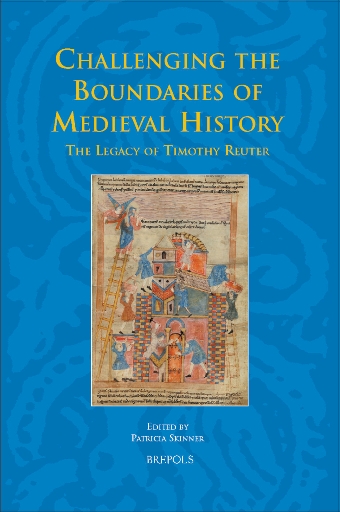
Challenging the Boundaries of Medieval History
show More to view fulltext, buy and share links for:Challenging the Boundaries of Medieval History show Less to hide fulltext, buy and share links for: Challenging the Boundaries of Medieval HistoryHow is the history of medieval Europe written? What national discourses shape the editing of medieval texts and their interpretation in historiography? And how can medieval historians confront these questions by reintegrating their fragmented field through the use of comparison and critiques across national boundaries? In his work, Timothy Reuter regularly posed these challenges to his colleagues, acting as a bridge between the historians of England and Germany, working on an edition of the letters of Wibald of Stavelot (whose own career took him to many of the power centres of medieval Europe), and positioning medieval Europe in the wider discourses of world history. The essays collected here provide a response to this challenge. Dedicated to Prof. Reuter’s memory and in some cases directly continuing his work, all are explicitly comparative in their approach. All of the authors take as their starting point the need to be conscious of the situation from which they themselves are writing and to be sensitive to the training traditions which have shaped their own interpretations. This book shows medieval historians at work, questioning and reflecting on their practice. As well as being of value to specialists in the field, the essays are written in an approachable style and will therefore be of value as a teaching tool to undergraduate and graduate students.
-
-
-
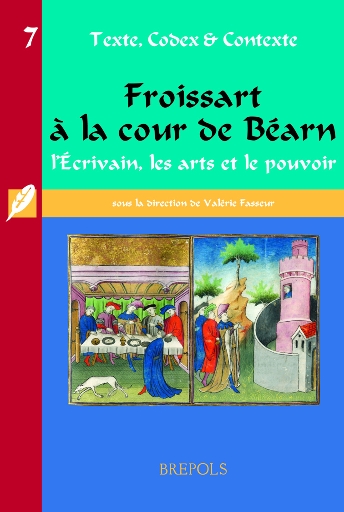
Froissart à la cour de Béarn: l’écrivain, les arts et le pouvoir
show More to view fulltext, buy and share links for:Froissart à la cour de Béarn: l’écrivain, les arts et le pouvoir show Less to hide fulltext, buy and share links for: Froissart à la cour de Béarn: l’écrivain, les arts et le pouvoirLes dix-sept contributions rassemblées dans ce volume se proposent d’aborder l’œuvre de Jean Froissart par le prisme de la rupture que marque la rédaction du Voyage en Béarn. Elles revisitent la cour de Gaston Febus dans ses aspects culturels, sondent le personnage de Gaston III, mesurent la distorsion entre la réalité historique et la représentation littéraire qu’en livre Froissart chroniqueur; elles s’interrogent, enfin, sur la teneur véritable des relations entre les deux hommes — l’écrivain et son mécène.
-
-
-
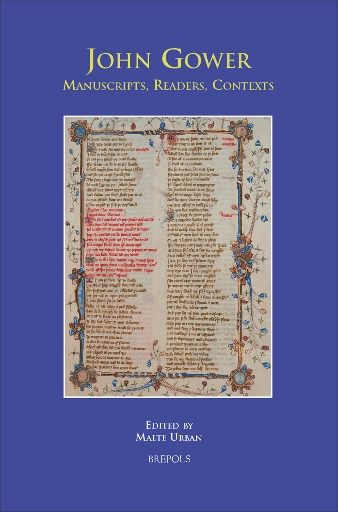
John Gower
show More to view fulltext, buy and share links for:John Gower show Less to hide fulltext, buy and share links for: John GowerThe essays collected here represent the current state of research into the works of John Gower, poet, philosopher, and contemporary of Geoffrey Chaucer. They assess Gower’s literary output within the context of manuscript production and readership/ownership in late medieval England and the triangle of Latin, French, and English as literary and official languages in Ricardian England. Sections of the volume focus on manuscripts and the circulation of Gower’s works in languages other than English. In addition, the literary and philosophical contexts that inform Gower’s poetics and politics are considered here, resulting in readings of the poet’s rhetorical and ethical agenda as well as his texts’ intervention in and reaction to social outsiders in his contemporary London. A wide variety of critical discourses inform the readings presented here, including medieval English, French, and Latin literary studies, art history, manuscript production and reception, postmodern ethics, and historical studies.
-
-
-
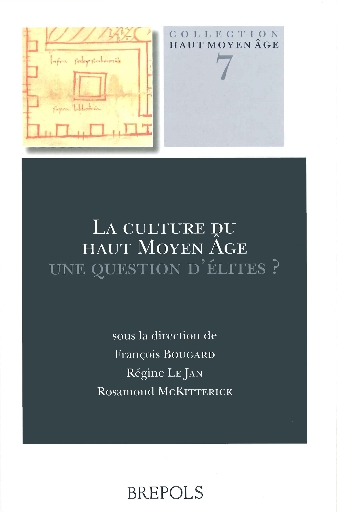
La culture du haut moyen âge, une question d’élites ?
show More to view fulltext, buy and share links for:La culture du haut moyen âge, une question d’élites ? show Less to hide fulltext, buy and share links for: La culture du haut moyen âge, une question d’élites ?Quatrième volet de la série sur «les élites au haut Moyen Âge», l’ouvrage explore l’aspect culturel de la question, autour de quatre thèmes: «sociologie et sociographie des élites», «formes et pratiques d’une culture d’élites», «culture et lien social», «culture des clercs, culture des laïcs: formes et produits». Les élites se définissent-elles et se reconnaissent-elles par l’usage de langages propres et comment peut-on apprécier la différenciation des langues à l’intérieur même des élites? Certains produits culturels sont-ils particulièrement destinés aux élites et quelle est leur place dans le système global d’échange? Comment les commandes (manuscrits, constructions, objets du décor) et les soutiens aux médiateurs culturels (précepteurs, écolâtres, missionnaires) contribuent-ils à légitimer la domination, à renforcer la hiérarchie et à soutenir les réseaux? Y a-t-il une relation entre la hiérarchie des savoirs et la hiérarchie des pouvoirs et la culture est-elle signe de légitimation d’une position dans la hiérarchie? Assure-t-elle des possibilités d’ascension sociale? Dans la hiérarchie laïque, ecclésiastique? Les détenteurs d’un savoir spécifique occupent-ils une position privilégiée? Quel est l’impact des transformations politiques et sociales brutales, comme les conquêtes, sur les modèles culturels élitaires? Y-a-t-il des résistances et des phénomènes de marginalisation de certains modèles culturels? En envisageant la culture sous toutes ces formes comme élément et critère de distinction des élites, par l’analyse de sa place dans les stratégies de reproduction, de hiérarchisation et de mobilité sociale, les auteurs du présent volume se sont efforcés de répondre à la plupart de ces questions dans une enquête européenne qui couvre les VIe-XIe siècles.
-
-
-

Land, Power, and Society in Medieval Castile
show More to view fulltext, buy and share links for:Land, Power, and Society in Medieval Castile show Less to hide fulltext, buy and share links for: Land, Power, and Society in Medieval CastileThis work offers an up-to-date discussion of medieval Castilian lordship and social relations, approached through an analysis of behetría lordship, a power-structure of fundamental importance in medieval Castile. The origins of behetría lordship, a complex phenomenon in both theory and practice, are obscure. Knowledge of the behetrías has therefore hitherto been limited to a narrow circle of traditionalist, highly specialized legal historians. The present volume redresses this imbalance, as its various contributors explore the question of behetría lordship from a broad social perspective, thereby demonstrating the crucial role played by this seigneurial structure within medieval Castilian society. This collection of essays thus focuses less on legal intricacies than on deeper social, territorial, and political issues, which are also examined in relation to other better-known forms of lordship exercised both within Castile and beyond. This volume provides rich historical material on medieval Castile rarely available to an English readership. It represents a gateway to a wealth of relatively little-known literature and information on the social history of medieval Spain and will provide an invaluable tool for comparative research.
-
-
-
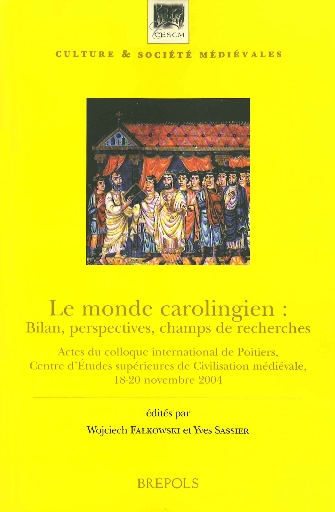
Le monde carolingien: bilan, perspectives, champs de recherches
show More to view fulltext, buy and share links for:Le monde carolingien: bilan, perspectives, champs de recherches show Less to hide fulltext, buy and share links for: Le monde carolingien: bilan, perspectives, champs de recherchesL’objet de cet ouvrage collectif est d’envisager la civilisation carolingienne dans tous ses aspects: chaque auteur a eu, sur le sujet de son choix, la pleine liberté, soit de se cantonner à dresser un bilan exhaustif de l’état de la recherche, soit d’allier bilan et perspectives nouvelles en proposant ses propres hypothèses ou pistes de recherches. Les thèmes abordés sont d’une grande diversité: idéologie, conception, pratiques et lieux du pouvoir, liturgie, vie monastique, esprit missionnaire, hiérarchie et mobilité sociale, relations entre le roi et les élites du royaume, laïques et ecclésiastiques. Sans couvrir tout l’espace carolingien, les contributions présentes dans ce livre nous conduisent de Rome vers Aix et Saint-Gall, de l’Italie lombarde vers le cœur du vieux pays franc, de la Saxe vers le pays avar et jusqu’au monde scandinave. Sans couvrir tout le temps carolingien, elles concernent aussi bien les origines de la dynastie, voire l’héritage idéologique, politique ou religieux des deux siècles précédents, que les quatre générations qui suivent le règne de Pépin et les années crépusculaires.
-
-
-
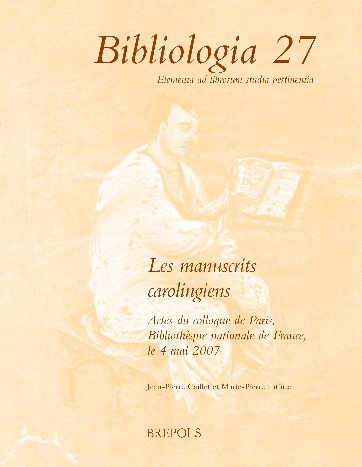
Les manuscrits carolingiens
show More to view fulltext, buy and share links for:Les manuscrits carolingiens show Less to hide fulltext, buy and share links for: Les manuscrits carolingiensÀ l’occasion de l’exposition «Trésors carolingiens» présentée dans ses salles du 20 mars au 24 juin 2007, la Bibliothèque nationale de France a organisé une journée internationale d’étude autour du livre manuscrit à l’époque en question. L’exceptionnelle richesse du fonds parisien (auquel avaient été adjoints d’incontournables spécimens de certaines bibliothèques régionales françaises) donnait lieu, en effet, à évoquer pratiquement tous les principaux aspects de la production et du contenu même de ces œuvres, ainsi que de leur devenir.
Après une introduction visant à situer le livre carolingien au regard de ses antécédents antiques profanes et païens, paléochrétiens et haut-médiévaux (Jean-Pierre Caillet), ce sont les étapes — et les raisons — de l’émergence de l’intérêt pour ces manuscrits et de la constitution de leurs collections qui ont été abordés (Marie-Pierre Laffitte). Il importait d’autre part également de dresser le panorama des grands travaux consacrés à ce domaine de la fin du XIXe siècle à nos jours (Jean Vezin). Le statut privilégié du livre religieux en tant que composante majeure du trésor, et tout particulièrement l’assimilation de son contenu à de véritables reliques, devaient ensuite être clairement précisés. Naturellement, la nature du message iconographique, tant à l’égard du texte, dont il offre un contrepoint visuel portant ses propres accents, que des modèles — anciens ou récents — dont il s’avère tributaire à divers degrés, a fourni matière pour de substantielles mises au point (Herbert Kessler, Charlotte Denoël, Fabrizio Crivello, Anne-Orange Poilpré). Les rapports, thématiques aussi bien que stylistiques, des ivoires de la reliure avec l’imagerie interne du livre, ainsi que l’éventuelle diachronie de leur association, n’ont pas non plus manqué de susciter un réexamen serré (Lawrence Nees). Par ailleurs, les derniers développements d’une investigation de laboratoire sur les pigments utilisés dans l’élaboration des miniatures de certains manuscrits, et dont les résultats sont évidemment lourds de conséquences quant aux origines de ceux-ci, ont témoigné d’une notable ouverture des perspectives de recherche (Patricia Roger). La conclusion de l’ensemble (Jean-Pierre Caillet) s’attache à souligner l’opportune complémentarité de ces approches; et, au-delà des nouveaux acquis ainsi opérés, à dégager les orientations encore propres à parfaire la connaissance de ce qui correspond bien à un temps fort de l’évolution culturelle et artistique de l’Occident médiéval.
-
-
-
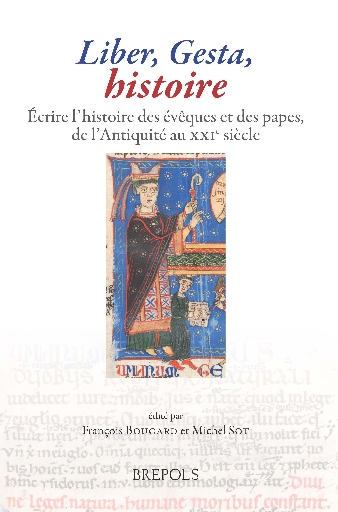
Liber, Gesta, histoire
show More to view fulltext, buy and share links for:Liber, Gesta, histoire show Less to hide fulltext, buy and share links for: Liber, Gesta, histoireTrès tôt les Églises chrétiennes ont pensé et écrit leur histoire, une histoire organisée autour de la succession des évêques, depuis les apôtres. Les catalogues antiques d’évêques de Rome ont permis d’établir au VIe siècle le premier Liber pontificalis, Livre des papes, continué jusqu’au IXe, puis au XIVe siècle, relayé ensuite par une histoire humaniste des pontifes, puis une histoire critique, universitaire et enfin médiatique en notre début de XXIe siècle. C’est à une reprise des travaux sur le Liber pontificalis et à une réflexion sur les histoires pontificales plus récentes qu’est consacrée la première partie de cet ouvrage.
Le même souci de la liste ininterrompue des évêques depuis les apôtres «jusqu’à nos jours», d’une histoire qui se construit autour de la liste épiscopale, s’est exprimé dans les gesta episcoporum. Ces Gestes d’évêques rédigés dans de nombreuses cités épiscopales démontrent comment la lignée des évêques a progressivement mis en place les droits de l’Église de la cité, ses biens, ses monuments, sa liturgie, tout ce qui constitue l’Église au moment de l’écriture de l’histoire. Ces gestes d’évêques, dont les prototypes sont carolingiens, ont été eux aussi continués. Leur fonction a évolué, mais la conception de l’histoire reste la même: la continuité et la sainteté globale de la liste des pontifes est garante de la légitimité et de l’orthodoxie de l’Église du temps présent. La seconde partie du livre nous entraîne de Dalmatie, d’Italie et d’Espagne en Bavière, en Rhénanie et en France pour voir comment et pourquoi on a écrit l’histoire des évêques au Moyen Âge, puis comment et pourquoi, aux époques moderne et contemporaine l’histoire érudite et critique a repris les écrits de ce type et les informations qu’ils portaient.
-
-
-
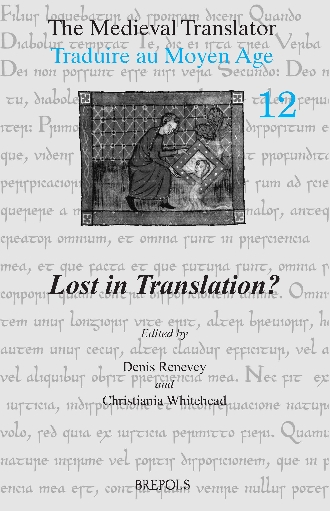
Lost in Translation?
show More to view fulltext, buy and share links for:Lost in Translation? show Less to hide fulltext, buy and share links for: Lost in Translation?[Les communications présentées dans ce volume témoignent, par leur agencement, de la vitalité de l’activité de traducteur au cours de la période médiévale, ainsi que de l’inventivité de la recherche actuelle dans l’étude de la traduction en général. Aucune autre période ne semble autant dépendre de ce procédé littéraire pour la construction de son identité culturelle. Les traductions du latin vers une langue vernaculaire, ou d’une langue vernaculaire vers une autre, ou encore d’une langue vernaculaire vers le latin, constituent quelques-unes des nombreuses formes de la traduction au Moyen Âge. La codification du processus de traduction en tant qu’appropriation, transformation ou accommodation, fait insuffisamment ressortir le rôle essentiel de la curiosité et de l’intérêt qui sont à l’origine de tout acte de traduction. C’est cette curiosité positive que le présent volume cherche à mettre en valeur.
Il aborde tout d’abord une étude de la traduction de textes du haut Moyen Âge. Il considère ensuite le phénomène du bilinguisme et la relation privilégiée que l’Angleterre entretient avec le continent, en particulier avec les traditions littéraires française et italienne. Une troisième partie, consacrée à la traduction des textes religieux au quinzième siècle en Angleterre, et dans une moindre mesure en France, met en évidence la dimension politique de l’activité de traduction à cette période. Considérée principalement comme transfert culturel, la traduction peut en effet être abordée au-delà de sa dimension purement linguistique. Une quatrième partie présente plusieurs exemples de traduction d’un genre littéraire vers un autre, d’un média vers un autre. Les communications proposées dans ce volume illustrent également des manières nouvelles d’aborder l’entreprise essentiellement littéraire de la traduction. Tout en faisant l’éloge de la diversité et de la différence, elles suggèreront une lecture de l’épisode de Babel moins traumatisante que ce qui en est généralement retenu.
,The contributions to this volume are organised in a way that bear out the vitality of translation activity in the medieval period and the resourcefulness of modern scholarship in addressing the phenomenon of translation at large. No other period relies so heavily on this literary process to construct its cultural identity. Translations from Latin into the vernacular, or from one vernacular into another, or even from a vernacular into the Latin language, are just a few of the many forms medieval translation can take. The codification of the translation process as appropriation, transformation, or accommodation does not sufficiently emphasize the overarching curiosity and interest that motivates any translation activity. Rather, preceding the stages of appropriation and re-interpretation, it is positive inquisitiveness and openness towards linguistic and cultural difference that generate the production of a new text and the transference of culture from one sphere to another. It is that positive inquisitiveness which this volume emphasizes.
The volume initially addresses the way in which translators dealt with texts from the early medieval period. It then considers the phenomenon of bilingualism and the privileged relationship that England held with the continent, especially the Italian and French literary traditions. The third part of this volume tackles the problem of fifteenth-century religious translation in England and, to a lesser extent, France, and complicates it by showing its inevitable political implications. Understood more particularly as an act of cultural transfer, translation activity can also be considered beyond the linguistic process. The fourth part of the volume deals with several instances of translations from one genre into another, and from one media into another. The contributions also point to new ways of considering the literary process of translation, and by praising diversity and difference, they suggest a less traumatic way of reading Babel than is usually implied.
]
-
-
-
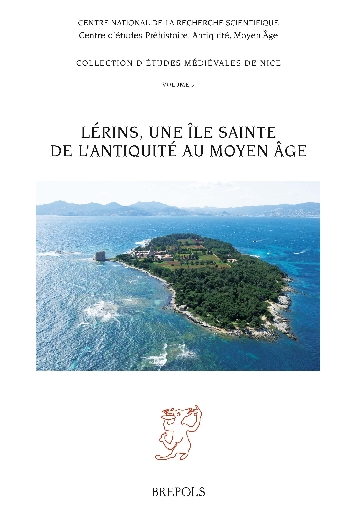
Lérins, une île sainte de l’Antiquité au Moyen Âge
show More to view fulltext, buy and share links for:Lérins, une île sainte de l’Antiquité au Moyen Âge show Less to hide fulltext, buy and share links for: Lérins, une île sainte de l’Antiquité au Moyen ÂgeDans les années 400-410, un groupe d’ascètes menés par Honorat s’installe sur la plus petite des deux îles de Lérins, au large de Cannes, donnant ainsi naissance à l’un des premiers établissements religieux d’Occident. Ce «désert» monastique devint très tôt un pôle d’attraction sans équivalent sur les plans spirituel, intellectuel et social, ainsi qu’un lieu d’essaimage, fournissant personnel, structures d’autorité et système de valeurs à la société de l’Antiquité tardive. Au Moyen Âge, les moines lériniens bâtirent, à partir de leur île, une puissante Église seigneuriale commandant un vaste réseau de prieurés et de dépendances, engagée au service de la papauté et dans la lutte contre les ennemis de la foi, tels que les Sarrasins. L’histoire de Lérins est bien celle d’une Église dominant la société de son temps.
Les écrits composés entre le v e siècle et l’époque moderne - qui nous permettent et nous imposent en même temps d’envisager cette histoire dans la longue durée - attestent la manière dont les religieux ont progressivement assimilé leur établissement à une «île sainte», puis à une «île sacrée», identifiée à l’Ecclesia dans son ensemble. L’élaboration d’une ecclésiologie originale, à laquelle sont consacrés plusieurs chapitres de ce livre, s’est accompagnée de l’aménagement sur l’île d’une singulière topographie, juxtaposant un ensemble claustral, auquel est venu s’adjoindre une tour fortifiée, et une série de lieux de culte secondaires ou chapelles bornant l’espace insulaire: les auteurs du livre s’efforcent aussi de comprendre l’organisation et le sens de cet espace sacralisé très particulier, dont les moines ont œuvré, au fil des temps, à construire et reconstruire la mémoire.
Les différents chapitres de cet ouvrage, fruit d’une collaboration entre antiquisants et médiévistes, historiens et archéologues, sont issus d’un Colloque international organisé par le Centre d’études Préhistoire Antiquité Moyen Âge, de l’Université de Nice - Sophia Antipolis et du CNRS, du 21 au 23 juillet 2006, ainsi que de travaux entrepris à nouveaux frais à la suite du Colloque par une équipe de médiévistes.
-
-
-
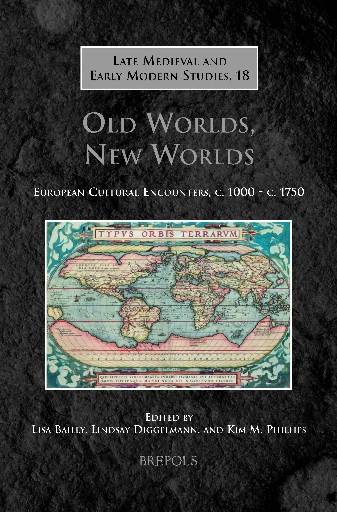
Old Worlds, New Worlds
show More to view fulltext, buy and share links for:Old Worlds, New Worlds show Less to hide fulltext, buy and share links for: Old Worlds, New WorldsPre-modern European history is replete with moments of encounter. At the end of arduous sea and land journeys, and en route, Europeans met people who challenged their assumptions and certainties about the world. Some sought riches, others allies; some looked for Christian converts and some aimed for conquest. Others experienced the forced cultural encounter of exile. Many travelled only in imagination, forming ideas which have become foundational to modern mentalities: race, ethnicity, nation, and the nature of humanity. The consequences were profound: both productive and destructive. At the beginning of the third millennium CE we occupy a world shaped by those centuries of travel and encounter. This collection examines key themes and moments in European cultural expansion. Unlike many studies it spans both the medieval and early modern periods, challenging the stereotype of the post-Columbus ‘age of discovery’. There is room too for examining cross-cultural relationships within Europe and regions closely linked to it, to show that curiosity, conflict, and transformation could result from such meetings as they did in more far-flung realms. Several essays deal with authors, events and ideas which will be unfamiliar to most readers but which deserve greater attention in the history of encounter and exploration.
-
-
-

Oligarchy and Patronage in Late Medieval Spanish Urban Society
show More to view fulltext, buy and share links for:Oligarchy and Patronage in Late Medieval Spanish Urban Society show Less to hide fulltext, buy and share links for: Oligarchy and Patronage in Late Medieval Spanish Urban SocietyHistorians have considered medieval oligarchic groups as part of a hierarchical social structure in urban societies. Frequently the interpretation of oligarchy as an isolated faction makes it difficult to understand its capacity in processes of incorporation and integration. M. Asenjo-González’s study of different cities in Northern Castile - Segovia, Soria, Valladolid and Toledo — attempts to identify bonding processes and the relationships among individuals or groups. In the city of Cuenca, J. A. Jara-Fuente stresses the importance of mechanisms for the attribution of social spaces of projection (related to individuals, lineages or collectivities), because it is through the analysis of the social expectations and of the degree of satisfaction reached in that process that other patterns of relationship come to light. Y. Guerrero-Navarrete deals with the connections between financial groups and the oligarchic policy of the elite in the case of Burgos. In Granada, A. Galán-Sánchez analyzes the Islamic elites’ behaviour, considering their economic and political interests, related to the goodwill of the Christian conquerors, and, their functions as representatives of the second-class citizens who were the moriscos. F. Sabaté focuses his research on the social consequences of the merchant oligarchy investments in the urban surroundings that contributed to establishing a flow of capital between the city and the region in Catalonia. E. Ramírez-Vaquero analyzes aspects of great relevance such as the relationship that oligarchies had with other systems linked to the noble and court spheres in the cities of Navarra. Finally Marc Boone offers an historiographic reflection on Iberian urban elites and analyzes some comparative perspectives about oligarchy and patronage in the Late Middle Ages.
-
-
-

Priscien
show More to view fulltext, buy and share links for:Priscien show Less to hide fulltext, buy and share links for: PriscienChassé d’Afrique par les invasions vandales et installé à Constantinople vers le début du VIe siècle, Priscien a engagé une refonte de la grammaire antique en faisant confluer ses principaux courants, la tradition grammaticale romaine et les apports grecs issus de la philologie alexandrine, auxquels il a intégré des recherches menées dans d’autres domaines de l’analyse de la parole, en rhétorique et en philosophie.
La création de la première grammaire moderne est ainsi d’abord une synthèse, qui correspond dans la partie orientale de l’Empire aux espoirs qu’au même moment, à Rome, Boèce et son cercle plaçaient dans l’hellénisme pour renouveler la vie intellectuelle d’une partie occidentale tombée aux mains des Barbares.
Auteur à multiples dimensions, chez qui se croisent les spécificités et les ambiguïtés de l’Antiquité tardive, Priscien a été le passeur par qui l’époque médiévale a eu connaissance des éléments les plus complexes de la description linguistique antique. Son influence a été immense durant tout le Moyen Âge et ses échos sont perceptibles jusque dans la tradition classique.
Malgré cela, aucune traduction dans une langue moderne n’a encore été faite des principaux textes de Priscien, et la période actuelle commence seulement à mesurer l’importance et l’originalité de cet auteur.
Le présent volume est la première mise au point d’ensemble et dresse un état des recherches à l’issue du colloque international Priscien (ENS Lettres et Sciences Humaines, Lyon, 10 - 14 octobre 2006). Ses 40 articles présentent les points de vue transversaux d’antiquisants, de linguistes, d’historiens et de médiévistes. Réparties en six sections, les contributions traitent successivement de la position historique de Priscien et de la transmission de ses œuvres, des sources et du contenu de son texte majeur, les Institutions Grammaticales, de ses scripta minora et de la réception de sa doctrine du Haut Moyen Âge à la Renaissance.
L’ouvrage comporte une bibliographie globale et plusieurs index (auteurs anciens et modernes, manuscrits, passages cités, concepts et termes).
-