EMISCA

Collection Contents
241 - 260 of 260 results
-
-
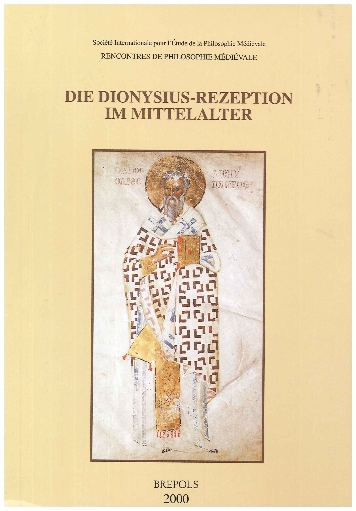
Die Dionysius-Rezeption im Mittelalter
show More to view fulltext, buy and share links for:Die Dionysius-Rezeption im Mittelalter show Less to hide fulltext, buy and share links for: Die Dionysius-Rezeption im MittelalterDer vorliegende Band enthält die Beiträge des internationalen Kolloquiums Die Dionysius-Rezeption im Mittelalter — La réception du Pseudo-Denys durant le moyen âge — The Reception of Pseudo-Dionysius in the Middle Ages, das vom 8. bis 11. April 1999 in Sofia unter der Schirmherrschaft der S.I.E.P.M. stattfand. Im Mittelpunkt steht die Rezeption der unter dem Namen des Pseudo-Dionysius Areopagita überlieferten Werke, die seit ihrem Erscheinen in Byzanz am Beginn des 6. Jahrhunderts und seit der Mitte des 9. Jahrhunderts im lateinischen Abendland einen großen Einfluß auf die europäische Geistesgeschichte ausgeübt haben. Das Corpus Dionysiacum ist nicht nur ein außerordentlich einflußreicher Traditionsstrang des Neuplatonismus bis in die Neuzeit hinein, es stellt darüber hinaus ein europäisches ‘cross-culture’-Phänomen dar, das auf exklusive Weise den griechisch-byzantinischen und den lateinisch-abendländischen Kulturkreis verbindet. Die Erforschung dieser byzantinisch-lateinischen Austauschbeziehung und damit verbunden eine weiterführende Sicht auf die Denkrichtungen der mittelalterlichen europäischen Kultur im Westen und im Osten vor dem Hintergrund der verschiedenen Interpretationen des Werkes des Pseudo-Dionysius Areopagita ist das Grundanliegen dieses Bandes.
-
-
-
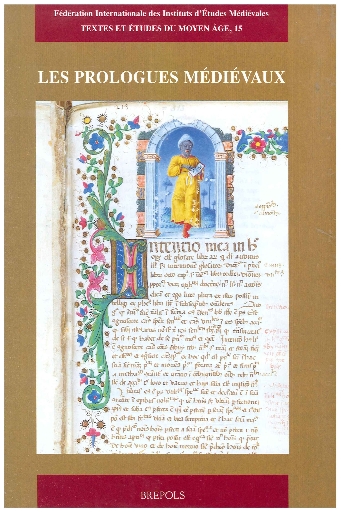
Les prologues médiévaux
show More to view fulltext, buy and share links for:Les prologues médiévaux show Less to hide fulltext, buy and share links for: Les prologues médiévauxCe livre rassemble une série de communications présentées lors d’un Colloque organisé à Rome sur Les prologues médiévaux. Le but était de montrer l’importance de ce genre littéraire et tout l’intérêt que les chercheurs peuvent tirer de l’analyse des introductions. Interdisciplinaire par excellence, le sujet touche tous les médiévistes et à ce titre mérite qu’on s’y attarde puisque à ce jour, malgré des recherches ponctuelles et des études consacrées à des domaines très particuliers, il n’a pas été l’objet d’études systématiques.
De nombreuses questions sont abordées par les auteurs: on peut citer parmi d’autres les problèmes terminologiques, les relations entre le titre d’une œuvre et son prologue, l’évolution du genre littéraire depuis l’Antiquité jusqu’à la fin du Moyen Age, la comparaison entre différents genres littéraires ainsi que l’examen de prologues en langues différentes: grecque, latine ou française.
Les articles publiés dans cet ouvrage permettront de faire un premier tour de la question et d’aboutir à une série de conclusions qui, même si elles ne sont pas définitives, feront progresser nos connaissances en la matière. Ce volume d’actes devrait constituer pour les médiévistes un point de référence sur le sujet.
-
-
-
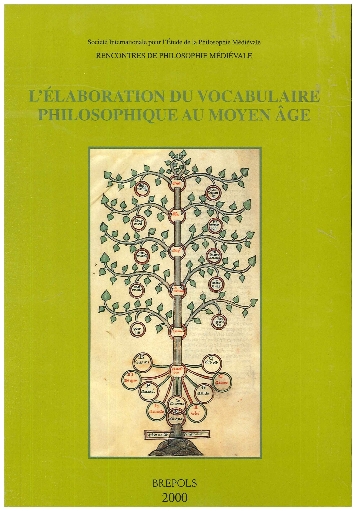
L’élaboration du vocabulaire philosophique au Moyen Age
show More to view fulltext, buy and share links for:L’élaboration du vocabulaire philosophique au Moyen Age show Less to hide fulltext, buy and share links for: L’élaboration du vocabulaire philosophique au Moyen AgeConçu comme un complément du volume consacré Aux origines du lexique philosophique européen, cet ouvrage contient des études qui tentent de montrer comment le vocabulaire philosophique a été élaboré au Moyen Âge occidental.
Les penseurs médiévaux — tant les traducteurs des textes philosophiques grecs, hébraïques et arabes que les philosophes et les théologiens — ont contribué à la multiplication de néologismes et à l’affinement du sens d’anciens concepts. Par leur «travail» linguistique, qui allait de pair avec des efforts de conceptualisation, ils ont forgé un langage propre à leurs diverses disciplines et orientations philosophiques. Les penseurs du Moyen Âge — d’Augustin à Suárez, en passant par tant d’autres maîtres de la scolastique — ont joué de diverses manières un rôle primordial dans la formation du vocabulaire philosophique.
-
-
-
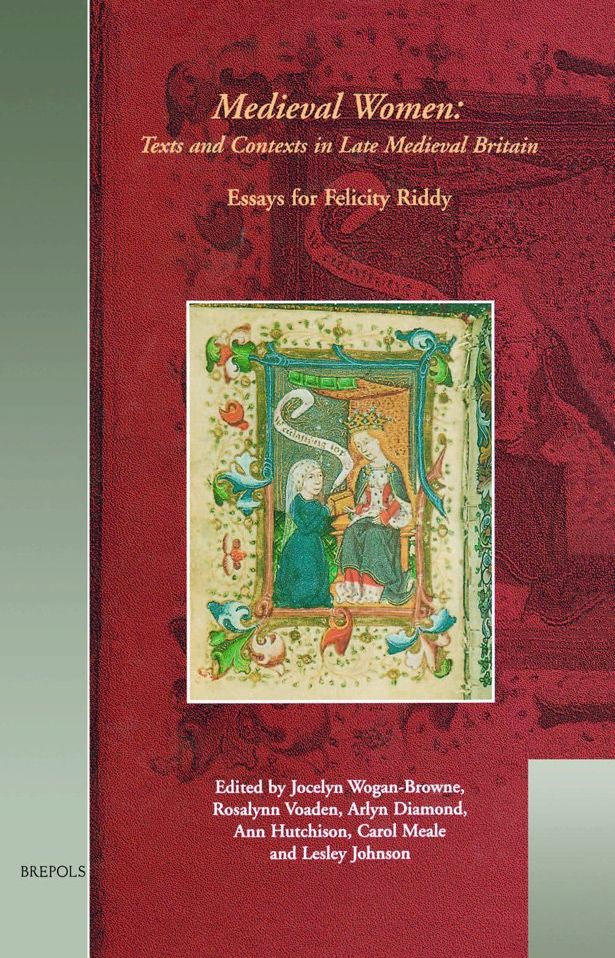
Medieval Women - Texts and Contexts in Late Medieval Britain
show More to view fulltext, buy and share links for:Medieval Women - Texts and Contexts in Late Medieval Britain show Less to hide fulltext, buy and share links for: Medieval Women - Texts and Contexts in Late Medieval BritainIn this themed collection by literary, historical and archaeological scholars, the study of medieval women is confidently and freshly mainstream. Profiting from the development of newly flexible models of gender, literacy, the political, the social, and the domestic, the volume is non-separatist, exploratory both of new source materials and new readings of established sources, and able to consider the broadest implications for the study of medieval culture without simply re-absorbing medieval women into invisibility. Grouped under the headings of matters of reading, of conduct and place, the essays move from legal cases to actual buildings and conceptions of the household, from conduct books to chronicles and romances, from saints’ lives to the medieval unconscious and back again, exemplifying the mature interdisciplinarity of current work on medieval women.
-
-
-
Miracle et Karama. Hagiographies médiévales comparées
show More to view fulltext, buy and share links for:Miracle et Karama. Hagiographies médiévales comparées show Less to hide fulltext, buy and share links for: Miracle et Karama. Hagiographies médiévales comparéesLa reconnaissance du miracle suscita des discussions théologiques dans le christianisme comme dans l’islam. Mais alors qu’une pratique du miracle sur les tombes des saints chrétiens est attestée par les collections de Miracula, la littérature hagiographique musulmane reste généralement sobre en la matière, même lorsqu’il s’agit de saints réputés pour leurs charismes. Les articles de ce volume tentent de déterminer les raisons de ces réticences et leurs rapports avec les circonstances historiques.
Bien que de nombreux miracles soient rapportés dans les Traditions, le Prophète de l’islam ne se signale pas par des miracles spectaculaires, contrairement à Jésus, considéré comme le thaumaturge par excellence. En revanche, Muhammad, recevant la révélation coranique à travers l’archange Gabriel, a été sujet à de multiples visions. Ce contraste entre les modèles, posés par les fondateurs respectifs de l’islam et du christianisme, pourrait expliquer que les miracles, dans l’hagiographie musulmane, soient plutôt constitués d’apparitions, de rêves ou de pouvoir d’ordre initiatique, alors que les miracles à dominante thaumaturgique abondent dans les Vies des saints chétiens.
L’étude des miracles conduit enfin à des comparaisons intéressantes entre christianisme et islam. La proportion entre miracles in vita et post mortem (tombeaux, reliques, images) semble constituer une différence majeure entre les deux religions, tandis que le recensement et la comparaison des topoi mènent à des rapprochements féconds, étant entendu que ces topoi peuvent être réinterprétés à chaque époque.
-
-
-
Occident et Proche-Orient: contacts scientifiques au temps des Croisades
show More to view fulltext, buy and share links for:Occident et Proche-Orient: contacts scientifiques au temps des Croisades show Less to hide fulltext, buy and share links for: Occident et Proche-Orient: contacts scientifiques au temps des CroisadesLes échanges entre Orient et Occident au Moyen Age ont fait l’objet de nombreux travaux récents. En histoire des sciences, l’attention a porté en priorité sur l’activité de traduction et de rédaction dans l’Espagne arabo-latine et l’Italie méridionale. Le colloque de Louvain-la-Neuve s’est proposé d’explorer les contacts scientifiques dans un contexte moins étudié, les états latins de Palestine, du XIe au XIIIe s. Les contributions intéressent les trois principales cultures en présence: arabe, byzantine et latine. L’éventail des disciplines abordées couvre l’alchimie, l’astronomie, l’histoire naturelle, les mathématiques, la médecine; une place est faite à l’histoire des techniques, ainsi qu’à certains milieux porteurs: la ville d’Antioche, la cour de Frédéric II de Hohenstaufen. On découvre ainsi que le Proche Orient des Croisades n’a pas seulement été un champ de bataille, mais qu’il y a eu place aussi pour des découvertes, des échanges, des influences réciproques.
-
-
-
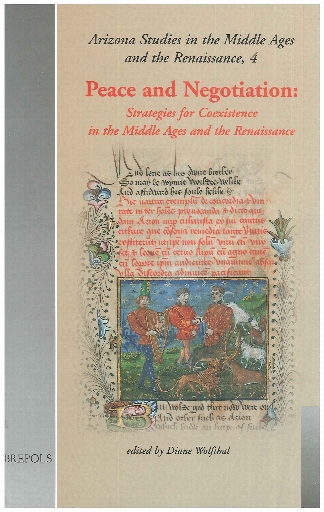
Peace and Negotiation: Strategies for Coexistence in the Middle Ages and the Renaissance
show More to view fulltext, buy and share links for:Peace and Negotiation: Strategies for Coexistence in the Middle Ages and the Renaissance show Less to hide fulltext, buy and share links for: Peace and Negotiation: Strategies for Coexistence in the Middle Ages and the RenaissancePeace was far from a pale, static concept - a simple lack of violence - in the Middle Ages and Renaissance. Rather, it was at times constructed as a rich and complex, positive and dynamic ideal. The thirteen articles in this volume cover a broad range of disciplines, times, and geographical areas and explore strategies that were used in the past to resolve conflict and attain peace. They examine events, texts, and images that date from the fifth through the sixteenth centuries, and their authors focus not only on Western Europe, but also on Scandinavia, the Caucausus, and Egypt. This volume rests on the assumption that peace covers a spectrum of situations that connects the personal and the political. Therefore, the papers presented here examine not only how nations negotiated peace, but also how individuals did. Similarly, although several essays spotlight those in the seat of power, others explore the situation of those lower on the social hierarchy. Our views about peace and conflict, as this collection makes clear, are shaped in part by the mentalités of the past. Although some peacemaking strategies may be unacceptable to us today - forced marriages and conversions, for example - we can learn from other strategies how to transcend or modify various modes of antagonistic thinking.
-
-
-

Sparks and Seeds
show More to view fulltext, buy and share links for:Sparks and Seeds show Less to hide fulltext, buy and share links for: Sparks and SeedsJohn Freccero is internationally renowned for his scholarship on Dante, Petrarch, Machiavelli, and other authors. Currently Professor of Italian and Comparative Literature at New York University, he has also taught at Yale, Stanford, Cornell, and Johns Hopkins. His numerous honors include Fulbright and Guggenheim fellowships and awards from the city of Florence and the Republic of Italy.
Despite the diverse expertise of their authors (fairly evenly divided between Italianists and scholars of English and Comparative Literature), all of the articles included in the volume appertain to Italian literature - from a literary analysis of Bonaventure’s Itinerarium to tracing the State of Maryland’s medieval Italian motto back through its English Renaissance sources. Many of the pieces are concerned with Dante directly, and several others dealing with medieval and Renaissance Italian subjects do so indirectly. Two articles are concerned with pre-modern cultural and literary implications of the history of science; the remainder trace the afterlife of medieval or Renaissance Italian motifs in modern culture. Despite the fact that the articles range from medieval scholasticism to twentieth-century cinema, this volume addresses applications of medieval and Renaissance Italian literature, influenced, above all, by the teaching and scholarship of John Freccero.
-
-
-
The Translation of the Works of St Birgitta of Sweden into the Medieval European Vernacular
show More to view fulltext, buy and share links for:The Translation of the Works of St Birgitta of Sweden into the Medieval European Vernacular show Less to hide fulltext, buy and share links for: The Translation of the Works of St Birgitta of Sweden into the Medieval European VernacularThis volume of papers, from an international Conference held in Beverley in 1997 on the translation into the medieval European vernaculars of the works of St Birgitta of Sweden, forms volume 7 in the series The Medieval Translator. Previous volumes in the series have been based on papers heard at the Cardiff Conferences on the Theory and Practice of Translation in the Middle Ages (1987- ). While future volumes in the series will continue to provide a record of the Cardiff Conference (the next is planned for Compostella in 2001), the present volume provides a welcome development for the series, and paves the way for scholarly monographs on individual works and writers — including editions of medieval translations — and other publications more narrowly angled at the different questions raised by the study of medieval translation.
-
-
-
Drama and Community
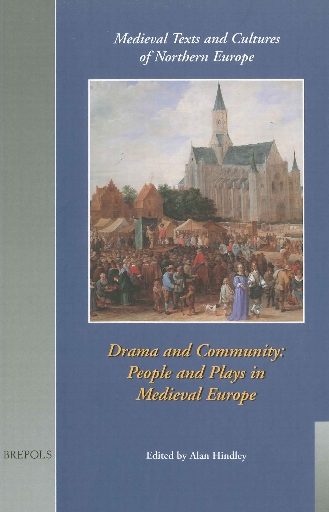
show More to view fulltext, buy and share links for:Drama and Community show Less to hide fulltext, buy and share links for: Drama and CommunityIn recent years medieval drama has seen a marked revival of interest, much of it informed by an increasing appreciation of its multi-disciplinary nature. The drama of medieval Europe is not just literature; it is a social and indeed commercial event, essentially a communal enterprise, inextricably bound up with the structures of society. This collection of essays by international scholars working in collaboration examines various aspects of the inter-relationship between different European communities and the plays they performed. Its coverage of a wide range of theatres and play-types provides a critical and practical perspective on performance cultures of the Northern Middle Ages. The comparative nature of this volume has the effect of underlining drama as a true medieval mass medium.
-
-
-
Negotiating Secular and Ecclesiastical Power
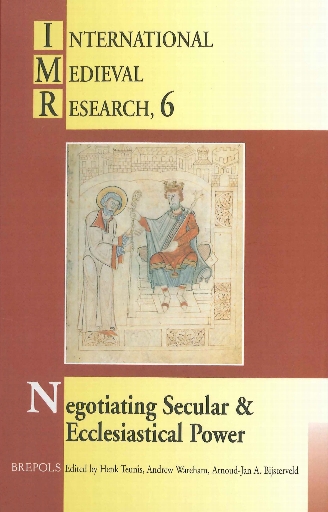
show More to view fulltext, buy and share links for:Negotiating Secular and Ecclesiastical Power show Less to hide fulltext, buy and share links for: Negotiating Secular and Ecclesiastical PowerTraditional historiography generally stresses the opposition and contradiction between secular and ecclesiastical power. By contrast, this volume focuses upon the interdependence of secular and ecclesiastical power and on the ways both secular rulers, kings, counts and other lords, and ecclesiastical authorities and institutions continuously interacted, trying to affirm the relationships between them. This selection of a historiographical introduction plus nine case-studies from England, northern France and the Low Countries enables a subtle comparison of secular and ecclesiastical links and social interactions in a series of regional and local contexts during the Central Middle Ages. The volume demonstrates that this process of negotiation led to an affirmation of shared values and contributed to the creation of common social values in medieval Europe.
Ludo Milis (Universiteit Gent), “This book, composed around three major themes (‘Texts as Tools of Power’, ‘Land and Kinship’, and ‘Conflict and Affirmation’), exemplifies how medievalists can reshape their discipline into a more responsive one. Its scope is not to offer a wide range of definitive explanations, but it shows how medievalists should try (and indeed do try) to return to a close reading of their documents. For far too long, institutional history, legal history, and histoire événémentielle have tried to monopolize power relationships and to encapsulate them in rather narrow explanatory schemes. This volume offers a broader and more encompassing approach.”
-
-
-

New Approaches to Medieval Communication
show More to view fulltext, buy and share links for:New Approaches to Medieval Communication show Less to hide fulltext, buy and share links for: New Approaches to Medieval CommunicationThis volume will serve as a textbook for studying this field, and as an introduction to current research. It is written in accessible language for non-specialists. The volume has three sections: introductions by two of the leading exponents worldwide: Michael Clanchy and Marco Mostert; a series of essays by members of the Utrecht ‘Pionierproject’ which consider writing and written culture against the background of all forms of communication available to a given medieval society, both in western and east-central Europe; and a comprehensive bibliography on the subject, comprising 1500 titles which will serve as a fundamental starting-point for work in this field.
-
-
-

New Trends in Feminine Spirituality
show More to view fulltext, buy and share links for:New Trends in Feminine Spirituality show Less to hide fulltext, buy and share links for: New Trends in Feminine SpiritualityWas there a women’s movement in the thirteenth century and is such a question meaningful in its medieval context? Far from being resolved, the issue of whether women had a thirteenth-century renaissance has still decisively to unsettle the periodization of Western European history in twelfth and sixteenth-century humanist renaissances. Herbert Grundmann long ago demonstrated the participation of women in the eremitically-inspired reforming movements of the twelfth and thirteenth centuries, and in the production of vernacular literature. Yet it is upon his work that this volume builds, for the diocese of Liège is the key area in this development. It was from Liège that Jacques de Vitry approached the papacy to secure permission for the women of the bishopric of Liège, France and Germany to live together and to promote holiness in each other by mutual example. The seventeen contributors to this volume examine not only the beguine religious life in the southern Low Countries, but also the impact of this movement on later medieval Sweden, England and France, the new modes of influence exerted by women in their religious lives, and the revivals of feminine spirituality in the late medieval West through to contemporary North America. Research does not yet allow for a whole new synthesis, but this volume directs scholars to detailed work on specific localities and persons, with an awareness of the problems and possibilities of wider European comparisons.
-
-
-
Showing Status
show More to view fulltext, buy and share links for:Showing Status show Less to hide fulltext, buy and share links for: Showing StatusHow did people in the late medieval period perceive and express social status? This volume brings together multi-disciplinary perspectives on representations of social difference in the Low Countries during a time of dynamic social change. The premise of the volume is that medieval social change may only be fully understood if hierarchies of wealth and power are examined alongside literary and artistic sources. Medieval texts and material culture expressed social standing and gave meaning to the experience of social change. The aim of the study is to recognise and translate the language of symbols used to encode and display status in the late Middle Ages.
-
-
-

The Commentary Tradition on Aristotle’s ’De generatione et corruptione’. Ancient, Medieval and Early Modern
show More to view fulltext, buy and share links for:The Commentary Tradition on Aristotle’s ’De generatione et corruptione’. Ancient, Medieval and Early Modern show Less to hide fulltext, buy and share links for: The Commentary Tradition on Aristotle’s ’De generatione et corruptione’. Ancient, Medieval and Early ModernIn this book, a dozen distinguished scholars in the field of the history of philosophy and science investigate aspects of the commentary tradition on Aristotle’s De generatione et corruptione, one of the least studied among Aristotle’s treatises in natural philosophy. Many famous thinkers such as Johannes Philoponus, Albert the Great, Thomas Aquinas, John Buridan, Nicole Oresme, Francesco Piccolomini, Jacopo Zabarella, and Galileo Galilei wrote commentaries on it. The distinctive feature of the present book is that it approaches this commentary tradition as a coherent whole, thereby ignoring the usual historiographical distinctions between the Middle Ages, the Renaissance, and the seventeenth century.
-
-
-
From Clermont to Jerusalem
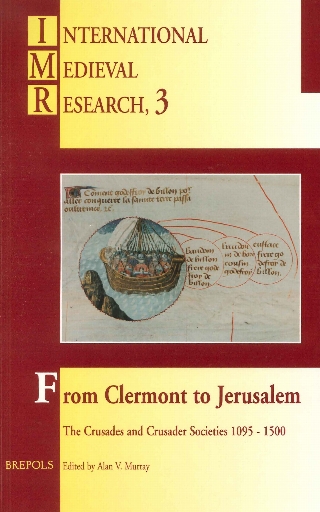
show More to view fulltext, buy and share links for:From Clermont to Jerusalem show Less to hide fulltext, buy and share links for: From Clermont to JerusalemThis collection of seventeen original essays offers new perspectives on the history and sources of the crusades from the Council of Clermont in 1095 to the late fifteenth century, and of the societies they established in Palestine, Greece, Cyprus and the Baltic.
The volume begins with a masterly survey of the concepts and strategies of the crusading movement. The historical case studies deal with the reigns of Baldwin I and Baldwin IV of Jerusalem, the role of castles in Greece and Cyprus, the military orders and crusade vows in England, and female warriors in the Baltic crusades. The essays on sources provide critical assessments and re-assessments of the narratives of the First and Fourth Crusades, introduce little known Arabic sources on the Muslim population of crusader Palestine, and analyse interpretations of the last days of the crusader kingdom in medieval theology and modern historiography. The volume concludes with a classified bibliography of the First Crusade, comprising over 400 texts, monographs and articles published up to 1997.
-