


EMISCS11

Collection Contents
2 results
-
-

Scale and Scale Change in the Early Middle Ages
show More to view fulltext, buy and share links for:Scale and Scale Change in the Early Middle Ages show Less to hide fulltext, buy and share links for: Scale and Scale Change in the Early Middle AgesKings, aristocrats, peasants, and the Church are among the shared features of most early medieval societies. However, these also varied dramatically in time and space. Can petty regional kings, for instance, be compared to those in charge of a whole empire? Scale is a crucial factor in modelling, explaining, and conceptualizing the past. Furthermore, many issues that historians and archaeologists treat independently can be theorized together as processes of scale decrease or increase: the appearance of complex societies, the rise and collapse of empires, changing world-systems, and globalization. While a subject of much discussion in fields such as ecology, geography, and sociology, scale is rarely theorized by archaeologists and historians. This book highlights the potential of the concepts of scale and scale change for comparing and explaining medieval socio-spatial processes. It integrates regional and temporal variations in the fragmentation of the Roman world and the emergence of medieval polities, which are often handled separately by late antique and early medieval specialists. The result of a three-year research project, the nine case studies in this volume offer fresh insights into early medieval rural society while combining their individual subjects to generate a wider explanatory framework.
-
-
-
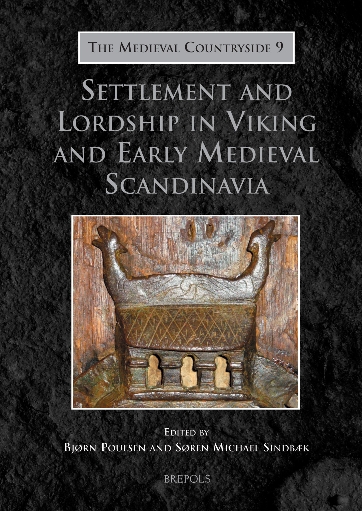
Settlement and Lordship in Viking and Early Medieval Scandinavia
show More to view fulltext, buy and share links for:Settlement and Lordship in Viking and Early Medieval Scandinavia show Less to hide fulltext, buy and share links for: Settlement and Lordship in Viking and Early Medieval ScandinaviaThis volume aims to define the changing nature of lordship in Viking and early medieval Scandinavia. Advances in settlement archaeology and cultural geography have revealed new aspects of social power in Viking Age and early medieval Scandinavia. The organization of settlement is increasingly well understood and gives evidence of strong social differentiation in rural settlement. Historical research, however, increasingly portrays these societies as characterized by elementary social networks at a personal level rather than at the level of formal institutions. Can these representations be reconciled? When did the possession of land, in the form of manors or large demesne farms, become an important source of power and authority? This question has generated intense debate internationally in recent years, but there is no comprehensive overview for Scandinavia. New sources and approaches allow us to question the traditional view that Scandinavian aristocrats developed from Viking raiders into Christian landlords. Seventeen thematic chapters by leading scholars survey and assess the state of research and provide a new baseline for interdisciplinary discussions. How were social ties structured? How did lordship and dependency materialize in modes of agriculture, settlement, landscape, and monuments? The book traces the power of tributary relations, forged through personal ties, gifts, duties, and feasting in great halls, and their gradual transformation into the feudal bonds of levies and land-rent.
-