


EMISCS11

Collection Contents
21 - 39 of 39 results
-
-
Meditations of the Heart: The Psalms in Early Christian Thought and Practice
show More to view fulltext, buy and share links for:Meditations of the Heart: The Psalms in Early Christian Thought and Practice show Less to hide fulltext, buy and share links for: Meditations of the Heart: The Psalms in Early Christian Thought and PracticeThe Psalms are one of the most important biblical texts in Patristic exegesis, commentary, preaching, liturgical practice and theological reflection. Their language and imagery is all-pervasive; they were not only interpreted by the fathers but a good deal of Patristic exegetical practice actually evolved from engagement with them; they directly informed Christological and Ecclesiological reflection; were central to early monasticism; inspired early Christian poetry and provided material for liturgical chant, prayers, hymns and penitential or doxological expression. This volume of essays on the Psalms in Early Christian Thought and Practice is offered with profound gratitude, admiration and respect by colleagues and friends of Professor Andrew Louth FBA, to honour his long and immensely distinguished career as priest, teacher and prolific author in almost every aspect of Greek and Latin Patristics.
-
-
-

Normandy and its Neighbours, 900—1250
show More to view fulltext, buy and share links for:Normandy and its Neighbours, 900—1250 show Less to hide fulltext, buy and share links for: Normandy and its Neighbours, 900—1250One of the most important aspects of David Bates’s distinguished career has been his readiness to engage — as few of his predecessors did — with the world of modern French scholarship. The outcome of this engagement and of his familiarity with French archives has been the reshaping of our understanding of the Anglo-Norman realm founded by William the Conqueror. The Norman Conquest has always been seen as a defining event in medieval English history, and David’s work has enabled us to place it in its broader European context. He has also welcomed insights from other disciplines, including archaeology, architectural history, and numismatics. His impact as a scholar has been profound. His writings have made academic debate accessible to the general public and the scholar alike, and he has conveyed his enthusiasm and commitment to both. He has brought together a generation of academics of various nationalities and from a broad range of disciplines to forge a new understanding of the relationship of England and Normandy in the central Middle Ages. This collection — offered in recognition of his contribution — acknowledges the many strands of his scholarship. It brings together specialist studies of Anglo-French culture, law, gender, and historiography.
-
-
-
On Old Age
show More to view fulltext, buy and share links for:On Old Age show Less to hide fulltext, buy and share links for: On Old AgeRecent research into old age and dying in the premodern world has examined not only the demographic aspects of ageing populations but also the social role of aged people. Nonetheless, there has usually been a neglect of the end of life and attitudes towards death and memory. These topics have seldom been discussed in the same volume. The end of life evokes questions. What does it mean to grow old? What happens when one dies? How does one cope with old age and death? These questions were as relevant for individuals and societies in earlier periods as they are in the present. The aim of this collection of articles is to cross the boundaries that have traditionally isolated different time periods and scholarly disciplines from each other. The volume focuses on aging, old age, and death from Classical Antiquity to the Middle Ages. The purpose of this book is to approach these themes from an interdisciplinary point of view in the longue durée. Instead of concentrating solely on demographic issues it takes a much broader view, considering attitudes towards ageing, dying, death, and memory. The volume, with its diverse topics, cuts across traditional scholarly barriers and will provide valuable analytical tools for further studies on the subject.
-
-
-
Resonances
show More to view fulltext, buy and share links for:Resonances show Less to hide fulltext, buy and share links for: ResonancesContinuity and change enclose a problem field that is fundamental to the interpretation of historical material. On the one hand the notions that are necessary to perceive the historical account as a narrative: continuity, tradition, constancy, consistency, identity; on the other those that provide an impetus or drive to that account: change, innovation, rupture, or discontinuity.
Resonances: Historical Essays on Continuity and Change explores the historiographical question of the modes of interrelation between these motifs in historical narratives. The essays in the collection attempt to realize theoretical consciousness through historical narrative ‘in practice’, by discussing selected historical topics from Western cultural history, within the disciplines of history, literature, visual arts, musicology, archaeology, philosophy, and theology.
The title Resonances indicates the overall perspective of the book: how connotations of past meanings may resonate through time, in new contexts, assuming new meanings without surrendering the old.
-
-
-

Scale and Scale Change in the Early Middle Ages
show More to view fulltext, buy and share links for:Scale and Scale Change in the Early Middle Ages show Less to hide fulltext, buy and share links for: Scale and Scale Change in the Early Middle AgesKings, aristocrats, peasants, and the Church are among the shared features of most early medieval societies. However, these also varied dramatically in time and space. Can petty regional kings, for instance, be compared to those in charge of a whole empire? Scale is a crucial factor in modelling, explaining, and conceptualizing the past. Furthermore, many issues that historians and archaeologists treat independently can be theorized together as processes of scale decrease or increase: the appearance of complex societies, the rise and collapse of empires, changing world-systems, and globalization. While a subject of much discussion in fields such as ecology, geography, and sociology, scale is rarely theorized by archaeologists and historians. This book highlights the potential of the concepts of scale and scale change for comparing and explaining medieval socio-spatial processes. It integrates regional and temporal variations in the fragmentation of the Roman world and the emergence of medieval polities, which are often handled separately by late antique and early medieval specialists. The result of a three-year research project, the nine case studies in this volume offer fresh insights into early medieval rural society while combining their individual subjects to generate a wider explanatory framework.
-
-
-
Settlement and Lordship in Viking and Early Medieval Scandinavia
show More to view fulltext, buy and share links for:Settlement and Lordship in Viking and Early Medieval Scandinavia show Less to hide fulltext, buy and share links for: Settlement and Lordship in Viking and Early Medieval ScandinaviaThis volume aims to define the changing nature of lordship in Viking and early medieval Scandinavia. Advances in settlement archaeology and cultural geography have revealed new aspects of social power in Viking Age and early medieval Scandinavia. The organization of settlement is increasingly well understood and gives evidence of strong social differentiation in rural settlement. Historical research, however, increasingly portrays these societies as characterized by elementary social networks at a personal level rather than at the level of formal institutions. Can these representations be reconciled? When did the possession of land, in the form of manors or large demesne farms, become an important source of power and authority? This question has generated intense debate internationally in recent years, but there is no comprehensive overview for Scandinavia. New sources and approaches allow us to question the traditional view that Scandinavian aristocrats developed from Viking raiders into Christian landlords. Seventeen thematic chapters by leading scholars survey and assess the state of research and provide a new baseline for interdisciplinary discussions. How were social ties structured? How did lordship and dependency materialize in modes of agriculture, settlement, landscape, and monuments? The book traces the power of tributary relations, forged through personal ties, gifts, duties, and feasting in great halls, and their gradual transformation into the feudal bonds of levies and land-rent.
-
-
-
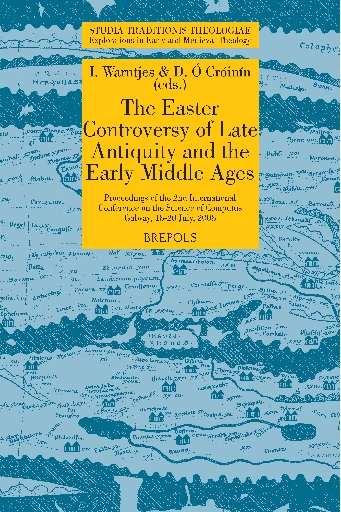
The Easter Controversy of Late Antiquity and the Early Middle Ages. Its Manuscripts, Texts, and Tables
show More to view fulltext, buy and share links for:The Easter Controversy of Late Antiquity and the Early Middle Ages. Its Manuscripts, Texts, and Tables show Less to hide fulltext, buy and share links for: The Easter Controversy of Late Antiquity and the Early Middle Ages. Its Manuscripts, Texts, and Tables2010 saw the publication of the Proceedings of the 1st International Conference on the Science of Computus in Ireland and Europe, which took place in Galway, 14–16 July, 2006. That first collection, which had the sub-title Computus and its Cultural Context in the Latin West, AD 300–1200, brought together papers by ten of the leading scholars in the field, on subjects ranging from the origins of the Annus Domini to the study of computus in Ireland c. 1100. All those who participated in the Conference were unanimous that a second, follow-up event should be organized, and that duly took place (also in Galway), 18–20 July, 2008. The proceedings of that Conference are published in this current volume. The topics covered in the 2nd Galway Conference ranged from the general – but vitally important – vocabulary of computus (i.e., the technical terminology developed by computists to describe what they were doing) to the origins of the different systems used to calculate the date of Easter in Antiquity and the Early Middle Ages. In addition, there was discussion also of the great debates about Easter, epitomized by the famous Synod of Whitby in AD 664, and the role of well-known individuals in the evolution of computistical knowledge (e.g., Anatolius of Laodicea, the African Augustalis, Sulpicius Severus, Victorius of Aquitaine, Cassiodorus, Dionysius Exiguus, Willibrord, the ninth-century Irish scholar-exile, Dicuil, as well as the late-tenth century Abbo of Fleury). Immo Warntjes is lecturer in Medieval History at the University of Greifswald (Germany). Besides computistics, his main areas of research include the use of languages in Early Medieval Europe, succession to high offices, high and late medieval burial practices, and German, English, and Irish political history and culture. Dáibhí Ó Cróinín lectures in history at NUI, Galway, where he is the Director of The Foundations of Irish Culture project. His research interests are Ireland, Britain and Europe during the Early Middle Ages, computistics, Medieval Latin Palaeography and Irish traditional music and song.
-
-
-
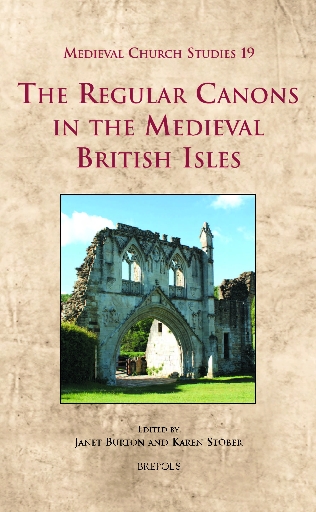
The Regular Canons in the Medieval British Isles
show More to view fulltext, buy and share links for:The Regular Canons in the Medieval British Isles show Less to hide fulltext, buy and share links for: The Regular Canons in the Medieval British IslesOf all the new monastic and religious groups to settle in the British Isles in the course of the twelfth century the regular canons were the most prolific. At the heart of their existence was the vita apostolica, but even more than other such groups the regular canons became involved in active spiritual care of their communities. Perhaps as a result of this feature they also enjoyed sustained support from founders, patrons, and benefactors, and new foundations continued to be made long after the main force of the expansion of the monastic orders had declined. This interdisciplinary volume brings together scholars from Scotland, Ireland, Wales, and England who work on aspects of the history, culture, art history, and archaeology of the regular canons in the medieval British Isles. Between them, the chapters of this book consider the regular canons in their wider historical and historiographical context, assessing their role in the religious, social, cultural, economic, and political world of the medieval British Isles, and introducing new and recent research on this important religious group.
Medieval Church Studies is a series of monographs and, sometimes, collections devoted to the history of the Western Church from, approximately, the Carolingian reform to the Council of Trent. It builds on Brepols’ longstanding interest in editions of texts and primary sources, and presents studies that are founded on a traditional close analysis of primary sources but which confront current research issues and adopt contemporary methodological approaches.
-
-
-

Vernacularity in England and Wales, c. 1300-1550
show More to view fulltext, buy and share links for:Vernacularity in England and Wales, c. 1300-1550 show Less to hide fulltext, buy and share links for: Vernacularity in England and Wales, c. 1300-1550Studies of the vernacular in the period 1300-1550 have tended to focus exclusively upon language, to the exception of the wider vernacular culture within which this was located. In a period when the status of English and ideas of Englishness were transforming in response to a variety of social, political, cultural and economic factors, the changing nature and perception of the vernacular deserves to be explored comprehensively and in detail. Vernacularity in England and Wales examines the vernacular in and across literature, art, and architecture to reach a more inclusive understanding of the nature of late medieval vernacularity.
The essays in this collection draw upon a wide range of source material, including buildings, devotional and educational literature, and parliamentary and civic records, in order to expand and elaborate our idea of the vernacular. Each contributor addresses central ideas about the nature and identity of the vernacular and how we appraise it, involving questions about nationhood, popularity, the commonalty, and the conflict and conjunction of the vernacular with the non-vernacular. These notions of vernacularity are situated within studies of reading practices, heresy, translation, gentry identity, seditious speech, and language politics. By considering the nature of vernacularity, these essays explore whether it is possible to perceive a common theory of vernacular use and practice at this time.
-
-
-
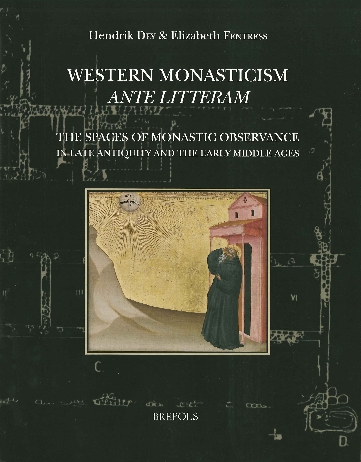
Western Monasticism ante litteram
show More to view fulltext, buy and share links for:Western Monasticism ante litteram show Less to hide fulltext, buy and share links for: Western Monasticism ante litteramSpace has always played a crucial part in defining the place that monks and nuns occupy in the world. Even during the first centuries of the monastic phenomenon, when the possible varieties of monastic practice were nearly infinite, there was a common thread in the need to differentiate the monk from the rest: whatever else they were supposed to be, monks were beings apart, unique, in some sense separate from the mainstream. The physical contours of monastic topographies, natural and constructed, are thus fundamental to an understanding of how early monks went about defining the parameters of their everyday lives, their modes of religious observance, and their interactions with the larger world around them. The group of eminent historians and archaeologists present at the American Academy in Rome in March, 2007 for the conference ‘Western monasticism ante litteram. The spaces of early monastic observance’, whose contributions comprise the bulk of this volume, have sought to reconsider the theory, the practice and above all the spaces of early monasticism in the West, in the hope of creating a more complete picture of that seminal period, from the fourth century until the ninth, when notions of what it meant to be a monk were as numerous as they were varied and (often) conflicting.
-
-
-
Zwischen Pragmatik und Performanz
show More to view fulltext, buy and share links for:Zwischen Pragmatik und Performanz show Less to hide fulltext, buy and share links for: Zwischen Pragmatik und PerformanzResearch on the practices and impacts of literacy has revolutionized the study of medieval history and culture. After initially having focused on investigating the modernising aspects of the development of literacy during the Middle Ages, the discussion now involves a large variety of topics, such as the performance of writing and reading, the use of the written word in political ritual and, on a general level, the ‘otherness’ of medieval communication. The volume presents essays dealing with a wide range of social and political uses of the written word during the Middle Ages, from the Carolingian era to late medieval Italy, Switzerland, Germany and Burgundy. It presents a panorama of the current state of the research and also offers new insights into the current conceptual debates about the history of communication in premodern Europe.
-
-
-
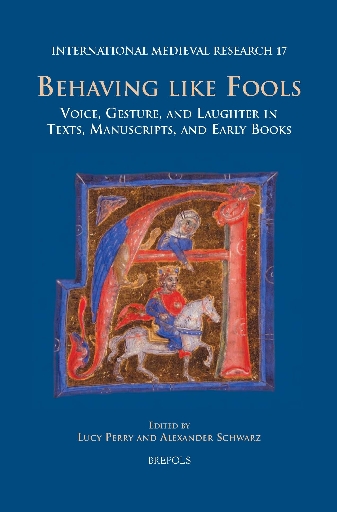
Behaving like Fools
show More to view fulltext, buy and share links for:Behaving like Fools show Less to hide fulltext, buy and share links for: Behaving like FoolsThe period from 1200 to 1600 was the golden age of fools. From representations of irreverent acts to full-blown insanity, fools appeared on the misericords of gothic churches and in the plots of Arthurian narratives, before achieving a wider prominence in literature and iconography in the decades around 1500. But how are we to read these figures appropriately? Is it possible to reconstruct the fascination that fools exerted on the medieval and early modern mind? While modern theories give us the analytical tools to explore this subject, we are faced with the paradox that by striving to understand fools and foolishness we no longer accept their ways but impose rational categories on them. Together these essays propose one way out of this dilemma. Instead of attempting to define the fool or trying to find the common denominator behind his many masks, this volume focuses on the qualities, acts, and gestures that signify foolishness. By investigating different manifestations of foolery rather than the figure of the fool himself, we can begin to understand the proliferation of fools and foolish behaviour in the texts and illustrations of manuscripts and early books.
-
-
-
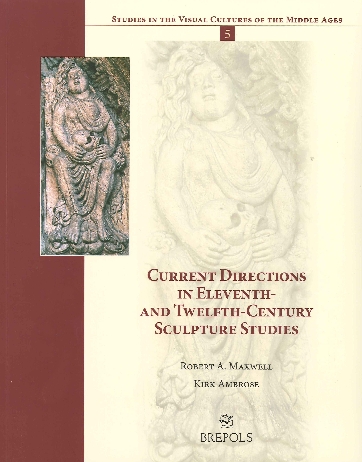
Current Directions in Eleventh- and Twelfth-Century Sculpture Studies
show More to view fulltext, buy and share links for:Current Directions in Eleventh- and Twelfth-Century Sculpture Studies show Less to hide fulltext, buy and share links for: Current Directions in Eleventh- and Twelfth-Century Sculpture Studies
-
-
-
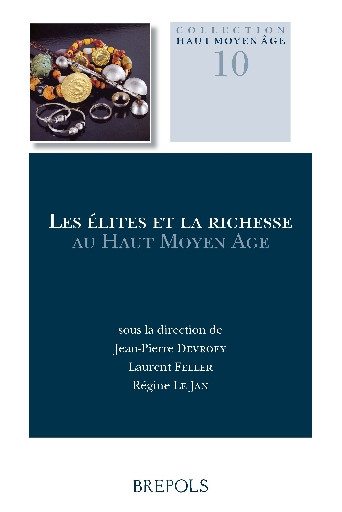
Les élites et la richesse au Haut Moyen Âge
show More to view fulltext, buy and share links for:Les élites et la richesse au Haut Moyen Âge show Less to hide fulltext, buy and share links for: Les élites et la richesse au Haut Moyen ÂgeCe volume recueille les actes d’un colloque tenu à Bruxelles dans le cadre du programme international «Les élites au haut Moyen Âge» et se propose d’étudier la richesse comme critère d’appartenance à l’élite sociale, politique ou religieuse et les usages faits de leurs biens matériels par les membres de ces groupes.
La possession de biens matériels, qu’il s’agisse de terres, de demeures, de bijoux, d’armes, de biens de production ou de biens de prestige, fait partie des éléments permettant à des groupes sociaux ou à des individus d’exercer leur domination sur les autres. À côté du prestige qu’assure la culture ou de la situation à la tête de réseaux complexes dans une société où les hiérarchies sont essentielles, la richesse classe et contribue à l’établissement du rang d’un individu ou d’un groupe dans l’ordre social.
Être riche entraîne un certain nombre de comportements et contraint à la satisfaction d’obligation de tous ordres: il existe un usage chrétien de la richesse et donc tout un discours sur sa signification et sa destination. La composition des fortunes, leur évolution, leur gestion et leur transmission sont de véritables problèmes auxquels le colloque «Les élites et la richesse durant le haut Moyen Âge» s’est efforcé de répondre, en axant ses interrogations sur les rationalités à l’œuvre dans les comportements des grands agents économiques de la période, qu’il s’agisse d’abbés, d’évêques ou de membres de l’aristocratie laïque.
Pour cette raison, les vingt contributions de l’ouvrage sont distribuées en trois parties, «Discourir sur la richesse», «Être riche» et «Obtenir et utiliser les richesses» qui marquent toutes trois un point de vue sur les interactions entre la richesse et la domination sociale telle qu’elle apparaît à travers les sources à notre disposition.
-
-
-
L’imaginaire de la parenté dans les romans arthuriens (XIIe-XIVe siècles)
show More to view fulltext, buy and share links for:L’imaginaire de la parenté dans les romans arthuriens (XIIe-XIVe siècles) show Less to hide fulltext, buy and share links for: L’imaginaire de la parenté dans les romans arthuriens (XIIe-XIVe siècles)Quoique éclipsée par la figure proéminente d’un héros, la parenté est au cœur de la matière de Bretagne. Or, nous n’insistons peut-être pas assez sur son rôle primordial aussi bien pour l’économie narrative que pour une meilleure compréhension, par le biais de l’imaginaire, d’aspects essentiels de la société médiévale. Les romans arthuriens mettent en scène toutes sortes de familles, touffues comme celle de Lancelot, ou bien restreintes comme celles des vavasseurs ou petits nobles qui font des apparitions fulgurantes. Il y a aussi des lignées sanctifiées comme celle des gardiens du Graal, ou damnées comme la descendance de Modred. C’est pourquoi les structures de parenté forment un cadre privilégié pour la prédestination et l’évolution des personnages. Parfois elles fonctionnent selon de pratiques réelles. Dans certains cas, elles les influencent, ou bien elles s’en écartent entièrement.
Les alliances matrimoniales souvent problématiques des romans arthuriens, leurs généalogies complexes, leurs conflits et loyautés d’ordre familial parviennent-ils à nous renseigner mieux sur la société médiévale, la légitimité, la violence, la vie privée, la femme? Ont-ils juste une valeur littéraire? Et quelle est la place du mythe païen ou de la pratique chrétienne dans le fonctionnement de la parenté? Enfin, l’héraldique occupe une place centrale dans l’imaginaire arthurien. Les armoiries, généralement signes d’appartenance à une parentèle, acquièrent des significations multiples et subissent des distorsions. Elles ont une valeur symbolique, marquant des étapes dans le devenir d’un personnage. Leur rôle politique de propagande n’est pas non plus négligeable. L’héraldique sert à la fois de marqueur d’identité ou de masque: elle rattache l’individu à son lignage ou souligne, au contraire, sa spécificité. Les textes, leur contexte ou l’iconographie, pris séparément ou mis en vis-à-vis, peuvent répondre à toutes ces questions, voire en susciter d’autres.
-
-
-
Matériaux du livre médiéval
show More to view fulltext, buy and share links for:Matériaux du livre médiéval show Less to hide fulltext, buy and share links for: Matériaux du livre médiévalCet ouvrage présente les résultats des travaux effectués dans le cadre d’un Groupement de recherche (GDR) initié par le CNRS en 2003 pour une durée de quatre ans et portant sur les matériaux du livre médiéval.
Ce groupement de recherche avait pour but de fédérer, dans un travail collectif interdisciplinaire et pluridisciplinaire, des équipes de recherche en sciences humaines, des laboratoires de sciences dites «dures», autrement dit des historiens, des paléographes, des archivistes-paléographes, des chimistes, des physiciens, des conservateurs de bibliothèques, d’archives, de musées, mais également des enseignants, des artisans-papetiers et formaires (les formaires étant des fabricants de formes à faire le papier à la main); participaient aussi au projet parcheminiers, enlumineurs, calligraphes, relieurs, etc., ainsi qu’un cinéaste documentariste. L’objectif était de faire progresser la connaissance des matériaux du livre médiéval sur le plan livresque, historique, expérimental ou analytique, en mettant en synergie et en fédérant les approches et les compétences spécifiques des personnels et des laboratoires participant au GDR. Connaissance indispensable pour son apport à l’histoire du livre et capitale pour gérer au mieux les problèmes de la conservation et de la sauvegarde de tout patrimoine.
L’originalité de ce GDR fut d’associer des recherches à la fois très différentes et très complémentaires qui pourraient, pour citer T. Delcourt, être regroupées en trois grandes catégories: «les recherches techniques sur les supports matériels de l’écrit que sont le papier, le parchemin, les encres; les recherches sur les différentes étapes intervenant dans la fabrication du livre autour de la reliure, mais aussi des ateliers de parcheminiers ou des moulins à papier; enfin des recherches sur le vocabulaire du livre et de l’écrit au Moyen Age si l’on veut comprendre avec un peu de certitude les textes, les inventaires ou les recettes qui traitent de la fabrication du livre au Moyen Age.»
Ces travaux ont été exposés au cours d’un colloque qui s’est tenu à Paris en novembre 2007.
-
-
-
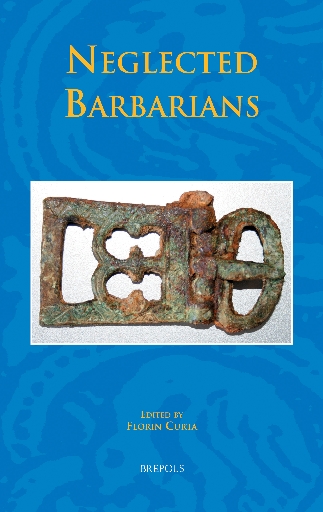
Neglected Barbarians
show More to view fulltext, buy and share links for:Neglected Barbarians show Less to hide fulltext, buy and share links for: Neglected BarbariansAlthough barbarians in history is a topic of perennial interest, most studies have addressed a small number of groups for which continuous narratives can be constructed, such as the Franks, Goths, and Anglo-Saxons. This volume examines groups less accessible in the literary and archaeological evidence. Scholars from thirteen countries examine the history and archaeology of groups for whom literary evidence is too scant to contribute to current theoretical debates about ethnicity. Ranging from the Baltic and northern Caucasus to Spain and North Africa and over a time period from 300 to 900, the essays address three main themes. Why is a given barbarian group neglected? How much can we know about a group and in what ways can we bring up this information? What sorts of future research are necessary to extend or fill out our understanding? Some papers treat these questions organically. Others use case studies to establish what we know and how we can advance. Drawing on those separate lines of research, the conclusion proposes an alternative reading of Late Antiquity and the early Middle Ages, viewed not from the ‘centre’ of the privileged but from the ‘periphery’ of the neglected groups. Neglected Barbarians covers a longer time span than similar studies of this kind, while its frequent use of the newest archaeological evidence has no parallel in any book so far published in any language.
-
-
-
The Legacy of Bernard de Montfaucon: Three Hunderd Years of Studies on Greek Handwriting
show More to view fulltext, buy and share links for:The Legacy of Bernard de Montfaucon: Three Hunderd Years of Studies on Greek Handwriting show Less to hide fulltext, buy and share links for: The Legacy of Bernard de Montfaucon: Three Hunderd Years of Studies on Greek HandwritingIn September 2008, the seventh edition of the International Colloquium of Greek Palaeography (Madrid-Salamanca, 15-20 September 2008) celebrated the 300th anniversary of the Palaeographia Graeca, the pioneer work of the Benedictine Bernard de Montfaucon that established the fundamentals of the discipline. Papers by renowned specialists in the field contributed to the methodology of study and to our knowledge of Greek manuscripts, and opened new perspectives for the study of the Greek manuscripts preserved mostly in European libraries, taking into account new methodological approaches, the possibilities of online resources and the results of ongoing research projects.
The Proceedings published here include contributions by specialists from over ten different countries, dealing with palaeographical issues such as ancient capital and lower-case lettering, writing and books in the Macedonian, Comnenian and Palaeologan periods, and Greek scribes and ateliers in the Renaissance (especially in manuscripts from the Iberian Peninsula). Many contributors also take a codicological approach and consider the material aspects of the codex, as well as other new research techniques. Finally, some papers deal with the book as object and how this relates to its content, as well as with the history of texts.
The International Colloquia of Greek Palaeography are organized by the International Committee of Greek Palaeography, presided by Prof. Dieter Harlfinger. The seventh edition payed tribute to the memory of the late Jean Irigoin, who died in 2006.
-
-
-

The Playful Middle Ages
show More to view fulltext, buy and share links for:The Playful Middle Ages show Less to hide fulltext, buy and share links for: The Playful Middle AgesLove play or playing dead, wordplay or playing games - the notion of play inhabits all spheres of human activity. This collection of essays brings together international scholars from a range of disciplines to explore aspects of playfulness in the later European Middle Ages. From manuscript to performance and from the domestic to the doctrinal, the exuberance and ambiguity of verbal and visual play is interrogated in order to decode layers of meaning in texts and artefacts. These twelve papers celebrate the work of Elaine C. Block, whose dedicated study of misericords has, through countless articles and books, made the riches of this dizzying iconographic resource easily available to scholars for the first time. Her monumental Corpus on Medieval Misericords volumes will no doubt inform medieval scholars for generations to come, and those included in the present collection are both proud and grateful to be of the first generation to benefit from her work on this body of carvings which challengingly - and playfully - straddles thesometimes invisible line between the sacred and profane.
-