EMISCS12

Collection Contents
39 results
-
-
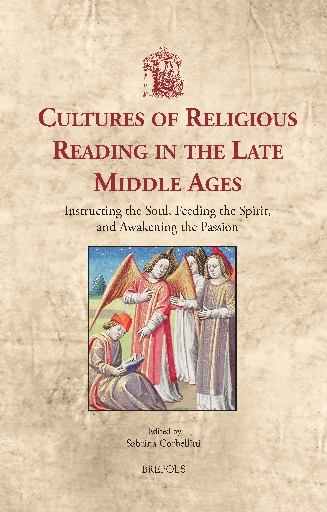
Cultures of Religious Reading in the Late Middle Ages
show More to view fulltext, buy and share links for:Cultures of Religious Reading in the Late Middle Ages show Less to hide fulltext, buy and share links for: Cultures of Religious Reading in the Late Middle AgesRead often, learn all that you can. Let sleep overcome you, the roll still in your hands; when your head falls, let it be on the sacred page.
- St Jerome, 384 AD
With these words, the Church Father Jerome exhorted the young Eustochium to find on the sacred page the spiritual nourishment that would give her the strength to live a life of chastity and to keep her monastic vows. His call to read does not stand alone. Books and reading have always played a pivotal role in early and medieval Christianity, often defined as ‘a religion of the book’.
A second important stage in the development of the ‘religion of the book’ can be attested in the late Middle Ages, when religious reading was no longer the exclusive right of men and women living in solitude and concentrating on prayer and meditation. Changes in the religious landscape and the birth of new religious movements transformed the medieval town into a privileged area of religious activity. Increasing literacy opened the door to a new and wider public of lay readers. This seminal transformation in the late medieval cultural horizon saw the growing importance of the vernacular, the cultural and religious emancipation of the laity, and the increasing participation of lay people in religious life and activities.
This volume presents a new, interdisciplinary approach to religious reading and reading techniques in a lay environment within late medieval textual, social, and cultural transformations.
-
-
-
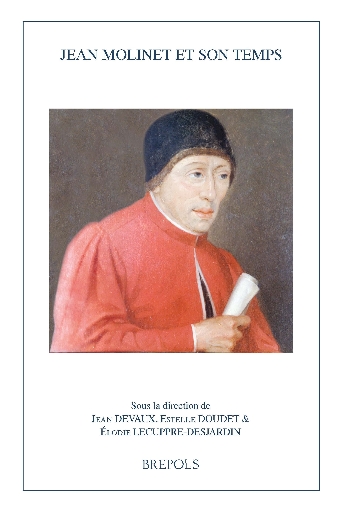
Jean Molinet et son temps
show More to view fulltext, buy and share links for:Jean Molinet et son temps show Less to hide fulltext, buy and share links for: Jean Molinet et son tempsReprésentant majeur de la littérature bourguignonne, poète et chroniqueur, proche des milieux artistiques et notamment musicaux de son époque, Jean Molinet (1435-1507) apparaît comme un auteur fédérateur des études portant sur l’histoire politique et littéraire au tournant des XVe et XVIe siècles. Organisé du 8 au 10 novembre 2007, à l’occasion du cinquième centenaire de la mort de l’écrivain, le colloque dont les actes paraissent aujourd’hui a été le fruit d’une collaboration régionale et transfrontalière entre l’Université de Gand, l’Université Charles-de-Gaulle - Lille 3 et l’Université du Littoral - Côte d’Opale (Dunkerque). Par le croisement des disciplines et des approches, il a contribué de manière décisive à mettre en lumière toute la richesse de cette œuvre foisonnante et sa situation au croisement des espaces et des cultures, reflet de la réalité complexe des principautés bourguignonnes à l’époque où le Moyen Âge s’apprête à épouser la Renaissance.
Jean Devaux est professeur à l’Université du Littoral - Côte d’Opale (Dunkerque et Boulogne-sur-Mer HLLI), où il enseigne la langue et la littérature françaises du Moyen Âge. Spécialiste de littérature bourguignonne, il s’intéresse plus particulièrement à l’historiographie du Bas Moyen Âge français.
Estelle Doudet est maître de conférences en littérature médiévale à l’Université de Lille Nord de France (UDL3- IRHiS). Elle est spécialiste des Grands Rhétoriqueurs et travaille actuellement sur les moralités politiques de la fin du Moyen Âge et de la première modernité.
Élodie Lecuppre-Desjardin est maître de conférences à l’Université de Lille Nord de France (UDL3- IRHiS). Spécialiste d’histoire urbaine et des Pays-Bas bourguignons, elle y enseigne l’histoire médiévale.
-
-
-
La littérature des questions et réponses dans l’Antiquité profane et chrétienne: de l’enseignement à l’exégèse
show More to view fulltext, buy and share links for:La littérature des questions et réponses dans l’Antiquité profane et chrétienne: de l’enseignement à l’exégèse show Less to hide fulltext, buy and share links for: La littérature des questions et réponses dans l’Antiquité profane et chrétienne: de l’enseignement à l’exégèse[Nous associons surtout le genre littéraire des questions et réponses dans l’Antiquité au commentaire sur les écritures saintes. Ce procédé discursif fut pourtant mis à profit dans d’autres genres littéraires et ces perspectives restent largement inexplorées.
Longtemps considérée comme l’héritière du dialogue philosophique, générateur de pensée innovatrice, la littérature par questions et réponses est ici envisagée sous l’angle de l’instruction dans un univers christianisé. Les textes formulés en questions et réponses dans un but pédagogique ont en effet connu une grande popularité et se sont développés au point de ne plus être ni un révélateur de pensée, comme le fut le dialogue philosophique, ni un instrument de mémorisation, comme l’étaient les questions sur les œuvres d’Homère, mais plutôt en vue de rassembler des collections de mini-traités ou de commentaires sur l’Écriture ou des enseignements sur la vie du fidèle.
Les textes réunis dans ce volume explorent la portée didactique du genre des questions et réponses exégétiques, du dialogue dans la littérature initiatique chrétienne gnostique, valentinienne, ou dans la littérature pédagogique tardive, afin de cerner les procédés didactiques, mais aussi le ton et le public auquel s’adressent ces enseignements.
,Question and Answer Literature in Late Antiquity and Early Christianity: From Teaching to Commenting
The question and answer literary genre in Antiquity is most often associated with commentaries on the Scriptures. In ways that remain largely unexplored by scholarship, this discursive technique was also put to good use in other genres as well.
In this volume, question and answer literature, long thought to be inherited from the dialogic method in philosophy, is studied in terms of its educational scope, in a Christianized world. Texts shaped in a question and answer format for a pedagogical purpose were certainly extremely popular in Antiquity and eventually evolved to the point that they no longer served as brewers of thought - as was the case in philosophy - nor as instruments of memorisation - as the grammatical questions on Homeric poems -, but rather for the purpose of gathering short treatises or commentaries on the Scriptures or on teachings for the use of the Christian, layman or cleric.
The texts gathered here explore the didactic perspective of the erotapocritic genre in exegetical texts, of the dialogue technique in initiation gnostic and Valentinian literature, and in Late Antique pedagogical literature, in the hope of outlining not only their mechanism, but also their tone and intended public.
]
-
-
-
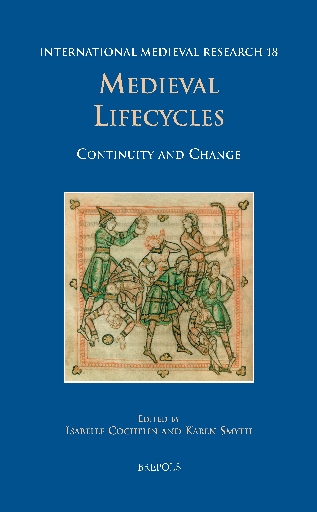
Medieval Life Cycles
show More to view fulltext, buy and share links for:Medieval Life Cycles show Less to hide fulltext, buy and share links for: Medieval Life CyclesThe essays in this collection present new research into a variety of questions on birth, childhood, adolescence, adulthood, middle age, and old age, ordered in a more or less chronological manner according to the life cycle. The volume exposes attitudes and representations of the life cycle from the Anglo-Saxon period to the end of the Middle Ages as being full of inconsistencies as well as definitive categories, and of variation and stasis. This attests to the fact that medieval conceptions and representations of the stages of life and their interrelationships are much more nuanced and less idealized than is usually credited. Medieval conceptual, mental, artistic, cultural, and sociological processes are scrutinized using various approaches and methods that cross disciplinary boundaries. What is emphasized across the volume is that there were varying, context-dependent rhythms of continuity and change in every stage of life in the medieval period. The volume’s selection of authors is international in scope and represents some of the leading current scholarship in the field.
-
-
-
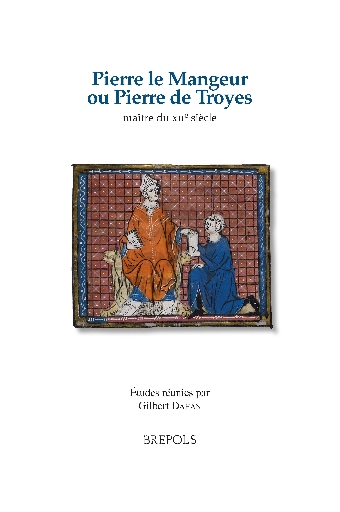
Pierre le Mangeur ou Pierre de Troyes, maître du XIIe siècle
show More to view fulltext, buy and share links for:Pierre le Mangeur ou Pierre de Troyes, maître du XIIe siècle show Less to hide fulltext, buy and share links for: Pierre le Mangeur ou Pierre de Troyes, maître du XIIe sièclePierre le Mangeur, connu également sous le nom de Pierre Comestor, est souvent appelé par ses contemporains Pierre de Troyes. Il est né probablement dans cette ville et y a été doyen du chapitre cathédral. Mais, s’il reste fidèle à cette cité, c’est en tant que maître à Paris qu’il jouit d’une réputation considérable: successeur de son maître Pierre Lombard, il a parmi ses élèves des auteurs aussi prestigieux que Pierre de Poitiers ou Étienne Langton. À la fin de sa vie (il meurt en 1178), il se retire à Saint-Victor de Paris. Son œuvre la plus célèbre est l’Historia scholastica, sorte de manuel d’études bibliques, fondé sur une réécriture des parties narratives de la Bible (jusqu’aux évangiles) et intégrant de nombreux éléments d’exégèse. Commentée pendant une ou deux générations (fin du xii e siècle, début du xiii e), elle fait l’objet d’une adaptation extrêmement bien diffusée en latin, l’Aurora de Pierre Riga, puis de traductions-adaptations en diverses langues vernaculaires, notamment la Bible historiale de Guyart des Moulins (à la fin du xiii e siècle), qui constituera la traduction française la plus répandue de la Bible jusqu’au xvi e siècle. Pierre le Mangeur est aussi l’auteur d’un corpus de 189 sermons, qui laissent percevoir une évolution vers le sermon «moderne» plus tardif, et de commentaires des évangiles très passionnants, en ce qu’ils nous font véritablement entrer dans la classe du maître. Son œuvre théologique, encore mal connue, comprend un nombre important de quaestiones, un traité sur les sacrements et, peut-être, un commentaire des Sentences de Pierre Lombard, dont seuls des fragments nous sont parvenus.
Le présent volume examine ces différents aspects de l’œuvre de Pierre le Mangeur et situe cet auteur dans l’histoire culturelle de son temps: très marqué par les conceptions herméneutiques de Hugues de Saint-Victor (et lié à cette école majeure du xii e siècle), il est aussi l’un des représentants principaux de ce que l’on a pu appeler l’«école biblique-morale» parisienne du dernier tiers du xii e siècle. Le retentissement de son œuvre fait l’objet de plusieurs études et rappelle que l’Historia scholastica a été imprimée dès le dernier quart du xv e siècle.
-
-
-
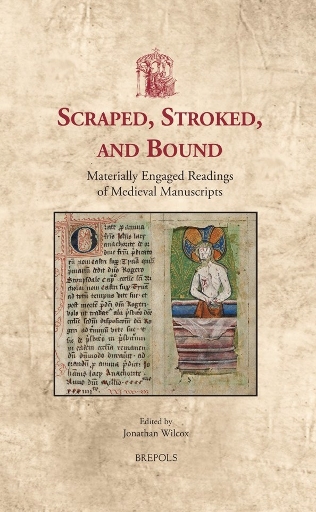
Scraped, Stroked, and Bound
show More to view fulltext, buy and share links for:Scraped, Stroked, and Bound show Less to hide fulltext, buy and share links for: Scraped, Stroked, and BoundThis collection of essays makes an original contribution to medieval manuscript studies through its deep engagement with the material side of book creation, anchored by bringing together major scholars of medieval manuscripts with leading contemporary book artists. The result is a ground-breaking collection that will be of interest both for its methodological implications and for the insights that the case studies provide.
In a sequence of interconnected essays, experts in the field of literature, history, art, and manuscript studies enact readings of medieval manuscripts that incorporate extreme attention to the materiality of the object of their study. While the digital revolution has provided unparalleled access to medieval manuscripts, these essays are attentive to what has got left behind - not just the aura of the original, but also the engagement of the senses, such as the feel of the binding, the heft of the volume, the smell of the parchment, or the sound of the pages. By bringing together experienced medievalist scholars with practicing book artists of today, the present collection brings back an artisanal sense of the complete book to an understanding of medieval manuscripts.
-
-
-
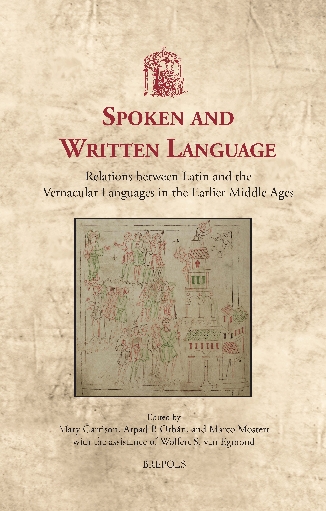
Spoken and Written Language
show More to view fulltext, buy and share links for:Spoken and Written Language show Less to hide fulltext, buy and share links for: Spoken and Written LanguageThe linguistic situation of medieval Europe has sometimes been characterized as one of diglossia: one learned language, Latin, was used for religion, law, and documents, while the various vernaculars were used in other linguistic registers. Informing the relationship between Latin and the vernaculars was the choice of Latin as the language of the Western Roman Empire and the Roman Church. This choice entailed the possibility of a shared literary culture and heritage across Europe, but also had consequences for access to that heritage. Scholarship on the Romance languages has contested the relevance of the term diglossia, and the divergence between written or spoken Latin and Romance is a subject of energetic debate. In other linguistic areas, too, questions have been voiced. How can one characterize the interaction between Latin and the various vernaculars, and between the various vernaculars themselves? To what extent could speakers from separate linguistic worlds communicate? These questions are fundamental for anyone concerned with communication, the transmission of learning, literary history, and cultural interaction in the Middle Ages. This volume contains contributions by historians, cultural historians, and students of texts, language, and linguistics, addressing the subject from their various perspectives but at the same time trying to overcome familiar disciplinary divisions.
-
-
-
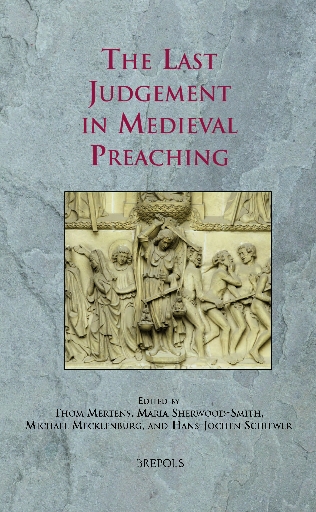
The Last Judgement in Medieval Preaching
show More to view fulltext, buy and share links for:The Last Judgement in Medieval Preaching show Less to hide fulltext, buy and share links for: The Last Judgement in Medieval PreachingIn the Middle Ages, the sermon was a powerful and versatile means of bringing the Word of God to the people. In fact, in the oral culture of that period, it was the primary medium for Christian clergy to convey religious education to lay audiences. Moreover, the sermon played an important role in the liturgy and life of the religious orders. With the growth of lay literacy the sermon collection also developed into a vernacular literary genre of its own.
Two aspects of Christian piety, hopeful expectation on the one hand, and fearful anticipation on the other, were decisive factors for the shaping of religious life and practical pastoral care. Both these aspects were often brought to the fore in sermons on the Last Judgement as part of a recurrent argument against a life too much oriented towards the world. The preachers dwell on both the Particular Judgement occurring immediately after death and the General Judgement over the whole of creation at the end of times.
This volume brings together scholars from several European countries with the purpose to present their research on the theme of the Last Judgement in medieval sermons. The scope of scholars is broadened to incorporate not only specialists in sermon studies, but also historians, theologians, and literary historians to encourage research along new, multi-perspectival lines.
-
-
-
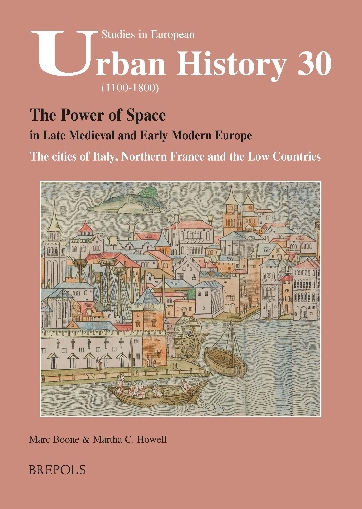
The Power of Space in Late Medieval and Early Modern Europe
show More to view fulltext, buy and share links for:The Power of Space in Late Medieval and Early Modern Europe show Less to hide fulltext, buy and share links for: The Power of Space in Late Medieval and Early Modern EuropeThis volume examines the politics of space in the most densely urbanized areas of Europe during the late Middle Ages and Renaissance. It ranges from Italy to the Parisian region and then to the greater Low Countries, home of Europe’s most powerful commercial cities of the period. Hardly inert sites on which political action took place, the spaces these authors investigate conferred power on those who possessed them. At the same time they were themselves transformed by the struggles, thus acquiring new powers that invited future contest. Thus implicitly responding to Georges Lefebvre’s claim that space is “produced”, the authors ask how space was perceived and used in everyday life, giving specific spaces cultural, social, and political coherence (“le perçu”); how it was represented or theorized, thus encoded in symbols, maps and laws (“le conçu”); and how it was lived, in effect the result of the dialectical relation between the perceived and the represented (“le vécu”).
Marc Boone is full professor of medieval social and political history of the (late) Middle Ages at Ghent University. He has been president of the European Association of Urban History and has published mainly in the field of urban history.
Martha C. Howell is Miriam Champion professor of History at Columbia University (New York). She has published on late medieval and early-modern European gender history and social history.
-
-
-
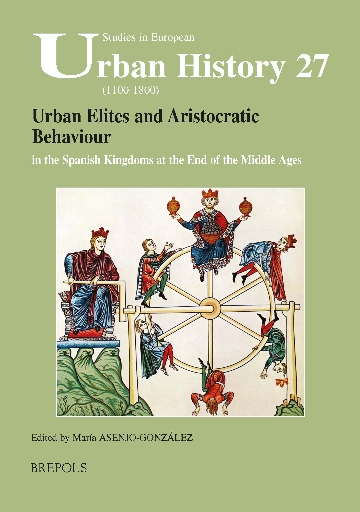
Urban Elites and Aristocratic Behaviour in the Spanish Kingdoms at the End of the Middle Ages
show More to view fulltext, buy and share links for:Urban Elites and Aristocratic Behaviour in the Spanish Kingdoms at the End of the Middle Ages show Less to hide fulltext, buy and share links for: Urban Elites and Aristocratic Behaviour in the Spanish Kingdoms at the End of the Middle AgesThis collection of studies presents the results of research to discover the scope of aristocratic ambitions of the urban elites in the Hispanic kingdoms in the Late Middle Ages. The goal is to gain a greater knowledge of the urban elites in order to discover the social and political motivations of the privileged, those who were able to profit from the mechanisms of social ascension. Aristocratisation is also related to the adoption of values which determined the behavior and mentality under the mark of the dominant feudal culture. The strategies, the resources to move up the social ladder and the ambition of the urban social elite and the occasions used to ensure successful promotion and the results obtained should be brought to light. The variety in the urban elites within the Iberian Peninsula offers comparative possibilities and supposes an important advancement in the knowledge of aspects related to social promotion.
María Asenjo-González, is professor of Medieval History at the Complutense University of Madrid. Her research interest covers Castilian cities from 1250 to 1520 in social, political, economic and cultural aspects.
-
-
-
Agôn. La compétition, Ve-XIIe siècle
show More to view fulltext, buy and share links for:Agôn. La compétition, Ve-XIIe siècle show Less to hide fulltext, buy and share links for: Agôn. La compétition, Ve-XIIe siècleAlors que le monde antique vit au rythme de la compétition individuelle et collective, celle-ci paraît perdre beaucoup de son importance dans l’Occident du haut Moyen Âge. Entre les dernières manifestations des jeux du cirque dans l’Occident latin au VIe siècle et la naissance des tournois chevaleresques à la fi n du XIe siècle, la dimension compétitive s’y efface, sauf exception comme l’Irlande, alors qu’elle garde une importance notable dans le monde byzantin et dans l’Islam. Les concours étaient depuis longtemps en butte aux critiques des penseurs chrétiens, en ce qu’ils ressortissent de la catégorie honnie des spectacles. À partir du milieu du Ve siècle, le coût économique de telles entreprises devint diffi cilement supportable, à un moment où la dépense somptuaire prenait d’autres cibles et où les systèmes de valeurs des royaumes barbares se détournaient des jeux au profi t de l’émulation entre pairs et de l’entraînement. Cependant, la compétition reste largement présente dans d’autres domaines. Les jeux de société intègrent cette dimension. La tradition de la joute oratoire se poursuit, d’Ennode aux tensos et aux jeux partis en passant par les rivalités poétiques de la cour carolingienne. Le vocabulaire de l’agôn est réinvesti par les auteurs chrétiens, sur la base de l’héritage patristique, spécialement à l’époque carolingienne ; avec des hauts et des bas, il s’adapte au martyre et plus généralement au combat de la vie chrétienne. La recherche des femmes, la quête de la gloire aux frontières peuvent aussi être lues au filtre de la compétition. Ces divers aspects sont traités dans le présent volume, qui inaugure une série dédiée à « la compétition dans les sociétés du haut Moyen Âge ».
-
-
-
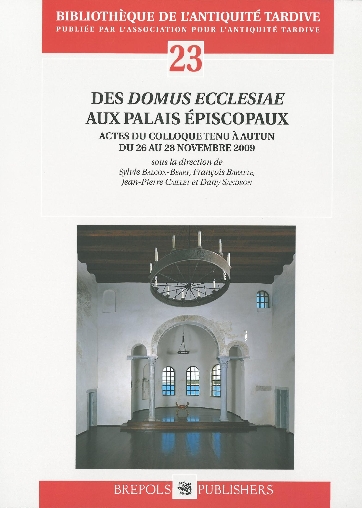
Des 'domus ecclesiae' aux palais épiscopaux
show More to view fulltext, buy and share links for:Des 'domus ecclesiae' aux palais épiscopaux show Less to hide fulltext, buy and share links for: Des 'domus ecclesiae' aux palais épiscopaux[La découverte sur le site archéologique de l’ancien groupe cathédral d’Autun des vestiges probables de la domus ecclesiae mentionnée au VIIe siècle a conduit à examiner la question de ces structures aux fonctions multiples et à étudier leur devenir, puisque bien souvent elles sont à l’origine des palais épiscopaux, comme c’est clairement le cas à Autun.
C’est d’ailleurs à Autun même, dans l’évêché, que s’est tenu ce colloque les 26-28 novembre 2009. Les quatorze présentations ici réunies, qui concernent des cas européens et de l’ensemble du monde méditerranéen, tendent à mieux cerner la configuration des résidences épiscopales primitives par rapport aux édifices de culte, d’en saisir l’organisation et de suivre leur évolution. Elles soulignent également la difficulté de l’interprétation des données textuelles et archéologiques, quand elles existent.
,The discovery on the archeological site of the former cathedral group of Autun of the probable remains of the domus ecclesiae mentioned in the VIIth century led to an examination of the question of these structures with multiple functions and a study of their development, as they are very often at the origin of episcopal palaces, as it is clearly the case in Autun.
It is moreover at Autun itself, in the bishop’s palace, that this conference was held from November 26 to 28, 2009. The fourteen presentations joined together here, which concern European cases as well as those from the whole of the Mediterranean world, tend to define more fully the character of early episcopal residences in respect to buildings for worship, to comprehend their design and to follow their evolution. They also underline the difficulty of the interpretation of the textual and archaeological data, when they exist.
]
-
-
-
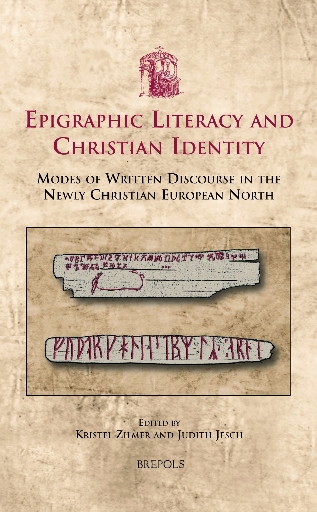
Epigraphic Literacy and Christian Identity
show More to view fulltext, buy and share links for:Epigraphic Literacy and Christian Identity show Less to hide fulltext, buy and share links for: Epigraphic Literacy and Christian IdentityThis volume examines the role of epigraphic literacy within the newly introduced Christian culture and the developing tradition of literacy in Northern Europe during the Viking Age and the High Middle Ages. The epigraphic material under scrutiny here originates from Scandinavia and North-West Russia - two regions that were converted to Christianity around the turn of the first millennium. Besides traditional categories of epigraphic sources, such as monumental inscriptions on durable materials, the volume is concerned with more casual inscriptions on less permanent materials. The first part of the book discusses a form of monumental epigraphic literacy manifested on Scandinavian rune stones, with a particular focus on their Christian connections. The second part examines exchanges between Christian culture and ephemeral products of epigraphic literacy, as expressed through Scandinavian rune sticks, East Slavonic birchbark documents and church graffiti. The essays look beyond the traditional sphere of parchment literacy and the Christian discourse of manuscript sources in order to explore the role of epigraphic literacy in the written vernacular cultures of Scandinavia and North-West Russia.
-
-
-
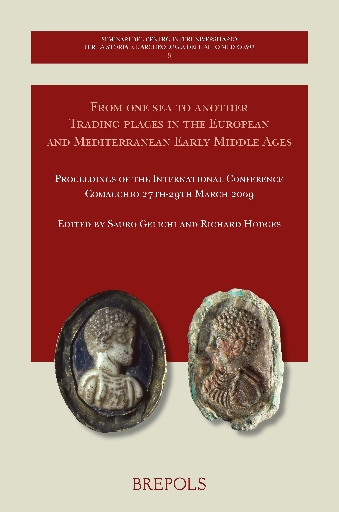
From one sea to another. Trading places in the European and Mediterranean Early Middle ages
show More to view fulltext, buy and share links for:From one sea to another. Trading places in the European and Mediterranean Early Middle ages show Less to hide fulltext, buy and share links for: From one sea to another. Trading places in the European and Mediterranean Early Middle agesRecent excavations at Comacchio as well as archaeological research in the Venetian lagoon are defining the northern Adriatic region as an especially dynamic area in demographic rather than economic terms during the early Middle Ages. This dynamism is best expressed in the form of new centres of settlement with specific characteristics, principally associated with short- and long-distance trade. This phenomenon possesses a strong resemblance to the emergence of similar places along the North Sea coastline from more or less the same period. This phenomenon has been much debated by historians and archaeologists, who have ascribed the source of these new specialized centres (defined as emporia or wics) as prototypes for future mercantile cities and the rebirth of the medieval economy.
The scope of the congress at Comacchio was to evaluate the most recent evidence, in a historical and archaeological context, addressingthe importance of these new Adriatic centres as well as considering comparisons for the first time with the more familiar northern European trading centres.
-
-
-
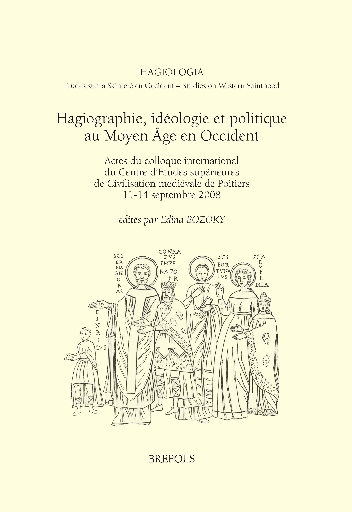
Hagiographie, idéologie et politique au Moyen Âge en Occident
show More to view fulltext, buy and share links for:Hagiographie, idéologie et politique au Moyen Âge en Occident show Less to hide fulltext, buy and share links for: Hagiographie, idéologie et politique au Moyen Âge en OccidentLa reconnaissance de la sainteté et sa propagation par l’écrit et l’image dépendent étroitement de la conjoncture sociale et politique : les saints ont du pouvoir et le pouvoir a ses saints. Issues du congrès international organisé à Poitiers en 2008, les contributions de ce volume analysent les enjeux du culte des saints dans les stratégies du pouvoir ecclésiastique et laïc en Occident du VII e au XV e siècle. La représentation de la sainteté et ses usages sont abordés selon plusieurs axes : la légitimation du pouvoir par le prestige des saints du passé ; l’hagiographie instrumentalisée dans les luttes idéologiques et politiques ; le rapport entre l’iconographie, la mise en valeur des reliques et le contexte historique. Ce bilan des recherches récentes jette un nouvel éclairage sur la question fondamentale de l’imbrication du religieux et du politique à l’époque médiévale
L’auteur
Edina Bozóky est maître de conférences à l’Université de Poitiers, membre du Centre d’Études Supérieures de Civilisation Médiévale. Elle a publié La politique des reliques de Constantin à Saint Louis (Paris) et Le Moyen Âge miraculeux (Paris, 2010) et a édité avec A.-M. Helvétius Les reliques : objets, cultes, symboles (Turnhout, 1999). Elle dirige la collection Culture et société médiévales aux Éditions Brepols
-
-
-
Humanistes, clercs et laïcs dans l’Italie du XIIIe au début du XVIe siècle
show More to view fulltext, buy and share links for:Humanistes, clercs et laïcs dans l’Italie du XIIIe au début du XVIe siècle show Less to hide fulltext, buy and share links for: Humanistes, clercs et laïcs dans l’Italie du XIIIe au début du XVIe sièclePourquoi associer, dans le titre de cet ouvrage, les catégories, usuelles au Moyen Âge, de clercs et de laïcs aux « humanistes », un mot qui n’apparaît dans les documents qu’à l’extrême fin du XVe siècle ? La juxtaposition des trois termes nous rappelle que ces admirateurs et imitateurs des auteurs antiques que nous nommons humanistes appartenaient tant à l’un qu’à l’autre des deux « genres de chrétiens » définis depuis la réforme grégorienne. Ce sont bien des laïcs, en effet, qui ont lancé le mouvement humaniste à Padoue au XIIIe siècle, mais par la suite, des clercs, des frères et des moines y participèrent également.
À la différence d’une historiographie qui a bien souvent privilégié les ruptures et les oppositions entre clercs et laïcs, entre scolastiques et humanistes, les auteurs de ce livre s’intéressent aux continuités, tout en s’affranchissant d’une approche exclusivement littéraire ou philosophique qui est dominante en particulier pour les “grands” humanistes. En prenant en compte les personnages “mineurs” ou les oeuvres “mineures” de grands auteurs, il s’agit également de “démonumentaliser” les oeuvres littéraires et de les examiner du point de vue des échanges féconds entre clercs et laïcs qui ne cessèrent, entre le XIIIe et le début du XVIe siècle, de nourrir la culture urbaine italienne. Les prises de position des humanistes sont ici systématiquement replacées dans le cadre de dynamiques sociales et de réseaux construits.
Les quinze contributions de ce volume ont été regroupées en quatre sections : les deux premières privilégient une analyse des modèles discursifs - c’est le cas pour l’art de la parole, ainsi que pour les champs de l’hagiographie et de la philologie biblique et patristique -, tandis que les deux autres sections privilégient plutôt une approche en termes de réseaux d’appartenance et de posture vis-à-vis des pouvoirs institutionnalisés.
-
-
-
La dîme, l’Église et la société féodale
show More to view fulltext, buy and share links for:La dîme, l’Église et la société féodale show Less to hide fulltext, buy and share links for: La dîme, l’Église et la société féodaleLes auteurs de ce livre s’interrogent sur le rôle historique de la dîme dans le développement des sociétés occidentales. Prélèvement d’un dixième, imposé à tous, en principe sur toute forme de production et en particulier sur les fruits de la terre, destiné à l’entretien des clercs et des pauvres, la dîme fut au Moyen Âge à l’origine de pratiques substantielles de redistribution des biens, en même temps qu’un élément essentiel de structuration des rapports sociaux.
Dans l’histoire variée des dîmes, dont ils s’efforcent de restituer les différentes facettes, des représentations et des normes aux usages sociaux, les historiens qui ont participé à ce volume saisissent les formes d’échanges et de domination caractéristiques de la société féodale, ainsi que la part prise par l’Église dans cette société.
L’ouvrage met en évidence la diversité, tout à la fois chronologique et spatiale, de l’histoire des dîmes. Les contributions relatives aux pratiques du prélèvement concernent la Francie du Nord-Est, de l’Ouest et du Midi, la Bourgogne, ainsi que l’Italie centrale et septentrionale, entre le VIIIe et le XVe siècle ; les chapitres consacrés aux discours sur la dîme évoquent les écrits des Pères de l’Église, les principes élaborés à l’époque carolingienne et les productions (théologiques, juridiques) émanant des intellectuels des XIIe et XIIIe siècles.
Dans un chapitre préliminaire (« Pour une histoire de la dîme et du dominium ecclésial »), Michel Lauwers expose les hypothèse et les résultats du programme de recherche qui a donné lieu à plusieurs rencontres scientifiques depuis 2007 et abouti à ce livre, tandis que, dans une postface (« Des fruits et des hommes »), Mathieu Arnoux propose un certain nombre de perspectives, parfois volontairement décalées par rapport aux travaux ici réunis.
-
-
-
Languages of Love and Hate
show More to view fulltext, buy and share links for:Languages of Love and Hate show Less to hide fulltext, buy and share links for: Languages of Love and HateThis book probes the nature of the clash of cultures as a process of identification and classification of the unknown. ‘There is no world of thought that is not a world of language and one sees of the world only what is provided for by language’ (Walter Benjamin, 1936). In the medieval Mediterranean, cultural groups were frequently labelled, fixed, and identified by language, and these linguistic groupings were consistently in states of conflict and/or exchange. This collection explores various expressions of cultural clash and exchange, and examines some of the ways in which language was used to express difference, to mark out cultural difference, and to further label those cultures – often as alien and inferior, but sometimes as different and worthy of respect. This theme unites papers coming from a range of perspectives and engaging with a whole series of cultural interchanges and conflicts. It brings together work on a wide range of peoples – Latins, Byzantines, Muslims, and Jews – commenting on and writing about each other, as well as a wide variety of different genres, from theology to farce. This volume seeks to offer a broad and wide-ranging approach to understanding the world at the time of the crusades through the words of participants and observers.
-
-
-
Le cheval dans les sociétés antiques et médiévales
show More to view fulltext, buy and share links for:Le cheval dans les sociétés antiques et médiévales show Less to hide fulltext, buy and share links for: Le cheval dans les sociétés antiques et médiévales[Ces Actes des Journées d’étude internationales (Strasbourg, 6-7 novembre 2009) sont l’aboutissement d’un programme de recherche (2007-2009), mené au sein de l’UMR 7044 (Étude des civilisations de l’Antiquité : de la Préhistoire à Byzance), sur la place du cheval dans l’empire byzantin. Les 14 contributions qu’ils réunissent sont consacrées au cheval de guerre et de loisir dans l’Antiquité et au Moyen Âge.
L’ouvrage est divisé en trois sections. Dans la première, les contributeurs analysent la naissance du corps de cavalerie dans l’armée romaine et ses emplois. Sont également étudiés les différences régionales du pourtour méditerranéen dans l’élevage du cheval, les prix pratiqués ou encore les connaissances hippologiques des Anciens. Les travaux qui composent la deuxième partie proposent des synthèses sur le cheval médiéval, byzantin et occidental. Ils abordent le sujet à travers les textes, les sources archéologiques, les représentations et les us et coutumes des civilisations étudiées. Enfin, la dernière partie s’intéresse aux instruments hippiques, aux armes et à l’hippiatrie. Y sont ainsi réexaminées les innovations, adoptions et adaptations, dans l’Antiquité tardive, des pièces de l’équipement équin essentielles pour le combat, telles que l’étrier et le mors. Les armes des cavaliers sont réévaluées, ainsi que les changements dans leurs techniques de combat suite à la diffusion de l’étrier. On trouvera aussi l’analyse du vocabulaire employé pour l’anatomie du cheval dans la littérature hippiatrique grecque, qui connaît à cette période un essor sans précédent, lié au développement de la cavalerie romaine et protobyzantine.
,These Actes des Journées d’étude internationales (Strasbourg, 6-7 November 2009) are the end result of a 2007-2009 research programme held at the UMR 7044 (Étude des civilisations de l’Antiquité: de la Préhistoire à Byzance) on the role of the horse in the Byzantine Empire. These fourteen contributions focus on the role of the horse in both war and leisure from Antiquity to the Middle Ages.
The book is divided into three sections. In the first, the contributors analyze the origins and use of cavalry in the Roman army. Additionally, this section explores the regional differences in the breeding of horses throughout the Mediterranean, their monetary value, as well as the hippological knowledge of Antiquity. The chapters constituting the second part discuss the medieval, Byzantine, and western horse. They approach this subject via texts, archaeological sources, illustrations, and an examination of the customs and traditions of these civilizations. The final part focuses on hippological instruments, weapons, and the care of horses. Here the contributors examine the innovations, adoptions, and adaptations during late Antiquity of pieces of equestrian equipment essential for war, such as stirrups and bits. Horsemen’s weapons are re-evaluated, as well as the changes in their tactics brought about by the widespread adoption of stirrups. Also present is an analysis of the vocabulary used for the anatomy of the horse in Greek hippological literature, which saw an unprecedented increase at this time thanks to the development of the Roman and Proto-Byzantine cavalry.
]
-
-
-
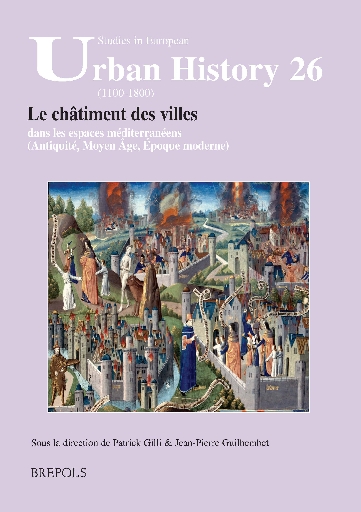
Le châtiment des villes dans les espaces méditerranéens (Antiquité, Moyen Âge, Époque moderne)
show More to view fulltext, buy and share links for:Le châtiment des villes dans les espaces méditerranéens (Antiquité, Moyen Âge, Époque moderne) show Less to hide fulltext, buy and share links for: Le châtiment des villes dans les espaces méditerranéens (Antiquité, Moyen Âge, Époque moderne)Les villes comme organismes politiques ont souvent été l’objet d’une répression spécifique de la part de leurs ennemis ou d’une autorité souveraine. Des mesures les plus symboliques, comme l’abattis des murailles, aux plus radicales, comme la réduction en esclavage des populations ou l’éradication a fundamento du bâti, le châtiment des cités reflète la place que ces dernières occupaient dans l’économie des pouvoirs. L’approche comparatiste ici privilégiée permet de voir, sur la très longue durée, de la haute Antiquité à la Révolution française, les modalités de la punition, la réflexion sur la licéité ou la pertinence de la sanction, les discours et les représentations que ces dispositifs déployaient. C’est donc un regard singulier sur l’histoire urbaine qu’apportent ces études, comblant de fait une étonnante lacune historiographique.
-
-
-

Multilingualism in Medieval Britain (c. 1066-1520)
show More to view fulltext, buy and share links for:Multilingualism in Medieval Britain (c. 1066-1520) show Less to hide fulltext, buy and share links for: Multilingualism in Medieval Britain (c. 1066-1520)This book is devoted to the study of multilingual Britain in the later medieval period, from the Norman Conquest to John Skelton. It brings together experts from different disciplines — history, linguistics, and literature - in a joint effort to recover the complexities of spoken and written communication in the Middle Ages. Each author focuses on one specific text or text type, and demonstrates by example what careful analysis can reveal about the nature of medieval multilingualism and about medieval attitudes to the different living languages of later medieval Britain. There are chapters on charters, sermons, religious prose, glossaries, manorial records, biblical translations, chronicles, and the macaronic poetry of William Langland and John Skelton. By addressing the full range of languages spoken and written in later medieval Britain (Latin, French, Old Norse, Welsh, Cornish, English, Dutch, and Hebrew), this collection reveals the linguistic situation of the period in its true diversity and shows the resourcefulness of medieval people when faced with the need to communicate. For medieval writers and readers, the ability to move between languages opened up a wealth of possibilities: possibilities for subtle changes of register, for counterpoint, for linguistic playfulness, and, perhaps most importantly, for texts which extend a particular challenge to the reader to engage with them.
-
-
-

Philosophy and Theology in the 'Studia' of the Religious Orders and at Papal and Royal Courts
show More to view fulltext, buy and share links for:Philosophy and Theology in the 'Studia' of the Religious Orders and at Papal and Royal Courts show Less to hide fulltext, buy and share links for: Philosophy and Theology in the 'Studia' of the Religious Orders and at Papal and Royal CourtsMost scholars know that the great universities were the institutional setting of Scholastic philosophical and theological activity in the later Middle Ages. Fewer realize, however, that perhaps far more Scholastic learning in the liberal arts and theology took place in the studia or study-houses of the religious orders, which out-numbered the universities and were more widely distributed across Europe. Indeed, most members of the mendicant orders received most or all of their learning in the liberal arts and theology in the studia of their order, and the most famous members of the orders (e.g., Albert the Great, Thomas Aquinas and John Duns Scotus) spent more time teaching in the studia than they did serving as Regent Masters in the university proper. As a consequence, the greater part of later medieval Scholastic literature was produced in the institutional context of the studia of the religious orders. Moreover, there were other significant institutional loci for Scholastic learning and discourse in the later Middle Ages besides the universities and the study-houses, namely the Papal Court—notably the Sacred Palace at Avignon—and several royal courts, for example, the courts of Robert the Wise in Naples and of the Emperor Lewis IV in Munich. It is not surprising, therefore, that many of the greatest Scholastic masters at different times taught in, or were associated with, all of these venues. This volume, which originated at the XVth annual Colloquium of the Société Internationale pour l’Étude de la Philosophie Médiévale held at the University of Notre Dame (USA) in October 2008, contains essays concerning the study and teaching of philosophy and theology in the studia of the Dominicans, Franciscans, Augustinian Hermits, Carmelites, Benedictines and Cistercians, as well as the intellectual activity at the Papal Court in Rome and Avignon and at various royal courts (London, Naples, Munich).Contributions by: Fabrizio Amerini, Luca Bianchi, Alain Boureau, Stephen F. Brown, Amos Corbini, William O. Duba, Russell L. Friedman, Hester G. Gelber, Joseph Goering, Wouter Goris, Guy Guldentops, Jacqueline Hamesse, Maarten J.F.M. Hoenen, Roberto Lambertini, Alfonso Maierù, Michèle Mulchahey, Patrick Nold, Adriano Oliva, OP, Alessandro Palazzo, Giorgio Pini, Sylvain Piron, François-Xavier Putallaz, Christopher D. Schabel and Garrett R. Smith, Neslihan ?enocak, Thomas Sullivan, OSB, Christian Trottmann, with an introduction by Kent Emery, Jr. and an epilogue by William J. Courtenay.
-
-
-

Synesios von Kyrene: Politik - Literatur - Philosophie
show More to view fulltext, buy and share links for:Synesios von Kyrene: Politik - Literatur - Philosophie show Less to hide fulltext, buy and share links for: Synesios von Kyrene: Politik - Literatur - PhilosophiePhilosopher and man of letters, Lybian magnate, political writer in Constantinople, pupil of Hypatia the neoplatonist, and eventually metropolitan bishop of Ptolemais - Synesius of Cyrene is among the most interesting figures of Late Antiquity.
The present volume brings together the papers presented at the conference “Synesios von Kyrene: Politik - Literatur - Philosophie”, held at the University of Constance in November 2008. They offer a broad approach to selected aspects concerning Synesius’ works as well as to the historical background, philosophical contexts, and reception in scholarship and literature, from Late Antiquity to the present.
Helmut Seng is Associate Professor at the University of Constance and Lecturer at the Institute of Classical Philology at the University of Frankfurt. Main research interests include Synesius and the Chaldaean Oracles as well as aspects of form and of intertextuality in Greek and Latin literature.
Lars Hoffmann was a researcher at the University of Mainz, where he taught in all fields of Byzantine studies. Since 2010 he has been a researcher at the Max-Planck-Institute for European Legal History at Frankfurt and in collaboration with other scholars, he is responsible for a new edition of a collection of Byzantine legal sources. Main research interests include the cultural history of Byzantium as well as the tradition and reception of ancient and Byzantine Greek texts.
-
-
-

Études d'exégèse médiévale offertes à Gilbert Dahan par ses élèves
show More to view fulltext, buy and share links for:Études d'exégèse médiévale offertes à Gilbert Dahan par ses élèves show Less to hide fulltext, buy and share links for: Études d'exégèse médiévale offertes à Gilbert Dahan par ses élèvesAprès les ouvrages classiques de Beryl Smalley et Henri de Lubac, les travaux de Gilbert Dahan ont renouvelé les études sur l’exégèse de la Bible en Occident chrétien au moyen âge. Tout d’abord, l’attention qu’il a portée aux méthodes mêmes de l’exégèse a mis en valeur les questions de critique textuelle et le schématisme de la démarche des exégètes. Mais son souci de caractériser une « herméneutique médiévale » a permis aussi de montrer combien exégèse « confessante » et exégèse « scientifique » (pour employer les catégories de Paul Ricoeur) construisent harmonieusement le sens, notamment chez les auteurs du XIIIe siècle.
Ces recherches ont été l’objet de son enseignement à l’École pratique des hautes études (Section des sciences religieuses), dans la chaire « Histoire de l’exégèse chrétienne au moyen âge ». Plusieurs de ses « élèves » ou auditeurs lui offrent le présent recueil d’études, qui illustrent la fécondité de son enseignement, au point qu’on peut parler d’un renouveau des études bibliques médiévales chez les jeunes chercheurs en France. Ses travaux ont aussi donné des outils d’analyse aux historiens et sociologues du moyen âge et même de l’époque moderne.
Plusieurs des aspects de cette recherche sont ici illustrés : critique textuelle à l’époque carolingienne, étude de thèmes ou de versets particuliers, méthodes des commentateurs - mais aussi présence de la Bible en dehors même de l’exégèse, dans les traductions, dans la réfl exion politique ou dans la controverse avec les juifs.
Annie Noblesse-Rocher est professeur d’histoire du christianisme médiéval et moderne à la Faculté de théologie protestante, Université de Strasbourg. Elle poursuit des recherches sur les commentaires monastiques médiévaux (L’expérience de Dieu dans les sermons de Guerric, abbé d’Igny, xii e siècle, Paris, Cerf, 2005) et sur ceux de la première modernité (en particulier sur Martin Bucer, dont elle édite des oeuvres).
Contributeurs : Claire Angotti, Emmanuel Bain, Timothy Bellamah, Hedwige Boff y-de Bouteiller, Caroline Boucher, Adrien Candiard, Caroline Chevalier-Royet, Sophie Delmas, Maria Valeria Ingegno, Kristina Mitalaité, Brigitte Prévot, Anne-Zoé Rillon-Marne, Lydwine Scordia, Sumi Shimahara, Claire Soussen-Max.
-
-
-
Adorare caelestia, gubernare terrena. Atti del Colloquio Internazionale in onore di Paolo Lucentini (Napoli, 6-7 Novembre 2007), Arfé, Caiazzo, Sannino
show More to view fulltext, buy and share links for:Adorare caelestia, gubernare terrena. Atti del Colloquio Internazionale in onore di Paolo Lucentini (Napoli, 6-7 Novembre 2007), Arfé, Caiazzo, Sannino show Less to hide fulltext, buy and share links for: Adorare caelestia, gubernare terrena. Atti del Colloquio Internazionale in onore di Paolo Lucentini (Napoli, 6-7 Novembre 2007), Arfé, Caiazzo, SanninoAdorare caelestia, gubernare terrena indica una pericope dell’Asclepius che declina la natura essenziale e corporea dell’uomo in relazione alla duplice funzione del suo essere: «ammirare e adorare le realtà celesti, custodire e governare le realtà terrene» (Ascl. 8). Sotto questa epigrafe sono raccolti i contributi di venticinque studiosi che hanno inteso rendere omaggio a Paolo Lucentini (1937-2011), medievista di rilievo internazionale, fondatore e direttore di Hermes Latinus, il programma di ricerca per lo studio e per l’edizione dei testi ermetici, pubblicato nella collana del Corpus Christianorum. Continuatio Mediaeualis (Brepols, Turnhout). I saggi contenuti nel volume coprono un ampio arco cronologico, dalla tarda antichità all’epoca moderna, e sostanzialmente afferiscono ai tre filoni tematici perseguiti da Lucentini nella sua carriera scientifica: platonismo, ermetismo e eresia. Di filosofie dissidenti si sono occupate Alessandra Beccarisi e Antonella Straface. Allo studio della tradizione ermetica si sono dedicati Charles Burnett, Stefano Caroti, Chiara Crisciani, Peter Dronke, Michele Fatica, Françoise Hudry, Ilaria Parri e Pinella Travaglia; alle filosofie e alle tradizioni scientifiche medievali: Paul Kunitzsch, Fabrizio Lelli, Alfonso Maierù, Vittoria Perrone Compagni, Gregorio Piaia, Antonella Sannino, Valeria Sorge; agli influssi del platonismo: Pasquale Arfé, Carmela Baffioni, Irene Caiazzo, Luigi Catalani, Giulio d’Onofrio, Mark Delp, Michela Pereira e Pasquale Porro.
-
-
-
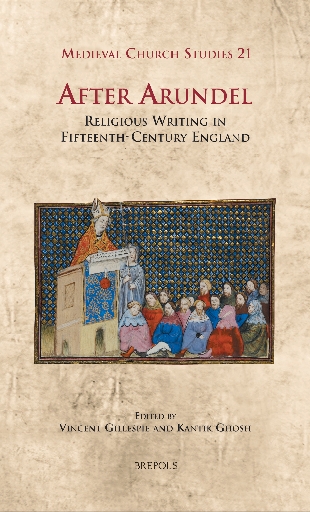
After Arundel
show More to view fulltext, buy and share links for:After Arundel show Less to hide fulltext, buy and share links for: After ArundelEngland’s religious life in the fifteenth century is worthy of sustained, nuanced, and meticulous analysis. This book offers a portrait of late medieval English religious theory and praxis that complicates any attempt to present the period as either quivering in the post-traumatic stress of Lollardy, or basking in the autumn sunshine of an uncritical and self-satisfied hierarchy’s failure to engage with undoubted European and domestic crises in ecclesiology, pastoral theology, anti-clericalism, and lay spiritual emancipation. After Arundel means not just because of or despite Archbishop Arundel (and the repressive legislation associated with him), for it also asks what models and taxonomies will be needed to move beyond Arundel as a fixed star in the firmament of (especially literary) scholarship in the period. It aims to supply the next phase of scholarly exploration of this still often dark continent of religious attitudes and writing with new tools and technical vocabularies, as well as to suggest new directions of travel.
-
-
-
Byzantine Theology and its Philosophical Background
show More to view fulltext, buy and share links for:Byzantine Theology and its Philosophical Background show Less to hide fulltext, buy and share links for: Byzantine Theology and its Philosophical BackgroundSince Byzantium never saw a consistent and definitive attempt at determining the status of philosophy and theology the way Western scholasticism did, the relationship between them in the Greek-speaking medieval world has always been regarded as a problematic issue. The essays contained in this volume work from the assumption that philosophy in Byzantium was not a monolithic doctrinal tradition, but related to a manifold set of intellectual phenomena, institutional frameworks, doctrines, and text traditions that influenced the theological literature in different ways according to the different manifestations and facets of philosophy itself.
Antonio Rigo is Professor of Byzantine Philology and Christianity at the University of Venice Ca' Foscari. His research focuses on religious life in Byzantium, with special emphasis on ascetical and mystical literature, heresiology, and theology during the Paleologan period.
-
-
-
Byzanz in Europa. Europas östliches Erbe
show More to view fulltext, buy and share links for:Byzanz in Europa. Europas östliches Erbe show Less to hide fulltext, buy and share links for: Byzanz in Europa. Europas östliches ErbeThe role of Byzantium in the Middle Ages is comparable to that of a modern political superpower such as the United States. The latter has a pervasive cultural impact on Europe and Asia, and similar cross-cultural relationships between East and West were also evident in medieval Europe, when Byzantine literature, music, art, and ritual were not only known but also studied and appropriated throughout the West. Scholarship on Byzantium and its relationship with Western Europe has yet to explore the full dynamics of this relationship or the extent to which the West was influenced by Byzantine culture. The papers presented in this volume offer a wide interdisciplinary perspective on the crucial importance of Byzantium for Western Europe, featuring articles on art and architectural history, social and religious history, musicology, literature, historiography, gender studies. The essays originate from an interdisciplinary conference, held in the Wissenschaftskolleg Greifswald in December 2007, which brought together an international group of scholars. The proceedings of this gathering give a new and compelling testimony to the exceptionally high status of Byzantine culture in Western Europe and invite further studies on the exceptional and unique role of the Byzantine Empire, positioned at the crux between Europe and Asia.
Michael Altripp received his PhD in Early Christian Archaeology and Byzantine Art from the University of Mainz, and currently holds an Associate Professorship at the University of Greifswald. His main fi elds of interests are at the crossroads of art and architecture with theology, and address in particular issues of exegesis, iconography and liturgy, as well as the dynamics of cross-cultural exchange between East and West.
-
-
-
Christian readings of Aristotle from the Middle Ages to the Renaissance
show More to view fulltext, buy and share links for:Christian readings of Aristotle from the Middle Ages to the Renaissance show Less to hide fulltext, buy and share links for: Christian readings of Aristotle from the Middle Ages to the RenaissanceWidely recognized as one of the main characteristics of Latin Aristotelianism, the ‘Christianisation’ of Aristotle from the thirteenth to the seventeenth century has received as yet little attention. Aiming to answer the need for a more systematic investigation, the articles here collected approach Christian readings of the Stagirite’s works from different perspectives. Setting aside abstract discussions about ‘degrees of orthodoxy’, they address a few specific questions: which ‘images’ of Aristotle were offered by Medieval and Renaissance interpreters, and in particular how did some of them argue that — far from being a pagan or even an impious thinker — he did not contradict the truths revealed by Holy Scripture? Which strategies did they adopt to harmonize Aristotelian philosophy with Christian religion, or at least to avoid their clash? How did they conceive the task of expounding Aristotle’s thought? How did they understand and apply the distinctions, developed since the mid-thirteenth century, between the point of view of the philosophers and that of the believers, between what is true ‘speaking naturally’ and what is true ‘according to faith’? Were these distinctions — and other disclaimers or cautionary statements — effective in protecting masters that taught Aristotle’s texts from accusations of heresy? To what extent were ideas issuing from Christian theology integrated within the Peripatetic worldview, or even treated within Aristotelian commentaries?
Discussing these and related questions, the ten contributors to this volume examine relevant doctrines of outstanding thinkers – Roger Bacon (Chiara Crisciani), Siger of Brabant and Henry of Ghent (Pasquale Porro), Dante Alighieri (Gianfranco Fioravanti); offer a fine analysis of some commentaries on the Nicomachean Ethics (Iacopo Costa), the Politics (Stefano Simonetta) and the libri naturales (Amos Corbini); suggest innovative interpretations of the genesis of the Liber de bona fortuna (Valérie Cordonier) and of the condemnation of 1277 (Dragos Calma); inspect minor but significant figures of the Italian Renaissance such as Ludovico Beccadelli (Pietro Rossi) and Cesare Crivellati (Luca Bianchi).
-
-
-
Heinrich Isaac and Polyphony for the Proper of the Mass in the Late Middle Ages and the Renaissance
show More to view fulltext, buy and share links for:Heinrich Isaac and Polyphony for the Proper of the Mass in the Late Middle Ages and the Renaissance show Less to hide fulltext, buy and share links for: Heinrich Isaac and Polyphony for the Proper of the Mass in the Late Middle Ages and the RenaissanceThe important contribution of Heinrich Isaac (ca. 1455–1517) to the genre of the proper of the mass has long been recognised. His work in this genre, collected in the monumental posthumously published Choralis Constantinus, was considered a landmark even in the sixteenth century. Yet Isaac’s magnum opus was by no means isolated. The mass proper played a much greater and more significant musical and symbolic role in the landscape of later-medieval and Renaissance music-making than is currently acknowledged. The present collection of fifteen essays offers new insights into both Isaac's mass propers themselves, which are still shrouded by many enigmas, and their context within broader later-fifteenth and sixteenth-century mass proper traditions. The circumstances under which Isaac's mass propers were composed, performed, and transmitted are discussed afresh, as is the striking late-sixteenth-century reception that the Choralis experienced. Studies of previously unknown or little-examined mass proper collections from countries as widely seperated as Portugal and Poland, as well as of the transformation of the genre in Lutheran territories and in the hands of William Byrd, show that Isaac's enterprise, though the largest of its kind, was built on and embedded in a strong and ongoing tradition of proper settings and cycles.
-
-
-
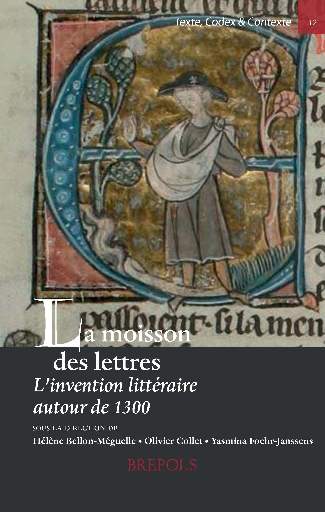
La moisson des lettres: L'invention littéraire autour de 1300
show More to view fulltext, buy and share links for:La moisson des lettres: L'invention littéraire autour de 1300 show Less to hide fulltext, buy and share links for: La moisson des lettres: L'invention littéraire autour de 1300Cet ouvrage rassemble les contributions de chercheurs en histoire de la littérature et en histoire de l’art sur les innovations qui ont marqué les lettres et la production manuscrite dans les dernières décennies du XIIIe siècle et les premières du XIVe siècle (1270-1340) en France. Cette période charnière de l’histoire de la littérature médiévale a souffert jusqu’à présent d’un certain désintérêt de la critique et reste de ce fait encore méconnue. Comblant cette lacune, les auteurs de cette étude collective ont évalué le poids du passé littéraire chez des écrivains et des artistes revendiquant leur statut d’héritier mais montrant aussi la faculté de s’approprier la tradition et d’imposer leur originalité. Ils ont mis en lumière les particularités et les innovations de la période tant au niveau des méthodes de traduction, qu’à celui des genres littéraires, des formes poétiques ou artistiques, ils ont étudié enfin les milieux politiques qui ont soutenu alors une production littéraire et manuscrite digne d’intérêt.
-
-
-
The Calligraphy of Medieval Music
show More to view fulltext, buy and share links for:The Calligraphy of Medieval Music show Less to hide fulltext, buy and share links for: The Calligraphy of Medieval MusicThe Calligraphy of Medieval Music treats the practical aspects of the book making and music writing trades in the Middle Ages. It covers most major regions of music writing in medieval Europe, from Sicily to England and from Spain to the eastern Germanic regions. Specific issues raised by the contributors include the pricking and ruling of books; the writing habits of scribes and their reliance on memory; the cultural influence of monastic orders such as the Carthusians; graphic variants between regional styles of music notation ranging from tenth-century Saint-Gall to sixteenth-century Cambrai; and the impact of print on late medieval notation. The volume opens with a few essays dealing with general issues such as page layout and manuscript production both in and out of medieval Europe. The second part of the book covers early music notations from the tenth and eleventh centuries, and the third part, the twelfth to the sixteenth centuries.
-
-
-
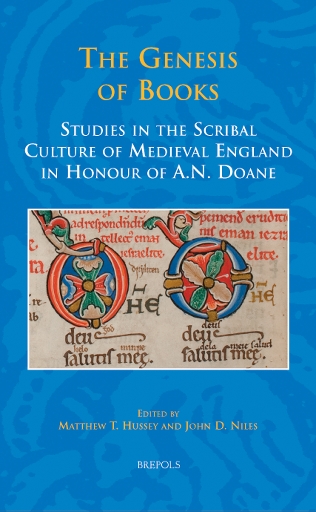
The Genesis of Books
show More to view fulltext, buy and share links for:The Genesis of Books show Less to hide fulltext, buy and share links for: The Genesis of BooksThis volume is about the book itself, as shaped and made by medieval scribes and as conditioned by the cultural understandings that were present in the world where those scribes lived. Questions relating to the provenance, compilation, script, function, and use — both medieval and modern — of manuscripts are raised and are resolved in a fresh manner. The focal point of the volume is Anglo-Saxon England, approached as a cultural crossroads east and west, with attention given to English manuscripts produced both before and after the Conquest. The book thus contributes to a reassessment of early English culture as complex, emergent, and multi-stranded.
A number of different literary genres and types are explored, ranging from devotional materials (e.g. psalters, sermons, and illustrated gospel books) to texts of a more worldly orientation. A number of plates illustrate the work of particular scribes. While some beautiful codices are showcased, the emphasis falls on plain books written in English, including the Vercelli Book, the Exeter Book, and the Blickling Homilies. Analyses of the history of palaeography and the theory of editing raise the point that whatever we know from old books is conditioned by the tools used to study them.
-
-
-
Théorie et pratiques des élites au Haut Moyen Âge. Conception, perception et réalisation sociale
show More to view fulltext, buy and share links for:Théorie et pratiques des élites au Haut Moyen Âge. Conception, perception et réalisation sociale show Less to hide fulltext, buy and share links for: Théorie et pratiques des élites au Haut Moyen Âge. Conception, perception et réalisation socialeLe programme de recherche international sur «Les élites dans le haut Moyen Âge occidental. Formation, identité, reproduction» (2002-2009) s’est donné pour objectif d’examiner dans une perspective comparative, à l’échelle européenne, les catégories sociales dominantes aussi bien laïques qu’ecclésiastiques, celles de la cour autant que celles des régions. Le sixième et dernier volume issu de ce projet fournit d’abord un bilan et une synthèse des travaux. Il associe par ailleurs à ces premiers acquis une analyse des concepts, de la perception et de la façon dont les élites se concevaient elles-mêmes. Il tente enfin de vérifier, sur la base de dossiers régionaux ou d’enquêtes sur des catégories particulières, dans quelle mesure la perception médiévale était en conformité avec les pratiques.L’étude du vocabulaire et des concepts relatifs aux élites du haut Moyen Âge s’est orientée autour du questionnement suivant: qu’est-ce qui, du point de vue moderne, relève des élites? Qui, du point de vue des contemporains, appartenait à ce(s) groupe(s) dominant(s)? Selon quels critères lexicaux et conceptuels définissait-on les élites? Par quels moyens se démarquaient-elles dans la perspective des contemporains et à leurs propres yeux? Établissait-on une hiérarchie entre les critères de distinction? Selon quels modèles théoriques étaient-ils distingués (et quel contenu donnait-on à ces modèles)? Dans quelle mesure les concepts actuels d’élites sont-ils applicables au haut Moyen Âge? Au registre des pratiques sociales, plusieurs études de cas permettent de saisir ce qui démarquait concrètement les élites par rapport au reste de la population, tout en se demandant dans quelle mesure cette réalité sociale correspondait aux représentations mentales des élites et si les concepts s’adaptaient à une réalité changeante, ou l’inverse. Plusieurs types d’élites sont envisagés, avec leurs particularités, leurs hiérarchies internes et leurs évolutions, enfin l’imbrication des groupes dominants entre eux.
-
-
-
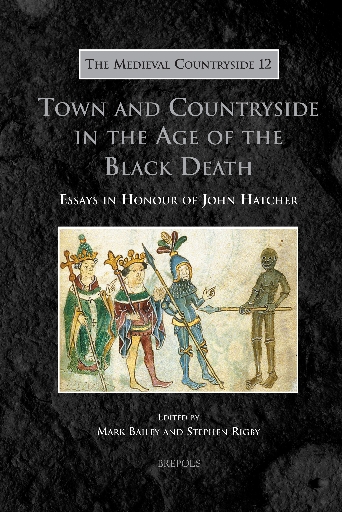
Town and Countryside in the Age of the Black Death
show More to view fulltext, buy and share links for:Town and Countryside in the Age of the Black Death show Less to hide fulltext, buy and share links for: Town and Countryside in the Age of the Black DeathThe arrival of the Black Death in England, which killed around a half of the national population, marks the beginning of one of the most fascinating, controversial and important periods of English social and economic history. This collection of essays on English society and economy in the later Middle Ages provides a worthy tribute to the pioneering work of John Hatcher in this field. With contributions from many of the most eminent historians of the English economy in the later Middle Ages, the volume includes discussions of population, agriculture, the manor, village society, trade, and industry. The book’s chapters offer original reassessments of key topics such as the impact of the Black Death on population and its effects on agricultural productivity and estate management. A number of its studies open up new areas of research, including the demography of coastal communities and the role of fairs in the late medieval economy, whilst others explore the problems of evidence for mortality rates or for change within the village community. Bringing together broad surveys of change and local case studies based on detailed archival research, the chapters offer an assessment of previous work in the field and suggest a number of new directions for scholarship in this area.
-
-
-

Vehicles of Transmission, Translation, and Transformation in Medieval Textual Culture
show More to view fulltext, buy and share links for:Vehicles of Transmission, Translation, and Transformation in Medieval Textual Culture show Less to hide fulltext, buy and share links for: Vehicles of Transmission, Translation, and Transformation in Medieval Textual CultureIn this volume the McGill University Research Group on Transmission, Translation, and Transformation in Medieval Cultures and their collaborators initiate a new reflection on the dynamics involved in receiving texts and ideas from the antiquity or from other contemporary cultures. For all their historic specificity, the western European, Arab/Islamic and Jewish civilizations of the Middle Ages were nonetheless co-participants in a complex web of cultural transmission that operated via translation and inevitably involved the transformation of what had been received. This threefold process is what defines medieval intellectual history. Every act of transmission presumes the existence of some ‘efficient cause’ – a translation, a commentary, a book, a library etc. Such vehicles of transmission, however, are not passive containers in which cultural products are transported. On the contrary: the vehicles themselves select, shape, and transform the material transmitted, making ancient or alien cultural products usable and attractive in another milieu. The case studies contained in this volume attempt to bring these larger processes into the foreground. They lay the groundwork for a new intellectual history of medieval civilizations in all their variety, based on the core premise that these shared not only a cultural heritage from antiquity but, more importantly, a broadly comparable ‘operating system’ for engaging with that heritage. Each was a culture of transmission, claiming ownership over the prestigious knowledge inherited from the past. Each depended on translation. Finally, each transformed what it appropriated.
-
-
-

Wycliffite Controversies
show More to view fulltext, buy and share links for:Wycliffite Controversies show Less to hide fulltext, buy and share links for: Wycliffite ControversiesThe philosophical and theological ideas of John Wyclif, their dissemination among clerical and lay audiences, and the movement of religious dissent associated with his name all provoked sharp controversies in late medieval England. This volume brings together the very latest scholarship on Wyclif and Wycliffism, with its contributors exploring in interdisciplinary fashion the historical, literary, and theological resonances of the Wycliffite controversies. Far from adhering to the traditional binary divide between ‘orthodoxy’ and ‘heresy’ as a tool for explaining the religious turmoil of the late fourteenth, fifteenth, and early sixteenth centuries, essays here explore the construction and rhetorical use of those terms, collectively producing a more nuanced account of the religious history of pre-Reformation England. Topics include the use of religious lyrics and tables of lessons as indirect rebuttals of Wycliffite claims; the social networks through which dissenters transmitted their ideas; dissenting and mainstream readings of Scripture; the ‘survival’ of Wycliffism in the run-up to Henry VIII’s reformation; and the fate of Wyclif and Wycliffism in later historiography. Leading contributors include Anne Hudson, Alastair Minnis, and Peter Marshall.
-
-
-
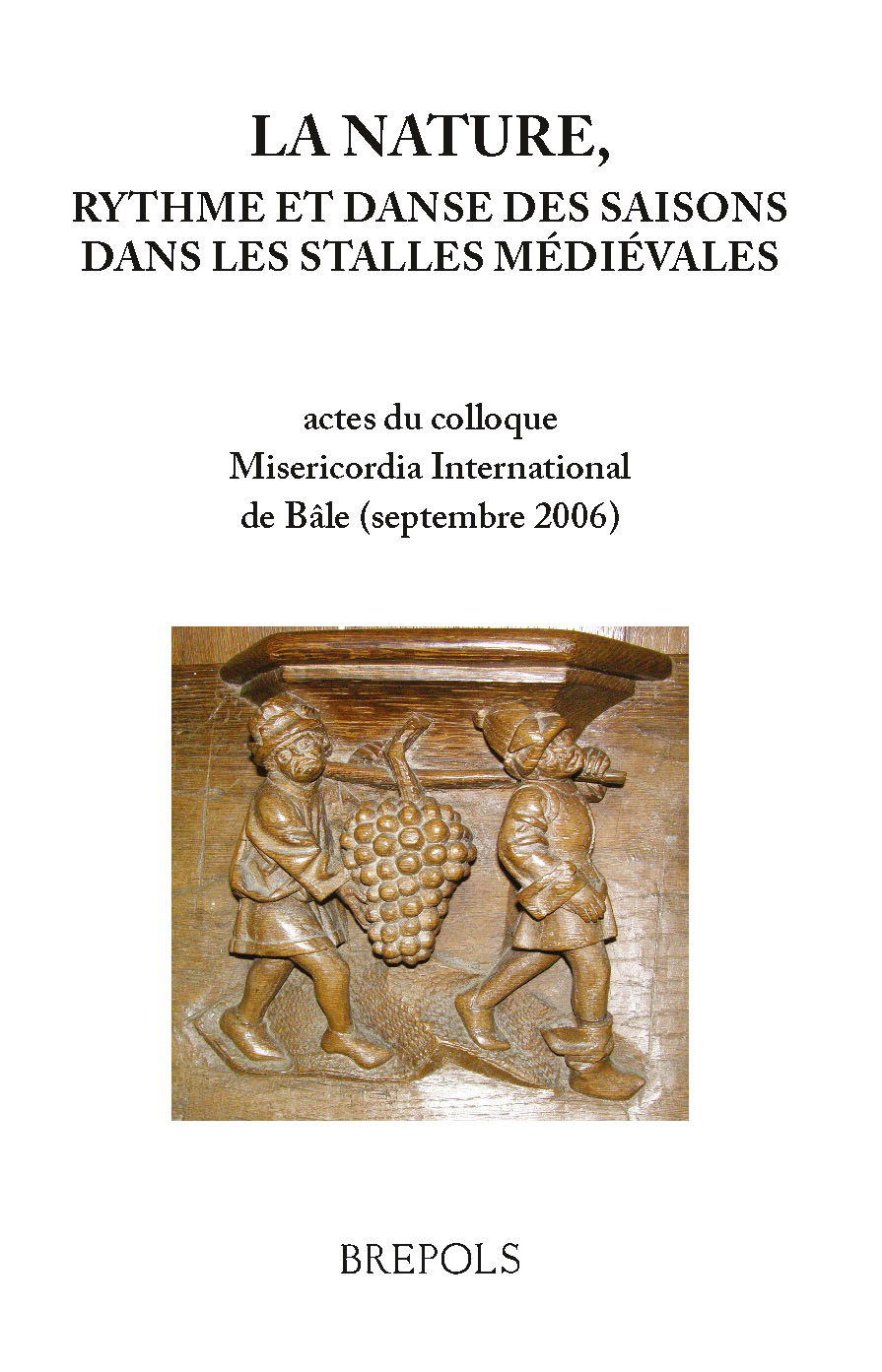
La nature, rythme et danse des saisons dans les stalles médiévales
show More to view fulltext, buy and share links for:La nature, rythme et danse des saisons dans les stalles médiévales show Less to hide fulltext, buy and share links for: La nature, rythme et danse des saisons dans les stalles médiévales
-