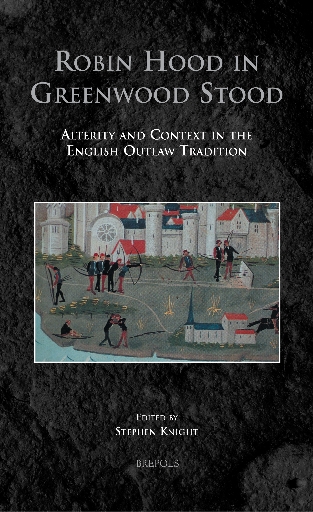
EMISCS12

Collection Contents
21 - 39 of 39 results
-
-

Multilingualism in Medieval Britain (c. 1066-1520)
show More to view fulltext, buy and share links for:Multilingualism in Medieval Britain (c. 1066-1520) show Less to hide fulltext, buy and share links for: Multilingualism in Medieval Britain (c. 1066-1520)This book is devoted to the study of multilingual Britain in the later medieval period, from the Norman Conquest to John Skelton. It brings together experts from different disciplines — history, linguistics, and literature - in a joint effort to recover the complexities of spoken and written communication in the Middle Ages. Each author focuses on one specific text or text type, and demonstrates by example what careful analysis can reveal about the nature of medieval multilingualism and about medieval attitudes to the different living languages of later medieval Britain. There are chapters on charters, sermons, religious prose, glossaries, manorial records, biblical translations, chronicles, and the macaronic poetry of William Langland and John Skelton. By addressing the full range of languages spoken and written in later medieval Britain (Latin, French, Old Norse, Welsh, Cornish, English, Dutch, and Hebrew), this collection reveals the linguistic situation of the period in its true diversity and shows the resourcefulness of medieval people when faced with the need to communicate. For medieval writers and readers, the ability to move between languages opened up a wealth of possibilities: possibilities for subtle changes of register, for counterpoint, for linguistic playfulness, and, perhaps most importantly, for texts which extend a particular challenge to the reader to engage with them.
-
-
-

Philosophy and Theology in the 'Studia' of the Religious Orders and at Papal and Royal Courts
show More to view fulltext, buy and share links for:Philosophy and Theology in the 'Studia' of the Religious Orders and at Papal and Royal Courts show Less to hide fulltext, buy and share links for: Philosophy and Theology in the 'Studia' of the Religious Orders and at Papal and Royal CourtsMost scholars know that the great universities were the institutional setting of Scholastic philosophical and theological activity in the later Middle Ages. Fewer realize, however, that perhaps far more Scholastic learning in the liberal arts and theology took place in the studia or study-houses of the religious orders, which out-numbered the universities and were more widely distributed across Europe. Indeed, most members of the mendicant orders received most or all of their learning in the liberal arts and theology in the studia of their order, and the most famous members of the orders (e.g., Albert the Great, Thomas Aquinas and John Duns Scotus) spent more time teaching in the studia than they did serving as Regent Masters in the university proper. As a consequence, the greater part of later medieval Scholastic literature was produced in the institutional context of the studia of the religious orders. Moreover, there were other significant institutional loci for Scholastic learning and discourse in the later Middle Ages besides the universities and the study-houses, namely the Papal Court—notably the Sacred Palace at Avignon—and several royal courts, for example, the courts of Robert the Wise in Naples and of the Emperor Lewis IV in Munich. It is not surprising, therefore, that many of the greatest Scholastic masters at different times taught in, or were associated with, all of these venues. This volume, which originated at the XVth annual Colloquium of the Société Internationale pour l’Étude de la Philosophie Médiévale held at the University of Notre Dame (USA) in October 2008, contains essays concerning the study and teaching of philosophy and theology in the studia of the Dominicans, Franciscans, Augustinian Hermits, Carmelites, Benedictines and Cistercians, as well as the intellectual activity at the Papal Court in Rome and Avignon and at various royal courts (London, Naples, Munich).Contributions by: Fabrizio Amerini, Luca Bianchi, Alain Boureau, Stephen F. Brown, Amos Corbini, William O. Duba, Russell L. Friedman, Hester G. Gelber, Joseph Goering, Wouter Goris, Guy Guldentops, Jacqueline Hamesse, Maarten J.F.M. Hoenen, Roberto Lambertini, Alfonso Maierù, Michèle Mulchahey, Patrick Nold, Adriano Oliva, OP, Alessandro Palazzo, Giorgio Pini, Sylvain Piron, François-Xavier Putallaz, Christopher D. Schabel and Garrett R. Smith, Neslihan ?enocak, Thomas Sullivan, OSB, Christian Trottmann, with an introduction by Kent Emery, Jr. and an epilogue by William J. Courtenay.
-
-
-

Synesios von Kyrene: Politik - Literatur - Philosophie
show More to view fulltext, buy and share links for:Synesios von Kyrene: Politik - Literatur - Philosophie show Less to hide fulltext, buy and share links for: Synesios von Kyrene: Politik - Literatur - PhilosophiePhilosopher and man of letters, Lybian magnate, political writer in Constantinople, pupil of Hypatia the neoplatonist, and eventually metropolitan bishop of Ptolemais - Synesius of Cyrene is among the most interesting figures of Late Antiquity.
The present volume brings together the papers presented at the conference “Synesios von Kyrene: Politik - Literatur - Philosophie”, held at the University of Constance in November 2008. They offer a broad approach to selected aspects concerning Synesius’ works as well as to the historical background, philosophical contexts, and reception in scholarship and literature, from Late Antiquity to the present.
Helmut Seng is Associate Professor at the University of Constance and Lecturer at the Institute of Classical Philology at the University of Frankfurt. Main research interests include Synesius and the Chaldaean Oracles as well as aspects of form and of intertextuality in Greek and Latin literature.
Lars Hoffmann was a researcher at the University of Mainz, where he taught in all fields of Byzantine studies. Since 2010 he has been a researcher at the Max-Planck-Institute for European Legal History at Frankfurt and in collaboration with other scholars, he is responsible for a new edition of a collection of Byzantine legal sources. Main research interests include the cultural history of Byzantium as well as the tradition and reception of ancient and Byzantine Greek texts.
-
-
-

Études d'exégèse médiévale offertes à Gilbert Dahan par ses élèves
show More to view fulltext, buy and share links for:Études d'exégèse médiévale offertes à Gilbert Dahan par ses élèves show Less to hide fulltext, buy and share links for: Études d'exégèse médiévale offertes à Gilbert Dahan par ses élèvesAprès les ouvrages classiques de Beryl Smalley et Henri de Lubac, les travaux de Gilbert Dahan ont renouvelé les études sur l’exégèse de la Bible en Occident chrétien au moyen âge. Tout d’abord, l’attention qu’il a portée aux méthodes mêmes de l’exégèse a mis en valeur les questions de critique textuelle et le schématisme de la démarche des exégètes. Mais son souci de caractériser une « herméneutique médiévale » a permis aussi de montrer combien exégèse « confessante » et exégèse « scientifique » (pour employer les catégories de Paul Ricoeur) construisent harmonieusement le sens, notamment chez les auteurs du XIIIe siècle.
Ces recherches ont été l’objet de son enseignement à l’École pratique des hautes études (Section des sciences religieuses), dans la chaire « Histoire de l’exégèse chrétienne au moyen âge ». Plusieurs de ses « élèves » ou auditeurs lui offrent le présent recueil d’études, qui illustrent la fécondité de son enseignement, au point qu’on peut parler d’un renouveau des études bibliques médiévales chez les jeunes chercheurs en France. Ses travaux ont aussi donné des outils d’analyse aux historiens et sociologues du moyen âge et même de l’époque moderne.
Plusieurs des aspects de cette recherche sont ici illustrés : critique textuelle à l’époque carolingienne, étude de thèmes ou de versets particuliers, méthodes des commentateurs - mais aussi présence de la Bible en dehors même de l’exégèse, dans les traductions, dans la réfl exion politique ou dans la controverse avec les juifs.
Annie Noblesse-Rocher est professeur d’histoire du christianisme médiéval et moderne à la Faculté de théologie protestante, Université de Strasbourg. Elle poursuit des recherches sur les commentaires monastiques médiévaux (L’expérience de Dieu dans les sermons de Guerric, abbé d’Igny, xii e siècle, Paris, Cerf, 2005) et sur ceux de la première modernité (en particulier sur Martin Bucer, dont elle édite des oeuvres).
Contributeurs : Claire Angotti, Emmanuel Bain, Timothy Bellamah, Hedwige Boff y-de Bouteiller, Caroline Boucher, Adrien Candiard, Caroline Chevalier-Royet, Sophie Delmas, Maria Valeria Ingegno, Kristina Mitalaité, Brigitte Prévot, Anne-Zoé Rillon-Marne, Lydwine Scordia, Sumi Shimahara, Claire Soussen-Max.
-
-
-
Adorare caelestia, gubernare terrena. Atti del Colloquio Internazionale in onore di Paolo Lucentini (Napoli, 6-7 Novembre 2007), Arfé, Caiazzo, Sannino
show More to view fulltext, buy and share links for:Adorare caelestia, gubernare terrena. Atti del Colloquio Internazionale in onore di Paolo Lucentini (Napoli, 6-7 Novembre 2007), Arfé, Caiazzo, Sannino show Less to hide fulltext, buy and share links for: Adorare caelestia, gubernare terrena. Atti del Colloquio Internazionale in onore di Paolo Lucentini (Napoli, 6-7 Novembre 2007), Arfé, Caiazzo, SanninoAdorare caelestia, gubernare terrena indica una pericope dell’Asclepius che declina la natura essenziale e corporea dell’uomo in relazione alla duplice funzione del suo essere: «ammirare e adorare le realtà celesti, custodire e governare le realtà terrene» (Ascl. 8). Sotto questa epigrafe sono raccolti i contributi di venticinque studiosi che hanno inteso rendere omaggio a Paolo Lucentini (1937-2011), medievista di rilievo internazionale, fondatore e direttore di Hermes Latinus, il programma di ricerca per lo studio e per l’edizione dei testi ermetici, pubblicato nella collana del Corpus Christianorum. Continuatio Mediaeualis (Brepols, Turnhout). I saggi contenuti nel volume coprono un ampio arco cronologico, dalla tarda antichità all’epoca moderna, e sostanzialmente afferiscono ai tre filoni tematici perseguiti da Lucentini nella sua carriera scientifica: platonismo, ermetismo e eresia. Di filosofie dissidenti si sono occupate Alessandra Beccarisi e Antonella Straface. Allo studio della tradizione ermetica si sono dedicati Charles Burnett, Stefano Caroti, Chiara Crisciani, Peter Dronke, Michele Fatica, Françoise Hudry, Ilaria Parri e Pinella Travaglia; alle filosofie e alle tradizioni scientifiche medievali: Paul Kunitzsch, Fabrizio Lelli, Alfonso Maierù, Vittoria Perrone Compagni, Gregorio Piaia, Antonella Sannino, Valeria Sorge; agli influssi del platonismo: Pasquale Arfé, Carmela Baffioni, Irene Caiazzo, Luigi Catalani, Giulio d’Onofrio, Mark Delp, Michela Pereira e Pasquale Porro.
-
-
-
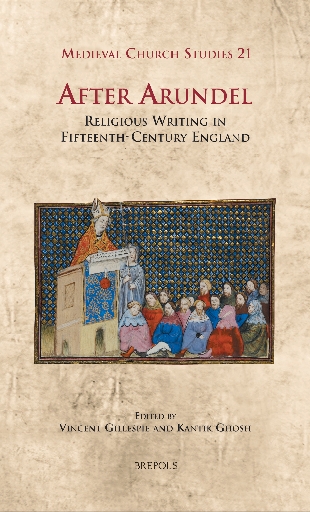
After Arundel
show More to view fulltext, buy and share links for:After Arundel show Less to hide fulltext, buy and share links for: After ArundelEngland’s religious life in the fifteenth century is worthy of sustained, nuanced, and meticulous analysis. This book offers a portrait of late medieval English religious theory and praxis that complicates any attempt to present the period as either quivering in the post-traumatic stress of Lollardy, or basking in the autumn sunshine of an uncritical and self-satisfied hierarchy’s failure to engage with undoubted European and domestic crises in ecclesiology, pastoral theology, anti-clericalism, and lay spiritual emancipation. After Arundel means not just because of or despite Archbishop Arundel (and the repressive legislation associated with him), for it also asks what models and taxonomies will be needed to move beyond Arundel as a fixed star in the firmament of (especially literary) scholarship in the period. It aims to supply the next phase of scholarly exploration of this still often dark continent of religious attitudes and writing with new tools and technical vocabularies, as well as to suggest new directions of travel.
-
-
-
Byzantine Theology and its Philosophical Background
show More to view fulltext, buy and share links for:Byzantine Theology and its Philosophical Background show Less to hide fulltext, buy and share links for: Byzantine Theology and its Philosophical BackgroundSince Byzantium never saw a consistent and definitive attempt at determining the status of philosophy and theology the way Western scholasticism did, the relationship between them in the Greek-speaking medieval world has always been regarded as a problematic issue. The essays contained in this volume work from the assumption that philosophy in Byzantium was not a monolithic doctrinal tradition, but related to a manifold set of intellectual phenomena, institutional frameworks, doctrines, and text traditions that influenced the theological literature in different ways according to the different manifestations and facets of philosophy itself.
Antonio Rigo is Professor of Byzantine Philology and Christianity at the University of Venice Ca' Foscari. His research focuses on religious life in Byzantium, with special emphasis on ascetical and mystical literature, heresiology, and theology during the Paleologan period.
-
-
-
Byzanz in Europa. Europas östliches Erbe
show More to view fulltext, buy and share links for:Byzanz in Europa. Europas östliches Erbe show Less to hide fulltext, buy and share links for: Byzanz in Europa. Europas östliches ErbeThe role of Byzantium in the Middle Ages is comparable to that of a modern political superpower such as the United States. The latter has a pervasive cultural impact on Europe and Asia, and similar cross-cultural relationships between East and West were also evident in medieval Europe, when Byzantine literature, music, art, and ritual were not only known but also studied and appropriated throughout the West. Scholarship on Byzantium and its relationship with Western Europe has yet to explore the full dynamics of this relationship or the extent to which the West was influenced by Byzantine culture. The papers presented in this volume offer a wide interdisciplinary perspective on the crucial importance of Byzantium for Western Europe, featuring articles on art and architectural history, social and religious history, musicology, literature, historiography, gender studies. The essays originate from an interdisciplinary conference, held in the Wissenschaftskolleg Greifswald in December 2007, which brought together an international group of scholars. The proceedings of this gathering give a new and compelling testimony to the exceptionally high status of Byzantine culture in Western Europe and invite further studies on the exceptional and unique role of the Byzantine Empire, positioned at the crux between Europe and Asia.
Michael Altripp received his PhD in Early Christian Archaeology and Byzantine Art from the University of Mainz, and currently holds an Associate Professorship at the University of Greifswald. His main fi elds of interests are at the crossroads of art and architecture with theology, and address in particular issues of exegesis, iconography and liturgy, as well as the dynamics of cross-cultural exchange between East and West.
-
-
-
Christian readings of Aristotle from the Middle Ages to the Renaissance
show More to view fulltext, buy and share links for:Christian readings of Aristotle from the Middle Ages to the Renaissance show Less to hide fulltext, buy and share links for: Christian readings of Aristotle from the Middle Ages to the RenaissanceWidely recognized as one of the main characteristics of Latin Aristotelianism, the ‘Christianisation’ of Aristotle from the thirteenth to the seventeenth century has received as yet little attention. Aiming to answer the need for a more systematic investigation, the articles here collected approach Christian readings of the Stagirite’s works from different perspectives. Setting aside abstract discussions about ‘degrees of orthodoxy’, they address a few specific questions: which ‘images’ of Aristotle were offered by Medieval and Renaissance interpreters, and in particular how did some of them argue that — far from being a pagan or even an impious thinker — he did not contradict the truths revealed by Holy Scripture? Which strategies did they adopt to harmonize Aristotelian philosophy with Christian religion, or at least to avoid their clash? How did they conceive the task of expounding Aristotle’s thought? How did they understand and apply the distinctions, developed since the mid-thirteenth century, between the point of view of the philosophers and that of the believers, between what is true ‘speaking naturally’ and what is true ‘according to faith’? Were these distinctions — and other disclaimers or cautionary statements — effective in protecting masters that taught Aristotle’s texts from accusations of heresy? To what extent were ideas issuing from Christian theology integrated within the Peripatetic worldview, or even treated within Aristotelian commentaries?
Discussing these and related questions, the ten contributors to this volume examine relevant doctrines of outstanding thinkers – Roger Bacon (Chiara Crisciani), Siger of Brabant and Henry of Ghent (Pasquale Porro), Dante Alighieri (Gianfranco Fioravanti); offer a fine analysis of some commentaries on the Nicomachean Ethics (Iacopo Costa), the Politics (Stefano Simonetta) and the libri naturales (Amos Corbini); suggest innovative interpretations of the genesis of the Liber de bona fortuna (Valérie Cordonier) and of the condemnation of 1277 (Dragos Calma); inspect minor but significant figures of the Italian Renaissance such as Ludovico Beccadelli (Pietro Rossi) and Cesare Crivellati (Luca Bianchi).
-
-
-
Heinrich Isaac and Polyphony for the Proper of the Mass in the Late Middle Ages and the Renaissance
show More to view fulltext, buy and share links for:Heinrich Isaac and Polyphony for the Proper of the Mass in the Late Middle Ages and the Renaissance show Less to hide fulltext, buy and share links for: Heinrich Isaac and Polyphony for the Proper of the Mass in the Late Middle Ages and the RenaissanceThe important contribution of Heinrich Isaac (ca. 1455–1517) to the genre of the proper of the mass has long been recognised. His work in this genre, collected in the monumental posthumously published Choralis Constantinus, was considered a landmark even in the sixteenth century. Yet Isaac’s magnum opus was by no means isolated. The mass proper played a much greater and more significant musical and symbolic role in the landscape of later-medieval and Renaissance music-making than is currently acknowledged. The present collection of fifteen essays offers new insights into both Isaac's mass propers themselves, which are still shrouded by many enigmas, and their context within broader later-fifteenth and sixteenth-century mass proper traditions. The circumstances under which Isaac's mass propers were composed, performed, and transmitted are discussed afresh, as is the striking late-sixteenth-century reception that the Choralis experienced. Studies of previously unknown or little-examined mass proper collections from countries as widely seperated as Portugal and Poland, as well as of the transformation of the genre in Lutheran territories and in the hands of William Byrd, show that Isaac's enterprise, though the largest of its kind, was built on and embedded in a strong and ongoing tradition of proper settings and cycles.
-
-
-
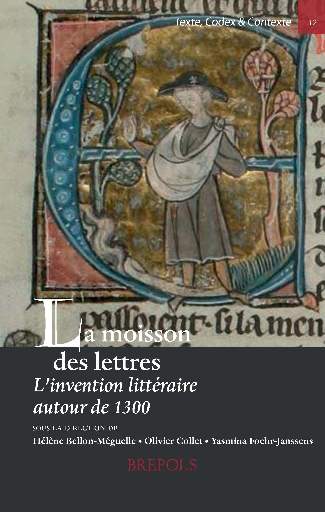
La moisson des lettres: L'invention littéraire autour de 1300
show More to view fulltext, buy and share links for:La moisson des lettres: L'invention littéraire autour de 1300 show Less to hide fulltext, buy and share links for: La moisson des lettres: L'invention littéraire autour de 1300Cet ouvrage rassemble les contributions de chercheurs en histoire de la littérature et en histoire de l’art sur les innovations qui ont marqué les lettres et la production manuscrite dans les dernières décennies du XIIIe siècle et les premières du XIVe siècle (1270-1340) en France. Cette période charnière de l’histoire de la littérature médiévale a souffert jusqu’à présent d’un certain désintérêt de la critique et reste de ce fait encore méconnue. Comblant cette lacune, les auteurs de cette étude collective ont évalué le poids du passé littéraire chez des écrivains et des artistes revendiquant leur statut d’héritier mais montrant aussi la faculté de s’approprier la tradition et d’imposer leur originalité. Ils ont mis en lumière les particularités et les innovations de la période tant au niveau des méthodes de traduction, qu’à celui des genres littéraires, des formes poétiques ou artistiques, ils ont étudié enfin les milieux politiques qui ont soutenu alors une production littéraire et manuscrite digne d’intérêt.
-
-
-
The Calligraphy of Medieval Music
show More to view fulltext, buy and share links for:The Calligraphy of Medieval Music show Less to hide fulltext, buy and share links for: The Calligraphy of Medieval MusicThe Calligraphy of Medieval Music treats the practical aspects of the book making and music writing trades in the Middle Ages. It covers most major regions of music writing in medieval Europe, from Sicily to England and from Spain to the eastern Germanic regions. Specific issues raised by the contributors include the pricking and ruling of books; the writing habits of scribes and their reliance on memory; the cultural influence of monastic orders such as the Carthusians; graphic variants between regional styles of music notation ranging from tenth-century Saint-Gall to sixteenth-century Cambrai; and the impact of print on late medieval notation. The volume opens with a few essays dealing with general issues such as page layout and manuscript production both in and out of medieval Europe. The second part of the book covers early music notations from the tenth and eleventh centuries, and the third part, the twelfth to the sixteenth centuries.
-
-
-
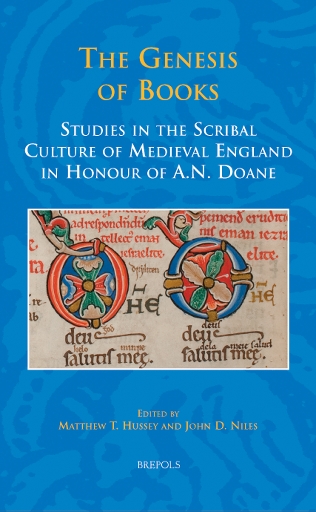
The Genesis of Books
show More to view fulltext, buy and share links for:The Genesis of Books show Less to hide fulltext, buy and share links for: The Genesis of BooksThis volume is about the book itself, as shaped and made by medieval scribes and as conditioned by the cultural understandings that were present in the world where those scribes lived. Questions relating to the provenance, compilation, script, function, and use — both medieval and modern — of manuscripts are raised and are resolved in a fresh manner. The focal point of the volume is Anglo-Saxon England, approached as a cultural crossroads east and west, with attention given to English manuscripts produced both before and after the Conquest. The book thus contributes to a reassessment of early English culture as complex, emergent, and multi-stranded.
A number of different literary genres and types are explored, ranging from devotional materials (e.g. psalters, sermons, and illustrated gospel books) to texts of a more worldly orientation. A number of plates illustrate the work of particular scribes. While some beautiful codices are showcased, the emphasis falls on plain books written in English, including the Vercelli Book, the Exeter Book, and the Blickling Homilies. Analyses of the history of palaeography and the theory of editing raise the point that whatever we know from old books is conditioned by the tools used to study them.
-
-
-
Théorie et pratiques des élites au Haut Moyen Âge. Conception, perception et réalisation sociale
show More to view fulltext, buy and share links for:Théorie et pratiques des élites au Haut Moyen Âge. Conception, perception et réalisation sociale show Less to hide fulltext, buy and share links for: Théorie et pratiques des élites au Haut Moyen Âge. Conception, perception et réalisation socialeLe programme de recherche international sur «Les élites dans le haut Moyen Âge occidental. Formation, identité, reproduction» (2002-2009) s’est donné pour objectif d’examiner dans une perspective comparative, à l’échelle européenne, les catégories sociales dominantes aussi bien laïques qu’ecclésiastiques, celles de la cour autant que celles des régions. Le sixième et dernier volume issu de ce projet fournit d’abord un bilan et une synthèse des travaux. Il associe par ailleurs à ces premiers acquis une analyse des concepts, de la perception et de la façon dont les élites se concevaient elles-mêmes. Il tente enfin de vérifier, sur la base de dossiers régionaux ou d’enquêtes sur des catégories particulières, dans quelle mesure la perception médiévale était en conformité avec les pratiques.L’étude du vocabulaire et des concepts relatifs aux élites du haut Moyen Âge s’est orientée autour du questionnement suivant: qu’est-ce qui, du point de vue moderne, relève des élites? Qui, du point de vue des contemporains, appartenait à ce(s) groupe(s) dominant(s)? Selon quels critères lexicaux et conceptuels définissait-on les élites? Par quels moyens se démarquaient-elles dans la perspective des contemporains et à leurs propres yeux? Établissait-on une hiérarchie entre les critères de distinction? Selon quels modèles théoriques étaient-ils distingués (et quel contenu donnait-on à ces modèles)? Dans quelle mesure les concepts actuels d’élites sont-ils applicables au haut Moyen Âge? Au registre des pratiques sociales, plusieurs études de cas permettent de saisir ce qui démarquait concrètement les élites par rapport au reste de la population, tout en se demandant dans quelle mesure cette réalité sociale correspondait aux représentations mentales des élites et si les concepts s’adaptaient à une réalité changeante, ou l’inverse. Plusieurs types d’élites sont envisagés, avec leurs particularités, leurs hiérarchies internes et leurs évolutions, enfin l’imbrication des groupes dominants entre eux.
-
-
-
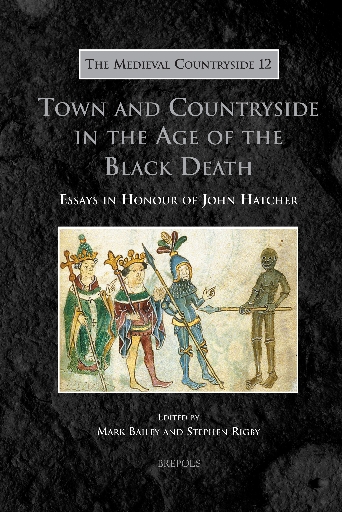
Town and Countryside in the Age of the Black Death
show More to view fulltext, buy and share links for:Town and Countryside in the Age of the Black Death show Less to hide fulltext, buy and share links for: Town and Countryside in the Age of the Black DeathThe arrival of the Black Death in England, which killed around a half of the national population, marks the beginning of one of the most fascinating, controversial and important periods of English social and economic history. This collection of essays on English society and economy in the later Middle Ages provides a worthy tribute to the pioneering work of John Hatcher in this field. With contributions from many of the most eminent historians of the English economy in the later Middle Ages, the volume includes discussions of population, agriculture, the manor, village society, trade, and industry. The book’s chapters offer original reassessments of key topics such as the impact of the Black Death on population and its effects on agricultural productivity and estate management. A number of its studies open up new areas of research, including the demography of coastal communities and the role of fairs in the late medieval economy, whilst others explore the problems of evidence for mortality rates or for change within the village community. Bringing together broad surveys of change and local case studies based on detailed archival research, the chapters offer an assessment of previous work in the field and suggest a number of new directions for scholarship in this area.
-
-
-

Vehicles of Transmission, Translation, and Transformation in Medieval Textual Culture
show More to view fulltext, buy and share links for:Vehicles of Transmission, Translation, and Transformation in Medieval Textual Culture show Less to hide fulltext, buy and share links for: Vehicles of Transmission, Translation, and Transformation in Medieval Textual CultureIn this volume the McGill University Research Group on Transmission, Translation, and Transformation in Medieval Cultures and their collaborators initiate a new reflection on the dynamics involved in receiving texts and ideas from the antiquity or from other contemporary cultures. For all their historic specificity, the western European, Arab/Islamic and Jewish civilizations of the Middle Ages were nonetheless co-participants in a complex web of cultural transmission that operated via translation and inevitably involved the transformation of what had been received. This threefold process is what defines medieval intellectual history. Every act of transmission presumes the existence of some ‘efficient cause’ – a translation, a commentary, a book, a library etc. Such vehicles of transmission, however, are not passive containers in which cultural products are transported. On the contrary: the vehicles themselves select, shape, and transform the material transmitted, making ancient or alien cultural products usable and attractive in another milieu. The case studies contained in this volume attempt to bring these larger processes into the foreground. They lay the groundwork for a new intellectual history of medieval civilizations in all their variety, based on the core premise that these shared not only a cultural heritage from antiquity but, more importantly, a broadly comparable ‘operating system’ for engaging with that heritage. Each was a culture of transmission, claiming ownership over the prestigious knowledge inherited from the past. Each depended on translation. Finally, each transformed what it appropriated.
-
-
-

Wycliffite Controversies
show More to view fulltext, buy and share links for:Wycliffite Controversies show Less to hide fulltext, buy and share links for: Wycliffite ControversiesThe philosophical and theological ideas of John Wyclif, their dissemination among clerical and lay audiences, and the movement of religious dissent associated with his name all provoked sharp controversies in late medieval England. This volume brings together the very latest scholarship on Wyclif and Wycliffism, with its contributors exploring in interdisciplinary fashion the historical, literary, and theological resonances of the Wycliffite controversies. Far from adhering to the traditional binary divide between ‘orthodoxy’ and ‘heresy’ as a tool for explaining the religious turmoil of the late fourteenth, fifteenth, and early sixteenth centuries, essays here explore the construction and rhetorical use of those terms, collectively producing a more nuanced account of the religious history of pre-Reformation England. Topics include the use of religious lyrics and tables of lessons as indirect rebuttals of Wycliffite claims; the social networks through which dissenters transmitted their ideas; dissenting and mainstream readings of Scripture; the ‘survival’ of Wycliffism in the run-up to Henry VIII’s reformation; and the fate of Wyclif and Wycliffism in later historiography. Leading contributors include Anne Hudson, Alastair Minnis, and Peter Marshall.
-
-
-
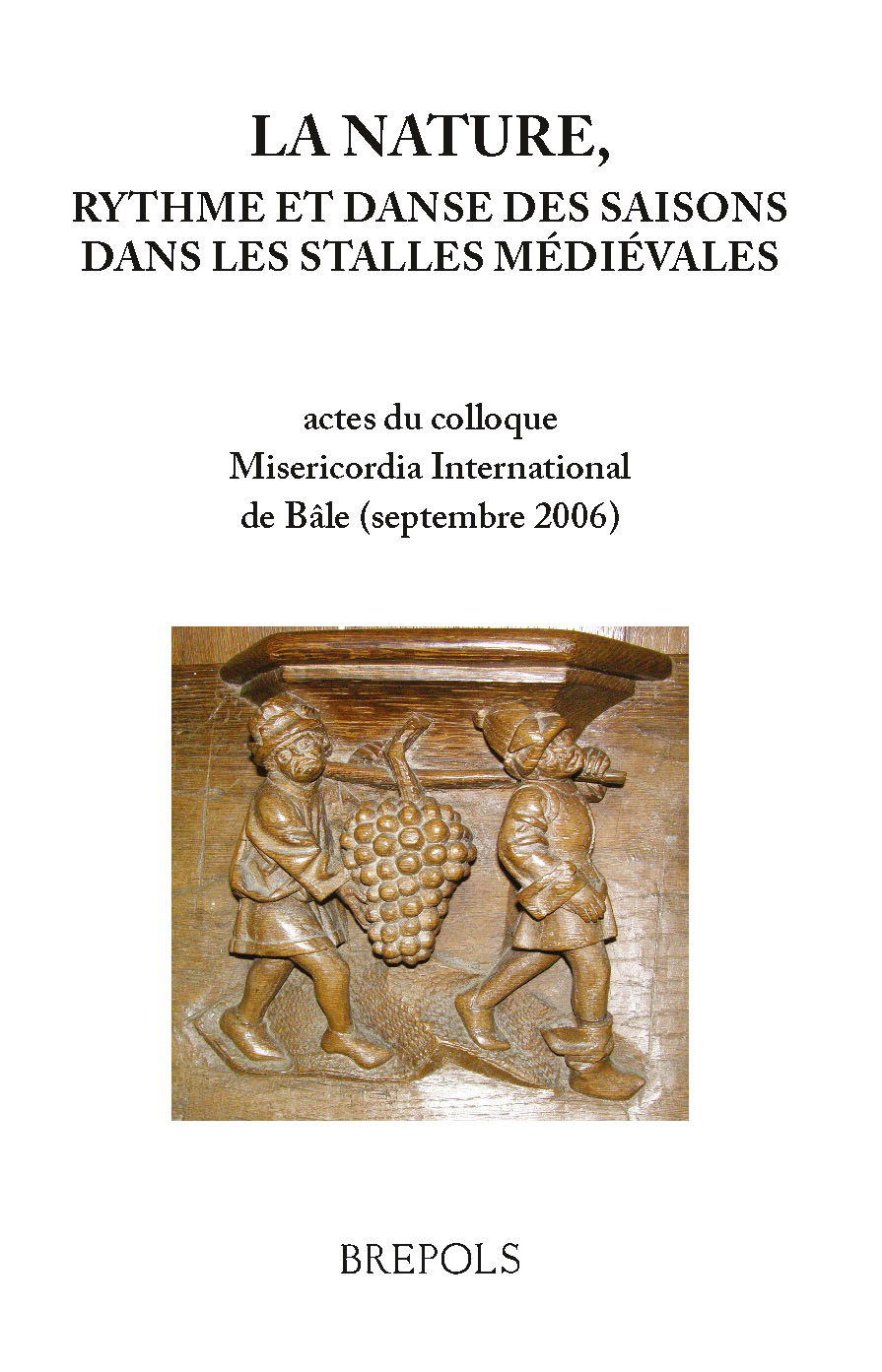
La nature, rythme et danse des saisons dans les stalles médiévales
show More to view fulltext, buy and share links for:La nature, rythme et danse des saisons dans les stalles médiévales show Less to hide fulltext, buy and share links for: La nature, rythme et danse des saisons dans les stalles médiévales
-