


EMISCS13

Collection Contents
1 - 20 of 43 results
-
-
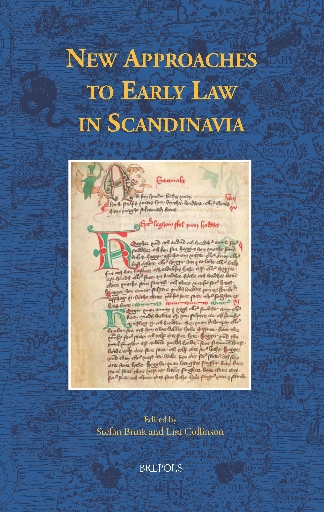
New Approaches to Early Law in Scandinavia
show More to view fulltext, buy and share links for:New Approaches to Early Law in Scandinavia show Less to hide fulltext, buy and share links for: New Approaches to Early Law in ScandinaviaDuring recent years, there has been a revival of interest in the early laws of Scandinavia. In this volume several aspects of this field are presented and discussed. The collection begins by exploring the introduction and development of the næfnd in medieval Denmark, a kind of ‘jury’ which replaced the ordeal. The focus then moves to Sweden and Norway, with an analysis of the Hälsingelagen, and a comparison of the kristindómsbálkr (‘Ecclesiastical Law Section’) of the town law of Trondheim (Niðaróss Bjarkeyjarréttr) with the provincial law of medieval Trøndelag, Frostuþingslög. A further article explores how violence and homicide involving laymen and clerics was handled in late medieval Norway, drawing on the recent discovery of register protocols of the Penitentiary at the Papal Curia. The documentary aspects of law are examined through an analysis of the Äldre and Yngre Västgötalagen from existing manuscripts, in an attempt to discover the source of the initiative to write the laws down. A further study explores several words for ‘outlawry’ in Old Scandinavian languages.
This volume also provides a general theory of legal culture to show how the introduction of three new elements into Norwegian legal culture (norm-producing, large-scale lawmaking; conflict-resolving juries; equity as idea of justice) led to a major change in legal culture in medieval Norway. Finally, the book looks at the development of penal law in Denmark in the Middle Ages, attempting to explain that development in the light of both domestic conditions and foreign influence, especially from Sweden and Germany.
-
-
-
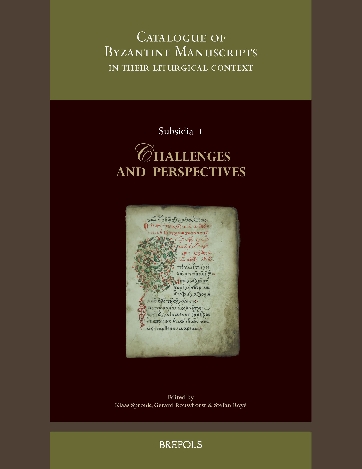
A Catalogue of Byzantine Manuscripts in their Liturgical Context: Challenges and Perspectives
show More to view fulltext, buy and share links for:A Catalogue of Byzantine Manuscripts in their Liturgical Context: Challenges and Perspectives show Less to hide fulltext, buy and share links for: A Catalogue of Byzantine Manuscripts in their Liturgical Context: Challenges and PerspectivesThe world of Byzantine manuscripts is fascinating but also confusing. Although they play an important part in modern studies on the history of Christian liturgy and on the textual history of the Bible, a clear overview of the vast amount of these manuscripts in their many different forms is lacking. A new approach in their cataloguing is called for. The present volume brings together a number of specialists in the field of Byzantine, liturgical and Biblical studies with the aim to develop a new methodology for codicological research of the Byzantine manuscripts, taking seriously the original environment of the integral codices in the monasteries and the churches in which they were manufactured and functioned.
Prof. dr. Klaas Spronk is Head of the Research Department Sources of the Protestant Theological University (PThU), location Amsterdam, and chairman of the CBM Academic Board.
Prof. dr. Gerard Rouwhorst is Professor of Liturgical History at the Tilburg School of Catholic Theology and member of the Department of Biblical Sciences and Church History of that institution. He is member of the CBM Academic Board.
Dr. Stefan Royé is member of the Research Department Sources of the Protestant Theological University (PThU), location Amsterdam, and CBM programme coordinator and secretary of the Academic Board.
-
-
-
Ad notitiam ignoti
show More to view fulltext, buy and share links for:Ad notitiam ignoti show Less to hide fulltext, buy and share links for: Ad notitiam ignotiSituée au milieu du XIIIe siècle, la paraphrase d’Albert le Grand à l’Isagogè de Porphyre constitue un point de départ pour le présent volume. Son premier livre, un traité indépendant intitulé « Préalable à la logique », fournit un cadre de lecture qui s’étend bien au-delà des sources grécolatines habituelles à l’époque, et contribue à la fixation d’un questionnaire nouveau, engageant une véritable philosophie de la logique. Il porte sur l’essence de la logique, ses fonctions comme logique de la découverte (inventio) et logique de la justification (iudicium), son statut - art, science, instrument -, sa valeur de méthode enseignant comment « passer de l’inconnu au connu » (ad notitiam ignoti) à toute partie de la philosophie, de manière immanente, comme logica utens, ou réflexive, comme logica docens. L’étude des diverses traditions de l’Organon en domaines grec, syriaque, arabe, et latin montre que la mise en ordre des matériaux aristotéliciens fixée par l’édition d’Andronicos de Rhodes (Ier s. av. J-C.) a sans cesse été renégociée, tandis que le corpus logique a connu divers formats. Ce livre collectif explore les interactions qui s’opèrent entre les différentes définitions de la logique et les métamorphoses successives du corpus aristotélicien, dans un cadre ancien et médiéval où l’histoire de la logique est indissociable d’une histoire de l’Organon.
-
-
-
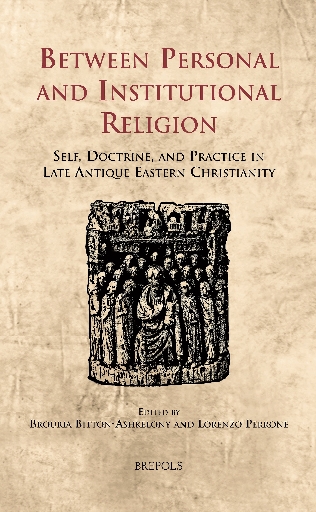
Between Personal and Institutional Religion
show More to view fulltext, buy and share links for:Between Personal and Institutional Religion show Less to hide fulltext, buy and share links for: Between Personal and Institutional ReligionThis book addresses change and continuity in late antique Eastern Christianity, as perceived through the lens of the categories of institutional religion and personal religion. The interaction between personal devotion and public identity reveals the creative aspects of a vibrant religious culture that altered the experience of Christians on both a spiritual and an institutional level. A close look at the interrelations between the personal and the institutional expressions of religion in this period attests to an ongoing revision of both the patristic literature and the monastic tradition. By approaching the period in terms of ‘revision’, the contributors discuss the mechanism of transformation in Eastern Christianity from a new perspective, discerning social and religious changes while navigating between the dynamics of personal and institutional religion.
Recognizing the creative aspects inherent to the process of ‘revision’, this volume re-examines several aspects of personal and institutional religion, revealing dogmatic, ascetic, liturgical, and historiographical transformations. Attention is paid to the expression of the self, the role of history and memory in the construction of identity, and the modification of the theological discourse in late antique culture. The book also explores several avenues of Jewish-Christian interaction in the institutional and public sphere.
-
-
-
Catherine of Siena
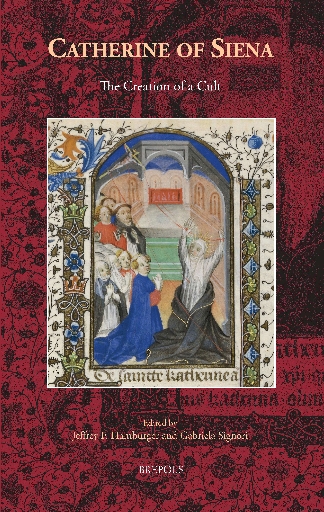
show More to view fulltext, buy and share links for:Catherine of Siena show Less to hide fulltext, buy and share links for: Catherine of SienaHow does one construct a saint and promote a cult beyond the immediate community in which he or she lived? Italian mendicants had accumulated a good deal of experience in dealing with this politically explosive question. The posthumous description of the life of Francis of Assisi (d. 1226) written by the Master General of the order, Bonaventure (d. 1274), could be regarded as paradigmatic in this regard. A similarly massive intervention in the production and diffusion of a cult can be observed in the case of the Dominican tertiary, Catherine of Siena (d. 1380), who in many respects (e.g. the imitation of Christ and her stigmatization) ‘competed’ with Francis of Assisi. Raymund of Capua (d. 1399), the Master General of the order, established the foundation for the dissemination of the cult by writing the authoritative life, but it was only the following generation that succeeded in establishing and disseminating the cult on a broad basis by means of copies, adaptations, and translations. The question of how to make a cult, which stands at the centre of this volume, thus presents itself in terms of the challenge of rewriting a legend for different audiences. The various contributions consider the role, not only of texts in many dfferent vernaculars (Czech, English, French, German, and Italian), but also of images, whether separately or in connection with one another.
-
-
-
Encyclopédire
show More to view fulltext, buy and share links for:Encyclopédire show Less to hide fulltext, buy and share links for: EncyclopédireAu regard du modèle que représente l’Encyclopédie des Lumières, envisagée comme un aboutissement et non comme un commencement, plusieurs œuvres antiques et médiévales ont été perçues, au cours des dernières décennies, comme des préfigurations ou des prodromes de ce comble du savoir. Les contributions réunies dans ce volume n’entendent pas imposer le label d’encyclopédie à de nouveaux objets littéraires, ou confirmer celui qu’ont déjà reçu ailleurs des œuvres anciennes, mais réfléchir à la vocation profonde qui sous-tend, travaille et motive certains savants de l’Antiquité au Moyen Âge, construisant un horizon de savoir total et organisé.
L’ambition encyclopédique est dès lors la dynamique commune d’un programme de constitution d’un système du monde, où les sciences sont appelées à se coaliser pour former une culture rationnelle complète. Encyclopédire le monde, c’est engager son discours dans une perspective totalisante, même s’il ne porte que sur des aires partielles. Le défi majeur que porte une telle ambition est donc la synthèse des savoirs ; il lie étroitement trois questions : les enjeux scientifiques d’une visée encyclopédique, les choix de transmission et d’intégration des savoirs, et les principes et mode d’organisation interne des œuvres.
Les auteurs de cet ouvrage se sont interrogés sur des œuvres ou des genres révélateurs de cette ambition, sur les formes et les expressions de ce syndrome ou complexe encyclopédiste, et sur les modalités de cette volonté d’encyclopédire que l’on suppose tenace, archaïque et profonde.
-
-
-
Friendship and Social Networks in Scandinavia, c. 1000-1800
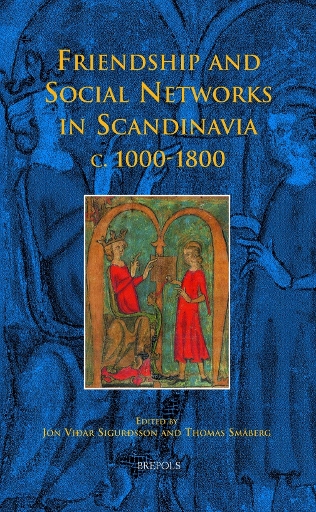
show More to view fulltext, buy and share links for:Friendship and Social Networks in Scandinavia, c. 1000-1800 show Less to hide fulltext, buy and share links for: Friendship and Social Networks in Scandinavia, c. 1000-1800Friendship, patron-client relationships, and social networks played a fundamental role in Scandinavian society from the Viking Age through to the Industrial Era. Personal ties were essential to Viking chieftains for building their power base, and such ties were equally crucial for early modern merchants, who used their personal bonds to create trade networks. Furthermore, social networks connected medieval men and women to the saints and to God.
The articles in this book emphasize the strong correlation between political developments such as the emergence of the state and the evolution of friendships and social networks. They also highlight radical changes in the importance and contexts of friendship that occurred between the Viking Age and the late eighteenth century. During this period, friendships became far more than community-based social relationships, but rather tools for the elite in social positioning and wealth acquisition.
This volume highlights the major significance of friendships and patron-client relationships to political and cultural life in medieval, early modern, and modern society. It covers social networks in Iceland, Norway, Denmark, and Sweden, each of which are characterized by different societal features, ranging from the free-state republic of early medieval Iceland to the early modern kingdom of Denmark.
-
-
-
Hierarchies in rural settlements
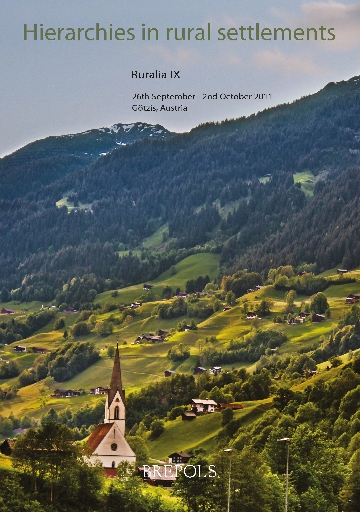
show More to view fulltext, buy and share links for:Hierarchies in rural settlements show Less to hide fulltext, buy and share links for: Hierarchies in rural settlementsThe Ruralia, Volume 9, includes thirty papers dealing with the various aspects of social and economic hierarchy in the rural settlement in medieval Europe mainly from archaeological point of view. The authors from 15 countries provide a broad overview of the current issues, complemented for the most part by extensive bibliographies. Very important are also the high quality figures.
The main topics include the differentiation of rural social and economic structure, refl ected, for example, in the building culture and various aspects of everyday life. The topic of discussion is the hierarchy of power and the many ways it is presented in archaeology. The focus is on the manor houses and manorial farms, as well as the grain mills in rural areas and the impact of mining activity.
The Ruralia, Volume 9, represents one of the current fields of European archaeological research and offers a solid foundation for further comparative studies.
-
-
-
Instruments, Ensembles, and Repertory, 1300-1600
show More to view fulltext, buy and share links for:Instruments, Ensembles, and Repertory, 1300-1600 show Less to hide fulltext, buy and share links for: Instruments, Ensembles, and Repertory, 1300-1600Over the past 45 years, Keith Polk has been one of the major scholars in the history of musical instruments and their repertories during the period 1300 - 1600. His publications have been extremely helpful in elucidating the development of the instruments, the repertory they performed, and the role played by instruments and instrumentalists in late medieval and Renaissance society. This collection of twelve essays on medieval and Renaissance music performance topics adds to the areas in which Keith Polk has made significant contributions, namely instruments, ensembles, and repertory. The scope of the individual essays varies in terms of geographical and temporal focus, with some involving an issue that was common to all areas of Europe, while others are specifically aimed at a single instrument, ensemble, composition, country, city, or occasion. Most of the essays are historical in nature, centring on how music was performed in particular circumstances, although some are quite practical and explain performance techniques involving voices and instruments. What unites the twelve essays is that they all shed new light on musical performance in Europe during the late Middle Ages and Renaissance. The writers chosen for this volume are all highly respected scholars whose writings are always of the highest calibre. Taken as a whole, the essays in this volume make an excellent contribution to the field of music history.
-
-
-
La correspondance entre souverains, princes et cités-États
show More to view fulltext, buy and share links for:La correspondance entre souverains, princes et cités-États show Less to hide fulltext, buy and share links for: La correspondance entre souverains, princes et cités-ÉtatsLa création au xiiie siècle de l’Empire mongol suscite de fréquents échanges diplomatiques entre puissances orientales, mais aussi entre l’Orient, Byzance et l’Occident. À cette même période, les liens et les tensions qui unissent ou divisent empereurs, rois et princes chrétiens, se manifestent souvent au cours de rencontres personnelles ou par l’envoi de messagers et d’ambassades. Les correspondances des souverains jouent dans ces relations multiformes un rôle essentiel. Elles sont conservées en nombre croissant pour plusieurs territoires occidentaux sous domination chrétienne, alors que les lettres originales des souverains musulmans orientaux demeurent fort rares avant la consolidation de la chancellerie ottomane. Tout en précisant les raisons de ce profond déséquilibre archivistique, les études réunies dans La correspondance entre souverains permettent une première approche comparative des manières de rédiger, de transmettre, de conserver et, le cas échéant, de réutiliser ces lettres. Du Bosphore à Florence, du Yémen à Rome, de l’Égypte mamelouke à la cour des Mongols d’Iran, les lettres des souverains véhiculent des idéologies et, parfois, des prétentions dominatrices contradictoires, elles portent un discours représentatif du pouvoir dont elles émanent. Pièces centrales des échanges diplomatiques, les lettres sont imprégnées de modèles de chancellerie, puis soumises à des processus de transmission qui peuvent s’avérer extrêmement complexes. Certains originaux sont traduits, quelquefois à plusieurs reprises, par des intermédiaires aux compétences linguistiques inégales. Grâce à des analyses croisées menées jusqu’au début du xvie siècle, l’on voit ainsi apparaître les effets de l’intensification des échanges diplomatiques sur l’art et les pratiques épistolaires souveraines.
Denise Aigle (École Pratique des Hautes Études, CNRS UMR « Orient et Méditerranée » Spécialiste de l’Orient musulman médiéval, elle s’intéresse particulièrement aux contacts entre Orient et Occident à l’époque mongole. Elle est l’auteur de nombreux articles et ouvrages. Elle a notamment publié, Le Fārs sous la domination mongole (xiii e-xiv e siècles). Politique et fiscalité, Leuven, 2005 ; Le Bilād al-Šām face aux mondes extérieurs. La perception de l'Autre et la représentation du souverain, D. Aigle (dir.), Beyrouth, 2012.
Stéphane Péquignot (École Pratique de Haute Études) est spécialiste de la diplomatie médiévale et de la Couronne d’Aragon, il a notamment publié Au nom du roi. Pratique diplomatique et pouvoir durant le règne de Jacques II d’Aragon (1291-1327), Madrid, 2009 ; avec S. Andretta, M.-K. Schaub, J.-C Waquet, C. Windler (dir.) Paroles de négociateurs. L'entretien dans la pratique diplomatique da la fin du Moyen Âge à la fin du xix e siècle, Rome, 2010.
-
-
-
Landscapes of Defence in Early Medieval Europe
show More to view fulltext, buy and share links for:Landscapes of Defence in Early Medieval Europe show Less to hide fulltext, buy and share links for: Landscapes of Defence in Early Medieval EuropeThis volume is the result of a conference at University College London in 2007 which addressed the scale and form of civil defences in early medieval Europe, c. 800-1000. Previous work has largely focused on individual sites or specific categories of evidence. These papers offer new interdisciplinary perspectives driven by a landscape approach. Several contributions focus on civil defence in England around the time of King Alfred the Great, and together provide a new agenda for the study of Anglo-Saxon military landscapes. European case-studies facilitate a comparative approach to local and regional defensive structures and interpretive paradigms. Topics and themes covered include civil defence landscapes, the organization and form of defensive structures, and the relationships and dynamics between social complexity, militarization, and external threats. With papers ranging from England to Spain and Germany to Scandinavia the volume is of relevance to a range of disciplines including archaeology, history, onomastics, geography, and anthropology.
John Baker is Research Associate at the University of Nottingham, Stuart Brookes is Research Associate, and Andrew Reynolds is Professor in Medieval Archaeology, both at the UCL Institute of Archaeology.
-
-
-
Landscapes or seascapes?
show More to view fulltext, buy and share links for:Landscapes or seascapes? show Less to hide fulltext, buy and share links for: Landscapes or seascapes?This volume deals with the geographical evolution of the coastal areas adjacent to the North Sea, with a focus upon the last two thousand years. Although many articles are reworked in a fundamental way, most of them are the result of a conference which took place in 2010 at Ghent University (Belgium) and which was actually the third in a series of symposiums on the same broad theme. The first took place in 1958, and the second in 1978. Recognized specialists were invited to present their research in a variety of fields relating to the subject. The various disciplines in which the coastal plains are studied too often remain within their own borders, and so we have set out to thoroughly interweave them in the hope that this will spur greater interdisciplinary cooperation. This collection of texts is intended to appeal not just to experts in historical geography, but to historians and scientists working in any field who wish to gain insights into the present ‘state of play’.
Detailed geological research about many areas provided new data and researchers gradually gained a better understanding of the close relationship between the processes of deposition, sea-level change, and land formation taking place across multiple regions. In the same time, historical and archaeological research also evolved. Most significantly, ideas regarding the chronology of human occupation have changed a lot. This scope of the research collected in this volume is important because it has increasingly become evident that land loss and gain were the results of regional factors, including and especially human activities. Moreover, it is now clear that humans devised survival strategies, and thus organized their activities in relation to the environment, on a regional basis, which means that the causes of local changes must have been both natural and socio-historical. It has now become clearer than ever that there is no single chronological scheme capable of explaining the coastal evolution across the entirety of the North Sea area.
Erik Thoen is professor in rural history and environmental history at Ghent University (B) and co-ordinator of the CORN network.
Guus J. Borger is emeritus professor in historical geography at the University of Amsterdam and the VU University Amsterdam (NL).
Adriaan M.J. de Kraker is senior researcher in historical geography at the VU University Amsterdam (NL).
Tim Soens is professor in rural history and environmental history at the University of Antwerp (B).
Dries Tys is professor at the Brussels Free University (VUB) (B).
Lies Vervaet is assistant specialised in rural history at Ghent University (B).
Henk J.T. Weerts is senior researcher paleogeography at the Cultural Heritage Agency of the Netherlands.
-
-
-
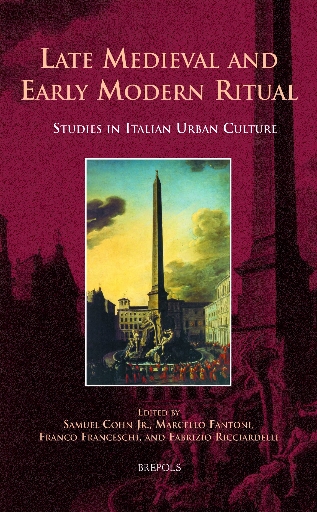
Late Medieval and Early Modern Ritual
show More to view fulltext, buy and share links for:Late Medieval and Early Modern Ritual show Less to hide fulltext, buy and share links for: Late Medieval and Early Modern RitualThis collection of fifteen studies brings together scholars of late medieval, Renaissance, and early modern Italy to reflect on the multifaceted world of ritual. The scope is expansive, covering four centuries, and the length and breadth of the Italian peninsula.
Because of older presumptions about the modernity of the Renaissance and hence its supposed aversion to the irrational, scholarship on ritual life in Italian city-states of the Renaissance has lagged behind the historiography on symbols and rituals in monarchies north of the Alps. Only by the 1990s had a wide range of scholars across disciplines become interested in these subjects and approaches for the late medieval and early modern Italian city-state; yet no synthesis or comparative work on rituals and symbols has peered across the regional enclaves of Italy. Through original research in libraries and archives across the Italian peninsula, these essays analyze the richness and importance of ritual at the heart of the Renaissance and Counter-Reformation states, the importance of oaths, ritual space, the power of images, processions, curses, guild ceremonies, saints, and more. The wide geographic and disciplinary range of these essays provides a new platform for viewing the significance of ritual and symbolic power in Renaissance and early modern Italy.
-
-
-
Les Stratégies matrimoniales (IXe-XIIIe siècle)
show More to view fulltext, buy and share links for:Les Stratégies matrimoniales (IXe-XIIIe siècle) show Less to hide fulltext, buy and share links for: Les Stratégies matrimoniales (IXe-XIIIe siècle)Depuis une soixantaine d’années, le structuralisme a mis l’alliance au cœur de l’étude de la parenté. S’inspirant de l’anthropologie, les historiens tentent ainsi de dégager les règles qui président à l’échange de femmes entre les familles médiévales. Ils sont cependant conscients de la spécificité du Moyen Âge, où le mariage est fortement influencé par le christianisme, par le droit romain, et plus généralement par des normes écrites et abstraites dépassant le pragmatisme quotidien des chefs lignagers. Il est vrai qu’au sein de l’aristocratie, les pratiques matrimoniales ont longtemps obéi à des logiques patrimoniales. Le douaire, apporté par le mari, ou la dot, cédée par les parents de la mariée, « font » traditionnellement le mariage. Du reste, l’alliance est trop souvent conclue pour entériner une trêve entre deux troupes ennemies, pour faciliter l’ascension d’un guerrier fidèle que son seigneur récompense par la main de sa fille ou pour obtenir un parti prestigieux. Elle participe donc de l’effort d’une parentèle pour prendre et pour conserver le pouvoir. Elle réduit la future épouse, et peut-être aussi son jeune fiancé, au rôle de l’actrice passive des décisions prises par les aînés de la maison. Aussi solide et enraciné qu’il puisse paraître, ce modèle cède, du moins en partie, aux valeurs évangéliques véhiculées par le clergé savant : unicité, indissolubilité, consensualisme, exogamie extrême… Une telle acculturation (ou plutôt « inculturation », adaptation du christianisme à une société donnée) ne se fait pas sans heurts. Il en va de même avec le remplacement des coutumes germaniques par le droit romain renaissant, qui impose la dot au détriment du douaire. Ces mutations n’interviennent pas seulement dans les pratiques des nobles, mais aussi dans leur imaginaire et dans leurs mentalités. Elles sont particulièrement à l’œuvre entre les IX e et XIII e siècles où l’alliance prend à jamais un nouveau visage.
-
-
-
Les débuts de l’enseignement universitaire à Paris (1200 – 1245 environ)
show More to view fulltext, buy and share links for:Les débuts de l’enseignement universitaire à Paris (1200 – 1245 environ) show Less to hide fulltext, buy and share links for: Les débuts de l’enseignement universitaire à Paris (1200 – 1245 environ)L’un des éléments les plus marquants de l’histoire intellectuelle du monde occidental est la naissance de l’institution que nous appelons encore aujourd’hui « université ». Sur l’émergence et l’histoire institutionnelle des premières universités, Bologne et Paris, beaucoup a été écrit. Cependant, la première période de l’Université de Paris, à partir de sa naissance vers 1200 jusqu’à 1245 environ, est encore mal connue ; surtout du point de vue de l’enseignement, des textes et des maîtres, la réalité universitaire reste encore assez insaisissable. Dans ce volume, qui réunit les actes d’un colloque organisé en septembre 2012, nous avons voulu faire le point sur cette première période de l’Université de Paris, celle de la naissance et de l’enfance de l’université. Rassemblant quasiment toutes les facettes de l’enseignement à l’Université de Paris, après une mise en contexte historique et institutionnelle, le volume vise à présenter un exemple de ce que l’on pourrait appeler l’histoire de la pensée, pour une période restreinte, bien sûr, mais aussi une période cruciale pour l’histoire intellectuelle du moyen âge.
-
-
-
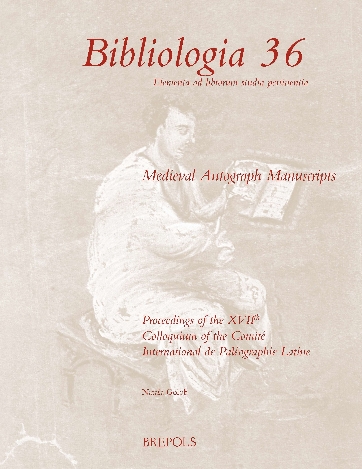
Medieval Autograph Manuscripts
show More to view fulltext, buy and share links for:Medieval Autograph Manuscripts show Less to hide fulltext, buy and share links for: Medieval Autograph ManuscriptsWhat is an autograph? How is it possible to define it? And how can we distinguish the hand of the writer, scientist, or translator - that is, of the learned person setting down his thoughts - from the hand of a pupil or copyist trained in the same style? Autographs have long been an especially challenging area of research into medieval manuscripts, for the finished product is intimately linked to both the author’s thought and his hand. Many well-known medieval authors had already been accorded scientific representations and became known as a result of these. They were joined by new names, a fact which widens the scope of research in the field of autographs and invites new questions. The XVIIth Colloquium of the Comité International de Paléographie Latine, which was held in Ljubljana between 7th and 10th September, 2010, was dedicated to autographs. In addition to scientific contributions by established paleographers, historians, literary and art historians, there were also inspiring papers by younger researchers. The colloquium was receptive to the presentation of new methods and processes of research into medieval manuscripts in general. These Proceedings of the XVIIth Colloquium contain 37 scientific papers documented with 239 illustrations as well as with further graphic elements.
-
-
-
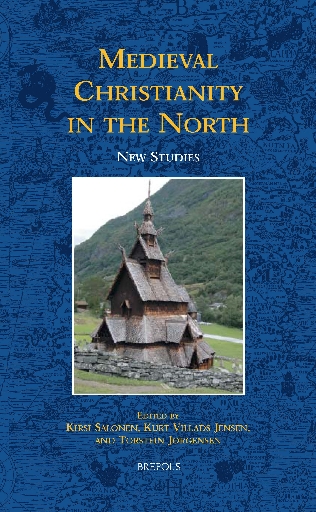
Medieval Christianity in the North
show More to view fulltext, buy and share links for:Medieval Christianity in the North show Less to hide fulltext, buy and share links for: Medieval Christianity in the NorthAll those barbarious peoples who in far-distant islands frequent the ice-bound Ocean, living as they do like beasts - who could call them Christians?
Pope Urban II, 1095
Such condescending impressions about the peoples living at the ‘end of the world’ have been adapted by Scandinavian historians who, until recently, have stressed the isolation and the otherness of the North, and ignored the many similarities to the ‘culturally more developed’ Europe. This collection of articles by Nordic scholars is truly interdisciplinary, covering philology, history, archaeology, theology, and other approaches. It is divided into two parts, the first of which addresses conversion from a broad perspective, while the second is devoted to the consolidation of Christianity and ecclesiastical structures. The book investigates from a fresh viewpoint important aspects of Nordic Christianity in the Middle Ages and discusses to what extent ideas and institutions were adapted to local circumstances. It includes a variety of topics, such as the remnants of paganism, medieval saints’ cults, law, and church, to religious warfare, and the use of beer in cult and memory.
-
-
-
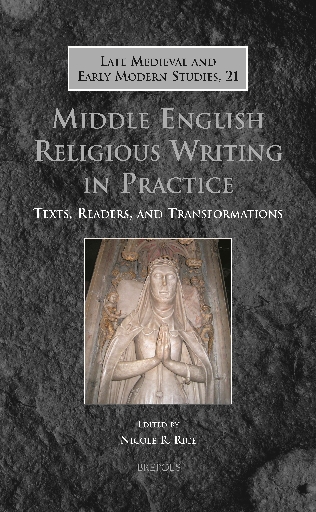
Middle English Religious Writing in Practice
show More to view fulltext, buy and share links for:Middle English Religious Writing in Practice show Less to hide fulltext, buy and share links for: Middle English Religious Writing in PracticeAlthough the Middle English texts broadly categorized as ‘devotional literature’ have received considerable scholarly attention in recent years, much work remains to be done on the cultural meanings and textual transformations of vernacular religious writing during the later medieval period and into the sixteenth century. During these years, popular (but still little-studied) late medieval works such as the Pore Caitif circulated in varied forms amid changing circumstances: the expansion of audiences for Middle English texts, the emergence and persecution of Lollardy, attempts at ecclesiastical censorship, the advent of printing, and the Henrician Reformation. How did Middle English religious texts answer changing cultural and practical needs and the requirements of orthodoxy? How did older texts find new readers; how did these readers alter and deploy them? This collection capitalizes on widespread current interest in these questions, gathering original essays that analyse the many forms, meanings, and legacies of Middle English religious writing.
-
-
-
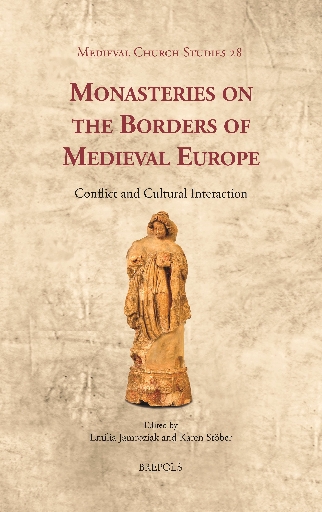
Monasteries on the Borders of Medieval Europe
show More to view fulltext, buy and share links for:Monasteries on the Borders of Medieval Europe show Less to hide fulltext, buy and share links for: Monasteries on the Borders of Medieval EuropeAs a historical and cultural phenomenon, monasticism always had a close connection with frontiers. The earliest monasteries were believed to be founded in wildernesses and deserts, thus existing beyond society and the inhabited world in general. As intercessors praying for their patrons and benefactors, monastic communities also existed on the border between the earthly and the spiritual worlds.
In medieval Europe, however, the frontier nature of monasticism had specific manifestations in addition to the founding myths of monastic wilderness. In the twelfth and thirteenth centuries the expansion of Latin Europe in East-Central Europe, the Iberian Peninsula, Scandinavia, and into the Holy Land and Greece opened possibilities for extending monastic networks and establishing new houses. One of the most important parts of this process was the interaction between these new religious communities and the social world around them - an interaction that was characterised by various shades of hostility, cooperation, and adaptation to the local social and cultural framework.
This is the first collection to consider the phenomenon of monastic frontiers in a cross-disciplinary manner. The book’s ten chapters explore the role of monasteries in maintaining political and cultural borders, in breaking and sustaining linguistic boundaries in late medieval Europe, as well as in building and stabilizing Latin Christian cultural identities on the northern and southern frontiers of Europe. Using a wide range of textual, archaeological, and material evidence, an international group of authors examines the expansion of monastic and mendicant networks in Scandinavia, Iberia, East-Central Europe, the British Isles, northern France, the Balkans, and Frankish Greece.
-
-
-
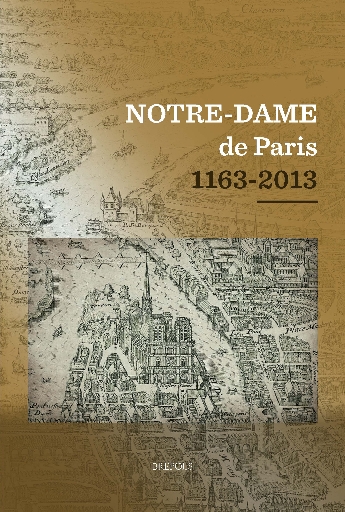
Notre-Dame de Paris 1163-2013
show More to view fulltext, buy and share links for:Notre-Dame de Paris 1163-2013 show Less to hide fulltext, buy and share links for: Notre-Dame de Paris 1163-2013En 1163, débute le chantier de l’actuelle cathédrale Notre-Dame de Paris. Construit en un siècle environ, le nouvel édifice devient vite un des monuments les plus fameux de France, symbolisant jusqu’à aujourd’hui l’évêque, l’Église et la ville de Paris. Huit siècles et demi après le début de la construction, un congrès scientifique a réuni du 12 au 15 décembre 2012 des spécialistes d’histoire religieuse, sociale, liturgique, artistique, intellectuelle et institutionnelle. Le livre issu de ce colloque présente un ensemble d'études faisant le point sur l’église cathédrale jusqu’à aujourd’hui et sa fonction médiatrice revendiquée entre Dieu et les hommes : du contrôle sur l’Université aux conférences de Carême, en passant par l’action méconnue du chapitre cathédral, les relations avec la Couronne, le renouvellement du chant sacré, la célébration des grands événements de la nation, l’impact sur l’esthétique néo-gothique.
L’objectif est de mieux comprendre les façons diverses dont Notre-Dame de Paris et les hommes qui prient, travaillent et vivent sous son ombre - évêques, chantres, maîtres, chanoines, chapelains, prédicateurs, hospitaliers, etc. - ont durablement marqué le territoire d’une Cité, la vie d’une capitale et la mémoire d’une nation.
Cédric Giraud, ancien élève de l’École nationale des chartes et agrégé d’histoire, est maître de conférences à l’université de Lorraine et membre junior de l’Institut universitaire de France. Ses recherches portent sur l’histoire culturelle du Moyen Âge central et la philologie médiolatine.
-