


EMISCS14

Collection Contents
1 - 20 of 43 results
-
-
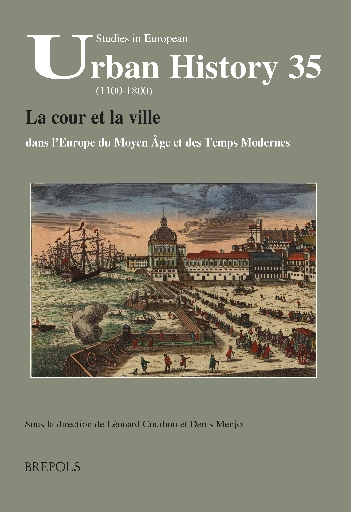
La cour et la ville dans l’Europe du Moyen Âge et des Temps Modernes
show More to view fulltext, buy and share links for:La cour et la ville dans l’Europe du Moyen Âge et des Temps Modernes show Less to hide fulltext, buy and share links for: La cour et la ville dans l’Europe du Moyen Âge et des Temps ModernesLe présent ouvrage rassemble quinze textes issus en majorité de la session principale « La cour et les villes dans l’Europe du Moyen Âge et des Temps Modernes», organisée à l’occasion de la XIe Conférence de l’Association Européenne d’Histoire Urbaine, qui s’est tenue à Prague du 29 août au 1er septembre 2012. Ces travaux visent à appréhender les relations toujours plus étroites et complexes que tissent les cours européennes, engagées durant ces siècles dans de nouvelles pratiques de mobilités et donc de nouveaux rapports à l’espace, et les villes qui, fortes de leur croissance démographique et de leur dynamisme économique et culturel, deviennent des interlocuteurs privilégiés des pouvoirs princiers et monarchiques. Si les sources littéraires brossent un tableau plutôt sombre de la cohabitation de deux sociétés curiale et urbaine que tout semble opposer, l’analyse d’une documentation plus riche et beaucoup plus variée permet d’envisager cette construction littéraire comme l’écho des profondes recompositions sociales, spatiales, culturelles et politiques en milieu urbain, sous l’effet de la rencontre et de la coexistence de ces deux sociétés. Cette réflexion collective souligne la fécondité d’une histoire des réseaux, des circulations, de la communication et de la gouvernementalité pour le renouvellement des études curiales et urbaines.
Léonard Courbon, professeur agrégé est doctorant à l’Université de Lyon 2.
Denis Menjot est professeur d’histoire du Moyen Âge à l’Université de Lyon 2.
Ils appartiennent tous les deux à l’Unité Mixte de Recherche 5648:CIHAM.
-
-
-
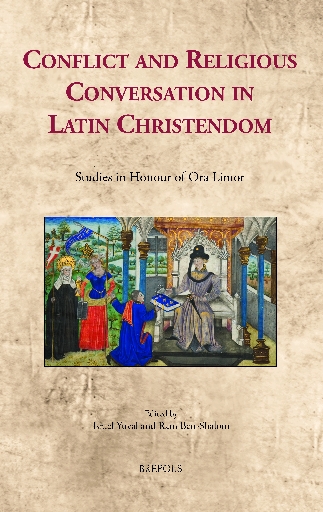
Conflict and Religious Conversation in Latin Christendom
show More to view fulltext, buy and share links for:Conflict and Religious Conversation in Latin Christendom show Less to hide fulltext, buy and share links for: Conflict and Religious Conversation in Latin ChristendomThe literature against the Jews (contra Iudeos) was crucially influential in the shaping of Christianity during the centuries following the crucifixion, particularly during the period when Christianity remained outside official Roman toleration. And yet, this phenomenon did not decline in the Middle Ages when Christianity emerged as the supreme power in the western world and Judaism could no longer threaten it in any way. The Jewish response to this literary practice did not arise for some time, yet from the twelfth century onwards the effort to counter Christian ideological attacks became a central intellectual activity and a pressing concern on the part of Jewish scholars in the West. Although both Latin and Hebrew polemics were often intended, first and foremost, for local audiences in order to satisfy local needs and intellectual demands, they also engaged each other, and raised urgent theological and cultural questions in doing so. This cultural discourse did not just find expression in polemical literature (Nizahon and Adversus Iudaeos) but also in a variety of other representations and daily practices. This collection of studies is devoted to an examination of the significance of this phenomenon as a longue durée process, and pursues its concerns from a variety of innovative perspectives that join together authoritative scholars from the field of Jewish-Christian relations.
-
-
-
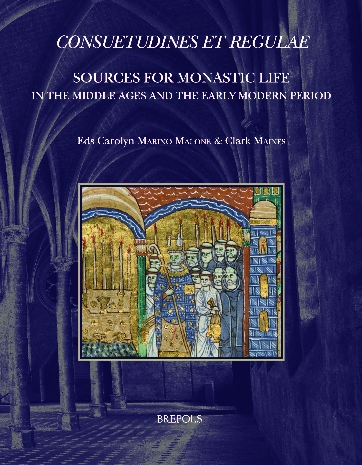
Consuetudines et Regulae
show More to view fulltext, buy and share links for:Consuetudines et Regulae show Less to hide fulltext, buy and share links for: Consuetudines et RegulaeThis volume addresses the nature and quality of the lives of monks and canons in Western Europe during the middle ages and the early modern period. Building on the collaborative spirit of recent work on medieval religion, it includes studies by historians of the religious orders, liturgy and ritual as well as archaeologists and architectural historians. Several studies combine the interpretation of texts, most particularly customaries and rules, with the analysis of architecture. The volume sheds new and exciting light on monastic daily life in all its dimensions from the liturgical and the quotidian to the spatial and architectural.
Carolyn Marino Malone is Professor of Art History at the University of Southern California in Los Angeles (USA). She specializes in French Romanesque and English Gothic architecture and sculpture. Her most recent book, is Saint-Bénigne de Dijon en l’an mil, “totius Galliae basilicis mirabiliorem”: Interprétation politique, liturgique et théologique, Disciplina monastica, 5 (Turnhout, 2009).
Clark Maines is Professor of Art History and Archaeology and Kenan Professor of the Humanities at Wesleyan University, in Middletown, Connecticut (USA). He specializes in the study of monasticism from architecture in its structural and ritual dimensions to technology and monastic domains. His most recent book, co-written with Sheila Bonde, is Saint-Jean-des-Vignes in Soissons, Approaches to its Architecture, Archaeology and History, Bibliotheca Victorina, XV (Turnhout, 2003).
-
-
-
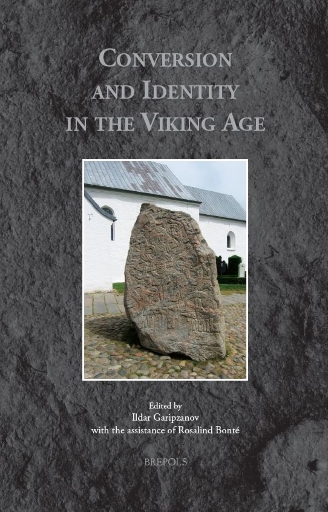
Conversion and Identity in the Viking Age
show More to view fulltext, buy and share links for:Conversion and Identity in the Viking Age show Less to hide fulltext, buy and share links for: Conversion and Identity in the Viking AgeThis volume presents a state-of-the-art collection of essays on the socio-cultural aspects of the conversion to Christianity in Viking-Age Scandinavia and the Scandinavian colonies of the North Atlantic. The nine scholars, drawn from the disciplines of history, archaeology, and literary studies, have been brought together to address the overarching topic of how conversion affected peoples’ identities - both as individuals, and as members of broader religious, political, and social groups - on either side of the ‘divide’ between paganism and Christianity. Central to this exploration is the question of how existing and changing identities shaped the progress of conversion as a process of societal, and more specifically cultural, change.
Each of the papers in this volume provides examples of the complicated patterns of interaction, influence, and identity-modification that were characteristic of the transition from paganism to Christianity in the Viking world. The authors look for new ways of understanding and describing this gradual intermingling between the two fuzzy-edged religious communities, and they provide a challenging redefinition of the nature of conversion in the Viking Age that will be of interest both to a wide variety of medievalists and to all those who work on conversion in its theoretical and historical aspects.
-
-
-
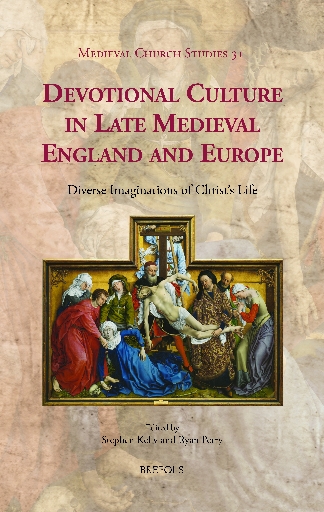
Devotional Culture in Late Medieval England and Europe
show More to view fulltext, buy and share links for:Devotional Culture in Late Medieval England and Europe show Less to hide fulltext, buy and share links for: Devotional Culture in Late Medieval England and EuropeChrist’s life, as related through the Gospel narratives and early Apocrypha, was subject to a riot of literary-devotional adaptation in the medieval period. This collection provides a series of groundbreaking studies centring on the devotional and cultural significance of Christianity’s pivotal story during the Middle Ages.
The collection represents an important milestone in terms of mapping the meditative modes of piety that characterize a number of Christological traditions, including the Meditationes vitae Christi and the numerous versions it spawned in both Latin and the vernacular. A number of chapters in the volume track how and why meditative piety grew in popularity to become a mode of spiritual activity advised not only to recluses and cenobites as in the writings of Aelred of Rievaulx, but also reached out to diverse lay audiences through the pastoral regimens prescribed by devotional authors such as the Carthusian prior Nicholas Love in England and the Parisian theologian and chancellor of the University of Paris, Jean Gerson.
Through exploring these texts from a variety of perspectives - theoretical, codicological, theological - and through tracing their complex lines of dissemination in ideological and material terms, this collection promises to be invaluable to students and scholars of medieval religious and literary culture.
-
-
-

D’Orient en Occident
show More to view fulltext, buy and share links for:D’Orient en Occident show Less to hide fulltext, buy and share links for: D’Orient en OccidentDes Mille et une Nuits aux Canterbury Tales, du Panchatantra au Décaméron, en passant par Artamène ou le Grand Cyrus, un vaste réseau de textes témoigne de la richesse et de l’originalité du ‘récit à tiroirs’ hérité de la tradition orientale. Le nombre impressionnant des récits concernés, de même que l’extraordinaire diffusion qu’ils ont connue en Orient comme en Occident, au Moyen Âge comme à l’époque moderne, illustrent l’urgence qu’il y a à repenser l’étude de ces textes dont plusieurs comptent parmi les fleurons les plus illustres de la littérature universelle.
Les travaux ici réunis se concentrent sur quatre recueils, le Calila et Dimna (ou Panchatantra), la légende de Barlaam et Josaphat, le Roman des Sept Sages (ou Livre de Sindibad), et la Disciplina clericalis de Pierre Alphonse, dont les trois premiers ont marqué, bien avant leur apparition en Occident, toute l’histoire de la littérature orientale. Quant au quatrième, il constitue l’un des recueils les plus importants que le Moyen Âge nous a transmis, comme en témoigne son immense diffusion du Roman de Renart au Décaméron de Boccace. C’est à partir du XIIe siècle que ces récits-recueils font connaître les traditions narratives du Levant dans l’Europe médiévale. Leur influence se fait sentir jusqu’à l’époque moderne dans le domaine occidental, à travers des réécritures et des adaptations. En réunissant les travaux de plus d’une vingtaine de spécialistes des domaines et des littératures concernés par cette transmission, le présent volume entend suivre le parcours des quatre textes de l’Antiquité tardive et du Moyen Âge à l’aube des Lumières.
-
-
-

England and Rome in the Early Middle Ages
show More to view fulltext, buy and share links for:England and Rome in the Early Middle Ages show Less to hide fulltext, buy and share links for: England and Rome in the Early Middle AgesThis volume explores the special connection that linked England and Rome between the seventh and the eleventh centuries, a topic which in spite of its relevance and attraction has never before been dealt with in a publication of this scale and depth. By bringing together scholars from different countries and disciplines and by relying on important recent archaeological findings that have led to a firmer knowledge of early medieval Rome, the volume provides a detailed and integrated investigation of the ways in which contacts between England and the Eternal City developed across the early Middle Ages. With special attention to major themes such as pilgrimage, artistic exchange, and ecclesiastical politics, the essays in this volume show the continuity of the Anglo-Saxons’ relations with Rome as well as the ways in which, over time, these adapted to different circumstances. They also show that Anglo-Saxon England should not be thought of as just a passive recipient of influential cultural trends, but rather as an important player in the multi-faceted world of early medieval Europe in which Rome, by now the city of the popes, kept its centrality as a source of spiritual and political power.
-
-
-
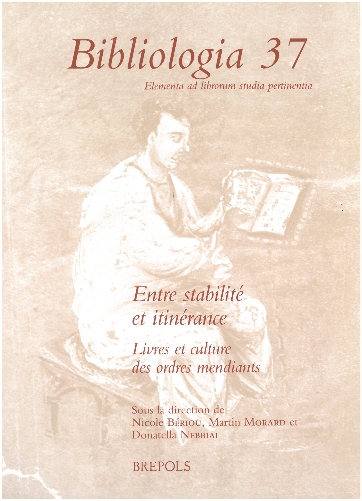
Entre stabilité et itinérance
show More to view fulltext, buy and share links for:Entre stabilité et itinérance show Less to hide fulltext, buy and share links for: Entre stabilité et itinéranceLes travaux de ces dernières années confirment que les livres tiennent une place centrale dans l’organisation des couvents mendiants et dans leurs pratiques économiques. Au quotidien, les livres font partie intégrante de la vie des couvents, comme vecteur de connaissances, support d’édification et outil de communication. Les frères les acquièrent pour étudier, pour transmettre les savoirs et pour discipliner la société. Les sœurs sont aussi, souvent, familières de la culture écrite, qui peut représenter un lieu de rencontre et de complémentarité entre les communautés masculines et féminines. Les contributions réunies dans ce volume s’attachent à considérer les différentes formes sous lesquelles les uns et les autres ont exprimé leur adhésion à la culture livresque, ou leurs éventuelles réserves, et reconnaissent dans la tension entre stabilité et itinérance l’un des points essentiels de l’identité culturelle des ordres mendiants. Parmi les aspects étudiés, figurent, en particulier, les réseaux institutionnels et interpersonnels, où les échanges de livres ont eu une très grande ampleur à l’humanisme, ainsi que les conditions historiques qui marquent le passage du manuscrit à l’imprimé.
-
-
-
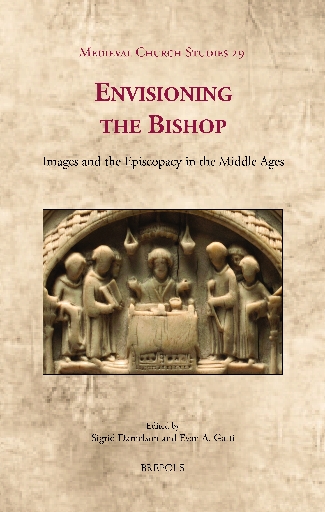
Envisioning the Bishop
show More to view fulltext, buy and share links for:Envisioning the Bishop show Less to hide fulltext, buy and share links for: Envisioning the BishopThe bishop wielded significant authority in religious, intellectual, and political spheres during the Middle Ages, but how was this influence articulated, and once articulated, how was it received? The essays in this volume represent a variety of disciplinary perspectives, each tuned to the production of images made by, for, and about the medieval episcopacy. They present the bishop as a model of piety and intellectual life as well as political and religious action.
Considering material from Late Antiquity through the thirteenth century, the essays offer a series of case-studies demonstrating that crafting episcopal imagery was a complicated endeavour employing pictorial, historical, literary, and historiographic devices. Never a static institution, the episcopacy was formed and reformed making it visible to the bishop, to those with whom he interacted, and to broader communities. These efforts at making present the power and authorities of the office asserted the duties, expectations, and ideals of the bishop in ways often specific to time and place.
The diverse perspectives on the episcopal image assembled here reveal the office, not as a singular contour, but as a succession of marks and erasures. Shaped by supporters and detractors alike, medieval images of the bishop engaged with historical models, responded to present realities, and considered the eschatological future.
-
-
-
Eriugena and Creation
show More to view fulltext, buy and share links for:Eriugena and Creation show Less to hide fulltext, buy and share links for: Eriugena and CreationUnjustly ignored as a result of a thirteenth-century condemnation, the thought of Johannes Scottus Eriugena (ca. 810-877) has only been subject to critical study in the twentieth century. Now, with the completion of the critical edition of Eriugena’s masterwork - the Periphyseon - the time has come to explore what is arguably the most intriguing and vital theme in his work: creation and nature.
In honor of Edouard Jeauneau - Institute Professor at the Pontifical Institute of Mediaeval Studies, University of Toronto and Honorary Research Director at the C.N.R.S. in Paris - to whom the field of Eriugenian studies is enormously indebted, this volume seeks to undertake a serious examination of the centrality of Eriugena’s thought within the Carolingian context, taking into account his Irish heritage, his absorption of Greek thought and his place in Carolingian culture; of Eriugena as a medieval thinker, both his intellectual influences and his impact on later medieval thinkers; and of Eriugena’s reception by modern philosophy, from considerations of philosophical idealism to technology.
-
-
-
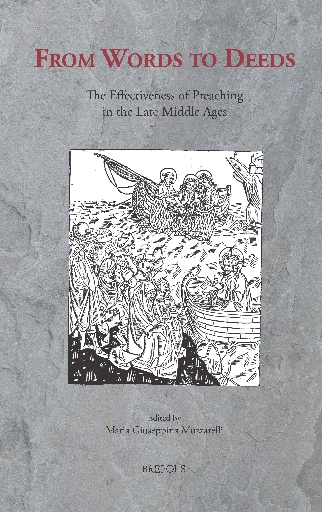
From Words to Deeds
show More to view fulltext, buy and share links for:From Words to Deeds show Less to hide fulltext, buy and share links for: From Words to DeedsPreaching is a method of exhorting the practice of virtues and the performance of one’s duties. If people are not moved to act, preachers become obsolete. Because of this, preachers in the Middle Ages understood the importance of ensuring that their words were heeded and disseminated.
The focus of this volume is the relationship, whether direct or indirect, between what was preached and what was achieved. The articles in this collection present a range of studies, from the thirteenth to the sixteenth century and, while focused on Italy, also give a broad European perspective.
The volume investigates both the tools employed by preachers and the pragmatic aims and outcomes of their sermons. It does this by exploring the various oratorical and gesticular techniques employed by preachers, as well as their methods of preparing themselves to deliver their message and preparing their audiences to receive it. Furthermore, the volume considers both hypothetical and concrete relationships between preachers’ words and civic policies and the behaviours of groups or individual citizens, as well as the question of how and when words were translated into actions.
-
-
-
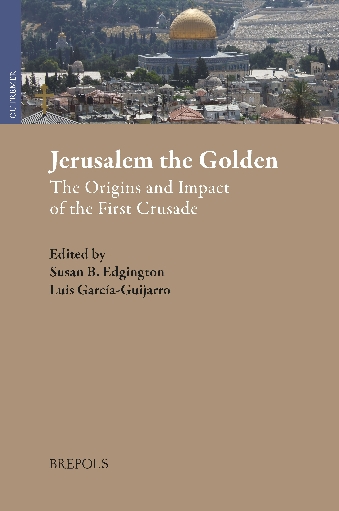
Jerusalem the Golden
show More to view fulltext, buy and share links for:Jerusalem the Golden show Less to hide fulltext, buy and share links for: Jerusalem the GoldenThis collection brings together new work by an international cast of distinguished scholars, who explore areas as diverse as the military and ecclesiastical aspects of the First Crusade; its representation in contemporary sculpture; and the way it has been portrayed in modern fiction and film. Further contributions analyse and compare primary sources and historiography, and yet others consider the crusade in its Mediterranean context, which is sometimes overlooked. These definitive studies of established areas of research are augmented by the ground-breaking work of a number of early-career academics who are working in relatively new areas: the ‘emotional language’ used in the narrative sources; the memorialization of the crusades; and the use of literary sources for crusade studies: notably there are complementary papers on the heroes and villains depicted in the Old French poetic accounts of the First Crusade. In these twenty-one essays every historian and interested reader of medieval history will find illumination and food for thought.
Susan B. Edgington is a teaching and research fellow at Queen Mary University of London. She is an authority on the sources for the First Crusade and the early history of the kingdom of Jerusalem.
Luis García-Guijarro is reader in Medieval History at the University of Zaragoza. His many books and articles deal with crusades, military orders, church history, socio-economic history, and Iberia in the central Middle Ages.
-
-
-
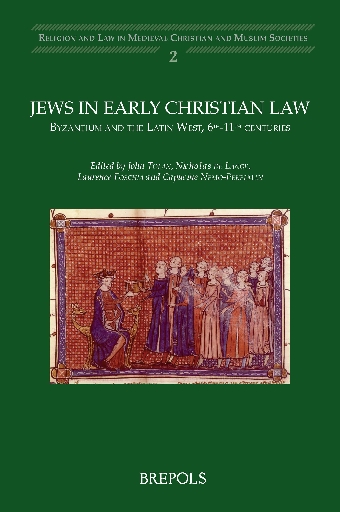
Jews in Early Christian Law
show More to view fulltext, buy and share links for:Jews in Early Christian Law show Less to hide fulltext, buy and share links for: Jews in Early Christian LawThe sixth to eleventh centuries are a crucial formative period for Jewish communities in Byzantium and Latin Europe: this is also a period for which sources are scarce and about which historians have often had to speculate on the basis of scant evidence. The legal sources studied in this volume provide a relative wealth of textual material concerning Jews, and for certain areas and periods are the principal sources. While this makes them particularly valuable, it also makes their interpretation difficult, given the lack of corroborative sources.
The scholars whose work has been brought together in this volume shed light on this key period of the history of Jews and of Jewish-Christian relations, focusing on key sources of the period: Byzantine imperial law, the canons of church councils, papal bulls, royal legislation from the Visigoths or Carolingians, inscriptions, and narrative sources in Hebrew, Greek and Latin. The picture that emerges from these studies is variegated. Some scholars, following Bernhard Blumenkranz, have depicted this period as one of relative tolerance towards Jews and Judaism; others have stressed the intolerance shown at key intervals by ecclesiastical authors, church councils and monarchs.
Yet perhaps more than revealing general tendencies towards “tolerance” or “intolerance”, these studies bring to light the ways in which law in medieval societies serves a variety of purposes: from providing a theologically-based rationale for social tolerance, to attempting to regulate and restrict inter-religious contact, to using anti-Jewish rhetoric to assert the authority or legitimacy of one party of the Christian elite over and against another. This volume makes an important contribution not only to the history of medieval Jewish-Christian relations, but also to research on the uses and functions of law in medieval societies.
-
-
-
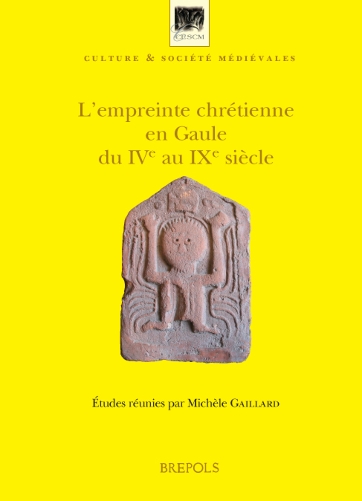
L'empreinte chrétienne en Gaule, du IVe au IXe siècle
show More to view fulltext, buy and share links for:L'empreinte chrétienne en Gaule, du IVe au IXe siècle show Less to hide fulltext, buy and share links for: L'empreinte chrétienne en Gaule, du IVe au IXe siècleCe volume contient les textes de la plupart des communications effectuées lors de trois journées d’étude tenues à l’Université de Lille 3, à l’automne 2010. Ces journées avaient pour but de présenter les recherches en cours sur la topographie religieuse des villes épiscopales, de mieux faire connaître les espaces ruraux, objets de nombreux et récents travaux archéologiques et historiques, tout en étudiant les changements intervenus au cours de ces six siècles dans le domaine des normes et comportements sociaux. Les vingt contributions ici offertes entraînent le lecteur de la législation constantinienne à la normalisation carolingienne, des premiers signes archéologiques de la présence du christianisme aux prémices de la paroisse médiévale, des premiers monastères aux communautés cénobitiques strictement encadrées par les réformes carolingiennes, des plus hauts lieux du christianisme gaulois ou gallo-franc à des sites moins illustres mais tout autant chargés d’histoire. Les auteurs ont inscrit leurs réflexions dans les grandes problématiques qui animent aujourd’hui l’archéologie et l’historiographie des débuts du christianisme en Occident, ce qui permet d’apprécier, à chaque étape de ce long itinéraire, l’empreinte du christianisme en Gaule aux premiers siècles de son histoire.
-
-
-
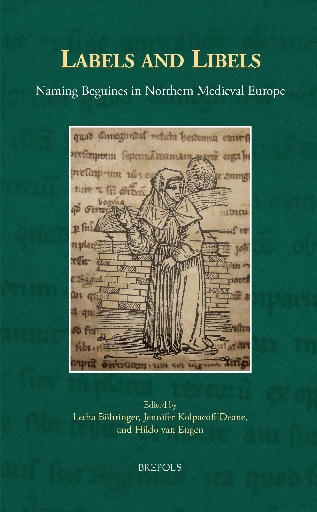
Labels and Libels
show More to view fulltext, buy and share links for:Labels and Libels show Less to hide fulltext, buy and share links for: Labels and LibelsThis volume investigates the diverse meanings assigned to and adopted by lay religious women in northern Europe between the thirteenth and sixteenth centuries. While many outstanding studies have unearthed the local or regional significance of such women, little comparative or transregional scholarship exists to date. Moreover, traditional emphasis on medieval ecclesiastical condemnation of beguines has obscured the extent to which their communities were intertwined with supportive local social structures.
Exploring the multiplicity of contemporary perspectives in the Belgian, Dutch, French, and German contexts over time, the volume traces not only the women’s relationships to various authorities and institutions, but also the specific terms used to represent and respond to ‘beguines’. Illuminating the kaleidoscopic ways in which medieval people categorized, described, and engaged with such women, the collected essays also underscore the extent to which simple dualities of ‘clerical’ and ‘lay’, ‘elite’ and ‘popular’, and ‘orthodox’ and ‘heretical’ are insufficient constructs with which to map intersections of medieval gender, lay religiosity, and society. In doing so, they propose new avenues and coordinates for exploring the sociospiritual topography of medieval Europe.
-
-
-
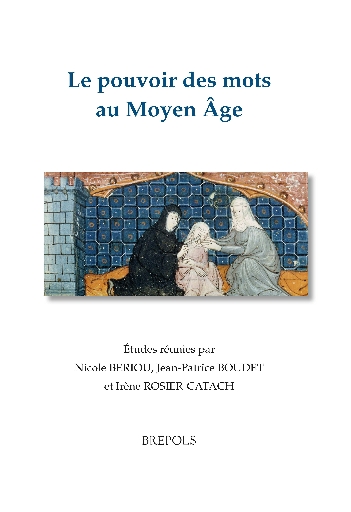
Le pouvoir des mots au Moyen Âge
show More to view fulltext, buy and share links for:Le pouvoir des mots au Moyen Âge show Less to hide fulltext, buy and share links for: Le pouvoir des mots au Moyen ÂgeL’idée d’un pouvoir ou d’une efficacité des paroles émerge de la lecture de sources fort différentes au Moyen Âge, qu’il s’agisse de textes doctrinaux ou d’ouvrages à vocation pratique. Ce livre se veut une confrontation la plus large possible, sur ce thème, dans une perspective d’histoire intellectuelle et anthropologique. En effet, dans les différents cas, relevant de différents domaines, de nombreuses questions transversales se posaient, au sujet des éléments qui étaient décrits comme déterminant l’efficacité de la parole (les paroles elles-mêmes, le rituel, les protagonistes). Cette efficacité faisait-elle l’objet d’un discours normatif ? Donnait-elle lieu à un discours réflexif, de la part des philosophes ou des théologiens ? L’engagement du locuteur, sa croyance, son intention, étaient-elles, comme le consentement ou la collaboration de l’auditeur, des facteurs déterminants ? Existait-il dans les paroles un pouvoir intrinsèque, ou n’étaient-elles que le vecteur d’un pouvoir venu d’ailleurs, surnaturel notamment ? Des matériaux et analyses présentés surgissent des questions qui pourront intéresser la philosophie du langage comme l’histoire ou l’anthropologie.
-
-
-
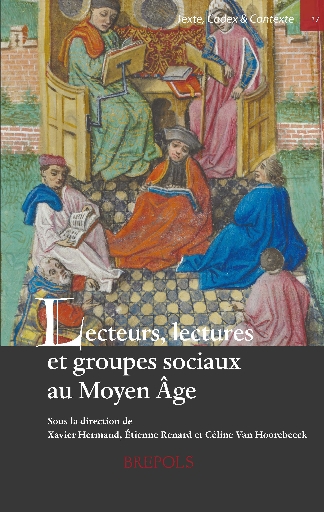
Lecteurs, lectures et groupes sociaux au Moyen Âge
show More to view fulltext, buy and share links for:Lecteurs, lectures et groupes sociaux au Moyen Âge show Less to hide fulltext, buy and share links for: Lecteurs, lectures et groupes sociaux au Moyen ÂgeDepuis quelques années, la réflexion sur la place et les usages du livre dans la société médiévale s’est considérablement renouvelée, dans ses méthodes comme dans ses objectifs. L’étude des pratiques de lecture au sein de lectorats socialement déterminés s’impose désormais comme l’un des courants les plus dynamiques dans l’historiographie relative aux livres et aux bibliothèques médiévales. Les dix contributions rassemblées dans ce volume s’inscrivent dans ce champ de la recherche. Historiens et philologues y abordent cette thématique de manière plurielle mais complémentaire. Sont tantôt privilégiés les rapports au livre et à la lecture, que ce soit dans le monde monastique, au sein des circuits humanistes ou en milieu curial ; tantôt l’identification du lectorat et des usages de tel ou tel texte ou ensemble de textes : chansons de geste, bibles portatives, recueils d’exempla…
Xavier Hermand est professeur d’histoire médiévale à l’Université de Namur.
Étienne Renard est chargé de cours en histoire médiévale à l’Université de Namur.
Céline Van Hoorebeeck est conservatrice à la Bibliothèque universitaire Moretus Plantin de l’Université de Namur.
-
-
-
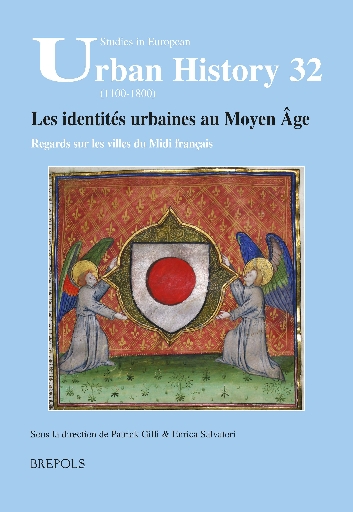
Les identités urbaines au Moyen Âge. Regards sur les villes du Midi français
show More to view fulltext, buy and share links for:Les identités urbaines au Moyen Âge. Regards sur les villes du Midi français show Less to hide fulltext, buy and share links for: Les identités urbaines au Moyen Âge. Regards sur les villes du Midi françaisLa singularité urbaine des villes du Midi français a souvent été négligée. Coincées entre le modèle communal italien triomphant et le puissant mouvement urbain des villes flamandes ou rhénanes, elles apparaissent comme faiblement typées ; leur intégration dans l’espace capétien aurait également limité leur capacité d’autogouvernement et de discussions avec les autorités centrales. Pourtant, le dynamisme de ces cités méridionales est avéré, aussi bien dans leur élan démographique que dans la force des échanges économiques. Que dire également de leur place dans le développement des mouvements religieux contestaires et de leur rayonnement intellectuel facilité par la présence de grandes universités au recrutement international ! À la lumière des nombreux et récents travaux sur le sujet, le colloque offre la première approche comparative sur ces villes méridionales, en insistant sur les traits identitaires qui définissent leurs contours originaux, en particulier dans l’organisation politique.
Patrick Gilli est professeur d’histoire médiévale à l’université Montpellier 3, directeur du CEMM (centre d’études médiévales de Montpellier, EA 4583).
Enrica Salvatori est professeur d’histoire médiévale à l’université de Pise.
-
-
-
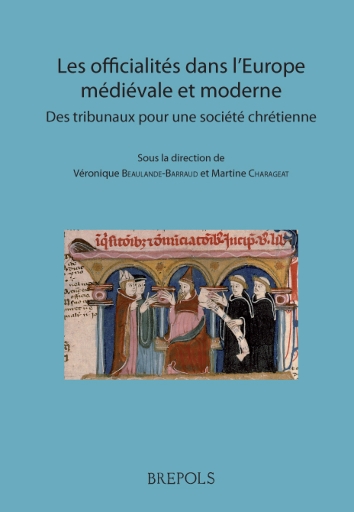
Les officialités dans l'Europe médiévale et moderne
show More to view fulltext, buy and share links for:Les officialités dans l'Europe médiévale et moderne show Less to hide fulltext, buy and share links for: Les officialités dans l'Europe médiévale et moderneLes justices ecclésiastiques suscitent un intérêt historiographique renouvelé ces dernières années, tant comme juridictions temporelles spécifiques que dans les manifestations d’une justice compétente en matière «spirituelle». C’est spécifiquement sur les «cours d’Église», les officialités, que s’est tenu ce colloque réunissant historiens et juristes, médiévistes et modernistes, pour un bilan en forme d’invitation à poursuivre les investigations.
L’histoire des officialités a ainsi été éclairée dans sa diversité et dans son évolution, dans une perspective comparatiste. Leur compétence et la manière dont elles exercent leur juridiction, gracieuse, contentieuse, criminelle, a été mise en valeur, attestant de leur rôle quotidien auprès des populations. Enfin, l’étude de leur activité permet une approche de l’histoire des femmes et du couple qui, à son tour, met en valeur la richesse des sources des officialités, organes de “disciplinement des mœurs” encore en partie méconnus.
-
-
-
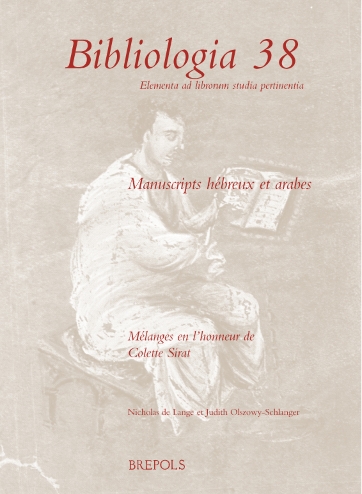
Manuscrits hébreux et arabes
show More to view fulltext, buy and share links for:Manuscrits hébreux et arabes show Less to hide fulltext, buy and share links for: Manuscrits hébreux et arabesL'étude des manuscrits hébreux est à juste titre considérée comme le fondement de la recherche en histoire intellectuelle des juifs. C'est sous la plume de Colette Sirat, dont les travaux ont profondement marqué aussi bien les études sur la pensée juive et que sur l'histoire de l'écriture, que la paléographie hébraïque a acquis une méthodologie rigoureuse, un ancrage institutionnel et une série d'ouvrages de référence.
Manuscrits hébreux et arabes est un recueil de mélanges dédiés à Colette Sirat par ses collègues, amis et disciples. Les articles portant sur des manuscrits provenant de lieux et périodes différents montrent l'envergure des travaux en paléographie et codicologie hébraïque aujourd'hui.
-