


EMISCS14

Collection Contents
6 results
-
-
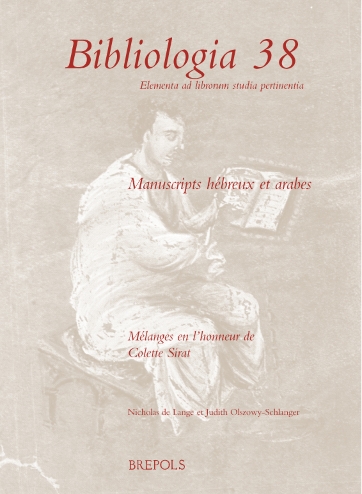
Manuscrits hébreux et arabes
show More to view fulltext, buy and share links for:Manuscrits hébreux et arabes show Less to hide fulltext, buy and share links for: Manuscrits hébreux et arabesL'étude des manuscrits hébreux est à juste titre considérée comme le fondement de la recherche en histoire intellectuelle des juifs. C'est sous la plume de Colette Sirat, dont les travaux ont profondement marqué aussi bien les études sur la pensée juive et que sur l'histoire de l'écriture, que la paléographie hébraïque a acquis une méthodologie rigoureuse, un ancrage institutionnel et une série d'ouvrages de référence.
Manuscrits hébreux et arabes est un recueil de mélanges dédiés à Colette Sirat par ses collègues, amis et disciples. Les articles portant sur des manuscrits provenant de lieux et périodes différents montrent l'envergure des travaux en paléographie et codicologie hébraïque aujourd'hui.
-
-
-
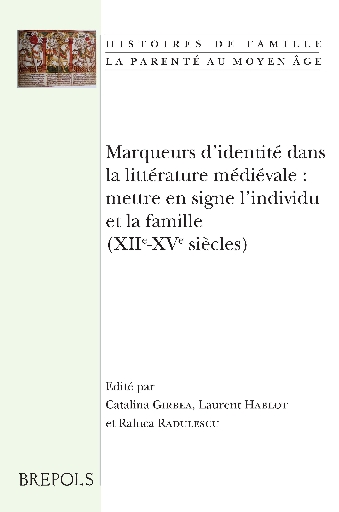
Marqueurs d’identité dans la littérature médiévale : mettre en signe l’individu et la famille (XIIe-XVe siècles)
show More to view fulltext, buy and share links for:Marqueurs d’identité dans la littérature médiévale : mettre en signe l’individu et la famille (XIIe-XVe siècles) show Less to hide fulltext, buy and share links for: Marqueurs d’identité dans la littérature médiévale : mettre en signe l’individu et la famille (XIIe-XVe siècles)Le XIIe siècle marque une fracture épistémologique dont les symptômes les plus visibles sont l’apparition des questionnements identitaires, qu’il s’agisse d’une meilleure définition de l’individu, des familles ou des groupes. Ils se laissent entrevoir avec une force sans précédent sur le fond d’une double mutation, sociale et culturelle. L’éclosion de la littérature vernaculaire, l’effondrement progressif durant tout le XIIe siècle de la suprématie du latin écrit, provoque un bouleversement épistémique. Les marqueurs de l’identité comme les signes héraldiques commencent à préoccuper l’homme médiéval. Les contributions de ce volume se proposent de suivre le développement et la rationalisation de ces marqueurs qui définissent les rapports entre les individus et leurs groupes jusqu’à la fin du Moyen Âge. Cette enquête est menée à travers la fiction vernaculaire, le lieu par excellence où les problématiques identitaires trouvent une voie d’expression à la fois transparente et complexe.
-
-
-
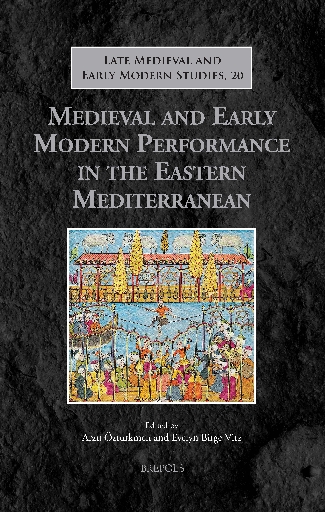
Medieval and Early Modern Performance in the Eastern Mediterranean
show More to view fulltext, buy and share links for:Medieval and Early Modern Performance in the Eastern Mediterranean show Less to hide fulltext, buy and share links for: Medieval and Early Modern Performance in the Eastern MediterraneanThis book brings to life an impressively broad array of performances in the Eastern Mediterranean. It covers many traditional types of performance, including singers, dancers, storytellers, street performers, clowns, preachers, shadow-puppeteers, fireworks displays, and semi-theatrical performances in folk and other celebrations. It explores performance of the secular as well as of the sacred in its many forms, including Sunni, Shiite, Sufi, and Alevi Muslims; Sephardic Jews and those in the Holy Land; and Armenian, Greek, and European Catholic Christians. The book focuses on the Medieval and Early Modern periods, including the Early Ottoman. Some papers reach backward into Late Antiquity, while others demonstrate continuity with the modern Eastern Mediterranean world.
The articles discuss evidence for performers and performance coming from archival sources, architectural and manuscript images, musical notation, historical and ethnographic accounts, literary works, and oral tradition. Across the broad range of issues, chronology, and geography, certain fundamental topics are central: concepts of drama and theatricality; varied definitions of ‘performance’ and related terms; the sacred and the profane, and their frequent intersection; and complex relations between oral and written traditions.
-
-
-
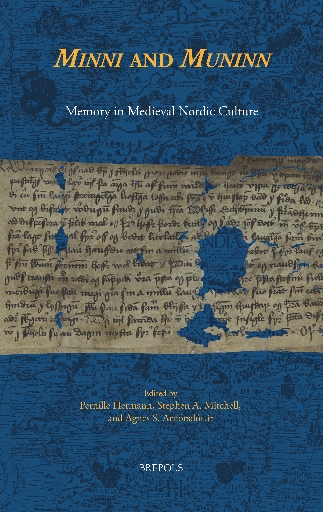
Minni and Muninn
show More to view fulltext, buy and share links for:Minni and Muninn show Less to hide fulltext, buy and share links for: Minni and MuninnIn recent years, various branches of memory studies have provided useful tools of analysis that offer new ways of understanding medieval cultures. The articles in this collection draw on these new theoretical tools for studying - and conceptualizing - memory, in order to reassess the function of memory in medieval Nordic culture. Despite its interdisciplinary and comparative basis, the volume remains very much an empirical study of memory and memory-dependent issues as these took form in the Nordic world.
In addition, the articles deal with a variety of theoretical concepts and areas of investigation which are of relevance when dealing with memory studies in general, such as transmission and media, preservation and storage, forgetting and erasure, and authenticity and falsity. The articles cover a wide range of medieval texts, such as saga, myth, poetry, law, historiography, learned literature, and other forms of verbal expression, such as runic inscriptions.
-
-
-
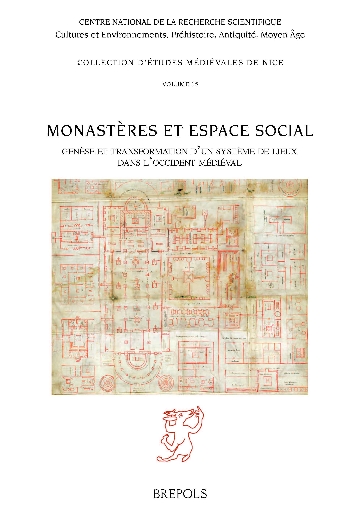
Monastères et espace social
show More to view fulltext, buy and share links for:Monastères et espace social show Less to hide fulltext, buy and share links for: Monastères et espace socialCet ouvrage présente les résultats d’une enquête, menée par des archéologues et des historiens, sur l’organisation spatiale du monachisme au Moyen Âge. Il propose tout à la fois des synthèses inédites sur plusieurs complexes ou cités monastiques et une réflexion sur les processus d’articulation et de hiérarchisation des lieux de vie, de culte et de production constitutifs des monastères occidentaux. Il s’intéresse entre autres aux différentes formes de circulation - déplacements pragmatiques, déambulations liturgiques, parcours mentaux - qui ont favorisé la structuration et la monumentalisation de ces ensembles religieux.
La mise en place et le développement des monastères sont ici appréhendés au travers des usages de l’espace, par l’étude des monuments, des textes et des images qui en portent la trace. Les auteurs de ce volume mettent ainsi en évidence la genèse et la transformation d’un système de lieux singulier qui fut, dans l’Occident médiéval, l’un des principaux laboratoires des représentations et des pratiques de l’espace social.
-
-
-
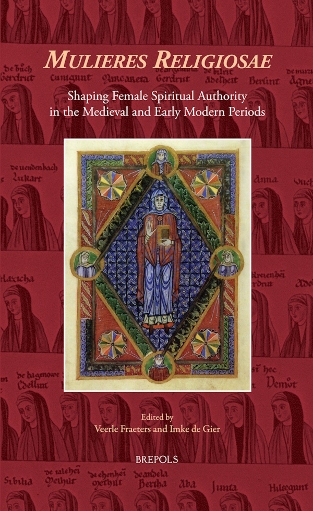
Mulieres Religiosae
show More to view fulltext, buy and share links for:Mulieres Religiosae show Less to hide fulltext, buy and share links for: Mulieres ReligiosaeTraditionally women were denied access to positions of official religious authority within Christianity and were therefore compelled to explore other avenues to acquire and express spiritual leadership. Through twelve case studies covering different regions in Europe, this volume considers the nuances of what constituted female spiritual authority, how it was acquired and manifested by religious women, and how it evolved from the high Middle Ages to the Early Modern period. Whilst current scholarship often emphasizes binaries within the fields of gender and religious authority, this volume examines the manifestation of female religious authority in its multiple facets. It looks both at individuals displaying exceptional forms of agency such as prophesying, as well as more commonplace, communal activities such as letter-writing and music-making. By taking into account the pervasiveness of spirituality in society as a whole in the Pre-Modern era, this collection of essays renegotiates the relationship between the spiritual and the social domain. Through the chronological organization of the contributions insight is gained into the changes in the means and forms female religious authority could take between 1150 and 1750. The narrative is clearly impacted by late medieval enclosure policies and by changing modes of spirituality. Whereas women in the earlier period tended to represent themselves as a door through which God could advance towards mankind, later on they functioned more frequently as a portal through which others could advance towards God.
-