


EMISCS15

Collection Contents
41 results
-
-
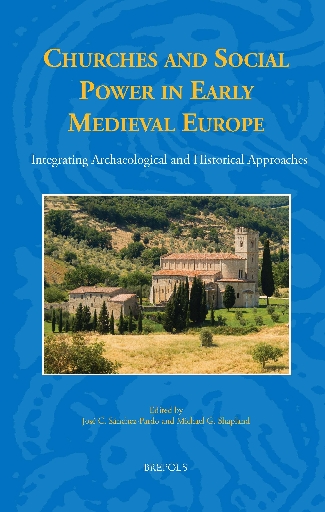
Churches and Social Power in Early Medieval Europe
show More to view fulltext, buy and share links for:Churches and Social Power in Early Medieval Europe show Less to hide fulltext, buy and share links for: Churches and Social Power in Early Medieval EuropeLocal churches were an established part of many towns and villages across early medieval Western Europe, and their continued presence make them an invaluable marker for comparing different societies. Up to now, however, the dynamics of power behind church building and the importance of their presence within the landscape have largely been neglected.
This book takes a comparative and interdisciplinary approach to the study of early medieval churches, drawing together archaeology, history, architecture, and landscape studies in order to explore the relationship between church foundation, social power, and political organization across Europe. Key subjects addressed here include the role played by local elites and the importance of the church in buttressing authority, as well as the connections between archaeology and ideology, and the importance of individual church buildings in their broader landscape contexts.
Bringing together case-studies from diverse regions across Western Europe (Italy, Spain, Portugal, Germany, France, the British Isles, Denmark, and Iceland), the seventeen contributions to this volume offer new insights into the relationships between church foundations, social power, and political organization. In doing so, they provide a means to better understand social power in the landscape of early medieval Europe.
-
-
-
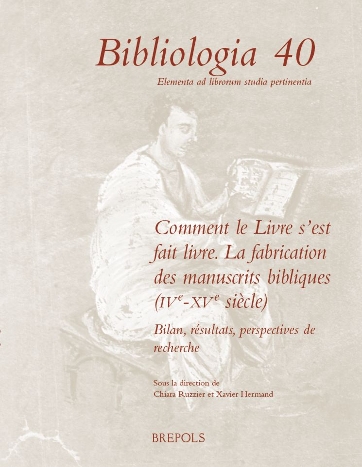
Comment le Livre s'est fait livre. La fabrication des manuscrits bibliques (IVe-XVe siècle)
show More to view fulltext, buy and share links for:Comment le Livre s'est fait livre. La fabrication des manuscrits bibliques (IVe-XVe siècle) show Less to hide fulltext, buy and share links for: Comment le Livre s'est fait livre. La fabrication des manuscrits bibliques (IVe-XVe siècle)Dès l’Antiquité et tout au long du Moyen Âge, la Bible a été l’un des textes les plus reproduits dans le monde chrétien. Texte sacré par excellence, elle a été très largement commentée, remaniée, utilisée dans des contextes variés et avec des finalités diverses. C’est pourquoi, en tout lieu et à toute époque, elle constitua l’une des expressions les plus achevées, et parfois novatrices, du professionnalisme artisanal dans le domaine du livre médiéval. Si le texte de la Bible et sa tradition manuscrite ont depuis longtemps été l’objet d’une attention soutenue de la part des philologues, des exégètes et des historiens, il en va tout autrement pour ce qui est de son « incarnation » dans un objet matériel.
C’est aux diverses modalités de cette « incarnation » qu’était consacré le colloque international organisé à l’Université de Namur en mai 2012, dont les contributions sont ici réunies. Cette rencontre fut à la fois l’occasion de faire le point sur les connaissances déjà acquises sur la fabrication de la Bible de l’Antiquité tardive au xv e siècle, et d’ouvrir de nouvelles pistes de recherche. La perspective adoptée se veut globale et comparative, et met en lumière la diversité des solutions retenues pour répondre aux problèmes posés par la réalisation matérielle du texte sacré selon les époques et les contrées, des premières bibles pandectes à la diffusion des bibles incunables.
-
-
-
Compétition et sacré au haut Moyen Âge : entre médiation et exclusion
show More to view fulltext, buy and share links for:Compétition et sacré au haut Moyen Âge : entre médiation et exclusion show Less to hide fulltext, buy and share links for: Compétition et sacré au haut Moyen Âge : entre médiation et exclusionLes actes du colloque « Compétition et sacré au haut Moyen Âge : entre médiation et exclusion » constituent le deuxième volume de la série de publications du groupe international de recherches sur la compétition dans les sociétés médiévales (400-1100). Ce programme de recherche considère les objets de la compétition, les moyens et les formes de la compétition qui dépendent des capacités de régulation de cette même compétition : règles du jeu édictées par les autorités, mécanismes de médiation plus ou moins forts, équilibre de la terreur, la performativité des moyens : résultats en termes d’objets et d’enjeux, les possibilités de mobilité sociale, de changement de statut ou de position qui sont plus ou moins grandes selon les périodes et les espaces. La rencontre de Limoges place le sacré au centre de la réfl exion sur la compétition, mais il est nécessaire de ne pas restreindre le sacré à ce qui est consacré par l’autorité ecclésiastique. Si le sacré est bien ce qui est doté d’une force surnaturelle et qui isole, la distinction sacré-profane ne passe pas complètement par l’opposition clercs-laïcs. Avec le sacré on touche au pouvoir, puisqu’il ne peut y avoir de pouvoir légitime au Moyen Âge sans lien avec le sacré, quelle que soit la forme prise par la relation. Même si les clercs tendent à monopoliser de plus en plus le sacré par le biais du « consacré », la spécifi cité de la période prégrégorienne tient précisément à ce que le sacré n’est pas encore entièrement contrôlé par les clercs et qu’il est donc objet de compétition. En même temps, le sacré est un instrument de la compétition et il est facteur d’exclusion.
-
-
-
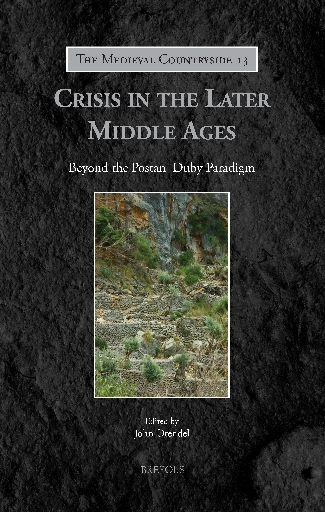
Crisis in the Later Middle Ages
show More to view fulltext, buy and share links for:Crisis in the Later Middle Ages show Less to hide fulltext, buy and share links for: Crisis in the Later Middle AgesThese papers are taken from the first of a series of five international conferences devoted to the European conjuncture in 1300. They examine the enduring influence of Michael Postan’s Malthusian model of economic crisis, and in particular the impact upon non-English speaking historians of Postan’s ideas as interpreted by Georges Duby. Through both historiographical essays and original research, the authors reinterpret the later medieval crisis on the continent and in Britain. The vision they express is of a medieval society in which economic, political, and social threads wove together town and country in a complex web extending to the furthest reaches of the ‘margin’, in the highlands of the Mediterranean and on the heaths of England. In order to understand the later medieval crisis, our attention must shift to how individuals negotiated and manoeuvred among institutions of exchange, power, and culture in their bewildering complexity rather than focus upon the modelling of reified factors.
-
-
-

De l’ancien français au français moderne
show More to view fulltext, buy and share links for:De l’ancien français au français moderne show Less to hide fulltext, buy and share links for: De l’ancien français au français moderneLa traduction « intralinguale », du « même au même », selon la définition qu’en a donnée Michel Zink, est une invention de ces mêmes clercs médiévaux qui ont mis en communication à travers la translatio studii deux horizons culturels et linguistiques. Cette traduction constitue la trace la plus manifeste de l’évolution d’un idiome au sein du diasystème linguistique gallo-roman. Or d’un état à l’autre de la langue française, et contrairement à ce que l’on pourrait croire, ce transfert ne vas pas de soi. D’un côté il continue de témoigner d’une conscience de la différence, de l’autre, à la différence de ce que l’on constate au Moyen Âge, d’une indifférence traductologique affichée des translateurs de notre temps à l’égard de leur acte, des principes qui le fondent comme des choix techniques qui l’expriment. Ce livre met en lumière nombre des arguments qui peuvent expliquer ce silence des traducteurs modernes. Beaucoup d’entre eux ne voient-ils pas dans leur travail un simple moyen de rendre accessible de la manière la plus neutre possible un texte vieilli destiné à un lecteur non spécialiste ? La revendication stéréotypée de la fidélité respectueuse au texte source conduit alors bien des traductions actuelles à décalquer la langue d’origine dans un français artificiel qu’Antoine Berman nommait le « clerquois ».
Les différents travaux rassemblés dans le présent volume suivent quatre perspectives critiques : Théories et méthodologies, Pratiques poétiques, Traductions romanes, Seuils et impasses. Ils abordent différentes facettes de ces questions jusqu’ici inexplorées et présentent des solutions méthodologiques et pragmatiques qui permettront sans doute de dépasser les peurs françaises de la traduction intralinguale.
Claudio Galderisi est professeur de langues et littératures de la France médiévale à l’Université de Poitiers (CESCM). Il a dirigé les trois volumes des Translations médiévales. Cinq siècles de traductions en français au Moyen Âge. XIe-XVe s. (Brepols, 2011).
Jean-Jacques Vincensini est professeur de langue et littératures médiévales à l’Université de Tours (CESR). Il a édité et traduit notamment le Roman de Mélusine de Jean d’Arras et de Coudrette. Il prépare l’édition et la traduction de l’Escoufle de Jean Renart.
-
-
-
Early Medieval Ireland and Europe: Chronology, Contacts, Scholarship
show More to view fulltext, buy and share links for:Early Medieval Ireland and Europe: Chronology, Contacts, Scholarship show Less to hide fulltext, buy and share links for: Early Medieval Ireland and Europe: Chronology, Contacts, ScholarshipThe pivotal role of Ireland in the development of a decidedly Christian culture in early medieval Europe has long been recognized. Still, Irish scholarship on early medieval Ireland has tended not to look beyond the Irish Sea, while continental scholars try to avoid Hibernica by reference to its special Celtic background. Following the lead of the honorand of this volume, Prof. Dáibhí Ó Cróinín, this collection of 27 essays aims at contributing to a reversal of this general trend. By way of introduction to the period, the first section deals with chronological problems faced by modern scholars as well as the controversial issues relating to the reckoning of time discussed by contemporary intellectuals. The following three sections then focus on Ireland’s interaction with its neighbours, namely Ireland in the insular world, continental influences in Ireland, and Irish influences on the Continent. The concluding section is devoted to modern scholarship and the perception of the Middle Ages in modern literature.
-
-
-

Economies, Public Finances, and the Impact of Institutional Changes in Interregional Perspective
show More to view fulltext, buy and share links for:Economies, Public Finances, and the Impact of Institutional Changes in Interregional Perspective show Less to hide fulltext, buy and share links for: Economies, Public Finances, and the Impact of Institutional Changes in Interregional PerspectiveThe way and extent to which differences in economic systems and stages of development, and the impact of institutional changes affected the political economy and fiscal systems of regions, or vice versa, is the overall theme of this volume. One major problem is the non-convergence of economic regions, financial networks, political borders and fiscal systems. The question is whether a set of variables is supra-regional, interregional, regional, local or even a mix of all of these. These questions have broad implications for our understanding of urban society and the relations between town and countryside. This volume contains studies about economic, financial and political structures, and developments in different regions of the Low Countries and the Lower Rhine area in a regional comparative perspective during the Late Middle Ages and the Early Modern Period.
-
-
-
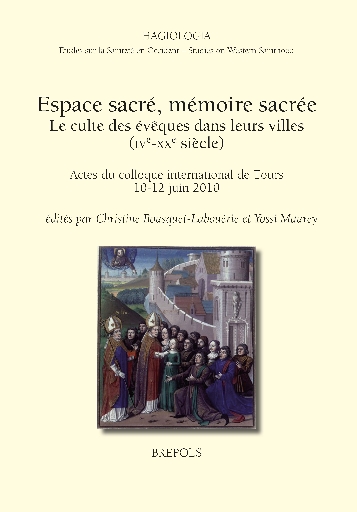
Espace sacré, mémoire sacrée. Le culte des évêques dans leurs villes (IVe-XXe siècle)
show More to view fulltext, buy and share links for:Espace sacré, mémoire sacrée. Le culte des évêques dans leurs villes (IVe-XXe siècle) show Less to hide fulltext, buy and share links for: Espace sacré, mémoire sacrée. Le culte des évêques dans leurs villes (IVe-XXe siècle)L’histoire de bien des villes européennes a été façonnée par une ou plusieurs figures saintes dont les relations aux villes-vraies ou imaginées- ont eu des conséquences spirituelles et pratiques. La topographie de la ville, son économie, ses établissements, sa liturgie, sa réputation, et même le développement de la fierté civique des habitants, se sont forgés dans une association idiosyncratique du saint et de sa ville. La figure de l’évêque-saint, en adéquation avec ses prérogatives spirituelles et temporelles extraordinaires, représente une catégorie particulière dont ce livre a voulu tracer les contours. Le topos de la sainteté épiscopale préjuge la plupart du temps de rapports passionnels entre l’évêque et sa ville, parfois conflictuels même tant l’écart entre la sainteté vécue ou du moins ressentie peut entrer en contradiction avec une population souvent versatile mais soucieuse cependant de participer par capillarité à la sainteté de son chef de diocèse.
-
-
-
Exclure de la communauté chrétienne
show More to view fulltext, buy and share links for:Exclure de la communauté chrétienne show Less to hide fulltext, buy and share links for: Exclure de la communauté chrétienneL’excommunication et l’anathème, « condamnation à la mort éternelle », théoriquement plus grave mais en réalité devenu rapidement synonyme, sont attestés dès les débuts du christianisme et suivent d’abord une évolution parallèle à celle de la pénitence : ils deviennent progressivement de moins en moins publics et de plus en plus renouvelables, devenant par là-même des instruments privilégiés du contrôle social par la pression exercée sur l’individu retranché de la communauté chrétienne.
Cet ouvrage s’interroge à la fois sur la législation ecclésiastique dans la longue durée - pour quelle faute encourt-on l’excommunication entre le IVe et le Xe siècle ? - et sur la pertinence de son application suivant les différents espaces, afin d’évaluer les modalités de la mise en place de cette norme canonique. Il permet de comprendre comment l’excommunication sert à définir et à délimiter les communautés et il étudie les formules et les rituels mis en oeuvre.
-
-
-
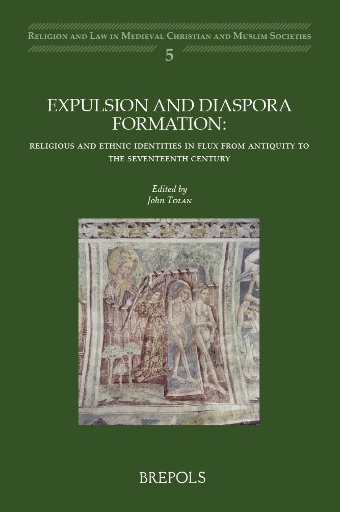
Expulsion and Diaspora Formation: Religious and Ethnic Identities in Flux from Antiquity to the Seventeenth Century
show More to view fulltext, buy and share links for:Expulsion and Diaspora Formation: Religious and Ethnic Identities in Flux from Antiquity to the Seventeenth Century show Less to hide fulltext, buy and share links for: Expulsion and Diaspora Formation: Religious and Ethnic Identities in Flux from Antiquity to the Seventeenth CenturyThe eleven essays brought together in this volume explore the relations between expulsion, diaspora, and exile between Late Antiquity and the seventeenth century. The essays range from Hellenistic Egypt to seventeenth-century Hungary and involve expulsion and migration of Jews, Muslims and Protestants. The common goal of these essays is to shed light on a certain number of issues: first, to try to understand the dynamics of expulsion, in particular its social and political causes; second, to examine how expelled communities integrate (or not) into their new host societies; and finally, to understand how the experiences of expulsion and exile are made into founding myths that establish (or attempt to establish) group identities.
John Tolan is professor of history at the University of Nantes (France) and member of the Academia Europæa. He is author of numerous articles and books in medieval history and cultural studies, including Petrus Alfonsi and his Medieval Readers (1993), Saracens: Islam in the Medieval European Imagination (2002), Sons of Ishmael: Muslims through European Eyes in the Middle Ages (2008), and Saint Francis and the Sultan: The Curious History of a Christian-Muslim Encounter (2009). He is director of a major project funded by the European Research Council, “RELMIN: The legal status of religious minorities in the Euro-Mediterranean world (5th-15th centuries)” (www.relmin.eu).
-
-
-
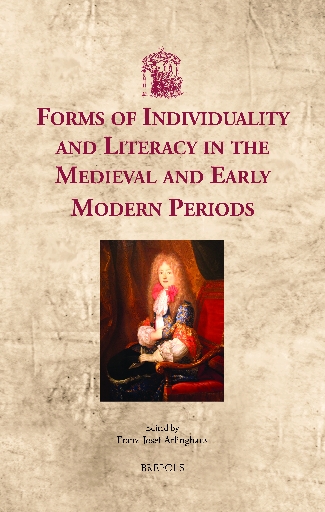
Forms of Individuality and Literacy in the Medieval and Early Modern Periods
show More to view fulltext, buy and share links for:Forms of Individuality and Literacy in the Medieval and Early Modern Periods show Less to hide fulltext, buy and share links for: Forms of Individuality and Literacy in the Medieval and Early Modern Periods‘Individuality’ is one of the central categories of modern society. Can the roots of modern individuality be found in pre-modern times? Or is our way of thinking about ourselves a very recent phenomenon? This book takes a theoretical approach to the problem, derived from Niklas Luhmann’s system theory, in which different forms of individuality are linked to different structures of society in modern and pre-modern times.
The papers in this volume approach this problem by discussing a broad variety of medieval and early modern sources, including charters and seals, letters, and naming practices in a late medieval town. Self-representation is also considered, in ‘housebooks’ and drawings. Textual studies include autobiography in German Humanism, and concepts of individuality and gender in late medieval literary texts.
-
-
-
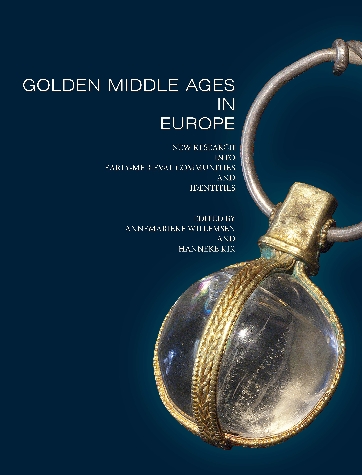
Golden Middle Ages in Europe
show More to view fulltext, buy and share links for:Golden Middle Ages in Europe show Less to hide fulltext, buy and share links for: Golden Middle Ages in EuropeDorestad was an important harbour town in the middle of the present-day Netherlands, that had its hey-day in the Carolingian period, but was already an important settlement in the centuries before, with a famous 7th-century Frankish mint. In July 2014, the National Museum of Antiquities in Leiden hosted the second Dorestad congress, exactly five years after the first. This congress was attached to the exhibition ‘Golden Middle Ages: The Netherlands in the Merovingian World, 400-700 ad’ and brought together historians, archaeologists and linguists to discuss these ‘Dark Ages’, their burials and settlements, rituals and identities, and the position of the Low Countries in the world-wide networks of early-medieval Europe. Contributions in these congress proceedings are devoted to key themes like early-medieval identity and agency, so-called royal burials in Europe, significant find categories like garnets, coins and Merovingian glass, important new sites and finds from the Low Countries and recent work in the Carolingian ‘vicus famosus’ of Dorestad.
Dr. Annemarieke Willemsen is curator of the Medieval Department of the National Museum of Antiquities (Leiden), where she organized the 2009 exhibition & congress on Carolingian Dorestad and the 200 exhibition & congress on the early-medieval Netherlands.
Hanneke Kik m.a. is project manager at the same museum, and was secretary of the Dorestad Congress in 2009 and 2014.
-
-
-
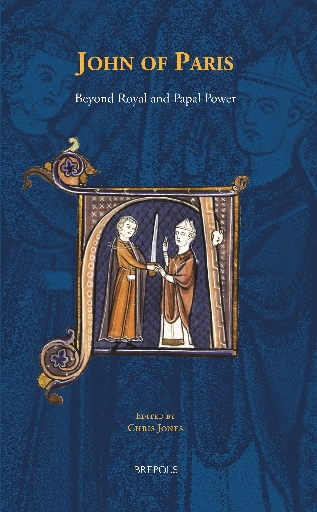
John of Paris
show More to view fulltext, buy and share links for:John of Paris show Less to hide fulltext, buy and share links for: John of ParisThe Dominican scholar John of Paris was one of the most controversial members of the University of Paris in the later Middle Ages. The author of over twenty works, he is best known today for On Royal and Papal Power, a tract traditionally linked to the explosive confrontation that took place between the French king Philip IV and Pope Boniface VIII in the early years of the fourteenth century. Although his role as a royal apologist has been questioned in recent years, John’s tract is often considered the first great defence of the independence of nation-states in the face of the claims to universal authority made by popes and emperors.
Bringing together a team of international scholars with a wide range of expertise, this volume offers the first collection of essays in any language to be dedicated to an exploration of John’s thought. It re-examines his view of the relationship between Church and state, and his conception of political organization. It considers the role played by John’s background as a member of the Dominican order in shaping his ideas and breaks new ground in exploring the relationship between his various works, the origins of his thought, its development, and its legacy.
-
-
-
Knowledge, Contemplation, and Lullism
show More to view fulltext, buy and share links for:Knowledge, Contemplation, and Lullism show Less to hide fulltext, buy and share links for: Knowledge, Contemplation, and LullismThe philosophical questions and issues explored by the medieval masters continued to play a role in the thought of the Renaissance and Early Modern periods. The essays collected in this volume, divided into three parts – Knowledge, Contemplation, and Lullism – study this influence through the lens of Ramon Llull’s Art. They represent the contributions made by scholars of Llull to the 2012 Congress of the Société Internationale pour l’Étude de la Philosophie Médiévale (SIEPM) held in Freising, Germany. The contributions focus on the philosophical implications of Llull’s thought in areas such as geometry, logic, methodology, and Early Modern law.
The SIEPM Congresses in Palermo (2007) and Freising (2012) both held meetings devoted to Llull’s thought. This continued interest in Llull reinforced the constitution of a Lullian Section supported by the SIEPM Bureau (Commission of Latin Philosophy). Since its foundation, this research network has promoted academic research leading to new insights into Llull’s work as a vehicle for medieval philosophical concerns and into the history of its reception. The contributions gathered here reflect the preliminary insights and outcomes of this research. Moreover, in view of the 700th anniversary of Llull’s death (1316-2016) the essays provide a pertinent example of the continuing significance of Llull’s thought for our time.
-
-
-
La formule au Moyen Âge, II / Formulas in Medieval Culture, II
show More to view fulltext, buy and share links for:La formule au Moyen Âge, II / Formulas in Medieval Culture, II show Less to hide fulltext, buy and share links for: La formule au Moyen Âge, II / Formulas in Medieval Culture, IIQu’est-ce que la « formularité » dans les savoirs et les pratiques médiévales? Comment s’illustre-t-elle entre expression individuelle et normes collectives, rituels et innovations, reprises d’un modèle et créativité? La présente publication rassemble un choix parmi les contributions présentées à l’occasion du grand colloque international qui s’est tenu à Nancy et Metz du 7 au 9 juin 2012, sur le thème de l’usage de la formule dans la culture médiévale. Le colloque a accueilli des médiévistes issus de toutes les disciplines, parmi lesquelles ont été retenues ici la diplomatique (sept articles), la littérature (sept articles, auxquels s’ajoutent deux contributions sur l’hagiographie, et une sur la littérature universitaire), l’iconographie et l’architecture, mais aussi l’étude des formules dans des domaines de la vie pratique comme la magie, la médecine et chez les hérauts d’armes.
-
-
-
Le dictamen dans tous ses états
show More to view fulltext, buy and share links for:Le dictamen dans tous ses états show Less to hide fulltext, buy and share links for: Le dictamen dans tous ses étatsL’ars dictaminis, ensemble de techniques de rédaction latines créées entre 1070 et 1250 pour répondre aux nouveaux besoins de la société médiévale, jouit depuis deux décennies d’un regain d’attention notable. Art rhétorique cultivé par les différentes autorités ecclésiastiques et laïques durant la plus grande partie du bas Moyen Âge, l’ars a profité de l’intérêt accru pour l’histoire des techniques de communication. Peut-on dire pour autant que l’étude de ce courant central de l’écriture médiolatine est réellement sortie d’un enclavement séculaire ? Non. Dans une volonté de décentrer l’étude de l’ars dictaminis de l’approche strictement théorique pour envisager l’ensemble des problèmes que ce champ d’étude pose à l’histoire médiévale, le colloque a affronté collectivement l’ensemble des questions posées par l’ars dictandi, en tentant à la fois de faire le bilan des avancées effectuées ces dernières décennies, et de préciser les perspectives de recherche.
Les contributeurs : Anna Adamska, Elisabetta Bartoli, Francesca Battista, Filippo Bognini, Tanja Broser, Martin Camargo, Fulvio Delle Donne, Claudio Felisi, Paolo Garbini, Benoît Grévin, Florian Hartmann, Dario Internullo, Maria Koczerska, Vito Sivo, Francesco Stella, Matthias Thumser, Anne-Marie Turcan-Verkerk, Charles Vulliez
-
-
-
Le Pater noster au XIIe siècle
show More to view fulltext, buy and share links for:Le Pater noster au XIIe siècle show Less to hide fulltext, buy and share links for: Le Pater noster au XIIe siècle« Breviarium totius evangelii » selon l’heureuse formule de Tertullien, la prière du « Notre Père » enseignée par Jésus à ses disciples apparaît, dans l’histoire de la chrétienté, comme un moyen capital de formation spirituelle et morale, aussi bien d’un individu que d’une communauté. Son message est dévoilé, renforcé et répandu grâce à la série de commentaires et d’autres ouvrages produits autour d’elle.
Au cours du xii e siècle, on assiste à des lectures renouvelées des sept demandes de l’oraison dominicale, suscitées par différents facteurs : la multiplication des écoles urbaines et la mise en place de nouveaux instruments de formation ; la nécessité de réformer l’Église à partir de perspectives diverses, autant ecclésiastiques que laïques ; un esprit attentif aux sources et aux auctoritates.
Le but de ce recueil est de mettre en lumière les divers mouvements d’appropriation et retransmission du « Notre Père » dans différents contextes institutionnels (les écoles, les communautés de religieux, etc.) et selon une multiplicité de réécritures.
Docteur en histoire de la philosophie et histoire des idées de l’Université de Rome La Sapienza, Francesco Siri est ingénieur de recherche auprès de l’I.R.H.T. de Paris. Ses travaux portent sur les maîtres en sacra pagina du xii e siècle et l’édition des textes médiolatins.
-
-
-
Les origines de l’abbaye cistercienne d’Orval
show More to view fulltext, buy and share links for:Les origines de l’abbaye cistercienne d’Orval show Less to hide fulltext, buy and share links for: Les origines de l’abbaye cistercienne d’OrvalAlors que se profilait à l’horizon la commémoration en 1970 du « neuvième centenaire » de l’abbaye d’Orval, la tradition d’une triple fondation monastique était remise en question. Les cisterciens arrivés en 1131 ou 1132 ne se situeraient pas dans la continuité de bénédictins venus de Calabre en 1070 auxquels auraient succédé des chanoines réguliers en 1110. Un dialogue « difficile » s’instaurait alors entre partisans de l’une et l’autre « écoles ». Quatre décennies plus tard, de nouveaux acteurs sont entrés en jeu et l’archéologie médiévale dispose de techniques inédites ou radicalement renouvelées. Un colloque tenu à Orval en juillet 2011 a tenté de faire le point des connaissances. Après quelques exposés consacrés au contexte politique et religieux de l’implantation monastique, une table ronde offrit l’occasion de fructueux échanges entre des archéologues, des historiens et un historien du bâti impliqués dans le dossier de plus ou moins longue date. Quelques avancées significatives sur les origines d’Orval s’inscrivent à l’actif de la rencontre.
-
-
-
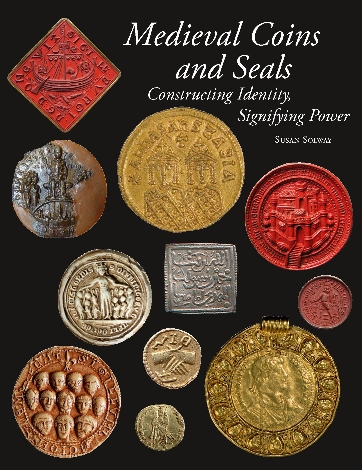
Medieval Coins and Seals: Constructing Identity, Signifying Power
show More to view fulltext, buy and share links for:Medieval Coins and Seals: Constructing Identity, Signifying Power show Less to hide fulltext, buy and share links for: Medieval Coins and Seals: Constructing Identity, Signifying PowerMedieval Coins and Seals: Constructing Identity, Signifying Power showcases these objects as intrinsic and highly significant aspects of medieval visual culture, and contributes to an understanding of the many ways in which they functioned as conveyors of meaning in Western European, Islamic, and Byzantine cultures from the fifth to the fifteenth century. The essays presented here, by art historians, numismatists, sigillographers, and historians on a wide variety of coins and seals, afford fresh insight into these tantalizing relics of medieval art and the vibrant cultural roles they played at the time of their creation. Through their images and inscriptions, they conveyed complex cultural attitudes by means of sophisticated visual strategies carefully constructed to further the subjective agendas of rulers and − in the case of seals − of aristocrats, ordinary individuals, towns, corporations, and government officials. The messages conveyed by these tightly controlled objects were, above all, ones of authority, identity, and legitimacy, with goals or subtexts that included the politics of self- presentation; the construction of personal, civic, national and cultural identity; the advertisement of dynastic succession; and much more. As forceful modes of visual discourse designed to carry calculated, at times propagandistic, communications to broadly dispersed audiences, coins and seals actively served during these centuries as sociocultural agents that helped mold public opinion (as they had in antiquity), and thereby shaped the medieval world.
-
-
-
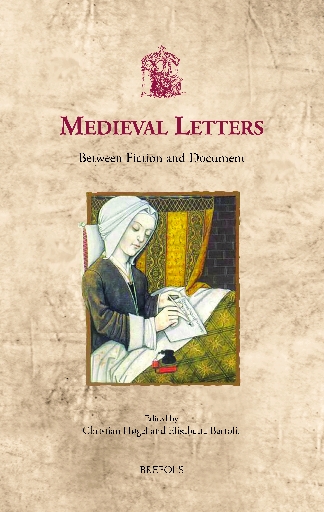
Medieval Letters
show More to view fulltext, buy and share links for:Medieval Letters show Less to hide fulltext, buy and share links for: Medieval LettersModern scholarship on medieval letters has often focused on the divide between fictionality and historicity. Attempts have been made to distinguish between ‘real’ letters and those that were used as stylistic models, and discussion has focused on how to make use of these texts as historical sources. In this volume, which draws on the proceedings of the ‘Medieval Letters between Fiction and Document’ conference held in Siena in 2013, scholars including Peter Dronke, Ronald Witt, Joan Ferrante, and Sylvie Lefèvre analyse the historical value of medieval letters in both Latin and other European languages and explore different disciplinary approaches to the field. Comprising contributions on methodology, Latin literature up to the fifteenth century, Byzantine and Romance literature, and courtly letters, this unique book also documents the debate on unedited texts - including women’s love letters - and on celebrated cases of disputed authorship such as the Epistolae duorum amantium and Dante’s Epistola to Cangrande. It thus offers a significant re-evaluation of the huge and partly unpublished heritage of medieval letters across Europe, and provides important insights into the use of these unique sources in social, literary, and legal history.
-
-
-
New Directions in Early Medieval European Archaeology: Spain and Italy Compared
show More to view fulltext, buy and share links for:New Directions in Early Medieval European Archaeology: Spain and Italy Compared show Less to hide fulltext, buy and share links for: New Directions in Early Medieval European Archaeology: Spain and Italy ComparedThis book of essays is dedicated to the memory of Riccardo Francovich, one of Europe’s most eminent Medieval archaeologists, who died in 2007. It began as a one-day conference held at the British School at Rome the day after Riccardo Francovich would have been 65 years old, on the 11 June 2011.
The book takes as its core theme a comparison of Italian and Spanish Medieval Archaeology, in each case challenging the status quo and attempting to move the boundaries of our historical discussions ever forwards. The volume attempts to evaluate if the Medieval Archaeology of these two important Mediterranean countries, largely unfamiliar on the international stage, with their different ‘histories’, can be compared. To do this, a key moment in their formation is reviewed - the passage from the Ancient to the Medieval world. This approach highlights not only the identifi cation of singular conjunctures (the impact of the new ‘barbaric’ aristocracies on the social structures of the Roman world, and how Islam was established, for example, in the peninsula as in Sicily), but also parallel evolutions at the macro-structural level (for example, conditions in towns and the countryside). Taking the paradigm of fragmentation as a basic starting-point that characterizes the western world after the fall of the Roman Empire, it offers comparative archaeologies in terms of themes, but above all else in terms of shared methods.
-
-
-
Nicholas of Dinkelsbühl and the Sentences at Vienna in the Early Fifteenth Century
show More to view fulltext, buy and share links for:Nicholas of Dinkelsbühl and the Sentences at Vienna in the Early Fifteenth Century show Less to hide fulltext, buy and share links for: Nicholas of Dinkelsbühl and the Sentences at Vienna in the Early Fifteenth CenturyThis volume examines the faculty of theology of the University of Vienna after the new institution produced its first students. Taking Nicholas of Dinkelsbühl as our guide to this nascent academic milieu, the five contributors illuminate the university system at Vienna, describe the evolution of doctrine, identify the network of professors that developed the specific curriculum, and trace the reception of the academic writings outside the university. Traditionally the history of medieval universities is based primarily on statutes, cartularies, or other documents relating to the organization of the university as an institution. The present studies instead inspect the underside of the iceberg and penetrate the academic context of Vienna by reading and editing the texts issuing from the practice of teaching. The papers gathered here shed new light on the main pedagogical protagonists, measure the impact of the transmission of ideas between the Universities of Paris and Vienna, and provide access to the community of scholars to whom this material was addressed.
-
-
-
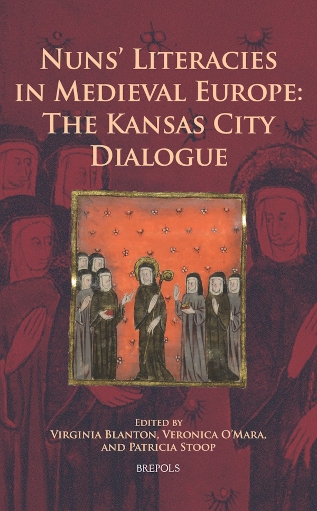
Nuns’ Literacies in Medieval Europe
show More to view fulltext, buy and share links for:Nuns’ Literacies in Medieval Europe show Less to hide fulltext, buy and share links for: Nuns’ Literacies in Medieval EuropeThe present volume is the second in a series of three integrated publications, the first produced in 2013 as Nuns’ Literacies in Medieval Europe: The Hull Dialogue. Like that volume, this collection of essays, focused on various aspects of nuns’ literacies from the late seventh to the mid-sixteenth century, brings together the work of specialists to create a dialogue about the Latin and vernacular texts that were read, written, and exchanged by medieval nuns.
It investigates literacy from palaeographical and textual perspectives, evidence of book ownership and exchange, and other more external evidence, both literary and historical. To highlight the benefits of cross-cultural comparison, contributions include case studies focused on northern and southern Europe, as well as the extreme north and west of the region. A number of essays illustrate nuns’ active engagement with formal education, and with varied textual forms, such as the legal and epistolary, while others convey the different opportunities for studying examples of nuns’ artistic literacy. The various discussions included here build collectively on the first volume to demonstrate the comparative experiences of medieval female religious who were reading, writing, teaching, composing, and illustrating at different times and in diverse geographical areas throughout medieval Europe.
-
-
-
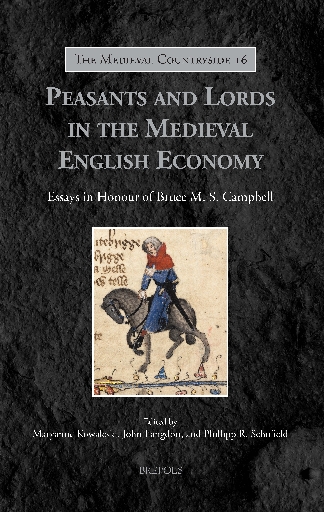
Peasants and Lords in the Medieval English Economy
show More to view fulltext, buy and share links for:Peasants and Lords in the Medieval English Economy show Less to hide fulltext, buy and share links for: Peasants and Lords in the Medieval English EconomyProfessor Bruce Campbell’s career has been devoted to providing systematic and highly influential studies of the medieval economy and society of the British Isles, including his innovative work on the role of the elites in defining medieval agricultural practices. This volume draws together essays from a distinguished group of researchers who have been inspired by Campbell’s work and the spirit of collegiality and inclusiveness that he has always demonstrated, and who wish to celebrate his significant contributions to scholarship. Many of the essays collected here engage directly with critical issues raised in Professor Campbell’s own research: how medieval society fed itself with reputedly very low levels of technology, the productivity of medieval society as a whole, the impact of external forces (particularly climate), the relationship between lords and peasants, and the importance of nonseigniorial contributions to the medieval economy.
-
-
-
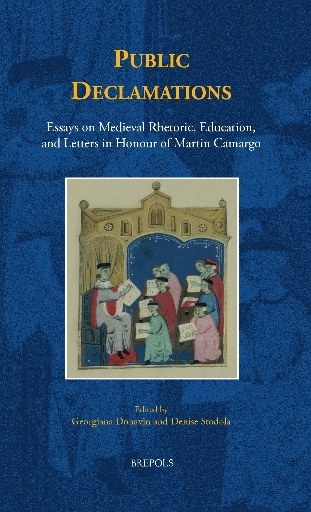
Public Declamations
show More to view fulltext, buy and share links for:Public Declamations show Less to hide fulltext, buy and share links for: Public DeclamationsMartin Camargo, Professor of English, Medieval Studies, and Classics at the University of Illinois at Urbana-Champaign, is a beloved teacher, mentor, colleague, and the scholar whose work this collection celebrates. With interests in defining ‘medieval rhetoric’, understanding the history of both literary and bureaucratic epistles, explaining the revival of rhetorical studies in fourteenth-century England, editing texts for teaching the trivium, and excavating performance pedagogies in medieval language classrooms, Carmago has paved the way for scholars in many fields, including educational and institutional history; literature, language, and manuscript studies; and rhetoric in the Middle Ages.
This book pays tribute to his own ground-breaking research by presenting original and inventive new work in many of these fields. Authored by established scholars and innovative new researchers alike, the essays contained in this volume give significant scope to didactic medieval commentaries, theories of medieval rhetoric and language, literary epistles and the ars dictaminis, and poetry of various genres including romances and riddles, as well as to the classroom practices that all of these investigations infer. In keeping with Camargo’s generosity in sharing resources, the authors hope that their essays in turn will provide encouragement and suggestions for further work.
-
-
-
Raison et démonstration
show More to view fulltext, buy and share links for:Raison et démonstration show Less to hide fulltext, buy and share links for: Raison et démonstrationDurant au moins deux millénaires, les Seconds Analytiques d’Aristote ont joué un rôle de premier plan dans la réflexion sur la science, ses objets et ses procédures. On a souvent retenu la structure syllogistique comme élément essentiel de cette conception. Mais le traité examine aussi de nombreuses autres questions relevant de la philosophie des sciences : statut des principes, nature des prémisses, fonction du moyen terme, rapport entre causalité réelle et causalité épistémique, diversité des types de démonstration, rôle des définitions, confrontation du modèle ainsi élaboré avec les mathématiques. Chaque fois, c’est toute une série de nouveaux problèmes qui surgit à partir ou à l’occasion du texte aristotélicien, amplifiés par la suite des exégèses auxquelles celui-ci a donné lieu.
L’objet de cet ouvrage collectif est d’étudier quelques moments majeurs des interprétations et usages des Seconds Analytiques. Il n’entre pas dans les débats contemporains concernant le texte même d’Aristote et n’examine que de façon marginale les premiers commentaires grecs ; il a pour objet premier leur transmission ultérieure jusque dans l’occident médiéval. Dans ce parcours, il prend en compte le monde byzantin et le monde arabe. Une grande partie de l’ouvrage est ensuite consacrée aux XIIIe et XIVe siècles en Occident médiéval, mais on trouvera aussi quelques études examinant la place des Seconds Analytiques chez quelques humanistes italiens ou dans le nominalisme du début du XVIe siècle.
Ce volume propose ainsi une histoire de la transmission et de l’interprétation de ce texte, tout en visant à éclairer quelques questions importantes pour la nature de la démonstration et de la connaissance scientifique.
-
-
-
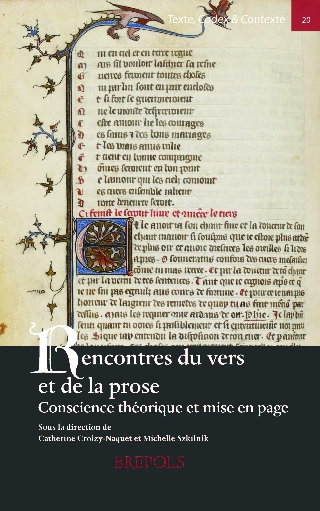
Rencontres du vers et de la prose : pensée théorique et mise en page
show More to view fulltext, buy and share links for:Rencontres du vers et de la prose : pensée théorique et mise en page show Less to hide fulltext, buy and share links for: Rencontres du vers et de la prose : pensée théorique et mise en pageEmbrassant toutes les strates du langage, de sa production à sa réception, les formes vers et prose sont dans une tension constante et évolutive, et invitent à s’interroger sur ce qui les sépare et les réunit, d’un point de vue parfois strictement linguistique, parfois plus largement rythmique, générique ou idéologique. Aussi travaillée soit-elle, la question des formes et des usages résiste toutefois à une théorisation générale, en raison de l’ampleur du phénomène et des présupposés culturels qu’elle engage. L’aborder sous l’angle de la rencontre, « rencontre » en son sens premier de « conflit », mais aussi en celui de « cohabitation, dialogue, échange », est une manière de contourner la difficulté. Ces rencontres, au pluriel donc, se produisent en effet dans divers lieux textuels, et à divers moments, du Moyen Âge à la Renaissance, dans une longue période où se dessinent et se formulent en langue française les expériences et les réflexions et où se dévoilent des imaginaires singuliers. Elles s’éclairent en outre à la lumière des pratiques enregistrées dans les langues voisines. La diversité et la complexité des formules révèlent que le jeu des formes est au cœur de l’identité des langues et de l’image mentale qu’elles renvoient.
Catherine Croizy-Naquet
est professeur de Littérature du Moyen Âge à l’Université de la Sorbonne Nouvelle-Paris 3, ses recherches portent essentiellement sur la littérature narrative médiévale, romans et récits historiques, en vers et en prose.
Michelle Szkilnik
est professeur de Littérature du Moyen Âge à l’Université de la Sorbonne Nouvelle-Paris 3, ses recherches portent sur le roman arthurien et sur la littérature de la fi n du Moyen Âge.
-
-
-
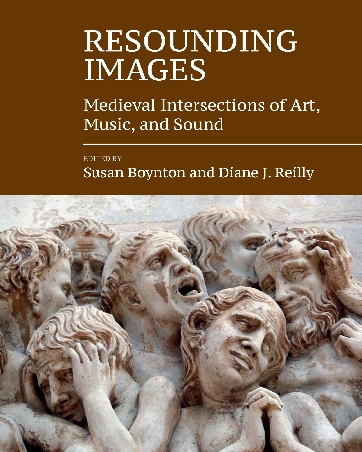
Resounding Images
show More to view fulltext, buy and share links for:Resounding Images show Less to hide fulltext, buy and share links for: Resounding ImagesWhile sound is probably the most difficult component of the past to reconstruct, it was also the most pervasive, whether planned or unplanned, instrumental or vocal, occasional or ambient. Acoustics were central to the perception of performance; images in liturgical manuscripts were embedded in a context of song and ritual actions; and architecture provided both visual and spatial frameworks for music and sound. Resounding Images brings together specialists in the history of art, architecture, and music to explore the manifold roles of sound in the experience of medieval art. Moving beyond the field of musical iconography, the contributors reconsider the relationship between sound, space and image in the long Middle Ages.
-
-
-
Rewriting the Middle Ages in the Twentieth Century
show More to view fulltext, buy and share links for:Rewriting the Middle Ages in the Twentieth Century show Less to hide fulltext, buy and share links for: Rewriting the Middle Ages in the Twentieth CenturyThis is the third volume of the series “Rewriting the Middle Ages in the Twentieth Century”, focused this time on the medieval political thought.
This book offers an overview of the national and transnational traditions of the historiography and studies the main questions and the background of this discipline in the last century.
Essays for this new volume focus on the subject’s life, intellectual and academic training; discuss major works and historiographical heritage; and locate the medievalists who have contributed to the better understanding of medieval political thought, through their work in medieval studies. This interdisciplinary resource aims to include medievalists from different fields: history, art, literature, theology, among others.
-
-
-
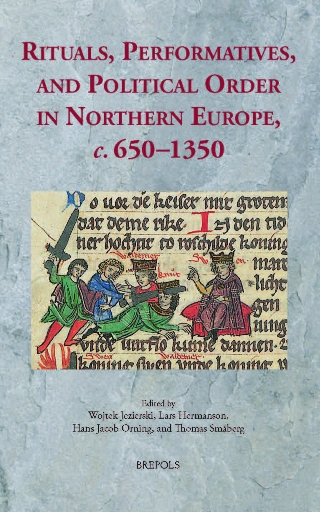
Rituals, Performatives, and Political Order in Northern Europe, c. 650–1350
show More to view fulltext, buy and share links for:Rituals, Performatives, and Political Order in Northern Europe, c. 650–1350 show Less to hide fulltext, buy and share links for: Rituals, Performatives, and Political Order in Northern Europe, c. 650–1350This multidisciplinary volume draws together contributions from history, archaeology, and the history of religion to offer an in-depth examination of political ritual and its performative and transformative potential across Continental Europe and Scandinavia. Covering the period between c. 650 and 1350, this work takes a theoretical, textual, and practical approach to the study of political ritual, and explores the connections between, and changing functions of, key rituals such as assemblies, feasts, and religious confrontations between pagans and Christians.
Taking as a central premise the fact that rituals were not only successful political instruments used to create and maintain order, but were also a hazardous game in which intended strategies could fail, the papers within this volume demonstrate that the outcomes of feasts or court meetings were often highly unpredictable, and a friendly atmosphere could quickly change into a violent clash. By emphasising the conflict-ridden and unpredictable nature of ritual acts, the articles add crucial insights into the meanings, (ab)uses, and interpretations of performances in the Middle Ages. In doing so, they demonstrate that rituals, far from being mere representations of power, also constituted an important mechanism through which the political and religious order could be challenged and transformed.
-
-
-
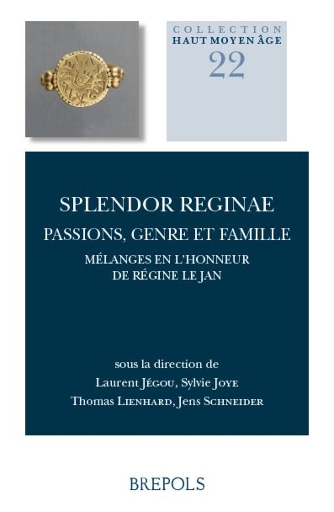
Splendor Reginae: Passions, genre et famille
show More to view fulltext, buy and share links for:Splendor Reginae: Passions, genre et famille show Less to hide fulltext, buy and share links for: Splendor Reginae: Passions, genre et familleRégine Le Jan a marqué de son empreinte l’histoire du haut Moyen Âge. Son oeuvre a accompagné l’évolution de la discipline historique depuis plus de quarante ans. Au gré de ses publications, de colloques, de programmes de recherche, de son enseignement, elle a donné à l’histoire du haut Moyen Âge des orientations inédites. Pour lui rendre hommage, ses collègues, amis et élèves se sont inspirés de quelques-uns de ses thèmes de recherche privilégiés au fil de trente articles rassemblés ici. Dans ce volume est d’abord envisagée l’importance de la famille et des liens de parenté dans les relations de pouvoir au haut Moyen Âge, rappelant l’ouvrage fondateur que fut sa thèse Famille et Pouvoir dans le monde franc (Publications de la Sorbonne, 1995). Sont ensuite évoquées celles dont elle a si bien montré le rôle essentiel par l’évocation de figures de femmes médiévales, tout en rappelant comment a continué à peser sur elles tout le poids d’une discrimination qui se poursuit pendant toute la période. Enfin, les auteurs reviennent sur l’usage des émotions et du vocabulaire de la haine et de l’amitié, dont la place ne cesse de croître à la fois dans les domaines social et politique au fil du haut Moyen Âge.
-
-
-
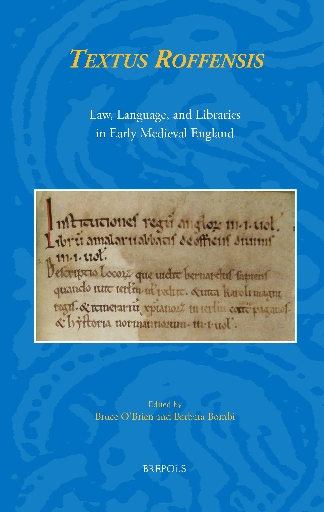
Textus Roffensis
show More to view fulltext, buy and share links for:Textus Roffensis show Less to hide fulltext, buy and share links for: Textus RoffensisTextus Roffensis, a Rochester Cathedral book of the early twelfth century, holds some of the most significant texts issued in early medieval England, ranging from the oldest English-language law code of King Æthelberht of Kent (c. 600) to a copy of Henry I’s Coronation Charter (5 August 1100). Textus Roffensis also holds abundant charters (including some forgeries), narratives concerning disputed property, and one of the earliest library catalogues compiled in medieval England. While it is a familiar and important manuscript to scholars, however, up to now it has never been the object of a monograph or collection of wide-ranging studies. The seventeen contributors to this book have subjected Textus Roffensis to close scrutiny and offer new conclusions on the process of its creation, its purposes and uses, and the interpretation of its laws and property records, as well as exploring significant events in which Rochester played a role and some of the more important people associated with the See. The work of the contributors takes readers into the mind of the scribes and compiler (or patron) behind the Textus Roffensis, as well as into the origins and meaning of the texts that the monks of early twelfth-century Rochester chose to preserve. The essays contained here not only set the study of the manuscript on a firm foundation, but also point to new directions for future work.
-
-
-
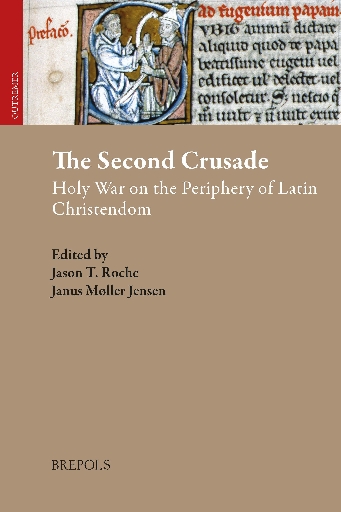
The Second Crusade
show More to view fulltext, buy and share links for:The Second Crusade show Less to hide fulltext, buy and share links for: The Second CrusadeA seminal article published by Giles Constable in 1953 focused on the genesis and expansion in scope of the Second Crusade with particular attention to what has become known as the Syrian campaign. His central thesis maintained that by the spring of 1147 the Church “viewed and planned” the Second Crusade as a general Christian offensive against and the Muslims of Syria and the Iberian Peninsula and the pagan Wends of the southern Baltic lands. Constable's work remains extremely influential and provides the framework for the recent major works published on this extraordinary twelfth-century phenomenon. This volume aims to readdress scholarly predilections for concentrating on the venture in the Near East and for narrowly focusing on the accepted targets of the crusade. It aims instead to place established, contentious, and new events and concepts associated with the enterprise in a wider ideological, chronological, geopolitical, and geographical context.
Jason T. Roche is a Lecturer in Medieval History at Manchester Metropolitan University. His research interests cover the history of the crusades and the Latin East and the topography of medieval Anatolia and the Near East.
Janus Møller Jensen is head of department at Nyborg Castle, Museums of Eastern Funen, Denmark. His main research interests cover the history and historiography of the Crusades and Scandinavian medieval history.
-
-
-
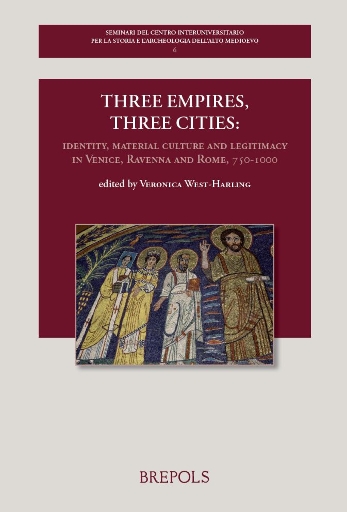
Three empires, three cities
show More to view fulltext, buy and share links for:Three empires, three cities show Less to hide fulltext, buy and share links for: Three empires, three citiesThis book focuses on three Italian cities in the early middle ages, Rome, Ravenna and Venice, and looks at them in a new light. The unifying element linking them was their common Byzantine past, since they remained in the sphere of imperial power after the creation of the Lombard kingdom in the late 6th century, up to 750. What happened to them when their links with the Byzantine Empire were almost entirely severed in the 8th century? Did they remain socially and culturally heirs of Byzantium in the 9th and 10th centuries in their political structures, social organisation, material culture, ideological frame of reference and representation of identity? Or did they become part of the next imperial powers of Italy, the Carolingian and the Ottonian empires? A workshop in Oxford in 2014 brought together an international group of specialists to discuss these questions in a comparative context; the excitement of their debates is captured in the discussion sections linking the papers in this volume. Early medieval Italy can be seen in a new way as a result.
-
-
-
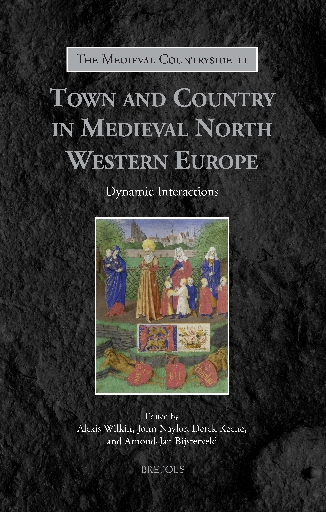
Town and Country in Medieval North Western Europe
show More to view fulltext, buy and share links for:Town and Country in Medieval North Western Europe show Less to hide fulltext, buy and share links for: Town and Country in Medieval North Western EuropeThis volume explores the relationships and interactions between medieval urban populations and their rural counterparts across north western Europe from the seventh to sixteenth centuries. This theme has become increasingly fragmented in recent decades, resulting in scholars being largely unaware of developments outside their own areas. The present volume brings together historians and archaeologists in order to highlight the varied ways in which town–country interactions can be considered, from perspectives that include economy, politics, natural environment, material culture, and settlement hierarchy. As a whole, the papers offer innovative interdisciplinary perspectives on the topic that create a new platform from which to understand more fully the complex, bilateral relationships in which both urban and rural spheres were able to influence and challenge each other. Contributions are wide-ranging, from the activities of elite, aristocratic groups in and around individual towns, to large-scale surveys covering wide areas. With coverage from the North Sea to the western Baltic, the book will be relevant to a range of disciplines including archaeology, history, and geography, and is aimed towards both advanced students and established scholars.
-
-
-
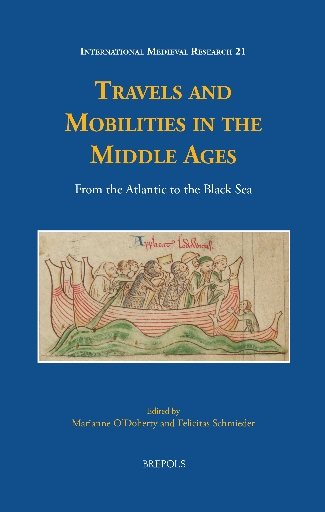
Travels and Mobilities in the Middle Ages
show More to view fulltext, buy and share links for:Travels and Mobilities in the Middle Ages show Less to hide fulltext, buy and share links for: Travels and Mobilities in the Middle AgesThis collection of research, which brings together contributions from scholars around the world, reflects the range and variety of work that is currently being undertaken in the field of travel and mobility in the European Middle Ages. The essays draw on diverse methodological approaches, from the archival and literary to the art historical and archaeological. The collection focuses not just on key medieval modes of travel and mobility, but also on themes whose relevance continues to resonate in the modern world. Topics touched upon include religious and diplomatic journeys, migration, mobility and governance, gendered mobilities, material culture and mobility, mobility and disability, travel and status, and notions of home and abroad. Broad themes are approached through case studies of individuals, families, and groups, ranging from kings, queens, and nobles to friars, exiles, and students. The geographical reach of the collection is particularly broad, encompassing travellers from Southern, Western, Northern, Central and Eastern Europe and journeys to destinations as diverse as Scandinavia, the Black Sea, the Mediterranean, and the Indian Ocean. A wide-ranging and detailed introduction situates the collection in its scholarly context.
-
-
-
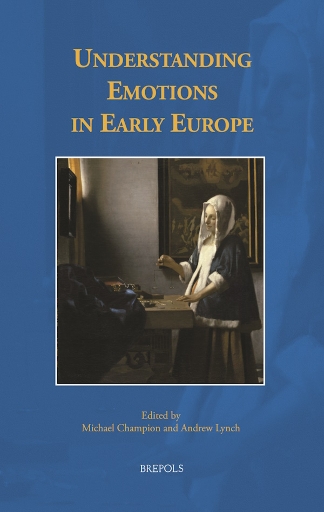
Understanding Emotions in Early Europe
show More to view fulltext, buy and share links for:Understanding Emotions in Early Europe show Less to hide fulltext, buy and share links for: Understanding Emotions in Early EuropeThis book investigates how medieval and early modern Europeans constructed, understood, and articulated emotions. The essays trace concurrent lines of influence that shaped post-Classical understandings of emotions, through overlapping philosophical, rhetorical, and theological discourses. They show the effects of developments in genre and literary, aesthetic, and cognitive theories on depictions of psychological and embodied emotion in literature. They map the deeply embedded emotive content inherent in rituals, formal documents, daily conversation, communal practice, and cultural memory. The contributors focus on the mediation and interpretation of pre-modern emotional experience in cultural structures and institutions - customs, laws, courts, religious foundations - as well as in philosophical, literary, and aesthetic traditions.
The volume thus represents a conspectus of contemporary interpretative strategies, displaying close connections between disciplinary and interdisciplinary critical practices drawn from historical studies, literature, anthropology and archaeology, philosophy and theology, cognitive science, psychology, religious studies, and gender studies. The essays stretch from classical and indigenous cultures to the contemporary West, embracing numerous national and linguistic groups. They illuminate the complex potential of medieval and early modern emotions in situ, analysing their involvement in subjects as diverse as philosophical theories, imaginative and scholarly writing, concepts of individual and communal identity, social and political practices, and the manifold business of everyday life.
-
-
-
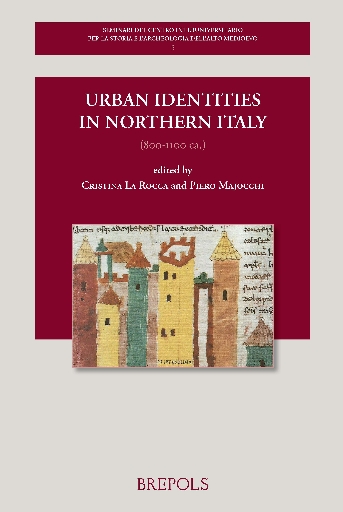
Urban identities in Northern Italy, 800-1100 ca.
show More to view fulltext, buy and share links for:Urban identities in Northern Italy, 800-1100 ca. show Less to hide fulltext, buy and share links for: Urban identities in Northern Italy, 800-1100 ca.The book aims to reflect on the characteristics of urban centers of the kingdom of Italy between the ninth and the eleventh centuries, filling a noticeable historiographical gap. The cities in Northern Italy in this period have not yet been analysed with a multidisciplinary approach, able to outline their specific and distinctive characteristics and to pose this ages in relation to the post-Roman past and also to the following 'Communal' phase. Urban identities are examined from different points of view: from a political perspective, in relation to the dialectic between center and periphery and to the border areas of the kingdom; from an institutional and territorial standing point, analyzing the structures of local power and public territorializations; according to social and military history approaches, highlighting the continuities and transformations in comparison with former and following centuries. The issue of urban identities is also archaeologically investigated in relation to urban development and to topographic transformations, and culturally explored, examining mutual exchanges between the cities of the kingdom. Another aspect rarely addressed by previous literature is ultimately to compare the results of this research on the Italic kingdom with studies on the Transalpine Carolingian and post-Carolingian empire and kingdoms, outlining common trends, but also specific peculiarities.
-
-
-
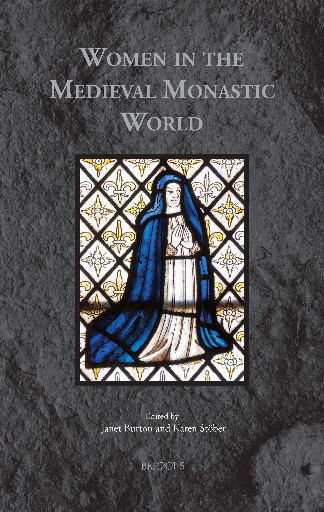
Women in the Medieval Monastic World
show More to view fulltext, buy and share links for:Women in the Medieval Monastic World show Less to hide fulltext, buy and share links for: Women in the Medieval Monastic WorldThere has long been a tendency among monastic historians to ignore or marginalize female participation in monastic life, but recent scholarship has begun to redress the balance, and the great contributions made by women to the religious life of the Middle Ages are now attracting increasing attention. This interdisciplinary volume draws together scholars from Spain, Italy, France, the Low Countries, Germany, Transylvania, Scandinavia, and the British Isles, and offers new insights into the history, art history, and material culture, and the religiosity and culture of medieval religious women.
The different chapters within this book take a comparative approach to the emergence and spread of female monastic communities across different geographical, political, and economic settings, comparing and contrasting houses that ranged from rich, powerful royal abbeys to small, subsistence priories on the margins of society, and exploring the artistic achievements, the interaction with neighbours and secular and ecclesiastical authorities, and the spiritual lives that were led by their inhabitants. The contributors to this volume address issues as diverse as patronage and relationships with the outside world, organizational structures, the nature of Cistercian observance and identity among female houses, and the role of male authority, and in doing so, they seek to shed light on the divergences and commonalities upon which the female religious life was based.
-
-
-
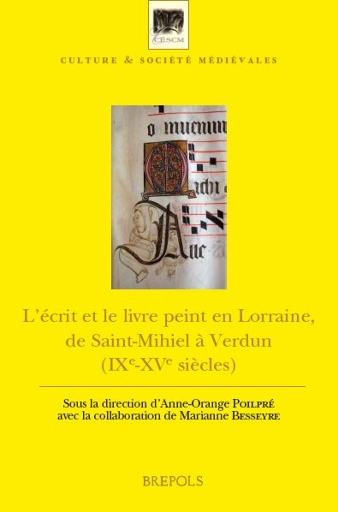
L'écrit et le livre peint en Lorraine, de Saint-Mihiel à Verdun (IXe-XVe siècles)
show More to view fulltext, buy and share links for:L'écrit et le livre peint en Lorraine, de Saint-Mihiel à Verdun (IXe-XVe siècles) show Less to hide fulltext, buy and share links for: L'écrit et le livre peint en Lorraine, de Saint-Mihiel à Verdun (IXe-XVe siècles)Les manuscrits médiévaux de Lorraine, trésors du patrimoine graphique de cette région, étaient au coeur du colloque qui s’est tenu durant l’automne 2010 à l’abbaye bénédictine de Saint-Mihiel (Meuse). Les actes présentés dans cet ouvrage portent sur une large série de productions locales et exogènes qui ont toutes pour dénominateur commun, l’histoire politique, institutionnelle, intellectuelle, spirituelle et artistique de Verdun et de l’abbaye de Saint-Mihiel au Moyen Âge. La question du livre et de l’écrit est abordée en trois volets thématiques et chronologiques allant des origines carolingiennes jusqu’aux productions enluminées du XVe siècle. Si certains documents sont bien connus, comme le traité de Verdun, d’autres demeuraient à ce jour totalement ou partiellement inédits, tels le manuscrit dit « du pseudo Athanase » (Saint-Mihiel, Bibliothèque municipale, ms Z 28) ou le graduel de Saint-Mihiel (Saint-Mihiel, Bibliothèque municipale, ms Z 73).
-
-
-
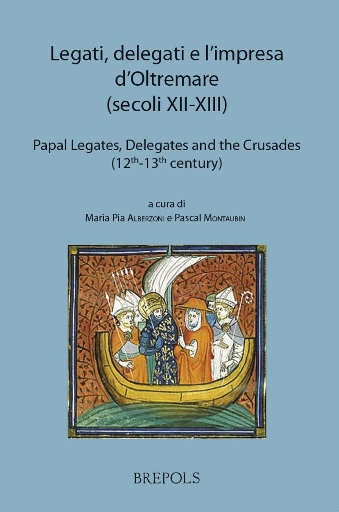
Legati, delegati e l’impresa d’Oltremare (secoli XII-XIII) / Papal Legates, Delegates and the Crusades (12th-13th Century)
show More to view fulltext, buy and share links for:Legati, delegati e l’impresa d’Oltremare (secoli XII-XIII) / Papal Legates, Delegates and the Crusades (12th-13th Century) show Less to hide fulltext, buy and share links for: Legati, delegati e l’impresa d’Oltremare (secoli XII-XIII) / Papal Legates, Delegates and the Crusades (12th-13th Century)While the huge historiographical production on medieval crusades mainly stresses the part played by princes, the aristocracy and military orders, the proceedings of the international congress held at the Università cattolica del Sacro Cuore in Milan on 9th-11th March 2011 focus on a topic which has received far less attention: the importance of the popes and their delegates in the organization before departure and the conduct of the armies sent to liberate the Holy Land in the 12th and 13th centuries. The recent revival of studies on the representation of the Supreme Pontiff has led to reconsider the actions of the papal governement in the crusades. In this volume, fourteen specialists throw new light on the clerks and prelates (cardinals, legates, nuncios, papal chaplains, etc.) who were commissioned by the popes to set up and lead crusades, on their origins and careers, on their methods of preaching and collecting taxes, on their diplomatic relations, on the obligations of their missions and their liberty to act, etc. Devoting greater attention to papal delegates will help to better understand the complex inner history of the military pilgrims to Jerusalem.
Maria Pia Alberzoni is Professor of medieval history at the Università cattolica del Sacro Cuore in Milan (Italy). Pascal Montaubin is Maître de conférences in medieval history at the Université de Picardie-Jules Verne in Amiens (France).
-