


EMISCS15

Collection Contents
21 - 40 of 41 results
-
-
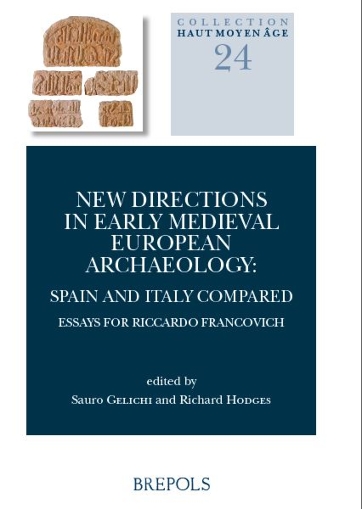
New Directions in Early Medieval European Archaeology: Spain and Italy Compared
show More to view fulltext, buy and share links for:New Directions in Early Medieval European Archaeology: Spain and Italy Compared show Less to hide fulltext, buy and share links for: New Directions in Early Medieval European Archaeology: Spain and Italy ComparedThis book of essays is dedicated to the memory of Riccardo Francovich, one of Europe’s most eminent Medieval archaeologists, who died in 2007. It began as a one-day conference held at the British School at Rome the day after Riccardo Francovich would have been 65 years old, on the 11 June 2011.
The book takes as its core theme a comparison of Italian and Spanish Medieval Archaeology, in each case challenging the status quo and attempting to move the boundaries of our historical discussions ever forwards. The volume attempts to evaluate if the Medieval Archaeology of these two important Mediterranean countries, largely unfamiliar on the international stage, with their different ‘histories’, can be compared. To do this, a key moment in their formation is reviewed - the passage from the Ancient to the Medieval world. This approach highlights not only the identifi cation of singular conjunctures (the impact of the new ‘barbaric’ aristocracies on the social structures of the Roman world, and how Islam was established, for example, in the peninsula as in Sicily), but also parallel evolutions at the macro-structural level (for example, conditions in towns and the countryside). Taking the paradigm of fragmentation as a basic starting-point that characterizes the western world after the fall of the Roman Empire, it offers comparative archaeologies in terms of themes, but above all else in terms of shared methods.
-
-
-
Nicholas of Dinkelsbühl and the Sentences at Vienna in the Early Fifteenth Century
show More to view fulltext, buy and share links for:Nicholas of Dinkelsbühl and the Sentences at Vienna in the Early Fifteenth Century show Less to hide fulltext, buy and share links for: Nicholas of Dinkelsbühl and the Sentences at Vienna in the Early Fifteenth CenturyThis volume examines the faculty of theology of the University of Vienna after the new institution produced its first students. Taking Nicholas of Dinkelsbühl as our guide to this nascent academic milieu, the five contributors illuminate the university system at Vienna, describe the evolution of doctrine, identify the network of professors that developed the specific curriculum, and trace the reception of the academic writings outside the university. Traditionally the history of medieval universities is based primarily on statutes, cartularies, or other documents relating to the organization of the university as an institution. The present studies instead inspect the underside of the iceberg and penetrate the academic context of Vienna by reading and editing the texts issuing from the practice of teaching. The papers gathered here shed new light on the main pedagogical protagonists, measure the impact of the transmission of ideas between the Universities of Paris and Vienna, and provide access to the community of scholars to whom this material was addressed.
-
-
-
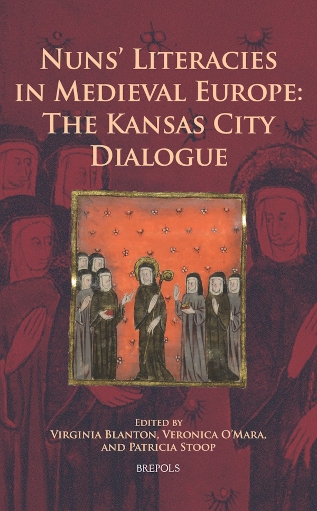
Nuns’ Literacies in Medieval Europe
show More to view fulltext, buy and share links for:Nuns’ Literacies in Medieval Europe show Less to hide fulltext, buy and share links for: Nuns’ Literacies in Medieval EuropeThe present volume is the second in a series of three integrated publications, the first produced in 2013 as Nuns’ Literacies in Medieval Europe: The Hull Dialogue. Like that volume, this collection of essays, focused on various aspects of nuns’ literacies from the late seventh to the mid-sixteenth century, brings together the work of specialists to create a dialogue about the Latin and vernacular texts that were read, written, and exchanged by medieval nuns.
It investigates literacy from palaeographical and textual perspectives, evidence of book ownership and exchange, and other more external evidence, both literary and historical. To highlight the benefits of cross-cultural comparison, contributions include case studies focused on northern and southern Europe, as well as the extreme north and west of the region. A number of essays illustrate nuns’ active engagement with formal education, and with varied textual forms, such as the legal and epistolary, while others convey the different opportunities for studying examples of nuns’ artistic literacy. The various discussions included here build collectively on the first volume to demonstrate the comparative experiences of medieval female religious who were reading, writing, teaching, composing, and illustrating at different times and in diverse geographical areas throughout medieval Europe.
-
-
-
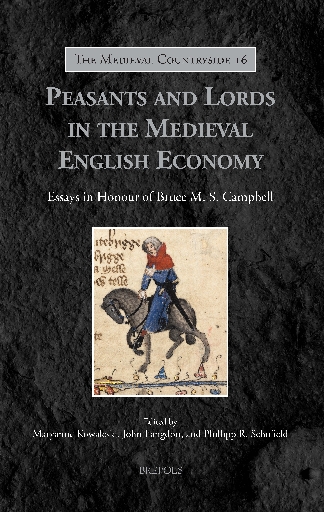
Peasants and Lords in the Medieval English Economy
show More to view fulltext, buy and share links for:Peasants and Lords in the Medieval English Economy show Less to hide fulltext, buy and share links for: Peasants and Lords in the Medieval English EconomyProfessor Bruce Campbell’s career has been devoted to providing systematic and highly influential studies of the medieval economy and society of the British Isles, including his innovative work on the role of the elites in defining medieval agricultural practices. This volume draws together essays from a distinguished group of researchers who have been inspired by Campbell’s work and the spirit of collegiality and inclusiveness that he has always demonstrated, and who wish to celebrate his significant contributions to scholarship. Many of the essays collected here engage directly with critical issues raised in Professor Campbell’s own research: how medieval society fed itself with reputedly very low levels of technology, the productivity of medieval society as a whole, the impact of external forces (particularly climate), the relationship between lords and peasants, and the importance of nonseigniorial contributions to the medieval economy.
-
-
-
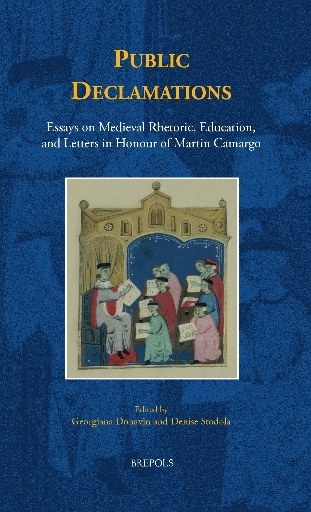
Public Declamations
show More to view fulltext, buy and share links for:Public Declamations show Less to hide fulltext, buy and share links for: Public DeclamationsMartin Camargo, Professor of English, Medieval Studies, and Classics at the University of Illinois at Urbana-Champaign, is a beloved teacher, mentor, colleague, and the scholar whose work this collection celebrates. With interests in defining ‘medieval rhetoric’, understanding the history of both literary and bureaucratic epistles, explaining the revival of rhetorical studies in fourteenth-century England, editing texts for teaching the trivium, and excavating performance pedagogies in medieval language classrooms, Carmago has paved the way for scholars in many fields, including educational and institutional history; literature, language, and manuscript studies; and rhetoric in the Middle Ages.
This book pays tribute to his own ground-breaking research by presenting original and inventive new work in many of these fields. Authored by established scholars and innovative new researchers alike, the essays contained in this volume give significant scope to didactic medieval commentaries, theories of medieval rhetoric and language, literary epistles and the ars dictaminis, and poetry of various genres including romances and riddles, as well as to the classroom practices that all of these investigations infer. In keeping with Camargo’s generosity in sharing resources, the authors hope that their essays in turn will provide encouragement and suggestions for further work.
-
-
-
Raison et démonstration
show More to view fulltext, buy and share links for:Raison et démonstration show Less to hide fulltext, buy and share links for: Raison et démonstrationDurant au moins deux millénaires, les Seconds Analytiques d’Aristote ont joué un rôle de premier plan dans la réflexion sur la science, ses objets et ses procédures. On a souvent retenu la structure syllogistique comme élément essentiel de cette conception. Mais le traité examine aussi de nombreuses autres questions relevant de la philosophie des sciences : statut des principes, nature des prémisses, fonction du moyen terme, rapport entre causalité réelle et causalité épistémique, diversité des types de démonstration, rôle des définitions, confrontation du modèle ainsi élaboré avec les mathématiques. Chaque fois, c’est toute une série de nouveaux problèmes qui surgit à partir ou à l’occasion du texte aristotélicien, amplifiés par la suite des exégèses auxquelles celui-ci a donné lieu.
L’objet de cet ouvrage collectif est d’étudier quelques moments majeurs des interprétations et usages des Seconds Analytiques. Il n’entre pas dans les débats contemporains concernant le texte même d’Aristote et n’examine que de façon marginale les premiers commentaires grecs ; il a pour objet premier leur transmission ultérieure jusque dans l’occident médiéval. Dans ce parcours, il prend en compte le monde byzantin et le monde arabe. Une grande partie de l’ouvrage est ensuite consacrée aux XIIIe et XIVe siècles en Occident médiéval, mais on trouvera aussi quelques études examinant la place des Seconds Analytiques chez quelques humanistes italiens ou dans le nominalisme du début du XVIe siècle.
Ce volume propose ainsi une histoire de la transmission et de l’interprétation de ce texte, tout en visant à éclairer quelques questions importantes pour la nature de la démonstration et de la connaissance scientifique.
-
-
-
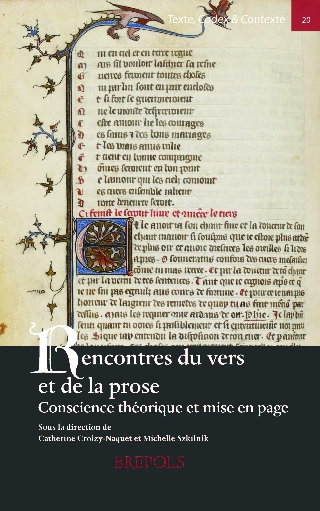
Rencontres du vers et de la prose : pensée théorique et mise en page
show More to view fulltext, buy and share links for:Rencontres du vers et de la prose : pensée théorique et mise en page show Less to hide fulltext, buy and share links for: Rencontres du vers et de la prose : pensée théorique et mise en pageEmbrassant toutes les strates du langage, de sa production à sa réception, les formes vers et prose sont dans une tension constante et évolutive, et invitent à s’interroger sur ce qui les sépare et les réunit, d’un point de vue parfois strictement linguistique, parfois plus largement rythmique, générique ou idéologique. Aussi travaillée soit-elle, la question des formes et des usages résiste toutefois à une théorisation générale, en raison de l’ampleur du phénomène et des présupposés culturels qu’elle engage. L’aborder sous l’angle de la rencontre, « rencontre » en son sens premier de « conflit », mais aussi en celui de « cohabitation, dialogue, échange », est une manière de contourner la difficulté. Ces rencontres, au pluriel donc, se produisent en effet dans divers lieux textuels, et à divers moments, du Moyen Âge à la Renaissance, dans une longue période où se dessinent et se formulent en langue française les expériences et les réflexions et où se dévoilent des imaginaires singuliers. Elles s’éclairent en outre à la lumière des pratiques enregistrées dans les langues voisines. La diversité et la complexité des formules révèlent que le jeu des formes est au cœur de l’identité des langues et de l’image mentale qu’elles renvoient.
Catherine Croizy-Naquet
est professeur de Littérature du Moyen Âge à l’Université de la Sorbonne Nouvelle-Paris 3, ses recherches portent essentiellement sur la littérature narrative médiévale, romans et récits historiques, en vers et en prose.
Michelle Szkilnik
est professeur de Littérature du Moyen Âge à l’Université de la Sorbonne Nouvelle-Paris 3, ses recherches portent sur le roman arthurien et sur la littérature de la fi n du Moyen Âge.
-
-
-
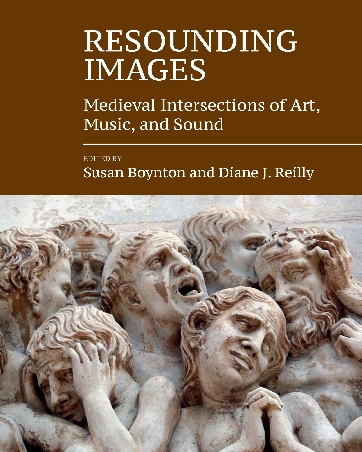
Resounding Images
show More to view fulltext, buy and share links for:Resounding Images show Less to hide fulltext, buy and share links for: Resounding ImagesWhile sound is probably the most difficult component of the past to reconstruct, it was also the most pervasive, whether planned or unplanned, instrumental or vocal, occasional or ambient. Acoustics were central to the perception of performance; images in liturgical manuscripts were embedded in a context of song and ritual actions; and architecture provided both visual and spatial frameworks for music and sound. Resounding Images brings together specialists in the history of art, architecture, and music to explore the manifold roles of sound in the experience of medieval art. Moving beyond the field of musical iconography, the contributors reconsider the relationship between sound, space and image in the long Middle Ages.
-
-
-
Rewriting the Middle Ages in the Twentieth Century
show More to view fulltext, buy and share links for:Rewriting the Middle Ages in the Twentieth Century show Less to hide fulltext, buy and share links for: Rewriting the Middle Ages in the Twentieth CenturyThis is the third volume of the series “Rewriting the Middle Ages in the Twentieth Century”, focused this time on the medieval political thought.
This book offers an overview of the national and transnational traditions of the historiography and studies the main questions and the background of this discipline in the last century.
Essays for this new volume focus on the subject’s life, intellectual and academic training; discuss major works and historiographical heritage; and locate the medievalists who have contributed to the better understanding of medieval political thought, through their work in medieval studies. This interdisciplinary resource aims to include medievalists from different fields: history, art, literature, theology, among others.
-
-
-
Rituals, Performatives, and Political Order in Northern Europe, c. 650–1350
show More to view fulltext, buy and share links for:Rituals, Performatives, and Political Order in Northern Europe, c. 650–1350 show Less to hide fulltext, buy and share links for: Rituals, Performatives, and Political Order in Northern Europe, c. 650–1350This multidisciplinary volume draws together contributions from history, archaeology, and the history of religion to offer an in-depth examination of political ritual and its performative and transformative potential across Continental Europe and Scandinavia. Covering the period between c. 650 and 1350, this work takes a theoretical, textual, and practical approach to the study of political ritual, and explores the connections between, and changing functions of, key rituals such as assemblies, feasts, and religious confrontations between pagans and Christians.
Taking as a central premise the fact that rituals were not only successful political instruments used to create and maintain order, but were also a hazardous game in which intended strategies could fail, the papers within this volume demonstrate that the outcomes of feasts or court meetings were often highly unpredictable, and a friendly atmosphere could quickly change into a violent clash. By emphasising the conflict-ridden and unpredictable nature of ritual acts, the articles add crucial insights into the meanings, (ab)uses, and interpretations of performances in the Middle Ages. In doing so, they demonstrate that rituals, far from being mere representations of power, also constituted an important mechanism through which the political and religious order could be challenged and transformed.
-
-
-
Splendor Reginae: Passions, genre et famille
show More to view fulltext, buy and share links for:Splendor Reginae: Passions, genre et famille show Less to hide fulltext, buy and share links for: Splendor Reginae: Passions, genre et familleRégine Le Jan a marqué de son empreinte l’histoire du haut Moyen Âge. Son oeuvre a accompagné l’évolution de la discipline historique depuis plus de quarante ans. Au gré de ses publications, de colloques, de programmes de recherche, de son enseignement, elle a donné à l’histoire du haut Moyen Âge des orientations inédites. Pour lui rendre hommage, ses collègues, amis et élèves se sont inspirés de quelques-uns de ses thèmes de recherche privilégiés au fil de trente articles rassemblés ici. Dans ce volume est d’abord envisagée l’importance de la famille et des liens de parenté dans les relations de pouvoir au haut Moyen Âge, rappelant l’ouvrage fondateur que fut sa thèse Famille et Pouvoir dans le monde franc (Publications de la Sorbonne, 1995). Sont ensuite évoquées celles dont elle a si bien montré le rôle essentiel par l’évocation de figures de femmes médiévales, tout en rappelant comment a continué à peser sur elles tout le poids d’une discrimination qui se poursuit pendant toute la période. Enfin, les auteurs reviennent sur l’usage des émotions et du vocabulaire de la haine et de l’amitié, dont la place ne cesse de croître à la fois dans les domaines social et politique au fil du haut Moyen Âge.
-
-
-
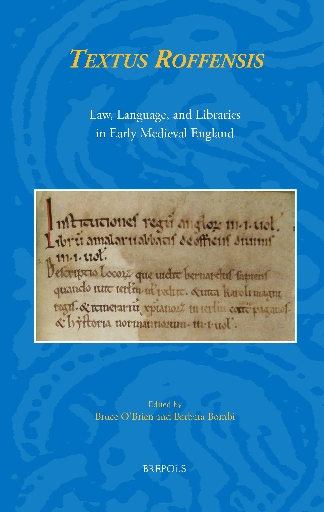
Textus Roffensis
show More to view fulltext, buy and share links for:Textus Roffensis show Less to hide fulltext, buy and share links for: Textus RoffensisTextus Roffensis, a Rochester Cathedral book of the early twelfth century, holds some of the most significant texts issued in early medieval England, ranging from the oldest English-language law code of King Æthelberht of Kent (c. 600) to a copy of Henry I’s Coronation Charter (5 August 1100). Textus Roffensis also holds abundant charters (including some forgeries), narratives concerning disputed property, and one of the earliest library catalogues compiled in medieval England. While it is a familiar and important manuscript to scholars, however, up to now it has never been the object of a monograph or collection of wide-ranging studies. The seventeen contributors to this book have subjected Textus Roffensis to close scrutiny and offer new conclusions on the process of its creation, its purposes and uses, and the interpretation of its laws and property records, as well as exploring significant events in which Rochester played a role and some of the more important people associated with the See. The work of the contributors takes readers into the mind of the scribes and compiler (or patron) behind the Textus Roffensis, as well as into the origins and meaning of the texts that the monks of early twelfth-century Rochester chose to preserve. The essays contained here not only set the study of the manuscript on a firm foundation, but also point to new directions for future work.
-
-
-
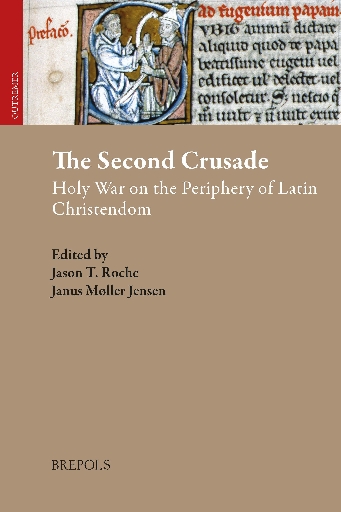
The Second Crusade
show More to view fulltext, buy and share links for:The Second Crusade show Less to hide fulltext, buy and share links for: The Second CrusadeA seminal article published by Giles Constable in 1953 focused on the genesis and expansion in scope of the Second Crusade with particular attention to what has become known as the Syrian campaign. His central thesis maintained that by the spring of 1147 the Church “viewed and planned” the Second Crusade as a general Christian offensive against and the Muslims of Syria and the Iberian Peninsula and the pagan Wends of the southern Baltic lands. Constable's work remains extremely influential and provides the framework for the recent major works published on this extraordinary twelfth-century phenomenon. This volume aims to readdress scholarly predilections for concentrating on the venture in the Near East and for narrowly focusing on the accepted targets of the crusade. It aims instead to place established, contentious, and new events and concepts associated with the enterprise in a wider ideological, chronological, geopolitical, and geographical context.
Jason T. Roche is a Lecturer in Medieval History at Manchester Metropolitan University. His research interests cover the history of the crusades and the Latin East and the topography of medieval Anatolia and the Near East.
Janus Møller Jensen is head of department at Nyborg Castle, Museums of Eastern Funen, Denmark. His main research interests cover the history and historiography of the Crusades and Scandinavian medieval history.
-
-
-
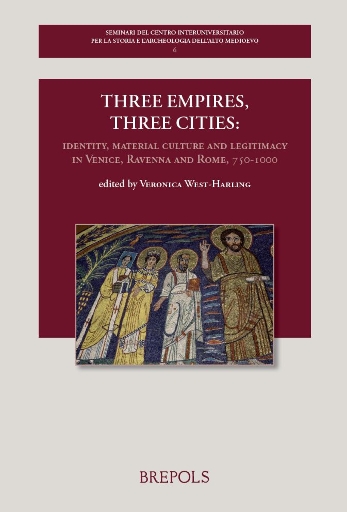
Three empires, three cities
show More to view fulltext, buy and share links for:Three empires, three cities show Less to hide fulltext, buy and share links for: Three empires, three citiesThis book focuses on three Italian cities in the early middle ages, Rome, Ravenna and Venice, and looks at them in a new light. The unifying element linking them was their common Byzantine past, since they remained in the sphere of imperial power after the creation of the Lombard kingdom in the late 6th century, up to 750. What happened to them when their links with the Byzantine Empire were almost entirely severed in the 8th century? Did they remain socially and culturally heirs of Byzantium in the 9th and 10th centuries in their political structures, social organisation, material culture, ideological frame of reference and representation of identity? Or did they become part of the next imperial powers of Italy, the Carolingian and the Ottonian empires? A workshop in Oxford in 2014 brought together an international group of specialists to discuss these questions in a comparative context; the excitement of their debates is captured in the discussion sections linking the papers in this volume. Early medieval Italy can be seen in a new way as a result.
-
-
-
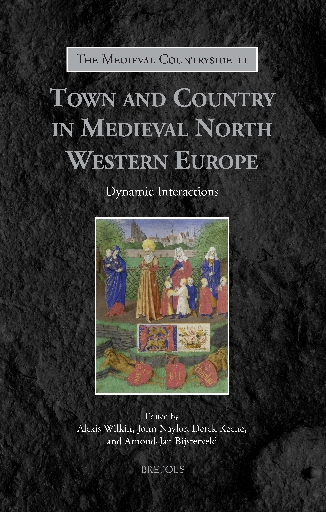
Town and Country in Medieval North Western Europe
show More to view fulltext, buy and share links for:Town and Country in Medieval North Western Europe show Less to hide fulltext, buy and share links for: Town and Country in Medieval North Western EuropeThis volume explores the relationships and interactions between medieval urban populations and their rural counterparts across north western Europe from the seventh to sixteenth centuries. This theme has become increasingly fragmented in recent decades, resulting in scholars being largely unaware of developments outside their own areas. The present volume brings together historians and archaeologists in order to highlight the varied ways in which town–country interactions can be considered, from perspectives that include economy, politics, natural environment, material culture, and settlement hierarchy. As a whole, the papers offer innovative interdisciplinary perspectives on the topic that create a new platform from which to understand more fully the complex, bilateral relationships in which both urban and rural spheres were able to influence and challenge each other. Contributions are wide-ranging, from the activities of elite, aristocratic groups in and around individual towns, to large-scale surveys covering wide areas. With coverage from the North Sea to the western Baltic, the book will be relevant to a range of disciplines including archaeology, history, and geography, and is aimed towards both advanced students and established scholars.
-
-
-
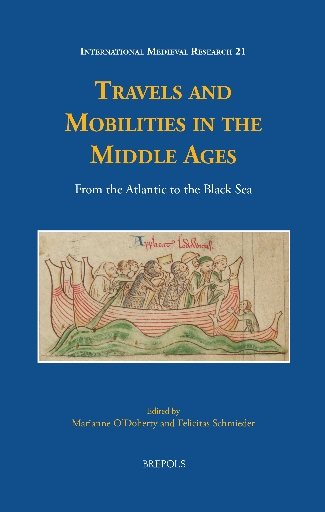
Travels and Mobilities in the Middle Ages
show More to view fulltext, buy and share links for:Travels and Mobilities in the Middle Ages show Less to hide fulltext, buy and share links for: Travels and Mobilities in the Middle AgesThis collection of research, which brings together contributions from scholars around the world, reflects the range and variety of work that is currently being undertaken in the field of travel and mobility in the European Middle Ages. The essays draw on diverse methodological approaches, from the archival and literary to the art historical and archaeological. The collection focuses not just on key medieval modes of travel and mobility, but also on themes whose relevance continues to resonate in the modern world. Topics touched upon include religious and diplomatic journeys, migration, mobility and governance, gendered mobilities, material culture and mobility, mobility and disability, travel and status, and notions of home and abroad. Broad themes are approached through case studies of individuals, families, and groups, ranging from kings, queens, and nobles to friars, exiles, and students. The geographical reach of the collection is particularly broad, encompassing travellers from Southern, Western, Northern, Central and Eastern Europe and journeys to destinations as diverse as Scandinavia, the Black Sea, the Mediterranean, and the Indian Ocean. A wide-ranging and detailed introduction situates the collection in its scholarly context.
-
-
-
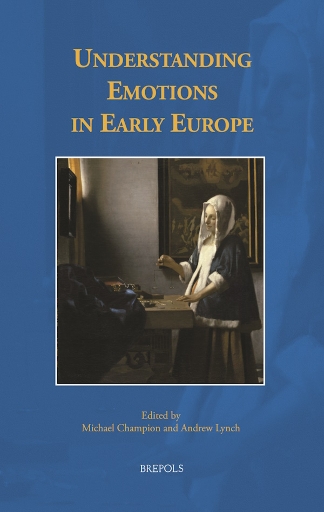
Understanding Emotions in Early Europe
show More to view fulltext, buy and share links for:Understanding Emotions in Early Europe show Less to hide fulltext, buy and share links for: Understanding Emotions in Early EuropeThis book investigates how medieval and early modern Europeans constructed, understood, and articulated emotions. The essays trace concurrent lines of influence that shaped post-Classical understandings of emotions, through overlapping philosophical, rhetorical, and theological discourses. They show the effects of developments in genre and literary, aesthetic, and cognitive theories on depictions of psychological and embodied emotion in literature. They map the deeply embedded emotive content inherent in rituals, formal documents, daily conversation, communal practice, and cultural memory. The contributors focus on the mediation and interpretation of pre-modern emotional experience in cultural structures and institutions - customs, laws, courts, religious foundations - as well as in philosophical, literary, and aesthetic traditions.
The volume thus represents a conspectus of contemporary interpretative strategies, displaying close connections between disciplinary and interdisciplinary critical practices drawn from historical studies, literature, anthropology and archaeology, philosophy and theology, cognitive science, psychology, religious studies, and gender studies. The essays stretch from classical and indigenous cultures to the contemporary West, embracing numerous national and linguistic groups. They illuminate the complex potential of medieval and early modern emotions in situ, analysing their involvement in subjects as diverse as philosophical theories, imaginative and scholarly writing, concepts of individual and communal identity, social and political practices, and the manifold business of everyday life.
-
-
-
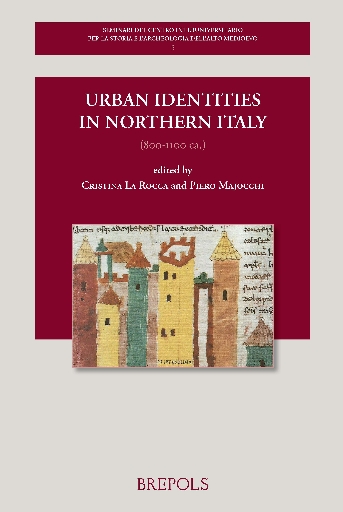
Urban identities in Northern Italy, 800-1100 ca.
show More to view fulltext, buy and share links for:Urban identities in Northern Italy, 800-1100 ca. show Less to hide fulltext, buy and share links for: Urban identities in Northern Italy, 800-1100 ca.The book aims to reflect on the characteristics of urban centers of the kingdom of Italy between the ninth and the eleventh centuries, filling a noticeable historiographical gap. The cities in Northern Italy in this period have not yet been analysed with a multidisciplinary approach, able to outline their specific and distinctive characteristics and to pose this ages in relation to the post-Roman past and also to the following 'Communal' phase. Urban identities are examined from different points of view: from a political perspective, in relation to the dialectic between center and periphery and to the border areas of the kingdom; from an institutional and territorial standing point, analyzing the structures of local power and public territorializations; according to social and military history approaches, highlighting the continuities and transformations in comparison with former and following centuries. The issue of urban identities is also archaeologically investigated in relation to urban development and to topographic transformations, and culturally explored, examining mutual exchanges between the cities of the kingdom. Another aspect rarely addressed by previous literature is ultimately to compare the results of this research on the Italic kingdom with studies on the Transalpine Carolingian and post-Carolingian empire and kingdoms, outlining common trends, but also specific peculiarities.
-
-
-
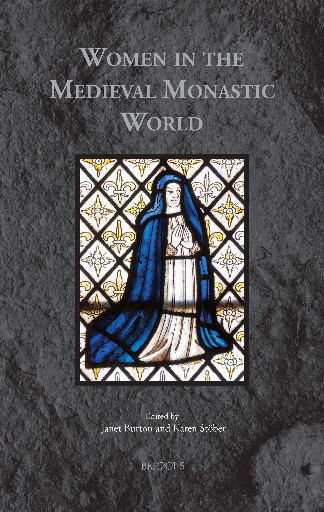
Women in the Medieval Monastic World
show More to view fulltext, buy and share links for:Women in the Medieval Monastic World show Less to hide fulltext, buy and share links for: Women in the Medieval Monastic WorldThere has long been a tendency among monastic historians to ignore or marginalize female participation in monastic life, but recent scholarship has begun to redress the balance, and the great contributions made by women to the religious life of the Middle Ages are now attracting increasing attention. This interdisciplinary volume draws together scholars from Spain, Italy, France, the Low Countries, Germany, Transylvania, Scandinavia, and the British Isles, and offers new insights into the history, art history, and material culture, and the religiosity and culture of medieval religious women.
The different chapters within this book take a comparative approach to the emergence and spread of female monastic communities across different geographical, political, and economic settings, comparing and contrasting houses that ranged from rich, powerful royal abbeys to small, subsistence priories on the margins of society, and exploring the artistic achievements, the interaction with neighbours and secular and ecclesiastical authorities, and the spiritual lives that were led by their inhabitants. The contributors to this volume address issues as diverse as patronage and relationships with the outside world, organizational structures, the nature of Cistercian observance and identity among female houses, and the role of male authority, and in doing so, they seek to shed light on the divergences and commonalities upon which the female religious life was based.
-
-
-
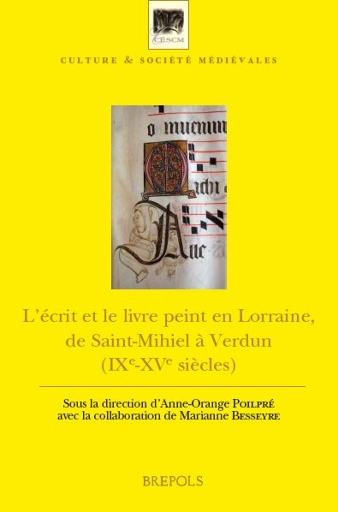
L'écrit et le livre peint en Lorraine, de Saint-Mihiel à Verdun (IXe-XVe siècles)
show More to view fulltext, buy and share links for:L'écrit et le livre peint en Lorraine, de Saint-Mihiel à Verdun (IXe-XVe siècles) show Less to hide fulltext, buy and share links for: L'écrit et le livre peint en Lorraine, de Saint-Mihiel à Verdun (IXe-XVe siècles)Les manuscrits médiévaux de Lorraine, trésors du patrimoine graphique de cette région, étaient au coeur du colloque qui s’est tenu durant l’automne 2010 à l’abbaye bénédictine de Saint-Mihiel (Meuse). Les actes présentés dans cet ouvrage portent sur une large série de productions locales et exogènes qui ont toutes pour dénominateur commun, l’histoire politique, institutionnelle, intellectuelle, spirituelle et artistique de Verdun et de l’abbaye de Saint-Mihiel au Moyen Âge. La question du livre et de l’écrit est abordée en trois volets thématiques et chronologiques allant des origines carolingiennes jusqu’aux productions enluminées du XVe siècle. Si certains documents sont bien connus, comme le traité de Verdun, d’autres demeuraient à ce jour totalement ou partiellement inédits, tels le manuscrit dit « du pseudo Athanase » (Saint-Mihiel, Bibliothèque municipale, ms Z 28) ou le graduel de Saint-Mihiel (Saint-Mihiel, Bibliothèque municipale, ms Z 73).
-