


EMISCS16

Collection Contents
13 results
-
-
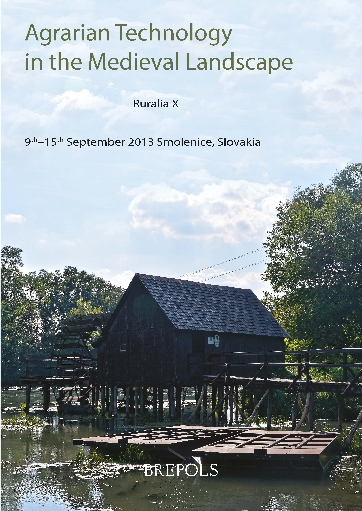
Agrarian Technology in the Medieval Landscape
show More to view fulltext, buy and share links for:Agrarian Technology in the Medieval Landscape show Less to hide fulltext, buy and share links for: Agrarian Technology in the Medieval LandscapeRuralia X includes 27 papers dealing with agrarian technologies in the medieval landscape as seen in different European countries. The subject areas include cultivation, livestock husbandry, gardening, viticulture and woodland management – interpreting the concept of agrarian production in a broad sense – studied mainly on the basis of archaeology, but also using iconography, documentary evidence and archaeo-environmental approaches.
Ruralia X, marks an important step on the way towards interpreting innovation, as well as understanding the varieties of agrarian activity from a Europe-wide perspective.
Authors from 14 countries provide a broad overview of the current issues, complemented by extensive bibliographies. Ruralia X represents one of the current fields of European archaeological research and offers a solid foundation for further comparative studies.
-
-
-
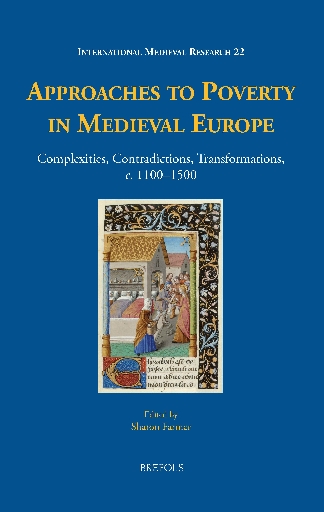
Approaches to Poverty in Medieval Europe
show More to view fulltext, buy and share links for:Approaches to Poverty in Medieval Europe show Less to hide fulltext, buy and share links for: Approaches to Poverty in Medieval EuropeThe essays in this volume re-examine two major medieval turning points in the relationship between rich and poor: the revolution in charity of the twelfth and thirteenth centuries, and the era of late medieval crises when the vulnerability of the poor increased dramatically and charitable generosity often declined. Drawing on a variety of sources from England, France, the Low Countries, Italy, and Iberia, the contributors to this volume add new perspectives on the agency of the poor, the influence of gendered forms of devotion, parallels in Christian and Jewish representations of the deserving and undeserving poor, and the effect of mendicant piety on the status of the involuntary poor. A broader implication of the volume as a whole is that medieval studies of poverty and wealth need to pay more attention to the role of rulers, ruling elites, and public policy in shaping the experiences of the poor.
-
-
-
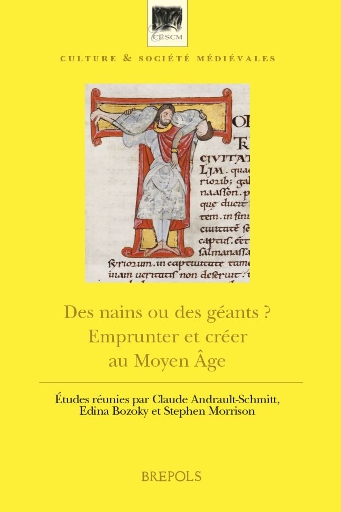
Des nains ou des géants ?
show More to view fulltext, buy and share links for:Des nains ou des géants ? show Less to hide fulltext, buy and share links for: Des nains ou des géants ?« Bernard de Chartres disait que nous sommes comme des nains assis sur les épaules de géants de sorte que nous pouvons voir davantage [de choses] qu’eux et plus loin non certes à cause de l’acuité de notre propre vue ou de la hauteur de notre corps, mais parce que nous sommes soulevés en hauteur et élevés à une hauteur gigantesque » (Jean de Salisbury, Metalogicon, III, 4).
Les géants de l’adage sont l’incarnation de l’autorité du passé, si prégnante dans la culture du Moyen Âge. Mais la tradition, qui est à la fois contrainte et force, porte en elle les germes d’une véritable inventivité. La nouveauté se nourrit de l’ancien, pour le transformer et le dépasser.
Issues d'un colloque interdisciplinaire organisé à Poitiers en 2011, les études de ce volume se proposent d'analyser la nature, le contenu, les modalités ou la finalité des emprunts pour appréhender des phénomènes plus complexes tels que la recomposition ou le déplacement, fondés plutôt sur la notion de référence, d’allusion, d’influence, de choix. Passifs ou délibérés, individuels ou collectifs, éphémères ou durables, ces réaménagements peuvent être considérés comme autant de créations nouvelles témoignant de la vitalité du Moyen Âge et de sa capacité à façonner un paysage culturel en perpétuel mouvement. Les éditeurs du volume - Claude Andrault-Schmitt, Edina Bozoky et Stephen Morrison -, sont professeurs à l'Université de Poitiers et membres du Centre d'études supérieures de Civilisation médiévale.
-
-
-

Jews and Christians in Medieval Europe
show More to view fulltext, buy and share links for:Jews and Christians in Medieval Europe show Less to hide fulltext, buy and share links for: Jews and Christians in Medieval EuropeThe name of Bernhard Blumenkranz is well known to all those who study the history of European Jews in the Middle Ages and in particular the history of Jewish-Christian relations. Blumenkranz was born in Vienna in 1913; he left for Switzerland during the war and obtained a doctorate at the University of Basel on the portrayal of Jews in the works of Augustine. He subsequently moved to France where his numerous publications revived and renovated the field of Jewish studies. The international group of scholars who wrote the fifteen essays in this volume, beyond paying homage to Blumenkranz’s work, trace the trajectories of various lines of inquiry that he initiated: Christian theology of Judaism, problems of conversion and proselytism, geography and topography of Medieval Jewish communities, the representation of Jews in Christian art. These essays provide both an assessment of Blumenkranz’s intellectual legacy and a snapshot of the evolution of the field over the last sixty years.
-
-
-
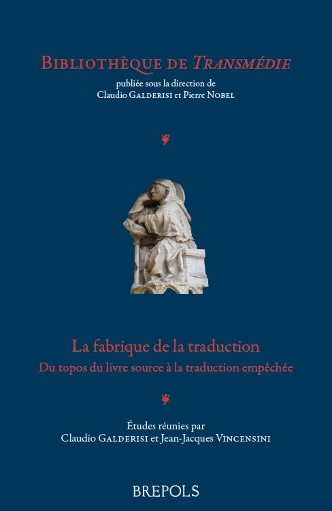
La fabrique de la traduction
show More to view fulltext, buy and share links for:La fabrique de la traduction show Less to hide fulltext, buy and share links for: La fabrique de la traductionAprès un premier volume consacré à la traduction intralinguale de l’ancien français au français moderne, ce deuxième ouvrage d’un projet en trois volets, portant sur des aspects peu étudiés de la translatio studii médiévale, se propose d’aborder dans une même réflexion les questions de la traduction empêchée et de la traduction manipulée. Les chapitres qui le composent étudient selon des approches complémentaires aussi bien des sources manipulées que des sources non traduites. Ils permettent de révéler des différences typologiques et génériques et de distinguer plus clairement ces deux frontières de la traduction médiévale.
Se dégage ainsi de la diversité des approches et des sujets un enseignement majeur : l’activité de sélection, de philtre, de mystification, de dissimulation est à la fois le résultat d’un acte individuel et d’une stratégie plurielle. Celle-ci n’est pas seulement le fruit d’un oubli plus ou moins volontaire, plus ou moins conscient, de pans entiers de la culture, des sciences, des lettres exprimées dans d’autres langues et qui ne franchissent pas le seuil de leur idiome d’origine. Elle est aussi à la source d’un certain nombre d’ouvrages revendiquant une filiation littérale qui apparaît aujourd’hui comme fantaisiste ou fictive, comme c’est le cas avec le « topos du livre source ». Comment interpréter cette disposition à la falsification propre à des clercs nourris de morale chrétienne ? Comment expliquer que ces auteurs ne manifestent aucune réserve critique devant les supercheries qu’ils accumulent avec une évidente délectation ou une peur inquiète du vide ? Comment analyser le recours évident au stéréotype propre à l’art littéraire de leur temps : la « nostalgie du passé » ?
Au terme de ce parcours critique, on constate que la traduction empêchée et la traduction manipulée font apparaître plus clairement les confins et les différences structurelles entre une translatio studii identitaire et une traduction en français savante.
Claudio Galderisi est professeur de langues et littératures de la France médiévale à l’Université de Poitiers (CESCM). Il a dirigé les trois volumes des Translations médiévales. Cinq siècles de traductions en français au Moyen Âge (xi e-xv e s.) (Brepols, 2011). Il a codirigé avec Jean-Jacques Vincensini le volume sur la traduction intralinguale (Brepols 2015).
Jean-Jacques Vincensini est professeur de langue et littératures médiévales à l’Université de Tours (CESR). Il a édité et traduit notamment les Romans de Mélusine de Jean d’Arras et de Couldrette et prépare l’édition et la traduction de l’Escoufle de Jean Renart. Il a codirigé avec Claudio Galderisi le volume sur la traduction intralinguale.
-
-
-
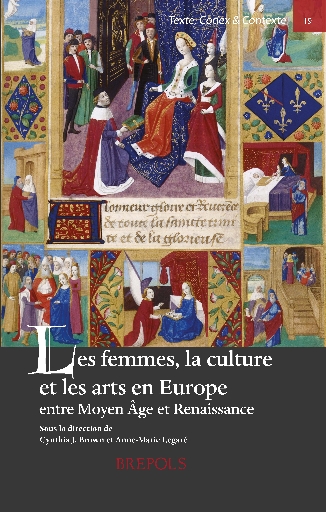
Les femmes, la culture et les arts en Europe entre Moyen Âge et Renaissance
show More to view fulltext, buy and share links for:Les femmes, la culture et les arts en Europe entre Moyen Âge et Renaissance show Less to hide fulltext, buy and share links for: Les femmes, la culture et les arts en Europe entre Moyen Âge et RenaissanceThe articles in this collection explore female patronage in literary, artistic and bibliophilic spheres from the Middle Ages to the early Renaissance with the aim of better defining women’s roles in the textual and visual (re)production and transmission of secular and religious works. What was their influence as commissioners of these oeuvres? Were literary texts translated or revised with a female-oriented message in mind? To what extent were images in illuminated manuscripts, illustrated books and paintings adapted to women’s interests? Bringing to light the phenomenon of cultural feminization, its conditions and constraints, the multidisciplinary approaches presented here elucidate in innovative and original fashion the real character of female patronage in Europe between the 13th and 16th centuries.
-
-
-
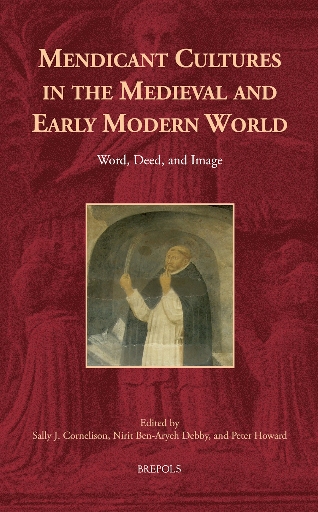
Mendicant Cultures in the Medieval and Early Modern World
show More to view fulltext, buy and share links for:Mendicant Cultures in the Medieval and Early Modern World show Less to hide fulltext, buy and share links for: Mendicant Cultures in the Medieval and Early Modern WorldThe eleven interdisciplinary essays that comprise this book complement and expand upon a significant body of literature on the history of the Franciscan and Dominican orders during the later Middle Ages and the early modern period. They elucidate and examine the ways in which mendicant friars established, sustained, and transformed their institutional identities and shaped the devotional experiences of the faithful to whom they ministered via verbal and visual culture. Taking primary texts and images as their point of departure, these essays break new scholarly ground by revising previous assumptions regarding mendicant life and actions and analysing sites, works of art, and texts that either have been neglected in the existing literature or that have not been examined through the lens of current methodologies such as sermon studies, ritual, gender, and cross-cultural interactions. Indeed, the varied methods and subjects of these essays demonstrate there is still much to be learned about the mendicant orders and the ways and spaces in which they operated and presented themselves on the local, regional, and global stages.
-
-
-
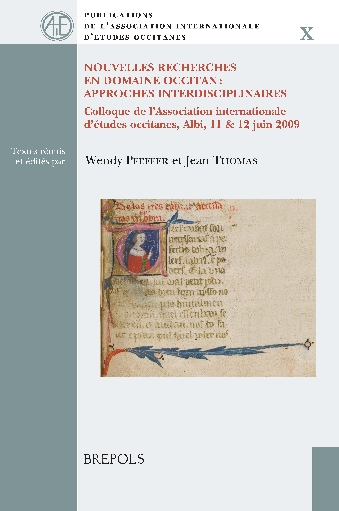
Nouvelles recherches en domaine occitan: Approches interdisciplinaires
show More to view fulltext, buy and share links for:Nouvelles recherches en domaine occitan: Approches interdisciplinaires show Less to hide fulltext, buy and share links for: Nouvelles recherches en domaine occitan: Approches interdisciplinairesLes Actes d'un colloque tenu à Albi en 2009 qui a réuni de jeunes universitaires présentant leurs recherches dans plusieurs domaines de l'étude de l'occitan: la littérature, la linguistique, la musique, du Moyen Âge à nos jours. De nouvelles approches scientifiques par des étudiants venant de plusieurs pays. Sous les rubriques de littérature et musique du Moyen Âge, des XVIIe et XVIIIe siècles, l'ère moderne, avec aussi des discussions de la langue et la littérature occitanes comme outil pour les historiens. Une mise en valeur non seulement des études occitanes mais de la langue même, utilisée pour présenter quelques-unes de ces communications scientifiques.
-
-
-

Objects, Environment, and Everyday Life in Medieval Europe
show More to view fulltext, buy and share links for:Objects, Environment, and Everyday Life in Medieval Europe show Less to hide fulltext, buy and share links for: Objects, Environment, and Everyday Life in Medieval EuropeArtefacts and environmental remains are abundant from archaeological excavations across Europe, but until now they have most commonly been used to accompany broader narratives built on historical sources and studies of topography and buildings, rather than being studied as important evidence in their own right. The papers in this volume aim to redress the balance by taking an environmental and artefact-based approach to life in medieval Europe.
The contributions included here address central themes such as urban identities, the nature of towns and their relationship with their hinterlands, provisioning processes, and the role of ritual and religion in everyday life. Case studies from across Europe encourage a comparative approach between town and country, and provide a pan-European perspective to current debates.
The volume is divided into four key parts: an exploration of the processes of provisioning; an assessment of the dynamics of urban population; an examination of domestic life; and a discussion of the status quaestionis and future potential of urban environmental archaeology. Together, these sections make a significant contribution to medieval archaeology and offer new and unique insights into the conditions of everyday life in medieval Europe.
-
-
-
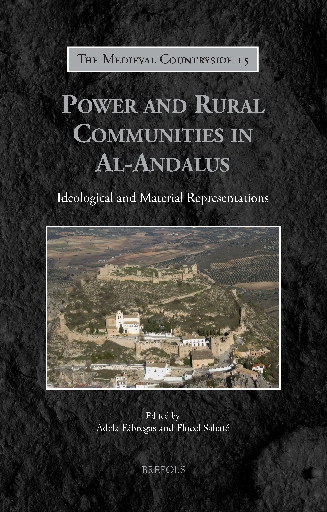
Power and Rural Communities in Al-Andalus
show More to view fulltext, buy and share links for:Power and Rural Communities in Al-Andalus show Less to hide fulltext, buy and share links for: Power and Rural Communities in Al-AndalusThis volume explores new definitions of state power in Al-Andalus throughout the Middle Ages by examining the interactions of the Andalusian state with its Islamic society, looking at specific moments in Andalusian history in a variety of local, geographical contexts. The essays collected here adopt largely archaeological methodologies, considering in turn the various spaces reclaimed by the state and its material remains, as well as the footprints of state impact on other local and territorial organizational structures. In addition, these means of analysis directly highlight those spaces that remained outside of state control, while also supporting consideration of how and why they managed to do so.
The essays use the territorial dimension of the kinship–state dichotomy as a starting point for considering its means of operation and evolution over time. Beginning with the traditional assumption that territorial configuration patterns are heavily determined by the relative weight of the different authorities operating in a given territory, the essays identify the different agents operating in Al-Andalus (mainly the state and gentry-based peasant communities) through insightful archaeological and historical considerations of medieval Andalusian society’s material remains. With special attention also paid to the Nasrid Kingdom of Granada — the Andalusian territory lasting longest under Muslim rule — this collection makes an important contribution to larger historiographical debates surrounding the medieval Islamic world.
-
-
-
Sensory Perception in the Medieval West
show More to view fulltext, buy and share links for:Sensory Perception in the Medieval West show Less to hide fulltext, buy and share links for: Sensory Perception in the Medieval WestWhat was it like to experience the medieval world through one’s senses? Can we access those past sensory experiences, and use our senses to engage with the medieval world? How do texts, objects, spaces, manuscripts, and language itself explore, define, exploit, and control the senses of those who engage with them?
This collection of essays seeks to explore these challenging questions. To do so is inevitably to take an interdisciplinary and context-focused approach. As a whole, this book develops understanding of how different fields speak to one another when they are focused on human experiences, whether of those who used our sources in the medieval period, or of those who seek to understand and to teach those sources today.
Articles by leading researchers in their respective fields examine topics including: Old English terminology for the senses, effects of the digitisation of manuscripts on scholarship, Anglo-Saxon explorations of non-human senses, scribal sensory engagement with poetry, the control of sound in medieval drama, bird sounds and their implications for Anglo-Saxon sensory perception, how goldwork controls the viewing gaze, legalised sensory impairment, and the exploitation of the senses by poetry, architecture, and cult objects.
-
-
-
Shaping Stability
show More to view fulltext, buy and share links for:Shaping Stability show Less to hide fulltext, buy and share links for: Shaping StabilityThis volume examines the efforts of medieval religious communities and orders to bring stability to the dynamic complexity of organized religious life. By focusing on legislative structures and normative documents (rules, customaries, constitutions), the authors address not only such matters as the meaning of these texts and the motivations behind them, but also the evolving conditions of their production and use, the internal politics of institutional change, and the reality of “precept not practice.” These papers thus present spiritual principles and social practices in their historical and functional contexts, confront normative programs with formative processes, and explain distinctive modes and models of life within the broader landscape of medieval organized religion..
-
-
-
Loyalty in the Middle Ages
show More to view fulltext, buy and share links for:Loyalty in the Middle Ages show Less to hide fulltext, buy and share links for: Loyalty in the Middle AgesAlthough ‘loyalty’ is in itself a relatively modern term, as a phenomenon it has long been recognised as a fundamental element of social relationships. The essays collected in this volume address the concept of loyalty as it was understood in the Middle Ages, exploring the theme of loyalty from three separate angles — the ties between individuals (such as marriage or feudal ties), the ties between individuals and groups (for example, the role of the individual in their wider family), and the ties between institutions and groups (such as monastic orders or guilds) — and questioning how, when, and why the phenomenon of loyalty first developed.
This volume, which draws together contributions from leading historians, explores how loyalty was manifested, both in public and in private, in the medieval world. Covering topics as diverse as religious orders, royal courts, and funeral customs, the essays collected here explore the interplay between loyalty and love, friendship, obedience, and justice, and question how the value of loyalty functioned both in theory and in practice across a range of social spaces. Together, these articles offer a unique new perspective on medieval society and provide a framework that also promises to be fruitful for future research.
-