


EMISCS99

Collection Contents
4 results
-
-
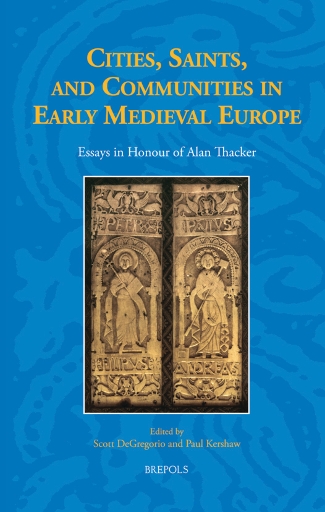
Cities, Saints, and Communities in Early Medieval Europe
show More to view fulltext, buy and share links for:Cities, Saints, and Communities in Early Medieval Europe show Less to hide fulltext, buy and share links for: Cities, Saints, and Communities in Early Medieval EuropeThis book honours the scholarship of English historian Dr. Alan Thacker by exploring the insular, the European and, more broadly, the Mediterranean connections and contexts of the history and culture of Anglo-Saxon England in the age of Bede, and beyond. It brings together original contributions by leading European and North American scholars of Late Antiquity and the early Middle Ages working across a range of disciplines: history, theology, epigraphy, and art history. Moving from the Irish Sea to the Bosporus, this collection presents a linked world in which saints, scholars, and the city of Rome all played powerful connective roles, creating communities, generating relationships, linking east to west, north to south, and present to past.
As in Thacker’s own work, Bede’s life and thought is a central presence. Bede’s attitudes to historical and contemporaneous conceptions of heresy, to the Irish church, and the evidence for his often complex relationships with his Northumbrian contemporaries all come under scrutiny, together with groundbreaking studies of his exegesis, christology, and historical method. Many of the contributions offer original insights into figures and phenomena that have been the focus of Dr. Thacker’s highly influential scholarship.
-
-
-

Crossing Borders in the Insular Middle Ages
show More to view fulltext, buy and share links for:Crossing Borders in the Insular Middle Ages show Less to hide fulltext, buy and share links for: Crossing Borders in the Insular Middle AgesThis volume offers an in-depth exploration of the cultural connections between and across Britain, Ireland, and Iceland during the high and late Middle Ages. Drawing together new research from international scholars working in Celtic Studies, Norse, and English, the contributions gathered together here establish the coherence of the medieval Insular world as an area for literary analysis and engage with a range of contemporary approaches to examine the ways, and the degrees to which, Insular literatures and cultures connect both with each other, and with the wider European mainstream.
The articles in this collection discuss the Insular histories of some of the most widely read literary works and authors of the Middle Ages, including Geoffrey of Monmouth and William Langland. They trace the legends of Troy and of Charlemagne as they travelled across linguistic and geographical borders, give fresh attention to the multilingual manuscript collections of great households and families, and explore the political implications of language choice in a linguistically plural society. In doing so, they shed light on a complex network of literary and cultural connections and establish the Insular world not as a periphery, but as a centre.
-
-
-
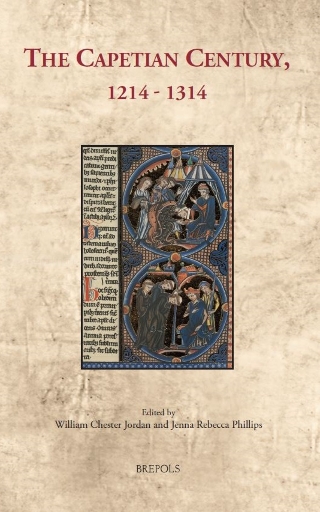
The Capetian Century, 1214 to 1314
show More to view fulltext, buy and share links for:The Capetian Century, 1214 to 1314 show Less to hide fulltext, buy and share links for: The Capetian Century, 1214 to 1314This volume provides a fresh look at the Capetian century (1214-1314), a period that changed the cultural and political fabric and laid the foundation for the modernisation of the medieval West.
The period from the birth of Louis IX to the death of Philip the Fair is remarkable for a series of developments and accomplishments associated with the Capetian kings of France. Innovations in architecture, manuscript illumination, and music all helped shape the cultural fabric of French and European life. Administrative historians emphasize the development of political institutions that have been said to lay foundations of the modern State. ‘Moral reform’, partly in support of the crusading movement, led to various changes in policies toward Jews, prostitutes, heretics, and many other social groups.
This volume brings together essays presented at the Capetian Century Conference held at Princeton University, commemorating two seminal anniversaries bracketing the 'Capetian Century' - the Battle of Bouvines (1214), and the death of Philip the Fair (1314).
-
-
-
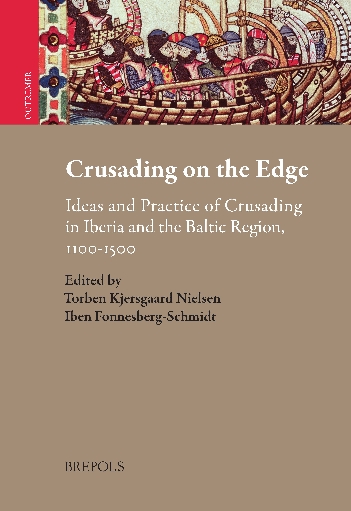
Crusading on the Edge
show More to view fulltext, buy and share links for:Crusading on the Edge show Less to hide fulltext, buy and share links for: Crusading on the EdgeThis volume brings together contributions from fifteen historians and art historians working on the history of the crusades, focusing on Iberia and the Baltic region. The subjects treated include the historiography of the Iberian and Baltic crusades; the transfer of crusading ideas from the Holy Land to Iberia and the Baltic region and the use of such ideas in local rhetoric and propaganda; the papal attitudes towards the Iberian and Baltic campaigns; the papal attitudes towards Muslims living in Christian Spain; the interaction between conquered and conquerors as reflected in art and architecture; and the exchange of information about the crusades in Iberia and the wider Baltic Region. The collection thus throws further light not only onto events in the Iberian Peninsula and the Baltic region but also onto the development of the crusade movement in general. It constitutes a valuable resource for both undergraduates and postgraduates studying the crusade movement in the Middle Ages.
Torben Kjersgaard Nielsen is Associate Professor in Medieval History at Aalborg University, Denmark. His main research interests cover the history of the Baltic Crusades, the medieval papacy, and Denmark in the Middle Ages.
Iben Fonnesberg-Schmidt is Professor (MSO) of Medieval History at Aalborg University, Denmark. Her research interests focus on papal communication and papal involvement in mission and crusades in the central Middle Ages.
-