


EMISCS99

Collection Contents
3 results
-
-

From Carickfergus to Carcassonne
show More to view fulltext, buy and share links for:From Carickfergus to Carcassonne show Less to hide fulltext, buy and share links for: From Carickfergus to Carcassonne‘From Carrickfergus to Carcassonne…’ has its genesis in the IRC funded exhibition of the same name which explores the unlikely links between medieval Ulster and Languedoc.
Hinging upon the personal story of a charismatic individual - Hugh de Lacy, earl of Ulster, ‘From Carrickfergus to Carcassonne’ explores the wider interplay between the Gaelic, Angevin, Capetian and Occitan worlds in the late twelfth and early thirteenth centuries.
This book brings to light new research linking de Lacy to a conspiracy with the French king and details his subsequent exile and participation in the Albigensian Crusade in the south of France. The combined papers in this volume detail this remarkable story through interrogation of the historical and archaeological evidence, benefitting not just from adept scholarly study from Ireland and the UK but also from a Southern French perspective. The ensemble of papers describe the two realms within which de Lacy operated, the wider political machinations which led to his exile, the Cathar heresy, the defensive architecture of France and Languedoc and the architectural influences transmitted throughout this period from one realm to another.
In exploiting the engaging story of Hugh de Lacy, this volume creates a thematic whole which facilitates wide ranging comparison between events such as the Anglo-Norman take-over of Ireland and the Albigensian Crusade, the subtleties of doctrine in Ireland and Languedoc and the transmission of progressive castle design linking the walls of Carcassonne and Carrickfergus.
-
-
-
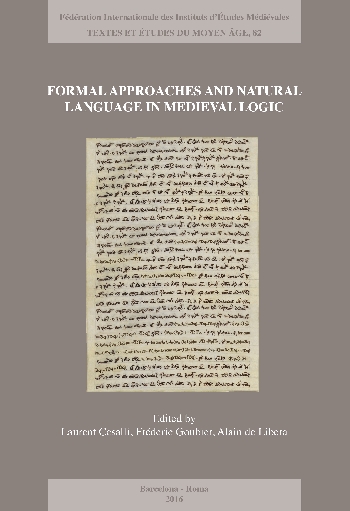
Formal Approaches and Natural Language in Medieval Logic
show More to view fulltext, buy and share links for:Formal Approaches and Natural Language in Medieval Logic show Less to hide fulltext, buy and share links for: Formal Approaches and Natural Language in Medieval LogicThe late medieval period is widely acknowledged as one of the most salient moments of the history of logic and semantics. It not only considered logic as a sine qua non condition for scientific knowledge, it also begot highly sophisticated theories about both argumentation and language. The last fifty years of increasingly intense research have brought about an ever more detailed knowledge of these theories. And yet, the questions as to what kind of logic is medieval logic, whether and to what extent it corresponds to our conception of logic, and, even, what the nature of its object was, remain challenging. That it has a formal character is widely accepted; and its semantic components display remarkable affinities with contemporary ones. But is it formal in the way modern logic is - or believes it is? Medieval logic does not really make recourse to symbolisms, after all, and the fact that the idea of formal validity might have been born in the twelfth century does not mean that developing formal approaches was an aim of medieval logicians. And what is its semantics a semantics of? Medieval logicians use Latin to deal with Latin constructions, but do these constructions belong to natural language or are they regimented to the point of forming some sort of ideal language?
The twenty-five papers gathered in this volume deal with these issues, thus allowing to reassess the broader questions of the formal character and formalising ambitions of medieval logic, as well as that of the natural character of the language in (and on) which it operated: in other words, they address the question of the nature, object and purpose of medieval logic.
-
-
-
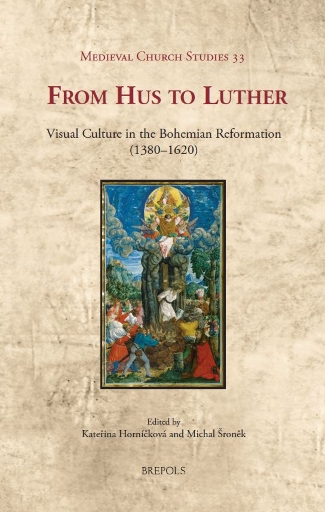
From Hus to Luther
show More to view fulltext, buy and share links for:From Hus to Luther show Less to hide fulltext, buy and share links for: From Hus to LutherThis book portrays a little-known phenomenon in Bohemian cultural and political history - the visual culture that grew up in the environment of Reformation churches in Bohemia from the time of the Hussites until the defeat of the Estates by the Habsburg coalition at White Mountain in 1620. It provides the first comprehensive overview of a forgotten era of artistic production over a period of approximately two hundred years, when most of the population of Bohemia professed non-Catholic faiths.
During the fifteenth and sixteenth centuries a unique situation arose in Bohemia, with five main Christian denominations (Utraquists, Lutherans, the Unity of Brethren, Calvinists, and Catholics) gradually coming to function alongside each other, with a number of other religious groups also active. The main churches, which had a fundamental influence on political stability in the state, were the majority Utraquists and the minority Catholics. Yet the essays of this book establish that despite the particularities of the Bohemian situation, the religious trends of Bohemia were an integral part of the process of Reformation across Europe.
Featuring over fifty illustrations including manuscript illumination, panel painting, and architecture, the book also presents the surviving cultural products of the four non-Catholic Christian denominations, ranging from the more moderate to radical Reformation cultures. The book also analyses the attitudes of these denominations to religious representations, and illuminates their uses of visual media in religious and confessional communication. The book thus opens up both the Reformation culture of Bohemia and its artistic heritage to an international audience.
-