


EMISCS99

Collection Contents
6 results
-
-
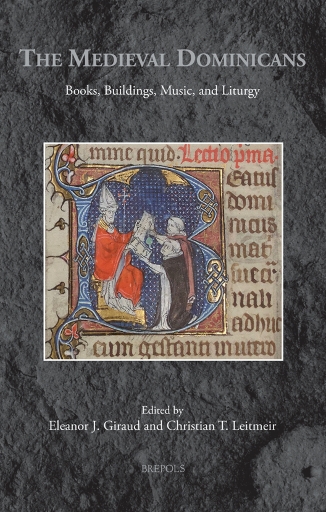
The Medieval Dominicans
show More to view fulltext, buy and share links for:The Medieval Dominicans show Less to hide fulltext, buy and share links for: The Medieval DominicansThe Order of Preachers has famously bred some of the leading intellectual lights of the Middle Ages. While Dominican achievements in theology, philosophy, languages, law, and sciences have attracted much scholarly interest, their significant engagement with liturgy, the visual arts, and music remains relatively unexplored. These aspects and their manifold interconnections form the focal point of this interdisciplinary volume.
The different chapters examine how early Dominicans positioned themselves and interacted with their local communities, where they drew their influences from, and what impact the new Order had on various aspects of medieval life. The contributors to this volume address issues as diverse as the making and illustrating of books, services for a king, the disposition of liturgical space, the creation of new liturgies, and a Dominican-made music treatise. In doing so, they seek to shed light on the actions and interactions of medieval Dominicans in the first centuries of the Order’s existence.
-
-
-

Medieval Francophone Literary Culture Outside France
show More to view fulltext, buy and share links for:Medieval Francophone Literary Culture Outside France show Less to hide fulltext, buy and share links for: Medieval Francophone Literary Culture Outside FranceIn medieval Europe, cultural, political, and linguistic identities rarely coincided with modern national borders. As early as the end of the twelfth century, French rose to prominence as a lingua franca that could facilitate communication between people, regardless of their origin, background, or community. Between the twelfth and fifteenth centuries, literary works were written or translated into French not only in France but also across Europe, from England and the Low Countries to as far afield as Italy, Cyprus, and the Holy Land. Many of these texts had a broad European circulation and for well over three hundred years they were transmitted, read, studied, imitated, and translated.
Drawing on the results of the AHRC-funded research project Medieval Francophone Literary Culture Outside France, this volume aims to reassess medieval literary culture and explore it in a European and Mediterranean setting. The book, incorporating nineteen papers by international scholars, explores the circulation and production of francophone texts outside of France along two major axes of transmission: one stretching from England and Normandy across to Flanders and Burgundy, and the other running across the Pyrenees and Alps from the Iberian Peninsula to the Levant. In doing so, it offers new insights into how francophone literature forged a place for itself, both in medieval textual culture and, more generally, in Western cultural spheres.
-
-
-
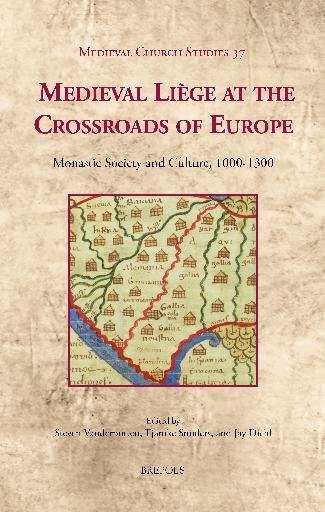
Medieval Liège at the Crossroads of Europe
show More to view fulltext, buy and share links for:Medieval Liège at the Crossroads of Europe show Less to hide fulltext, buy and share links for: Medieval Liège at the Crossroads of EuropeDuring the high Middle Ages, the bishopric of Liège found itself at a cultural crossroads between the German Empire and the French lordships. The Liègeois themselves summed up the situation when they declared that: ‘Gaul considers us its most distant inhabitants, Germany as nearby citizens. In fact we are neither, but both at the same time’. This same complexity is also echoed by present-day historians, who have described Liège as a hub of interactions between two great civilisations. Medieval monastic communities in Liège were key sites of this exchange, actively participating in the cultural developments, social networks, and political structures of both regions.
Bringing together the work of international scholars, this collection of essays addresses the problem of monastic identity and its formation in a region that was geographically wedged between two major competing socio-political powers. It investigates how monastic communities negotiated the uncertainties of this situation, while also capitalizing on the opportunities it presented. As such, this book sheds light on the agency of monastic identity formation in a small but complex region caught at the crossroads of two major powers.
-
-
-
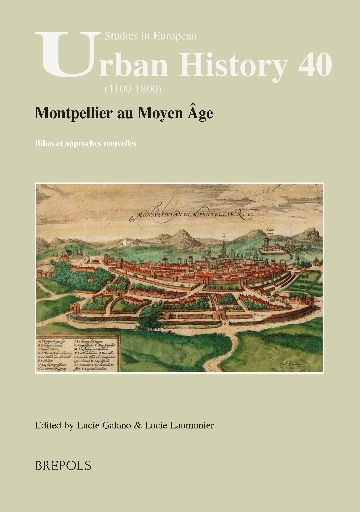
Montpellier au Moyen Âge
show More to view fulltext, buy and share links for:Montpellier au Moyen Âge show Less to hide fulltext, buy and share links for: Montpellier au Moyen ÂgeFondée à la fin du x e siècle, Montpellier connut une expansion fulgurante à partir du xii e, à la faveur du développement d’échanges culturels et économiques, vers la Méditerranée ou le nord de l’Europe. Cette expansion était le fruit de politiques menées par les Guilhem et confirmée lors du passage de la seigneurie sous l’autorité des rois d’Aragon et de Majorque après 1204, quand la ville obtint un gouvernement consulaire. Devenue une communauté urbaine d’importance au xiii e siècle, Montpellier était habitée par une population cosmopolite. Dans et hors les murs se croisaient grands marchands, changeurs et simples revendeurs, universitaires et intellectuels de renom, artisans et agriculteurs. L’attractivité et le rayonnement de Montpellier en faisaient l’une des principales villes du Bas-Languedoc. Pourtant, son histoire médiévale n’a bénéficié que d’une attention inégale de la part des chercheurs. Cet ouvrage procède d’un colloque international réuni à Montpellier en 2013 et rassemble des articles réalisés par les principaux contributeurs et principales contributrices à l’histoire et à l’archéologie de la ville. Basées sur des archives originales ou sur la réinterprétation de données connues, les recherches proposées ici, tout en présentant un bilan des travaux passés, empruntent des voies nouvelles démontrant les promesses des études historiques et archéologiques sur Montpellier.
-
-
-

Music, Liturgy, and the Veneration of Saints of the Medieval Irish Church in a European Context
show More to view fulltext, buy and share links for:Music, Liturgy, and the Veneration of Saints of the Medieval Irish Church in a European Context show Less to hide fulltext, buy and share links for: Music, Liturgy, and the Veneration of Saints of the Medieval Irish Church in a European ContextThis book opens up discussion on the liturgical music of medieval Ireland by approaching it from a multidisciplinary, European perspective. In so doing, it challenges received notions of an idiosyncratic ‘Celtic Rite’, and of the prevailing view that no manuscripts with music notation have survived from the medieval Irish Church. This is due largely to a preoccupation by earlier scholars with pre-Norman Gaelic culture, to the neglect of wider networks of engagement between Ireland, Britain, and continental Europe. In adopting a more inclusive approach, a different view emerges which demonstrates the diversity and international connectedness of Irish ecclesiastical culture throughout the long Middle Ages, in both musico-liturgical and other respects.
The contributors represent a variety of specialisms, including musicology, liturgiology, palaeography, hagiology, theology, church history, Celtic studies, French studies, and Latin. From this rich range of perspectives they investigate the evidence for Irish musical and liturgical practices from the earliest surviving sources with chant texts to later manuscripts with music notation, as well as exploring the far-reaching cultural impact of the Irish church in medieval Europe through case studies of liturgical offices in honour of Irish saints, and of saints traditionally associated with Ireland in different parts of Europe.
-
-
-
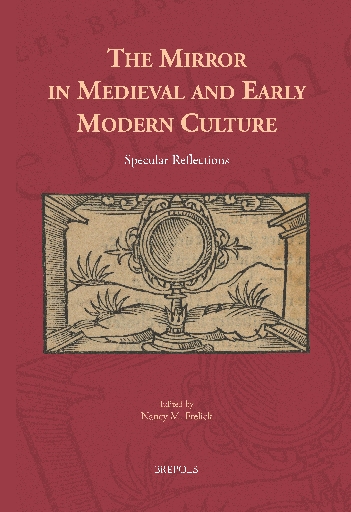
The Mirror in Medieval and Early Modern Culture
show More to view fulltext, buy and share links for:The Mirror in Medieval and Early Modern Culture show Less to hide fulltext, buy and share links for: The Mirror in Medieval and Early Modern CultureMirrors have always fascinated humankind. They collapse ordinary distinctions, making visible what is normally invisible, and promising access to hidden realities. Yet, these liminal objects also point to the limitations of human perception, knowledge, and wisdom. In this interdisciplinary volume, specialists in medieval and early modern science, cultural and political history, as well as art history, philosophy, and literature come together to explore the intersections between material and metaphysical mirrors in Europe and the Islamic world. During the time periods studied here, various technologies were transforming the looking glass as an optical device, scientific instrument, and aesthetic object, making it clearer and more readily available, though it remained a rare and precious commodity. While technical innovations spawned new discoveries and ways of seeing, belief systems were slower to change, as expressed in the natural sciences, mystical writings, literature, and visual culture. Mirror metaphors based on analogies established in the ancient world still retained significant power and authority, perhaps especially when related to Aristotelian science, the medieval speculum tradition, religious iconography, secular imagery, Renaissance Neoplatonism, or spectacular Baroque engineering, artistry, and self-fashioning. Mirror effects created through myths, metaphors, rhetorical strategies, or other devices could invite self-contemplation and evoke abstract or paradoxical concepts. Whether faithful or deforming, specular reflections often turn out to be ambivalent and contradictory: sometimes sources of illusion, sometimes reflections of divine truth, mirrors compel us to question the very nature of representation.
-