


EMISCS99

Collection Contents
6 results
-
-
Regards croisés sur le monument médiéval
show More to view fulltext, buy and share links for:Regards croisés sur le monument médiéval show Less to hide fulltext, buy and share links for: Regards croisés sur le monument médiévalClaude Andrault-Schmitt a consacré la majeure partie de sa carrière d’enseignant-chercheur à l’étude des arts de l’ancien duché d’Aquitaine, en accordant un intérêt particulier à l’architecture religieuse. Dans sa démarche intellectuelle, elle s’est constamment interrogée sur les questions d’historiographie, de méthodologie et d’épistémologie, ce qui l’a amenée à défendre plusieurs principes qui lui sont chers : appliquer à l’architecture un vocabulaire adapté aux réalités et aux usages médiévaux, se méfier des idées reçues héritées de l’historiographie et des étiquettes - à commencer par le traditionnel clivage entre le roman et le gothique -, aborder les rapports entre les formes et les différentes fonctions d’une église et rassembler le plus grand nombre de disciplines autour d’un même édifice pour en comprendre toutes les facettes : historiens, archéologues, spécialistes des matériaux, de l’épigraphie, de l’iconographie, musicologues.
À l’occasion de son départ à la retraite, ses collègues et ses élèves ont souhaité lui rendre hommage en lui dédiant trente et une contributions reflétant ces différentes préoccupations, regroupées dans quatre sections intitulées Contextualisations, De l’archéologie monumentale à l’archéologie du bâti, Les ordres réformés et Le décor monumental . Ces contributions forment ensemble un panorama très représentatif de l’état de la recherche actuelle dans ces différents domaines et des orientations encouragées par Claude Andrault-Schmitt, que ce soit dans ses publications ou dans son enseignement.
-
-
-
Religious Minorities in Christian, Jewish and Muslim Law (5th - 15th centuries)
show More to view fulltext, buy and share links for:Religious Minorities in Christian, Jewish and Muslim Law (5th - 15th centuries) show Less to hide fulltext, buy and share links for: Religious Minorities in Christian, Jewish and Muslim Law (5th - 15th centuries)The fruit of a sustained and close collaboration between historians, linguists and jurists working on the Christian, Muslim and Jewish societies of the Middle Ages, this book explores the theme of religious coexistence (and the problems it poses) from a resolutely comparative perspective. The authors concentrate on a key aspect of this coexistence: the legal status attributed to Jews and Muslims in Christendom and to dhimmīs in Islamic lands. What are the similarities and differences, from the point of view of the law, between the indigenous religious minority and the foreigner? What specific treatments and procedures in the courtroom were reserved for plaintiffs, defendants or witnesses belonging to religious minorities? What role did the law play in the segregation of religious groups? In limiting, combating, or on the contrary justifying violence against them? Through these questions, and through the innovative comparative method applied to them, this book offers a fresh new synthesis to these questions and a spur to new research.
-
-
-
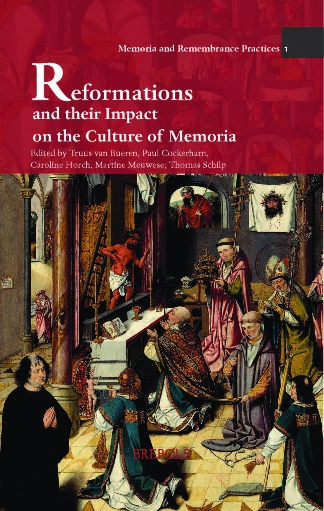
Reformations and their Impact on the Culture of Memoria
show More to view fulltext, buy and share links for:Reformations and their Impact on the Culture of Memoria show Less to hide fulltext, buy and share links for: Reformations and their Impact on the Culture of MemoriaThis volume presents cultural studies approaches to different modes of memoria (the original medieval way of commemoration), taking into account specific confessional contexts. It mainly focuses on the consequences of political, religious and social reforms in the period from 1200 to 1800. Scholars from multiple subject areas in the field of cultural studies evaluate if, and to what extent, reform processes and political or social change have influenced different practices of memoria.
Since customs of commemoration of the dead (and the living) serve as a means of self-reassurance for a society, they allow significant insights into what the respective societies were grounded upon. This volume delivers the first discipline-specific and methodologically diverse approach to the consequences of different reforms on memoria.
In this way this overview creates a ‘history of memoria’ throughout the centuries.
-
-
-
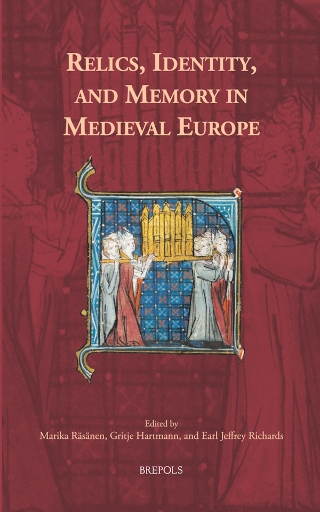
Relics, Identity, and Memory in Medieval Europe
show More to view fulltext, buy and share links for:Relics, Identity, and Memory in Medieval Europe show Less to hide fulltext, buy and share links for: Relics, Identity, and Memory in Medieval EuropeThis volume contributes to current discussions of the place of relics in devotional life, politics, and identity-formation, by illustrating both the power which relics were thought to emanate as well as the historical continuity in the significance assigned to that power. Relics had the power to ‘touch’ believers not only as material objects, but also through different media that made their presence tangible and valuable. Local variants in relic-veneration demonstrate how relics were exploited, often with great skill, in different religious and political contexts. The volume covers both a wide historical and geographical span, from Late Antiquity to the early modern period, and from northern, central, and southern Europe.
The book focuses on textual, iconographical, archaeological, and architectural sources. The contributors explore how an efficient manipulation of the liturgy, narrative texts, iconographic traditions, and architectural settings were used to construct the meaningfulness of relics and how linguistic style and precision were critically important in creating a context for veneration. The methodology adopted in the book combines studies of material culture and close reading of textual evidence in order to offer a new multidisciplinary purchase on the study of relic cults.
-
-
-
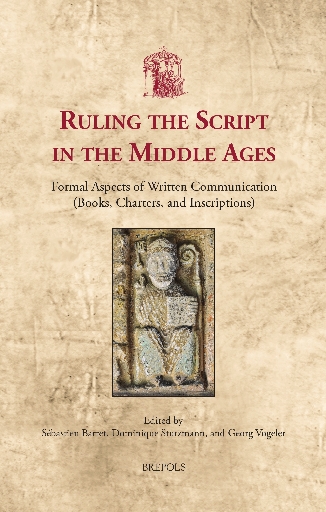
Ruling the Script in the Middle Ages
show More to view fulltext, buy and share links for:Ruling the Script in the Middle Ages show Less to hide fulltext, buy and share links for: Ruling the Script in the Middle AgesThe textuality and materiality of documents are an essential part of their communicative role. Medieval writing, as part of the interpersonal communication process, had to follow rules to ensure the legibility and understanding of a text and its connotations. This volume provides new insights into how different kinds of rules were designed, established, and followed in the shaping of medieval documents, as a means of enabling complex and subtle communicational phenomena. Because they provide a perspective for approaching the material they are supposed to organize, these rules (or the postulation of their use) provide powerful analytical tools for structural studies into given corpora of documents.
Originating in talks given at the International Medieval Congress in Leeds between 2010 and 2012, the twenty papers in this collection offer a precise, in-depth analysis of a variety of medieval scripts, including books, charters, accounts, and epigraphic documents. In doing so, they integrate current developments in palaeography, diplomatics, and codicology in their traditional methodological set, as well as aspects of the digital humanities, and they bridge the gap between the so-called ‘auxiliary sciences of history’ and the field of communication studies. They illustrate different possibilities for exploring how the formal aspects of scripts took their place in the construction of effective communication structures.
-
-
-

Reading Sacred Scripture with Thomas Aquinas
show More to view fulltext, buy and share links for:Reading Sacred Scripture with Thomas Aquinas show Less to hide fulltext, buy and share links for: Reading Sacred Scripture with Thomas AquinasThomas Aquinas is still most widely known for his works in systematic theology (Summa theologiae) and as a commentator of Aristotle. Recent decades, however, have seen a revived interest in Aquinas as a biblical scholar. The essays gathered in this volume explore the richness of his biblical commentaries by analyzing the hermeneutical tools employed in his reading of Scripture and investigating the contemporary relevance of his biblical exegesis. Its goal is to familiarize the contemporary reader with an indispensable dimension of his scholarly activity: as a master in Sacred Scripture (magister in sacra pagina) Aquinas taught theology as a form of speculative reading of the revealed Word of God and hence the reading of the various books of the Bible constituted the axis of his scriptural didactics. Altogether, the nineteen contributions in the volume offers an up-to-date analysis of Aquinas’s contribution to medieval biblical exegesis and points to ways in which it can enrich contemporary debates on the relation between exegesis and systematic theology.
Contributors: Christopher Baglow, Timothy F. Bellamah, Lluís Clavell, Gilbert Dahan, Leo J. Elders, Jeremy Holmes, Daniel Keating, Matthew Levering, Enrique Martínez, Miroslaw Mróz, Mauricio Narváez, Marco Passarotti, Matthew J. Ramage, Elisabeth Reinhardt, Margherita Maria Rossi, Piotr Roszak, Olivier-Thomas Venard, Jörgen Vijgen, Robert J. Woźniak.
-