


EMISCS99

Collection Contents
2 results
-
-
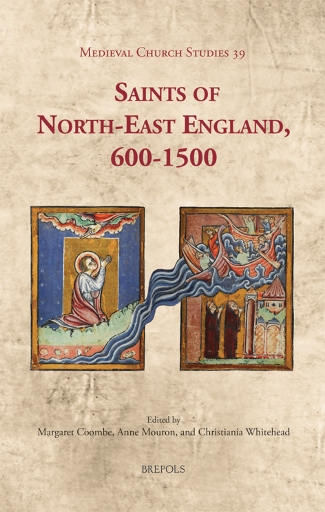
Saints of North-East England, 600-1500
show More to view fulltext, buy and share links for:Saints of North-East England, 600-1500 show Less to hide fulltext, buy and share links for: Saints of North-East England, 600-1500During the seventh and early eighth centuries a number of influential saints’ cults were established within the Anglo-Saxon kingdom of Northumbria, most notably the cult of St Cuthbert served by the monks of Lindisfarne. Reacting to the Danish incursions of the ninth century, the Lindisfarne community gradually migrated south to Durham, where, in the early eleventh century, the relics of further Northumbrian saints were collected to join those of Cuthbert. Following the re-foundation of the Durham church as a Benedictine house in 1083, the community sought to legitimise itself by stressing its links with an ancient, saintly past. A century later, the cults of new hermit saints such as Godric of Finchale and Bartholomew of Farne, extensively modelled on St Cuthbert’s example, were added to the north-eastern Durham familia.
This volume takes an interdisciplinary approach to these north-eastern saints, offering a comprehensive snapshot of new scholarship within the field. The first section focuses on the most eminent saints and hagiographers of Anglo-Saxon Northumbria: Cuthbert, Wilfrid and Bede. The second section examines their utility for the twelfth-century, Anglo-Norman community at Durham, and surveys the cults which emerged alongside, including the early saint-bishops of Hexham Augustinian priory. The third section reviews the material culture which developed around these saints in the fourteenth and fifteenth centuries: their depiction in stained glass, their pilgrimages and processions, and the use of their banners in the Anglo-Scottish wars. A concluding essay re-evaluates the north-eastern cult of saints from post-Reformation perspectives.
-
-
-
Shaping Authority
show More to view fulltext, buy and share links for:Shaping Authority show Less to hide fulltext, buy and share links for: Shaping AuthorityThe cultural and religious history from Antiquity through the Renaissance may be read through the lens of the rise and demise of auctoritates. Throughout this long period of about two millennia, many historical persons have been considered as exceptionally authoritative. Obviously, this authority derived from their personal achievements. But one does not become an authority on one’s own. In many cases, the way an authority’s achievements were received and disseminated by their contemporaries and later generations, was the determining factor in the construction of their authority. This volume focuses on the latter aspect: what are the mechanisms and strategies by which participants in intellectual life at large have shaped the authority of historical persons? On what basis, why and how were some persons singled out above their peers as exceptional auctoritates and by which processes did this continue (or discontinue) over time? What imposed geographical or other limits on the development and expansion of a person’s auctoritas? Which circumstances led to the disintegration of the authority of persons previously considered to be authoritative? The case-studies in this volume reflect the dazzling variety of trajectories, concerns, actors and factors that contributed over a time span of two millennia to the fashioning of the postmortem and lasting authority of historical persons.
-