


EMISCS99

Collection Contents
7 results
-
-
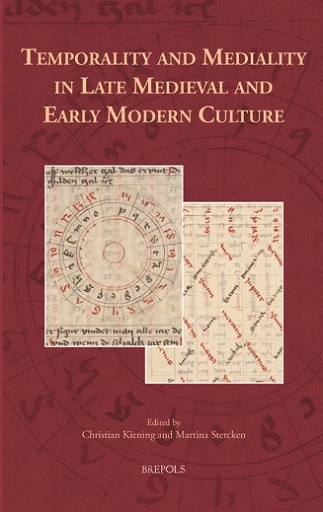
Temporality and Mediality in Late Medieval and Early Modern Culture
show More to view fulltext, buy and share links for:Temporality and Mediality in Late Medieval and Early Modern Culture show Less to hide fulltext, buy and share links for: Temporality and Mediality in Late Medieval and Early Modern CultureThis interdisciplinary volume explores the ways in which time is staged at the threshold between the Middle Ages and the early modern period. Proceeding from the reality that all cultural forms are inherently and inescapably temporal, it seeks to discover the significance of time in mediations and communications of all kinds.
By showing how time is displayed in diverse cultural strategies and situations, the essays of this volume show how time is intrinsic to the very concept of tradition. In exploring a variety of medial forms and communicative practices, they also reveal that while the beginning of the age of printing (around 1500) may mark a fundamental change in terms of reproduction and circulation, artefacts and other historical traditions continue to employ earlier systems and practices relating time and space.
The volume features articles by leading researchers in their respective fields, including studies on mosaics as a medium reflecting space and time; the triptych’s potential as a time machine; winged altarpieces mediating eternity; texts and images of the passion of Christ permeating past, present, and future; dimensions of time embedded in maps; a compendium of world knowledge organized by forms of time and temporality; the figuration of prophecy in times of crisis; the portrayal of time in architecture.
The volume thus provides a new approach to media and mediality from the perspective of cultural history.
-
-
-
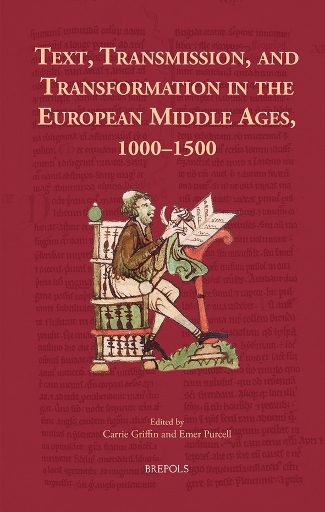
Text, Transmission, and Transformation in the European Middle Ages, 1000–1500
show More to view fulltext, buy and share links for:Text, Transmission, and Transformation in the European Middle Ages, 1000–1500 show Less to hide fulltext, buy and share links for: Text, Transmission, and Transformation in the European Middle Ages, 1000–1500These essays are concerned primarily with the different ways in which European writers, translators, and readers engaged with texts and concepts, and with the movement and exchange of those texts and ideas across boundaries and geographical spaces. It brings together new research on Anglophone and Latinate writings, as well as on other vernaculars, among them Old Norse, Anglo-Saxon, Medieval Irish, Welsh, Arabic, Middle Dutch, Middle German, French, and Italian, including texts and ideas that are experienced in aural and oral contexts, such as in music and song. Texts are examined not in isolation but in direct relation and as responses to wider European culture; several of the contributions theorize the translation of works, for example, those relating to spiritual instruction and prayer, into other languages and new contexts.
The essayists share a common concern, then, with the transmission and translation of texts, examining what happens to material when it moves into contexts other than the one in which it was produced; the influence that scribes, translators, and readers have on textual materiality and also on reception; and the intermingling different textual traditions and genres. Thus they foreground the variety and mobility of textual cultures of the Middle Ages in Europe, both locally and nationally, and speak to the profound connections and synergies between peoples and nations traceable in the movement and interpretation of texts, versions, and ideas. Together the essays reconstruct an outward-looking, networked, and engaged Europe in which people used texts in order to communicate, discover, and explore, as well as to record and preserve.
-
-
-
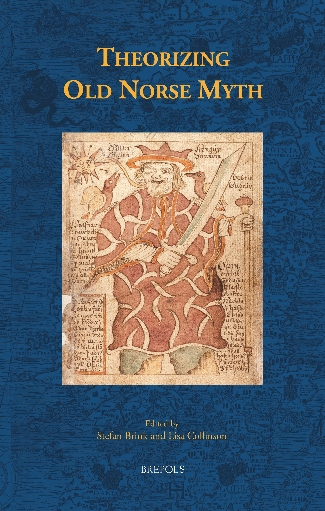
Theorizing Old Norse Myth
show More to view fulltext, buy and share links for:Theorizing Old Norse Myth show Less to hide fulltext, buy and share links for: Theorizing Old Norse MythThis collection explores the theoretical and methodological foundations through which we understand Old Norse myths and the mythological world, and the medieval sources in which we find expressions of these. Some contributions take a broad, comparative perspective; some address specific details of Old Norse myths and mythology; and some devote their attention to questions concerning either individual gods and deities, or more topographical and spatial matters (such as conceptions of pagan cult sites). The elements discussed provide an introductory and general overview of scholarly enquiry into myth and ritual, as well as an attempt to define myth and theory for Old Norse scholarship. The articles also offer a rehabilitation of the comparative method alongside a discussion of the concept of ‘cultural memory’ and of the cognitive functions that myths may have performed in early Scandinavian society. Particular subjects of interest include analyses of the enigmatic god Heimdallr, as well as the more well-known Óðinn, the deities, the female ásynjur, and the ‘elves’ or álfar. Text-based discussions are set alongside recent archaeological discoveries of cult buildings and cult sites in Scandinavia, together with a discussion of the most enigmatic site of all: Uppsala in Sweden. The key themes discussed throughout this volume are brought together in the concluding chapter, in a comprehensive summary that sheds new light on current scholarly perspectives.
-
-
-
Trent and Beyond. The Council, Other Powers, Other Cultures
show More to view fulltext, buy and share links for:Trent and Beyond. The Council, Other Powers, Other Cultures show Less to hide fulltext, buy and share links for: Trent and Beyond. The Council, Other Powers, Other CulturesFor centuries, the Council of Trent has been studied as a fundamental episode in European history wherein doctrinal and institutional unity was lost. Although the Council decrees nowhere refer to the contexts of the peoples met by Christopher Columbus, nor to the Cathay regions rediscovered by missionaries, nor to their religions, their superstitions or their political systems, the Council was nonetheless a global event. The Roman Church, which lost doctrinal control of the considerable part of Europe captured by different forms of Protestantism, imposed itself upon its followers through the application of conciliar decrees. Freed of its exclusively European perspective it opened up to cultures of the rest of the world. The customs and traditions thus encountered, the relationships with political authorities, possibilities for the construction of a new Christianity offered by New Worlds, disclosing spaces and contexts to the Tridentine Church, with accommodations and cross-fertilizations, with a return to origins and tradition, obliged that it begin to think of itself, perhaps for the first time, as a universal Church.
The Council and Beyond suggests not only reconsideration of Europe through the prism of the Tridentine decrees and the long processes of their dissemination, but also through an intercontinental consideration, a spatial perspective that would become universal to the Church and to the normative texts that had been elaborated at Trent.
-
-
-
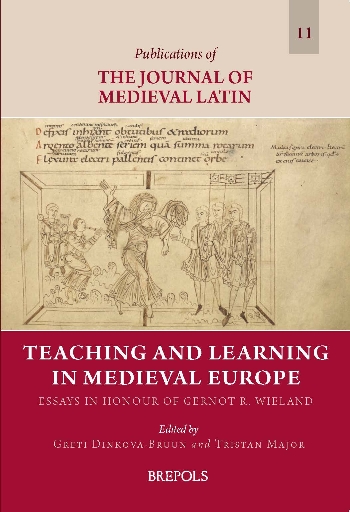
Teaching and Learning in Medieval Europe
show More to view fulltext, buy and share links for:Teaching and Learning in Medieval Europe show Less to hide fulltext, buy and share links for: Teaching and Learning in Medieval EuropeOver the span of his career, Gernot R. Wieland has been actively engaged in the contribution and promotion of the study of medieval literature, particularly in Anglo-Latin and Old English. From his early work on glosses in Anglo-Saxon manuscripts, to his later editorial work for The Journal of Medieval Latin, Wieland has provided the field with diverse, diligent, and creative scholarship. The contributors of this volume pay tribute to the significance of Wieland’s teaching and learning in the literature of medieval Europe by presenting him with twelve essays on varied aspects of the subject.
The first section of the volume aims to honour Wieland’s contributions to the study of medieval glossing. It deals with the history of glossing from early medieval Latin literature to late Middle English grammatical texts, as well as the early interpretative history of Walter of Châtillon’s Alexandreis and Geoffrey of Monmouth’s Historia regum Britannie. The following section corresponds with Wieland’s interest in Anglo-Saxon literature, with essays on the bilingual letters of Ælfric of Eynsham, the poetry of Alcuin of York, and the Old English Hexateuch. The second half of the volume, which examines elements of Latin literature from the eleventh to the fourteenth century, is divided into two sections containing essays that well represent Wieland’s diverse philological and literary interests in medieval Latin. The third section of the volume on the texts and contexts of Latin literature presents essays on the books of Abbot Maiolus of Cluny, on scholastic virtues of good teaching, and on Walter Map’s Dissuasio Valerii. The final section on the texts and manuscripts of Latin literature provides editions of and commentaries on a Latin-Greek phrase-book, a treatise on the firmament of Genesis 1:6.
With these contributions, this volume honours the research interests of a great teacher and learner of the Middle Ages: Gernot Weiland.
-
-
-
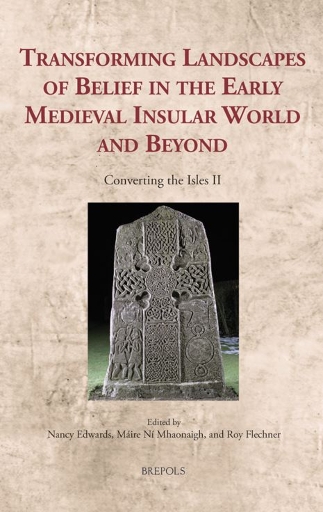
Transforming Landscapes of Belief in the Early Medieval Insular World and Beyond
show More to view fulltext, buy and share links for:Transforming Landscapes of Belief in the Early Medieval Insular World and Beyond show Less to hide fulltext, buy and share links for: Transforming Landscapes of Belief in the Early Medieval Insular World and BeyondConversion to Christianity is arguably the most revolutionary social and cultural change that Europe experienced throughout Late Antiquity and the early Middle Ages. Christianization affected all strata of society and transformed not only religious beliefs and practices, but also the nature of government, the priorities of the economy, the character of kinship, and gender relations. It is against this backdrop that an international array of leading medievalists gathered under the auspices of the Converting the Isles Research Network (funded by the Leverhulme Trust) to investigate social, economic, and cultural aspects of conversion in the early medieval Insular world, covering different parts of Britain, Ireland, Scandinavia, and Iceland.
This volume analyses the effects of religious conversion on landscapes of cult and on religious practice in Europe, focusing in particular on Britain and Ireland. Adopting an interdisciplinary and comparative approach, the volume investigates the interaction between different forms of belief, their coexistence and competition. It discusses the coming of writing, the power of the word, landscapes of ritual, and converting communities. The contributors include leading historians, archaeologists, linguists, and literary scholars. This is the second volume to emerge from research undertaken by contributors to the Converting the Isles Research Network and forms a companion volume to The Introduction of Christianity into the Early Medieval Insular World.
See the companion volume at: http://www.brepols.net/Pages/ShowProduct.aspx?prod_id=IS-9782503554624-1
-
-
-
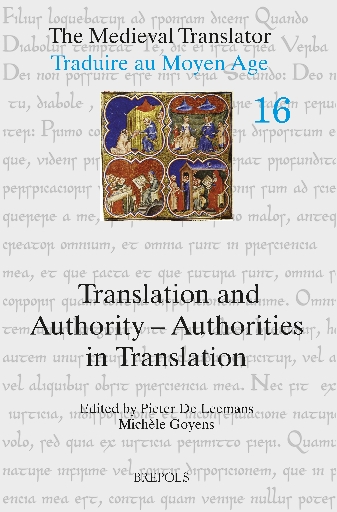
Translation and Authority - Authorities in Translation
show More to view fulltext, buy and share links for:Translation and Authority - Authorities in Translation show Less to hide fulltext, buy and share links for: Translation and Authority - Authorities in TranslationThe question about the relation between medieval translation practices and authority is a complex and multifaceted one. Depending on one’s decision to focus on the authority of the source-text or of the translated text itself, on the author of the original text, on the translator, or on the user of the translation, it falls apart in several topics to be tackled, such as, just to name a few: To what extent does the authority of the text to be translated affect translational choices? How do translators impose authority on their text? By lending their name to a translation, do they contribute to its authoritative status?
After two introductory essays that set the scene for the volume, addressing the above questions from the perspective of translations of authoritative texts into Dutch and French, the focus of the volume shifts to the translators themselves as authorities. A next section deals with the choices of texts to be translated, and the impact these choices have on the translation method. A third part is dedicated to papers that examine the role of the users of the translations.
The selection of papers in the present volume gives a good indication of the issues mentioned above, embedded in a field of tension between translations made from a learned language to a vernacular language, translations from one vernacular to another, or even from a vernacular to the Latin language.
-