


EMISCS99

Collection Contents
1 - 50 of 57 results
-
-
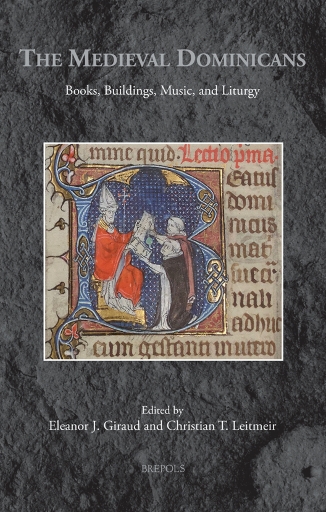
The Medieval Dominicans
show More to view fulltext, buy and share links for:The Medieval Dominicans show Less to hide fulltext, buy and share links for: The Medieval DominicansThe Order of Preachers has famously bred some of the leading intellectual lights of the Middle Ages. While Dominican achievements in theology, philosophy, languages, law, and sciences have attracted much scholarly interest, their significant engagement with liturgy, the visual arts, and music remains relatively unexplored. These aspects and their manifold interconnections form the focal point of this interdisciplinary volume.
The different chapters examine how early Dominicans positioned themselves and interacted with their local communities, where they drew their influences from, and what impact the new Order had on various aspects of medieval life. The contributors to this volume address issues as diverse as the making and illustrating of books, services for a king, the disposition of liturgical space, the creation of new liturgies, and a Dominican-made music treatise. In doing so, they seek to shed light on the actions and interactions of medieval Dominicans in the first centuries of the Order’s existence.
-
-
-
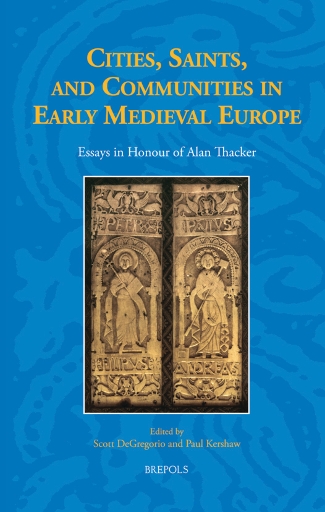
Cities, Saints, and Communities in Early Medieval Europe
show More to view fulltext, buy and share links for:Cities, Saints, and Communities in Early Medieval Europe show Less to hide fulltext, buy and share links for: Cities, Saints, and Communities in Early Medieval EuropeThis book honours the scholarship of English historian Dr. Alan Thacker by exploring the insular, the European and, more broadly, the Mediterranean connections and contexts of the history and culture of Anglo-Saxon England in the age of Bede, and beyond. It brings together original contributions by leading European and North American scholars of Late Antiquity and the early Middle Ages working across a range of disciplines: history, theology, epigraphy, and art history. Moving from the Irish Sea to the Bosporus, this collection presents a linked world in which saints, scholars, and the city of Rome all played powerful connective roles, creating communities, generating relationships, linking east to west, north to south, and present to past.
As in Thacker’s own work, Bede’s life and thought is a central presence. Bede’s attitudes to historical and contemporaneous conceptions of heresy, to the Irish church, and the evidence for his often complex relationships with his Northumbrian contemporaries all come under scrutiny, together with groundbreaking studies of his exegesis, christology, and historical method. Many of the contributions offer original insights into figures and phenomena that have been the focus of Dr. Thacker’s highly influential scholarship.
-
-
-

Crossing Borders in the Insular Middle Ages
show More to view fulltext, buy and share links for:Crossing Borders in the Insular Middle Ages show Less to hide fulltext, buy and share links for: Crossing Borders in the Insular Middle AgesThis volume offers an in-depth exploration of the cultural connections between and across Britain, Ireland, and Iceland during the high and late Middle Ages. Drawing together new research from international scholars working in Celtic Studies, Norse, and English, the contributions gathered together here establish the coherence of the medieval Insular world as an area for literary analysis and engage with a range of contemporary approaches to examine the ways, and the degrees to which, Insular literatures and cultures connect both with each other, and with the wider European mainstream.
The articles in this collection discuss the Insular histories of some of the most widely read literary works and authors of the Middle Ages, including Geoffrey of Monmouth and William Langland. They trace the legends of Troy and of Charlemagne as they travelled across linguistic and geographical borders, give fresh attention to the multilingual manuscript collections of great households and families, and explore the political implications of language choice in a linguistically plural society. In doing so, they shed light on a complex network of literary and cultural connections and establish the Insular world not as a periphery, but as a centre.
-
-
-

Medieval Francophone Literary Culture Outside France
show More to view fulltext, buy and share links for:Medieval Francophone Literary Culture Outside France show Less to hide fulltext, buy and share links for: Medieval Francophone Literary Culture Outside FranceIn medieval Europe, cultural, political, and linguistic identities rarely coincided with modern national borders. As early as the end of the twelfth century, French rose to prominence as a lingua franca that could facilitate communication between people, regardless of their origin, background, or community. Between the twelfth and fifteenth centuries, literary works were written or translated into French not only in France but also across Europe, from England and the Low Countries to as far afield as Italy, Cyprus, and the Holy Land. Many of these texts had a broad European circulation and for well over three hundred years they were transmitted, read, studied, imitated, and translated.
Drawing on the results of the AHRC-funded research project Medieval Francophone Literary Culture Outside France, this volume aims to reassess medieval literary culture and explore it in a European and Mediterranean setting. The book, incorporating nineteen papers by international scholars, explores the circulation and production of francophone texts outside of France along two major axes of transmission: one stretching from England and Normandy across to Flanders and Burgundy, and the other running across the Pyrenees and Alps from the Iberian Peninsula to the Levant. In doing so, it offers new insights into how francophone literature forged a place for itself, both in medieval textual culture and, more generally, in Western cultural spheres.
-
-
-
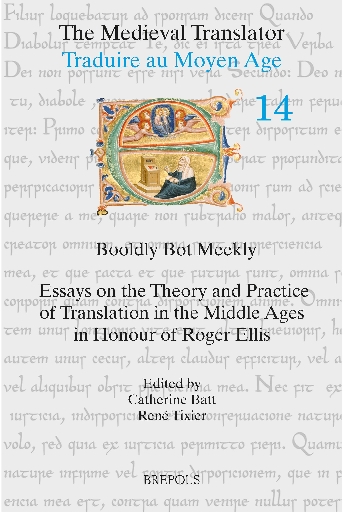
Booldly bot meekly
show More to view fulltext, buy and share links for:Booldly bot meekly show Less to hide fulltext, buy and share links for: Booldly bot meeklyWhen, back in the 1980s, Roger Ellis first sounded out academic colleagues in British universities and beyond about their possible interest and participation in a conference on medieval translation theory and practice, he perhaps did not envisage that the resulting gathering - intellectually curious, animated, convivial - at Gregynog Hall in Wales (1987) would be the first of a series of international conferences with a strong continental European base, which now provides a regular forum in which one can initiate, and engage with, research questions about this near all-encompassing aspect of medieval culture. Since that first meeting, the Cardiff Conferences on the Theory and Practice of Translation in the Middle Ages have charted and drawn anew the parameters of scholarly debate on the topic, while their Proceedings, hosted since 1996 by Brepols’ Medieval Translator series, cumulatively present a body of work valuable to anyone interested in translation in its medieval, broadly European, manifestations.
The contributors of this volume’s essays, assembled in tribute to Roger Ellis on the occasion of his seventieth birthday, have profited from the intellectual opportunities the Medieval Translator conferences foster, and in particular from Roger’s friendship and academic acumen. The essays draw in many cases on Roger’s work to inform a collective project that reflects on his specific interests in translation, including latemedieval piety and Birgittine texts, scholarly editions and studies of genre, considering literary and linguistic relations within and across languages, registers, national boundaries, time and space, refining, even re-defining, our understanding of translation. We offer these essays with warm thanks to and appreciation of Roger Ellis for his work in this field, not least for establishing, with this conference series, a means to demonstrate that translation, and translation studies, is above all a question of different voices speaking productively in dialogue.
-
-
-

Editing and Interpretation of Middle English Texts
show More to view fulltext, buy and share links for:Editing and Interpretation of Middle English Texts show Less to hide fulltext, buy and share links for: Editing and Interpretation of Middle English TextsThese fifteen essays, all published here for the first time, explore issues related to the editing and interpretation of Middle English literature. These include the treatment of various types of evidence (variant readings; punctuation; capitalization; rubrication; physical layout), in relation to both manuscript transmission and the transition from manuscript to print. The editorial representation of these and other aspects constitutes an act of textual interpretation at the most fundamental level, which subsequently influences scholarly understanding.
Two major fields of writing - religious texts and chronicles - provide the focus of this volume. Major works that receive attention include Trevisa’s translation of the Polychronicon, the Middle English Brut, Piers Plowman, Nicholas Love’s Mirror of the Blessed Life of Jesus Christ, and John Mirk’s Festial; a wide range of shorter devotional and historical texts, in both verse and prose, is also considered, as are aspects related to the translation of texts from Latin and French into Middle English. Almost all of the contributors are experienced editors of medieval texts. Several contribute further insights into texts they have edited, whilst others discuss or offer new editions of previously unpublished works. Collectively, these essays foreground the many and varied matters of interpretation that confront the editor of Middle English texts.
-
-
-

From Carickfergus to Carcassonne
show More to view fulltext, buy and share links for:From Carickfergus to Carcassonne show Less to hide fulltext, buy and share links for: From Carickfergus to Carcassonne‘From Carrickfergus to Carcassonne…’ has its genesis in the IRC funded exhibition of the same name which explores the unlikely links between medieval Ulster and Languedoc.
Hinging upon the personal story of a charismatic individual - Hugh de Lacy, earl of Ulster, ‘From Carrickfergus to Carcassonne’ explores the wider interplay between the Gaelic, Angevin, Capetian and Occitan worlds in the late twelfth and early thirteenth centuries.
This book brings to light new research linking de Lacy to a conspiracy with the French king and details his subsequent exile and participation in the Albigensian Crusade in the south of France. The combined papers in this volume detail this remarkable story through interrogation of the historical and archaeological evidence, benefitting not just from adept scholarly study from Ireland and the UK but also from a Southern French perspective. The ensemble of papers describe the two realms within which de Lacy operated, the wider political machinations which led to his exile, the Cathar heresy, the defensive architecture of France and Languedoc and the architectural influences transmitted throughout this period from one realm to another.
In exploiting the engaging story of Hugh de Lacy, this volume creates a thematic whole which facilitates wide ranging comparison between events such as the Anglo-Norman take-over of Ireland and the Albigensian Crusade, the subtleties of doctrine in Ireland and Languedoc and the transmission of progressive castle design linking the walls of Carcassonne and Carrickfergus.
-
-
-
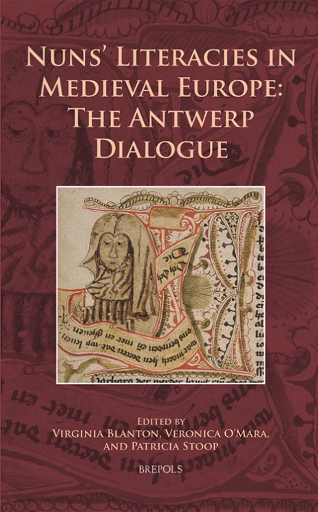
Nuns’ Literacies in Medieval Europe: The Antwerp Dialogue
show More to view fulltext, buy and share links for:Nuns’ Literacies in Medieval Europe: The Antwerp Dialogue show Less to hide fulltext, buy and share links for: Nuns’ Literacies in Medieval Europe: The Antwerp DialogueThe present volume is the third in a series of three integrated publications, the first produced in 2013 as Nuns’ Literacies in Medieval Europe: The Hull Dialogue and the second in 2015 as Nuns’ Literacies in Medieval Europe: The Kansas City Dialogue. Whereas the first volume focused primarily on Northern Europe, the second expanded the range to include material in minority languages such as Old Norse and Old Irish and focused particularly on education and other textual forms, such as the epistolary and the legal.
The third volume expands the geographical range by including a larger selection of female religious, for instance, tertiaries, and further languages (for example, Danish and Hungarian), as well as engaging more explicitly on issues of adaptation of manuscript and early printed texts for a female readership. Like the previous volumes, this collection of essays, focused on various aspects of nuns’ literacies from the late seventh to the mid-sixteenth century, brings together the work of specialists to create a dialogue about the Latin and vernacular texts that were read, written, and exchanged by medieval nuns. Contributors to this volume investigate the topic of literacy primarily from palaeographical and textual evidence and by discussing information about book ownership and production in convents.
-
-
-
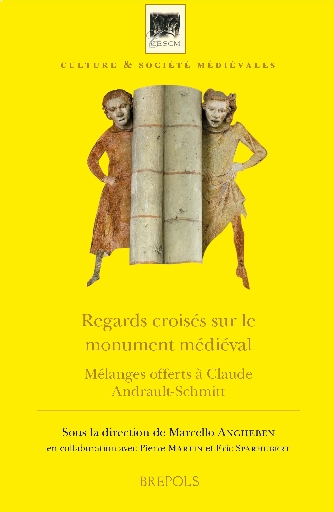
Regards croisés sur le monument médiéval
show More to view fulltext, buy and share links for:Regards croisés sur le monument médiéval show Less to hide fulltext, buy and share links for: Regards croisés sur le monument médiévalClaude Andrault-Schmitt a consacré la majeure partie de sa carrière d’enseignant-chercheur à l’étude des arts de l’ancien duché d’Aquitaine, en accordant un intérêt particulier à l’architecture religieuse. Dans sa démarche intellectuelle, elle s’est constamment interrogée sur les questions d’historiographie, de méthodologie et d’épistémologie, ce qui l’a amenée à défendre plusieurs principes qui lui sont chers : appliquer à l’architecture un vocabulaire adapté aux réalités et aux usages médiévaux, se méfier des idées reçues héritées de l’historiographie et des étiquettes - à commencer par le traditionnel clivage entre le roman et le gothique -, aborder les rapports entre les formes et les différentes fonctions d’une église et rassembler le plus grand nombre de disciplines autour d’un même édifice pour en comprendre toutes les facettes : historiens, archéologues, spécialistes des matériaux, de l’épigraphie, de l’iconographie, musicologues.
À l’occasion de son départ à la retraite, ses collègues et ses élèves ont souhaité lui rendre hommage en lui dédiant trente et une contributions reflétant ces différentes préoccupations, regroupées dans quatre sections intitulées Contextualisations, De l’archéologie monumentale à l’archéologie du bâti, Les ordres réformés et Le décor monumental . Ces contributions forment ensemble un panorama très représentatif de l’état de la recherche actuelle dans ces différents domaines et des orientations encouragées par Claude Andrault-Schmitt, que ce soit dans ses publications ou dans son enseignement.
-
-
-
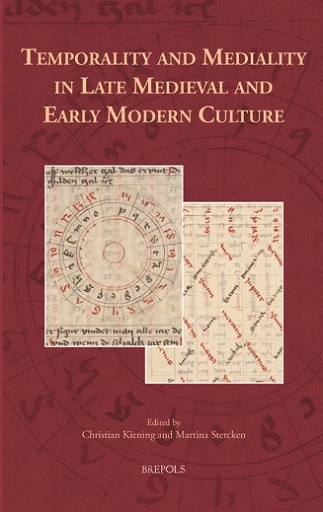
Temporality and Mediality in Late Medieval and Early Modern Culture
show More to view fulltext, buy and share links for:Temporality and Mediality in Late Medieval and Early Modern Culture show Less to hide fulltext, buy and share links for: Temporality and Mediality in Late Medieval and Early Modern CultureThis interdisciplinary volume explores the ways in which time is staged at the threshold between the Middle Ages and the early modern period. Proceeding from the reality that all cultural forms are inherently and inescapably temporal, it seeks to discover the significance of time in mediations and communications of all kinds.
By showing how time is displayed in diverse cultural strategies and situations, the essays of this volume show how time is intrinsic to the very concept of tradition. In exploring a variety of medial forms and communicative practices, they also reveal that while the beginning of the age of printing (around 1500) may mark a fundamental change in terms of reproduction and circulation, artefacts and other historical traditions continue to employ earlier systems and practices relating time and space.
The volume features articles by leading researchers in their respective fields, including studies on mosaics as a medium reflecting space and time; the triptych’s potential as a time machine; winged altarpieces mediating eternity; texts and images of the passion of Christ permeating past, present, and future; dimensions of time embedded in maps; a compendium of world knowledge organized by forms of time and temporality; the figuration of prophecy in times of crisis; the portrayal of time in architecture.
The volume thus provides a new approach to media and mediality from the perspective of cultural history.
-
-
-
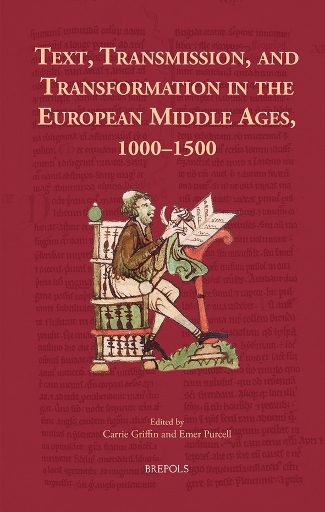
Text, Transmission, and Transformation in the European Middle Ages, 1000–1500
show More to view fulltext, buy and share links for:Text, Transmission, and Transformation in the European Middle Ages, 1000–1500 show Less to hide fulltext, buy and share links for: Text, Transmission, and Transformation in the European Middle Ages, 1000–1500These essays are concerned primarily with the different ways in which European writers, translators, and readers engaged with texts and concepts, and with the movement and exchange of those texts and ideas across boundaries and geographical spaces. It brings together new research on Anglophone and Latinate writings, as well as on other vernaculars, among them Old Norse, Anglo-Saxon, Medieval Irish, Welsh, Arabic, Middle Dutch, Middle German, French, and Italian, including texts and ideas that are experienced in aural and oral contexts, such as in music and song. Texts are examined not in isolation but in direct relation and as responses to wider European culture; several of the contributions theorize the translation of works, for example, those relating to spiritual instruction and prayer, into other languages and new contexts.
The essayists share a common concern, then, with the transmission and translation of texts, examining what happens to material when it moves into contexts other than the one in which it was produced; the influence that scribes, translators, and readers have on textual materiality and also on reception; and the intermingling different textual traditions and genres. Thus they foreground the variety and mobility of textual cultures of the Middle Ages in Europe, both locally and nationally, and speak to the profound connections and synergies between peoples and nations traceable in the movement and interpretation of texts, versions, and ideas. Together the essays reconstruct an outward-looking, networked, and engaged Europe in which people used texts in order to communicate, discover, and explore, as well as to record and preserve.
-
-
-

The Idea of the Gothic Cathedral
show More to view fulltext, buy and share links for:The Idea of the Gothic Cathedral show Less to hide fulltext, buy and share links for: The Idea of the Gothic CathedralCentral to many medieval ritual traditions both sacred and secular, the Gothic cathedral holds a privileged place within the European cultural imagination and experience. Due to the burgeoning historical interest in the medieval past, in connection with the medieval revival in literature, visual arts, and architecture that began in the late seventeenth century and culminated in the nineteenth, the Gothic cathedral took centre stage in numerous ideological discourses. These discourses imposed contemporary political and aesthetic connotations upon the cathedral that were often far removed from its original meaning and ritual use.
This volume presents interdisciplinary perspectives on the resignification of the Gothic cathedral in the post-medieval period. Its contributors, literary scholars and historians of art and architecture, investigate the dynamics of national and cultural movements that turned Gothic cathedrals into symbols of the modern nation-state, highlight the political uses of the edifice in literature and the arts, and underscore the importance of subjectivity in literary and visual representations of Gothic architecture. Contributing to scholarship in historiography, cultural history, intermedial and interdisciplinary studies, as well as traditional disciplines, the volume resonates with wider perspectives, especially relating to the reuse of artefacts to serve particular ideological ends.
-
-
-
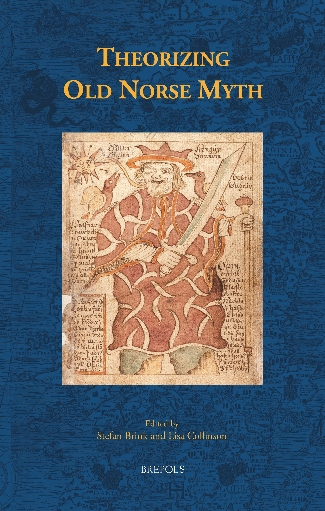
Theorizing Old Norse Myth
show More to view fulltext, buy and share links for:Theorizing Old Norse Myth show Less to hide fulltext, buy and share links for: Theorizing Old Norse MythThis collection explores the theoretical and methodological foundations through which we understand Old Norse myths and the mythological world, and the medieval sources in which we find expressions of these. Some contributions take a broad, comparative perspective; some address specific details of Old Norse myths and mythology; and some devote their attention to questions concerning either individual gods and deities, or more topographical and spatial matters (such as conceptions of pagan cult sites). The elements discussed provide an introductory and general overview of scholarly enquiry into myth and ritual, as well as an attempt to define myth and theory for Old Norse scholarship. The articles also offer a rehabilitation of the comparative method alongside a discussion of the concept of ‘cultural memory’ and of the cognitive functions that myths may have performed in early Scandinavian society. Particular subjects of interest include analyses of the enigmatic god Heimdallr, as well as the more well-known Óðinn, the deities, the female ásynjur, and the ‘elves’ or álfar. Text-based discussions are set alongside recent archaeological discoveries of cult buildings and cult sites in Scandinavia, together with a discussion of the most enigmatic site of all: Uppsala in Sweden. The key themes discussed throughout this volume are brought together in the concluding chapter, in a comprehensive summary that sheds new light on current scholarly perspectives.
-
-
-
Trent and Beyond. The Council, Other Powers, Other Cultures
show More to view fulltext, buy and share links for:Trent and Beyond. The Council, Other Powers, Other Cultures show Less to hide fulltext, buy and share links for: Trent and Beyond. The Council, Other Powers, Other CulturesFor centuries, the Council of Trent has been studied as a fundamental episode in European history wherein doctrinal and institutional unity was lost. Although the Council decrees nowhere refer to the contexts of the peoples met by Christopher Columbus, nor to the Cathay regions rediscovered by missionaries, nor to their religions, their superstitions or their political systems, the Council was nonetheless a global event. The Roman Church, which lost doctrinal control of the considerable part of Europe captured by different forms of Protestantism, imposed itself upon its followers through the application of conciliar decrees. Freed of its exclusively European perspective it opened up to cultures of the rest of the world. The customs and traditions thus encountered, the relationships with political authorities, possibilities for the construction of a new Christianity offered by New Worlds, disclosing spaces and contexts to the Tridentine Church, with accommodations and cross-fertilizations, with a return to origins and tradition, obliged that it begin to think of itself, perhaps for the first time, as a universal Church.
The Council and Beyond suggests not only reconsideration of Europe through the prism of the Tridentine decrees and the long processes of their dissemination, but also through an intercontinental consideration, a spatial perspective that would become universal to the Church and to the normative texts that had been elaborated at Trent.
-
-
-
Boundaries in the Medieval and Wider World
show More to view fulltext, buy and share links for:Boundaries in the Medieval and Wider World show Less to hide fulltext, buy and share links for: Boundaries in the Medieval and Wider WorldThroughout his distinguished career at Vanderbilt and Yale, Paul H. Freedman has established a reputation for pushing against and crossing perceived boundaries within history and within the historical discipline. His numerous works have consistently ventured into uncharted waters: from studies uncovering the hidden workings of papal bureaucracy and elite understandings of subaltern peasants, to changing perceptions of exotic products and the world beyond Europe, to the role modern American restaurants have played in taking cuisine in exciting new directions.
The fifteen essays collected in this volume have been written by Paul Freedman’s former students and closest colleagues to both honour his extraordinary achievements and to explore some of their implications for medieval and post-medieval European society and historical study. Together, these studies assess and explore a range of different boundaries, both tangible and theoretical: boundaries relating to law, religion, peasants, historiography, and food, medicine, and the exotic. While drawing important conclusions about their subjects, the collected essays identify historical quandaries and possibilities to guide future research and study.
-
-
-
Devotional Literature and Practice in Medieval England
show More to view fulltext, buy and share links for:Devotional Literature and Practice in Medieval England show Less to hide fulltext, buy and share links for: Devotional Literature and Practice in Medieval EnglandThis volume recognises that religious writings care deeply about how devotional reading takes place, providing models for improving reading as a way of improving one’s ability to worship. The abundant evidence from medieval England suggests a deep interest among devotional writers in documenting, teaching, and circumscribing devotional reading, given the importance of careful reading practices for salvation. This volume therefore draws together a wide range of interests in and approaches to studying the reading and reception of devotional texts in medieval England, from representations of readers and reading in devotional texts, to literary production and reception of devotional texts and images, to manuscripts and early books as devotional objects, to individual readers and patrons of devotional texts.
Prefaced by a substantial introduction by the editors - setting the community in its wider religious and cultural environment and against the backdrop of broad historiographical trends - this volume brings together substantial essays based on original research by new and leading scholars in the field of medieval English studies. This collection (and indeed, many of the individual articles) brings into dialogue a number of traditional disciplinary approaches - early and late medieval English literary studies, gender studies, manuscript studies, and religious studies. It strives to reflect trends in current scholarship of breaking down disciplinary boundaries and exploring the relationships between and among not only analytical and critical perspectives, but also the kinds of evidence examined.
-
-
-
Formal Approaches and Natural Language in Medieval Logic
show More to view fulltext, buy and share links for:Formal Approaches and Natural Language in Medieval Logic show Less to hide fulltext, buy and share links for: Formal Approaches and Natural Language in Medieval LogicThe late medieval period is widely acknowledged as one of the most salient moments of the history of logic and semantics. It not only considered logic as a sine qua non condition for scientific knowledge, it also begot highly sophisticated theories about both argumentation and language. The last fifty years of increasingly intense research have brought about an ever more detailed knowledge of these theories. And yet, the questions as to what kind of logic is medieval logic, whether and to what extent it corresponds to our conception of logic, and, even, what the nature of its object was, remain challenging. That it has a formal character is widely accepted; and its semantic components display remarkable affinities with contemporary ones. But is it formal in the way modern logic is - or believes it is? Medieval logic does not really make recourse to symbolisms, after all, and the fact that the idea of formal validity might have been born in the twelfth century does not mean that developing formal approaches was an aim of medieval logicians. And what is its semantics a semantics of? Medieval logicians use Latin to deal with Latin constructions, but do these constructions belong to natural language or are they regimented to the point of forming some sort of ideal language?
The twenty-five papers gathered in this volume deal with these issues, thus allowing to reassess the broader questions of the formal character and formalising ambitions of medieval logic, as well as that of the natural character of the language in (and on) which it operated: in other words, they address the question of the nature, object and purpose of medieval logic.
-
-
-

Islands in the West
show More to view fulltext, buy and share links for:Islands in the West show Less to hide fulltext, buy and share links for: Islands in the WestThis monograph traces the history of one of the most prominent types of geographical myths of the North-West Atlantic Ocean: transmarine otherworlds of blessedness and immortality. Taking the mythologization of the Viking Age discovery of North America in the earliest extant account of Vínland (‘Wine-Land’) and the Norse transmarine otherworlds of Hvítramannaland (‘The Land of White Men’) and the Ódáinsakr/Glæsisvellir (‘Field of the Not-Dead’/‘Shining Fields’) as its starting point, the book explores the historical entanglements of these imaginative places in a wider European context. It follows how these Norse otherworld myths adopt, adapt, and transform concepts from early Irish vernacular tradition and Medieval Latin geographical literature, and pursues their connection to the geographical mythology of classical antiquity. In doing so, it shows how myths as far distant in time and space as Homer’s Elysian Plain and the transmarine otherworlds of the Norse are connected by a continuous history of creative processes of adaptation and reinterpretation. Furthermore, viewing this material as a whole, the question arises as to whether the Norse mythologization of the North Atlantic might not only have accompanied the Norse westward expansion that led to the discovery of North America, but might even have been among the factors that induced it.
-
-
-
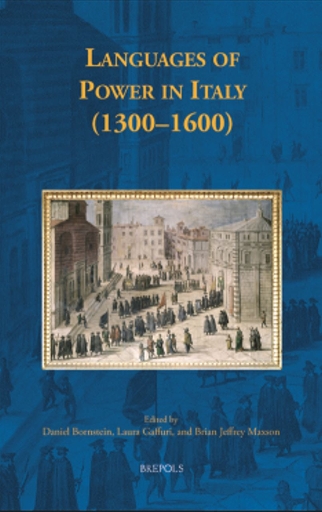
Languages of Power in Italy (1300-1600)
show More to view fulltext, buy and share links for:Languages of Power in Italy (1300-1600) show Less to hide fulltext, buy and share links for: Languages of Power in Italy (1300-1600)The essays in this collection explore the languages — artistic, symbolic, and ritual, as well as written and spoken — in which power was articulated, challenged, contested, and defended in Italian cities and courts, villages, and countryside, between 1300 and 1600. Topics addressed include court ceremonial, gossip and insult, the performance of sanctity and public devotions, the appropriation and reuse of imagery, and the calculated invocation (and sometimes undermining) of authoritative models and figures. The collection balances a broad geographic and chronological range with a tight thematic focus, allowing the individual contributions to engage in vigorous and fruitful debate with one another even as they speak to some of the central issues in current scholarship. The authors recognize that every institutional action is, in its context, a political act, and that no institution operates disinterestedly. At the same time, they insist on the inadequacy of traditional models, whether Marxian or Weberian, as the complex realities of the early modern state pose tough problems for any narrative of modernization, rationalization, and centralization.
-
-
-

Les Auctoritates Aristotelis, leur utilisation et leur influence chez les auteurs médiévaux
show More to view fulltext, buy and share links for:Les Auctoritates Aristotelis, leur utilisation et leur influence chez les auteurs médiévaux show Less to hide fulltext, buy and share links for: Les Auctoritates Aristotelis, leur utilisation et leur influence chez les auteurs médiévauxEn 1974, à l'époque de la publication du texte des Auctoritates Aristotelis les chercheurs n'avaient pas encore mesuré l'influence que ce florilège avait pu avoir dans bon nombre d'œuvres médiévales. Nombreux étaient ceux qui ne connaissaient même pas ce recueil et qui préféraient se référer directement à l'œuvre même du Stagirite pour identifier des citations. Mais la réalité médiévale était bien différente. En effet, les recherches menées après la parution de l'édition ont modifié considérablement notre conception de l'usage qu'en firent les intellectuels du 13e au 17e siècle. Beaucoup de progrès ont été faits depuis, surtout dans le domaine des éditions critiques de textes philosophiques encore inédits à l'époque. Il suffit de consulter les apparats critiques des sources utilisées par ces auteurs pour constater qu'ils furent nombreux à citer des « auctoritates » d'Aristote, extraites de ce florilège. D'autre part, les recherches réalisées progressivement, montrent que ce recueil a aussi une histoire.
Les études réunis dans ce volume se proposent de présenter un nouvel état de la question et de montrer à l'aide d'exemples pertinents l'usage qui fut fait des citations contenues dans le recueil par divers auteurs de l'époque. D'autre part, les informations glanées dans les divers exposés illustrent parfaitement des moments de son histoire. Ils ne rendent pas stériles les recherches ultérieures mais proposent diverses voies d'accès à la reconstitution de son élaboration, sans épuiser pour autant le sujet. Ces études permettent déjà de constater le succès énorme que connut le recueil, non seulement pendant l'époque scolastique, mais aussi jusqu'à la fin du 17e siècle, ce qui peut paraître étrange à première vue.
-
-
-
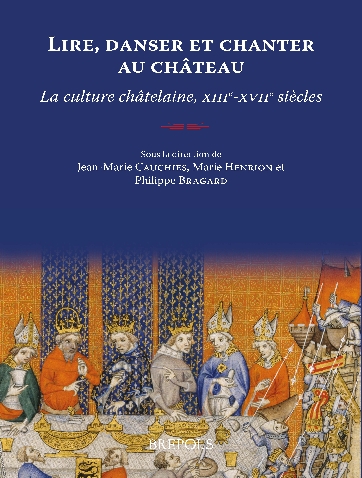
Lire, danser et chanter au château. La culture châtelaine, XIII-XVIIe siècles
show More to view fulltext, buy and share links for:Lire, danser et chanter au château. La culture châtelaine, XIII-XVIIe siècles show Less to hide fulltext, buy and share links for: Lire, danser et chanter au château. La culture châtelaine, XIII-XVIIe sièclesLieu de défense, de résidence, d’exercice et de représentation du pouvoir, d’exploitation et d’administration, le château du moyen âge et du premier âge moderne est aussi lieu de culture, de fête et de divertissement. Il peut être aussi objet de regards culturels. Ce lieu se prête à la danse, aux concerts, aux réjouissances en tout genre. Trouvères et ménestrels, bateleurs et jongleurs y proposent leurs récits, leurs chants, leurs spectacles. Tout y concourt à la « théâtralisation constante du mode de vie noble ». Mais la demeure seigneuriale est aussi lieu de création, quand le maître et seigneur y accueille pour qu’ils y résident et s’y adonnent à la production écrivains, musiciens ou artistes. Une poésie de cour y a d’ailleurs pris naissance, en France, en Italie, en Allemagne. Plus tard, des troupes de comédiens y seront entretenues. Poètes et artistes venus au château l’ont ensuite célébré de leur plume ou de leur pinceau. Entre ses murs, un espace privilégié peut être celui d’une bibliothèque, éventuelle héritière d’un « cabinet de manuscrits ». Certains seigneurs sont eux-mêmes écrivains. Et si des livres reposent dans le château, le château trouvera en retour sa place dans les livres, par le texte, l’image, la description et la figuration, réalistes ou idéalisées.
Après le château lui-même, ses abords, sa gestion, voici venu le temps de « Lire, danser et chanter au château. La culture châtelaine, XIII e-XVII e siècles », thème du quatrième colloque de la Fondation van der Burch au château-fort d’Écaussinnes-Lalaing en mai 2013.
-
-
-
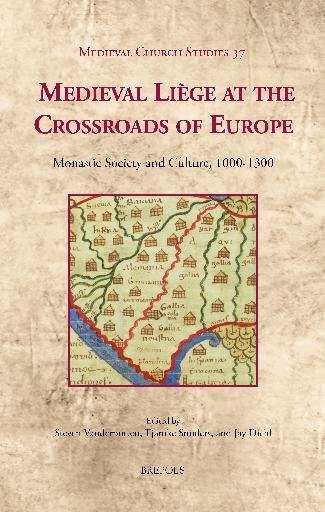
Medieval Liège at the Crossroads of Europe
show More to view fulltext, buy and share links for:Medieval Liège at the Crossroads of Europe show Less to hide fulltext, buy and share links for: Medieval Liège at the Crossroads of EuropeDuring the high Middle Ages, the bishopric of Liège found itself at a cultural crossroads between the German Empire and the French lordships. The Liègeois themselves summed up the situation when they declared that: ‘Gaul considers us its most distant inhabitants, Germany as nearby citizens. In fact we are neither, but both at the same time’. This same complexity is also echoed by present-day historians, who have described Liège as a hub of interactions between two great civilisations. Medieval monastic communities in Liège were key sites of this exchange, actively participating in the cultural developments, social networks, and political structures of both regions.
Bringing together the work of international scholars, this collection of essays addresses the problem of monastic identity and its formation in a region that was geographically wedged between two major competing socio-political powers. It investigates how monastic communities negotiated the uncertainties of this situation, while also capitalizing on the opportunities it presented. As such, this book sheds light on the agency of monastic identity formation in a small but complex region caught at the crossroads of two major powers.
-
-
-
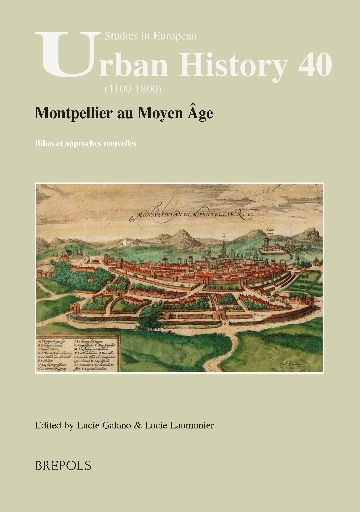
Montpellier au Moyen Âge
show More to view fulltext, buy and share links for:Montpellier au Moyen Âge show Less to hide fulltext, buy and share links for: Montpellier au Moyen ÂgeFondée à la fin du x e siècle, Montpellier connut une expansion fulgurante à partir du xii e, à la faveur du développement d’échanges culturels et économiques, vers la Méditerranée ou le nord de l’Europe. Cette expansion était le fruit de politiques menées par les Guilhem et confirmée lors du passage de la seigneurie sous l’autorité des rois d’Aragon et de Majorque après 1204, quand la ville obtint un gouvernement consulaire. Devenue une communauté urbaine d’importance au xiii e siècle, Montpellier était habitée par une population cosmopolite. Dans et hors les murs se croisaient grands marchands, changeurs et simples revendeurs, universitaires et intellectuels de renom, artisans et agriculteurs. L’attractivité et le rayonnement de Montpellier en faisaient l’une des principales villes du Bas-Languedoc. Pourtant, son histoire médiévale n’a bénéficié que d’une attention inégale de la part des chercheurs. Cet ouvrage procède d’un colloque international réuni à Montpellier en 2013 et rassemble des articles réalisés par les principaux contributeurs et principales contributrices à l’histoire et à l’archéologie de la ville. Basées sur des archives originales ou sur la réinterprétation de données connues, les recherches proposées ici, tout en présentant un bilan des travaux passés, empruntent des voies nouvelles démontrant les promesses des études historiques et archéologiques sur Montpellier.
-
-
-

Music, Liturgy, and the Veneration of Saints of the Medieval Irish Church in a European Context
show More to view fulltext, buy and share links for:Music, Liturgy, and the Veneration of Saints of the Medieval Irish Church in a European Context show Less to hide fulltext, buy and share links for: Music, Liturgy, and the Veneration of Saints of the Medieval Irish Church in a European ContextThis book opens up discussion on the liturgical music of medieval Ireland by approaching it from a multidisciplinary, European perspective. In so doing, it challenges received notions of an idiosyncratic ‘Celtic Rite’, and of the prevailing view that no manuscripts with music notation have survived from the medieval Irish Church. This is due largely to a preoccupation by earlier scholars with pre-Norman Gaelic culture, to the neglect of wider networks of engagement between Ireland, Britain, and continental Europe. In adopting a more inclusive approach, a different view emerges which demonstrates the diversity and international connectedness of Irish ecclesiastical culture throughout the long Middle Ages, in both musico-liturgical and other respects.
The contributors represent a variety of specialisms, including musicology, liturgiology, palaeography, hagiology, theology, church history, Celtic studies, French studies, and Latin. From this rich range of perspectives they investigate the evidence for Irish musical and liturgical practices from the earliest surviving sources with chant texts to later manuscripts with music notation, as well as exploring the far-reaching cultural impact of the Irish church in medieval Europe through case studies of liturgical offices in honour of Irish saints, and of saints traditionally associated with Ireland in different parts of Europe.
-
-
-

Originaux et cartulaires dans la Lorraine médiévale (XIIe - XVIe siècles)
show More to view fulltext, buy and share links for:Originaux et cartulaires dans la Lorraine médiévale (XIIe - XVIe siècles) show Less to hide fulltext, buy and share links for: Originaux et cartulaires dans la Lorraine médiévale (XIIe - XVIe siècles)Entourés des attentions des médiévistes, les cartulaires sont devenus un objet d’histoire. Ces recueils, résultant de la compilation d’actes par une institution ou une personne juridique, entretiennent des relations complexes avec les originaux, sources directes ou indirectes mises en œuvre par les cartularistes. Qu’il s’agisse de la sélection des matériaux ou du transfert d’informations du modèle à la cible, le travail accompli est affaire de choix, divers et multiples, dont il faut retrouver les logiques pour espérer comprendre les objectifs des hommes qui ont commandités et réalisés ces manuscrits. Même soumis à des contingences matérielles, les copistes conservent une certaine marge de manœuvre dans le traitement de leur documentation. Ils trient, classent ou reclassent les documents qu’ils accueillent et enfin transcrivent les actes en adoptant certains principes. Ce recueil d’études a pour but de renouveler la confrontation originaux-cartulaires, à travers l’analyse d’un recueil et de son chartrier ou grâce à l’exploration d’une question liée à la transcription, à travers plusieurs cartulaires.
La question est ici approchée dans un cadre régional, en l’occurrence la Lorraine médiévale, principalement constituée des diocèses de Metz, Toul et Verdun - et occasionnellement étendue à l’ancienne Lotharingie. La chronologie est délibérément large (XIIe - XVIe siècle), donnant toute leur place aux expériences, parfois négligées, de la fin du Moyen Âge. À défaut d’aborder systématiquement le phénomène de la « mise en cartulaire », les dossiers ici réunis voudraient en enrichir les données et questionnements.
-
-
-
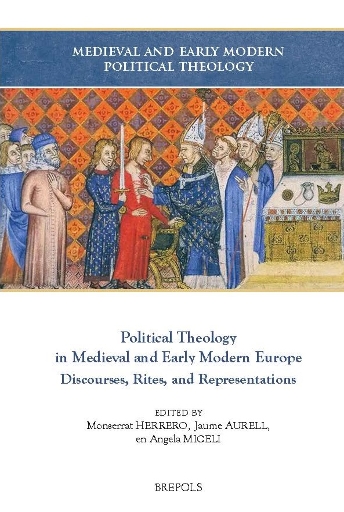
Political Theology in Medieval and Early Modern Europe
show More to view fulltext, buy and share links for:Political Theology in Medieval and Early Modern Europe show Less to hide fulltext, buy and share links for: Political Theology in Medieval and Early Modern EuropeThis book aims to provide new historical and theoretical perspectives on political theology with an interdisciplinary approach, from political philosophy and theology to art and history. After a comprehensive introduction and three introductory chapters on both the theory and the concept of “political theology” (based on the works of Schmitt, de Lubac and Kantorowicz), this volume explores the transferences between the temporal and the spiritual experimented on the past. It interprets some historical events (medieval crusades, royal wisdom, and early modern idea of tolerance), examines some philosophical and theological narratives (John of Paris, Spinoza, Locke, Bayle, Leibniz, Montesquieu, Tocqueville), and deciphers some rites (royal coronations) and representations (the Holy Crown, royal banquets, royal coats of arms).
-
-
-
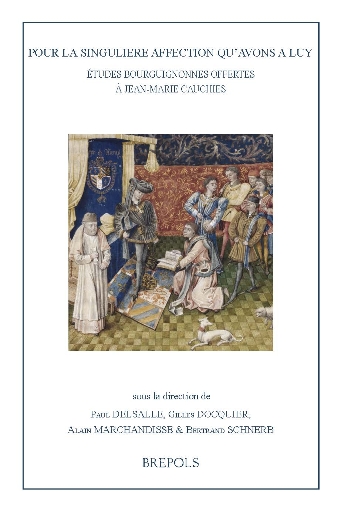
Pour la singuliere affection qu’avons a luy. Études bourguignonnes offertes à Jean-Marie Cauchies
show More to view fulltext, buy and share links for:Pour la singuliere affection qu’avons a luy. Études bourguignonnes offertes à Jean-Marie Cauchies show Less to hide fulltext, buy and share links for: Pour la singuliere affection qu’avons a luy. Études bourguignonnes offertes à Jean-Marie CauchiesMembre de la Classe des Lettres et des Sciences morales et politiques de l’Académie royale de Belgique et de la Commission royale d’Histoire de Belgique, Docteur honoris causa des Universités Jean Moulin Lyon 3 et de Haute-Alsace à Mulhouse, Professeur des Universités Saint-Louis de Bruxelles et catholique de Louvain, Secrétaire général du Centre européen d’Études bourguignonnes, Jean-Marie Cauchies a connu un parcours académique et une carrière universitaire prestigieux et exemplaires. À l’heure où il quitte sa charge d’enseignement pour une retraite sereine, mais sans doute aussi très studieuse, ses collègues et amis ont souhaité lui offrir un ensemble d’études relevant d’une matière à laquelle le jubilaire a consacré une part majeure de sa production scientifique - avec les trois volumes d’Ordonnances de Jean sans Peur et de Philippe le Bon, générales et destinées au Hainaut, parus à ce jour (Commission royale pour la publication des Anciennes Lois et Ordonnances de Belgique) et sa biographie de Philippe le Beau (Brepols, Coll. Burgundica) - en l’occurrence l’histoire des pays bourguignons des ducs de la Maison de Valois, puis de leurs successeurs Habsbourg. Si elles ne peuvent rendre compte de l’extrême diversité des thèmes auxquels Jean-Marie Cauchies aura consacré ses travaux bourguignons, lesquels relèvent aussi souvent, de façon fatalement imbriquée, des histoires du Hainaut et du droit, auxquels d’autres recueils d’hommage sont consacrés ailleurs, elles se veulent l’expression, à son égard, d’une admiration fondée et d’un riche esprit de convivialité scientifique et humaine.
-
-
-

Pursuing Middle English Manuscripts and their Texts
show More to view fulltext, buy and share links for:Pursuing Middle English Manuscripts and their Texts show Less to hide fulltext, buy and share links for: Pursuing Middle English Manuscripts and their TextsThis volume brings together essays by leading authorities on the production, reception, and editing of medieval English manuscripts in honour of Ralph Hanna, on the occasion of his retirement as Professor of Palaeography at the University of Oxford. Ralph Hanna has made an enormous contribution to the study of Middle English manuscripts; his numerous essays and books have discussed the development of London literature, alliterative poetry (especially Piers Plowman), regionalism, and the production and circulation of manuscripts. The essays included in this volume are arranged into four major sections corresponding to Ralph Hanna’s core areas of interest: Manuscript production; Dialect; Regionalism; Reading and Editing manuscripts.
These essays, written by leading scholars in their fields, offer new insights into the manuscripts of major Middle English writers and on scribal practice, as well as studies of individual codices. Essays cover a wide regional and chronological range, stretching from the beginnings of London literature traced in the works of Peter of Cornwall to the circulation of John Lydgate’s Troy Book, and encompassing manuscripts and texts composed and circulated outside the capital. Dialectal studies offer reconsiderations of the evidence for a Wycliffite orthography, the dialect of William Langland, and the vocabulary of the alliterative Morte Arthure. A final section on reading and editing investigates the structure and divisions in the manuscripts of the A Version of Piers Plowman, and examines specific readings in the Prick of Conscience and the Canterbury Tales. The volume also includes a tribute to Ralph Hanna and a list of his extensive publications.
-
-
-
Religious Minorities in Christian, Jewish and Muslim Law (5th - 15th centuries)
show More to view fulltext, buy and share links for:Religious Minorities in Christian, Jewish and Muslim Law (5th - 15th centuries) show Less to hide fulltext, buy and share links for: Religious Minorities in Christian, Jewish and Muslim Law (5th - 15th centuries)The fruit of a sustained and close collaboration between historians, linguists and jurists working on the Christian, Muslim and Jewish societies of the Middle Ages, this book explores the theme of religious coexistence (and the problems it poses) from a resolutely comparative perspective. The authors concentrate on a key aspect of this coexistence: the legal status attributed to Jews and Muslims in Christendom and to dhimmīs in Islamic lands. What are the similarities and differences, from the point of view of the law, between the indigenous religious minority and the foreigner? What specific treatments and procedures in the courtroom were reserved for plaintiffs, defendants or witnesses belonging to religious minorities? What role did the law play in the segregation of religious groups? In limiting, combating, or on the contrary justifying violence against them? Through these questions, and through the innovative comparative method applied to them, this book offers a fresh new synthesis to these questions and a spur to new research.
-
-
-
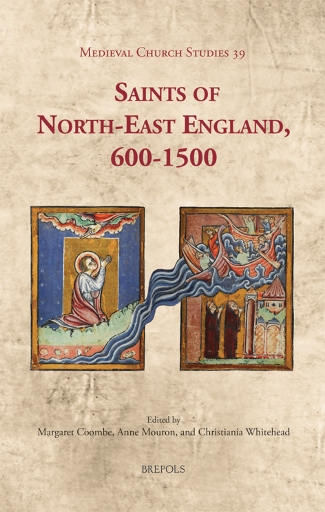
Saints of North-East England, 600-1500
show More to view fulltext, buy and share links for:Saints of North-East England, 600-1500 show Less to hide fulltext, buy and share links for: Saints of North-East England, 600-1500During the seventh and early eighth centuries a number of influential saints’ cults were established within the Anglo-Saxon kingdom of Northumbria, most notably the cult of St Cuthbert served by the monks of Lindisfarne. Reacting to the Danish incursions of the ninth century, the Lindisfarne community gradually migrated south to Durham, where, in the early eleventh century, the relics of further Northumbrian saints were collected to join those of Cuthbert. Following the re-foundation of the Durham church as a Benedictine house in 1083, the community sought to legitimise itself by stressing its links with an ancient, saintly past. A century later, the cults of new hermit saints such as Godric of Finchale and Bartholomew of Farne, extensively modelled on St Cuthbert’s example, were added to the north-eastern Durham familia.
This volume takes an interdisciplinary approach to these north-eastern saints, offering a comprehensive snapshot of new scholarship within the field. The first section focuses on the most eminent saints and hagiographers of Anglo-Saxon Northumbria: Cuthbert, Wilfrid and Bede. The second section examines their utility for the twelfth-century, Anglo-Norman community at Durham, and surveys the cults which emerged alongside, including the early saint-bishops of Hexham Augustinian priory. The third section reviews the material culture which developed around these saints in the fourteenth and fifteenth centuries: their depiction in stained glass, their pilgrimages and processions, and the use of their banners in the Anglo-Scottish wars. A concluding essay re-evaluates the north-eastern cult of saints from post-Reformation perspectives.
-
-
-
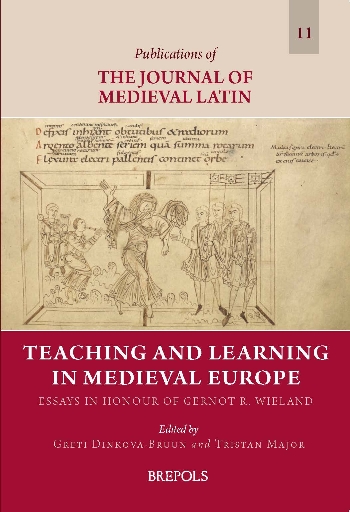
Teaching and Learning in Medieval Europe
show More to view fulltext, buy and share links for:Teaching and Learning in Medieval Europe show Less to hide fulltext, buy and share links for: Teaching and Learning in Medieval EuropeOver the span of his career, Gernot R. Wieland has been actively engaged in the contribution and promotion of the study of medieval literature, particularly in Anglo-Latin and Old English. From his early work on glosses in Anglo-Saxon manuscripts, to his later editorial work for The Journal of Medieval Latin, Wieland has provided the field with diverse, diligent, and creative scholarship. The contributors of this volume pay tribute to the significance of Wieland’s teaching and learning in the literature of medieval Europe by presenting him with twelve essays on varied aspects of the subject.
The first section of the volume aims to honour Wieland’s contributions to the study of medieval glossing. It deals with the history of glossing from early medieval Latin literature to late Middle English grammatical texts, as well as the early interpretative history of Walter of Châtillon’s Alexandreis and Geoffrey of Monmouth’s Historia regum Britannie. The following section corresponds with Wieland’s interest in Anglo-Saxon literature, with essays on the bilingual letters of Ælfric of Eynsham, the poetry of Alcuin of York, and the Old English Hexateuch. The second half of the volume, which examines elements of Latin literature from the eleventh to the fourteenth century, is divided into two sections containing essays that well represent Wieland’s diverse philological and literary interests in medieval Latin. The third section of the volume on the texts and contexts of Latin literature presents essays on the books of Abbot Maiolus of Cluny, on scholastic virtues of good teaching, and on Walter Map’s Dissuasio Valerii. The final section on the texts and manuscripts of Latin literature provides editions of and commentaries on a Latin-Greek phrase-book, a treatise on the firmament of Genesis 1:6.
With these contributions, this volume honours the research interests of a great teacher and learner of the Middle Ages: Gernot Weiland.
-
-
-
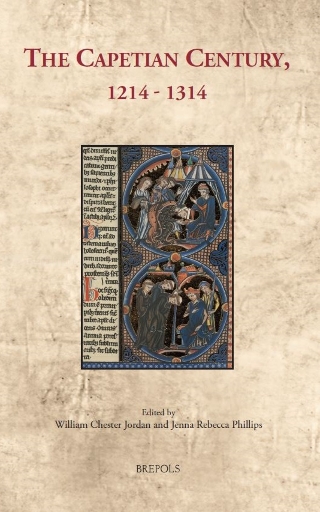
The Capetian Century, 1214 to 1314
show More to view fulltext, buy and share links for:The Capetian Century, 1214 to 1314 show Less to hide fulltext, buy and share links for: The Capetian Century, 1214 to 1314This volume provides a fresh look at the Capetian century (1214-1314), a period that changed the cultural and political fabric and laid the foundation for the modernisation of the medieval West.
The period from the birth of Louis IX to the death of Philip the Fair is remarkable for a series of developments and accomplishments associated with the Capetian kings of France. Innovations in architecture, manuscript illumination, and music all helped shape the cultural fabric of French and European life. Administrative historians emphasize the development of political institutions that have been said to lay foundations of the modern State. ‘Moral reform’, partly in support of the crusading movement, led to various changes in policies toward Jews, prostitutes, heretics, and many other social groups.
This volume brings together essays presented at the Capetian Century Conference held at Princeton University, commemorating two seminal anniversaries bracketing the 'Capetian Century' - the Battle of Bouvines (1214), and the death of Philip the Fair (1314).
-
-
-
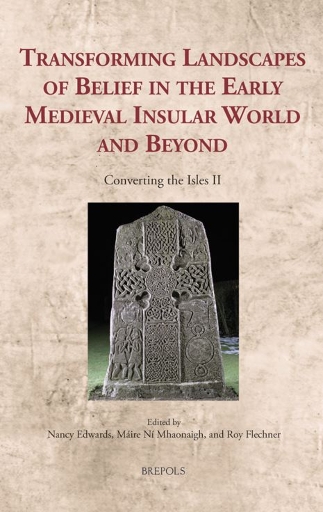
Transforming Landscapes of Belief in the Early Medieval Insular World and Beyond
show More to view fulltext, buy and share links for:Transforming Landscapes of Belief in the Early Medieval Insular World and Beyond show Less to hide fulltext, buy and share links for: Transforming Landscapes of Belief in the Early Medieval Insular World and BeyondConversion to Christianity is arguably the most revolutionary social and cultural change that Europe experienced throughout Late Antiquity and the early Middle Ages. Christianization affected all strata of society and transformed not only religious beliefs and practices, but also the nature of government, the priorities of the economy, the character of kinship, and gender relations. It is against this backdrop that an international array of leading medievalists gathered under the auspices of the Converting the Isles Research Network (funded by the Leverhulme Trust) to investigate social, economic, and cultural aspects of conversion in the early medieval Insular world, covering different parts of Britain, Ireland, Scandinavia, and Iceland.
This volume analyses the effects of religious conversion on landscapes of cult and on religious practice in Europe, focusing in particular on Britain and Ireland. Adopting an interdisciplinary and comparative approach, the volume investigates the interaction between different forms of belief, their coexistence and competition. It discusses the coming of writing, the power of the word, landscapes of ritual, and converting communities. The contributors include leading historians, archaeologists, linguists, and literary scholars. This is the second volume to emerge from research undertaken by contributors to the Converting the Isles Research Network and forms a companion volume to The Introduction of Christianity into the Early Medieval Insular World.
See the companion volume at: http://www.brepols.net/Pages/ShowProduct.aspx?prod_id=IS-9782503554624-1
-
-
-
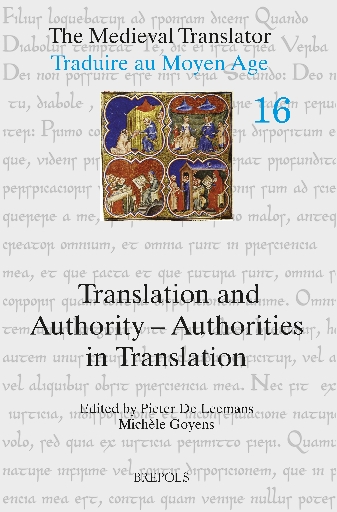
Translation and Authority - Authorities in Translation
show More to view fulltext, buy and share links for:Translation and Authority - Authorities in Translation show Less to hide fulltext, buy and share links for: Translation and Authority - Authorities in TranslationThe question about the relation between medieval translation practices and authority is a complex and multifaceted one. Depending on one’s decision to focus on the authority of the source-text or of the translated text itself, on the author of the original text, on the translator, or on the user of the translation, it falls apart in several topics to be tackled, such as, just to name a few: To what extent does the authority of the text to be translated affect translational choices? How do translators impose authority on their text? By lending their name to a translation, do they contribute to its authoritative status?
After two introductory essays that set the scene for the volume, addressing the above questions from the perspective of translations of authoritative texts into Dutch and French, the focus of the volume shifts to the translators themselves as authorities. A next section deals with the choices of texts to be translated, and the impact these choices have on the translation method. A third part is dedicated to papers that examine the role of the users of the translations.
The selection of papers in the present volume gives a good indication of the issues mentioned above, embedded in a field of tension between translations made from a learned language to a vernacular language, translations from one vernacular to another, or even from a vernacular to the Latin language.
-
-
-

Aspetti del meraviglioso nelle letterature medievali. Aspects du merveilleux dans les littératures médiévales
show More to view fulltext, buy and share links for:Aspetti del meraviglioso nelle letterature medievali. Aspects du merveilleux dans les littératures médiévales show Less to hide fulltext, buy and share links for: Aspetti del meraviglioso nelle letterature medievali. Aspects du merveilleux dans les littératures médiévalesThis book provides a fresh insight into European medieval culture by focusing on the concept of the marvellous as it was depicted in medieval writings. Drawing together papers that were presented at the Aspects of the Marvellous in Medieval Literature conference, held at the University of L’Aquila in November 2012, the volume takes a broad multicultural and multilingual approach that offers new perspectives onto the various kinds of mirabile and their common themes in texts from across Europe. Contributions to this volume pay equal attention to both Latin and vernacular writings, and cover aspects of the marvellous in fields as diverse as medieval Latin literature, Romance, Germanic, and Celtic philology, miracles and mirabilia, monsters and fairies, strange creatures and fantastic worlds. Above all, by expanding analysis through different literatures, languages, and literary genres, the volume not only provides an opportunity to compare and contrast key themes and features of these texts, but also casts new light onto the making of our own cultural identity.
-
-
-
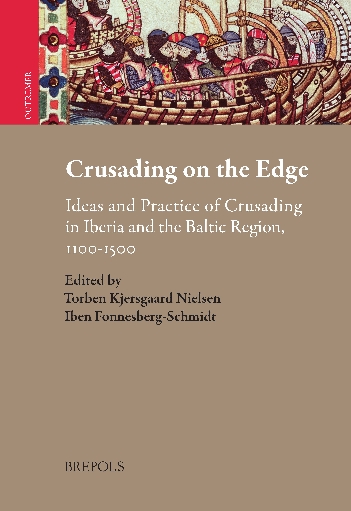
Crusading on the Edge
show More to view fulltext, buy and share links for:Crusading on the Edge show Less to hide fulltext, buy and share links for: Crusading on the EdgeThis volume brings together contributions from fifteen historians and art historians working on the history of the crusades, focusing on Iberia and the Baltic region. The subjects treated include the historiography of the Iberian and Baltic crusades; the transfer of crusading ideas from the Holy Land to Iberia and the Baltic region and the use of such ideas in local rhetoric and propaganda; the papal attitudes towards the Iberian and Baltic campaigns; the papal attitudes towards Muslims living in Christian Spain; the interaction between conquered and conquerors as reflected in art and architecture; and the exchange of information about the crusades in Iberia and the wider Baltic Region. The collection thus throws further light not only onto events in the Iberian Peninsula and the Baltic region but also onto the development of the crusade movement in general. It constitutes a valuable resource for both undergraduates and postgraduates studying the crusade movement in the Middle Ages.
Torben Kjersgaard Nielsen is Associate Professor in Medieval History at Aalborg University, Denmark. His main research interests cover the history of the Baltic Crusades, the medieval papacy, and Denmark in the Middle Ages.
Iben Fonnesberg-Schmidt is Professor (MSO) of Medieval History at Aalborg University, Denmark. Her research interests focus on papal communication and papal involvement in mission and crusades in the central Middle Ages.
-
-
-
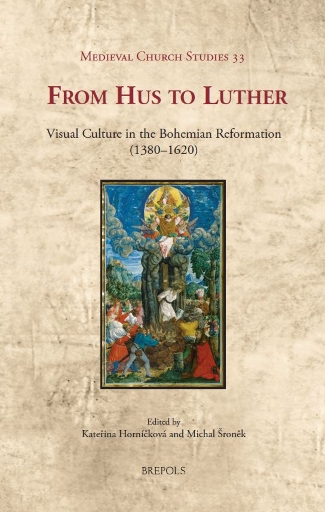
From Hus to Luther
show More to view fulltext, buy and share links for:From Hus to Luther show Less to hide fulltext, buy and share links for: From Hus to LutherThis book portrays a little-known phenomenon in Bohemian cultural and political history - the visual culture that grew up in the environment of Reformation churches in Bohemia from the time of the Hussites until the defeat of the Estates by the Habsburg coalition at White Mountain in 1620. It provides the first comprehensive overview of a forgotten era of artistic production over a period of approximately two hundred years, when most of the population of Bohemia professed non-Catholic faiths.
During the fifteenth and sixteenth centuries a unique situation arose in Bohemia, with five main Christian denominations (Utraquists, Lutherans, the Unity of Brethren, Calvinists, and Catholics) gradually coming to function alongside each other, with a number of other religious groups also active. The main churches, which had a fundamental influence on political stability in the state, were the majority Utraquists and the minority Catholics. Yet the essays of this book establish that despite the particularities of the Bohemian situation, the religious trends of Bohemia were an integral part of the process of Reformation across Europe.
Featuring over fifty illustrations including manuscript illumination, panel painting, and architecture, the book also presents the surviving cultural products of the four non-Catholic Christian denominations, ranging from the more moderate to radical Reformation cultures. The book also analyses the attitudes of these denominations to religious representations, and illuminates their uses of visual media in religious and confessional communication. The book thus opens up both the Reformation culture of Bohemia and its artistic heritage to an international audience.
-
-
-
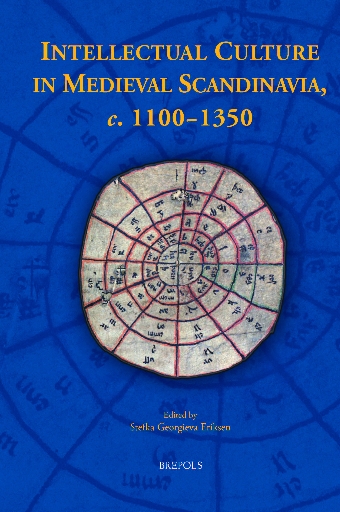
Intellectual Culture in Medieval Scandinavia, c. 1100–1350
show More to view fulltext, buy and share links for:Intellectual Culture in Medieval Scandinavia, c. 1100–1350 show Less to hide fulltext, buy and share links for: Intellectual Culture in Medieval Scandinavia, c. 1100–1350This book investigates the nature of intellectual activity in the Middle Ages from the perspective of medieval Scandinavia by discussing how a multimodal and multilingual Scandinavian culture emerged through the dynamic interchange of foreign and local impulses in the minds of creative intellectuals. By deploying cognitive theory, this volume conceptualizes intellectual culture as the result of the individual’s cognition, which incorporates physical perceptions of the world, memory and creation, rationality, emotionality and spirituality, and decision making. In doing so, it elucidates the diversity of social roles that could be assumed by people engaged in the activity of thinking. Attention is paid in particular to the key intellectual activities of negotiating secular and religious authority and identity; to thinking and learning through verbal and visual means; and to ruminating on worldly existence and heavenly salvation. These processes are explored in a series of essays that focus on various visual and textual artefacts, among them Church art and sculptures, manuscript fragments, and texts of both different languages (Latin and Old Norse) and genres (sagas, poetry and grammatical treatises, laws, liturgical explanations and theological texts). The variety of intellectual and ideational processes connected to the textual and material culture of medieval Scandinavia forms the focal point of this study. As a result, this book actively seeks to transcend the traditional cultural dichotomies of written versus oral material, Latin versus vernacular, lay versus secular, or European versus Nordic by foregrounding the cognitive and creative agency of intellectuals in medieval Scandinavia.
-
-
-
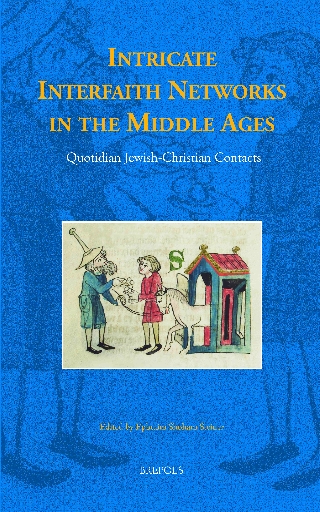
Intricate Interfaith Networks in the Middle Ages
show More to view fulltext, buy and share links for:Intricate Interfaith Networks in the Middle Ages show Less to hide fulltext, buy and share links for: Intricate Interfaith Networks in the Middle AgesRecent scholarship has suggested that the religious divide between Jews and Christians in the Middle Ages, although ever-present (and at times even violently so), did not stop individuals and groups from forming ties and expanding them in more intricate ways than previously thought. Moreover, these networks appear to have functioned with an apparent disregard towards any confessional and religious differences. Nevertheless, this was by no means a straightforward or simple situation; both the theological background to how each faith viewed ‘other’ beliefs, as well as the strong social, religious, and authoritative circles that at the least critiqued, even if they did not entirely discourage such contacts, created a formidable opposition to these networks. The articles in this book were presented as papers during an international workshop at the Central European University in Budapest in February 2010. In these presentations and discussions, the premise of interfaith relations and networks was thoroughly explored across Europe from the Iberian Peninsula to the eastern Hungarian frontier, and from England to Italy throughout the high and later medieval period. In this volume, the contributors explore a number of phenomena through different disciplinary approaches. Ties of an economic and cultural nature are examined, and attention is paid to social contacts and networks in the fields of art and the sciences, and matters of daily life. The picture that emerges is altogether more nuanced and diverse than the bipolar paradigm that has dominated previous scholarship.
-
-
-
Journeying along Medieval Routes in Europe and the Middle East
show More to view fulltext, buy and share links for:Journeying along Medieval Routes in Europe and the Middle East show Less to hide fulltext, buy and share links for: Journeying along Medieval Routes in Europe and the Middle EastFocusing on routes and journeys throughout medieval Europe and the Middle East in the period between Late Antiquity and the thirteenth century, this multi-disciplinary book draws on travel narratives, chronicles, maps, charters, geographies, and material remains in order to shed new light on the experience of travelling in the Middle Ages.
The contributions gathered here explore the experiences of travellers moving between Latin Europe and the Holy Land, between southern Italy and Sicily, and across Germany and England, from a range of disciplinary perspectives. In doing so, they offer unique insights into the experience, conditions, conceptualization, and impact of human movement in medieval Europe. Many essays place a strong emphasis on the methodological problems associated with the study of travel and its traces, and the collection is enhanced by the juxtaposition of scholarly work taking different approaches to this challenge. The papers included here engage in cross-disciplinary and interdisciplinary dialogue and are supported by a discursive, contextualizing introduction by the editors.
-
-
-
L'Ésotérisme shi'ite, ses racines et ses prolongements
show More to view fulltext, buy and share links for:L'Ésotérisme shi'ite, ses racines et ses prolongements show Less to hide fulltext, buy and share links for: L'Ésotérisme shi'ite, ses racines et ses prolongementsTogether with the notion of secrecy, the core of Shi'i esotericism gravitates around the ẓāhir/bāṭin dualism. This dialectical relationship between the visible and the hidden, which has been inherited from Late Antiquity, buttresses the main doctrines of esoteric Shi'ism which include a dualistic worldview, doctrines of emanation, the contrast between the people of knowledge and of ignorance, the soterial nature of knowledge and of the Guide who possesses it, the two levels of the Scriptures, the need for hermeneutics, and initiatory knowledge and practices. It is true that the birthplace of Shi'ism was Iraq, which had been the central province of the Sassanid Persian Empire until the advent of Islam. This region and its main cities were home to the many intellectual and spiritual traditions of Late Antiquity, including various Jewish, Christian, Judeo-Christian, Mazdean, Manichean, Neoplatonic and Gnostic movements, with these traditions living on for several centuries after the advent of the religion of the Arabs. The articles in this collection, written by recognised scholars in the field, are divided into three sections covering a very wide period of time: the "prehistory" of these doctrines before Islam, early esoteric Shi'ism and its developments in both Shi'i and non-Shi'i Sufism, occult sciences and philosophy.
-
-
-
La mystique théorétique et théurgique dans l'Antiquité gréco-romaine
show More to view fulltext, buy and share links for:La mystique théorétique et théurgique dans l'Antiquité gréco-romaine show Less to hide fulltext, buy and share links for: La mystique théorétique et théurgique dans l'Antiquité gréco-romaineDans ce volume sont publiés une partie des résultats d’un programme de recherche intitulé « Mystique théorétique et théurgique dans l’Antiquité gréco-romaine» et sous-titré «paganismes, judaïsmes, christianismes » : c’est dire sa diversité, son ouverture et sa portée dans un monde scientifique où le cloisonnement - sans doute rendu inévitable à cause de la variété des sources et concepts - des disciplines et des domaines devient de plus en plus préjudiciable à une perspective globalisante. Ainsi l’objet de ce projet a été de rendre compte non seulement des pratiques mystiques (rituelles ou cultuelles) mais aussi du versant spéculatif ou intellectuel de la mystique tel qu’on le trouve en œuvre, par exemple, dans la philosophie grecque.
-
-
-
La rigueur et la passion. Mélanges en l’honneur de Pascale Bourgain
show More to view fulltext, buy and share links for:La rigueur et la passion. Mélanges en l’honneur de Pascale Bourgain show Less to hide fulltext, buy and share links for: La rigueur et la passion. Mélanges en l’honneur de Pascale BourgainCe volume qui renferme 57 contributions portant sur la littérature médiolatine rend hommage à Pascale Bourgain, Professeur émérite d’Histoire et tradition manuscrite des textes littéraires à l’École nationale des chartes. Ces Mélanges peuvent se lire comme une histoire littéraire du Moyen Âge latin. Toute la période médiévale est en effet couverte largement, du v e siècle à la Renaissance et, au-delà, jusqu’aux entreprises du xix e siècle pour redonner vie aux anciens textes. Les œuvres relevant de ces divers champs et temps sont analysées en faisant converger sur elles l’éclairage d’une ou, souvent, de plusieurs disciplines parmi celles qui portent sur le manuscrit : codicologie, histoire de l’enluminure, histoire des bibliothèques ; ou sur les textes qu’il transmet : édition critique, histoire littéraire et critique d’attribution ; sur leurs relations d’influence, de la Quellenforschung à l’analyse des inflexions que subit un même passage repris d’une œuvre à l’autre ; sur la langue de ces textes : lexicographie, grammaire, art de la traduction, étude des interactions entre langues latine et romanes ; sur leur forme littéraire, d’une poésie de facture classique à la prose d’art en passant par la poésie rythmique ; sur enfin ce qu’il y a de plus subtil à décrire dans les textes, leur style, et la manière dont style et sens, loin de s’opposer, s’épousent.
-
-
-
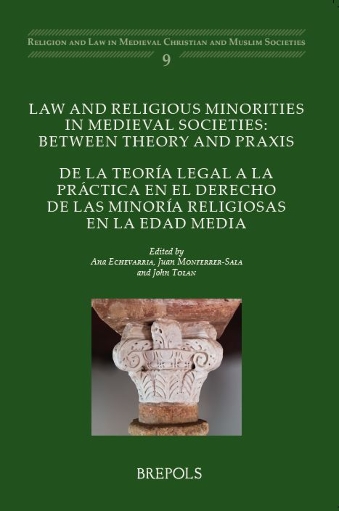
Law and Religious Minorities in Medieval Societies: Between Theory and Praxis
show More to view fulltext, buy and share links for:Law and Religious Minorities in Medieval Societies: Between Theory and Praxis show Less to hide fulltext, buy and share links for: Law and Religious Minorities in Medieval Societies: Between Theory and PraxisMuslim law developed a clear legal cadre for dhimmīs, inferior but protected non-Muslim communities (in particular Jews and Christians) and Roman Canon law decreed a similar status for Jewish and Muslim communities in Europe. Yet the theoretical hierarchies between faithful and infidel were constantly brought into question in the daily interactions between men and women of different faiths in streets, markets, bath-houses, law courts, etc. The twelve essays in this volume explore these tensions and attempts to resolve them. These contributions show that law was used to try to erect boundaries between communities in order to regulate or restrict interaction between the faithful and the non-faithful-and at the same time how these boundaries were repeatedly transgressed and negotiated. These essays explore also the possibilities and the limits of the use of legal sources for the social historian.
-
-
-
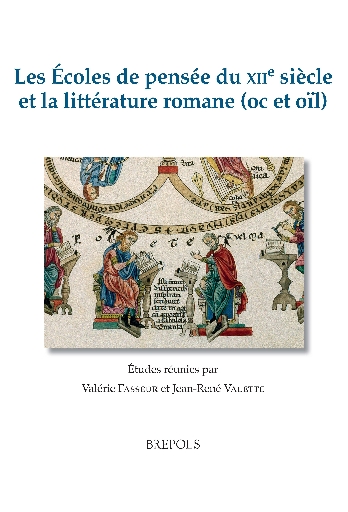
Les Écoles de pensée du XIIe siècle et la littérature romane (oc et oïl)
show More to view fulltext, buy and share links for:Les Écoles de pensée du XIIe siècle et la littérature romane (oc et oïl) show Less to hide fulltext, buy and share links for: Les Écoles de pensée du XIIe siècle et la littérature romane (oc et oïl)Souvent présentée comme une période charnière, la « Renaissance du xii e siècle » voit fleurir les écoles : école de Laon, de Saint-Victor, de Paris, de Chartres, école d’Abélard aussi, auxquelles on peut ajouter le groupe formé par les Porrétains ou bien encore les « écoles du cloître » (chartreux, cisterciens, clunisiens). L’« âge des écoles » marque ainsi le passage d’une forme de vie intellectuelle à une autre, l’évolution de la culture monastique vers la culture urbaine, qui verra la naissance de l’université de Paris au xiii e siècle et l’avènement de la scolastique. Au moment où se produit un tel essor, la littérature en langue romane connaît une seconde naissance. La langue d’oc voit s’épanouir la lyrique tandis qu’au nord de la Loire, dès les dernières années du xi e siècle, les chansons de geste se répandent, avant que les romans et la poésie des trouvères ne fassent leur apparition. Loin d’être étrangers l’un à l’autre, ces deux phénomènes entretiennent des rapports nombreux et complexes qui valent d’autant plus d’être étudiés que le retentissement de ces écoles de pensée sur la littérature romane est perceptible bien au-delà du xii e siècle. Telle est l’ambition de cet ouvrage, qui propose un bilan historiographique, de nombreuses études de cas et une réflexion à caractère épistémologique.
-
-
-
Neoplatonism in the Middle Ages
show More to view fulltext, buy and share links for:Neoplatonism in the Middle Ages show Less to hide fulltext, buy and share links for: Neoplatonism in the Middle AgesOne of the most important texts in the history of medieval philosophy, the Book of Causes was composed in Baghdad in the 9th century mainly from the Arabic translations of Proclus’ Elements of Theology. In the 12th century, it was translated from Arabic into Latin, but its importance in the Latin tradition was not properly studied until now, because only 6 commentaries on it were known. Our exceptional discovery of over 70 unpublished Latin commentaries mainly on the Book of Causes, but also on the Elements of Theology, prove, for the first time, that the two texts where widely disseminated and commented on throughout many European universities (Paris, Oxford, Erfurt, Krakow, Prague), from the 13th to the 16th century. These two volumes provide 14 editions (partial or complete) of the newly-discovered commentaries, and yields, through historical and philosophical analyses, new and essential insights into the influence of Greek and Islamic Neoplatonism in the Latin philosophical traditions.
-
-
-
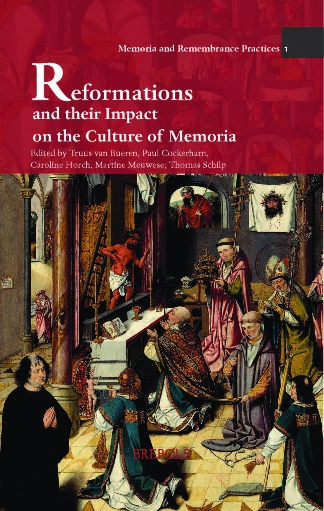
Reformations and their Impact on the Culture of Memoria
show More to view fulltext, buy and share links for:Reformations and their Impact on the Culture of Memoria show Less to hide fulltext, buy and share links for: Reformations and their Impact on the Culture of MemoriaThis volume presents cultural studies approaches to different modes of memoria (the original medieval way of commemoration), taking into account specific confessional contexts. It mainly focuses on the consequences of political, religious and social reforms in the period from 1200 to 1800. Scholars from multiple subject areas in the field of cultural studies evaluate if, and to what extent, reform processes and political or social change have influenced different practices of memoria.
Since customs of commemoration of the dead (and the living) serve as a means of self-reassurance for a society, they allow significant insights into what the respective societies were grounded upon. This volume delivers the first discipline-specific and methodologically diverse approach to the consequences of different reforms on memoria.
In this way this overview creates a ‘history of memoria’ throughout the centuries.
-
-
-
Relics, Identity, and Memory in Medieval Europe
show More to view fulltext, buy and share links for:Relics, Identity, and Memory in Medieval Europe show Less to hide fulltext, buy and share links for: Relics, Identity, and Memory in Medieval EuropeThis volume contributes to current discussions of the place of relics in devotional life, politics, and identity-formation, by illustrating both the power which relics were thought to emanate as well as the historical continuity in the significance assigned to that power. Relics had the power to ‘touch’ believers not only as material objects, but also through different media that made their presence tangible and valuable. Local variants in relic-veneration demonstrate how relics were exploited, often with great skill, in different religious and political contexts. The volume covers both a wide historical and geographical span, from Late Antiquity to the early modern period, and from northern, central, and southern Europe.
The book focuses on textual, iconographical, archaeological, and architectural sources. The contributors explore how an efficient manipulation of the liturgy, narrative texts, iconographic traditions, and architectural settings were used to construct the meaningfulness of relics and how linguistic style and precision were critically important in creating a context for veneration. The methodology adopted in the book combines studies of material culture and close reading of textual evidence in order to offer a new multidisciplinary purchase on the study of relic cults.
-
-
-
Ruling the Script in the Middle Ages
show More to view fulltext, buy and share links for:Ruling the Script in the Middle Ages show Less to hide fulltext, buy and share links for: Ruling the Script in the Middle AgesThe textuality and materiality of documents are an essential part of their communicative role. Medieval writing, as part of the interpersonal communication process, had to follow rules to ensure the legibility and understanding of a text and its connotations. This volume provides new insights into how different kinds of rules were designed, established, and followed in the shaping of medieval documents, as a means of enabling complex and subtle communicational phenomena. Because they provide a perspective for approaching the material they are supposed to organize, these rules (or the postulation of their use) provide powerful analytical tools for structural studies into given corpora of documents.
Originating in talks given at the International Medieval Congress in Leeds between 2010 and 2012, the twenty papers in this collection offer a precise, in-depth analysis of a variety of medieval scripts, including books, charters, accounts, and epigraphic documents. In doing so, they integrate current developments in palaeography, diplomatics, and codicology in their traditional methodological set, as well as aspects of the digital humanities, and they bridge the gap between the so-called ‘auxiliary sciences of history’ and the field of communication studies. They illustrate different possibilities for exploring how the formal aspects of scripts took their place in the construction of effective communication structures.
-
-
-
Shaping Authority
show More to view fulltext, buy and share links for:Shaping Authority show Less to hide fulltext, buy and share links for: Shaping AuthorityThe cultural and religious history from Antiquity through the Renaissance may be read through the lens of the rise and demise of auctoritates. Throughout this long period of about two millennia, many historical persons have been considered as exceptionally authoritative. Obviously, this authority derived from their personal achievements. But one does not become an authority on one’s own. In many cases, the way an authority’s achievements were received and disseminated by their contemporaries and later generations, was the determining factor in the construction of their authority. This volume focuses on the latter aspect: what are the mechanisms and strategies by which participants in intellectual life at large have shaped the authority of historical persons? On what basis, why and how were some persons singled out above their peers as exceptional auctoritates and by which processes did this continue (or discontinue) over time? What imposed geographical or other limits on the development and expansion of a person’s auctoritas? Which circumstances led to the disintegration of the authority of persons previously considered to be authoritative? The case-studies in this volume reflect the dazzling variety of trajectories, concerns, actors and factors that contributed over a time span of two millennia to the fashioning of the postmortem and lasting authority of historical persons.
-