


EMISCS99

Collection Contents
21 - 40 of 57 results
-
-
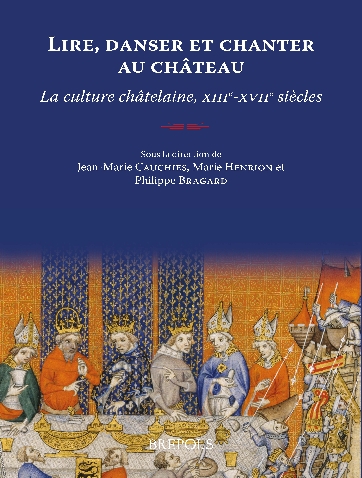
Lire, danser et chanter au château. La culture châtelaine, XIII-XVIIe siècles
show More to view fulltext, buy and share links for:Lire, danser et chanter au château. La culture châtelaine, XIII-XVIIe siècles show Less to hide fulltext, buy and share links for: Lire, danser et chanter au château. La culture châtelaine, XIII-XVIIe sièclesLieu de défense, de résidence, d’exercice et de représentation du pouvoir, d’exploitation et d’administration, le château du moyen âge et du premier âge moderne est aussi lieu de culture, de fête et de divertissement. Il peut être aussi objet de regards culturels. Ce lieu se prête à la danse, aux concerts, aux réjouissances en tout genre. Trouvères et ménestrels, bateleurs et jongleurs y proposent leurs récits, leurs chants, leurs spectacles. Tout y concourt à la « théâtralisation constante du mode de vie noble ». Mais la demeure seigneuriale est aussi lieu de création, quand le maître et seigneur y accueille pour qu’ils y résident et s’y adonnent à la production écrivains, musiciens ou artistes. Une poésie de cour y a d’ailleurs pris naissance, en France, en Italie, en Allemagne. Plus tard, des troupes de comédiens y seront entretenues. Poètes et artistes venus au château l’ont ensuite célébré de leur plume ou de leur pinceau. Entre ses murs, un espace privilégié peut être celui d’une bibliothèque, éventuelle héritière d’un « cabinet de manuscrits ». Certains seigneurs sont eux-mêmes écrivains. Et si des livres reposent dans le château, le château trouvera en retour sa place dans les livres, par le texte, l’image, la description et la figuration, réalistes ou idéalisées.
Après le château lui-même, ses abords, sa gestion, voici venu le temps de « Lire, danser et chanter au château. La culture châtelaine, XIII e-XVII e siècles », thème du quatrième colloque de la Fondation van der Burch au château-fort d’Écaussinnes-Lalaing en mai 2013.
-
-
-
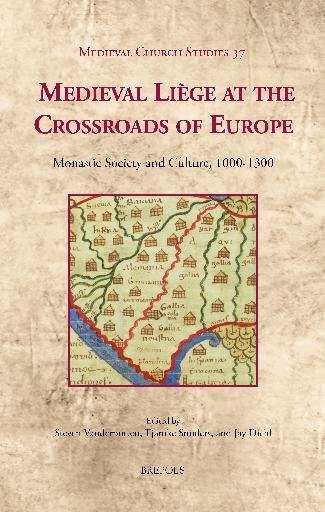
Medieval Liège at the Crossroads of Europe
show More to view fulltext, buy and share links for:Medieval Liège at the Crossroads of Europe show Less to hide fulltext, buy and share links for: Medieval Liège at the Crossroads of EuropeDuring the high Middle Ages, the bishopric of Liège found itself at a cultural crossroads between the German Empire and the French lordships. The Liègeois themselves summed up the situation when they declared that: ‘Gaul considers us its most distant inhabitants, Germany as nearby citizens. In fact we are neither, but both at the same time’. This same complexity is also echoed by present-day historians, who have described Liège as a hub of interactions between two great civilisations. Medieval monastic communities in Liège were key sites of this exchange, actively participating in the cultural developments, social networks, and political structures of both regions.
Bringing together the work of international scholars, this collection of essays addresses the problem of monastic identity and its formation in a region that was geographically wedged between two major competing socio-political powers. It investigates how monastic communities negotiated the uncertainties of this situation, while also capitalizing on the opportunities it presented. As such, this book sheds light on the agency of monastic identity formation in a small but complex region caught at the crossroads of two major powers.
-
-
-
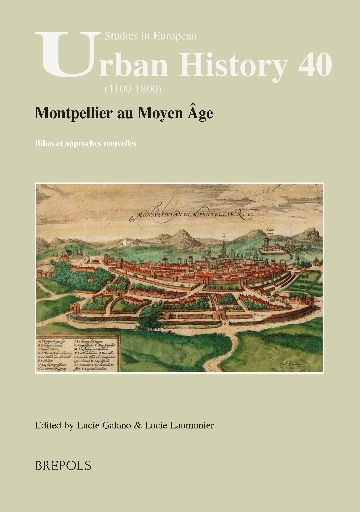
Montpellier au Moyen Âge
show More to view fulltext, buy and share links for:Montpellier au Moyen Âge show Less to hide fulltext, buy and share links for: Montpellier au Moyen ÂgeFondée à la fin du x e siècle, Montpellier connut une expansion fulgurante à partir du xii e, à la faveur du développement d’échanges culturels et économiques, vers la Méditerranée ou le nord de l’Europe. Cette expansion était le fruit de politiques menées par les Guilhem et confirmée lors du passage de la seigneurie sous l’autorité des rois d’Aragon et de Majorque après 1204, quand la ville obtint un gouvernement consulaire. Devenue une communauté urbaine d’importance au xiii e siècle, Montpellier était habitée par une population cosmopolite. Dans et hors les murs se croisaient grands marchands, changeurs et simples revendeurs, universitaires et intellectuels de renom, artisans et agriculteurs. L’attractivité et le rayonnement de Montpellier en faisaient l’une des principales villes du Bas-Languedoc. Pourtant, son histoire médiévale n’a bénéficié que d’une attention inégale de la part des chercheurs. Cet ouvrage procède d’un colloque international réuni à Montpellier en 2013 et rassemble des articles réalisés par les principaux contributeurs et principales contributrices à l’histoire et à l’archéologie de la ville. Basées sur des archives originales ou sur la réinterprétation de données connues, les recherches proposées ici, tout en présentant un bilan des travaux passés, empruntent des voies nouvelles démontrant les promesses des études historiques et archéologiques sur Montpellier.
-
-
-

Music, Liturgy, and the Veneration of Saints of the Medieval Irish Church in a European Context
show More to view fulltext, buy and share links for:Music, Liturgy, and the Veneration of Saints of the Medieval Irish Church in a European Context show Less to hide fulltext, buy and share links for: Music, Liturgy, and the Veneration of Saints of the Medieval Irish Church in a European ContextThis book opens up discussion on the liturgical music of medieval Ireland by approaching it from a multidisciplinary, European perspective. In so doing, it challenges received notions of an idiosyncratic ‘Celtic Rite’, and of the prevailing view that no manuscripts with music notation have survived from the medieval Irish Church. This is due largely to a preoccupation by earlier scholars with pre-Norman Gaelic culture, to the neglect of wider networks of engagement between Ireland, Britain, and continental Europe. In adopting a more inclusive approach, a different view emerges which demonstrates the diversity and international connectedness of Irish ecclesiastical culture throughout the long Middle Ages, in both musico-liturgical and other respects.
The contributors represent a variety of specialisms, including musicology, liturgiology, palaeography, hagiology, theology, church history, Celtic studies, French studies, and Latin. From this rich range of perspectives they investigate the evidence for Irish musical and liturgical practices from the earliest surviving sources with chant texts to later manuscripts with music notation, as well as exploring the far-reaching cultural impact of the Irish church in medieval Europe through case studies of liturgical offices in honour of Irish saints, and of saints traditionally associated with Ireland in different parts of Europe.
-
-
-

Originaux et cartulaires dans la Lorraine médiévale (XIIe - XVIe siècles)
show More to view fulltext, buy and share links for:Originaux et cartulaires dans la Lorraine médiévale (XIIe - XVIe siècles) show Less to hide fulltext, buy and share links for: Originaux et cartulaires dans la Lorraine médiévale (XIIe - XVIe siècles)Entourés des attentions des médiévistes, les cartulaires sont devenus un objet d’histoire. Ces recueils, résultant de la compilation d’actes par une institution ou une personne juridique, entretiennent des relations complexes avec les originaux, sources directes ou indirectes mises en œuvre par les cartularistes. Qu’il s’agisse de la sélection des matériaux ou du transfert d’informations du modèle à la cible, le travail accompli est affaire de choix, divers et multiples, dont il faut retrouver les logiques pour espérer comprendre les objectifs des hommes qui ont commandités et réalisés ces manuscrits. Même soumis à des contingences matérielles, les copistes conservent une certaine marge de manœuvre dans le traitement de leur documentation. Ils trient, classent ou reclassent les documents qu’ils accueillent et enfin transcrivent les actes en adoptant certains principes. Ce recueil d’études a pour but de renouveler la confrontation originaux-cartulaires, à travers l’analyse d’un recueil et de son chartrier ou grâce à l’exploration d’une question liée à la transcription, à travers plusieurs cartulaires.
La question est ici approchée dans un cadre régional, en l’occurrence la Lorraine médiévale, principalement constituée des diocèses de Metz, Toul et Verdun - et occasionnellement étendue à l’ancienne Lotharingie. La chronologie est délibérément large (XIIe - XVIe siècle), donnant toute leur place aux expériences, parfois négligées, de la fin du Moyen Âge. À défaut d’aborder systématiquement le phénomène de la « mise en cartulaire », les dossiers ici réunis voudraient en enrichir les données et questionnements.
-
-
-
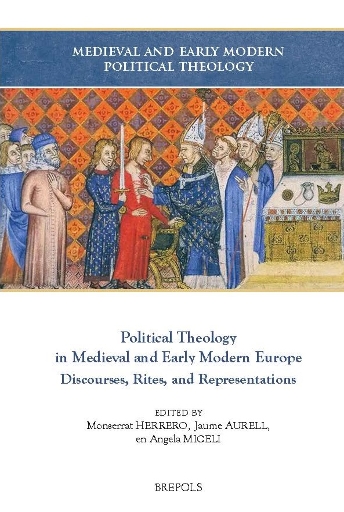
Political Theology in Medieval and Early Modern Europe
show More to view fulltext, buy and share links for:Political Theology in Medieval and Early Modern Europe show Less to hide fulltext, buy and share links for: Political Theology in Medieval and Early Modern EuropeThis book aims to provide new historical and theoretical perspectives on political theology with an interdisciplinary approach, from political philosophy and theology to art and history. After a comprehensive introduction and three introductory chapters on both the theory and the concept of “political theology” (based on the works of Schmitt, de Lubac and Kantorowicz), this volume explores the transferences between the temporal and the spiritual experimented on the past. It interprets some historical events (medieval crusades, royal wisdom, and early modern idea of tolerance), examines some philosophical and theological narratives (John of Paris, Spinoza, Locke, Bayle, Leibniz, Montesquieu, Tocqueville), and deciphers some rites (royal coronations) and representations (the Holy Crown, royal banquets, royal coats of arms).
-
-
-
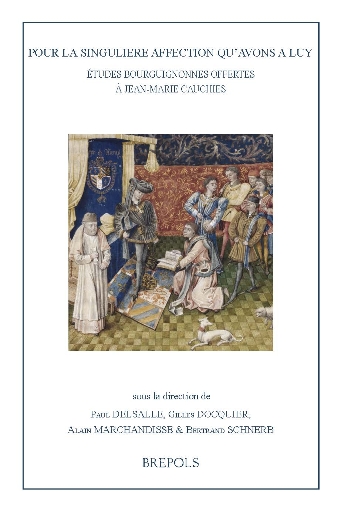
Pour la singuliere affection qu’avons a luy. Études bourguignonnes offertes à Jean-Marie Cauchies
show More to view fulltext, buy and share links for:Pour la singuliere affection qu’avons a luy. Études bourguignonnes offertes à Jean-Marie Cauchies show Less to hide fulltext, buy and share links for: Pour la singuliere affection qu’avons a luy. Études bourguignonnes offertes à Jean-Marie CauchiesMembre de la Classe des Lettres et des Sciences morales et politiques de l’Académie royale de Belgique et de la Commission royale d’Histoire de Belgique, Docteur honoris causa des Universités Jean Moulin Lyon 3 et de Haute-Alsace à Mulhouse, Professeur des Universités Saint-Louis de Bruxelles et catholique de Louvain, Secrétaire général du Centre européen d’Études bourguignonnes, Jean-Marie Cauchies a connu un parcours académique et une carrière universitaire prestigieux et exemplaires. À l’heure où il quitte sa charge d’enseignement pour une retraite sereine, mais sans doute aussi très studieuse, ses collègues et amis ont souhaité lui offrir un ensemble d’études relevant d’une matière à laquelle le jubilaire a consacré une part majeure de sa production scientifique - avec les trois volumes d’Ordonnances de Jean sans Peur et de Philippe le Bon, générales et destinées au Hainaut, parus à ce jour (Commission royale pour la publication des Anciennes Lois et Ordonnances de Belgique) et sa biographie de Philippe le Beau (Brepols, Coll. Burgundica) - en l’occurrence l’histoire des pays bourguignons des ducs de la Maison de Valois, puis de leurs successeurs Habsbourg. Si elles ne peuvent rendre compte de l’extrême diversité des thèmes auxquels Jean-Marie Cauchies aura consacré ses travaux bourguignons, lesquels relèvent aussi souvent, de façon fatalement imbriquée, des histoires du Hainaut et du droit, auxquels d’autres recueils d’hommage sont consacrés ailleurs, elles se veulent l’expression, à son égard, d’une admiration fondée et d’un riche esprit de convivialité scientifique et humaine.
-
-
-

Pursuing Middle English Manuscripts and their Texts
show More to view fulltext, buy and share links for:Pursuing Middle English Manuscripts and their Texts show Less to hide fulltext, buy and share links for: Pursuing Middle English Manuscripts and their TextsThis volume brings together essays by leading authorities on the production, reception, and editing of medieval English manuscripts in honour of Ralph Hanna, on the occasion of his retirement as Professor of Palaeography at the University of Oxford. Ralph Hanna has made an enormous contribution to the study of Middle English manuscripts; his numerous essays and books have discussed the development of London literature, alliterative poetry (especially Piers Plowman), regionalism, and the production and circulation of manuscripts. The essays included in this volume are arranged into four major sections corresponding to Ralph Hanna’s core areas of interest: Manuscript production; Dialect; Regionalism; Reading and Editing manuscripts.
These essays, written by leading scholars in their fields, offer new insights into the manuscripts of major Middle English writers and on scribal practice, as well as studies of individual codices. Essays cover a wide regional and chronological range, stretching from the beginnings of London literature traced in the works of Peter of Cornwall to the circulation of John Lydgate’s Troy Book, and encompassing manuscripts and texts composed and circulated outside the capital. Dialectal studies offer reconsiderations of the evidence for a Wycliffite orthography, the dialect of William Langland, and the vocabulary of the alliterative Morte Arthure. A final section on reading and editing investigates the structure and divisions in the manuscripts of the A Version of Piers Plowman, and examines specific readings in the Prick of Conscience and the Canterbury Tales. The volume also includes a tribute to Ralph Hanna and a list of his extensive publications.
-
-
-
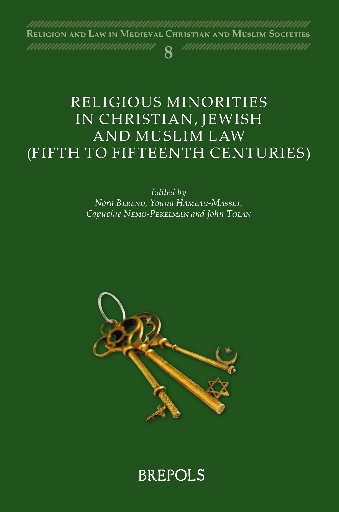
Religious Minorities in Christian, Jewish and Muslim Law (5th - 15th centuries)
show More to view fulltext, buy and share links for:Religious Minorities in Christian, Jewish and Muslim Law (5th - 15th centuries) show Less to hide fulltext, buy and share links for: Religious Minorities in Christian, Jewish and Muslim Law (5th - 15th centuries)The fruit of a sustained and close collaboration between historians, linguists and jurists working on the Christian, Muslim and Jewish societies of the Middle Ages, this book explores the theme of religious coexistence (and the problems it poses) from a resolutely comparative perspective. The authors concentrate on a key aspect of this coexistence: the legal status attributed to Jews and Muslims in Christendom and to dhimmīs in Islamic lands. What are the similarities and differences, from the point of view of the law, between the indigenous religious minority and the foreigner? What specific treatments and procedures in the courtroom were reserved for plaintiffs, defendants or witnesses belonging to religious minorities? What role did the law play in the segregation of religious groups? In limiting, combating, or on the contrary justifying violence against them? Through these questions, and through the innovative comparative method applied to them, this book offers a fresh new synthesis to these questions and a spur to new research.
-
-
-
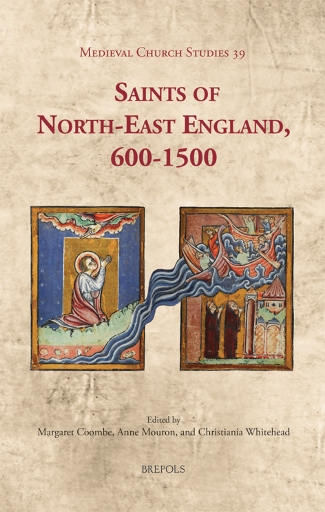
Saints of North-East England, 600-1500
show More to view fulltext, buy and share links for:Saints of North-East England, 600-1500 show Less to hide fulltext, buy and share links for: Saints of North-East England, 600-1500During the seventh and early eighth centuries a number of influential saints’ cults were established within the Anglo-Saxon kingdom of Northumbria, most notably the cult of St Cuthbert served by the monks of Lindisfarne. Reacting to the Danish incursions of the ninth century, the Lindisfarne community gradually migrated south to Durham, where, in the early eleventh century, the relics of further Northumbrian saints were collected to join those of Cuthbert. Following the re-foundation of the Durham church as a Benedictine house in 1083, the community sought to legitimise itself by stressing its links with an ancient, saintly past. A century later, the cults of new hermit saints such as Godric of Finchale and Bartholomew of Farne, extensively modelled on St Cuthbert’s example, were added to the north-eastern Durham familia.
This volume takes an interdisciplinary approach to these north-eastern saints, offering a comprehensive snapshot of new scholarship within the field. The first section focuses on the most eminent saints and hagiographers of Anglo-Saxon Northumbria: Cuthbert, Wilfrid and Bede. The second section examines their utility for the twelfth-century, Anglo-Norman community at Durham, and surveys the cults which emerged alongside, including the early saint-bishops of Hexham Augustinian priory. The third section reviews the material culture which developed around these saints in the fourteenth and fifteenth centuries: their depiction in stained glass, their pilgrimages and processions, and the use of their banners in the Anglo-Scottish wars. A concluding essay re-evaluates the north-eastern cult of saints from post-Reformation perspectives.
-
-
-
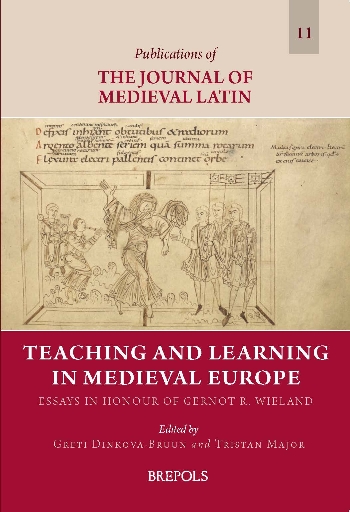
Teaching and Learning in Medieval Europe
show More to view fulltext, buy and share links for:Teaching and Learning in Medieval Europe show Less to hide fulltext, buy and share links for: Teaching and Learning in Medieval EuropeOver the span of his career, Gernot R. Wieland has been actively engaged in the contribution and promotion of the study of medieval literature, particularly in Anglo-Latin and Old English. From his early work on glosses in Anglo-Saxon manuscripts, to his later editorial work for The Journal of Medieval Latin, Wieland has provided the field with diverse, diligent, and creative scholarship. The contributors of this volume pay tribute to the significance of Wieland’s teaching and learning in the literature of medieval Europe by presenting him with twelve essays on varied aspects of the subject.
The first section of the volume aims to honour Wieland’s contributions to the study of medieval glossing. It deals with the history of glossing from early medieval Latin literature to late Middle English grammatical texts, as well as the early interpretative history of Walter of Châtillon’s Alexandreis and Geoffrey of Monmouth’s Historia regum Britannie. The following section corresponds with Wieland’s interest in Anglo-Saxon literature, with essays on the bilingual letters of Ælfric of Eynsham, the poetry of Alcuin of York, and the Old English Hexateuch. The second half of the volume, which examines elements of Latin literature from the eleventh to the fourteenth century, is divided into two sections containing essays that well represent Wieland’s diverse philological and literary interests in medieval Latin. The third section of the volume on the texts and contexts of Latin literature presents essays on the books of Abbot Maiolus of Cluny, on scholastic virtues of good teaching, and on Walter Map’s Dissuasio Valerii. The final section on the texts and manuscripts of Latin literature provides editions of and commentaries on a Latin-Greek phrase-book, a treatise on the firmament of Genesis 1:6.
With these contributions, this volume honours the research interests of a great teacher and learner of the Middle Ages: Gernot Weiland.
-
-
-
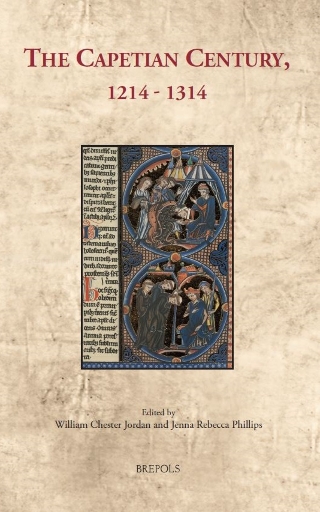
The Capetian Century, 1214 to 1314
show More to view fulltext, buy and share links for:The Capetian Century, 1214 to 1314 show Less to hide fulltext, buy and share links for: The Capetian Century, 1214 to 1314This volume provides a fresh look at the Capetian century (1214-1314), a period that changed the cultural and political fabric and laid the foundation for the modernisation of the medieval West.
The period from the birth of Louis IX to the death of Philip the Fair is remarkable for a series of developments and accomplishments associated with the Capetian kings of France. Innovations in architecture, manuscript illumination, and music all helped shape the cultural fabric of French and European life. Administrative historians emphasize the development of political institutions that have been said to lay foundations of the modern State. ‘Moral reform’, partly in support of the crusading movement, led to various changes in policies toward Jews, prostitutes, heretics, and many other social groups.
This volume brings together essays presented at the Capetian Century Conference held at Princeton University, commemorating two seminal anniversaries bracketing the 'Capetian Century' - the Battle of Bouvines (1214), and the death of Philip the Fair (1314).
-
-
-
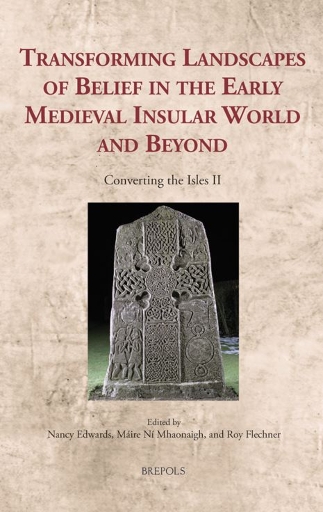
Transforming Landscapes of Belief in the Early Medieval Insular World and Beyond
show More to view fulltext, buy and share links for:Transforming Landscapes of Belief in the Early Medieval Insular World and Beyond show Less to hide fulltext, buy and share links for: Transforming Landscapes of Belief in the Early Medieval Insular World and BeyondConversion to Christianity is arguably the most revolutionary social and cultural change that Europe experienced throughout Late Antiquity and the early Middle Ages. Christianization affected all strata of society and transformed not only religious beliefs and practices, but also the nature of government, the priorities of the economy, the character of kinship, and gender relations. It is against this backdrop that an international array of leading medievalists gathered under the auspices of the Converting the Isles Research Network (funded by the Leverhulme Trust) to investigate social, economic, and cultural aspects of conversion in the early medieval Insular world, covering different parts of Britain, Ireland, Scandinavia, and Iceland.
This volume analyses the effects of religious conversion on landscapes of cult and on religious practice in Europe, focusing in particular on Britain and Ireland. Adopting an interdisciplinary and comparative approach, the volume investigates the interaction between different forms of belief, their coexistence and competition. It discusses the coming of writing, the power of the word, landscapes of ritual, and converting communities. The contributors include leading historians, archaeologists, linguists, and literary scholars. This is the second volume to emerge from research undertaken by contributors to the Converting the Isles Research Network and forms a companion volume to The Introduction of Christianity into the Early Medieval Insular World.
See the companion volume at: http://www.brepols.net/Pages/ShowProduct.aspx?prod_id=IS-9782503554624-1
-
-
-
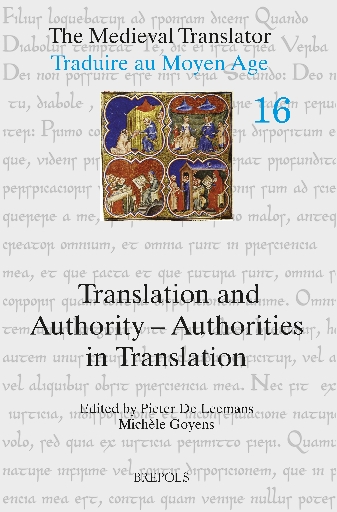
Translation and Authority - Authorities in Translation
show More to view fulltext, buy and share links for:Translation and Authority - Authorities in Translation show Less to hide fulltext, buy and share links for: Translation and Authority - Authorities in TranslationThe question about the relation between medieval translation practices and authority is a complex and multifaceted one. Depending on one’s decision to focus on the authority of the source-text or of the translated text itself, on the author of the original text, on the translator, or on the user of the translation, it falls apart in several topics to be tackled, such as, just to name a few: To what extent does the authority of the text to be translated affect translational choices? How do translators impose authority on their text? By lending their name to a translation, do they contribute to its authoritative status?
After two introductory essays that set the scene for the volume, addressing the above questions from the perspective of translations of authoritative texts into Dutch and French, the focus of the volume shifts to the translators themselves as authorities. A next section deals with the choices of texts to be translated, and the impact these choices have on the translation method. A third part is dedicated to papers that examine the role of the users of the translations.
The selection of papers in the present volume gives a good indication of the issues mentioned above, embedded in a field of tension between translations made from a learned language to a vernacular language, translations from one vernacular to another, or even from a vernacular to the Latin language.
-
-
-

Aspetti del meraviglioso nelle letterature medievali. Aspects du merveilleux dans les littératures médiévales
show More to view fulltext, buy and share links for:Aspetti del meraviglioso nelle letterature medievali. Aspects du merveilleux dans les littératures médiévales show Less to hide fulltext, buy and share links for: Aspetti del meraviglioso nelle letterature medievali. Aspects du merveilleux dans les littératures médiévalesThis book provides a fresh insight into European medieval culture by focusing on the concept of the marvellous as it was depicted in medieval writings. Drawing together papers that were presented at the Aspects of the Marvellous in Medieval Literature conference, held at the University of L’Aquila in November 2012, the volume takes a broad multicultural and multilingual approach that offers new perspectives onto the various kinds of mirabile and their common themes in texts from across Europe. Contributions to this volume pay equal attention to both Latin and vernacular writings, and cover aspects of the marvellous in fields as diverse as medieval Latin literature, Romance, Germanic, and Celtic philology, miracles and mirabilia, monsters and fairies, strange creatures and fantastic worlds. Above all, by expanding analysis through different literatures, languages, and literary genres, the volume not only provides an opportunity to compare and contrast key themes and features of these texts, but also casts new light onto the making of our own cultural identity.
-
-
-
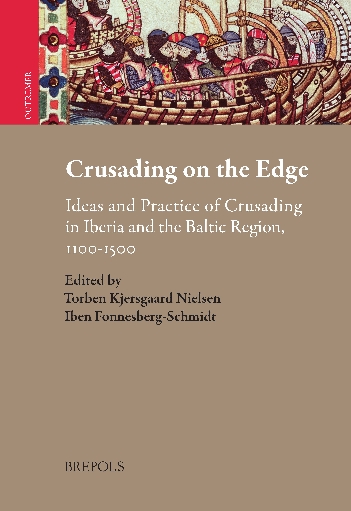
Crusading on the Edge
show More to view fulltext, buy and share links for:Crusading on the Edge show Less to hide fulltext, buy and share links for: Crusading on the EdgeThis volume brings together contributions from fifteen historians and art historians working on the history of the crusades, focusing on Iberia and the Baltic region. The subjects treated include the historiography of the Iberian and Baltic crusades; the transfer of crusading ideas from the Holy Land to Iberia and the Baltic region and the use of such ideas in local rhetoric and propaganda; the papal attitudes towards the Iberian and Baltic campaigns; the papal attitudes towards Muslims living in Christian Spain; the interaction between conquered and conquerors as reflected in art and architecture; and the exchange of information about the crusades in Iberia and the wider Baltic Region. The collection thus throws further light not only onto events in the Iberian Peninsula and the Baltic region but also onto the development of the crusade movement in general. It constitutes a valuable resource for both undergraduates and postgraduates studying the crusade movement in the Middle Ages.
Torben Kjersgaard Nielsen is Associate Professor in Medieval History at Aalborg University, Denmark. His main research interests cover the history of the Baltic Crusades, the medieval papacy, and Denmark in the Middle Ages.
Iben Fonnesberg-Schmidt is Professor (MSO) of Medieval History at Aalborg University, Denmark. Her research interests focus on papal communication and papal involvement in mission and crusades in the central Middle Ages.
-
-
-
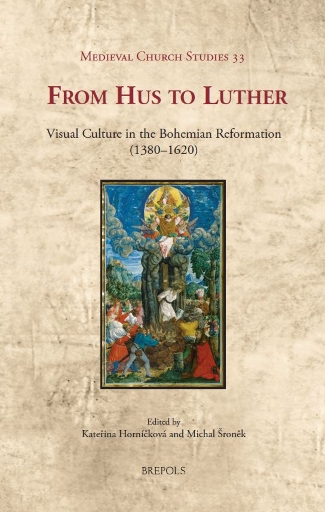
From Hus to Luther
show More to view fulltext, buy and share links for:From Hus to Luther show Less to hide fulltext, buy and share links for: From Hus to LutherThis book portrays a little-known phenomenon in Bohemian cultural and political history - the visual culture that grew up in the environment of Reformation churches in Bohemia from the time of the Hussites until the defeat of the Estates by the Habsburg coalition at White Mountain in 1620. It provides the first comprehensive overview of a forgotten era of artistic production over a period of approximately two hundred years, when most of the population of Bohemia professed non-Catholic faiths.
During the fifteenth and sixteenth centuries a unique situation arose in Bohemia, with five main Christian denominations (Utraquists, Lutherans, the Unity of Brethren, Calvinists, and Catholics) gradually coming to function alongside each other, with a number of other religious groups also active. The main churches, which had a fundamental influence on political stability in the state, were the majority Utraquists and the minority Catholics. Yet the essays of this book establish that despite the particularities of the Bohemian situation, the religious trends of Bohemia were an integral part of the process of Reformation across Europe.
Featuring over fifty illustrations including manuscript illumination, panel painting, and architecture, the book also presents the surviving cultural products of the four non-Catholic Christian denominations, ranging from the more moderate to radical Reformation cultures. The book also analyses the attitudes of these denominations to religious representations, and illuminates their uses of visual media in religious and confessional communication. The book thus opens up both the Reformation culture of Bohemia and its artistic heritage to an international audience.
-
-
-
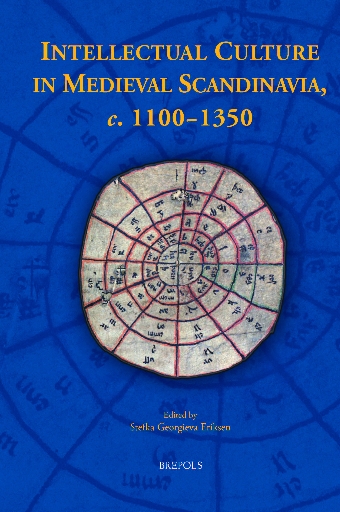
Intellectual Culture in Medieval Scandinavia, c. 1100–1350
show More to view fulltext, buy and share links for:Intellectual Culture in Medieval Scandinavia, c. 1100–1350 show Less to hide fulltext, buy and share links for: Intellectual Culture in Medieval Scandinavia, c. 1100–1350This book investigates the nature of intellectual activity in the Middle Ages from the perspective of medieval Scandinavia by discussing how a multimodal and multilingual Scandinavian culture emerged through the dynamic interchange of foreign and local impulses in the minds of creative intellectuals. By deploying cognitive theory, this volume conceptualizes intellectual culture as the result of the individual’s cognition, which incorporates physical perceptions of the world, memory and creation, rationality, emotionality and spirituality, and decision making. In doing so, it elucidates the diversity of social roles that could be assumed by people engaged in the activity of thinking. Attention is paid in particular to the key intellectual activities of negotiating secular and religious authority and identity; to thinking and learning through verbal and visual means; and to ruminating on worldly existence and heavenly salvation. These processes are explored in a series of essays that focus on various visual and textual artefacts, among them Church art and sculptures, manuscript fragments, and texts of both different languages (Latin and Old Norse) and genres (sagas, poetry and grammatical treatises, laws, liturgical explanations and theological texts). The variety of intellectual and ideational processes connected to the textual and material culture of medieval Scandinavia forms the focal point of this study. As a result, this book actively seeks to transcend the traditional cultural dichotomies of written versus oral material, Latin versus vernacular, lay versus secular, or European versus Nordic by foregrounding the cognitive and creative agency of intellectuals in medieval Scandinavia.
-
-
-
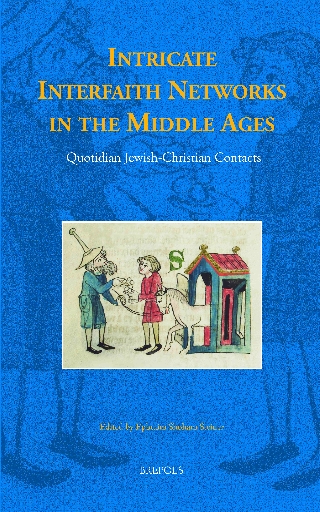
Intricate Interfaith Networks in the Middle Ages
show More to view fulltext, buy and share links for:Intricate Interfaith Networks in the Middle Ages show Less to hide fulltext, buy and share links for: Intricate Interfaith Networks in the Middle AgesRecent scholarship has suggested that the religious divide between Jews and Christians in the Middle Ages, although ever-present (and at times even violently so), did not stop individuals and groups from forming ties and expanding them in more intricate ways than previously thought. Moreover, these networks appear to have functioned with an apparent disregard towards any confessional and religious differences. Nevertheless, this was by no means a straightforward or simple situation; both the theological background to how each faith viewed ‘other’ beliefs, as well as the strong social, religious, and authoritative circles that at the least critiqued, even if they did not entirely discourage such contacts, created a formidable opposition to these networks. The articles in this book were presented as papers during an international workshop at the Central European University in Budapest in February 2010. In these presentations and discussions, the premise of interfaith relations and networks was thoroughly explored across Europe from the Iberian Peninsula to the eastern Hungarian frontier, and from England to Italy throughout the high and later medieval period. In this volume, the contributors explore a number of phenomena through different disciplinary approaches. Ties of an economic and cultural nature are examined, and attention is paid to social contacts and networks in the fields of art and the sciences, and matters of daily life. The picture that emerges is altogether more nuanced and diverse than the bipolar paradigm that has dominated previous scholarship.
-
-
-
Journeying along Medieval Routes in Europe and the Middle East
show More to view fulltext, buy and share links for:Journeying along Medieval Routes in Europe and the Middle East show Less to hide fulltext, buy and share links for: Journeying along Medieval Routes in Europe and the Middle EastFocusing on routes and journeys throughout medieval Europe and the Middle East in the period between Late Antiquity and the thirteenth century, this multi-disciplinary book draws on travel narratives, chronicles, maps, charters, geographies, and material remains in order to shed new light on the experience of travelling in the Middle Ages.
The contributions gathered here explore the experiences of travellers moving between Latin Europe and the Holy Land, between southern Italy and Sicily, and across Germany and England, from a range of disciplinary perspectives. In doing so, they offer unique insights into the experience, conditions, conceptualization, and impact of human movement in medieval Europe. Many essays place a strong emphasis on the methodological problems associated with the study of travel and its traces, and the collection is enhanced by the juxtaposition of scholarly work taking different approaches to this challenge. The papers included here engage in cross-disciplinary and interdisciplinary dialogue and are supported by a discursive, contextualizing introduction by the editors.
-