


EMISCS99

Collection Contents
41 - 57 of 57 results
-
-
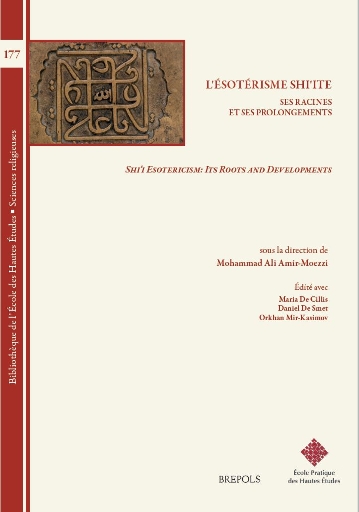
L'Ésotérisme shi'ite, ses racines et ses prolongements
show More to view fulltext, buy and share links for:L'Ésotérisme shi'ite, ses racines et ses prolongements show Less to hide fulltext, buy and share links for: L'Ésotérisme shi'ite, ses racines et ses prolongementsTogether with the notion of secrecy, the core of Shi'i esotericism gravitates around the ẓāhir/bāṭin dualism. This dialectical relationship between the visible and the hidden, which has been inherited from Late Antiquity, buttresses the main doctrines of esoteric Shi'ism which include a dualistic worldview, doctrines of emanation, the contrast between the people of knowledge and of ignorance, the soterial nature of knowledge and of the Guide who possesses it, the two levels of the Scriptures, the need for hermeneutics, and initiatory knowledge and practices. It is true that the birthplace of Shi'ism was Iraq, which had been the central province of the Sassanid Persian Empire until the advent of Islam. This region and its main cities were home to the many intellectual and spiritual traditions of Late Antiquity, including various Jewish, Christian, Judeo-Christian, Mazdean, Manichean, Neoplatonic and Gnostic movements, with these traditions living on for several centuries after the advent of the religion of the Arabs. The articles in this collection, written by recognised scholars in the field, are divided into three sections covering a very wide period of time: the "prehistory" of these doctrines before Islam, early esoteric Shi'ism and its developments in both Shi'i and non-Shi'i Sufism, occult sciences and philosophy.
-
-
-
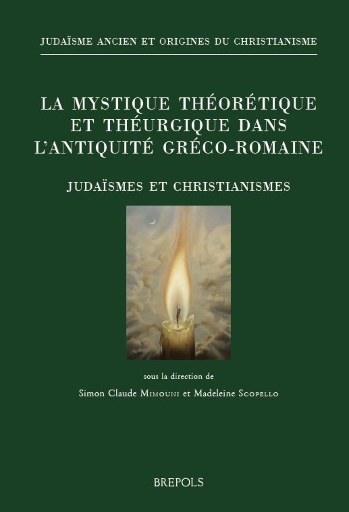
La mystique théorétique et théurgique dans l'Antiquité gréco-romaine
show More to view fulltext, buy and share links for:La mystique théorétique et théurgique dans l'Antiquité gréco-romaine show Less to hide fulltext, buy and share links for: La mystique théorétique et théurgique dans l'Antiquité gréco-romaineDans ce volume sont publiés une partie des résultats d’un programme de recherche intitulé « Mystique théorétique et théurgique dans l’Antiquité gréco-romaine» et sous-titré «paganismes, judaïsmes, christianismes » : c’est dire sa diversité, son ouverture et sa portée dans un monde scientifique où le cloisonnement - sans doute rendu inévitable à cause de la variété des sources et concepts - des disciplines et des domaines devient de plus en plus préjudiciable à une perspective globalisante. Ainsi l’objet de ce projet a été de rendre compte non seulement des pratiques mystiques (rituelles ou cultuelles) mais aussi du versant spéculatif ou intellectuel de la mystique tel qu’on le trouve en œuvre, par exemple, dans la philosophie grecque.
-
-
-
La rigueur et la passion. Mélanges en l’honneur de Pascale Bourgain
show More to view fulltext, buy and share links for:La rigueur et la passion. Mélanges en l’honneur de Pascale Bourgain show Less to hide fulltext, buy and share links for: La rigueur et la passion. Mélanges en l’honneur de Pascale BourgainCe volume qui renferme 57 contributions portant sur la littérature médiolatine rend hommage à Pascale Bourgain, Professeur émérite d’Histoire et tradition manuscrite des textes littéraires à l’École nationale des chartes. Ces Mélanges peuvent se lire comme une histoire littéraire du Moyen Âge latin. Toute la période médiévale est en effet couverte largement, du v e siècle à la Renaissance et, au-delà, jusqu’aux entreprises du xix e siècle pour redonner vie aux anciens textes. Les œuvres relevant de ces divers champs et temps sont analysées en faisant converger sur elles l’éclairage d’une ou, souvent, de plusieurs disciplines parmi celles qui portent sur le manuscrit : codicologie, histoire de l’enluminure, histoire des bibliothèques ; ou sur les textes qu’il transmet : édition critique, histoire littéraire et critique d’attribution ; sur leurs relations d’influence, de la Quellenforschung à l’analyse des inflexions que subit un même passage repris d’une œuvre à l’autre ; sur la langue de ces textes : lexicographie, grammaire, art de la traduction, étude des interactions entre langues latine et romanes ; sur leur forme littéraire, d’une poésie de facture classique à la prose d’art en passant par la poésie rythmique ; sur enfin ce qu’il y a de plus subtil à décrire dans les textes, leur style, et la manière dont style et sens, loin de s’opposer, s’épousent.
-
-
-
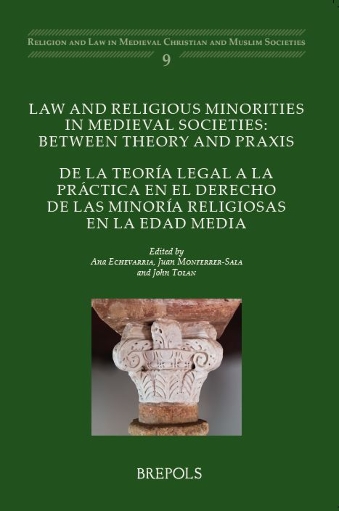
Law and Religious Minorities in Medieval Societies: Between Theory and Praxis
show More to view fulltext, buy and share links for:Law and Religious Minorities in Medieval Societies: Between Theory and Praxis show Less to hide fulltext, buy and share links for: Law and Religious Minorities in Medieval Societies: Between Theory and PraxisMuslim law developed a clear legal cadre for dhimmīs, inferior but protected non-Muslim communities (in particular Jews and Christians) and Roman Canon law decreed a similar status for Jewish and Muslim communities in Europe. Yet the theoretical hierarchies between faithful and infidel were constantly brought into question in the daily interactions between men and women of different faiths in streets, markets, bath-houses, law courts, etc. The twelve essays in this volume explore these tensions and attempts to resolve them. These contributions show that law was used to try to erect boundaries between communities in order to regulate or restrict interaction between the faithful and the non-faithful-and at the same time how these boundaries were repeatedly transgressed and negotiated. These essays explore also the possibilities and the limits of the use of legal sources for the social historian.
-
-
-
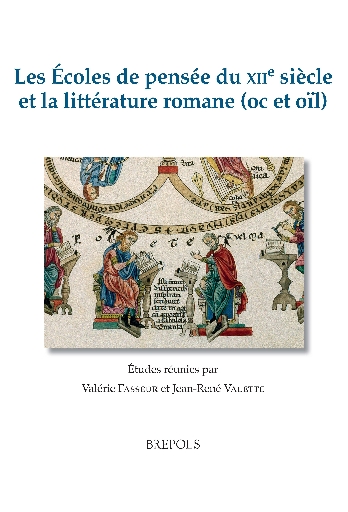
Les Écoles de pensée du XIIe siècle et la littérature romane (oc et oïl)
show More to view fulltext, buy and share links for:Les Écoles de pensée du XIIe siècle et la littérature romane (oc et oïl) show Less to hide fulltext, buy and share links for: Les Écoles de pensée du XIIe siècle et la littérature romane (oc et oïl)Souvent présentée comme une période charnière, la « Renaissance du xii e siècle » voit fleurir les écoles : école de Laon, de Saint-Victor, de Paris, de Chartres, école d’Abélard aussi, auxquelles on peut ajouter le groupe formé par les Porrétains ou bien encore les « écoles du cloître » (chartreux, cisterciens, clunisiens). L’« âge des écoles » marque ainsi le passage d’une forme de vie intellectuelle à une autre, l’évolution de la culture monastique vers la culture urbaine, qui verra la naissance de l’université de Paris au xiii e siècle et l’avènement de la scolastique. Au moment où se produit un tel essor, la littérature en langue romane connaît une seconde naissance. La langue d’oc voit s’épanouir la lyrique tandis qu’au nord de la Loire, dès les dernières années du xi e siècle, les chansons de geste se répandent, avant que les romans et la poésie des trouvères ne fassent leur apparition. Loin d’être étrangers l’un à l’autre, ces deux phénomènes entretiennent des rapports nombreux et complexes qui valent d’autant plus d’être étudiés que le retentissement de ces écoles de pensée sur la littérature romane est perceptible bien au-delà du xii e siècle. Telle est l’ambition de cet ouvrage, qui propose un bilan historiographique, de nombreuses études de cas et une réflexion à caractère épistémologique.
-
-
-
Neoplatonism in the Middle Ages
show More to view fulltext, buy and share links for:Neoplatonism in the Middle Ages show Less to hide fulltext, buy and share links for: Neoplatonism in the Middle AgesOne of the most important texts in the history of medieval philosophy, the Book of Causes was composed in Baghdad in the 9th century mainly from the Arabic translations of Proclus’ Elements of Theology. In the 12th century, it was translated from Arabic into Latin, but its importance in the Latin tradition was not properly studied until now, because only 6 commentaries on it were known. Our exceptional discovery of over 70 unpublished Latin commentaries mainly on the Book of Causes, but also on the Elements of Theology, prove, for the first time, that the two texts where widely disseminated and commented on throughout many European universities (Paris, Oxford, Erfurt, Krakow, Prague), from the 13th to the 16th century. These two volumes provide 14 editions (partial or complete) of the newly-discovered commentaries, and yields, through historical and philosophical analyses, new and essential insights into the influence of Greek and Islamic Neoplatonism in the Latin philosophical traditions.
-
-
-
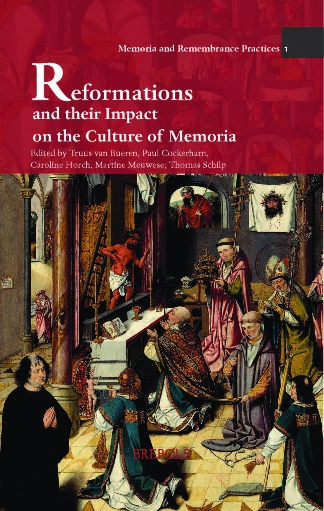
Reformations and their Impact on the Culture of Memoria
show More to view fulltext, buy and share links for:Reformations and their Impact on the Culture of Memoria show Less to hide fulltext, buy and share links for: Reformations and their Impact on the Culture of MemoriaThis volume presents cultural studies approaches to different modes of memoria (the original medieval way of commemoration), taking into account specific confessional contexts. It mainly focuses on the consequences of political, religious and social reforms in the period from 1200 to 1800. Scholars from multiple subject areas in the field of cultural studies evaluate if, and to what extent, reform processes and political or social change have influenced different practices of memoria.
Since customs of commemoration of the dead (and the living) serve as a means of self-reassurance for a society, they allow significant insights into what the respective societies were grounded upon. This volume delivers the first discipline-specific and methodologically diverse approach to the consequences of different reforms on memoria.
In this way this overview creates a ‘history of memoria’ throughout the centuries.
-
-
-
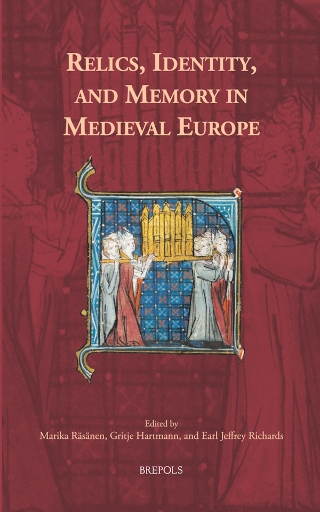
Relics, Identity, and Memory in Medieval Europe
show More to view fulltext, buy and share links for:Relics, Identity, and Memory in Medieval Europe show Less to hide fulltext, buy and share links for: Relics, Identity, and Memory in Medieval EuropeThis volume contributes to current discussions of the place of relics in devotional life, politics, and identity-formation, by illustrating both the power which relics were thought to emanate as well as the historical continuity in the significance assigned to that power. Relics had the power to ‘touch’ believers not only as material objects, but also through different media that made their presence tangible and valuable. Local variants in relic-veneration demonstrate how relics were exploited, often with great skill, in different religious and political contexts. The volume covers both a wide historical and geographical span, from Late Antiquity to the early modern period, and from northern, central, and southern Europe.
The book focuses on textual, iconographical, archaeological, and architectural sources. The contributors explore how an efficient manipulation of the liturgy, narrative texts, iconographic traditions, and architectural settings were used to construct the meaningfulness of relics and how linguistic style and precision were critically important in creating a context for veneration. The methodology adopted in the book combines studies of material culture and close reading of textual evidence in order to offer a new multidisciplinary purchase on the study of relic cults.
-
-
-
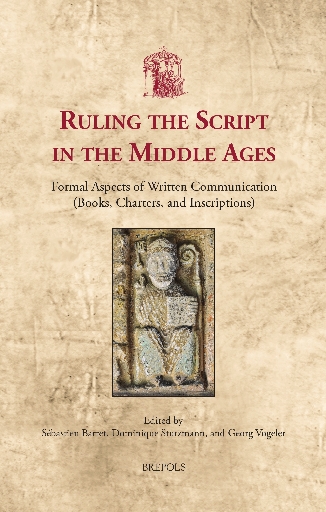
Ruling the Script in the Middle Ages
show More to view fulltext, buy and share links for:Ruling the Script in the Middle Ages show Less to hide fulltext, buy and share links for: Ruling the Script in the Middle AgesThe textuality and materiality of documents are an essential part of their communicative role. Medieval writing, as part of the interpersonal communication process, had to follow rules to ensure the legibility and understanding of a text and its connotations. This volume provides new insights into how different kinds of rules were designed, established, and followed in the shaping of medieval documents, as a means of enabling complex and subtle communicational phenomena. Because they provide a perspective for approaching the material they are supposed to organize, these rules (or the postulation of their use) provide powerful analytical tools for structural studies into given corpora of documents.
Originating in talks given at the International Medieval Congress in Leeds between 2010 and 2012, the twenty papers in this collection offer a precise, in-depth analysis of a variety of medieval scripts, including books, charters, accounts, and epigraphic documents. In doing so, they integrate current developments in palaeography, diplomatics, and codicology in their traditional methodological set, as well as aspects of the digital humanities, and they bridge the gap between the so-called ‘auxiliary sciences of history’ and the field of communication studies. They illustrate different possibilities for exploring how the formal aspects of scripts took their place in the construction of effective communication structures.
-
-
-
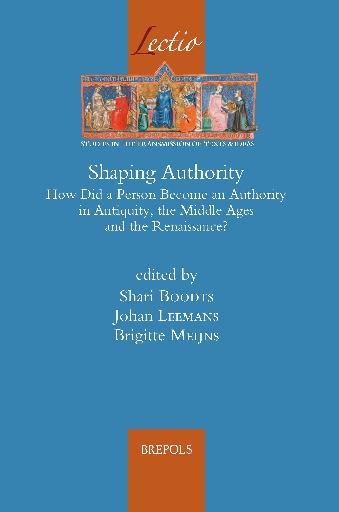
Shaping Authority
show More to view fulltext, buy and share links for:Shaping Authority show Less to hide fulltext, buy and share links for: Shaping AuthorityThe cultural and religious history from Antiquity through the Renaissance may be read through the lens of the rise and demise of auctoritates. Throughout this long period of about two millennia, many historical persons have been considered as exceptionally authoritative. Obviously, this authority derived from their personal achievements. But one does not become an authority on one’s own. In many cases, the way an authority’s achievements were received and disseminated by their contemporaries and later generations, was the determining factor in the construction of their authority. This volume focuses on the latter aspect: what are the mechanisms and strategies by which participants in intellectual life at large have shaped the authority of historical persons? On what basis, why and how were some persons singled out above their peers as exceptional auctoritates and by which processes did this continue (or discontinue) over time? What imposed geographical or other limits on the development and expansion of a person’s auctoritas? Which circumstances led to the disintegration of the authority of persons previously considered to be authoritative? The case-studies in this volume reflect the dazzling variety of trajectories, concerns, actors and factors that contributed over a time span of two millennia to the fashioning of the postmortem and lasting authority of historical persons.
-
-
-
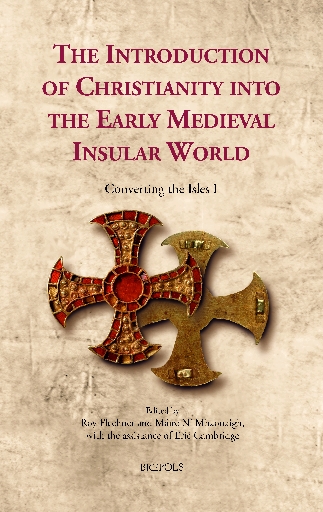
The Introduction of Christianity into the Early Medieval Insular World
show More to view fulltext, buy and share links for:The Introduction of Christianity into the Early Medieval Insular World show Less to hide fulltext, buy and share links for: The Introduction of Christianity into the Early Medieval Insular WorldConversion to Christianity is arguably the most revolutionary social and cultural change that Europe experienced throughout Late Antiquity and the early Middle Ages. Christianisation affected all strata of society and transformed not only religious beliefs and practices, but also the nature of government, the priorities of the economy, the character of kinship, and gender relations. It is against this backdrop that an international array of leading medievalists gathered under the auspices of the Converting the Isles Research Network (funded by the Leverhulme Trust) to investigate social, economic, and cultural aspects of conversion in the early medieval Insular world, covering different parts of Britain, Ireland, Scandinavia, and Iceland.
This is is the first of two volumes showcasing research generated through the ‘Converting the Isles’ Network. This volume focuses on specific aspects of the introduction of Christianity into the early medieval Insular world, including the nature and degree of missionary activity involved, socio-economic stimulants for conversion, as well as the depiction and presentation of a Christian saint. Its companion volume has the transformation of landscape as its main theme. By adopting a broad comparative and crossdisciplinary approach that transcends national boundaries, the material presented here and in volume II offers novel perspectives on conversion that challenge existing historiographical narratives and draw on up-to-date archaeological and written evidence in order to shed light on central issues pertaining to the conversion of the Isles.
-
-
-
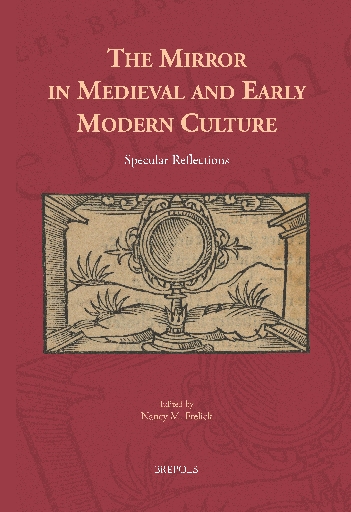
The Mirror in Medieval and Early Modern Culture
show More to view fulltext, buy and share links for:The Mirror in Medieval and Early Modern Culture show Less to hide fulltext, buy and share links for: The Mirror in Medieval and Early Modern CultureMirrors have always fascinated humankind. They collapse ordinary distinctions, making visible what is normally invisible, and promising access to hidden realities. Yet, these liminal objects also point to the limitations of human perception, knowledge, and wisdom. In this interdisciplinary volume, specialists in medieval and early modern science, cultural and political history, as well as art history, philosophy, and literature come together to explore the intersections between material and metaphysical mirrors in Europe and the Islamic world. During the time periods studied here, various technologies were transforming the looking glass as an optical device, scientific instrument, and aesthetic object, making it clearer and more readily available, though it remained a rare and precious commodity. While technical innovations spawned new discoveries and ways of seeing, belief systems were slower to change, as expressed in the natural sciences, mystical writings, literature, and visual culture. Mirror metaphors based on analogies established in the ancient world still retained significant power and authority, perhaps especially when related to Aristotelian science, the medieval speculum tradition, religious iconography, secular imagery, Renaissance Neoplatonism, or spectacular Baroque engineering, artistry, and self-fashioning. Mirror effects created through myths, metaphors, rhetorical strategies, or other devices could invite self-contemplation and evoke abstract or paradoxical concepts. Whether faithful or deforming, specular reflections often turn out to be ambivalent and contradictory: sometimes sources of illusion, sometimes reflections of divine truth, mirrors compel us to question the very nature of representation.
-
-
-
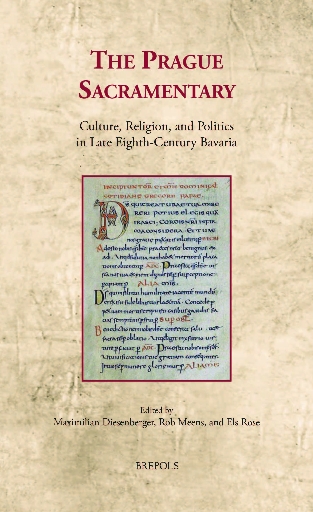
The Prague Sacramentary
show More to view fulltext, buy and share links for:The Prague Sacramentary show Less to hide fulltext, buy and share links for: The Prague SacramentaryThe Prague Sacramentary is a unique liturgical manuscript which can be very precisely located in a specific social and historical context. It was written in the turbulent period when Charlemagne crossed Bavaria to fight the Avars and when his son Pippin rebelled against him, seeking support among the Bavarian nobility. The manuscript can be linked to specific groups of Bavarian elites that had to come to terms with this explosive political situation. It also elucidates the ways in which Christian culture was expressed and experienced in Bavaria at the end of the eighth century. Although Bavaria may be regarded as a periphery from a Frankish perspective, it was certainly no cultural backwater. Because of its geographical position at the crossroads of Italian, Bavarian, and Frankish culture, Bavaria produced unique and intriguing texts and artefacts.
One such object is analysed here by a team of experts, shedding renewed light on the earthly and heavenly concerns of an early medieval community in a specific region. It includes a discussion of the topics of the formal invocation of saints, vernacular understandings of Latin texts, marriage, politics, and concerns for ritual purity as well as the well-being of the conflict-ridden Carolingian family.
-
-
-
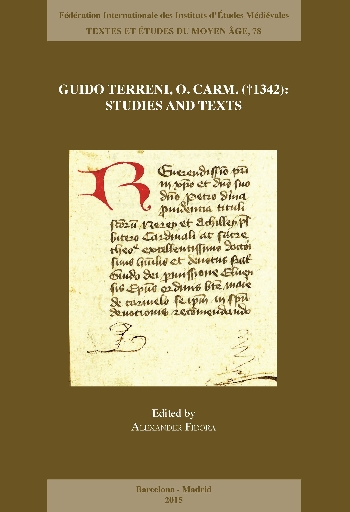
Guido Terreni, O. Carm. ( †1342)
show More to view fulltext, buy and share links for:Guido Terreni, O. Carm. ( †1342) show Less to hide fulltext, buy and share links for: Guido Terreni, O. Carm. ( †1342)The Catalan philosopher and theologian Guido Terreni (ca. 1270-1342) is one of the most outstanding fi gures in the history of the Carmelite order. The articles gathered in the first part of this volume explore the extremely rich, though still understudied, oeuvre of the Bishop of Majorca and Elne which comprises philosophicotheological, polemical, biblical and juridical texts. Since many of these works remain unedited, the second part of the volume contains selected text editions from Guido’s commentaries on Aristotle’s Physics and the Decretum Gratiani, as well as from his influential Quodlibetal Questions. Altogether, the sixteen contributions in this volume offer a comprehensive and up-to-date appraisal of Guido’s major contribution to the intellectual and political debates of his age and beyond.
-
-
-
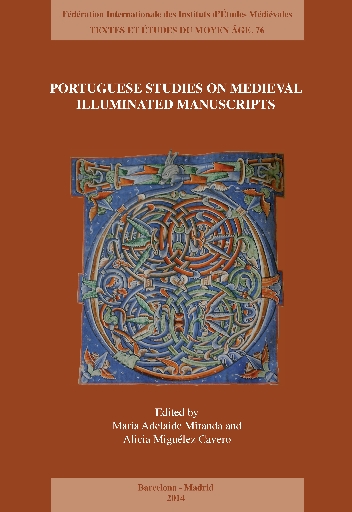
Portuguese Studies on Medieval Illuminated Manuscripts
show More to view fulltext, buy and share links for:Portuguese Studies on Medieval Illuminated Manuscripts show Less to hide fulltext, buy and share links for: Portuguese Studies on Medieval Illuminated ManuscriptsIn the most recent years a group of young researchers has given a new impetus to the study of Book Illumination in Portugal, promoting national and international research that focuses on understanding illuminated manuscripts in both their aesthetics and material dimensions, as well as the relationship between text and image. The developement of interdisciplinary research thanks, in part, to strategic partnerships between the Humanities and the domain of Exact Science has been established to address new issues raised by the need of more comprehensive and wide studies around the illuminated manuscript.
This volume gives thus light to the most important contributions of these new approaches, including new technical studies of pigments in manuscripts of the fund of the Monastery of Alcobaça and three copies of Hugh of Fouilloy’s Book of Birds, inquiries concerning a mismounted mappamundiin the Lorvão Beatus, a study of two southern French legal manuscripts, the image of the artist in astrological iconography, problems raised by two books of hours in the National Library of Portugal, and penwork decoration in fifteenth-century Hebrew manuscripts.
The authors of the volume belong to three Portuguese academic institutions. Maria Adelaide Miranda, Alicia Miguélez Cavero, Catarina Fernandes Barreira, Maria Alessandra Bilotta, Ana Lemos and Luís Ribeiro are integrated members of the Institute of Medieval Studies of the Nova University of Lisbon; Maria João Melo, Rita Castro, Conceição Casanova, Vania Solange Muralhas e Rita Araújo are members of the Department of Conservation and Restoration of the Nova University of Lisbon; Luís Urbano Afonso e Tiago Moita are members of the Institute of History of Art of the University of Lisbon.
-
-
-

Reading Sacred Scripture with Thomas Aquinas
show More to view fulltext, buy and share links for:Reading Sacred Scripture with Thomas Aquinas show Less to hide fulltext, buy and share links for: Reading Sacred Scripture with Thomas AquinasThomas Aquinas is still most widely known for his works in systematic theology (Summa theologiae) and as a commentator of Aristotle. Recent decades, however, have seen a revived interest in Aquinas as a biblical scholar. The essays gathered in this volume explore the richness of his biblical commentaries by analyzing the hermeneutical tools employed in his reading of Scripture and investigating the contemporary relevance of his biblical exegesis. Its goal is to familiarize the contemporary reader with an indispensable dimension of his scholarly activity: as a master in Sacred Scripture (magister in sacra pagina) Aquinas taught theology as a form of speculative reading of the revealed Word of God and hence the reading of the various books of the Bible constituted the axis of his scriptural didactics. Altogether, the nineteen contributions in the volume offers an up-to-date analysis of Aquinas’s contribution to medieval biblical exegesis and points to ways in which it can enrich contemporary debates on the relation between exegesis and systematic theology.
Contributors: Christopher Baglow, Timothy F. Bellamah, Lluís Clavell, Gilbert Dahan, Leo J. Elders, Jeremy Holmes, Daniel Keating, Matthew Levering, Enrique Martínez, Miroslaw Mróz, Mauricio Narváez, Marco Passarotti, Matthew J. Ramage, Elisabeth Reinhardt, Margherita Maria Rossi, Piotr Roszak, Olivier-Thomas Venard, Jörgen Vijgen, Robert J. Woźniak.
-
-
-
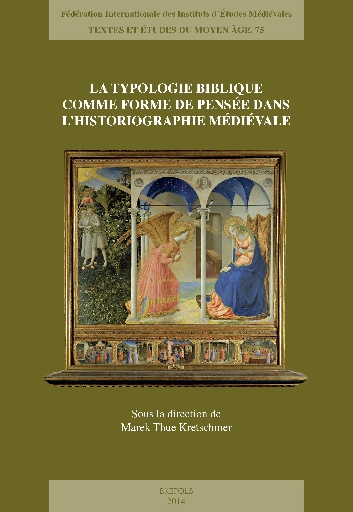
La Typologie biblique comme forme de pensée dans l'historiographie médiévale
show More to view fulltext, buy and share links for:La Typologie biblique comme forme de pensée dans l'historiographie médiévale show Less to hide fulltext, buy and share links for: La Typologie biblique comme forme de pensée dans l'historiographie médiévaleLe présent volume se propose, à travers des approches comparatives appliquées à un corpus de textes d’histoire appartenant à des périodes et des milieux différents, d’aboutir à une compréhension plus approfondie de l’infl uence de la typologie et des images bibliques sur l’historiographie du Moyen Âge: historiae, chronica, gesta, annales, vitae, epistolae, etc. Il s’agit, en effet, d’un aspect souvent négligé de l’historiographie médiévale, en raison, probablement, des controverses théoriques qui entourent le domaine. Cette publication devrait fournir de nouveaux outils de travail qui seront des apports précieux pour tous ceux qui s’intéressent à l’historiographie à l’époque médiévale.
-