


EMISCX11

Collection Contents
6 results
-
-
Chromatius of Aquileia and His Age
show More to view fulltext, buy and share links for:Chromatius of Aquileia and His Age show Less to hide fulltext, buy and share links for: Chromatius of Aquileia and His AgeThis volume presents the proceedings of the International Congress Chromatius of Aquileia and His Age which took place at Aquileia (Italy) from 22 to 24 May 2008 under the direction of Pier Franco Beatrice (University of Padova) and Alessio Peršič (Università Cattolica del Sacro Cuore, Milan) and was fostered by the National Commitee for the Sixteenth Centenary of the Death of Saint Chromatius Bishop of Aquileia headed by Dr. Mons. Duilio Corgnali, in common accord with the Dioceses of the Autonomous Region of Friuli Venezia Giulia and the adjacent Slovenian and Austrian Dioceses of Ljubljiana, Koper / Capodistria, and Gurk-Klagenfurt.
The Congress was part of a vast range of celebratory activites inspired by the desire to create a renewed Christian historical awareness of both the significance of Aquileia and its Fathers and of the strong vitality of evangelical spirituality directed at creating a synthesis between East and West, between Greco-Roman civilization, the revealed Hebrew epos, and the disruptive diversity of the new invading peoples. The Christian communities are heirs to the long tradition of the Patriarcate of Aquileia which lasted for over a thousand years and it was the passionate interest in their Christian origins which prompted the Congress. The Aquileian metropolis—patriarcal see until the eighteenth century and a crossroads where Romans and Illyrians, Germanic peoples and Slavs all met—was a cradle of monasticism and home to some of its greatest masters (Martin, Chromatius, Rufinus, and Jerome). These scholars have proven to be the beneficiaries of earlier exegetic skills (Victorinus, Fortunatianus) as well as intrepid and creative mediators of the highest and most controversial expressions of Greek spiritual and theological culture in the Roman world and of the rediscovered veritas hebraica of Old Testament sources. Lastly, Paulus Diaconus and the Patriarch Paulinus II distinguished themselves as inspiration for a modern European identity after its slow Christian and barbarian palingenesis.
The Congress brought together scholars from Europe and America who are experts on the work of Chromatius—only recently saved from the near obscurity into which it had fallen in manuscript tradition—for the purpose of providing original contributions on an international level to Aquileian literary historiography, Chromatius in particular, not always taken into account and given due merit.
-
-
-
Gottes Schau und Weltbetrachtung. Interpretationen zum »Liber contemplationis« des Raimundus Lullus
show More to view fulltext, buy and share links for:Gottes Schau und Weltbetrachtung. Interpretationen zum »Liber contemplationis« des Raimundus Lullus show Less to hide fulltext, buy and share links for: Gottes Schau und Weltbetrachtung. Interpretationen zum »Liber contemplationis« des Raimundus Lullus[In the year 2007, the Raimundus-Lullus-Institut at the University of Freiburg celebrated its 50th anniversary. To mark this occasion, an international congress was held on 25–28 November 2007, titled Vision of God and Contemplation of the World. Interpretations of Ramon Lull’s »Liber contemplationis«. The congress papers assembled in the present volume offer an informative survey of the Liber contemplationis in Deum (Catalan: Llibre de contemplació en Déu), the most comprehensive and probably most significant work of Lull’s. The Liber contemplationis comprises 366 chapters: one chapter for each day of the year, including one for the additional day of the leap year. The contents of the work have often been described as ‘encyclopaedic’. Its aim, however, is not to offer a comprehensive account of all that is known about reality, but rather to recognise and describe reality in the context of contemplating God, knowing the articles of faith as well as attaining a virtuous life agreeable to God.
The volume contains introductory studies of the Latin tradition of the text as well as detailed commentaries on individual chapters.
,Im Jahr 2007 konnte das Raimundus-Lullus-Institut der Universität Freiburg sein 50-jähriges Bestehen feiern. Aus diesem Anlass fand vom 25.–28. November 2007 ein internationaler wissenschaftlicher Kongress unter dem Titel Gottes Schau und Weltbetrachtung. Interpretationen zum »Liber contemplationis« des Raimundus Lullus statt. Die 20 Referentinnen und Referenten wurden bewusst nicht nur aus dem Kreis namhafter Lull-Spezialisten gewählt, sondern repräsentieren ein breites Spektrum internationaler mediävistischer Forschung. Mit ihren Tagungsbeiträgen, die in diesem Band gesammelt vorliegen, bieten sie eine informative Tour d’Horizon durch Ramon Lulls umfangreichstes und wohl bedeutendstes Werk, den Liber contemplationis in Deum (katalanisch: Llibre de contemplació en Déu).
Der Liber contemplationis umfasst 366 Kapitel: ein Kapitel für jeden Tag des Jahres und eines für den zusätzlichen Tag im Schaltjahr. Der Inhalt des Werkes ist oft als ‚enzyklopädisch‘ bezeichnet worden. Sein Ziel besteht jedoch nicht in einer umfassenden Darstellung des Wissens über die gesamte Wirklichkeit, sondern in der Bestimmung und Beschreibung der Wirklichkeit in Bezug auf die Betrachtung Gottes, die Erkenntnis der Glaubensartikel sowie die Erlangung eines tugendhaften, gottgefälligen Lebens.
Der vorliegende Band umfasst neben einführenden Untersuchungen zur lateinischen Textüberlieferung und zur Struktur des Werkes sowohl detaillierte Kommentare zu ausgewählten Kapiteln als auch Diskussionen von Einzelfragen vor dem Hintergrund von Lulls Gesamtwerk in seinem historischen Kontext.
]
-
-
-
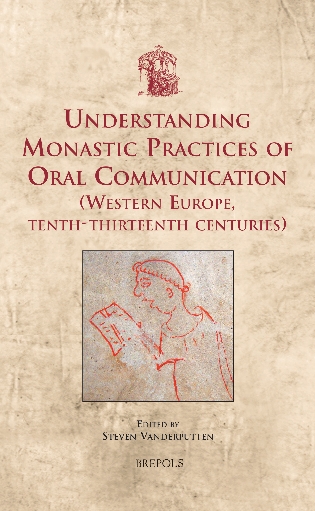
Understanding Monastic Practices of Oral Communication
show More to view fulltext, buy and share links for:Understanding Monastic Practices of Oral Communication show Less to hide fulltext, buy and share links for: Understanding Monastic Practices of Oral CommunicationAlthough traditionally defined as a literate environment, Western monastic culture depended on a range of communicative practices which was just as large, and in some ways more sophisticated in its diversity, than that of other groups of society. Monks and nuns exchanged considerable amounts of information for which no written media were deemed necessary or which did not make a complete or immediate transition into written sources. Grouped in five thematic chapters, the papers in this volume aim to provide inroads into a useable interpretation of the various contexts in which monks and nuns in the central Middle Ages considered the spoken word as a vital complementary medium to other forms of communication.
-
-
-

Agrosystems and Labour Relations in European Rural Societies
show More to view fulltext, buy and share links for:Agrosystems and Labour Relations in European Rural Societies show Less to hide fulltext, buy and share links for: Agrosystems and Labour Relations in European Rural SocietiesIt goes without saying that agriculture is a form of colonisation of nature by society. In the course of history the articulation of natural and societal features gave rise to a wide variety of agrosystems within the boundaries of Europe which were embedded in supra-regional political and economic contexts at least from the High Middle Ages onwards. By following an integrative approach, this volume defines agrosystems as production systems based on the ecological and socioeconomic relations involved in the reproduction of rural societies at multiple levels. The authors explore the articulation of natural and societal factors through the prism of labour relations. The structural and practical organization of labour is seen as the crucial link between rural production and reproduction. Accordingly, the contributions focus on the rural household as the basic unit of production and reproduction in different temporal and spatial contexts. Therefore, the question arises if the changes in ecosystems and social systems have so fundamentally altered European agriculture up to now that peasant family farming will disappear (if it is no longer sustained by state intervention).
-
-
-
Les innovations du vocabulaire latin à la fin du moyen âge: autour du Glossaire du latin philosophique
show More to view fulltext, buy and share links for:Les innovations du vocabulaire latin à la fin du moyen âge: autour du Glossaire du latin philosophique show Less to hide fulltext, buy and share links for: Les innovations du vocabulaire latin à la fin du moyen âge: autour du Glossaire du latin philosophiqueLe Glossaire du latin philosophique est un fichier d’environ 230.000 à 260.000 fiches consacré au vocabulaire philosophique du moyen âge. Une équipe du CNRS, au départ sous la direction de Pierre Michaud-Quantin, y a travaillé durant de nombreuses années. Récemment, il a été transporté de la Sorbonne à l’Institut de Recherche et d’Histoire des Textes, où il est désormais consultable à la Section latine.
A l’occasion de l’arrivée du Glossaire du latin philosophique à l’Institut de Recherche et d’Histoire des Textes et pour marquer un nouveau départ, une journée d’étude consacrée à ce fichier a eu lieu à l’IRHT, le jeudi 15 mai 2008, sous le titre «Les innovations du vocabulaire latin à la fin du moyen âge: autour du Glossaire du latin philosophique (philosophie, théologie, sciences)». L’accent était mis sur la fin du moyen âge (XIIIe-XVe s.) parce que le vocabulaire philosophique de cette période n’est représenté que très partiellement dans les dictionnaires du latin médiéval et que nombre d’éditions récentes concernent cette période.
Les articles réunis ici sont le reflet de cette journée, qui fut introduite et présidée par Louis Holtz. Ils sont de la main de Charles Burnett, Monica Calma, Ana Gómez Rabal, Jacqueline Hamesse, Ruedi Imbach, Alfonso Maierù et Jean-Pierre Rothschild. Ils sont suivis de deux Annexes: 1. Liste des différentes parties du fichier, 2. Quelques exemples tirés des différentes parties du fichier.
-
-
-
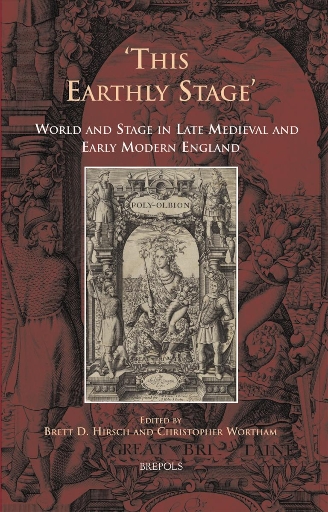
‘This Earthly Stage’
show More to view fulltext, buy and share links for:‘This Earthly Stage’ show Less to hide fulltext, buy and share links for: ‘This Earthly Stage’The thirteen essays collected in ‘This Earthly Stage’ explore intersections between the world as stage and the stage as world in late medieval and early modern England. The volume features studies of stages both familiar and unfamiliar, and worlds old and new - from the ritual performance of funerals for the fifteenth-century London elite to the electronic recreation of Shakespeare on the Internet. The essays engage with a variety of scholarly fields, including art and iconography, cultural and social history, digital humanities, literature, myth, philology, and philosophy. Most studies examine performative elements of Shakespeare’s works in relation to a representative selection of other plays from the dramatic genres in which he wrote, while they also analyse broader topics which traverse a number of plays, such as kingship and rites of civic performance in relation to stage drama. All of the essays consider the overarching issue of representation in late medieval and early modern English drama and culture through a range of theoretical approaches. This volume offers a valuable contribution to contemporary medieval and early modern scholarship, with a particular interest for those researching and teaching early modern English drama and culture.
-