


Peritia
Journal of the Medieval Academy of Ireland
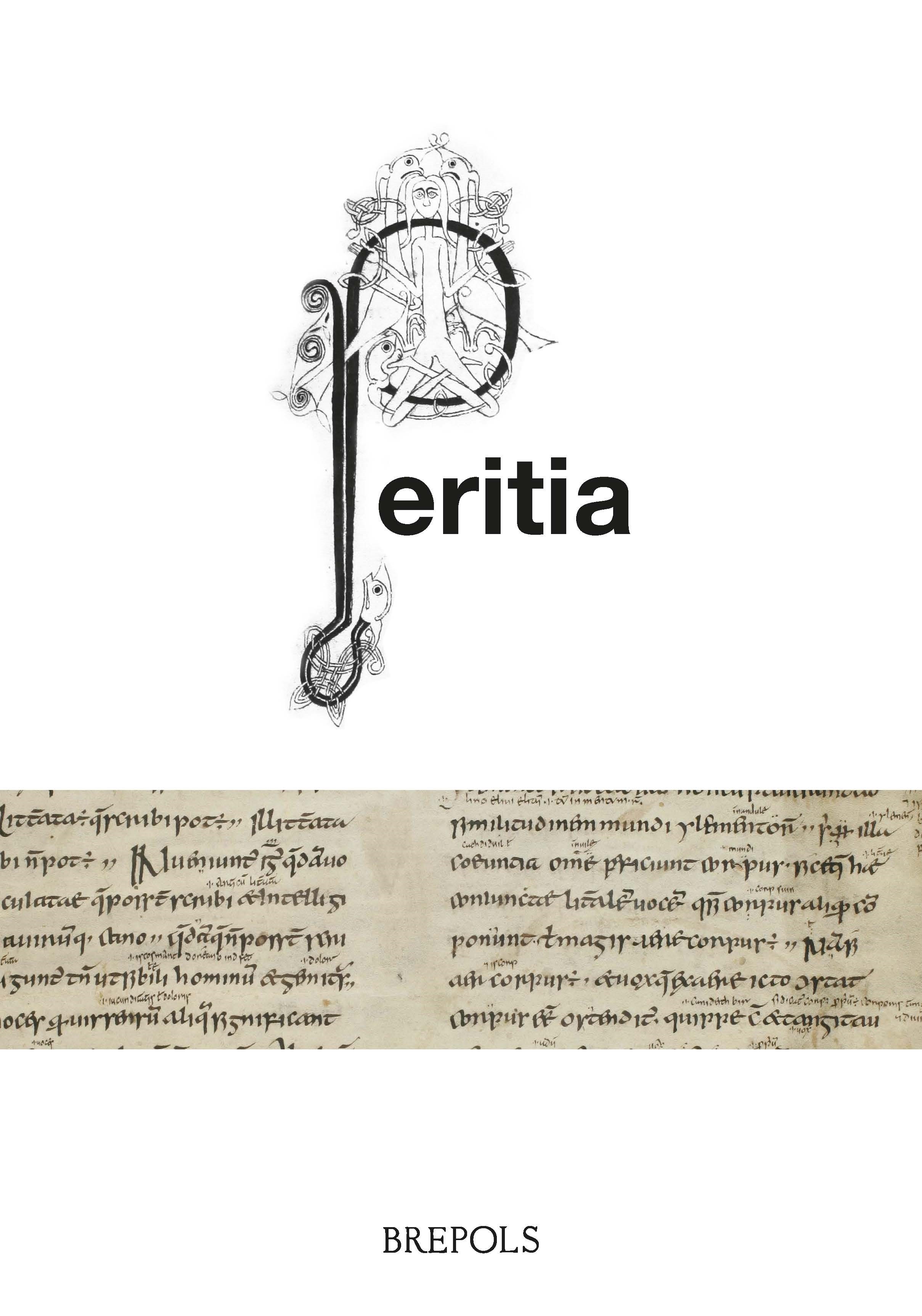
Volume 29, Issue 1, 2018
-
-
The Duality of Sin and Delict - Penance to God, Penalty to Men - A Legal Perspective
show More to view fulltext, buy and share links for:The Duality of Sin and Delict - Penance to God, Penalty to Men - A Legal Perspective show Less to hide fulltext, buy and share links for: The Duality of Sin and Delict - Penance to God, Penalty to Men - A Legal PerspectiveBy: Jaqueline BemmerAbstractRecognition of an offence in early Irish law entailed not punishment but compensation by payment. Some of these offences were also regulated in the penitentials and in canon law, posing the question of how penance and payment intertwined and to what communities they catered. This paper investigates the influence of this perceived duality in the paradigm of liability and sin from a legal perspective.
-
-
-
Reading Annalistic Obituaries as Biography
show More to view fulltext, buy and share links for:Reading Annalistic Obituaries as Biography show Less to hide fulltext, buy and share links for: Reading Annalistic Obituaries as BiographyBy: Paul ByrneAbstractAnnalistic obituaries of abbots who had resigned their positions frequently display their former titles without reference to the fact that these were no longer current. We may infer from this that some of the obits of churchmen, to whom multiple offices were ascribed without indication as to whether or not they were extant at the time of death, may actually record the positions held throughout their careers. Consideration of the demands of office and distances between churches substantiates this conclusion in a number of instances. Analysis of certain clerical obituaries allows us to reconstruct, tentatively, the career-paths of their subjects.
-
-
-
Was Áth an Tearmainn at Shrule, Co. Mayo? The Inauguration of Toirrdelbach Ua Conchobair and the Ráith Bressail Boundary
show More to view fulltext, buy and share links for:Was Áth an Tearmainn at Shrule, Co. Mayo? The Inauguration of Toirrdelbach Ua Conchobair and the Ráith Bressail Boundary show Less to hide fulltext, buy and share links for: Was Áth an Tearmainn at Shrule, Co. Mayo? The Inauguration of Toirrdelbach Ua Conchobair and the Ráith Bressail BoundaryBy: Jessica CookeAbstractWas Áth an Tearmainn at Cloghvanaha, Shrule, Co. Mayo? Shrule abbey held the ford to Iar-Connacht of the Uí Fhlaithbertaig, powerful opponents of the Uí Chonchobair. If Toirrdelbach Mór’s inauguration site and the Cong-Tuam diocesan boundary were identical, Shrule was key to dividing and controlling the Uí Fhlaithbertaig, politically and ecclesiastically.
-
-
-
Rethinking the Palaeography of H in Lebor na hUidre
show More to view fulltext, buy and share links for:Rethinking the Palaeography of H in Lebor na hUidre show Less to hide fulltext, buy and share links for: Rethinking the Palaeography of H in Lebor na hUidreBy: Charlene M. EskaAbstractThis work examines Elizabeth Duncan’s 2015 argument that Hand H represents six hands rather than one hand as postulated by R. I. Best in 1912 and suggests that Best’s original argument is correct and that the variation both Duncan and Best see in Hand H is a result of writing on abraded vellum and trying to make textual additions fit within the columns of the MS.
-
-
-
The Preface of Gildas, the Book of David, and the British Church in the Sixth Century
show More to view fulltext, buy and share links for:The Preface of Gildas, the Book of David, and the British Church in the Sixth Century show Less to hide fulltext, buy and share links for: The Preface of Gildas, the Book of David, and the British Church in the Sixth CenturyAuthors: Constant J. Mews and Stephen J. JoyceAbstractThis paper examines the connections between the penitential works attributed to Gildas and David and those of the anonymous author of the Poenitentiale Ambrosianum and Cummian. It argues that the penitential attributed to Gildas should be regarded as a genuine work by Gildas and that the Ambrosianum be considered as ‘the book of David’, from which excerpts were made. Attempts by Cummian to combine these two authorial traditions in seventh-century Ireland point to the continuing strength of a British Church, against the image presented by Bede.
-
-
-
The Irish Material in the Stowe Missal Revisited
show More to view fulltext, buy and share links for:The Irish Material in the Stowe Missal Revisited show Less to hide fulltext, buy and share links for: The Irish Material in the Stowe Missal RevisitedBy: Lars B. NooijAbstractThis article explores the composition history of the Stowe Missal in order to establish when and where the Irish language material contained therein was added to the manuscript. It is argued that the Stowe Missal was likely copied in early ninth-century Tallaght and that most of its Irish sections were added by the manuscript’s original scribe.
-
-
-
The Assassination of Tigernán Ua Ruairc, The Last King of Meath
show More to view fulltext, buy and share links for:The Assassination of Tigernán Ua Ruairc, The Last King of Meath show Less to hide fulltext, buy and share links for: The Assassination of Tigernán Ua Ruairc, The Last King of MeathAbstractThe expansion of Tigernán Ua Ruairc, king of Uí Briúin Bréifne, into the province of Meath in the mid-twelfth century ultimately led to his eclipse of the Uí Máel Sechlainn. His control of the region caused the Anglo-Norman baron Hugh de Lacy to assassinate him, with the aid of an exiled noble of Bréifne. This article investigates the motives, personalities, and locations concerned in the assassination, and shows that the Irish noble involved in killing Ua Ruairc was an Ua Ragallaig, not another Ua Ruairc, as previously thought.
-
-
-
The Ugly, Greedy Crane of Medieval Wales
show More to view fulltext, buy and share links for:The Ugly, Greedy Crane of Medieval Wales show Less to hide fulltext, buy and share links for: The Ugly, Greedy Crane of Medieval WalesBy: Lee RayeAbstractMost medieval depictions of the crane (Grus grus) emphasise its nobility and importance for falconry; however, medieval Welsh poetry provides a topos of an ugly, greedy creature. This paper contrasts the two attitudes and suggests possible origins with reference to classical literature, naturalistic observation and Marxist interpretations of class conflict.
-
-
-
Stair Mlaise ar Dhartraighibh déin by Sighraidh Ó Cuirnín: A Poem on the Rights and Privileges of the Coarb of Saint Molaise over Dartraighe
show More to view fulltext, buy and share links for:Stair Mlaise ar Dhartraighibh déin by Sighraidh Ó Cuirnín: A Poem on the Rights and Privileges of the Coarb of Saint Molaise over Dartraighe show Less to hide fulltext, buy and share links for: Stair Mlaise ar Dhartraighibh déin by Sighraidh Ó Cuirnín: A Poem on the Rights and Privileges of the Coarb of Saint Molaise over DartraigheBy: Peter J. SmithAbstractStair Mlaise ar Dhartraighibh, a poem of 14 verses, by a fourteenth-century author called Sighraidh Ó Cuirnín, gives an account of the rents to be paid by the Uí Mhithighéin to the Uí Thaithligh in their capacity as comarbaí [coarbs] to Saint Molaise (d. 562) on Daimhinis [Devenish Island, Co. Fermanagh].
-
-
-
Remembering the ‘Old North’ in Ninth- and Tenth-Century Wales
show More to view fulltext, buy and share links for:Remembering the ‘Old North’ in Ninth- and Tenth-Century Wales show Less to hide fulltext, buy and share links for: Remembering the ‘Old North’ in Ninth- and Tenth-Century WalesBy: Rebecca ThomasAbstractThis article takes a fresh look at how the memory of the ‘Old North’ was used and reshaped in early medieval Welsh sources. Although their value as historical evidence for the northern kingdoms is uncertain, these sources give us precious insight into how early Welsh writers perceived themselves as a people. Focusing on Historia Brittonum and Armes Prydein Vawr this study demonstrates the multiplicity of memories of the ‘Old North’ in early medieval Wales, with writers freely adapting the past to their present ends.
-
-
-
Latin and Irish Words for ‘Graveyard’ in Medieval Ireland
show More to view fulltext, buy and share links for:Latin and Irish Words for ‘Graveyard’ in Medieval Ireland show Less to hide fulltext, buy and share links for: Latin and Irish Words for ‘Graveyard’ in Medieval IrelandBy: Niamh WycherleyAbstractThis article considers the primary terms for burial places in the medieval Irish sources. It investigates why the etymology of modern Irish reilig differs from terms for graveyards and cemeteries in other major European languages. It is proposed that both the cult of relics and bilingualism played roles in the evolution of the term.
-
-
-
Notes
show More to view fulltext, buy and share links for:Notes show Less to hide fulltext, buy and share links for: NotesAbstractTwo Short Notes:The Latin citation at CIH 847.23; The Date of Section A of Royal Irish Academy MS 23 Q 6 [1243] (Charlene M. Eska)
Slieve Donard and Slieve Commedagh, Complementary Mourne Mountain Names (Cormac Bourke)
The Middle Irish glosses of Marianus Scottus alias Muiredach mac Robartaig in the Vienna Cod. 1247 (David Stifter)
-
-
-
The Myth of Pelagianism?
show More to view fulltext, buy and share links for:The Myth of Pelagianism? show Less to hide fulltext, buy and share links for: The Myth of Pelagianism?By: Peter BrownAbstractThe Pelagian heresy was the last great controversy of the Western Church in Late Antiquity. Its outcome shaped the future of that Church for centuries to come and its various theological positions were still being debated at the time of the Reformation. Central to the controversy were the figures of Pelagius and Augustine, with their respective supporters. In recent times, however, the debate has taken a dramatic new turn: the very existence of ‘Pelagianism’ as a body of ideas has been flatly denied, and the theological beliefs supposedly espoused by Pelagius himself have been dismissed as fabrications conjured up by Augustine and his followers as part of a massive conspiracy. This radical new theory offers the opportunity to reassess the scholarly discussion of the question over the last fifty years and to offer a verdict on the latest theory about Pelagius and Pelagianism.
-
-
-
John Bradley, Coilin O Drisceoil & Michael Potterton (eds), William Marshal and Ireland
show More to view fulltext, buy and share links for:John Bradley, Coilin O Drisceoil & Michael Potterton (eds), William Marshal and Ireland show Less to hide fulltext, buy and share links for: John Bradley, Coilin O Drisceoil & Michael Potterton (eds), William Marshal and IrelandBy: Clare Downham
-
-
-
Michelle P. Brown, Art of the islands: Celtic, Pictish, Anglo-Saxon and Viking visual culture c. 450-1050
show More to view fulltext, buy and share links for:Michelle P. Brown, Art of the islands: Celtic, Pictish, Anglo-Saxon and Viking visual culture c. 450-1050 show Less to hide fulltext, buy and share links for: Michelle P. Brown, Art of the islands: Celtic, Pictish, Anglo-Saxon and Viking visual culture c. 450-1050
-
-
-
Keith Busby, French in medieval Ireland, Ireland in medieval French: the paradox of two worlds
show More to view fulltext, buy and share links for:Keith Busby, French in medieval Ireland, Ireland in medieval French: the paradox of two worlds show Less to hide fulltext, buy and share links for: Keith Busby, French in medieval Ireland, Ireland in medieval French: the paradox of two worldsBy: Brendan Smith
-
-
-
Gianluca Caputo, L’aurora del Giappone tra mito e storiografia. Nascita ed evoluzione dell’alterità nipponica nella cultura italiana, 1300-1600
show More to view fulltext, buy and share links for:Gianluca Caputo, L’aurora del Giappone tra mito e storiografia. Nascita ed evoluzione dell’alterità nipponica nella cultura italiana, 1300-1600 show Less to hide fulltext, buy and share links for: Gianluca Caputo, L’aurora del Giappone tra mito e storiografia. Nascita ed evoluzione dell’alterità nipponica nella cultura italiana, 1300-1600By: Enrico Dal Lago
-
-
-
Leonard Ellinwood (ed & trans), The Musica of Hermannus Contractus
show More to view fulltext, buy and share links for:Leonard Ellinwood (ed & trans), The Musica of Hermannus Contractus show Less to hide fulltext, buy and share links for: Leonard Ellinwood (ed & trans), The Musica of Hermannus Contractus
-
-
-
Thomas Finan, Landscape and history on the medieval Irish frontier: the King’s Cantreds in the thirteenth century
show More to view fulltext, buy and share links for:Thomas Finan, Landscape and history on the medieval Irish frontier: the King’s Cantreds in the thirteenth century show Less to hide fulltext, buy and share links for: Thomas Finan, Landscape and history on the medieval Irish frontier: the King’s Cantreds in the thirteenth centuryBy: Brendan Smith
-
Volumes & issues
-
Volume 35 (2024)
-
Volume 34 (2023)
-
Volume 33 (2022)
-
Volume 32 (2021)
-
Volume 31 (2020)
-
Volume 30 (2019)
-
Volume 29 (2018)
-
Volume 28 (2017)
-
Volume 27 (2016)
-
Volume 26 (2015)
-
Volume 24-25 (2014)
-
Volume 22-23 (2011)
-
Volume 21 (2010)
-
Volume 20 (2008)
-
Volume 19 (2005)
-
Volume 17-18 (2003)
-
Volume 16 (2002)
-
Volume 15 (2001)
-
Volume 14 (2000)
-
Volume 13 (1999)
-
Volume 12 (1998)
-
Volume 11 (1997)
-
Volume 10 (1996)
-
Volume 9 (1995)
-
Volume 8 (1994)
-
Volume 6-7 (1987)
-
Volume 5 (1986)
-
Volume 4 (1985)
-
Volume 3 (1984)
-
Volume 2 (1983)
-
Volume 1 (1982)
Most Read This Month
