
Full text loading...





The Rise and Function of the Holy Text in Late Antiquity: Severus of Antioch, the Babylonian Talmud, and Beyond, Page 1 of 1
< Previous page | Next page > /docserver/preview/fulltext/10.1484/M.STR-EB.5.110574/J.BAIEP.5.107533-1.gif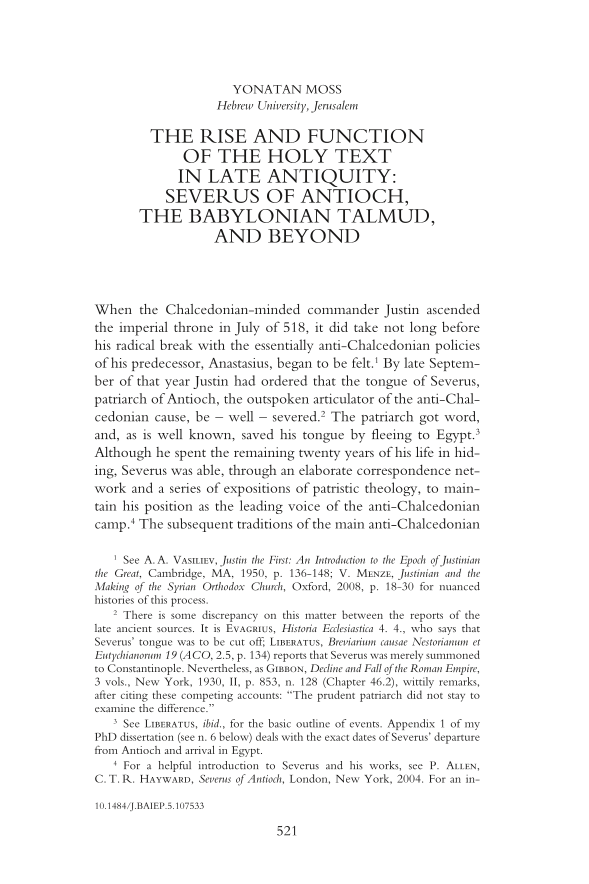
Ever since Peter Brown’s famous essay on his rise and function, the holy man of the fifth and sixth centuries has received volumes of scholarly attention. Less noticed, however, has been the parallel, contemporary challenge to this concept, manifestations of which we witness in later antique culture. Evidence to this effect is examined from the works of Severus of Antioch. Severus contests the authority of dreams, prophecies and miracles. The challenge to charismatic authority goes hand in hand with a parallel phenomenon characteristic of Severus’ works: his valorization of intellectual authority. This intellectual authority lies, as it does in the Babylonian Talmud (possibly redacted during Severus’ lifetime), in an expert knowledge of one’s revered textual tradition and in one’s exegetical ability to harmonize contradictions within this tradition. The comparative example of the Babylonian Talmud, as well as evidence from the Qur’ān, conspire with the material from Severus to demonstrate that alongside the late antique holy man, there was also a contemporary, cross-cultural current that prioritized holy messages and intellectual argumentation above holy people and miraculous deeds in the determination of theological truth.
Full text loading...