


Browse Books
Spectacle benefaction and the politics of appreciation
Case studies from Italy, Gallia Narbonensis and Africa Proconsularis
In the remotest corners of the Roman Empire large crowds were as beguiled by spectacles as their Roman counterparts. Provincial spectacles however did not share the technical wonders of flying machines elephant dressage and synchronised swimming seen at imperial extravaganzas. Is it this lack of the sensational that accounts for the relative paucity of scholarly attention paid to regional spectacles and in particular their sponsors?
When spectacles are viewed purely as entertainment the messy realities of institutionalized social economic and political power that regulated them are obscured. A clearer understanding of the spectacle can therefore be achieved by contextualizing it in the big picture of regional and provincial life against the backdrop of Roman power and control. The spectacle itself was highly political in its aims and intent. Access to sponsorship of a spectacle similarly relied on hierarchies of political power and privilege and consequently required strategic negotiation of candidacy promises expenditure and recognition. Rivalry competition and emulation was endemic.
This epigraphic analysis focusing on the western Roman Empire (Italy Gaul and North Africa) during the Imperial period identifies the milieux of provincial sponsors their strategies and quest for public honours.
Stones of Zadar
The Capital of Venetian Dalmatia
The book investigates the transformation of the architectural and visual language in Zadar eastern Adriatic town at the dawn of the early modern era when the mighty mediaeval commune was being transformed by the emerging governmental structures of the Republic of Venice. These events coincided with the Ottoman Empire's takeover of the hinterland of Dalmatian cities transforming Zadar into a city on the brink of two worlds.
A highly autonomous mediaeval commune was a lively trans-Adriatic artistic centre a network of builders painters and sculptors from Dalmatia Venice Marche and Lombardy so with the early adoption of humanist concepts by the local elite this practice continued. However the transformations the governmental structure and economic policies steadily limited its community autonomy and commercial sources. The crisis worsened in the 16th century when the local elites lost a large portion of their revenue from the fertile hinterland captured by the Ottoman Empire.
This launched an ongoing militarisation of social structures and fortifying the town. These events were reflected in the fields of architecture and art. The process of adopting a new architectural and artistic language began in the second half of the 15th century as demonstrated by motifs in architectural decoration and sculpture with impulses from important Dalmatian sculptural and stonemasons’ circles as well as Venetian models from the circles of Pietro Lombardo and Mauro Codussi. When the new classical language of architecture began spreading in the middle of the 16th century it expressed mostly in the renovation of administrative structures with occasional departures from the stylistic canons of artistic centres.
Sumer and the Sea
Deltas, Shoreline, and Urban Water Management in 3rd Millennium Mesopotamia. Proceedings of the 1st ARWA International Research Workshop (Rome, 2–4 June 2021)
From the Chalcolithic onwards the culture and society of Sumer flourished along the banks of the Tigris and Euphrates Rivers with communities living close to the ancient shoreline in an environment that was closely linked to the exploitation of fluvial systems the sea and the unique marshlands of the area. This volume gathers together research first presented as part of a workshop entitled Sumer and the Sea: Deltas Shoreline and Urban Water Management in 3rd Millennium Mesopotamia to explore the interaction between Sumerians and their water-dominated environment. The chapters gathered here offer updates on methodologies and the most recent research from the field to provide new understanding and fresh insights into how the Sumerians adapted to the world in which they lived.
The Imagery and Aesthetics of Late Antique Cities
While the role of the city in Late Antiquity has often been discussed by archaeologists and historians alike it is only in recent years that scholarship has begun to offer a more nuanced approach in our understanding to how such cities functioned stepping away from the traditional paradigm of their decline and fall with the collapse of the Roman Empire. In line with this approach this deliberately interdisciplinary volume seeks to provide a more multifaceted understanding of urban history by drawing together scholars of literary and material culture to discuss the concepts of imagery and aesthetics of late antique cities.
Gathering together contributions by historians philologists archaeologists literature specialists and art historians the volume aims to explore the imagery and aesthetics of cities in Late Antiquity within a strong theoretical framework. The different chapters explore the aesthetics of cityscape representations in literature and art asking in particular whether literary representations of late antique urban landscapes mirror the urban reality of eclectic ensembles of pre-existing architecture and new buildings as well as questioning both how the ideal of the city evolved in the imagination of the period and if imperial ideology was reflected in literary depictions of cities.
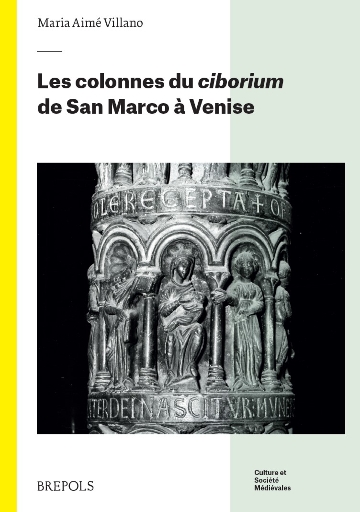
Les colonnes du ciborium de San Marco à Venise
La recherche s’articule autour de trois axes principaux : une lecture approfondie des aspects visibles et matériels qui composent l’œuvre d’art c’est-à-dire les parties sculptées et les inscriptions ; la relation de l’œuvre avec les sources littéraires ; enfin la relation de l’œuvre avec le contexte. L’application d’une méthode globale qui considère l’œuvre d’art comme un objet complexe fait de signes de lieux et d’intentions artistiques a permis une nouvelle interprétation de l’œuvre ouverte à des enjeux tout à fait actuels d’histoire de l’art et connectée à la notion d’histoire et d’anthropologie des objets en constante relation avec le temps et l’environnement.
Ce livre se compose de huit chapitres qui affirment et décomposent à la fois le « système » des colonnes ; ils sont précédés d’une mise en perspective historiographique. L’ouvrage présente également un catalogue exhaustif de fiches décrivant pour la première fois une à une les scènes et les inscriptions des colonnes.
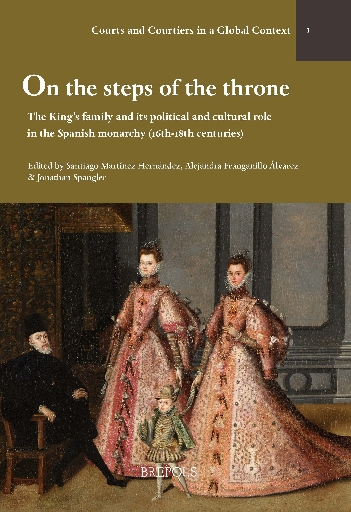
On the steps of the throne
The King’s family and its political and cultural role in the Spanish monarchy (16th-18th centuries)
The aim of this book is to forge a new critical perspective on the Spanish Habsburgs’ family networks by studying the roles performed by princes and princesses of the blood of different ranks and status in the service of the Spanish monarchs. The chapters included draw on a range of case studies in order to rethink the dynastic and political role assigned to the king’s relatives. They also analyse the problematic issues generated by the court ceremonial diplomatic dynastic and governmental duties undertaken by these political actors. In doing so these studies forge a deeper understanding of the conflicts prompted by the administration of the extensive transnational community of Spanish Habsburg interests and allegiances. The innovative and insightful studies included in this volume are drawn from both unpublished doctoral theses as well as ongoing research projects. In this sense it seeks to contribute to the evolving historiographical debate on the role played by a range of agents who have not been studied in depth by historians above all with a focus on the construction of the Spanish Habsburg monarchy in the early modern period. The approach we have adopted has been to prioritize little-known and less-studied agents contexts and periods from the Spanish Habsburg sphere which are nonetheless highly relevant for developing a deeper knowledge of the potential and expectations assigned to the king’s extended family whether legitimate or illegitimate. Furthermore this book addresses the problematic issues and conflicts that were prompted by these political agents in undertaking various diplomatic dynastic and governmental roles.
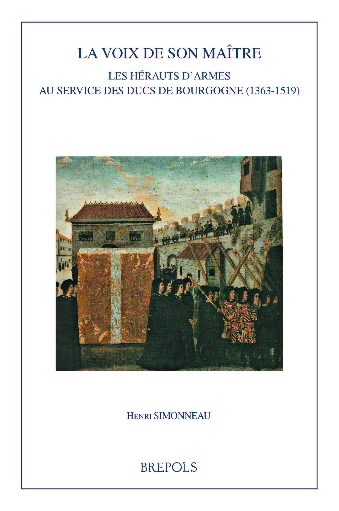
La voix de son maître
Les hérauts d’armes au service des ducs de Bourgogne (1363-1519)
Le héraut d’armes est un personnage incontournable du Moyen Âge occidental. Spécialiste des tournois présent au côté du prince lors des grandes cérémonies constamment sur les routes pour porter des lettres aux différents souverains il est aussi l’un des meilleurs connaisseurs de la noblesse occidentale.
L’émergence de ces officiers dans la société de cour est fulgurante. Apparus à la fin du XIIe siècle au sein du groupe des jongleurs et des ménestrels ils se mettent dès la fin du XIVe siècle au service des grands seigneurs des villes et des princes pour devenir au dernier siècle du Moyen Âge une véritable institution en France en Angleterre ou en Bourgogne.
Les Pays-Bas bourguignons offrent sans aucun doute un des meilleurs exemples de l’épanouissement de l’office d’armes au sein d’une cour médiévale. Véritables porte-voix du duc chargés de prononcer les déclarations de guerre et de publier la paix les hérauts sont omniprésents dans la conduite de la guerre ou dans la diplomatie de Philippe le Bon et de Charles le Téméraire. Baptisés du nom de provinces bourguignonnes vêtus de leur cotte d’armes ils représentent l’État bourguignon autant que le duc lui même jusqu’à en devenir son avatar.
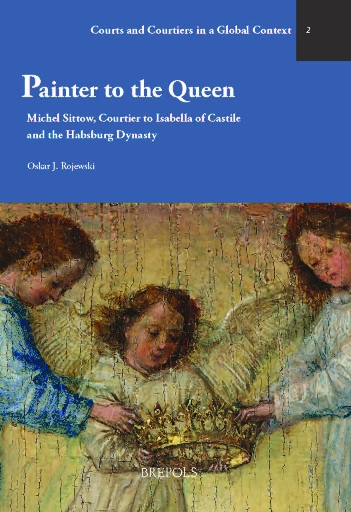
Painter to the Queen
Michel Sittow, Courtier to Isabella of Castile and the Habsburg Dynasty
Michel Sittow was born in Reval c. 1469 today the Estonian capital city of Tallinn. Possibly trained in the workshop of Hans Memling in Bruges he subsequently moved to work in the Iberian Peninsula where he first held the position of court painter. This monograph undertakes research on this phase of his career. In the Kingdom of Castille Michel Sittow was appointed painter to Queen Isabella and became a member of her household with an impressive annual salary. Thanks to the analysis of archival documents and formal and iconographical studies on Sittow’s paintings it is possible to explain the court painter’s life circumstances and describe the benefits he enjoyed and the difficulties he faced. The Castilian period was crucial for Michel Sittow’s career since over the course of his professional life he also resided at the courts of Philip the Fair Margaret of Austria Christian II of Denmark and Charles V all relatives of his first royal patron. While serving European monarchs he transferred Memling’s techniques and visual language beyond the Low Countries and developed his artistic practice and style. The analysis of the various contexts Michel Sittow worked in sheds light on his oeuvre and his possible privileged status as a courtier which provided opportunities to establish a flourishing and ambitious career in northern and southern Europe.
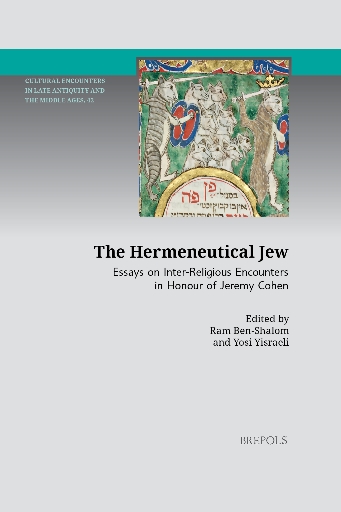
The Hermeneutical Jew
Essays on Inter-Religious Encounters in Honour of Jeremy Cohen
The interconnected histories of Judaism and Christianity are explored in this compelling volume honouring the influential work of Jeremy Cohen. Cohen’s pioneering studies have reshaped our understanding of these religious traditions emphasizing the crucial role of cross-religious engagements in forming their self-perceptions and identities.
Comprising fifteen chapters the book is organized into four thematic sections. The first section Literary Mirrors and Inter-Religious Representations explores patterns of internalizations (mis)representations and appropriations between competing religious traditions. The second section Physical and Figurative Encounters addresses the roles played by visible and physical markers in setting interreligious boundaries and exchanges. The third section Agents of Anti-Jewish Discourse focuses on Christian thinkers of the late Middle Ages who propagated anti-Jewish measures or prejudices across different genres and causes. The final section The Transformability of the Jews and the Hermeneutics of Inter-Religious Conversion examines the cultural and intellectual impact of different efforts to convert Jews and Jewishness.
This collection of new studies by leading medievalists serves as a fitting tribute to Jeremy Cohen’s groundbreaking contributions and offers readers an insightful look into the complex world of medieval and early modern religious identity.
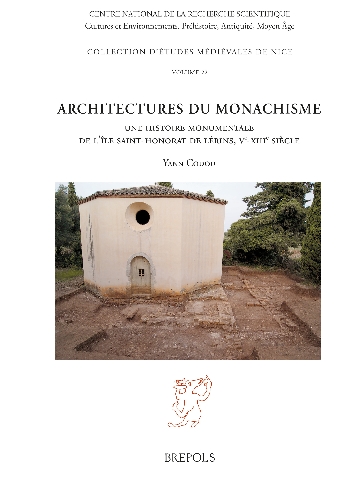
Architectures du monachisme
Une histoire monumentale de l’Île Saint-Honorat de Lérins, Ve-XIIIe siècle
L’île Saint-Honorat de Lérins accueille des religieux depuis le début du Ve siècle. Il s’agit d’un haut lieu du monachisme témoin des expériences ascétiques insulaires qui se développent en Occident durant l’Antiquité tardive. Le caractère exceptionnel de Lérins tient aussi à la longue durée d’occupation du site par des religieux. Ce n’est qu’à partir de 2005 qu’ont été entreprises des recherches archéologiques d’envergure sur l’île : fouilles et archéologie du bâti qui font de Lérins la seule île monastique pour laquelle il existe des vestiges archéologiques remontant de façon assurée aux premières expériences ascétiques occidentales. En présentant ce dossier l’ouvrage de Yann Codou apporte un éclairage inédit sur la genèse du monachisme en Occident où des expériences érémitiques cohabitent au sein de l’espace insulaire avec des formes de vie plus collectives. Les données restituent également les dynamiques du monachisme au cours du haut Moyen Âge et dans les siècles suivants en particulier le processus de communautarisation du monachisme. L’architecture est ici un document historique à part entière qui dialogue avec les sources écrites. Les multiples monuments qui composent le paysage insulaire offrent un terrain de choix pour comprendre des mécanismes de construction identitaire fondés sur la création et la réinterprétation des espaces sacrés. Les enjeux de la recherche dépassent largement l’histoire de la seule communauté lérinienne pour s’inscrire dans une réflexion sur l’organisation des espaces monastiques et leurs mutations tout au long du Moyen Âge.
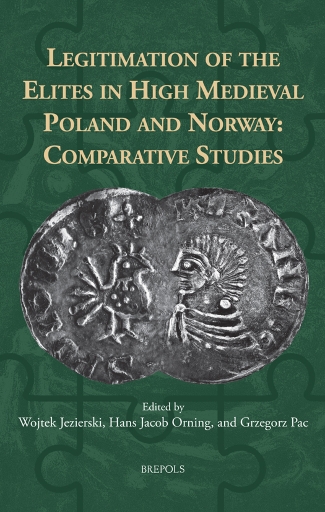
Legitimation of the Elites in High Medieval Poland and Norway
Comparative Studies
Between the years 1000 and 1300 the two developing polities of Norway and Poland often followed similar trends. Both realms were located on what was considered the periphery of Europe both joined Latin Christendom — and with it the wider sphere of European cultural influence — at the turn of the first millennium and both by the end of the thirteenth century had largely coalesced as stable kingdoms. Yet while the histories of these two countries have long been studied along national lines it remains rarer for them to be considered outside of their traditional geographical context and studied via comparison with events elsewhere.
This innovative volume seeks to explore the means and uses of symbolic power that were employed by religiopolitical elites in order to assert their legitimacy and dominance by taking an explicitly comparative approach and dual perspective on these two polities. What stories did elites tell themselves and others about their deservedness to rule what spaces and objects did they utilize in order to project their elevated status and how did struggle and rivalry form part of their societal dominance? Formed from chapters co-written by experts in Polish and Norwegian history this unique volume not only reflects on the similarities and differences between events in these two polities but also more broadly offers conceptual tools and comparative frameworks that can enhance our wider understanding of the conditions and factors that shaped religiopolitical behaviour on the peripheries.
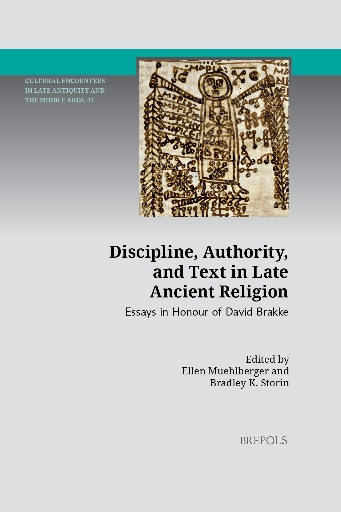
Discipline, Authority, and Text in Late Ancient Religion
Essays in Honour of David Brakke
This collection of essays on religious practice in the Mediterranean Near East and Middle East (ca. 100–800 ce) celebrates the impact that Professor David Brakke has had on the study of late antique religious history. Nineteen scholars celebrate the career of Professor Brakke with essays on a range of subjects on late ancient religion. Some chapters treat monastic texts ascetic practice and ritual performance; others address the roles of magic demons and miracle stories; still others examine Christian violence and martyrdom.
In particular many of these essays explore the kinds of ascetic theory practice identity organization performance and writing found throughout the diverse authors groups and locales of Late Antiquity. Essay topics cross disciplinary boundaries and operate in the overlapping intellectual space of Religious Studies History Classics English Anthropology and Comparative Literature. By treating asceticism as a phenomenon within a relatively confined time period and geography across a variety of religious and literary traditions this volume highlights the ascetic impulse within new areas.
The volume thus stands alone for its multifaceted discussions of religion and asceticism in Late Antiquity and advances scholarly investigation of and discourse about late antique asceticism by expanding conceptual and disciplinary boundaries in new and exciting directions.
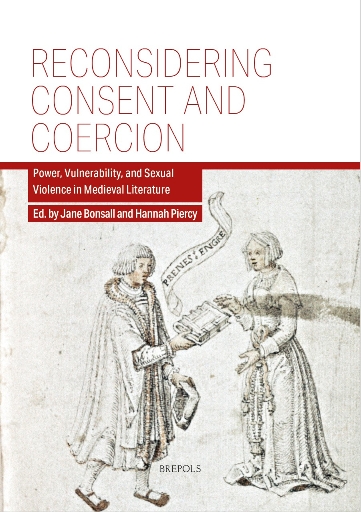
Reconsidering Consent and Coercion
Power, Vulnerability, and Sexual Violence in Medieval Literature
How can contemporary theorisations of consent help us to nuance our understanding of consent and coercion in the Middle Ages? And what can reconsidering medieval attitudes towards consent offer to our own ‘consent culture’? Contemporary feminist approaches have identified consent both as a potent political framework for liberation and as an inherently limited concept that opens out onto other important ethical questions. Proceeding from this moment this book looks in two directions to understand the varied ways in which structural inequalities impact meaningful consent and facilitate coercion in the Middle Ages and today.
Building upon the momentum of ‘medieval consent studies’ as a newly defined field this volume expands the focus beyond rape and raptus assessing more varied representations of consent and coercion through an intersectional consideration of power inequality and sexual violence. The contributions bring together different methodologies cultural contexts and literary traditions to highlight literature’s capacity to reflect otherwise undocumented forms of sexual vulnerability. Offering a compelling case for integrating critical approaches like trans history codicology animal studies ecocriticism and disability studies into this field Reconsidering Consent and Coercion demonstrates the vital necessity of a nuanced and inclusive understanding of the past for our present discourses of consent.
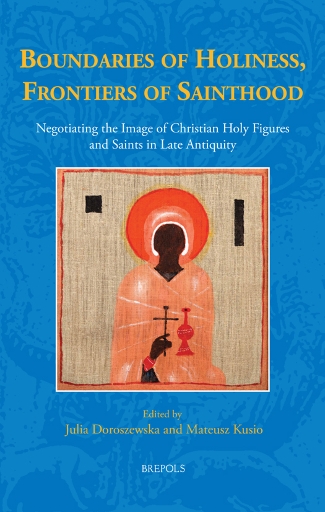
Boundaries of Holiness, Frontiers of Sainthood
Negotiating the Image of Christian Holy Figures and Saints in Late Antiquity
Many excellent studies have been published on the phenomenon of holy (wo)men and saints. As a rule however they focus on successful candidates for holiness who played the roles of charismatic leaders and patrons of social and religious life.
This volume offers a new perspective on ancient and medieval holiness — its main focus is holiness as defined by its peripheries and not by its conceptual centre. The contributors explore stories of men and women whose way to sainthood did not follow typical ‘models’ but who engaged with it from its outskirts. Several essays examine the strategies employed by hagiographical authors to tailor the images of candidates for holiness whose lives provided less obvious examples of moral and/or religious ideals. These include attempts to make saints out of emperors heretics and other unlikely or obscure figures. Other case studies focus on concerns with false holiness or unusual cases of holiness being ascribed prior to a saint’s death. Another concept explored in the volume is space. The spatial boundaries of holiness are discussed in relation to the transmission of relics to the opposition between urban and rural spaces holy sites and even imagined space.
Holiness and sainthood have been crucial concepts for Christianity from its inception. By exploring their ‘marginal’ and ‘peripheral’ aspects the essays in this book offer vital new perspectives on the religious world of Late Antiquity.

Forgotten Roots of the Nordic Welfare State in Protestant Cultures
The Nordic welfare state of the 20th century has been hailed around the world as a model of how to build democratic and egalitarian societies. It has often been described as a project of social democracy often following a narrative of secularization and rationalization of society. However some of the most important actors and ideas of the "Scandinavian Sonderweg" had their roots in Protestant often Pietist and revivalist milieus that dreamed of creating an egalitarian community. The present volume explores these often forgotten roots in several case studies of phenomena from the seventeenth to the twenty-first century focusing primarily on questioning the function of aesthetics in the creation of the welfare state model. We argue that aesthetics and what Friedrich Schiller called aesthetic education played an important unifying role for Nordic societies. These aesthetics were shaped by Protestant ideas and practices. Through references to the then widespread circulation of educational texts based on Luther's catechism the later pietistic catechism of Erik Pontoppidan Nordic hymnbooks and practices such as communal singing and preaching in church church coffee reading circles and conventicle meetings a common aesthetic language emerged that unified different social groups and their competing goals and claims. Civic actors and movements learned specific ways to engage in society to develop practices of internalizing responsibility (self)critique and accountability and to communicate and develop a more democratic modern civic sphere. We therefore propose to look at this history from the perspective of a historically changing aesthetic as an integrating principle for understanding the political social cultural economic and many other aspects of the Nordic welfare state.
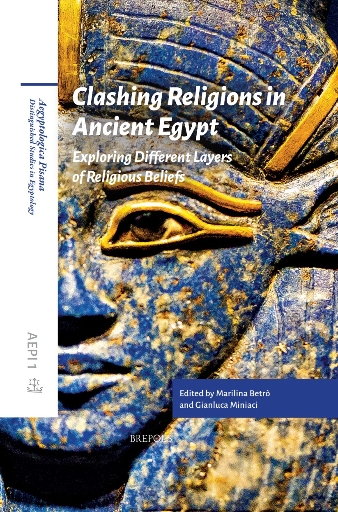
Clashing Religions in Ancient Egypt
Exploring Different Layers of Religious Beliefs
What did ‘religion’ mean for the Ancient Egyptians? Was the state involved in acting as a unifying and founding force for Egyptian religion or can we still identify some clashes between different religious practices? To what extent did different rituals practices and beliefs intersect and merge across time and space? Such questions have long preoccupied scholars working in the field but they have often only been considered through the lens of official ‘centralized’ texts. Yet increasingly there is an acknowledgement that such texts require calibration from archaeological data in order to offer a more nuanced understanding of how people must have lived and worshipped.
The chapters gathered in the volume aim to offer a thorough exploration of Egyptian cultural and religious beliefs and to explore how these impacted on other areas of daily life. Contributors explore the connection between religion and central power the paradigms around burial and access to the afterlife the interconnections between religion demonology magic and medicine and the impact of multicultural interaction on the religious landscape. What emerges from this discussion is an understanding that the only truly identifiable clash is that between modern Eurocentric perspectives and the views of the ancient Egyptians themselves.
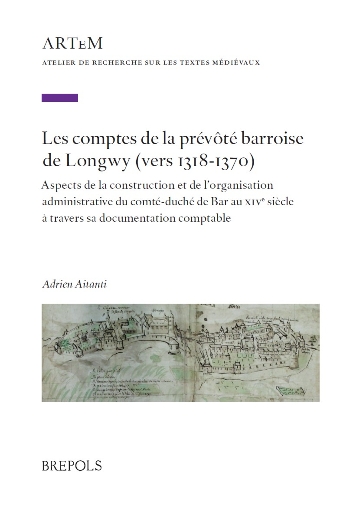
Les comptes de la prévôté barroise de Longwy (vers 1318-1370)
Au cœur d'un renouvellement de l'approche des sources de l'histoire médiévale la comptabilité domaniale publique connait depuis une quinzaine années la faveur des historiens des institutions et des origines de l'État. Les registres de comptes sont ainsi reconnus comme une source intrinsèque et non plus seulement comme une base de données factuelles alimentant de vastes synthèses historiques. En région lorraine les registres de comptes des prévôts du comté-duché de Bar par la richesse des collections chronologiques permettent cette approche nouvelle où le document comptable dans sa dimension codicologique et administrative participe pleinement au renforcement des liens entre centre et périphérie et à l’élaboration des dynamiques de gouvernement.La lecture et l’étude précise des registres de la prévôté de Longwy permettent de pénétrer au cœur des rouages administratifs de l'État barrois au temps de la régence de Yolande de Flandre de la Peste Noire et du début de la guerre de Cent Ans en Lorraine. Apparaît alors en pleine lumière la genèse du compte domanial instrument de pouvoir pour les décideurs centraux et preuve de la manière de servir pour les administrateurs locaux : prévôts châtelains et clercs jurés. Mais la gestion domaniale ne saurait se passer d’une phase de contrôle administratif. L’examen des comptes véritable tradition barroise va peu à peu s’institutionnaliser et revêtir un caractère hautement technique avec la création d’un organe de gouvernement d’une importance majeure : la Chambre des Comptes. Cette dernière fait alors basculer les comptes et le contrôle comptable dans une nouvelle dynamique : celle de la construction de l'État.
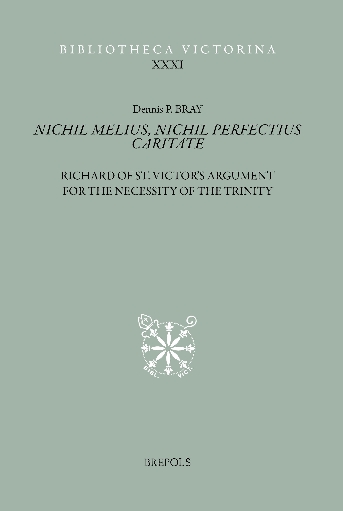
Nichil Melius, Nichil Perfectius Caritate
Richard of St Victor’s Argument for the Necessity of the Trinity
In his magnum opus De Trinitate the twelfth-century canon Richard of St. Victor offers sustained reflection on core dogmatic claims from the Athanasian creed. At the heart of the treatise is Richard’s argument for exactly three divine persons. Starting with the necessity of a single maximally perfect divine substance Richard reasons along four steps: (i) God must have maximal charity or other-love; (ii) to be perfectly good delightful and glorious God’s other-love must be shared among at least two and (iii) among at least three divine persons; (iv) the metaphysics of divine processions and love each ensure the impossibility of four divine persons. For Richard Scripture and trustworthy church authorities already provide certainty in these truths of faith. Even so as an act of ardent love Richard contemplates the Trinity as reflected in creation. From this epistemic point of departure he supports his conclusions from common human experience alone.
Recently philosophers of religion have employed Richard’s trinitarian reflection as a springboard for constructive work in apologetics and ramified natural theology. His unique and meticulous approach to the Trinity has garnered attention from scholars of medieval and Victorine studies recognizing the novelty and rigour of his philosophical theology.
This volume presents the first focused exploration of Richard’s central thesis in De Trinitate combining historical context with philosophical scrutiny. It confronts the most challenging aspects of his argument presenting Richard’s insights as not merely intriguing but also profoundly compelling. His thesis if validated promises to significantly enrich modern dialogues on the philosophical and theological dimensions of the Trinity.
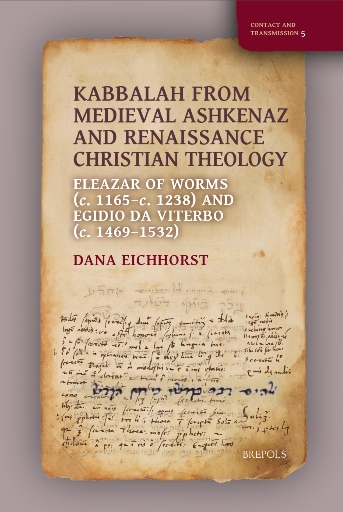
Kabbalah from Medieval Ashkenaz and Renaissance Christian Theology
Eleazar of Worms (c. 1165–c. 1238) and Egidio da Viterbo (c. 1469–1532)
The preoccupation of Christian theologians and scholars with the Hebrew language and sources at the dawn of the sixteenth century resulted in the transfer of a vast corpus of medieval Hebrew texts into Christian intellectual discourse and networks. These Hebrew sources were meticulously collected copied translated and subjected to rigorous study. These collections include texts that originate from medieval Ashkenaz the majority of which can be attributed to Eleazar ben Yehuda of Worms (c. 1165–c. 1238). Rabbi Eleazar was a prominent Jewish scholar of his time and a member of one of the most prestigious families in Jewish communities of the German Rhineland and Palatinate.
However the history of medieval Ashkenazic writings has been neglected in scholarship which has favoured other Jewish (primarily Sephardic) sources in tracing the infl uence of medieval Jewish mysticism on Christian theology and Kabbalah. This book takes the hitherto disregarded Ashkenazi Hebrew sources as its point of departure. It focuses on the work of Eleazar as a main representative of the Ḥaside Ashkenaz and on his mag num opus Sode Razayya which discusses all matter of the divine and the mundane sphere. The book explores how Eleazar’s work was a potentially interesting source for a Renaissance Christian Kabbalist like Egidio (Giles) da Viterbo. Kabbalah from Ashkenaz is distinguished by its emphasis on the Hebrew letters and language along with the divine word and divine speech (dibur). This central motif of the Ashkenazi sources found resonance with certain Christian theologians and Kabbalists in the context of Christian logos theology which is similarly anchored in the divine word (verbum).
On the Virgin Birth and On the Assumption of the Blessed Virgin Mary
On the Virgin Birth and On the Assumption of the Blessed Virgin Mary are two key Mariological treatises by the ninth-century Carolingian theologian Paschasius Radbertus. Written at a time when scholarship and erudition during the Carolingian Renaissance were at their height and prominence in the great monastery of Corbie these two works offer important insights into ninth-century reception of the doctrines of Mary’s perpetual virginity and her assumption into heaven. Written for the nuns of the monastery of Notre-Dame de Soissons they also provide important source material for the study of female spirituality during the Carolingian Reformation era.
This work presents for the first time an English translation with introduction and commentary of these texts based on the critical editions found in Corpus Christianorum Continuatio Mediaevalis (CC CM 56C). References to the corresponding pages of the Corpus Christianorum edition are provided in the margins of this translation.