


Browse Books
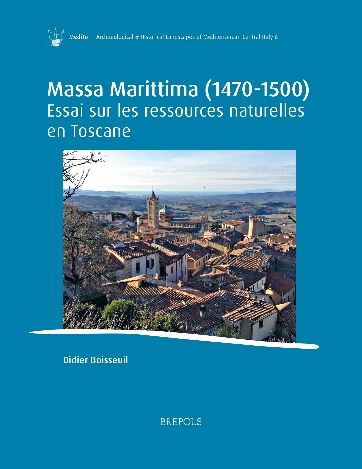
Massa Marittima (1470-1500)
Essai sur les ressources naturelles en Toscane
Cet ouvrage vise à explorer les modalités d’exploitation des ressources naturelles dans la Maremme siennoise – autour de la ville de Massa Marittima – à la fin du Moyen Âge. La séquence chronologique resserrée permet d’embrasser une ample documentation (urbaine notariée) provenant de différents fonds archivistiques ou des données archéologiques et d’étudier ensemble un large panel d’activités rurales artisanales et industrielles qui jusqu’alors n’avaient pas toutes été analysées ensemble. La période retenue (1470-1500) correspond à un moment de basculement marqué notamment par la reprise de la production métallurgique par l’essor de la production d’alun et par des bouleversements politiques majeurs qui affectent l’État siennois (avec notamment la mise en place à partir de 1487 d’un régime oligarchique). Les ressources sont au coeur des relations nouvelles qui se nouent entre les Massétans et désormais les élites siennoises qui entendent tirer profit de nouvelles richesses. L’ouvrage entend proposer un aperçu des modifications sociales politiques et environnementales qui confèrent un destin singulier à la Maremme.
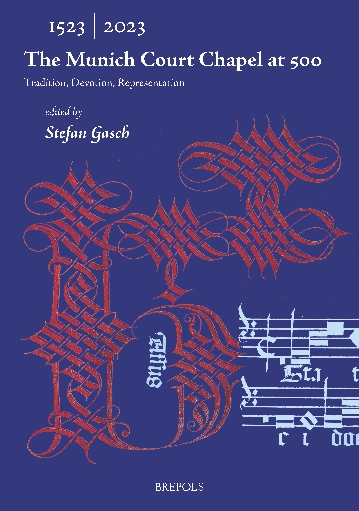
The Munich Court Chapel at 500
Tradition, Devotion, Representation
This collection of essays is the first to focus exclusively on the Wittelsbach court of Duke Wilhelm IV of Bavaria (1493–1550). The contributors argue for a deeper understanding of this duke’s reign and acknowledge his crucial role in shaping the religious and cultural identity of the Duchy of Bavaria. By providing insights into the duke’s cultural aspirations the organisation of the court musical sources religious musical practice and everyday working life this book aims to: (1) situate the court of Wilhelm IV in the context of the religious and political upheavals of the early sixteenth century; (2) trace the development of the musical repertoire and personnel of the Bavarian court chapel between 1500 and 1550; and (3) critically assess the degree to which the Munich court could be considered ‘modern’ by re-evaluating the broader cultural religious and musical life of the court around 1520. The volume thus sheds light on the cultural ambitions of a duke who defined music and art as expressions of strategic elements that interwove tradition devotion and representation in a programme of governance based on humanist education—a duke whose foresight enabled the Munich court to quickly become one of the most prestigious and famous seats of power in the Holy Roman Empire.

The Materiality of Sound in Chant Manuscripts in the East
The two books of Scriptor Cantor & Notator present an innovative multi-author project dealing with the complex interconnections between learning writing and performing chant in the Middle Ages. A number of different methodological approaches have been employed with the aim of beginning to understand the phenomenon of chant transmission over a large geographical area linking and contrasting modern definitions of East and West. Thus in spite of this wide geographical spread and the consequent variety of rites languages and musical styles involved the common thread of parallels and similarities between various chant repertoires arising from the need to fix oral repertories in a written form and the challenges involved in so doing are what bring this wide variety of repertoires and approaches together. This multi-centric multi-disciplinary approach will encourage scholars working in these areas to consider their work as part of a much larger geographical and historical picture and thus reveal to reader and listener more and far richer patterns of connections and developments than might otherwise have been suspected. The Materiality of Sound in Chant Manuscripts in the East brings together articles on ancient Greek Byzantine Coptic and Armenian music scripts in the East. Together with the collection of essays published in The Materiality of Sound in Chant Manuscripts in the West these books discuss local scribal peculiarities and idiosyncrasies beyond the cultural and geographical contexts of production and uses of their manuscript sources.

Mémoires des passés antiques
Une élaboration continue (xiv e -xix e siècle)
Alors que depuis plusieurs décennies les recherches sur la mémoire – memory studies – prennent un essor exceptionnel ce volume a pour objet les modalités de l’élaboration de mémoires particulières celles de passés antiques et prend en compte une longue durée allant du xive siècle jusque dans les années 1830. Les deux termes de « mémoire » et d’« élaboration » évoquent un acte de réception et de construction. Les mémoires de l’Antiquité ne sont pas un ensemble de connaissances reçues passivement et non transformées elles sont des représentations consciemment élaborées par des auteurs et des artistes. Étudier le phénomène sur une longue temporalité permet de mieux analyser les constantes qui relèvent sans nul doute d’une anthropologie de la mémoire et aussi les évolutions. Ce volume porte sur des œuvres qui illustrées ou non sont écrites et/ou contiennent un texte. La réflexion qu’il propose s’inscrit en parallèle aux recherches dédiées à la réception de la Grèce ancienne dans la littérature française prémoderne (1320-1550) et le projet ERC Advanced Grant AGRELITA « The Reception of Ancient Greece in Premodern French Literature and Illustrations of Manuscripts and Printed Books (1320-1550) ». Elle ouvre le champ d’analyse à une plus large diachronie et à un plus large corpus.
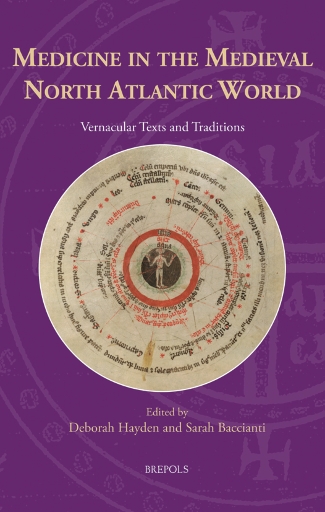
Medicine in the Medieval North Atlantic World
Vernacular Texts and Traditions
Studies of medical learning in medieval England Wales Ireland and Scandinavia have traditionally focused on each geographical region individually with the North Atlantic perceived as a region largely peripheral to European culture. Such an approach however means that knowledge within this part of the world is never considered in the context of more global interactions where scholars were in fact deeply engaged in wider intellectual currents concerning medicine and healing that stemmed from both continental Europe and the Middle East.
The chapters in this interdisciplinary collection draw together new research from historians literary scholars and linguists working on Norse English and Celtic material in order to bring fresh insights into the multilingual and cross-cultural nature of medical learning in northern Europe during the Middle Ages c. 700–1600. They interrogate medical texts and ideas in both Latin and vernacular languages addressing questions of translation cultural and scientific inheritance and exchange and historical conceptions of health and the human being within nature. In doing so this volume offers an in-depth study of the reception and transmission of medical knowledge that furthers our understanding both of scholarship in the medieval North Atlantic and across medieval Europe as a whole.
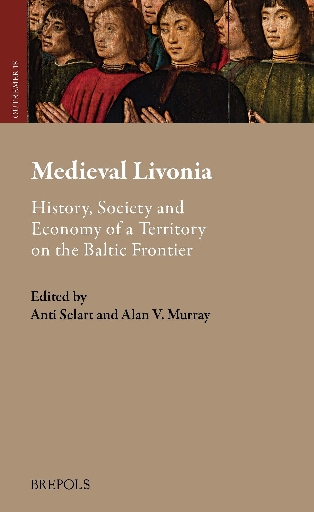
Medieval Livonia
History, Society and Economy of a Territory on the Baltic Frontier
The territory known as Livonia on the eastern shore of the Baltic Sea emerged as a result of the Baltic Crusades in the twelfth and thirteenth centuries. It was a region of multiple nations languages and cultures and the scene of their mutual interaction connected to the Holy Roman Empire the papal curia Scandinavia and Lithuania and mediating the Hanseatic trade with Russia. This book is a significant new study of the multiple facets of Baltic history taking in social history urban and rural culture peasant economy and literacy with novel perspectives on crusading political history and the chief agents of power notably the Teutonic Order. This first comprehensive treatment of Livonian history in English will serve as a valuable source of information for undergraduate and postgraduate students as well as a resource for studying the Baltic Crusades and crusader territories in general.

The Multilingual Dynamics of Medieval Literature in Western Europe, c. 1200–c. 1600
While the multilingualism of the medieval world has been at the forefront of research agendas across medieval studies in recent years there nonetheless remain many questions to answer. What for example were the stakes and consequences of multilingualism for literary culture? And how do these change if we think of multilingualism through cultural social artistic or material lenses? Taking such concerns as their starting point the essays in this volume address a variety of aspects of medieval literature and literary culture related to multilingualism. They deal with multilingualism in relation to manuscripts literary contexts and historical contexts. The chapters gathered together here address considerations that have been overlooked in previous scholarship and ask where the future of the study of medieval multilingualism lies. Contributions to the volume are grouped thematically rather than by date or period in order to draw out comparative perspectives with the aim of encouraging innovative new approaches to future research in the field.
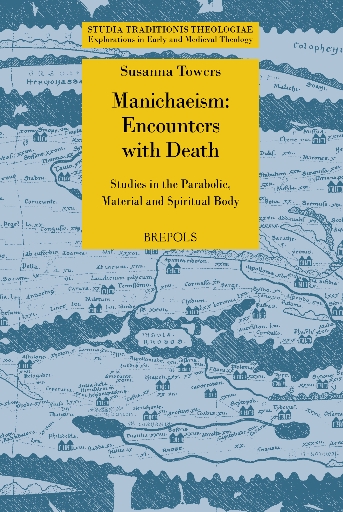
Manichaeism: Encounters with Death
Studies in the Material, Spiritual and Parabolic Body
Born in Persian Mesopotamia in the year 232 CE the self-proclaimed prophet Mani promulgated a dualist faith that rapidly spread throughout the Roman Empire Central Asia and China. This monograph comprises a series of studies of the Manichaean conceptualization of death and the afterlife in the context of Manichaean soteriology eschatology and anthropology. Material documentary and liturgical evidence is analysed to enrich knowledge of Manichaean funeral ritual and mourning practice. The book explores the thematic symbolism of the corpse in Manichaean parabolic literature offering fresh interpretations and exploring the influence of Buddhist teachings on the impermanence of the body karma and metempsychosis.
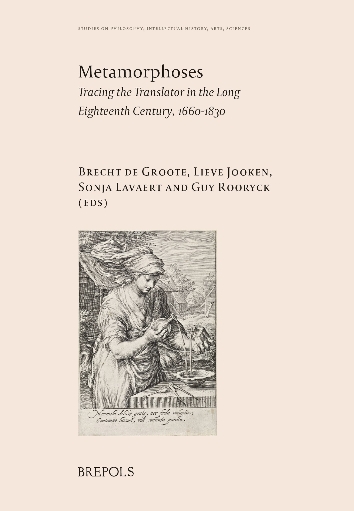
Metamorphoses
Tracing the Translator in the Long Eighteenth Century, 1660–1830
Translators are crucial to the constitution dissemination and adaptation of literatures cultures and ideas. However their presence in the historical record often proves difficult to recognise or retrace. This volume places front and centre this key problem for historians of translation as well as for historians of literature culture and ideas. It sheds new light on the much-debated (in)visibility of historical translators by investigating in what contexts and through what strategies translators sought to render themselves either (in)visible and how critics and scholars can now trace these efforts. When and how does the visible metamorphose into the invisible and vice versa?
The volume focuses on the long eighteenth century a period which witnesses a metamorphosis in literature and culture that tells powerfully on translators. From relatively visible cultural actors they are reduced to enforced invisibility as cultural products stabilised their meanings around singular authors. Tracing this shift across a swathe of products and practices the book conducts its investigations across a range of genres ranging from radical politics over philosophy to opera; taking in languages and cultures across Western Europe.
Chapters employ case studies to develop methodological and theoretical models that will empower scholars of translation history to recover translators both from the direct evidence of their work and from the networks and tools that supported them.

The Missing Interaction: Science and Diplomacy in the Early Cold War
This book enriches our understanding of the circumstances and conditions that have made the relation between science and diplomacy a primary concern of the political landscape in the twenty first century. As western liberal democracy and its effects on the environment but also on global war politics are under question authors in this collective volume rethink the effects that an ahistorical definition of science diplomacy has had on world politics. They document the historicity of the entanglement between on the one hand epistemic practices and knowledge production and on the other foreign policy strategies and negotiation tactics. The book is the first in a series of what Rentetzi calls 'Diplomatic Studies of Science' a highly inter- and trans- disciplinary field that analyzes science and diplomacy as historically co-produced. It primarily focuses on the entanglements of science and diplomacy after the Second World War bridging history of science diplomatic history and international relations
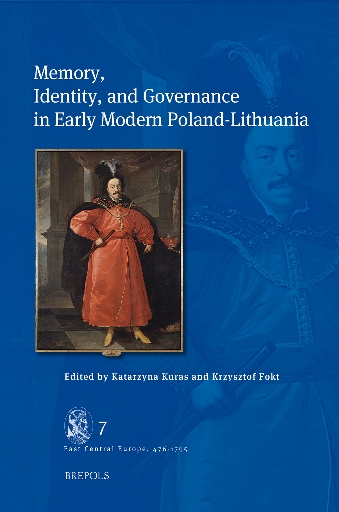
Memory, Identity, and Governance in Early Modern Poland‑Lithuania
In the early modern period Poland–Lithuania stood as a realm where the echoes of a storied past intertwined with the ambitions of a dynamic present. This volume illuminates how its diverse populace navigated the complexities of their shared heritage weaving tradition with innovation to craft a uniquely multi-layered identity. The essays presented here examine the dual nature of historical inheritance in this vast polity. On the one hand the past served as a treasure trove of enduring ideas compelling narratives and time-tested practices that enriched cultural and political life. On the other it posed formidable challenges requiring creative adaptation to meet the demands of changing times. By exploring established narratives performative traditions and historical frameworks the contributors uncover the intricate ways in which memory influenced decision-making and societal evolution. They reveal how the past was neither static nor simply an obstacle but was an active force that shaped contemporary aspirations and inspired visions of the future. Through the lenses of rulers nobles intellectuals and commoners this collection offers fresh perspectives on how the people of Poland–Lithuania harnessed the power of history to craft a legacy that transcended their era. Essential reading for scholars and enthusiasts alike this work examines the enduring dialogue between memory and identity in one of Europe’s most compelling early modern states.
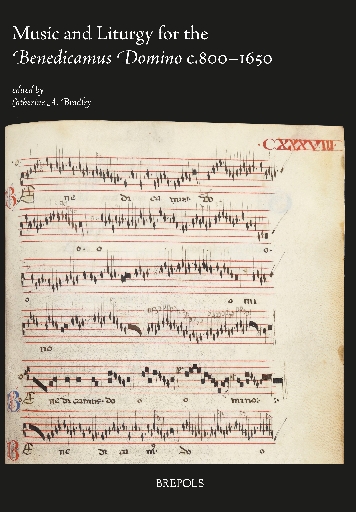
Music and Liturgy for the Benedicamus Domino c.800–1650
For more than a millenium singers in churches monasteries and private chapels across Europe have closed their worship with the joyful musical exclamation Benedicamus Domino (‘Let us Bless the Lord’). This moment has sounded in song many times a day: at the end of the Mass the Office hours outside the church walls in celebratory processions as well as in informal sacred devotional and festive contexts. Benedicamus Domino was uniquely associated with an unprecedented amount of creative freedom in the sacred rituals of the Christian West: plainchant melodies could be adopted at will from other parts of the liturgy and this moment inspired a proliferation of poetic and polyphonic elaborations from the eleventh century on.
This collection of essays brings together interdisciplinary contributions from eighteen scholars illuminating the wide range of ritual musical poetic manuscript and generic contexts for the Benedicamus Domino versicle in the period c.800–1650. Individual chapters engage with the evidence of liturgical commentaries and Patristic texts Ordines and hagiographies. They present and analyse musical and textual embellishments of the Benedicamus Domino as well as their written traces and material contexts with several sources discovered or discussed in detail here for the first time. Encompassing a wide geographical and generic scope this volume reveals unsuspected continuities and contrasts in the history of the Benedicamus Domino versicle in medieval and early modern Europe.
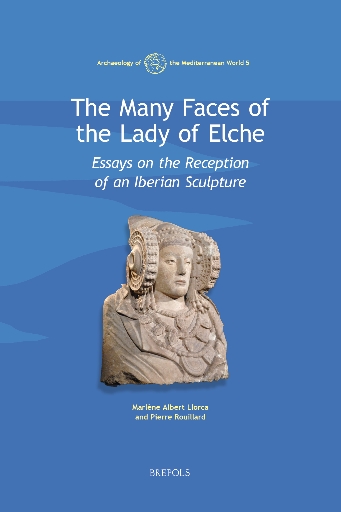
The Many Faces of the Lady of Elche
Essays on the Reception of an Iberian Sculpture
On 4 August 1897 farm workers in Elche — the site of ancient Ilici — discovered an Iberian sculpture of a woman that dated from the fifth– fourth centuries BCE. French archaeologist Pierre Paris dubbed this figure ‘the Lady of Elche’ and promptly purchased the sculpture on behalf of the Louvre Museum. There she drew the attention of European scholars who were intrigued by her stylistic features finally concluding that she bore witness to the existence of a specifically Iberian art. Since her discovery the Lady of Elche has been a source of fascination not only for scholars but also for artists and she has become an icon of regional and national identity across Spain. This volume co-written by an archaeologist and an anthropologist and translated here into English for the first time seeks to explore the importance of the Lady of Elche both for students of the past and for the peoples of Iberia. The authors here explore not only what we know — and still do not know — about her creation but also engage with key questions about what she represents for the men and women of our time who have questioned manipulated admired loved and often reinvented the singular beauty of this iconic figure.
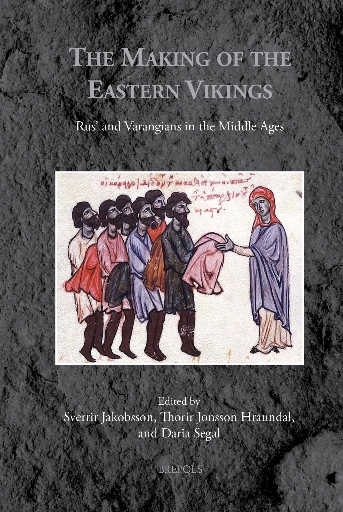
The Making of the Eastern Vikings
Rus’ and Varangians in the Middle Ages
Historiography on the Vikings of the East — the Rus' and the Varangians — has been both multiform and varied but it has been invariably focused on actual historical events and the extent to which these are accurately reflected in written sources. In contrast very little attention has been paid up to now to the narrators behind these medieval accounts to their motives in writing or to the context in which they were working.
This volume aims to redress the balance by offering a re-examination of medieval sources on the Eastern Vikings and by highlighting ongoing ‘debates’ concerning the identities of the Rus' and the Varangians in the medieval period. The chapters gathered here compare and contrast sources emanating from different cultures — Byzantium the Abbasid Caliphate and its successor states the early kingdoms of the Rus' and the high medieval Scandinavian kingdoms — and examine what significance these sources have attached to the Rus' and the Varangians in different contexts. The result is a new understanding of how different cultures chose to define themselves in relation to one another and a new perspective on the history of the Scandinavian peoples in the East.
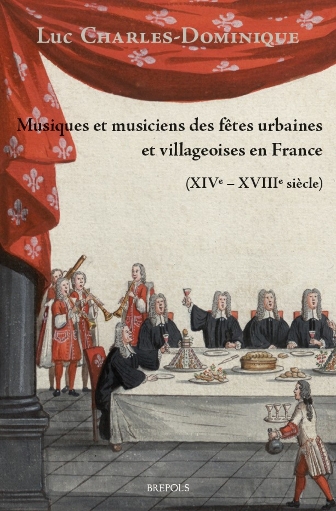
Musiques et musiciens des fêtes urbaines et villageoises en France (XIVe – XVIIIe siècle)
Si les premières traces de ritualisation musicale (noces banquets…) remontent au début du xiii e siècle avec les jongleurs ce n’est vraiment qu’à partir du siècle suivant que les ménétriers ou joueurs d’instruments sont chargés de la représentation des pouvoirs et de l’animation de la vie sociale dans sa totalité (fêtes politiques et religieuses de métiers calendaires votives familiales etc.) et qu’ils se regroupent en confréries ou corporations.
S’appuyant sur son « terrain » toulousain premier ainsi que sur le dépouillement systématique de deux siècles de littérature sur les ménétriers des provinces françaises et sur la collaboration de certains chercheurs en régions l’auteur propose une nouvelle réflexion d’ampleur sur le personnage historique du ménétrier (plus de trois mille musiciens recensés) son genre son statut social (poids de la marginalité musicienne des aveugles mendiants concurrence des musiciens occasionnels comme les maîtres d’école) sa fonction sa pratique et ses formes d’organisation.
Cette étude d’anthropologie musicale historique est doublée d’une approche territoriale cette géographie ménétrière étant abordée au niveau des provinces des villes (notamment des quarante ayant abrité des corporations et confréries ménétrières) des villages et de l’organisation administrative de ce vaste espace de la Ménestrandise (royauté et lieutenances ménétrières). Par ailleurs cette histoire sensible de l’art des ménétriers est aussi celle de leur rapport aux musiques dites « savantes » d’église aux cultures musicales autres comme celle des Bohémiens.
À l’aide de nombreuses archives de tableaux cartes documents iconographiques cet ouvrage dépeint la grande fresque d’une musique historique encore méconnue malgré sa longévité et sa centralité sociale et sociétale celle des ménestrels et joueurs d’instruments.
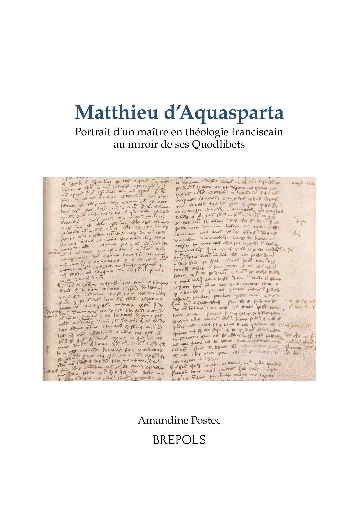
Matthieu d’Aquasparta
Portrait d’un maître en théologie franciscain au miroir de ses Quodlibets
Franciscain d’origine ombrienne Matthieu d’Aquasparta (v. 1240-1302) est maître en théologie à l’université de Paris au moment de la censure de 1277. Il rejoint ensuite la Curie pontificale en 1279. Doté de talents politiques certains il est brièvement ministre général de l’ordre franciscain avant d'être créé cardinal par Nicolas IV en 1288. Il obtient la charge de grand pénitencier et devient un soutien fidèle de Boniface VIII. Depuis le début du XXe siècle la pensée du théologien avait surtout fait l'objet d'études construites à partir de l'édition progressive de ses Questions disputées. Cet ouvrage propose une biographie complète de Matthieu d’Aquasparta au prisme de ses textes universitaires grâce à l’analyse de sa bibliothèque personnelle de ses manuscrits de travail légués aux couvent d'Assise et de Todi et de ses Quodlibets encore inédits.
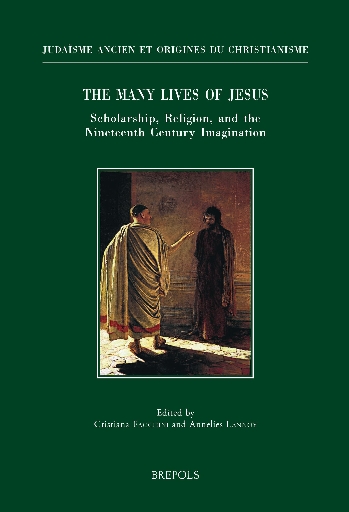
The Many Lives of Jesus
Scholarship, Religion, and the Nineteenth Century Imagination
This collection of essays aims to offer a multi-disciplinary approach to nineteenth and early twentieth century scholarship on Jesus and early Christianity which illustrates the width and depth of the questions that critical reflections on the historical Jesus raised in and beyond the field of liberal theology. More precisely it focuses on Jesus scholarship as practiced in various disciplines and fields that engaged with the academic study of religion. On the other hand this volume aims for a comprehensive multi-perspectivist historicization of this scholarship considering the full range of religious cultural racial political and national dynamics that hosted the many controversies over the historical Jesus.Divided into five sections the eleven essays in this book are organized according to guiding themes and a loose chronological structure. The first section revisits the roots of the Forschung in Liberal-Protestant Germany and especially focuses on the maturation of historical-critical consciousness in the work of Reimarus (and his predecessors) Schleiermacher and Strauss. The second section is concerned with the rise of the “oriental Jesus” against the background of the making of the academic non-theological study of religion as a scientific discipline. The third section explores how themes related to the historical Jesus and the rise of Christianity were treated among different academic disciplines from the early second half of the nineteenth century onwards. The fourth section explores how the historical Jesus was at the same time further explored by the biblical scholars and theologians who integrated new comparative methods in their research. The fifth section finally highlights the cultural-political appropriations that were made of scholarly writings on Jesus which not rarely constituted the bricks with which radical political movements built their houses.
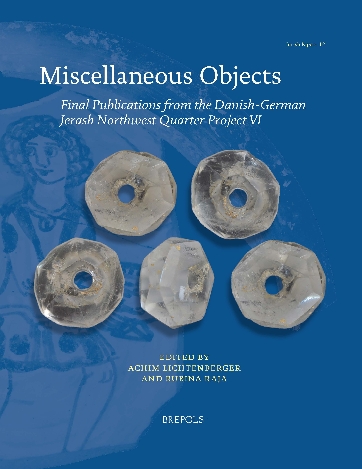
Miscellaneous Objects
Final Publications from the Danish-German Jerash Northwest Quarter Project VI
The Decapolis city of Jerash has long attracted attention from travellers and scholars due both to the longevity of the site and the remarkable finds uncovered during successive phases of excavation that have taken place from 1902 onwards. Between 2011 and 2016 a Danish-German team led by the universities of Aarhus and Münster focused their attention on the Northwest Quarter of Jerash — the highest point within the walled city — and this volume is the sixth in a series of books presenting the team’s final results.
In this volume a wide range of miscellaneous items discovered in the Northwest Quarter are presented ranging from prehistoric lithics to Ottoman pipes. Material finds covered include stone sculpture utensils and inscriptions as well as bone objects spindle whorls and bread stamps while some scientific analyses of jewellery and terracotta figurines complement the studies. These chapters ensure that all finds from the Northwest Quarter — no matter how small — are made available to researchers with the contributions gathered here offering unique new insights into the material groups from Gerasa later Jerash and into the lives of the population of the city from a longue durée perspective.
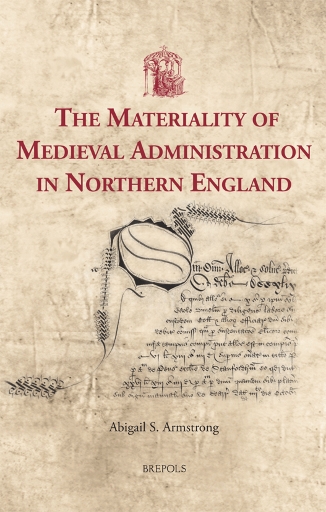
The Materiality of Medieval Administration in Northern England
In the late Middle Ages the Percy earls of Northumberland and the bishops of Durham were two of the largest landholders in the North East of England. This book is a study of their estate administrations based on the extant manorial accounts from the fourteenth through sixteenth centuries. Examining the documents holistically it investigates the shapes of the records and the materials they were written upon as well as how they were used and stored to provide new insights into late medieval lordly administration. Such a material-focussed approach explores the concurrent use of rolls booklets paper and parchment for different types of manorial accounts and at different steps of the multistage production and audit process. It also examines the hands drafting editing and auditing the accounts in addition to the layout and presentation of the contents of the records to further our understanding of the written burden of proof required in the management and audit of large estates in late medieval England. Studying the financial accounts of the earls of Northumberland and the bishops of Durham from a material perspective reveals two highly sophisticated administrative systems and structures of accountability.
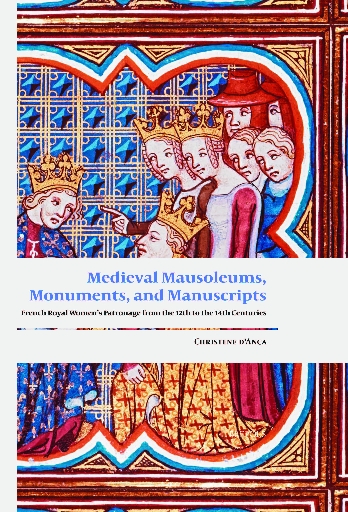
Medieval Mausoleums, Monuments, and Manuscripts
French Royal Women’s Patronage from the Twelfth to the Fourteenth Centuries
Medieval Mausoleums Monuments and Manuscripts: Royal Women’s Patronage from the Twelfth to the Fourteenth Centuries explores the manuscripts monuments and other memorabilia associated with the artistic patronage of Eleanor of Aquitaine (1122-1204) her daughters Marie de Champagne (1145-98) and Matilda of Saxony (1156-98) as well as works generated by three queens of France Marie de Brabant (1254-1322) Jeanne d’Évreux (1310-71) and Blanche de Navarre (1330-98). Through this study the shift in women’s artistic patronage over the centuries may be brought to light as well as its evolution evincing how each generation built upon the previous one.
Further despite the assorted shapes these women’s efforts embodied ranging from manuscripts to stained glass windows from funerary plaques paintings jewels and linens to monuments mausoleums and endowments of institutions including a variety of other forms these women were notably unified in that their greatest output tellingly occurred during precarious points in their lives that threatened their positions such as the potential political turmoil associated with the deaths of husbands or children. At these times their participation in acts of patronage solidified their places at court in society and within cultural memory while doubling as assertions of their political power and lineage. Thus testaments manuscript books monuments and memorials were not only a declaration or signs of one’s possessions but also sites and documents that continued the politicking of the deceased.