


Browse Books
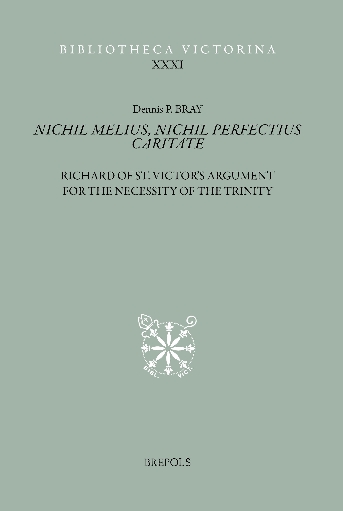
Nichil Melius, Nichil Perfectius Caritate
Richard of St Victor’s Argument for the Necessity of the Trinity
In his magnum opus De Trinitate the twelfth-century canon Richard of St. Victor offers sustained reflection on core dogmatic claims from the Athanasian creed. At the heart of the treatise is Richard’s argument for exactly three divine persons. Starting with the necessity of a single maximally perfect divine substance Richard reasons along four steps: (i) God must have maximal charity or other-love; (ii) to be perfectly good delightful and glorious God’s other-love must be shared among at least two and (iii) among at least three divine persons; (iv) the metaphysics of divine processions and love each ensure the impossibility of four divine persons. For Richard Scripture and trustworthy church authorities already provide certainty in these truths of faith. Even so as an act of ardent love Richard contemplates the Trinity as reflected in creation. From this epistemic point of departure he supports his conclusions from common human experience alone.
Recently philosophers of religion have employed Richard’s trinitarian reflection as a springboard for constructive work in apologetics and ramified natural theology. His unique and meticulous approach to the Trinity has garnered attention from scholars of medieval and Victorine studies recognizing the novelty and rigour of his philosophical theology.
This volume presents the first focused exploration of Richard’s central thesis in De Trinitate combining historical context with philosophical scrutiny. It confronts the most challenging aspects of his argument presenting Richard’s insights as not merely intriguing but also profoundly compelling. His thesis if validated promises to significantly enrich modern dialogues on the philosophical and theological dimensions of the Trinity.
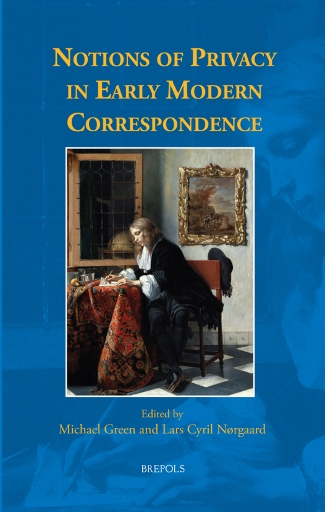
Notions of Privacy in Early Modern Correspondence
Our modern notions of privacy have their roots in the early modern period. When studying this historical background one of the most important sources is correspondence. Letters sent from one person to another reflect specific situations ideas thoughts emotions and experiences. Contextualizing an epistolary exchange provides information about the world and values of past individuals.
This volume presents essays that deal with a variety of early modern correspondence. The letters analysed written in French Dutch German and English speak to very different contexts and cultural codes. While each of the letters in question has its own unique story to tell all contributions come together by focusing on notions of privacy. From the intimacy that unfolds in educational exchanges to specific letter-writers and their strategic use of the private this volume offers ground-breaking insights that will be relevant to many different researchers and their respective fields: the history of science the history of Christianity the history of travel writing and education gender studies and the history of diplomacy. In addition the contributions also tackle the issue of publishing letters in the early modern period both as a cultural phenomenon and as a material praxis.
Together the essays show how ‘privacy’ was an ambiguous term in the early modern period; the letter as literary genre and a means of communication demonstrates how privacy was perceived both as valuable and as a potential threat.
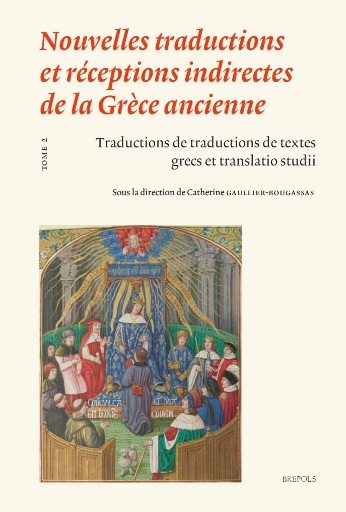
Nouvelles traductions et réceptions indirectes de la Grèce ancienne. Tome 2 : Traductions de traductions de textes grecs et translatio studii
L’essor des traductions directes du grec au français commence dans les années 1550. Du début du XIVe siècle jusqu’au milieu du XVIe siècle les auteurs-traducteurs en langue française qui représentent la Grèce ancienne n’ont sauf exception aucune connaissance directe des œuvres grecques. Les savoirs sur la Grèce qu’ils transmettent et réinventent sont médiatisés par des filtres divers. Leur réception est indirecte elle prend appui sur des œuvres antérieures textuelles et iconographiques dont les représentations de la Grèce ancienne sont déjà le fruit d’une ou de plusieurs réceptions.Les œuvres latines qu’ils traduisent et adaptentsont pour une part des œuvres antiques et médiévales qui ne sont pas des traductions et pour une part des traductions ou adaptations d’œuvres grecques avec parfois plusieurs transferts linguistiques à partir du grec. Elles sont très diverses : des textes antiques jusqu’aux traductions humanistes latines d’œuvres grecques réalisées en Italie et aux Pays-Bas en passant par des œuvres latines médiévales originales des traductions latines du français et des traductions arabo-latines et arabo-hispano-latines.
Les auteurs-traducteurs en langue française héritent ainsi de réceptions antérieures diverses qu’ils s’approprient et transforment poursuivant le processus d’invention de représentations de la Grèce ancienne. Comme les manuscrits et les imprimés de leurs nouvelles traductions sont souvent très illustrés les artistes offrent dans le même temps des traductions visuelles qui elles aussi s’appuient sur des sources diverses et des réceptions antérieures et donnent à voir de nouvelles images de la Grèce ancienne. La question de la réception de l’Antiquité grecque sera donc explorée par une entrée différente de celle qui a été adoptée jusqu’à présent et qui a consisté en l’étude de la transmission et de la traduction directes des œuvres grecques. Le présent volume se focalise sur les traductions au second degré de textes grecs.
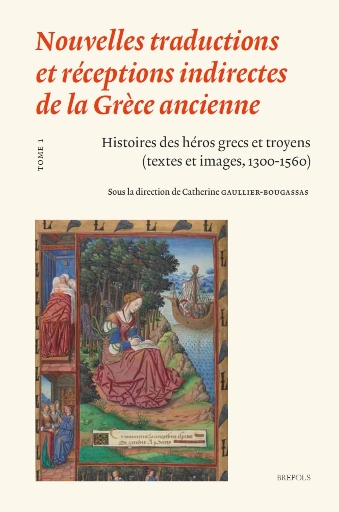
Nouvelles traductions et réceptions indirectes de la Grèce ancienne
Tome 1 : Histoires des héros grecs et troyens (textes et images, 1300-1560)
L’essor des traductions directes du grec au français commence dans les années 1550. Du début du xive siècle jusqu’au milieu du xvie siècle les auteurs-traducteurs en langue française qui représentent la Grèce ancienne n’ont sauf exception aucune connaissance directe des œuvres grecques. Les savoirs sur la Grèce qu’ils transmettent et réinventent sont médiatisés par des filtres divers. Leur réception est indirecte elle prend appui sur des œuvres antérieures textuelles et iconographiques dont les représentations de la Grèce ancienne sont déjà le fruit d’une ou de plusieurs réceptions.Les œuvres latines qu’ils traduisent et adaptentsont très diverses : des textes antiques jusqu’aux traductions humanistes d’œuvres grecques réalisées en Italie et aux Pays-Bas en passant par des œuvres latines médiévales originales des traductions latines du français et des traductions arabo-latines et arabo-hispano-latines. Les illustrations de nombreux manuscrits et imprimés redoublent cette traduction textuelle d’une traduction visuelle qui enrichit la mémoire de la Grèce ancienne ainsi recréée. La question de la réception de l’Antiquité grecque est ainsi explorée par une entrée différente de celle qui a été adoptée jusqu’à présent et qui a consisté en l’étude de la transmission et de la traduction directe des œuvres grecques. Le présent volume porte sur des traductions consacrées à des héros et héroïnes des temps mythiques jusqu’à la guerre de Troie.

Noble Magnificence
Culture of the Performing Arts in Rome 1644-1740
The thirty chapters in this book are based on the work of an international multidisciplinary team of researchers and archivists brought together for the PerformArt project funded by the European Research Council from 2016 to 2022. This project investigated the artistic patronage of the great Roman aristocratic families of the seventeenth and eighteenth centuries through research in the extant archives.After the accession to the papal throne of Innocent X in 1644 and more so after the Peace of the Pyrenees in 1659 – which led to a greater loss of power for the pope in his relations with other European states – the Roman families stepped up their efforts to assert their social preeminence not only through architecture and the fine arts but also through the ephemeral performing arts: music theatre and dance which were omnipresent throughout the year and especially during the intense period of artistic production that was the Roman Carnival. The search for traces of these spectacles in the archives of these families reveals that their desire to display their magnificence – an ideal well documented in the literature of the period – gave rise to lavish expenditure on a scale that could only be justified by the benefits (if not tangible then at least symbolic) they hoped to gain.The essays in this book which draw on social economic history the history of ideas and the evolving artistic practices of the time make a major contribution to our knowledge of courtly societies in Ancien Régime Europe by integrating the performing arts into their analyses in innovative ways.
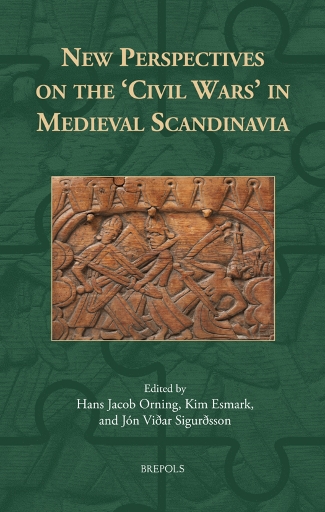
New Perspectives on the ‘Civil Wars’ in Medieval Scandinavia
In the twelfth and thirteenth centuries Scandinavia was rocked by an ongoing period of ‘civil war’ conflicts traditionally characterized by medieval historians as internal struggles that took place in the context of predominantly national state-centred political and constitutional frameworks. This volume however aims to overturn these established narratives with carefully curated essays written by experts in the field offering a new pan-Scandinavian perspective on the period in question that emphasizes the importance of fluid often overlapping social networks permeable borders between realms and constant underlying hostilities between rival groups. Through detailed examinations of pivotal moments in Danish Norwegian and Swedish history together with analyses of topographical patterns gender issues diplomacy and three contributions that draw parallels within similar conflicts outside of Scandinavia this book provides an important corrective to teleological narratives of the medieval ‘civil wars’ as a necessary stage on the route to state formation and modernity.

Navigating Language in the Early Islamic World
Multilingualism and Language Change in the First Centuries of Islam
Traditional accounts of Arabicization have often favoured linear narratives of language change instead of delving into the diversity of peoples processes and languages that informed the fate of Arabic in the early Islamic world. Using a wide range of case studies from the caliphal centres at Damascus and Baghdad to the provinces of Arabia Egypt Armenia and Central Asia Navigating Language reconsiders these prevailing narratives by analysing language change in different regions of the early Islamic world through the lens of multilingualism and language change. This volume complicates the story of Arabic by building on the work of scholars in Late Antiquity who have abundantly demonstrated the benefits of embracing multilingualism as a heuristic framework. The three main themes include imperial strategies of language use the participation of local elites in the process of language change and the encounters between languages on the page in the markets and at work. This volume brings together historians and art historians working on the interplay of Arabic and other languages during the early Islamic period to provide a critical resource and reference tool for students and scholars of the cultural and social history of language in the Near East and beyond.
Nicolaus Viti Gozzius, Breve compendium in duo prima capita tertii De anima Aristotelis
A Critical Edition with Introduction and Indices
This is the first edition of Nikola Vitov Gučetić’s (1549–1610) compendium of philosophical and theological problems arising from Aristotle’s De anima Book 3 Chapter 4 where he begins his discussion of the thinking part of the soul that is the intellect (nous). With the interpretation of Averroes (1126–1198) this text has structured much of the debate on the immortality of the soul in the Middle Ages and the Renaissance. Gučetić’s Breve compendium is a testament to these debates interesting for its selection of issues for discussion in connection with Aristotle’s text and for its open defence of the Averroist position in the late decades of the sixteenth century. Although Gučetić had a preliminary arrangement with Aldo Manuzio the Younger to print this text around 1590 at some point he abandoned the plan to publish it.
The main purpose of this book is to provide a critical edition of the Latin text for scholars in the humanities especially historians of late Medieval and Renaissance philosophy. The edition is accompanied by an introductory study that places the author and his work in the historical and intellectual context describes the manuscript and gives a detailed synopsis of the work. This will make the book useful also to students of the humanities and those interested in the history and culture of Dubrovnik.
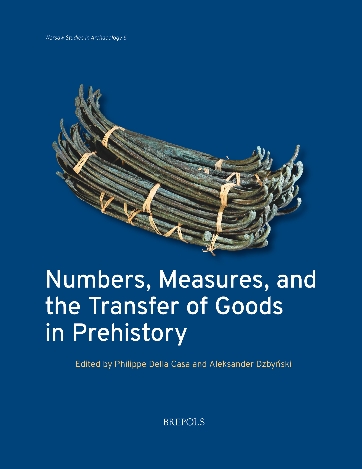
Numbers, Measures, and the Transfer of Goods in Prehistory
Numbers weights and measurements and the systems underpinning them have always been a fundamental part of human society. Developed in different ways and at different times such systems have provided a foundation for science technology economics and new ways of engaging with and understanding the world. This volume aims to explore the background to numbers and measurements in more detail by drawing together specialists from a growing field of research. The contributions gathered here offer new and interdisciplinary insights into how the development of mathematical ideas and systems evolved early metrological systems the exchange of goods and their impact the standardization of measuring tools and the impact of such concepts. This unique volume is deliberately set broad both geographically and chronologically in order to compare and contrast changes over time and between peoples and in doing so it sheds new light on the social and scientific developments among both prehistoric and early historic societies.
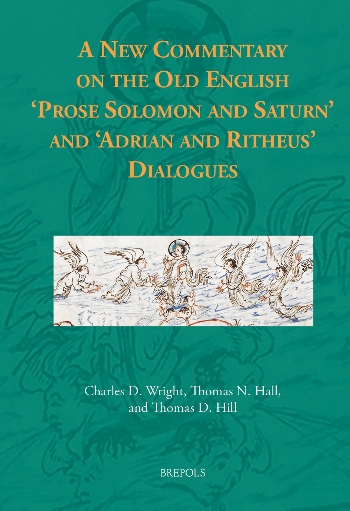
A New Commentary on the Old English ‘Prose Solomon and Saturn’ and ‘Adrian and Ritheus’ Dialogues
Who was not born was buried in his mother’s womb and was baptized after death? Who first spoke with a dog? Why don’t stones bear fruit? Who first said the word ‘God’? Why is the sea salty? Who built the first monastery? Who was the first doctor? How many species of fish are there? What is the heaviest thing to bear on earth? What creatures are sometimes male and sometimes female? The Old English dialogues The Prose Solomon and Saturn and Adrian and Ritheus critically edited in 1982 by J. E. Cross and Thomas D. Hill provide the answers to a trove of curious medieval ‘wisdom questions’ such as these drawing on a remarkable range of biblical apocryphal patristic and encyclopaedic lore.
This volume (which reprints the texts and translations of the two dialogues from Cross and Hill’s edition) both updates and massively supplements the commentary by Cross and Hill contributing extensive new sources and analogues (many from unpublished medieval Latin question-and-answer texts) and comprehensively reviews the secondary scholarship on the ancient and medieval texts and traditions that inform these Old English sapiential dialogues. It also provides an extended survey of the late antique and early medieval genres of ‘curiosity’ and ‘wisdom’ dialogues and florilegia including their dissemination and influence as well as their social and educational functions.
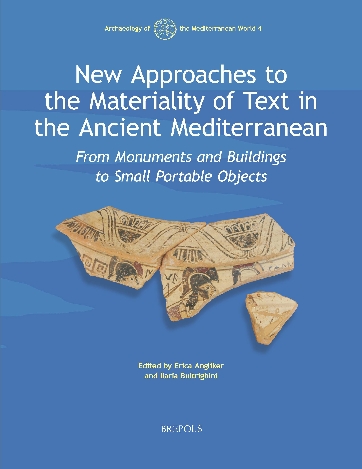
New Approaches to the Materiality of Text in the Ancient Mediterranean
From Monuments and Buildings to Small Portable Objects
In recent years the study of epigraphy and ancient writings has undergone a ‘material turn’ as scholars have increasingly looked beyond just the contents of written sources to also focus on their broader material and visual contexts as a way of exploring the layers of different meanings that can attach to written evidence. Taking this interdisciplinary approach as its starting point this volume draws together contributions from specialists in different fields in order to analyze text-bearing objects and monuments from across the ancient Mediterranean world.
From texts inscribed on large stone monuments and buildings clay or metal tablets to writings on papyrus and parchment rolls jewellery vases coins and textiles writing on different materials had manifold possibilities. The case studies gathered here examine novel approaches to the creation and display of inscribed objects as well as to the ways in which such items were approached and perceived by people during a chronological period ranging from the Late Bronze Age to Late Antiquity. In doing so the volume sheds new light not only on the interplay between ancient texts text-bearers and viewers within their wider spatial and physical contexts but also on the possibilities opened by exploring the material aspects of writing through interdisciplinary approaches.
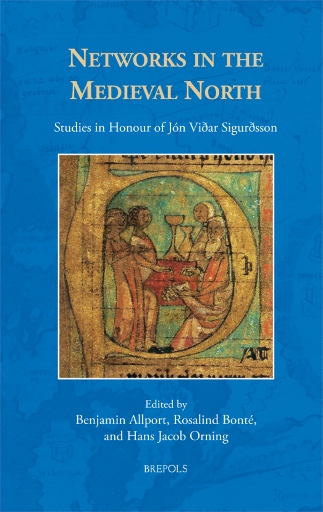
Networks in the Medieval North
Studies in Honour of Jón Viðar Sigurðsson
By the late thirteenth century Norgesveldet - the Norwegian realm - stretched far beyond its core in western Scandinavia. At its height in 1264 Norgesveldet connected Norse speakers in tributary territories ranging from the Irish Sea to Orkney and across the Atlantic to the Faroes Iceland and Greenland. But what held this disparate realm together? What were the dynamics of power between the men and women of the governing and elite classes of Norgesveldet? And what roles did different bodies play at different levels of society in creating and maintaining these networks - from kings and bishops to scribes and scholars traders and law-makers?
This volume aims to expand on and further recent important research into connections between Norway and the wider Norse North Atlantic from the eleventh century during which the Norwegian kingdom began to emerge through to the fourteenth-century decline of Norgesveldet with the creation of the Kalmar Union. Each chapter addresses a different facet of the Norgesveldet networks building a complex picture of both their function and their evolving nature. Taking as its inspiration the research and career of its honorand Jón Viðar Sigurðsson the volume explores medieval Norway and its wider connections using three key frameworks - sociopolitical networks legal and material networks and literary networks - with the aim of shedding new light on the people and processes of this North Atlantic polity.
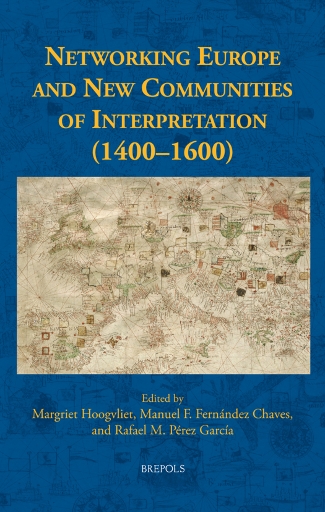
Networking Europe and New Communities of Interpretation (1400–1600)
Long-distance ties connecting Europeans from all geographical corners of the continent during the fifteenth and sixteenth century facilitated the sharing of religious texts books iconography ideas and practices. The contributions to this book aim to reconstruct these European networks of knowledge exchange by exploring how religious ideas and strategies of transformation ‘travelled’ and were shared in European and transatlantic cultural spaces. In order to come to a better understanding of Europe-wide processes of religious culture and religious change the chapters focus on the agency of the laity in ‘new communities of interpretation’ instead of intellectual elites the aristocracy and religious institutions. These new communities of interpretation were often formed by an urban laity active in politics finance and commerce. The agency of religious literatures in the European vernaculars in processes of religious purification reform and innovation during the long fifteenth century is still largely underestimated. ‘Networking Europe’ aims to step away from studying ‘national’ textual production and consumption by approaching these topics instead from a European and interconnected perspective. The contributions to this book explore late medieval and early modern networks connecting people and transporting texts following three main axes of investigation: ‘European Connections’ ‘Exiles Diasporas and Migrants’ and ‘Mobility and Dissemination’.
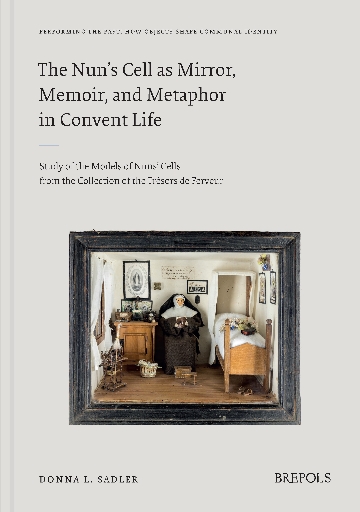
The Nun’s Cell as Mirror, Memoir, and Metaphor in Convent Life
Study of the Models of Nuns’ Cells from the Collection of the Trésors de Ferveur
In the eighteenth through the early twentieth century French nuns from various orders created miniature simulacra of the cells in which they slept studied and performed their devotions. Each diorama contains an effigy of the nun a prie-Dieu devotional objects such as a crucifix handiwork and artifacts to foster study and contemplation. This book examines the lives of the brides of Christ as depicted in these dioramas proposing that the material objects found in the chambers trace the contours of the collective and individual identities of the nuns who created these cells. Viewed as a type of memoir the cells furnish the sisters a stage upon which to rehearse the meaning of their lives. The dioramas create a tension between the private and public presentations of the self between verisimilitude and self-fashioning and between reality and representation. The book contextualizes the miniature cells within the larger discourse of gender identity self-representation monastic devotion and the power wielded by the aesthetics of scale.
Nicholas Trevet’s Commentary on the Psalms (1317 – c. 1321): A Publishing History
How did medieval authors publish their works in the age before print? This study seeks to achieve new insights into the publishing strategies of medieval authors by focusing on Nicholas Trevet an English Dominican friar and Oxford master. Shortly after 1317 Trevet was commissioned by his provincial prior to write a literal commentary on the Psalter. He chose as his reference version the less commonly used Latin translation by Jerome from the Hebrew and delivered his work before 1321/22.
The first book-length examination of Trevet’s commentary this detailed study traces the ways in which the work was circulated by the author and his proxies. Through a combined analysis of codicological textual and historical features of the nine extant fourteenth-century manuscripts this study identifies contemporary efforts to make Trevet’s work available to readers within and without the Dominican Order in England and on the Continent. Even during the author’s lifetime the commentary was copied in Paris and reached readers in Avignon and likely in Naples.
New Light on Formulas in Oral Poetry and Prose
During the twentieth century scholars discovered that oral poetry in entirely unrelated cultures in the world share a basic characteristic: the use of verbal formulas more or less fixed word strings which were inherited from tradition. The discovery of formulas revolutionized the understanding of oral tradition and how oral poetry was transmitted. Homer Eddic poems Karelian laments Serbian heroic poetry etc. were suddenly seen in a new light. But the original Oral-Formulaic Theory has also been questioned and revised. New approaches in the study of formulas have been developed among linguists and folklorists.
The present volume discusses new approaches models and interpretations of formulas in traditional poetry and prose. The twenty authors in the volume analyze formulas in a broad context by letting oral traditions from all over the world shed light on each other. The volume aims to deepen our understanding of the function and meaning of these formulas. A unique feature is that the volume focuses as much on formulas in oral prose as in poetry – usually formula studies have focused entirely or mainly on poetry.
Non est excellentior status : Vaquer à la philosophie médiévale
Études offertes en hommage à Claude Lafleur
Ce volume regroupe les contributions de vingt-deux chercheur.es universitaires collègues et ami.es de Claude Lafleur qui ont voulu lui rendre hommage à l’occasion de son départ à la retraite en tant que professeur titulaire à la Faculté de philosophie de l’Université Laval. La diversité des aires géographiques et la pluralité des strates générationnelles auxquelles appartiennent les chercheur.es qui ont contribué à ce livre témoignent éloquemment de l’envergure de la « sphère d’influence » des productions intellectuelles de Claude Lafleur.
Les textes réunis relèvent des principaux champs de recherche que leur ami et mentor a patiemment labourés au cours de sa carrière académique : histoire des corpus et des manuscrits; transmission des textes philosophiques et de leurs notions fondamentales de l’Antiquité au Moyen Âge; éditions critiques de textes issus des Facultés des arts et de théologie de l’Université de Paris aux xiiie-xive siècles; enseignement de la philosophie au xiiie siècle à la lumière des textes didascaliques; histoire des pratiques discursives dans les Facultés des arts médiévales; étude de concepts clés de la pensée de Thomas d’Aquin; discussion médiévale sur les universaux; philosophie de l’histoire des médiévistes contemporains.
Ce recueil d’études souhaite ainsi se faire le reflet de certains des intérêts heuristiques des orientations méthodologiques et des thématiques historico-philosophiques que Claude Lafleur a poursuivis explorées et étudiées dans ses propres écrits ayant toujours été convaincu « qu’il n’y a pas de statut plus excellent que de vaquer à la philosophie ».
Narratives on Translation across Eurasia and Africa
From Babylonia to Colonial India
What has driven acts of translation in the past and what were the conditions that shaped the results? In this volume scholars from across the humanities interrogate narratives on the process of translation: by historical translators ranging from ancient Babylonia to early modern Japan and the British Empire and by academics from the nineteenth to the twentieth centuries who interpreted these translators’ practices.
In Part 1 the volume authors reflect on the history of the approaches to the phenomenon of translation in their specific fields of competence in order to learn what shaped the academic questions asked what theoretical and practical tools were deployed which arguments were privileged and why certain kinds of evidence (but not others) were thought to be the basis for understanding the function and purpose of all translation performed in a given culture. Part II explores how translators and authors from antiquity to modern times described their own motivations and the circumstances in which they chose to translate. In both parts the contributors disentangle histories of translation from the specialized intellectual fields (such as science religion law or literature) with which they have been bound in order to make the case that we understand translation best when we take into account all cultural practices and translation activities cutting synchronically and diachronically through the entire societal fabric.
New Avenues in Biblical Exegesis in Light of the Septuagint
The detailed study of the Septuagint opens new avenues of interpretation of the biblical text and enables new advancements in exegetical studies. The Greek version can be studied through several different approaches and the application of exegetical methods old and new contributes to a better understanding of numerous literary historical and theological aspects of the Bible. The present volume collects the contributions written by renowned scholars who address the issue of the role and impact of Septuagint studies on biblical exegesis and theology. The papers range from more methodological discussions to exegetical studies applying various approaches to the Septuagint text. The wide variety of methods applied reveals numerous aspects of the Septuagint and the biblical text in general such as their composition history textual transmission literary scope and shape theology. The diversity of methods and analyses of the Septuagint represented in this book have nevertheless a common denominator: Biblical exegesis would benefit greatly from a deeper knowledge of the Septuagint.
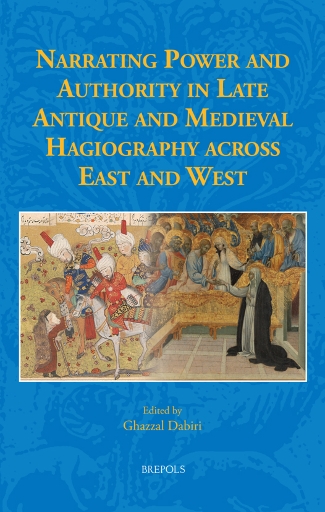
Narrating Power and Authority in Late Antique and Medieval Hagiography from East to West
This collection of essays explores the multifaceted representation of power and authority in a variety of late antique and medieval hagiographical narratives (Lives Martyr Acts oneiric and miraculous accounts). The narratives under analysis written in some of the major languages of the Islamicate world and the Christian East and Christian West - Arabic Armenian Georgian Greek Latin Middle Persian Ottoman Turkish and Persian - prominently feature a diverse range of historical and fictional figures from a wide cross-section of society - from female lay saints in Italy and Zoroastrians in Sasanian and Islamic Iran to apostles and bishops and emperors and caliphs. Each chapter investigates how power and authority were narrated from above (courts/ saints) and below (saints/laity) and by extension navigated in various communities. As each chapter delves into the specific literary and social scene of a particular time place or hagiographer the volume as a whole offers a broad view; it brings to the fore important shared literary and social historical aspects such as the possible itineraries of popular narratives and motifs across Eurasia and commonly held notions in the religio-political thought worlds of hagiographers and their communities. Through close readings and varied analyses this collection contributes to the burgeoning interest in reading hagiography as literature while it offers new perspectives on the social and religious history of late antique and medieval communities.