


Browse Books
Discipline, Authority, and Text in Late Ancient Religion
Essays in Honour of David Brakke
This collection of essays on religious practice in the Mediterranean Near East and Middle East (ca. 100–800 ce) celebrates the impact that Professor David Brakke has had on the study of late antique religious history. Nineteen scholars celebrate the career of Professor Brakke with essays on a range of subjects on late ancient religion. Some chapters treat monastic texts ascetic practice and ritual performance; others address the roles of magic demons and miracle stories; still others examine Christian violence and martyrdom.
In particular many of these essays explore the kinds of ascetic theory practice identity organization performance and writing found throughout the diverse authors groups and locales of Late Antiquity. Essay topics cross disciplinary boundaries and operate in the overlapping intellectual space of Religious Studies History Classics English Anthropology and Comparative Literature. By treating asceticism as a phenomenon within a relatively confined time period and geography across a variety of religious and literary traditions this volume highlights the ascetic impulse within new areas.
The volume thus stands alone for its multifaceted discussions of religion and asceticism in Late Antiquity and advances scholarly investigation of and discourse about late antique asceticism by expanding conceptual and disciplinary boundaries in new and exciting directions.
The Donatist Compendium of 427 and Related Texts
Exegetical Materials from a Dissident Communion
This volume contains the first translation into English of a number of documents associated with the Donatist movement in North Africa a dissident church which flourished during the fourth and fifth centuries before the Vandal invasion obscures our view of it. Donatists are often remembered for their fanatical opposition to traditores—those who had “handed over” the sacred scriptures during the Diocletianic Persecution—and their belief that those baptized by such people were not part of the true church. The writings contained in this volume add critical nuance to this portrait. At its centerpiece is the Donatist Compendium of 427 a collection of eleven exegetical texts compiled c. 427 CE by an unknown Donatist editor; other translated writings include a chronograph revised on the eve of the Vandal conquest of Carthage known as the Genealogy Book a set of section-headings for the Major Prophets and the book of Acts and a Donatist homily on the Epiphany one of the few sermons by a Donatist preacher that still survives. All of these texts were produced within a Donatist milieu and taken together they offer us a unique window into the inner life of the dissident communion as well as valuable insight into the exegetical tools that late antique bishops had at their disposal as they sought to illuminate the biblical text for their congregations.
Dura-Europos: Past, Present, Future
This volume brings together an international and interdisciplinary host of scholars to reflect on the complicated legacies of exploration at the archaeological site of Dura-Europos situated on the western bank of the Euphrates River near modern Salihiyeh (Syria). A chance discovery after World War I kicked off a series of excavations that would span the next century and whose finds are today housed in collections worldwide including the Yale University Art Gallery the Louvre and the National Museum in Damascus. Dura-Europos exemplifies a multiethnic frontier town at the crossroads of major trade routes. Its textual remains and remarkably-preserved Christian Jewish and polytheist religious sanctuaries provide key resources for the study of antiquity and attest to the cross-cultural interconnectivity that was demonstrably central to the ancient world but which has been too often obscured by Eurocentric historiographic traditions and siloed disciplinary divisions.
Foreign-run large-scale archaeological campaigns of the early twentieth century like those at Dura-Europos have created narratives of power and privilege that often exclude local communities. The significance of these imbalances is entangled with the destruction the site has experienced since the 2011 outbreak of conflict in Syria. As a step toward making knowledge descendant of early excavations more accessible this volume includes Arabic summaries of each paper following up on the simultaneous Arabic interpretation provided at the 2022 hybrid conference whose proceedings form the core of this publication. The papers address topics connected to essential themes in relation to Dura-Europos: long-distance trade relations and cross-border interactions in antiquity including the exchange of technologies people and materials; Christianity Judaism and other religious practices and their relations to one another; contemporary trafficking of looted artifacts; cultural heritage and the Islamic State; and the evolving role of museum collections technologies and archival materials for research.
De la Lune à la Terre
Les débats sur le premier livre des Météorologiques d’Aristote au Moyen Âge latin (la tradition parisienne, XIIIe-XVe siècles)
La météorologie ancienne et médiévale se distingue de son équivalent contemporain par un domaine d’études autrement plus vaste s’étendant bien au-delà des phénomènes atmosphériques. Le premier livre des Météorologiques d’Aristote aborde en effet des sujets aussi divers que l’action de la sphère céleste sur la région terrestre les liens entre mouvement lumière et production de chaleur les rapports quantitatifs entre les quatre éléments la formation des comètes et de la Voie lactée l’origine et le mouvement des fleuves les variations périodiques dans la répartition entre mers et terres sèches. Fondée sur l’analyse d’une grande quantité de textes inédits et prenant la forme d’un voyage de la Lune à la Terre la présente étude explore les débats que ces sujets ont suscités chez les maîtres scolastiques qui de la fin du XIIe au milieu du XVe siècle se sont confrontés au texte aristotélicien dans le cadre de leur enseignement à la Faculté des arts.
Diplomatics in the Netherlands
The Use, Editing, and Study of Charters by Dutch Historians from the Middle Ages to the Present
Charters and other administrative texts have long had the full attention of medievalists as primary sources in their historiographical work. This also applies to scholars from the Netherlands. Ever since the late Middle Ages they recognised the value of these sources included them as testimony in their historiography and gradually began to realise that charters and other documents required a specific form of textual criticism and a special way of editing. In this Dutch historians usually followed developments abroad. Sometimes as in the early seventeenth century they were ahead methodologically but for long periods they depended for new insights on developments elsewhere. This was especially true in the nineteenth century when scientific diplomatic methods and editing techniques emerged which would only be introduced and applied in the Netherlands in the next century. In the twenty-first century Dutch scholars are fully participating in the ‘digital turn’ that is creating new research tools in diplomatics.
Ultimately the history of diplomatics in the Netherlands is part of the broad development of historiography in the country and therefore a valuable aspect of the history of scholarship in general.

Dacia Ripensis
Topografia e cristianizzazione di una provincia danubiana nella Tarda Antichità
La Dacia Ripensis fu una provincia danubiana la cui esistenza si data fra gli anni ‘80 del III secolo e i primi anni del VII. Il suo territorio funse da cerniera fra il medio ed il basso corso del Danubio e al tempo stesso da raccordo fra il barbaricum e l’entroterra illirico. L’urbanizzazione vi ebbe un modesto successo; cionondimeno essa favorì la romanizzazione della provincia dove la militarizzazione si manifesta invece in modo evidente grazie a quanto noto dalla Notitia dignitatum e dall’archeologia. L’attenzione per la difesa dell’area era del resto giustificata per via della pressione esercitata da popolazioni come Goti Unni Slavi e Avari che condizionarono la storia dell’intera penisola proprio attraversando la Dacia Ripensis.
Dalle fonti letterarie è noto che la provincia fu anche interessata dalla diffusione della religione cristiana le cui prime testimonianze si datano ai primordi del IV secolo. Il processo rese possibile l’ascesa di sedi vescovili assai implicate nelle dispute teologiche e nella lotta a dottrine eretiche localmente diffuse ancora nel VI secolo. L’archeologia ha permesso di riconoscere la graduale formazione di questa rete ecclesiastica che in forme monumentali è riconoscibile sia in ambito urbano che rurale. Nonostante la sua importanza questa provincia è stata finora studiata solo occasionalmente e questo volume vuole ovviare a questo problema proponendo uno studio aggiornato mirato a definire le conoscenze storiche e archeologiche necessarie alla comprensione generale della topografia provinciale così come alla contestualizzazione del processo di cristianizzazione di questa porzione dell’area danubiana.
Disoriented
Gender Territories in Contemporary Art
'Desnortar' or disoriented means to lose the north or the sense of direction to disorient. In Disoriented a collective book from a gender perspective we consciously seek to lose both the geographical north and the north of the contemporary art canon. We aim to rethink and disrupt from feminist LGTBQ+ and postcolonial approaches the coordinates that have articulated the discourses on the art history and art system along the 20th and 21st centuries. Coordinates that define how these artistic practices and systems of modernity and the contemporary are understood the cardinal directions and main conceptual issues or which artists are relevant or expendable according to the narratives of avant-garde and contemporary art history. It is crucial to reinterpret and disorientate to disnorth and thereby shatter these references to overcome the gaps that prevent the emergence of alternative knowledges. To address questions or artists often perceived as peripheral to a grand historical narrative we propose an intersection of modern and contemporary art history gender feminist queer and postcolonial approaches and transnational interrelations. This intersectionality allows us to actively lose the north of the canon and to direct our gaze towards subjects outside the usual centres of legitimation. Mostly we attend to women artists to peripheral geographical centres to subaltern collectives or to practices or materials regularly considered of little artistic interest. All of the above critiques how conventional discourses have excluded some collectives or certain artistic proposals and the resistances that have emerged against them.
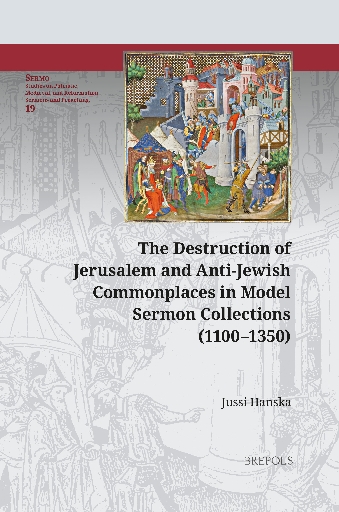
The Destruction of Jerusalem and Anti-Jewish Commonplaces in Model Sermon Collections (1100–1350)
This book analyses the diffusion of anti-Judaic stereotypes and topoi in thirteenth- and early fourteenth-century model sermon collections. It concentrates on the sermons on Luke 19.41-48 where Jesus foretells the Destruction of Jerusalem. The preachers took the view that the Destruction of Jerusalem was divine vengeance for the Jews because they killed Jesus. Thus these sermons were a good venue for those preachers who wanted to preach against the Jews.
Model sermon collections were the closest thing to modern mass media. Consequently their role in the diffusion of anti-Judaic attitudes was significant. The anti-Judaic writings of the early Church Fathers were only read by few literate church men whereas model sermons reached the illiterate masses all over Christianity. Therefore they played a major role in diffusing anti-Judaic attitudes amongst the population at large and thus contributed to the marginalization of the Jews to various libels expulsions violence and eventually to large-scale pogroms.
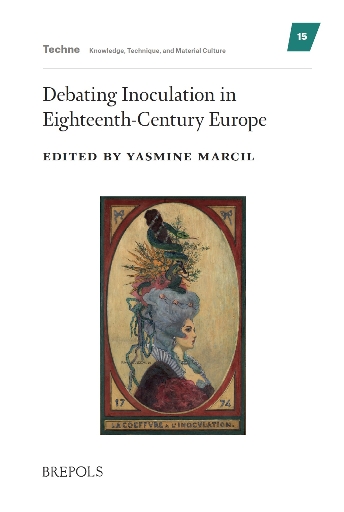
Debating Inoculation in Eighteenth-Century Europe
Smallpox (known as "variole" or "petite vérole" in French) spread relentlessly across Europe during the eighteenth century gaining an unprecedented and deadly momentum. While there was no cure for this highly infectious and often fatal disease those that recovered from it were immune to future infections. This phenomenon was the origin of a practice of inoculation whereby infectious material was introduced into the body to induce immunity. In Europe this practice was initially experimented with in England and it was subsequently adopted across the continent during the eighteenth century. Inoculation was however not without controversy—not least because the practice originated outside of Europe—and it became the subject of intense debate. This debate this volume argues extended beyond medical circles to include intellectuals and the broader public—a phenomenon driven by a growing periodical press. As books scientific treatises and plays crossed regional and national boundaries debates on inoculation must this volume shows be examined within a European transnational perspective thereby considering how ideas were shaped by adaptation translations and citation. Doing so this volume not only sheds new light on the history inoculation as a practice but also illustrates how cultural history can enrich history of medicine
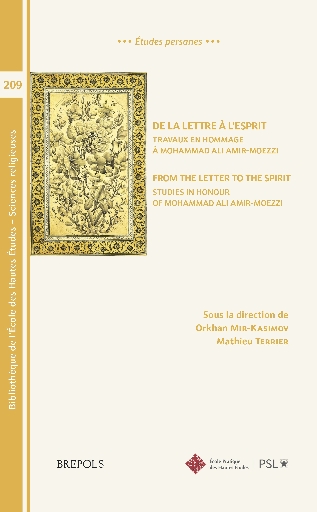
De la lettre à l’esprit / From the Letter to the Spirit
Travaux en hommage à Mohammad Ali Amir-Moezzi / Studies in Honour of Mohammad Ali Amir-Moezzi
La parution du Guide divin dans le shî’isme originel en 1992 a marqué le début de l’itinéraire scientifique de Mohammad Ali Amir-Moezzi. Suivant une ligne directrice cohérente aux ramifications nombreuses cet islamologue a transformé en profondeur les études shi’ites d’abord notamment en soulignant l’importance de la « tradition ésotérique originelle » dans l’histoire de ce grand courant de l’islam et les études coraniques ensuite par la prise en compte des sources shi’ites anciennes et la critique du récit traditionnel « orthodoxe ». Détenteur de 1996 à 2024 de la chaire « Exégèse et théologie de l’islam shi’ite » à la section des sciences religieuses de l’École Pratique des Hautes Études Mohammad Ali Amir-Moezzi est également un professeur hors du commun dont l’enseignement a formé et inspiré de nombreux chercheurs actuels. Ces volumes d’hommage réunissent quarante-quatre contributions de ses collègues et amis dont nombre d’anciens étudiants de tous horizons portant sur les domaines d’études chers au dédicataire : études shi’ites ; études coraniques ; antiquité tardive et débuts de l’islam ; traditions mystiques de l’islam ; aspects de la vie religieuse et intellectuelle contemporaine. Témoignages d’amitié et de reconnaissance pour une œuvre scientifique majeure les contributions savantes réunies dans ces volumes en font un ouvrage de référence.
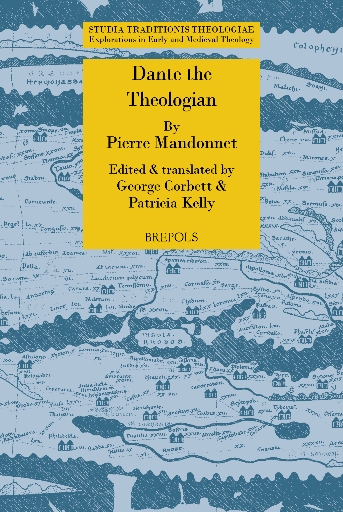
Dante the Theologian
Pierre Mandonnet
The Dominican master par excellence of the historical method Pierre Mandonnet (1858-1936) came to Dante as one of the leading Thomists and medievalists of his generation. However his monograph Dante le théologien (1935) was neglected and largely forgotten mainly as a result of the lay historian Étienne Gilson’s book-length refutation in Dante et la philosophie (1939).
This new edition and the first English translation re-presents Mandonnet’s erudite and thought-provoking monograph to contemporary scholars and Dante enthusiasts. It includes a critical introduction that situates Mandonnet’s work in relation to prevailing currents of Dante scholarship in the early twentieth-century and outlines how it might invite a reappraisal of central features of Dante’s thought today. Mandonnet’s historically-informed account of Dante the theologian as a preacher doctrinarian and distinctively medieval poet as well as his sophisticated analysis of the theological purpose method and content of the Commedia will be an invaluable resource for anyone who seeks to understand Dante’s works and their highly contested reception history.
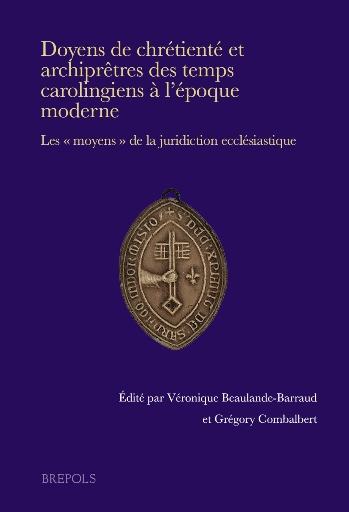
Doyens de chrétienté et archiprêtres des temps carolingiens à l’époque moderne
Les « moyens » de la juridiction ecclésiastique
Les doyens ruraux aussi appelés archiprêtres doyens de chrétienté ou vicaires forains sont des agents locaux au service des évêques constituant un échelon intermédiaire entre ce dernier et la paroisse. Ils jouent un rôle très important dans l’administation du diocèse dans le contrôle des bénéfices ecclésiastiques du clergé local et des habitants du diocèse. Ils disposent de leur propre juridiction et assurent de nombreuses tâches d’exécution commandées par les autorités diocésaines notamment le tribunal épiscopal. Ils réunissent régulièrement leurs collègues avertissent sanctionnent jugent produisent des écrits et des preuves pour eux mêmes et pour autrui. Ils sont des maillons indispensables de la transmission d’informations entre les autorités diocésaines et la société locale. Le diocèse est en général découpé en circonscriptions qui leur sont confiées. Pourtant ils n’ont guère retenu l’attention des historiens jusqu’à aujourd’hui. Ce livre a pour ambition de mettre dans la lumière ces doyens de chrétienté et de lever le voile à partir d’études de cas régionales et de synthèse thématiques plus larges sur leur apparition et leur place dans les diocèses médiévaux leur activité leurs rapports avec les autres acteurs de l’Église et leur rôle dans la société chrétienne. Ces questions sont abordées sur la longue durée de l’époque carolingienne aux Temps modernes dans une grande partie de l’Europe occidentale de l’Italie à l’Angleterre en passant par le royaume de France. Les doyens s’y révèlent véritablement pendant des siècles comme les « moyens » de la juridiction ecclésiastique aux deux sens de ce terme.
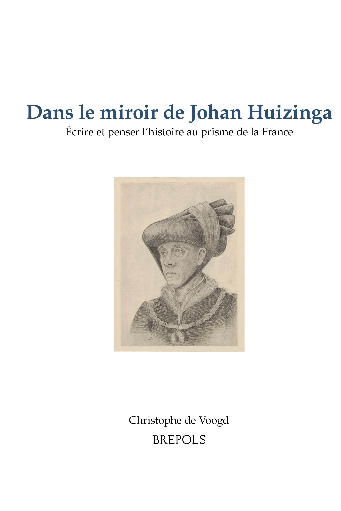
Dans le miroir de Johan Huizinga
Écrire et penser l’histoire au prisme de la France
Écrire et penser l’histoire au prisme de la France L’automne du Moyen Âge (1919) est assurément l’un des grands classiques de l’historiographie et le livre comme son auteur Johan Huizinga (1872-1945) connaissent une attention internationale renouvelée. Mais force est de constater que l’historien néerlandais demeure en France une référence marginale en dehors du milieu des médiévistes à la différence de son autre chef d’œuvre Homo ludens (1938).
Or la prise en compte de l’ensemble de ses écrits permet de mesurer combien son approche peut éclairer les débats épistémologiques de notre temps. Pionnier de l’histoire culturelle Huizinga met la force des représentations au premier plan du processus historique ; il pratique et préconise une démarche herméneutique et non causale ou structurelle. Car - et c’est là une divergence majeure avec notamment Lucien Febvre et Marc Bloch - il s’agit moins pour lui d’expliquer le passé à travers ses traces que de comprendre ses acteurs à travers leurs signes. D’où le privilège des sources narratives et iconographiques dans une écriture qui elle-même prend la forme du récit : un récit nourri d’abondantes références françaises.
C’est pourquoi le présent livre s’efforce de retracer à travers les relations de Huizinga avec la France sa conception et son écriture de l’histoire notamment dans L’automne du Moyen Âge dont on propose ici une relecture. Mais aussi de regarder la France son histoire et ses historiens dans le miroir de Johan Huizinga convaincu que l’on est des vertus d’un regard étranger pour éclairer le débat national.
Den Menschen dem Menschen erklären
Deskriptivität und Normativität in den christlichen Anthropologien von Laktanz, Gregor von Nyssa und Nemesios von Emesa
Den Menschen dem Menschen erklären stellt die erste umfassende Vergleichsanalyse von drei anthropologischen Traktaten aus dem vierten Jahrhundert n. Chr. dar: Laktanzens De opificio Dei Gregor von Nyssas De hominis opificio und Nemesios von Emesas De natura hominis. Diese Texte wurden oft als das jeweils erste Beispiel christlicher Anthropologie bezeichnet doch ebenso oft waren die Kriterien die zu diesem Urteil führten unklar. Das Buch hinterfragt diese Einschätzungen und widmet sich der Analyse der literarischen Form und des philosophisch-theologischen Inhalts dieser Schriften. Es zeichnet die Intentionen welche die drei Autoren beim Verfassen der Traktate verfolgten nach. Es analysiert die philosophischen Grundgedanken die diesen Beispielen christlicher Anthropologie zugrunde liegen. Es stellt dar wie in den drei Texten eine deskriptive und eine normative Anthropologie miteinander verwoben werden um ein protreptisch-paränetisches Ziel zu erreichen. Diese protreptische-paränetische Absicht die auch – und insbesondere - eine überwiegend positive Einstellung zur menschlichen Körperlichkeit mit sich bringt wird als gemeinsames Charakteristikum der drei Traktate identifiziert und als ein mögliches Hauptattribut christlicher Anthropologie erkannt. So will Den Menschen dem Menschen erklären eine Diskussion anstoßen ob das anthropologische Traktat eine spezifisch christliche literarische Gattung darstellen könnte.

Du chartrier au codex
La première cartularisation (ix e-début x e siècle)
Alors que le champ historiographique touchant les cartulaires s'est renouvelé en profondeur depuis les années 1990 les premières compilations datées du IXe siècle sont restées à l'écart de ce mouvement. Cette monographie entend donner un éclairage nouveau sur la première cartularisation. En considérant tous les témoins conservés elle replace l'apparition d'un nouveau type d'écrit dans son contexte documentaire et spatio-temporel en Francie orientale. Huit ensembles documentaires sont comparés entre eux mais aussi avec d'autres écrits contemporains afin de déterminer les origines les fonctions attribuées à ses premières compilations. Enfin une réflexion sur la matérialité éclaire les choix faits lors de la mise en codex. Un jeu constant sur les échelles est proposé pour comprendre pourquoi huit pôles cartularistes choisissent de produire un cartulaire parmi un arsenal d'écrits possibles pour répondre à des finalités précises.
Le croisement de différentes historiographies sur les cartulaires et les pratiques de l'écrit renouvelle les approches et les perspectives. Cette monographie replace le moment-cartulaire dans un paysage documentaire large et rend compte de la cartularisation comme un phénomène scriptural et culturel global inscrit dans les dynamiques de la société carolingienne.
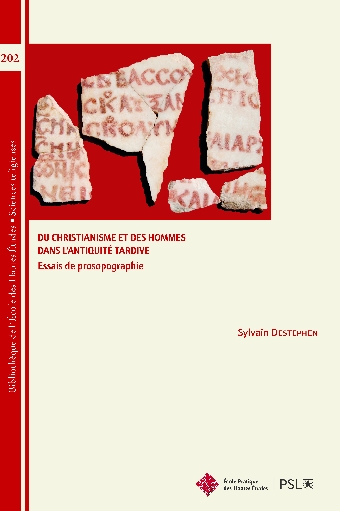
Du Christianisme et des hommes dans l’Antiquité Tardive. Essais de prosopographie
Le néologisme savant de ≪ prosopographie ≫ apparaît à la Renaissance et désigne dans un premier temps une oeuvre littéraire combinant généalogie de princes éloges de leurs vertus et galerie de portraits. Après les travaux érudits de l’Âge classique sur les dirigeants religieux du passé il faut attendre le xix e siècle pour que la prosopographie soit érigée en discipline scientifique.
Reposant sur un dépouillement systématique de la documentation conservée la prosopographie propose une étude sérielle des membres d’un groupe constitué sur une période et une durée déterminées.
En raison de la richesse des sources conservées l’Empire romain a suscité de manière précoce en Europe des études prosopographiques. La période couverte par les iii e-vii e siècles communément appelée ≪ Antiquité tardive ≫ offre une richesse documentaire et littéraire exceptionnelle liée en partie à l’expansion du christianisme et à la conversion du monde antique à la nouvelle religion. Cette abondance de sources explique la réalisation de grandes enquêtes prosopographiques portant d’abord sur l’ensemble des élites civiles puis sur les milieux ecclésiastiques monastiques ascétiques et dévots.
Le présent livre mobilise les résultats obtenus et les recherches en cours pour montrer l’importance de l’apport de la prosopographie à l’histoire du christianisme antique dans des domaines aussi variés que l’histoire des conciles l’hagiographie l’onomastique la hiérarchie ecclésiastique et l’histoire des femmes.

The Defence of the Faith
Crusading on the Frontiers of Latin Christendom in the Late Middle Ages
This volume focuses on the complex and often overlooked topic of crusading activities and the crusade movement on the fringes of Latin Christendom in the time frame from approximately 1300 to the beginning of the sixteenth century. It covers a period widely considered as a time of significant political cultural and religious changes in Europe. A period in which Western Christianity was on the one hand still expanding (vide Lithuania and the western Rus and later the Spanish Portuguese French and English expansion in the Americas Africa and South-East Asia) and on the other hand facing two mighty opponents: the Ottoman Empire and Muscovy. On its eastern and southeastern frontiers Latin Christian expansion came to a gradual halt — here the West was now largely under siege! Alone the political logistical and ultimately also military feasibility of a large-scale crusade to liberate Jerusalem had now receded into a purely theoretical and practically almost unenforceable far distance. Ranging in scope from the Baltic Sea region to the Balkans and Iberia this book’s nineteen papers explore how these developments influenced the continuation and adaptation of crusading ideas and activities during this later period of crusades.
The Dormition and Assumption of the Virgin Mary
This volume includes eight new translations of early Christian narratives about the end of the Virgin Mary’s life that is her Dormition and Assumption. Translated from Greek Latin Syriac Ethiopic Georgian and Christian Palestinian Aramaic each of these texts is either translated into a modern language for the first time or appears in a version that has not previously been published. The texts represent a broad range of the highly diverse early Christian memories of Mary's departure from this world. Likewise the texts themselves often disclose a range of theological diversity within the early Christian tradition even beyond what scholars have thus far recognized.

Descartes and Medicine
Problems, Responses and Survival of a Cartesian Discipline
This volume provides a more exhaustive interpretation of René Descartes’ medical views and its reception in the seventeenth century. Filling the gap in the recent scholarship the contributions in the volume follow four axes: exegetical textual philosophical and contextual. Authors in this book deal with Descartes’ physiology anatomy and therapy by reconstructing Cartesian texts detailing possible medical and philosophical sources discussing medical collaborations and oppositions and exploring obscurities and failures in Descartes’ medicine. In laying bare the more promising issues of Cartesian programme and discussing the reception and opposition in the seventeenth century the volume also uncovers the limitations within his interpretation ultimately revealing a more nuanced application of his methodology to a field of natural philosophy. While medical studies play a not secondary role in Descartes’ entire work the volume aims to discuss in detail the importance of medicine as a suitable field to understand Cartesian philosophy from a significant perspective in seventeenth-century Europe.
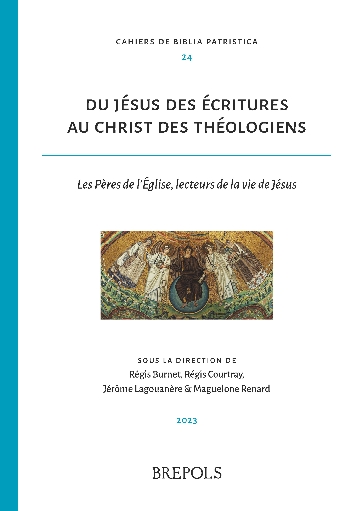
Du Jésus des Écritures au Christ des théologiens
Les Pères de l’Église, lecteurs de la vie de Jésus
Pour parler de la foi chrétienne les Pères ont souvent recouru à des exposés concrets s’appuyant sur des personnages bibliques. Or de tous ces modèles bibliques Jésus est sans conteste le paradigme. Les premiers écrivains chrétiens se sont ainsi attachés à expliquer les épisodes de sa vie pour en dégager des enseignements spirituels moraux ou doctrinaux soulevant de la sorte aussi bien des questions d’exégèse que de théologie.
La grande question qui s’est posée dès le début à la communauté chrétienne fut de démontrer que le Jésus de Nazareth de la Bible est bien le « Christ ». Cette question s’est posée de manière complexe et souvent violente au cours des premiers siècles du christianisme.
Partant de la lecture que les Pères ont faite de la figure de Jésus notamment dans les Évangiles le présent volume s’interrogera sur l’élaboration progressive parfois polémique des différents éléments constitutifs du personnage théologique du Christ. Il s’agira de permettre de mieux saisir la manière dont la figure de Jésus telle qu’on la trouve dans les Écritures a été peu à peu comprise et réélaborée dans des lectures théologiques.
Ces réflexions des Pères conservent toute leur portée aujourd’hui tant les questions soulevées dès les premiers siècles du christianisme continuent d’être actuelles : elles concernent tant les historiens des religions que les théologiens sans oublier les exégètes et tous ceux qui s’intéressent à la réception du personnage du Christ.