


Browse Books
Gnosticism and Its Metamorphoses
Dynamics of Development and Reworking of Gnostic Texts and Motifs from Antiquity to the Twentieth Century
The complex and multifaceted religious phenomenon called Gnosticism continues to fascinate both specialists and the wider audience. This volume explores the “metamorphoses” of Gnosticism through the analysis of selected examples. Late antique Gnostic groups and schools of thought developed and even changed their ideas when interacting with other religious groups and with various sources. Confrontation and polemics with the so-called “Great Church” and with other Christian groups were crucial to doctrinal elaboration of all parties involved. On a different side one can trace the metamorphoses of Gnostic ideasthrough the centuries as these ideas influenced and were reinterpreted by other religious and cultural traditions and currents from Manichaeism to medieval dualistic movements modern esotericism and even contemporary literature.
The essays gathered in this volume focus on two main topics namely how ancient Gnostic groups developed their doctrines by interpreting and reworking their wide range of sources (Jewish early Christian Platonic ones etc.) and how ancient Gnostic ideas and motifs survived – with new forms – in later philosophical religious and literary works up to the twentieth century.
The volume consists of three sections the first being dedicated to early anti-Gnostic controversy in texts embedding Jewish-Christian and Petrine traditions and using Gnostic motifs for polemical purposes; the second to some treatises from the Nag Hammadi corpus and other Gnostic manuscripts (plus Epiphanius’ Panarion) so as to provide fresh insights into late antique Gnostic texts and groups; and the third to three case studies of the modern reception and reworking of Gnostic writings and ideas.
Graphic Practices and Literacies in the History of English
Graphic devices such as tables and diagrams and other visual strategies of organising text and information are an essential part of communication. The use of these devices and strategies in books and documents developed throughout the medieval and early modern periods as knowledge was translated and circulated in European vernaculars. Yet the use of graphic practices and multimodal literacies associated with them have mostly been examined in the context of Latin Greek Arabic and Hebrew and early vernacular writing remains an under-researched area. This volume brings together contributors from English historical linguistics and book studies to highlight multimodal graphic practices and literacies in texts across a range of genres and text types from the late medieval period until the eighteenth century. Contributions in the volume investigate both handwritten and printed materials from books in the domains of medicine religion history and grammar to administrative records and letter writing.
Gendering the Nordic Past
Dialogues between Perspectives
The idea of the Nordic nations as champions of gender equality is firmly rooted in today’s perceptions of society. But how does such a modern comprehension influence our views of history? Does our understanding of gender impact on how we see the past? And do the ways in which we gender the past have an effect on our present identities?
From the Stone Age to the Early Modern period and from warriors and queens to households and burials this groundbreaking volume draws together research conducted as part of the project Gendering the Nordic Past an inter-Nordic collaboration aimed at (re)evaluating and revitalizing the field of gender studies in the region. The chapters gathered in this volume contributed by archaeologists and historians theologians art historians and specialists in gender studies aim to offer novel perspectives on the ways in which we gender the past. While many of the chapters focus explicitly on the Nordic countries comparisons are also drawn with other regions in order to provide both internal and external views on the role of the collective past in present Nordic identities. The result presented here is an essential dialogue into the importance of gender in creating and maintaining past identities as well as a new understanding of how the identities that we construct for the past can relate to heritage narratives.
Guests, Strangers, Aliens, Enemies
Ambiguities of Hospitality in the Middle Ages, c. 1000–1350
Many of our oldest and best-loved stories are about killing guests and betraying hosts. Hospitality is celebrated in medieval texts and in medieval studies as a way of binding individuals together and strengthening social cohesion but both the practice and narration of hospitality was shot through with ambiguity and ambivalence.
This volume shifts the scholarly gaze from the high table — where kings queens and honoured guests are graciously served by skilled servants — to the shadowy corners of the hall the places where gossip and complaint are exchanged where outlaws hide under the guise of hospitality where hostages and troublesome strangers are benched where the light from the hall-fire reflects on drawn blades: prompting difficult reflections on the processes of extraction and predation that provided the material foundations for the feast.
The chapters in Guests Strangers Aliens Enemies range from Silk Road caravanserais in Armenia and crusader relations in the Latin East through ambassadorial and papal receptions in the Mediterranean treatment of merchants and the poor in Scandinavia elite feasts in Latin Europe to hosting of outlaws and hostages in Eurasia. The authors explore ambiguities of hospitality in the Middle Ages through a wide range of sources and methodological approaches.
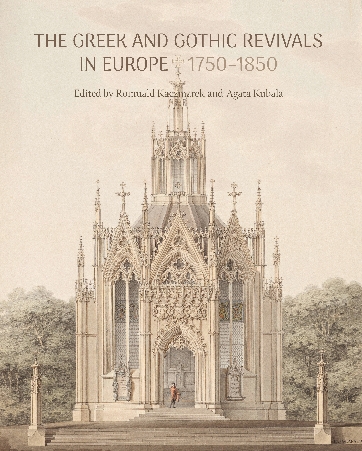
The Greek and Gothic Revivals in Europe 1750–1850
This book combines the Greek and Gothic Revival phenomena in the period between 1750 and 1850 showing the common cultural background of these artistic trends referring to the past. It presents examples from almost all over Europe. In addition to the introductory text problematizing the idea there are studies of more detailed issues - topographic shots presenting the aforementioned phenomena within artistic regions presentations of projects undertaken by outstanding personalities of the era as well as analyses of individual assumptions or works.
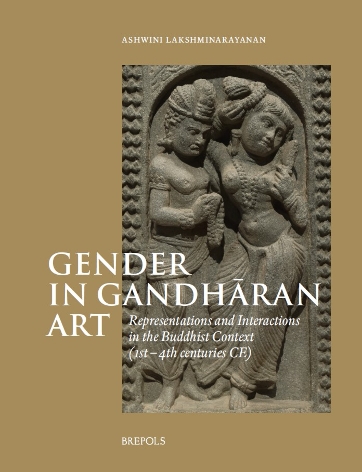
Gender in Gandhāran Art
Representations and Interactions in the Buddhist Context (1st – 4th centuries CE)
Gandhāran art developed around the first century BCE till the fourth century CE in parts of present-day Afghanistan and Pakistan and has been the focus of intense scholarly debates in both Classical and South Asian Studies for many decades. In this book Ashwini Lakshminarayan offers for the first time a specialized study on gender using Gandharan material culture and convincingly proposes new readings of visual culture beyond Eurocentric and postcolonial interpretations.
This book sets the stage with a detailed overview of the contexts in which Gandhāran art was located in Buddhist sites by analysing the gendered use of space and the gender and activities of donors and administrators. At its core the book gives prominence to the stone reliefs of Gandhāra and examines how male and female bodies are represented how they interact and how gender symbolised ideals and values.
With an important comparative overview of the Gandhāran artistic production and new illustrations this work is indispensable for all those interested in the study of gender in ancient art the interaction between Graeco-Roman and Indic cultures and the development of the early Buddhist artistic tradition in South and Central Asia that also shaped Buddhist visual culture eastwards in China.
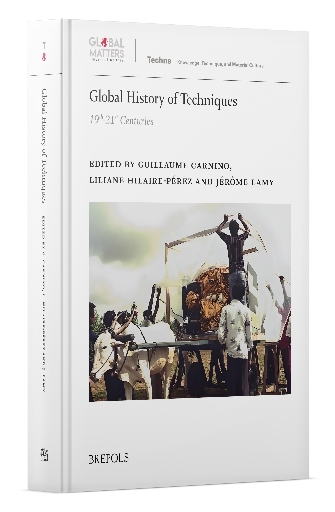
Global History of Techniques
(Nineteenth to Twenty-First Centuries)
It is impossible to understand societies without looking at their technological underpinnings. Technology constitutes the very fabric of societies' political economic cultural and everyday realities. Building on recent historiography this book offers the first overview of the global history of contemporary technology.
Gathering more than fifty specialists of the history of technology the collection of essays presents an overview of technological evolutions on a global scale. The book challenges both teleological approaches on progress and eurocentric perspectives. It explores the complex socio-economic implications of ‘techniques’ (and not simply technology) as well as the systems of representation and power structures that led to the emergence of today’s world.
The purpose of the collected essays is to offer a new history of technology. In this perspective a central question concerns the very category of the history of technology i.e. the term ‘technology’ itself. Refusing both the limitations of ‘technology’ and of ‘useful knowledge’ the book stresses the necessity to study technology as embodying human activity as a whole. In that sense history of technology envisioned as techniques rather than purely technologies is intrinsically linked to anthropology and ethnology.
This book is divided into three sections. The first section opens with a world tour of techniques restoring the complexity of regional historiographies and of the meanings given to technological activities in different societies. The second part focuses on sectors of activity processes and products with a strong emphasis on means of production and communication the exploitation of natural resources major technological systems infrastructures and networks. The final section provides access to major cross-related issues. It pays particular attention to the role played by technology/techniques in the process of globalization particularly through colonization imperialism and the development of large technological systems.
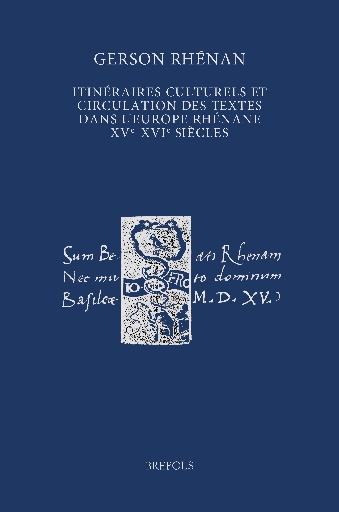
Gerson rhénan
Itinéraires culturels et circulation des textes dans l’Europe rhénane, XVe-XVIe siècles
Chancelier de l’Université de Paris Jean Gerson (1363-1429) est surtout connu comme théoricien de la théologie mystique et par son action réformatrice au sein de l’Église pendant les années difficiles du Grand Schisme où il joua un rôle de premier plan. Or si la carrière universitaire et l’action politique de Gerson font de lui un intellectuel parisien l’évidence de la transmission manuscrite et imprimée désigne sans équivoque le Rhin supérieur comme la région où la diffusion des œuvres du chancelier a été la plus foisonnante. Intervenant à une échelle comparable à la diffusion manuscrite des œuvres de Thomas d’Aquin le rayonnement de l’œuvre de Gerson a ceci de spectaculaire qu’il dépasse largement le milieu universitaire et qu’il se déploie en moins d’un siècle. Le paradoxe reste pourtant intact de pourquoi l’Allemagne et non la France s’impose comme le lieu de rayonnement de l’œuvre de Gerson dans des proportions aussi importantes quantitativement ? Pour répondre à cette question l’étude de la réception de l’œuvre du chancelier ne peut pas faire l’économie d’une réévaluation de la tradition manuscrite et imprimée des 15e et 16e siècles à partir des témoins préservés dans les bibliothèques du Rhin supérieur. En privilégiant le cas de Gerson comme point d’observation ce volume se propose de renouveler les perspectives de l’histoire intellectuelle et culturelle dans le long 15e siècle en focalisant sur l’histoire des textes les conditions et les circonstances de leur transmission afin de dresser une cartographie des réseaux de communication dans la région rhénane dans les décennies qui entourent l’invention de l’imprimerie.
Gods in the House
Anthropology of Roman Housing – II
The archaeological excavations conducted from one end of the Mediterranean zone to the other have illuminated the place of gods in the ritual practices in the dwellings of the Graeco-Roman era. The discovery of multiple artefacts dedicated spaces and figurative paintings support new avenues of historical anthropological and social reflection with the aim of better understanding domestic religious practices in the polytheistic contexts of antiquity. This collective volume organizes those reflections around three axes.The first axis centres on identifying the deities that were favoured in domestic sanctuaries. Which gods are represented and which are not? The second axisconcerns the interrelationships evident within domestic ritual spaces and sanctuaries.The third axis is dedicated to the anthropology of rituals. Lines of inquiry informed by anthropological social and phenomenological approaches are assuming ever-greater importance in scholarship on Antiquity. It is from this perspective that the authors explore the role that domestic ritual spaces play in shaping the lived environment.
Gott im Bild
Eidôlon – Studien zur Herkunft und Verwendung des Begriffes für das Götterbild in der Septuaginta
In the present day the term ‘idol’ is often associated with a personality cult but it still contains traces of its ancient meaning namely above all the idea of worship. But this exactly creates a problem for the faith in God attested in the Old Testament. Worship and imagery obviously contradict the Old Testament commandment of worshipping the God of Israel without any image. This study fills a gap in the research in theological and religious studies by systematically exploring the various uses and connotations of the term eidôlon. The starting point is an examination of the use of eidôlon in Greek literature and in Egyptian sources from the Hellenistic period. The main part of the work is devoted to the various connotations of the term that later find their way into the Septuagint the Greek Bible. There as well as in later Jewish-Hellenistic literature eidôlon becomes the terminus technicus for the pictorial representation of deities.
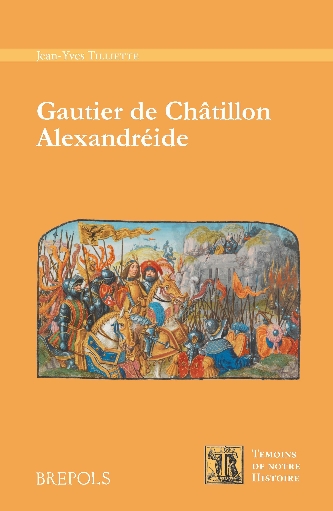
Gautier de Châtillon. Alexandréide
Gautier de Châtillon (ca. 1135-1200) passe en général pour le meilleur poète latin du moyen âge. À côté d'une œuvre lyrique riche et variée (Hymnes religieuses chansons d'amour pièces satiriques) il a composé vers 1180 à la demande de l'archevêque de Reims Guillaume aux Blanches Mains une épopée de style virgilen qui retrace la carrière fulgurante d'Alexandre le Grand un héros très populaire au xii e siècle. Ce poème en 10 livres de près de 5500 vers l'Alexandréide a connu en son temps un succès formidable (plus de 200 manuscrits). On entreprend de traduire pour la première fois en français moderne ce monument de la culture médiévale et d'en évaluer dans une introduction détaillée les enjeux historiques littéraires et moraux.
Geloion mimēma: studi sulla rappresentazione culturale della scimmia nei testi greci e greco-romani
Comment les Grecs et les Romains ont-ils représenté le singe cet animal qui dans la culture occidentale des deux derniers siècles a surtout incarné de nouvelles possibilités de repenser la relation entre les hommes et les non-humains ? En dehors du paradigme évolutionniste élaboré par Darwin sans les données de la génétique et le dispositif disciplinaire de la primatologie les textes anciens ont construit d’autres représentations culturelles du singe sans le concevoir comme un cousin ou un parent proche avec lequel nous aurions un ancêtre commun.
À travers une analyse philologique rigoureuse des textes anciens des traités savants de la zoologie et la médecine grecques aux élaborations symboliquement plus complexes du théâtre comique ou de la fable cette étude propose une analyse approfondie de la représentation discursive des primates non humains dans la culture antique.
Des questions essentielles pour la compréhension des cultures anciennes - de l’anthropomorphisme des animaux au débat sur l’intelligence des vivants en passant par les élaborations autour de l’importante catégorie de la mimésis - sont abordées selon une approche d’anthropologie historique. Les relations interspécifiques la représentation de l’altérité géographique et culturelle les jugements de valeur exprimés sur les groupes minoritaires et marginaux seront traités à travers la perspective transversale donnée par l’analyse d’une partie spécifique de l’encyclopédie culturelle ancienne à savoir le singe des Anciens.
Gouverner par les livres
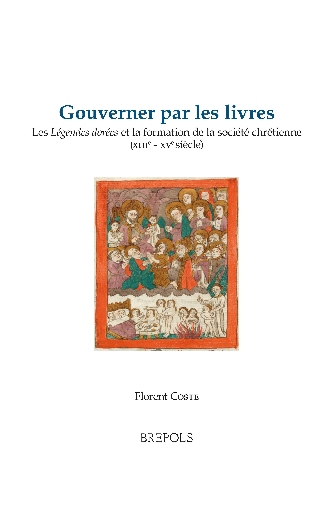
Les Légendes dorées et la formation de la société chrétienne (xiii e-xv e siècles)
La Légende dorée de Jacques de Voragine constitue à n’en pas douter une œuvre centrale et incontournable de la littérature européenne. Le nombre considérable de ses témoins manuscrits dans toutes les langues de l’Occident médiéval permet largement de le mesurer tout autant que la foule des œuvres qui s’en sont inspiré.
On ne peut manquer pourtant de s’étonner : la Légende dorée a certes circulé à travers les milieux sociaux les aires linguistiques et les territoires les plus divers mais au prix de substantielles transformations dans sa matérialité dans sa composition dans ses significations et ses usages. Pourtant sans devenir absolument méconnaissable la compilation hagiographique confectionnée à la fin du xiii e siècle a rapidement constitué une matrice textuelle accueillante et ouverte aux interventions que ses lecteurs ultérieurs ont apportées pour mieux l’actualiser au gré de leurs besoins et selon les nécessités des contextes. Tel est bien le paradoxe d’une œuvre si plastique et polyvalente qu’avec une singulière longévité littéraire elle parvient à perdurer non pas malgré mais grâce aux modulations considérables qu’elle connait.
C’est ainsi que la Légende dorée a pu s’imposer comme un instrument à la fois souple et robuste de la pastorale tout à la fois tourné vers l’édification de l’individu et assurant l’interface entre la collectivité de tous les hommes et la grande Cour des saints.
Glass, Lamps, and Jerash Bowls
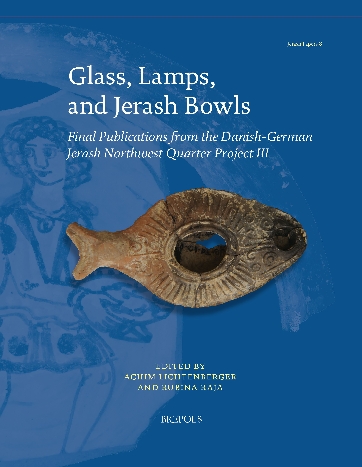
Final Publications from the Danish-German Jerash Northwest Quarter Project III
The Decapolis city of Jerash has long attracted attention from travellers and scholars due both to the longevity of the site and the remarkable finds uncovered during successive phases of excavation that have taken place from 1902 onwards. Between 2011 and 2016 a Danish-German team led by the universities of Aarhus and Münster focused their attention on the Northwest Quarter of Jerash - the highest point within the walled city - and this volume is the third in a series of books presenting the team’s final results.
The contributions gathered together in this volume provide an in-depth analysis of the glass finds the lamps and the iconography of the Jerash bowls discovered in the Northwest Quarter during the excavations. Together these chapters provide both general overviews and more detailed insights into these important groups of material evidence and also examine their stratigraphic contextualization and chronological spread across the centuries.
Gender and Status Competition in Pre-Modern Societies
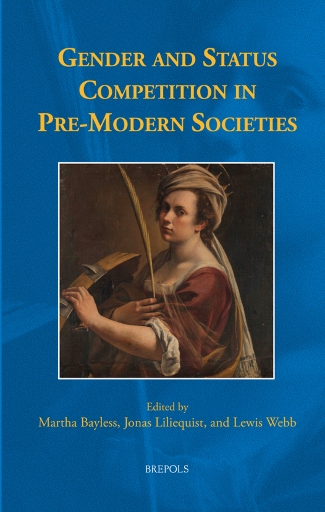
This innovative volume of cultural history offers a unique exploration of how gender and status competition have intersected across different periods and places. The contributions collected here focus on the role of women and the practice of masculinity in settings as varied as ancient Rome China Iran and Arabia medieval and early modern England and early modern Italy France and Scandinavia as well as exploring issues that affected people of all social rank from raillery and pranks to shaming male boasting about sexual conquests court rituals violence and the use and display of wealth. Particular attention is paid to the performance of such issues with chapters examining status and gender through cultural practices especially specific (re)presentations of women. These include Roman priestesses early Christian virgin martyrs flirtation in seventh-century Arabia and the attempt by an early modern French woman to take her place among the immortals. Together this wide-ranging and fascinating array of studies from renowned scholars offers new insights into how and why different cultures responded to the drive for status and the complications of gender within that drive.
Grumentum
The Epigraphical Landscape of a Roman Town in Lucania
About 130 Latin inscriptions shine a fascinating light on the medium-sized Roman town of Grumentum in ancient Lucania. Most of these stones have hardly been studied since the end of the 19th century. They now for the first time appear in a scholarly edition with revised Latin text illustration apparatus criticus translation and extensive commentary. Both the introduction and the edition illustrate the richness of the material: archaeology politics institutions the Roman army economy religion family and life course and Christianity are dealt with. The use learned scholars made of the inscriptions opens a window to Italian intellectual history from the Renaissance on. Written and presented in an accessible way this volume avoids the pitfalls of highly technical epigraphical editions and opens the field to archaeologists (ancient) historians and a more general audience with an interest for Roman sites in general and this hidden gem in Basilicata in particular.
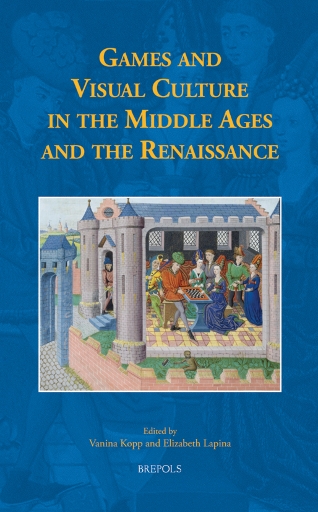
Games and Visual Culture in the Middle Ages and the Renaissance
During the Middle Ages and the Renaissance games were not an idle pastime but were in fact important tools for exploring transmitting enhancing subverting and challenging social practices and their rules. Their study through both visual and material sources offers a unique insight into medieval and early modern gaming culture shedding light not only on why where when with whom and in what conditions and circumstances people played games but also on the variety of interpretations that they had of games and play. Representations of games and of artefacts associated with games also often served to communicate complex ideas on topics that ranged from war to love and from politics to theology.
This volume offers a particular focus onto the type of games that required little or no physical exertion and that consequently all people could enjoy regardless of age gender status occupation or religion. The representations and artefacts discussed here by contributors who come from varied disciplines including history literary studies art history and archaeology cover a wide geographical and chronological range from Spain to Scandinavia to the Ottoman Turkey and from the early medieval period to the seventeenth century and beyond. Far from offering the ‘last word’ on the subject it is hoped that this volume will encourage further studies.
The Gospel According to Thomas
Introduction, Translation and Commentary
The Gospel According to Thomas is a collection of 114 sayings of Jesus attributed to a certain Didymus Judas Thomas. For scholars the text has much to offer for the study of early Christian literature history and theology. This enigmatic collection of sayings is part of a series of tractates in the Nag Hammadi Codices which were found in Egypt in 1945. Since the discovery of the Gospel According to Thomas scholars have endeavoured to uncover the place of writing and the sources of these sayings which in some cases are similar to those found in the synoptic gospels and other New Testament writings as well as in several early Christian texts. Without neglecting nor negating this important historical research on the Gospel According to Thomas this new translation accompanied by a commentary focuses on another aspect that has been given less attention in scholarship namely that of a synchronic reading and interpretation of the text. The main question this book attempts to answer is: What does the Gospel According to Thomas actually mean?
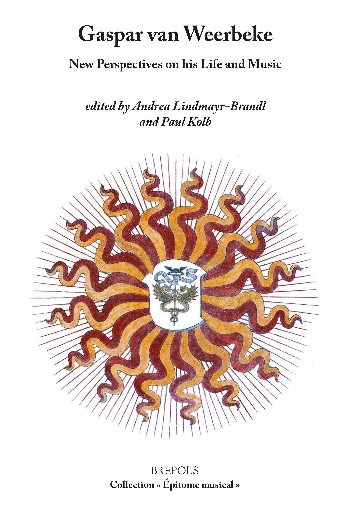
Gaspar van Weerbeke
New Perspectives on his Life and Music
Gaspar van Weerbeke was one of the most successful Franco-Flemish musicians of the second half of the fifteenth century holding prestigious positions in the Sforza court in Milan the Burgundian court chapel and the papal chapel in Rome. His compositions were widely transmitted in manuscript and print sources throughout Europe and he was one of the best represented composers in the early Italian music prints of Ottaviano Petrucci. Despite the high esteem of his contemporaries Gaspar has up to now played only a peripheral role in Renaissance music historiography. This book is the first collection of research articles dedicated exclusively to the life and works of Gaspar. While the basic facts of Gaspar's life have long been known the book fleshes out the details presenting a more differentiated and complex picture of his biography. Analysis of a wide range of Gaspar's compositional output leads to new interpretations of his approach to different genres: masses motets and motet cycles. His relatively small quantity of songs is revisited in light of the confusion—both then and now—over the meaning and validity of their attributions. This book seeks to promote further research on this composer and place him in his appropriate place in music history.