


Browse Books
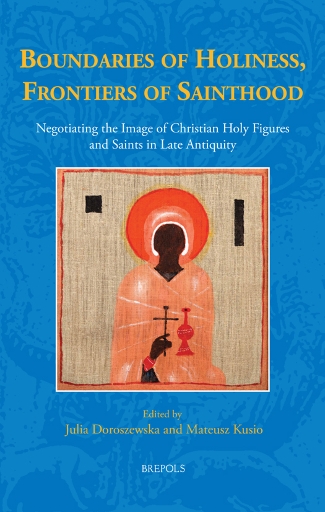
Boundaries of Holiness, Frontiers of Sainthood
Negotiating the Image of Christian Holy Figures and Saints in Late Antiquity
Many excellent studies have been published on the phenomenon of holy (wo)men and saints. As a rule however they focus on successful candidates for holiness who played the roles of charismatic leaders and patrons of social and religious life.
This volume offers a new perspective on ancient and medieval holiness — its main focus is holiness as defined by its peripheries and not by its conceptual centre. The contributors explore stories of men and women whose way to sainthood did not follow typical ‘models’ but who engaged with it from its outskirts. Several essays examine the strategies employed by hagiographical authors to tailor the images of candidates for holiness whose lives provided less obvious examples of moral and/or religious ideals. These include attempts to make saints out of emperors heretics and other unlikely or obscure figures. Other case studies focus on concerns with false holiness or unusual cases of holiness being ascribed prior to a saint’s death. Another concept explored in the volume is space. The spatial boundaries of holiness are discussed in relation to the transmission of relics to the opposition between urban and rural spaces holy sites and even imagined space.
Holiness and sainthood have been crucial concepts for Christianity from its inception. By exploring their ‘marginal’ and ‘peripheral’ aspects the essays in this book offer vital new perspectives on the religious world of Late Antiquity.
The Byzantine Historiographical Prefaces (4th–15th Centuries)
A Study on the Praxis and Culture of Writing History in Byzantium
In recent years a lively debate has developed on the features of Byzantine historiography. The increasingly dominant tendency today is to treat historical texts more as pleasant literary narratives than as systematic historical accounts of the political and military history of Byzantium. The present study aims to contribute to this debate by revisiting the voices of the Byzantine authors themselves focusing on the extant historical prefaces from the Early Middle and Late Byzantine eras. This seemed timely more than a century after the publication of Ηeinrich Lieberich’s fundamental work on Byzantine historiographical proems.
Obviously not all prefaces are of equal interest: some serve a purely conventional function while others are composed more thoughtfully and merit more careful attention. The book’s goal is twofold: firstly to outline the details of the prefatory function of the Byzantine historiographical proems as microtexts; secondly to detect and evaluate the theoretical views expressed by the authors of each period regarding the genre of Byzantine historiography. This will expand our knowledge of how the Byzantines wrote (praxis) and thought (culture) about historiography.
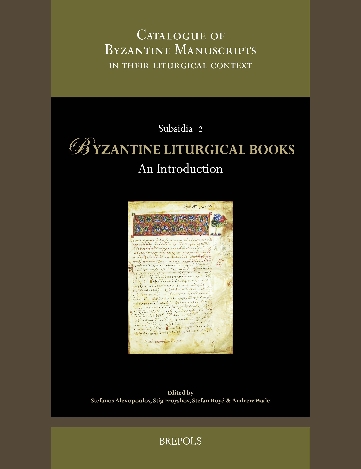
Byzantine Liturgical Books
An Introduction
The world of Byzantine liturgical book types is fascinating but also confusing. While they are central to the study and celebration of Byzantine Liturgy no one work offers an overview of their history contents and structure. This volume offers for the first time an introduction to the major types of Byzantine liturgical books their taxonomy origins development and contents.
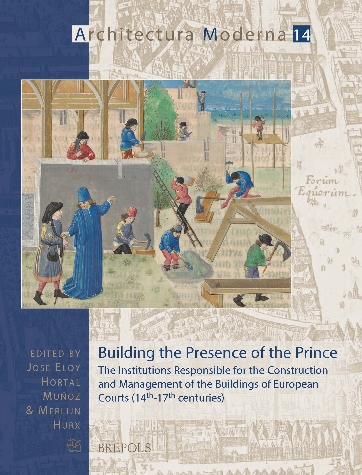
Building the Presence of the Prince
The Institutions Responsible for the Construction and Management of the Buildings of European Courts (14th-17th centuries)
By the late Middle Ages architecture became an increasingly important means of representation of princely rule and institutions. In addition to their symbolic significance the ruler’s buildings served a host of practical purposes. Obviously castles and fortresses defended the territory while urban and rural residences served the itinerant court during its proceedings but their possessions also comprised a wider network of estates that included infrastructure and agricultural commercial industrial and administrative buildings. Together these networks of sites became a significant means of consolidating the sovereigns’ power and served as key instruments for promoting their rule. To tighten the control over their possessions and to ensure their upkeep rulers set up Offices of Works permanent administrative bodies entrusted with their management.
These building administrations have not yet been systematically studied and it remains unclear to what extent such centralised institutions developed autonomously responding to local conditions and requirements or were part of international developments facilitated by the close networks of the European courts.
This volume with contributions from architectural historians administrative historians and court historians represents a first attempt to compare these institutions on a pan-European scale from the late Middle Ages up to the end of the seventeenth century. It aims to explore the relationships between the local specificities of these organisations and their shared characteristics. From a multidisciplinary perspective it addresses questions concerning the nature of such administrations their purpose organisational structure and judicial powers as well as their role in the formation of the state.
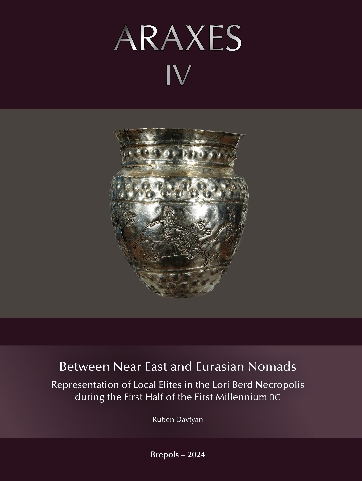
Between Near East and Eurasian Nomads
Representation of Local Elites in the Lori Berd Necropolis during the First Half of the First Millennium bc
The site of Lori Berd located in northern Armenia is home to an extraordinary necropolis that once housed the dead of the local elite during a period that spanned from 2200 to 400 BC. Influenced both by Urartian conquests from the south and by invasions from the Eurasian nomadic tribes from the north the people of this region buried their dead with prestigious artefacts complex customs and a particular reverence shown during the later stages of the Early and Middle Iron Ages (1000–550 BC). This volume offers a detailed account of the archaeological significance of the site providing detailed accounts of thirty-one tombs the majority of which have never before been comprehensively published and seeking to set Lori Berd in its broader historical and material context. Through this approach the book offers a comprehensive exploration of the Iron Age in the South Caucasus unravelling the interconnected themes of wealth power and cultural expressions.
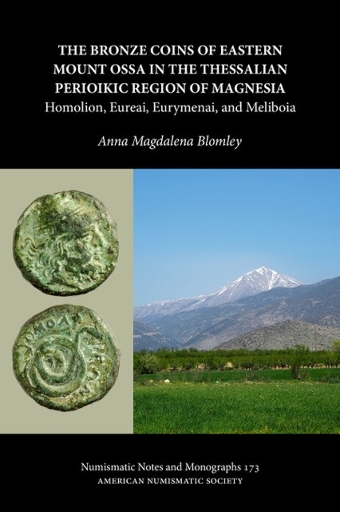
The Bronze Coins of Eastern Mount Ossa in the Thessalian Perioikic Region of Magnesia
Homolion, Eureai, Eurymenai, and Meliboia
This monograph examines the Late Classical and Hellenistic bronze coinages of five mints in the Thessalian perioikic region of Magnesia. At the core of this work lies a new die-study of the coins produced by the strategically and economically important coastal cities of Homolion and Meliboia as well as the lesser-known mints of Eureai Eurymenai and Rhizous. Combining this die-study with a close examination of the cities’ topographical context in a border region between Thessaly and Macedon and drawing on archaeological data from Magnesia and beyond the monograph addresses key questions concerning the chronology denominations and circulation patterns of the bronze issues minted on eastern Mount Ossa. This analysis not only throws new light on coin production in Late Classical and Hellenistic Magnesia but also allows a discussion of the possible military and non-military functions of the region’s different bronze issues.
Placing the coins of Eureai Eurymenai Homolion Meliboia and Rhizous in their wider context this monograph furthermore addresses broader issues in the history of Thessalian coinage. In particular the monograph’s regional approach offers an unusual opportunity to examine to what extent Thessaly’s Late Classical and Hellenistic civic coins were genuinely local in design production and function. The monograph thus both explores the coins of Mount Ossa and contributes towards a better understanding of the introduction and development of bronze coinages in the wider Thessalian region and beyond.
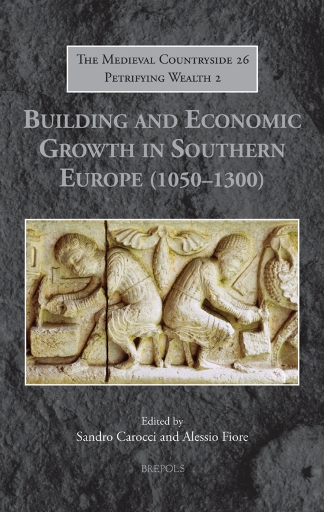
Building and Economic Growth in Southern Europe (1050–1300)
The four-volume sub-series ‘Petrifying Wealth’ explores the sudden ubiquity of masonry construction between 1050 and 1300 in Southern Europe and its profound effect on the European landscape. New questions about wealth society and medieval building are explored which highlight the link between construction in durable materials and the shaping of individual collective and territorial identities: the birth of a new long-lasting panorama epitomising the way we see the space and territory of Europe nowadays.
Volume 2 of the ‘Petrifying Wealth’ series focuses on economic growth in Southern Europe between 1050 and 1300 discussing investments on buildings connected with production and trade. It examines buildings that served a primarily economic purpose in various aspects: agricultural activity and the conservation and processing of its products crafts and exchanges and their material infrastructures. The growth in this period resulted in a multiplication of material structures closely linked with economic activity such as mills barns canals workshops and arsenals. Focusing on the dynamics connected with these buildings thus offers a vantage point to better understand the contexts and characteristics of the ‘economic take-off’ in Southern Europe in this period.
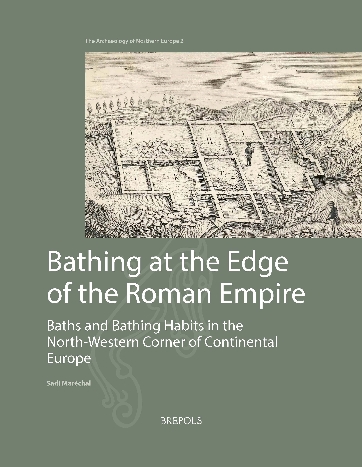
Bathing at the Edge of the Empire
Roman Baths and Bathing Habits in the North-Western Corner of Continental Europe
Roman bathhouses are considered to be prime markers when studying romanization in the provinces of the Empire as these very specific - and archaeologically recognizable - buildings together with their associated ideas about the body and personal health introduced a decidedly Roman habit into regions that had hitherto been unfamiliar with (communal) bathhouses and heating technology. While traditionally studies into Roman baths and bathing have focused on large public baths in the cities of the empire however those from the area that now roughly corresponds to modern-day Belgium have often been neglected in recent research as this was an area with few important urban centres.
This book for the first time investigates the introduction spread and eventual disappearance of Roman-style baths and of bathing habits in this north-western corner of the Roman Empire. A detailed analysis of the architecture technology and decoration of both public and private baths is combined with a discussion on the role of bathing in the area’s romanization and supplemented by a fully illustrated catalogue of all bathhouses in the area of study. In doing so the volume sheds new light not only on the evolution of baths and bathing in this region but also on their broader role in larger historic processes such as cultural change across the Empire.
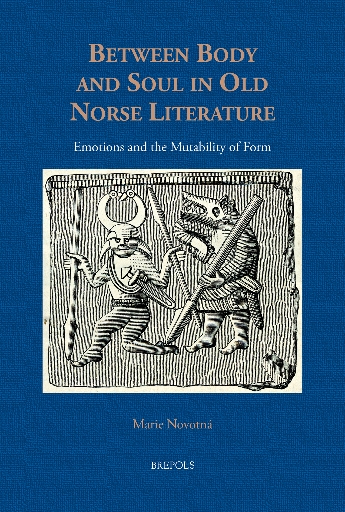
Between Body and Soul in Old Norse Literature
Emotions and the Mutability of Form
What did the body mean for inhabitants of the medieval Norse-speaking world? How was the physical body viewed? Where did the boundary lie between corporality and the psychological or spiritual aspects of humanity? And how did such an understanding tie in with popular literary motifs such as shape-shifting? This monograph seeks to engage with these questions by offering the first focused work to delineate a space for ideas about the body within the Old Norse world. The connections between emotions and bodily changes are examined through discussion of the physical manifestations of emotion (tiredness changes in facial colour swelling) while the author offers a detailed analysis of the Old Norse term hamr a word that could variously mean shape form and appearance but also character. Attention is also paid to changes of physical form linked to flight and battle ecstasy as well as to magical shapeshifting. Through this approach diametrically different ways of thinking about the connection between body and soul can be found and the argument made that within the Old Norse world concepts of change within the body rested along a spectrum that ranged from the purely physical through to the psychological. In doing so this volume offers a broader understanding of what physicality and spirituality might have meant in the Middle Ages.

Bear and Human
Facets of a Multi-Layered Relationship from Past to Recent Times, with Emphasis on Northern Europe
Bears have throughout human history been admired and feared by humans in equal measure with an interrelationship between the two species identifiable from pre-modern times through a wealth of material items as well as from cult sites sacral remains images and written sources. This unique interdisciplinary volume draws together sixty-four contributions by experts from across a range of fields in order to shed light on the complex connections between bears and humans in a period extending from the pre-modern into modern times and across an area stretching from England into Russia. From bear biology (represented by work from the Scandinavian Brown Bear Research Project) and archaeo(zoo)logy to art history and from history of religion to philology the research gathered across this three-volume set explores a wide-range of subjects. Among them are the bear in biology bears and animal agency bear remains in graves and churches the role of bears in religious beliefs (including berserker and bear ceremonialism) bears in literature the philology underpinning why bear is a taboo word and the image of the bear in rock art as well as political iconography up to the present day. Together these wide-ranging but closely thematic texts combine to produce a ground-breaking new work that will prove fundamental in understanding the human connection with this remarkable animal.
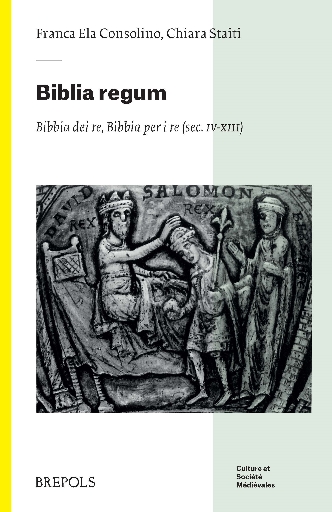
Biblia regum
Bibbia dei re, Bibbia per i re (sec. IV-XIII)
This volume collects contributions from the international conference Biblia regum. Bibbia dei re Bibbia per i re (sec. iv-xiii) held at the University of L’Aquila 16-17 April 2018. The collection sheds a new light on the relation between the Bible and royal authority in the late antique and medieval West. By focussing both on the use of biblical quotations and on distinct features of biblical manuscripts - such as dedications comments translations and illustrations - contributors investigate how the Bible functioned as a behavioural model to which rulers and their subjects should conform as well as a text that supported royal power. Collectively the contributions address significant aspects of the layered interconnection between royal power and the Holy Writ and lead to a fruitful dialogue between different fields of research.
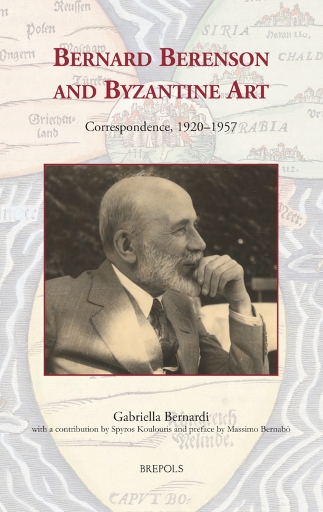
Bernard Berenson and Byzantine Art
Correspondence, 1920–1957
The American art historian Bernard Berenson born in 1865 is famous for his pioneering studies of the Italian Renaissance but his work on Byzantine art remains less well-known and less studied. Yet his passion for studies of Byzantium - dubbed the ‘Byzantine infection’ - played a major role throughout Berenson’s life and in the 1920s he began work on a magnum opus on this topic that was sadly never completed. This volume aims to illuminate and revisit Berenson’s approach to Byzantium and the art of the Christian East through an exploration and analysis of the correspondence travel notes and photo archive that Berenson built up over his lifetime and that taken together clearly points to an explicit recognition by Berenson of the importance of Byzantine art in the Latin Middle Ages. Drawing together Berenson’s correspondence with art historians collectors and scholars from across Europe the US and the Near East together with an overview of his numerous photography campaigns the book is able to open a new window into Byzantine art historiography from the 1920s to the 1950s. In doing so it sheds light onto a period in which important discoveries and extensive restoration campaigns were carried out such as those of the mosaics of Hagia Sophia and Kariye Camii in Istanbul as well as of the Basilica of San Marco in Venice and its decoration.
Bassit 2 (Syrie) - Fouilles Paul Courbin (1971-1984)
Le tell du xvi e siècle av. J.- C. au vi e siècle ap. J.- C.
À 50 km au Nord de Lattaquié le site côtier de Bassit a été étudié sous la direction de Paul Courbin : après l’acropole (1971-1972) (périodes hellénistique et romaine) et la nécropole du Fer (1973-1974) le « tell » a été fouillé de 1972 à 1984. Sont présentés ici une description détaillée de la stratigraphie et de l’architecture du « tell » des ensembles céramiques associés ainsi que le corpus du mobilier datant du Bronze Récent I et II. Bassit est installé aux marges Nord du royaume d’Ougarit à partir du milieu du xvi e s. av. J.-C.. Les importations chypriotes sont nombreuses durant tout le Bronze Récent mais la céramique égéenne apparaît très rare. Le site est détruit bien avant le passage des « peuples de la mer » (vers 1200). À l’âge du Fer la fonction constante de Bassit est de contrôler l’accès maritime depuis Chypre et le cabotage littoral. Le commerce de la céramique chypriote domine le Fer I et II celui des céramiques égéennes et étrusques puis attiques le Fer III. À l’époque hellénistique la production d’amphores et de monnaies confirme l’identification de Posideion avec Bassit. L’époque romaine est également marquée par une importante production de céramique.
Boire sous l’œil de Gorgias
Un commentaire rhétorique du Banquet de Platon et du Banquet de Xénophon
Plato’s Symposium and Xenophon’s Symposium are unexpected and untapped sources on rhetoric and its links to the socio-religious rite of banqueting. They offer two different and sometimes opposing points of view on rhetoric and both contrary to what has often been said include a critical view of the rituals of sociability. Plato and Xenophon both react to the realities of their times and suggest each in his own way that rhetoric under certain conditions can be a mode of conviviality i.e. an intellectual tool an exercise in citizenship learning a research instrument or even a step towards truth. In both cases the tutelary and fascinating figure of Gorgias is summoned sometimes to criticize the deadly rhetoric of the sophists which constitutes an obstacle to convivial dialogue sometimes to promote a constructive practice of speech in the communicational and visual space that symposium creates.
Bede and the Beginnings of English Racism
This book examines how the Venerable Bede constructs a racial order in his most famous historical writing Ecclesiastical History of the English People a remarkable eighth-century work known for how it combines myth and history into a compelling charming narrative of the English conversion to Christianity. Yet Bede’s History also disturbingly deploys Scripture’s tropes and types many of them anti-Jewish to render unflattering sketches of some of Britain’s “races” (gentes)-especially the Britons.
To uncover the History’s characterizations of what it identifies as the British Irish English and Latin races Foley examines three of its episodes that narrate attempted conversions of the first three races- respectively-either to Christianity or to a better more orthodox catholic Latin version of it. This close analysis exposes the theological dimensions of each episode’s racial constructions. Foley argues that unlike modern conceptions of race which are grounded in imagined biological difference Bede’s is rooted in his perception of a particular race’s affective disposition its habits of the heart. More than that Bede closely ties a race’s disposition to its relative proximity to theological orthodoxy and catholicity. This book’s close reading also highlights surprising similarities between Bede’s medieval Christian discourse and modern secular and white discourses on race.
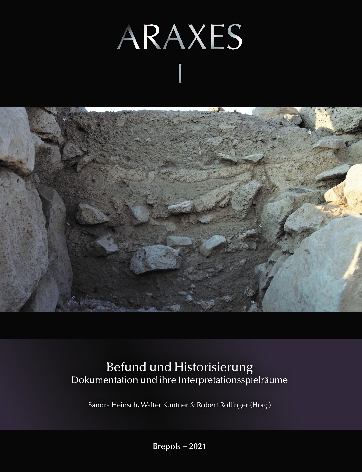
Befund und Historisierung
Dokumentation und ihre Interpretationsspielräume
Archaeological periodization schemes of material culture development in Northern Mesopotamia from 7th to 5th centuries bce traditionally refer to the sequence of dynasties. In particular they highlight historical events related to distinguished members of the royal houses of the Sargonids Urartians Medes Teispids and Achaemenids. However whereas the repercussions these Iron Age empires had on the history of the Near East are undeniable the impact they had on the material culture and its development is not always equally tangible in the archaeological findings. The latter are not infrequently characterized by continuity rather than by incisive changes as recent studies and re-evaluations of key sites in Syria Iraq Iran and Armenia show. This publication uses case studies to address problems that arises when the archaeological (relative concept) and historical (absolute concept) methodology use different intrinsic values of time to reconstruct history and to understand cultural material development.
Beyond Exclusion in Medieval Ireland
Intersections of Ethnicity, Sex, and Society under English Law
The notion that upon the advent of the English in 1167 all Gaelic peoples in Ireland were immediately and ipso facto denied access to the English royal courts has become so widely accepted in popular culture that it is often treated as fact. In this ground-breaking monograph however the narrative of absolute ethnic discrimination in thirteenth- and early fourteenth-century English Ireland is for the first time tackled head-on through a thorough re-examination of the Irish plea rolls. Through a forensic study of these records the author demonstrates not only that there was a great deal of variation in how members of various ethnic groups and women who came before the English royal courts in Ireland were treated but also that there was a large - and hitherto scarcely noticed - population of Gaels with regular and unimpeded access to English law and that the intersections between gender/sex and ethnicity have too often been deeply misunderstood or disregarded. A close comparison between the treatment of Gaelic women and men and that of the English of Ireland together with an in-depth examination of other ethnicities from around the Irish Sea provide a new understanding of English Ireland in which it is clear that there was not a simple dichotomy between the English and the unfree but rather that people lived an altogether more complex and nuanced existence.
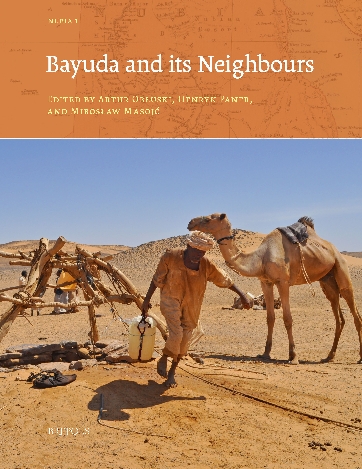
Bayuda and its Neighbours
The Bayuda although an arid desert located in modern-day Sudan has nonetheless been inhabited farmed worshipped in and fought over by humans from the Palaeolithic onwards. Yet despite the longevity of its human occupation the region has only in recent years become the focus of more intensive scholarly research. This volume the first in a series dedicated to exploring the archaeology and history of Northeast Africa aims to build on this trend by drawing together the very latest archaeological research and data and shedding light on how the Bayuda Desert and its environs were transformed into a cultural landscape. The contributions gathered here introduce examine and (re)assess a number of important issues many of which are new in the archaeology of Nubia as well as considering them against a broader comparative background. From climate change over the past millennia - and its far-reaching consequences in the present - through to an examination of the cultural influences of the Kingdom of Kerma and from analysis of funeral rites through to interpretations of rock art forgotten trade routes and the commerce in cattle and slaves this insightful volume offers a wealth of new information into the history of ancient Nubia.
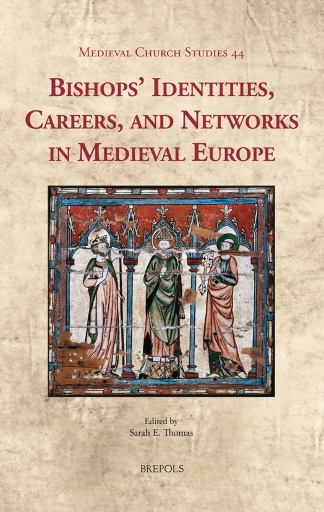
Bishops’ Identities, Careers, and Networks in Medieval Europe
Bishops were powerful individuals who had considerable spiritual economic and political power. They were not just religious leaders; they were important men who served kings and lords as advisers and even diplomats. They also controlled large territories and had significant incomes and people at their command. The nature of the international Church also meant that they travelled and had connections well beyond their home countries were players on an increasingly international stage and were key conduits for the transfer of ideas.
This volume examines the identities and networks of bishops in medieval Europe. The fifteen papers explore how senior clerics attained their bishoprics through their familial social and educational networks their career paths relationships with secular lords and the papacy. It brings together research on bishops in central southern and northern Europe by early career and established scholars. The first part features five case-studies of individual bishops’ identities careers and networks. Then we turn to examine contact with the papacy and its role in three regions: northern Italy the archbishopric of Split and Sweden. Part III focuses on five main issues: royal patronage reforming bishops nepotism social mobility and public assemblies. Finally Part IV explores how episcopal networks in Poland Sigüenza and the Nidaros church province helped candidates achieve promotion. These contributions will thus enhance of our understanding of how bishops fit into the religious political social and cultural fabrics of medieval Europe.
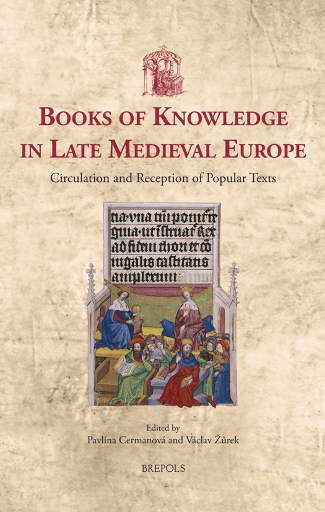
Books of Knowledge in Late Medieval Europe
Circulation and Reception of Popular Texts
This book provides a series of studies concerning unique medieval texts that can be defined as ‘books of knowledge’ such as medieval chronicles bestiaries or catechetic handbooks. Thus far scholarship of intellectual history has focused on concepts of knowledge to describe a specific community or to delimit intellectuals in society. However the specific textual tool for the transmission of knowledge has been missing. Besides oral tradition books and other written texts were the only sources of knowledge and they were thus invaluable in efforts to receive or transfer knowledge. That is one reason why texts that proclaim to introduce a specific field of expertise or promise to present a summary of wisdom were so popular. These texts discussed cosmology theology philosophy the natural sciences history and other fields. They often did so in an accessible way to maintain the potential to also attract a non-specialised public. The basic form was usually a narrative chronologically or thematically structured and clearly ordered to appeal to readers. Books of this kind could be disseminated in dozens or even hundreds of copies and were often available (by translation or adaptation) in various languages including the vernacular.
In exploring these widely-disseminated and highly popular texts that offered a precise segment of knowledge that could be accessed by readers outside the intellectual and social elite this volume intends to introduce books of knowledge as a new category within the study of medieval literacy.