


Browse Books
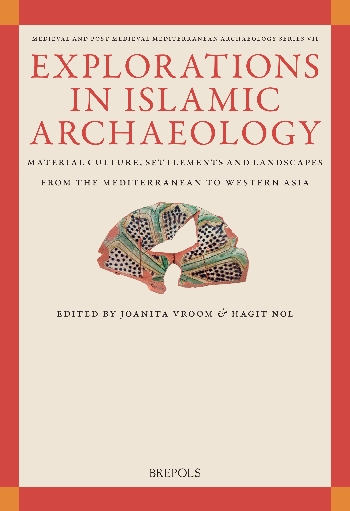
Explorations in Islamic Archaeology
Material Culture, Settlements, and Landscapes from the Mediterranean to Western Asia
This volume presents contributions by leading scholars on various topics and aspects of Islamic Archaeology a discipline which has recently seen the development of exciting new approaches to the study of the material culture of the Muslim world. This material culture was produced by and/or for Muslims as well as by and/or for non-Muslims living under Islamic rule from the 7th century onward in an expanding and ultimately vast area reaching from southern Europe to West Asia.
The contributions in this book focus on Jordan Oman Spain Turkey Lebanon as well as Israel and cover a timespan from the 7th century through the Mamluk period to the early 20th century. They highlight the archaeology of large Islamic centers in the past but also of the material culture in smaller sites and peripheral regions. Special emphasis is paid to pottery as one of the main artifacts that carry information on past societies but other finds and materials are discussed as well. The aspect of Islamic material culture which receives particular attention is ‘production’ specifically the production of clay vessels glaze mercury and crops.
What unites the new approaches presented here is that Islam is understood as both a ‘religion’ and a framework for economic cultural and social networks and influence. In this perspective the volume aims to offer students of Islamic archaeology historians of Islam and archaeologists of different disciplines a glimpse of the state-of-the-art in current Islamic Archaeology
Estética de la Contemplación en Ricardo de San Víctor
Sabiduría, Caridad, Trinidad
El renovado interés por las fuentes históricas ha favorecido el redescubrimiento de figuras como Ricardo de San Víctor que habiendo sido opacadas por la fama de autores posteriores como santo Tomás o san Buenaventura constituyen sin embargo auténticos hitos del pensamiento cristiano.
Las obras de Ricardo de San Víctor de gran calado teológico espiritual y místico son una constante invitación a explorar la belleza escondida en las profundidades del misterio divino. Un misterio al que solo es posible acceder mediante la gracia de la contemplación que ilumina el camino hacia la restauración del alma y la comunión con Dios. En sus escritos Ricardo ofrece una explicación coherente y sistemática de la relación del ser humano con lo divino que iniciándose en la contemplación de lo creado puede elevarse hacia la unión con Dios a través de la luz de la sabiduría y el fuego de la caridad. Justamente son estos elementos -sabiduría y caridad- los que constituyen el hilo conductor de sus desarrollos teológicos sobre la contemplación y la Trinidad.
Por medio de un análisis detallado del conjunto de sus obras esta investigación identifica su continuidad temática así como el modo excepcional con que se articula en ellas la experiencia mística y la reflexión dialéctica. Este acercamiento integral a sus desarrollos permite descubrir la auténtica riqueza de su teología que al poner de relieve la indisoluble relación entre la antropología la estética la contemplación y el misterio trinitario constituye una de las propuestas más originales del siglo XII.
Entangled Histories at Conques
Interdisciplinary Perspectives on a Unique Site of Medieval Heritage
Conques has been an important node a singularity within many entangled histories from late antiquity to the present. This volume publishes papers expanding on the second conference of the project “Conques in the Global World. Transferring Knowledge: from Material to Immaterial Heritage” (Marie Skłodowska-Curie Research and Innovation Staff Exchange H2020). Held in October 2023 at the Centre européen in Conques the workshop brought together international experts from a variety of disciplines and geographies indicating the directions future studies of this site might take and reflecting on its material literary and historiographical legacy.
The collected essays in this volume reflect scholarly and artistic fascination with Conques. They question open and reopen important dossiers bringing fresh insights and perspectives on the site’s material literary and performative culture. These range from Bernard of Angers’s Miracles of Sainte Foy and the scholarly reception of this text to charged discussions of the architectural sources and models for the abbey-church and its role in regional and interregional dynamics. From the heated architectural history the essays segue into the other hot topic of Conques: rethinking the elusive Majesty of Sainte Foy. Essays examine its fabrication history its specific perception during the eleventh and twelfth centuries and its staging and geographical anchoring. These analyses give way to an essay devoted to Conques’ nineteenth-century reconstruction. The present volume closes with a text devoted to the mediation of medieval literary culture within contemporary contexts. In their disciplinary diversity this volume unites scholarly traditions opening new avenues for the study of a medieval site which through its entangled histories captivates scholars around the world.
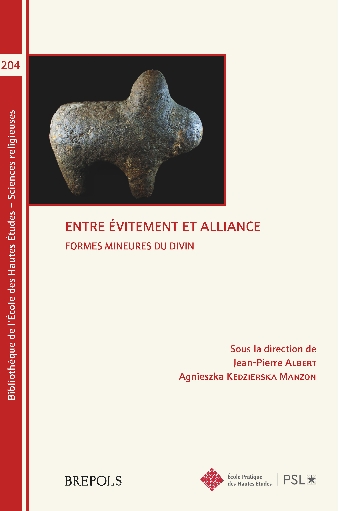
Entre évitement et alliance
Formes mineures du divin
Selon le mot de Pétrone « notre pays est si plein de divinités que tu peux plus facilement y rencontrer un dieu qu’un homme. » La Rome antique est bien loin d’être la seule société à connaître pareille surpopulation divine. Par-delà la différence entre d’un côté ce que les sciences religieuses ont l’habitude de considérer comme des « religions traditionnelles » désignées par les termes de fétichisme animisme chamanisme et de l’autre des monothéismes et des polythéismes la quasi-totalité des religions du monde réserve une place de choix à d’innombrables divinités mineures ou entités invisibles. Esprits génies êtres fantastiques revenants ancêtres ou saints font l’objet de relations intéressées parfois aussi assez inquiétantes pour que l’on cherche à les éviter. La plupart de ces entités ambiguës ne donnent pas lieu à des cultes réguliers. Leur présence se manifeste le plus souvent dans des rencontres fortuites qui appellent un traitement rituel visant à normaliser les relations que les hommes ont avec elles. Créditées de pouvoirs qui se cantonnent à des champs d’intervention limités elles sont liées à des lieux des moments des pratiques telles la chasse l’agriculture la guerre ou encore des épisodes biographiques saillants – naissance maladies conflits etc. Cet ouvrage réunit les contributions d’anthropologues historiens et philosophes qui chacun à sa manière se sont essayés à mieux comprendre le sens de cette prolifération d’entités mineures et à questionner sur cette base la notion même de religion comme impliquant – ou non – celle de dieux.
East Central Europe and Ireland
Political, Economic, and Social Interconnections, 1000–1850
This book explores the broad scope of political economic and social aspects of relations between Central Europe (focused on Poland and the lands of the Czechs) and Ireland. Taking a longitudinal approach this study charts the interaction between the western and the central-eastern peripheries of Europe from the Middle Ages to the period after the Third Partition of Poland-Lithuania in 1795. The authors examine how the relationship between the geographically opposite ends of Europe evolved. Shaped by the shifts of ‘political tectonic plates’ they argue that the evolution can be described in general terms: from a largely unidirectional to an interconnected chain of events. This book demonstrates similarities and analyses differences in a complex yet unexplored past of the three emergent nations; nations which in the public perception were overshadowed by their mighty neighbours for far too long.

Exégèses de la « mécréance » et statut du non-musulman dans le Commentaire coranique d’al-Qurtubi (m.671/1273)
Al-Qurṭubī (m. 671/1273) est l'auteur d'un commentaire coranique qui constitue depuis le XIIIe siècle jusqu’à nos jours une référence incontournable dans la transmission du savoir islamique. Ce monumental commentaire offre un matériel pluridisciplinaire permettant d’accéder de manière inédite à une représentation à la fois globale et contextualisée du thème de la non-islamité dans les différentes branches de la pensée islamique. Dans ce texte l’exégèse coranique renseigne le matériel juridique : elle a pour fonction de l’expliquer. Ainsi les notions coraniques sont réinterprétées détachées de leur contexte d’origine en vue de fonder le patrimoine juridique ainsi que les règles de droit dans le Coran considéré comme source de loi.
Cette recherche démontre que la notion de mécréance avait initialement un sens purement politique renvoyant à des actes d’insoumission de déloyauté et d’iniquité. La notion s’élabore dans le contexte historico-mythique de paix brisées guerres et conciliations évoquées dans le Coran. L’idée de filiation entre les religions monothéistes tout particulièrement celle que l’islam provient des religions des « Gens du Livre » –Juifs et Chrétiens - est dominante. La “mécréance” devient alors l’argument qui permet de réhabiliter la coexistence entre musulmans et non-musulmans. Puis on découvre que c’est d’avantage la non-islamité accompagnée de l’allégeance politique – plutôt que le critère de mécréance en tant que tel - qui détermine l’octroi de la protection légale (dhimma) aux non-musulmans résidant en Terre d’Islam.
Epidemics and Pandemics
Philosophical Perspectives
Epidemics pandemics contagion immunity social distance zoonosis are just a few of the concepts that have become commonplace in the academic community and in everyday conversation since the outbreak of the Covid-19. This book aims to provide the reader with a philosophical guide to this conceptual vocabulary by investigating the meanings implications and history of words related to the current emergency of Covid-19.
This book addresses the fundamental anthropological ethical and political issues that have come under the spotlight of the public debate (life and death freedom and authority fear and protection poverty and access to medical care). In this context particular attention is given to the conflict between the scientific discourse on the one hand and irrational bias misinformation and fake news on the other.
The SARS-CoV-2 outbreak is only the latest episode in a long history of pandemics and epidemics that have constellated human history since its very beginning. Authoritative accounts have made some of these contagious plagues famous (Thucydides’ pages immortalizing the Athenian epidemic of the 5th century B.C.; Boccaccio’s description of the Black Death; Manzoni’s depiction of the Plague ravaging 17th-century Milan). Because a full understanding of the present is not possible without historical inquiry several contributions in the book explore debates about calamitous phenomena as documented in philosophical literature from Antiquity to 20th-century philosophy.
Eusèbe de Césarée et la philosophie
Christianisme et philosophie en Palestine au tournant du IVe siècle de notre ère
Eusebius of Caesarea in Palestine active between the end of the third century and the beginning of the fourth is the Christian author who has handed down to us in the form of quotations the greatest number of Greek philosophical texts. Yet his precise relationship to philosophy has never been the subject of a comprehensive study.
This book which brings together contributions by leading specialists aims to provide an initial overview. The analyses covering most of Eusebius’ works starting with the Preparation for the Gospel show the importance of philosophy in his thought. Beyond the use he makes of philosophers sometimes to criticise them sometimes to appropriate their ideas Eusebius stands out for his fairly good knowledge of philosophy especially Platonic philosophy the issues of which he seems to understand well. Although he takes up from his Christian predecessors the idea that Christianity is as such a “philosophy” this claim sometimes implies a technicality that is revealed not only in the way he quotes and comments on the philosophers but also in the presence in his work less visible at first sight of concepts and methods of exposition that bear witness to a real philosophical culture. At the end of these studies Eusebius of Caesarea too often reduced to a “court theologian” or to the status of “Father of Ecclesiastical History” emerges more as the scholar he was both Greek and Christian whose work and thought are inseparable from the philosophical context in which they were born.
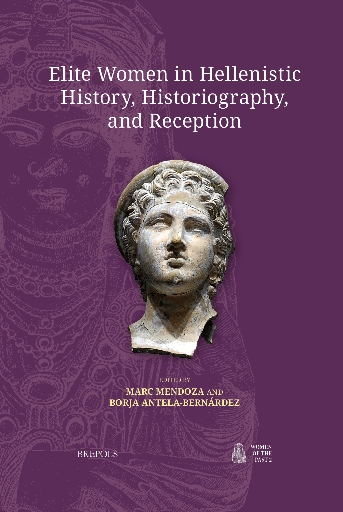
Elite Women in Hellenistic History, Historiography, and Reception
The Hellenistic world with its many new cultural trends and traditions has often proved a challenging period for scholars. In the wake of changing political religious cultural economic and social conceptions and practices gender roles and notions also underwent significant change leading to the emergence of strong female figures. Up to now however no major encompassing research work on elite Hellenistic women has been published. This volume aims to fill this historiographical gap by gathering together contributions covering a wide range of geographical chronological and cultural backgrounds. While mostly focused on royal women the chapters included here also seek to provide readers with an accurate and diverse description of the female experience in the Hellenistic period. The contributors to this book both renowned scholars and new voices in the discipline together advocate for a fresh approach that goes beyond the often problematic approaches of earlier historiography and provides a new understanding of elite women in the period.
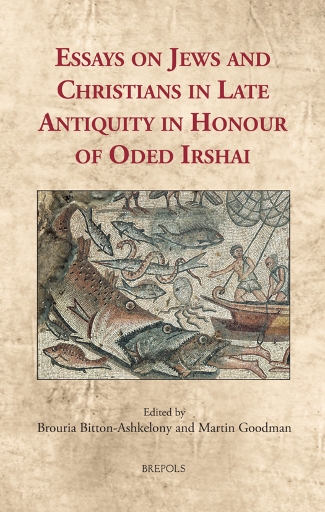
Essays on Jews and Christians in Late Antiquity in Honour of Oded Irshai
Leading scholars in the study of Late Antiquity discuss the religious landscape of the eastern Roman Empire with expert discussion of the theological political and social issues which confronted Jews and Christians in late Roman Palestine and surrounding regions. Individual chapters analyse in depth the rabbinic patristic and archaeological evidence to produce a sophisticated account of religious lives in provincial societies in which rabbinic Judaism took root within a Roman world increasingly dominated from the early fourth century CE by competing Christian power structures particularly within Palestine. Detailed studies investigate among other topics rabbinic speculation about the origins and nature of the Roman state; the implications of the sharing of urban space by different religious traditions and the sharing of religious iconography; competition both within Judaism and Christianity and between Jews and Christians in light of the political pressures exerted by the Christian Roman state; and both similarities and differences in speculation by Jews and Christians about the nature of the expected end of days.
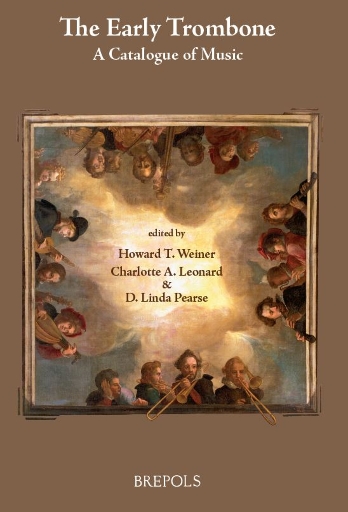
The Early Trombone: A Catalogue of Music
This catalogue documents nearly 9000 musical works specifying the trombone from anonymous pieces mentioned in early sixteenth-century writings up to Haydn’s iconic oratorios The Creation and The Seasons on the cusp of the nineteenth century. As such the catalogue provides a single resource for scholars trombonists chamber musicians and conductors to access instrumental solo and ensemble as well as choral works specifying trombone from the sixteenth through to the end of the eighteenth century. In compiling this inventory the authors have personally examined as many of the sources as possible either the original prints and manuscripts in libraries and archives or copies thereof (microfilm microfiche scans facsimile editions photocopies and photos). Relevant text passages from title pages prefaces and composer’s performance instructions are given in the original language and in English translation. Annotations discuss attributions the situation and peculiarities of sources and relationships to parallel transmissions. Extensive bibliographical information is provided to guide the readers to relevant secondary literature.
The catalogue is divided into three sections: concerted instrumental music (with solo trombone) instrumental music with trombones and vocal music specifying trombones with the vocal works representing the largest portion of the repertoire. The compositions range in size from pieces for a single voice with trombone and basso continuo to large-scale sacred and secular polychoral works with multiple trombones.
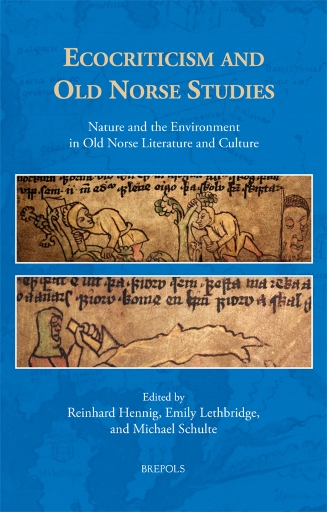
Ecocriticism and Old Norse Studies
Nature and the Environment in Old Norse Literature and Culture
Ecocriticism and Old Norse Studies is the first anthology to combine environmental humanities approaches and the study of premodern Nordic literature and culture. The chapters gathered here present innovative research based on the most recent developments within ecologically informed literary and cultural studies. Covering a wide variety of sources the volume provides new insights into the Old Norse environmental imagination showing how premodern texts relate to nature and the environment - both the real-world environments of the Viking Age and Middle Ages and the fantastic environments of some parts of saga literature. Collectively the contributions shed new light on the role of cultural contacts textual traditions and intertextuality in the shaping of Old Norse perceptions and representations of nature and the environment as well as on the modern reception and (mis-)use of these ideas. The volume moreover has a contemporary relevance inviting readers to consider the lessons that can be learned from how people perceived their environments and interacted with them in the past as we face environmental crises in our own times.
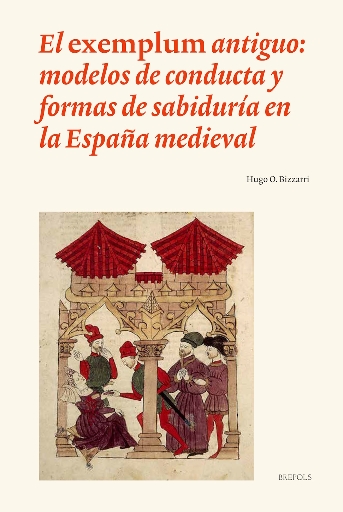
El exemplum antiguo: modelos de conducta y formas de sabiduría en la España medieval
L'exemplum antique est l'un des héritages les plus importants de l'Antiquité au Moyen Âge. Les anecdotes tirées des œuvres d'historiens latins tels que Tite-Live Suétone Valère Maxim et même de traités tels que Sénèque et Cicéron étaient diffusées sous la forme d'un récit bref. Mais l'Antiquité n'a pas transmis au Moyen Âge qu'une collection d'histoires. Ils étaient porteurs d'une idéologie le mos maiorum c'est-à-dire une série de vertus qui avaient constitué la base de l'Empire romain et que le Moyen Âge souhaitait appliquer à la chevalerie. Cette forme d'exemplum avait une longue tradition en Espagne. Dès le xii e siècle des auteurs tels que Pedro Alfonso de Huesca s'en servent. Au xiv e siècle il a été revalorisé et a commencé à faire partie du discours politique des ‘miroirs des princes’. Mais son moment de diffusion le plus important se situe au xv e siècle au point que cette période peut être caractérisée comme une aetas valeriana.
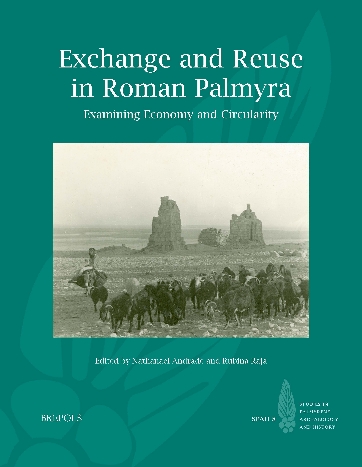
Exchange and Reuse in Roman Palmyra
Examining Economy and Circularity
How did ancient cities like Palmyra survive? How did their people produce and manage the resources required for both their short- and long-term needs? Were their methods circular or wasteful? What materials did they reuse and how? What form did their routine exchanges take? The material culture of Palmyra offers unique potential for addressing these questions in a concrete way. While the city is most famous for its long-distance commerce a century of excavations at the site together with a series of recent print publications and digital enterprises have provided scholars with unprecedented amounts of material objects among them inscriptions statues tesserae coins glass and metal finds textiles and other objects all of which shed new light on Palmyra’s economy and how its inhabitants consumed maintained exchanged or reused key resources.
Drawing together contributions from leading researchers on ancient Palmyra this volume explores various dimensions of the city’s economy from fresh angles. The chapters gathered here feature new methodologies for determining the size of Palmyra’s population and for understanding the nature of coins in local exchanges offer reassessments of the Palmyrene institutions that underpinned economic exchange examine how Palmyrenes used and reused materials and consider the forms of exchange and reuse that governed the building activity of Palmyrenes after the city’s Roman heyday and within areas of Egypt.
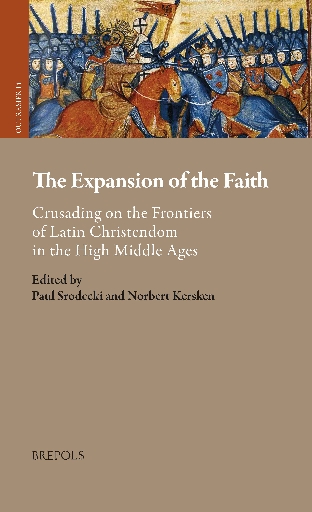
The Expansion of the Faith
Crusading on the Frontiers of Latin Christendom in the High Middle Ages
This volume offers a comparative approach to the crusade movement on the frontiers of Latin Christendom in the high Middle Ages bringing a regional focus to research on these peripheral phenomena. It features several key questions: Which military campaigns were propagated as crusades on the peripheries of the Christian West? What efforts were made to gain recognition for them as crusades and what effects did these have? What value did the crusade movement have for societies at the fines christianitatis? What role did the cruciatae have in strengthening pan-Western sense of togetherness and solidarity and what role did they have for creation of a crusader and frontier identity? The eighteen papers ranging in scope from the southern and eastern Baltic regions to Iberia Egypt and the Balkans provide new insights into the ways in which crusade rhetoric was reflected in the culture and literature of countries involved in crusading beyond the Holy Land.
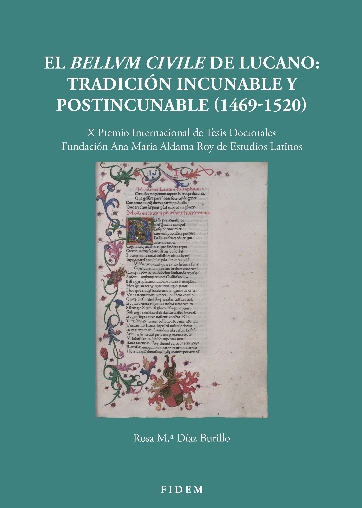
El Bellum Ciuile de Lucano: tradición incunable y postincunable (1469-1520)
Desde 1469 año en el que vio la luz la editio princeps del Bellum Ciuile en Roma el poema de Lucano se imprimió íntegramente en diecisiete ocasiones en el siglo XV y en dieciocho en los primeros veinte años del siglo XVI. Así su difusión y lectura durante el Renacimiento fue profusa. En muy poco tiempo los ejemplares impresos procedentes de diferentes talleres de imprenta europeos sobre todo italianos circularon por la Península Ibérica.
En el presente volumen se aborda en primer lugar el estudio filológico del texto transmitido por las ediciones incunables y postincunables del Bellum Ciuile. Durante estos primeros años de tradición impresa se establecieron diferentes formas textuales del poemay finalmente se configuró la vulgata del texto. El análisis filológico del texto de Lucano transmitido en estas ediciones incunables y postincunables ha permitido precisar las relaciones de filiación entre ediciones reconocer las diferentes familias textuales que convivieron en los primeros años de tradición impresa y dar los primeros pasos en la descripción de su relación con la tradición manuscrita así como en la identificación de la intervención de los editores sobre el texto. Todo ello contribuye desde el estudio de una tradición determinada al conocimiento del trabajo editorial realizado en el Renacimiento sobre textos latinos antiguos.
Igualmente se presenta el corpus de ejemplares conservados en bibliotecas españolas atendiendo a las huellas de lectura y a los poseedores que han dejado su rastro en este valioso patrimonio bibliográfico del que somos herederos.
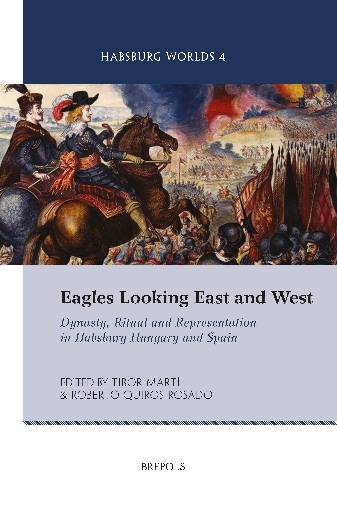
Eagles Looking East and West
Dynasty, Ritual and Representation in Habsburg Hungary and Spain
Symbolised by the ‘double-headed eagle’ looking East and West the Habsburg dynasty constituted a universal power structure in the early modern era. The dynasty’s Spanish and Austrian branches created a code of shared identity one which also encompassed their religious piety and their ability to pitch the Austriacum Imperium against multiple enemies worldwide.
The present volume investigates the construction of the dynasty’s political image in two spheres the Kingdom of Hungary and the Spanish monarchy between the sixteenth and eighteenth centuries. Fifteen Hungarian Czech and Spanish specialists offer comparative perspectives on the Habsburg era during this convulsive period of European history addressing topics including diplomatic links dynastic ritual and representation and the Order of the Golden Fleece. In covering a wide range of themes their contributions aim towards a better understanding of the emergence of new political attitudes in the Western world prior to the Enlightenment.
Contributors to the volume include Cristina Bravo Lozano Václav Bůžek Nóra G. Etényi Alfredo Floristán Imízcoz Rubén González Cuerva Borbála Gulyás Fanni Hende János Kalmár Zsolt Kökényesi Zoltán Korpás Pavel Marek Tibor Monostori and Géza Pálffy.
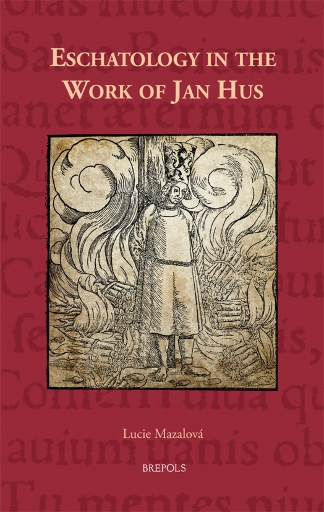
Eschatology in the Work of Jan Hus
This study provides a systematic and comprehensive overview of Hus’s ideas on the last things as they are presented in both his work and life. It examines the content and language of his works particularly his Latin sermons and correspondence from a literary-historical perspective. It explores general eschatology (Antichrist purgatory heaven and hell) as well as its intertwining with the Last Things that Jan Hus experienced personally in his struggle against Antichrist. Thus the reader will learn not only about Hus’s official ideas but also about his intimate thoughts contained in correspondence written during his exile and even as he was in prison awaiting death.
The book also presents Hus’s eschatology in the broader context of Church reform. It clarifies how Hus’s eschatology developed from its beginnings up to his death and takes into account the writings of other thinkers whose ideas are connected to Hus’s eschatology such as John Wycliffe Milíč of Kroměříž Matěj of Janov and Nicholas of Dresden. The book also features an introductory prolegomena on Hus’s life and work and early reform eschatology which describes not only relevant Czech influences on Hus’s eschatology (e.g. university theology social-political factors the Czech preaching tradition) but also European influences (e.g. Peter Lombard heterodox doctrines).
Editing and Analysing Numerical Tables
Towards a Digital Information System for the History of Astral Sciences
Astronomical tables are a significant yet understudied part of the scientific historical corpus. They circulated among many cultures and were adopted and transformed by astronomical practitioners for a variety of purposes. The numerical data conveyed in these tables provides rich evidence for pre-modern scientific practices. In the last fifty years new approaches to the analysis and critical editing of astronomical tables have flourished due to advances in computing power and associated modern mathematical tools. In more recent times the rapid growth of digital humanities and modern data analysis promises exciting further developments in this area. The present collection of studies on astronomical tables captures this momentum. It is a result of long-term collaborative work on building a database of astronomical tables and other objects found in manuscripts released under the name DISHAS (Digital Information System for the History of Astral Sciences). The fourteen contributions in this volume provide a broad coverage of astronomical traditions throughout Eurasia and North Africa which with very few exceptions find their roots in the mathematical astronomy of Ptolemy. The contributions include critical editions of previously unexamined astronomical tables along with insightful mathematical analyses as well as reflective methodological surveys that open up new perspectives for research on these fundamental sources for the history of mathematics and astronomy.
Eradication ou modération des passions. Histoire de la controverse chez Cicéron, Sénèque et Philon d’Alexandrie
Ce livre retrace l’histoire de la controverse qui opposa les Stoïciens aux Péripatéticiens à propos des passions. Alors que les Stoïciens prônent un sage dépourvu de toute passion les Péripatéticiens quant à eux admettent les passions modérées. Contrairement aux études dont la démarche consiste à reconstruire la doctrine stoïcienne au moyen d’une lecture synoptique de fragments issus de sources et de périodes variées cette étude favorise les témoignages complets et se concentre sur les textes qui attestent clairement de la polémique entre éradication et modération des passions. Ainsi cet ouvrage s’attelle aussi bien à l’argumentation théorique qu'aux différentes articulations de la controverse telle qu’elle émerge chez Cicéron le premier témoin important de la dispute Sénèque et Philon d’Alexandrie. L’approche de cette étude est à la fois analytique et historique et s’articule autour de trois objectifs majeurs. Il s’agit tout d’abord 1) d’éclairer les problématiques philosophiques soulevées ou relayées par la polémique à propos des passions à chaque époque déterminée 2) d’élucider les mécanismes polémiques ainsi que 3) de comprendre la manière dont les identités philosophiques sont articulées à travers la controverse. La double méthodologie (analytique et historique) permet d'éclairer les fondements théoriques de la théorie des passions du Portique ainsi que d'aborder la question des acteurs des sources des modes d’expression de la dispute ainsi que de la terminologie à travers laquelle elle fut véhiculée à chaque époque.