


Browse Books

Forgotten Roots of the Nordic Welfare State in Protestant Cultures
The Nordic welfare state of the 20th century has been hailed around the world as a model of how to build democratic and egalitarian societies. It has often been described as a project of social democracy often following a narrative of secularization and rationalization of society. However some of the most important actors and ideas of the "Scandinavian Sonderweg" had their roots in Protestant often Pietist and revivalist milieus that dreamed of creating an egalitarian community. The present volume explores these often forgotten roots in several case studies of phenomena from the seventeenth to the twenty-first century focusing primarily on questioning the function of aesthetics in the creation of the welfare state model. We argue that aesthetics and what Friedrich Schiller called aesthetic education played an important unifying role for Nordic societies. These aesthetics were shaped by Protestant ideas and practices. Through references to the then widespread circulation of educational texts based on Luther's catechism the later pietistic catechism of Erik Pontoppidan Nordic hymnbooks and practices such as communal singing and preaching in church church coffee reading circles and conventicle meetings a common aesthetic language emerged that unified different social groups and their competing goals and claims. Civic actors and movements learned specific ways to engage in society to develop practices of internalizing responsibility (self)critique and accountability and to communicate and develop a more democratic modern civic sphere. We therefore propose to look at this history from the perspective of a historically changing aesthetic as an integrating principle for understanding the political social cultural economic and many other aspects of the Nordic welfare state.
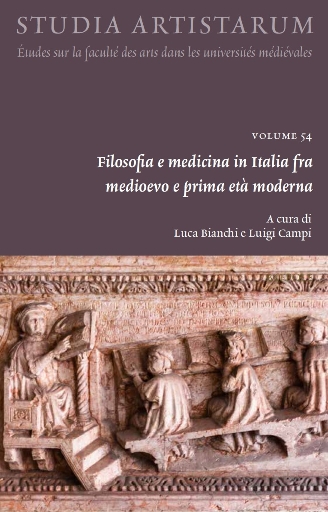
Filosofia e medicina in Italia fra medioevo e prima età moderna
Il volume raccoglie alcune delle relazioni presentate durante il 4° Colloquio Internazionale della Societas Artistarum. Svoltosi presso l’Università degli studi di Milano il 7-9 novembre 2019 esso si proponeva di approfondire da prospettive diverse come si sia configurato nell’Italia medievale e rinascimentale il rapporto fra medicina e filosofia. Alcuni contributi si soffermano sul contesto storico-istituzionale dell’insegnamento e della pratica della medicina sull’uso di dottrine etiche e di strumenti logici e retorici da parte dei medici. Altri contributi avvalendosi anche di documenti e testi inediti analizzano invece temi interdisciplinari come le teorie della generazione e la natura delle acque fluviali oppure mettono a fuoco il pensiero e l’opera di medici-filosofi come Bartolomeo da Salerno Taddeo Alderotti Antonio da Parma e Ludovico Boccadiferro.
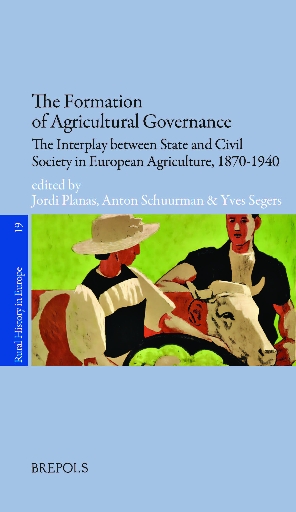
The Formation of Agricultural Governance
The Interplay between State and Civil Society in European Agriculture, 1870-1940
This book unravels how the agricultural sector and the rural world in Europe became more and more organised within capitalism in the years 1870-1940 and this with the aim of tackling the important challenges of the time. The focus is not so much on the myriad of individual farmers’ actions but on the collective efforts undertaken through the interplay between the state and the agricultural civil society.
A wide variety of actors from landowners associations farmers’ unions cooperatives scientific institutions and researchers to farmers themselves (or civil society) played a critical role in the process of drafting a policy agenda developing agricultural policies and were instrumental in implementing them in close relationship with the state. The result was a metamorphosis from mobilisation and representation of agrarian interests to a form of self-government or co-government of the agricultural sector at the national level which would only reach its highest point after the Second World War.
These issues are explored by established rural historians covering a period of seven decades (1870-1940). The papers provide a wide geographical perspective from the north of Europe to the Mediterranean.
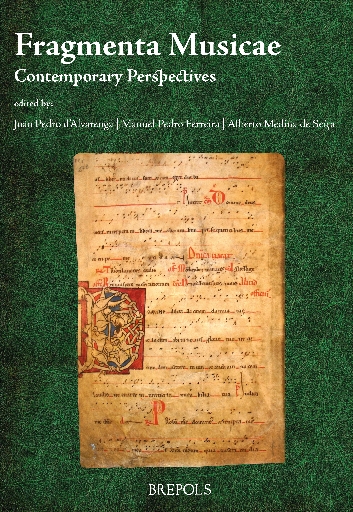
Fragmenta Musicae
Contemporary Perspectives
This volume stems from a research project on medieval and sixteenth-century fragments with music carried out at CESEM–Centre for the Study of the Sociology and Aesthetics of Music Lisbon Nova University between 2021 and 2024 as well as from an international colloquium on fragmentology held in Cascais Portugal in July 2023. It brings together twenty studies that address a varied range of disjecta membra including loose folios from dismembered manuscripts mutilated musical-liturgical codices incomplete sets of part-books truncated musical settings and even the remains of a historic organ. The aim is to invest these materials with significance beyond their condition as fragmented cultural artefacts by exploring their texts contexts meanings trajectories and when appropriate proposing methods for their reconstitution.
Foreign Influences: The Circulation of Knowledge in Antiquity
The Greeks had a rich and varied relationship with foreign lands and people which made possible a real circulation of knowledge throughout the Archaic Classical and Hellenistic times. The essays collected in this volume aim at exploring the hypothesis that the most adventurous intellectuals saw foreign lands and foreigners as repositories of knowledge that the Greeks σοφοί had to engage with in the hope of bringing back home valuables in the form of new ideas. Each of the articles included in this collective work explores one aspect of the “stranger” as a potential source with contributions mostly focused on Plato Xenophon Democritus Aristotle Diogenes Cicero and Galen.
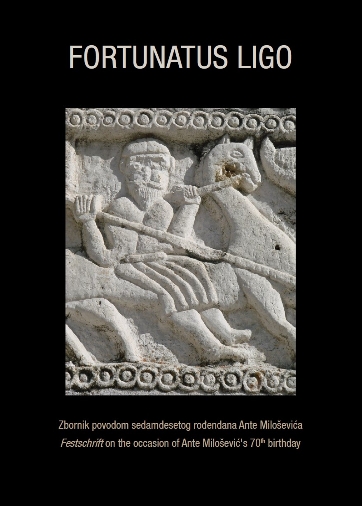
Fortunatus Ligo
Festschrifts on the occasion of Ante Milosevic’s 70th birthday
This book consists of 36 contributions all of them intended as a memento for professor Ante Milošević in honour of his 70th birthday. The first part of the book with 5 contributions are depicting the bio-bibliography of the celebrant and two homages. Thirty-one contributions are original scientific papers dealing with problems in disciplines of history art history and archaeology in the chronological span from prehistory to early modern times connected to the territory of today’s Croatia or its neighbouring regions in European context which is why they are especially relevant for the Croatian national scientific community and its development. Therefore the scientific impact of this book will be important.
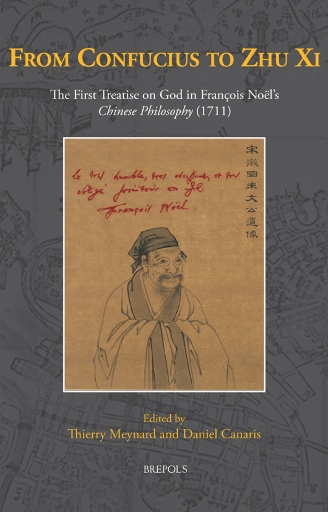
From Confucius to Zhu Xi
The First Treatise on God in François Noël’s Chinese Philosophy (1711)
On 25 September 1710 Pope Clement XI finally promulgated the 1704 decree Cum Deus optimus which condemned the toleration of certain Confucian rituals among Chinese Catholic converts and the use of the Chinese terms tian and Shangdi to refer to the Christian God. This papal decision antagonised the Kangxi Emperor and devastated the Jesuit China mission. Although the Jesuits were prohibited from publicly refuting the decree the Flemish Jesuit François Noël sought to defend the Jesuit position by publishing his voluminous scholarship on the Chinese classics. Among other works in 1711 Noël published two seminal contributions to the history of Sinology: the Sinensis imperii libri classici sex or Libri sex and the Philosophia Sinica a sophisticated treatment of Chinese metaphysics ritual and ethics. While the Libri sex achieved some degree of influence in the Enlightenment through the French translation of the French Jesuit historian Du Halde and the writings of the philosopher Christian Wolff the Philosophia Sinica was actively suppressed by the Superior-General of the Jesuit order. Yet it is in this latter work where the full breadth of Noël’s originality and intellectual contribution can be found. Noël reinterprets the Jesuits’ position through the lens of Neo-Confucianism integrating concepts such as li taiji yin and yang in his reading of Chinese philosophy. With contributions from Sinologists and intellectual historians this book offers the first systematic study of this pioneering work.
Fallacies in the Arabic, Byzantine, Hebrew and Latin Traditions
Fallacy studies are a well established and fast expanding field of argumentation theory. Without notable exception however the evergrowing literature on argumentative failure suffers from a conspicuous lack of interest in medieval fallacy theory - arguably the most creative stage in the whole history of argumentation theories. The standard story is that after Aristotle got off to a tentative start the study of fallacies lay dormant until people at Port Royal and John Locke revived it in spectacular fashion. The volume will show that this picture is both inaccurate and misleading. By working its way from the inside out within each medieval world Fallacies in the Arabic Byzantine Hebrew and Latin Traditions will provide ample and unambiguous record of the exegetical proficiency technical expertise and argumentative savoir-faire typically displayed by medieval authors on issues about flawed arguments which are all too often our own.
Faustus of Riez, On Grace
Faustus was a Gallic representative of what has been referred to as 'semipelagianism'. In his De Gratia he fiercely opposed the Augustinian view of Grace and Predestination that had been upheld by Lucidus a presbyter who possibly misunderstood Augustine's thought. Faustus did not open new ground about these contested doctrines but put significant roadblocks to their possible extreme trajectories.
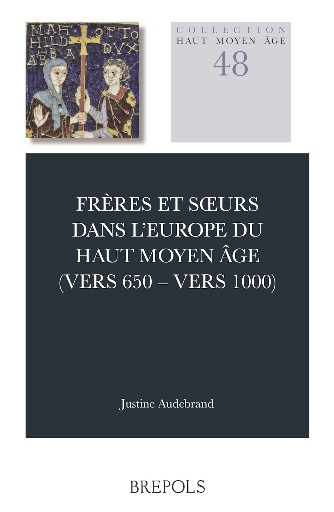
Frères et sœurs dans l’Europe du haut Moyen Âge (vers 650 ‑ vers 1000)
Les relations entre frères et sœurs constituent encore un champ mal exploré de l’étude de la famille pour la période allant de 650 à 1000. Pourtant ce lien est un élément essentiel des sociétés du haut Moyen Âge tant dans les mondes franc et germanique qu’en Angleterre. Dans les discours de l’Église il est même un idéal. En outre dans le contexte démographique médiéval la relation adelphique - c'est-à-dire entre frères et sœurs - est souvent la plus pérenne : face à la mort précoce des parents et à un veuvage fréquent elle accompagne les individus tout au long de leur existence. Étudier les relations adelphiques est également une manière d’envisager les relations entre hommes et femmes grâce aux dernières avancées de recherche sur le genre. Pour étudier ces liens spécifiques il convient de s'intéresser à une large documentation et d'emprunter aux outils de la sociologie et de l'anthropologie. La relation adelphique apparaît alors une donnée importante des sociétés du haut Moyen Âge et que son étude permet de complexifier l'histoire de la famille sur cette période.
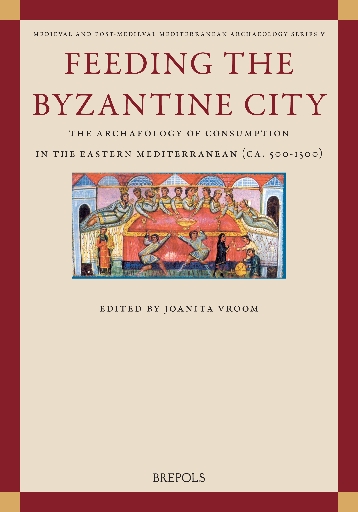
Feeding the Byzantine City
The Archaeology of Consumption in the Eastern Mediterranean (ca. 500-1500)
This book offers new and innovative perspectives on the archaeology of consumption in Byzantine cities and their hinterlands. Case-studies range from towns in eastern Macedonia north-western and central Greece and Crete to urban centres in Serbia Bulgaria and western Turkey. The archaeological data and historical insights presented in this volume are always of great interest often exciting and more than once outright astonishing. The commodities discussed in the volume are dated between the 6th and the 16th century CE and include pottery (e.g. glazed table wares amphorae cooking pots storage jars) textile fragments metal objects bronze and golden jewellery marble carved slabs and columns.
Feeding the Byzantine City sheds compelling light on a world which was much more complex and interconnected than has often been assumed which makes it essential reading for scholars and a larger audience alike.
Fîr d’èsse walon
Études d’histoire en l’honneur du professeur Luc Courtois
Vingt-quatre contributions portant sur toutes les périodes historiques et sur des thématiques chères au jeune émérite: l’histoire de la théologie et du christianisme l’histoire de la Wallonie l’histoire de l’Université catholique de Louvain la bande dessinée et la littérature de jeunesse en tant que sources historiques.
Figures exemplaires de pouvoir sous l’Empire dans la littérature gréco-latine
The exemplum held immense power in antiquity especially in the political field. What role did historical or legendary figures from the Greco-Roman past play during the Empire in speeches intended to build legitimise or question power? How were they selected? How did they work? These are the questions that the eighteen contributions in this volume seek to answer. This multifaceted approach crosses several literary genres including poetry historiography and political or philosophical discourse which are examined over six centuries. It considers different types of power or authority (imperial power but also the authority of the magistrate in the Greek city during Roman domination and the power of bishops). This highlights the plasticity of exempla that depending on the context could justify or question a vast diversity of ideologies and practices of power.
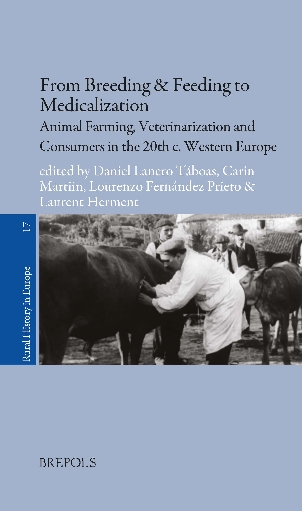
From Breeding & Feeding to Medicalization
Animal Farming, Veterinarization and Consumers in Twentieth-Century Western Europe
To fully understand the changes in European animal husbandry during the long twentieth century it is necessary to examine all aspects of the food chain devoted to supplying proteins and fats to a growing population. Indeed the twentieth century saw great changes in animal husbandry - towards a market-oriented intensified and specialized production. This influenced and was influenced by policies trade aspects of animal and public health food supply issues aims in animal breeding development of production systems principles in feeding and impact of producer cooperatives.
Because it is not possible to apprehend all these global changes from a rural point of view this book aims to bring together many different expert perspectives in fields such as: agronomy veterinary medicine microbiology history of sciences economic and cultural history and sociology. Taking into account both national idiosyncrasies and changes from an international perspective the book gathers scientists from Italy Spain France England The Netherlands and Sweden.
The first part of the book will be devoted to the evolution of animal husbandry and commercialization from the end of the nineteenth century to the beginning of the twenty-first century. The second part of the book is devoted to the increasing medicalization of this sector with a special focus on the role of veterinarians and the on the increasing uses of antibiotics.
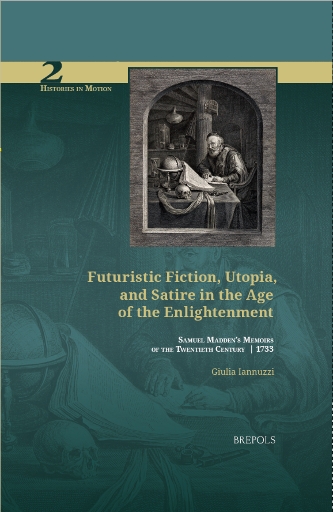
Futuristic Fiction, Utopia, and Satire in the Age of the Enlightenment
Samuel Madden’s Memoirs of the Twentieth Century (1733)
Published anonymously in 1733 Memoirs of the Twentieth Century is one of the earliest futuristic novels known in Anglophone and Euro-American literature. It foregrounds an acceleration of history brought about by an increasing degree of global interconnectedness and the exclusion of prophetism and astrology as credible ways to know the future. The work of Samuel Madden an Irish writer and philanthropist of Whig sympathies it consists of a collection of diplomatic letters composed in the 1990s which the narrator claims were brought to him from the time to come by a supernatural entity. Through these correspondences twentieth-century world scenarios are spread out before the reader in which British naval power rules the waves and international commerce while the transnational scheming of the Jesuits threatens the independence of weaker European courts.
This book — which includes a study followed by an annotated edition of the text — assesses the cultural significance of this literary work as an apt observatory on how historical time as a cultural construction was shaped during the eighteenth century by new forms of transnational circulation of information and by the dubious space carved out in European culture by seventeenth- and early eighteenth-century debates on the nature of historical knowledge.
Through and by means of the Memoirs case study this volume aims to contribute to a wider cultural history of the future and speculative fiction. The novel’s ironic distancing of beliefs considered to be superstitious and absurd — such as divination techniques and occult and magical disciplines — offers an exceptional testimony to the negotiation of the boundaries of verisimilitude and credibility within a religious enlightenment.

From the Domesday Book to Shakespeare’s Globe
The Legal and Political Heritage of Elizabethan Drama
The phrase ‘Jus Uncommon’ summarizes England’s claim to independence from Europe a claim supported by its unique legal system and Elizabethan theatre and their strong interconnexion. Elizabethan tragedy begins at the Inns of Court. It was no mere coincidence but a result of the long history of intersecting processes of law politics and theatre. This book sets out to contextualize and explore such legal and literary intersections charting the emergence of Elizabethan legal culture from its various English and European sources over the course of the four hundred years running from Magna Carta to Shakespeare. It encompasses the major strands of legal history and culture that formed the background to Elizabethan political drama republican tradition theories of monarchical sovereignty European and English theories of imperium pedagogical and rhetorical practices of the Inns of Courtlegal-antiquarian research parliamentary privilege and Tudor political pamphleteering.
Legal texts discourses and social practices constructed a pervasive intellectual culture from which Elizabethan drama – like Shakespeare’s – emerged. Shakespeare is not the central object of this study but he is central to its argument. What he knew about law was what collective memory had stored from centuries past at home and abroad. The issues characters themes theories and metaphors dramatized by the Elizabethan playwrights followed the way opened at the Inns. Emblematic figures of lawyers-writers and their Senecan patterns paved the way to Gorboduc and to Shakespeare’s histories.
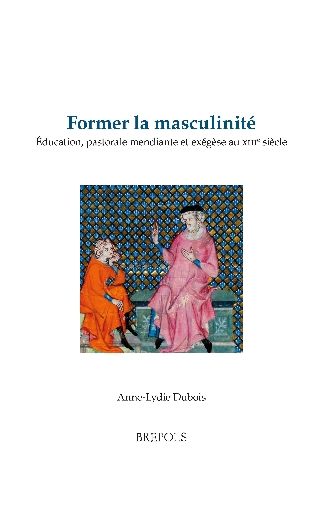
Former la masculinité
Éducation, pastorale mendiante et exégèse au xiii e siècle
« On ne naît pas homme on le devient ». La formule de Simone de Beauvoir détournée par les historiennes et les historiens des masculinités peut également s’appliquer à la période médiévale à travers l’éducation. Au sein du discours clérical du xiii e siècle la masculinité laïque loin d’être innée est en effet envisagée comme un apprentissage autant pour les garçons et les adolescents que pour les adultes - pères de famille et maris. Cette identité de genre constitue un statut qui s’acquiert au prix de nombreux efforts sur soi-même par un long processus de transformation intérieure. Élaboré dans les commentaires bibliques un idéal de masculinité incarné par Adam se dessine également et exerce une grande influence sur le comportement masculin prescrit dans les textes pédagogiques. Le discours normatif ainsi produit participe de la différenciation des sexes. Il constitue un moyen privilégié de forger l’identité sexuée et un terreau fertile d’exploration historique.
Dans une perspective d’histoire culturelle et sociale cet ouvrage s’intéresse à la manière dont la masculinité est construite au sein d’un corpus de sources du xiii e siècle principalement composé par des frères mendiants. Il interroge un domaine de recherche au développement récent en plein essor depuis les années 1990-2000 qui reste toutefois encore peu exploité pour la période médiévale en particulier dans le milieu francophone. Ayant rendu les hommes visibles en tant qu’êtres sexués l’étude des masculinités s’avère pourtant complémentaire de l’histoire des femmes et indispensable pour appréhender les sociétés médiévales dans le dialogue entre les genres qui y prend place.
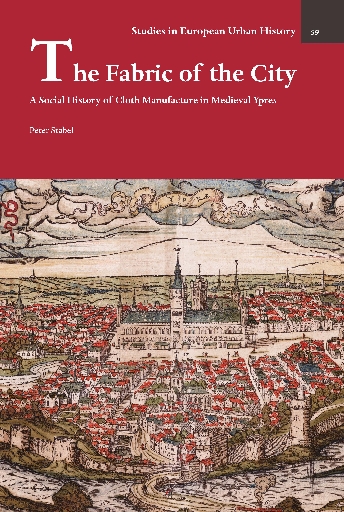
The Fabric of the City
A Social History of Cloth Manufacture in Medieval Ypres
Textile industries were one of the driving forces of the urbanisation process in medieval Northwest Europe and nowhere was their impact so profound as in Flanders where almost all larger and smaller cities were involved in manufacturing woollens from the 12th to the 16th century. Ypres the third city in the county was perhaps the most important concentration of industrial labour and capital in this period. In their heyday in the 13th and 14th centuries Ypres woollens were exported all over Europe and Ypres entrepreneurs and textile workers were able to adapt in very flexible ways to changes in demand. This book investigates not only what the impact of cloth manufacture was on urban society it also tries to unravel the social mechanisms of industrial development in late medieval cities. It focuses on social inequalities and on the often difficult relationship between the various stakeholders in the urban cloth industry: merchants entrepreneurs guild masters and skilled and unskilled workers. Through the analysis work practices wage levels investment strategies gender issues and political aspirations it unravels how urban industries in the pre-industrial era shaped social relations in the city how they moulded the urban fabric.
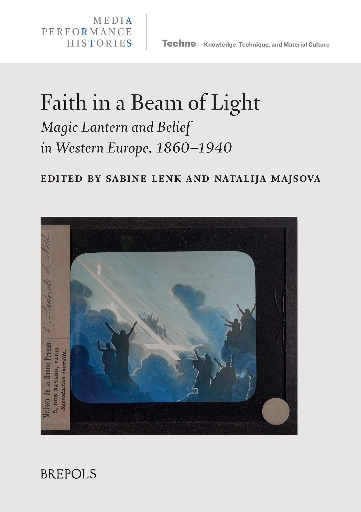
Faith in a Beam of Light
Magic Lantern and Belief in Western Europe, 1860-1940
An early visual mass medium the magic lantern was omnipresent in most Western societies between 1880 and 1930. The Christian Church especially the Catholics spiritual associations such as the Freemasons political interest groups and teaching institutions all made use of lectures enriched by projected images to disseminate information convictions and doctrines. Moreover the lantern often featured as a concealed aid in stage spectacles. Nineteen authors analyse the effects of "the beam of light in the dark" in the context of religion faith and belief. Attention is paid to the wide spectrum of locations where projections took place as well as to the lantern's impressive versatility. The lavishly illustrated chapters collected in this volume range from analyses of religious propaganda to fundraising lectures for missionary work in China from the fight against alcoholism to the secularisation of society and from the lantern's application in spiritualist sessions to its use in science and teaching.
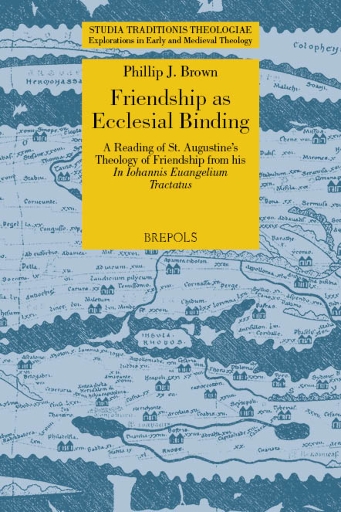
Friendship as Ecclesial Binding
A Reading of St Augustine’s Theology of Friendship in His In Iohannis evangelium tractatus
In the age of Augustine within the classical structures of society nothing was more valued than friends and friendship. Augustine was an innovative thinker and friendship represents a good example of his flair for reconfiguring its framework into an ecclesial setting. He wrote: ‘what greater consolation do we have in this human society riddled with errors and anxieties than the unfeigned faith and mutual love of true and good friends?’. Yet as a Christian Bishop how would he reconceive this well established and treasured institution? Friendship was certainly something that became recast within the light of his conversion and immersion into the life of the Church. In Augustine’s exchange with the Donatists we glimpse his most fully developed vision of friendship. Through his preaching on John’s gospel which comes to us as his In Iohannis Euangelium Tractatus Augustine reveals this vision of what friendship is. Given that John’s gospel gives such weight to the incarnation and to friendship we can witness through his hermeneutical strategy of figuration his notion that friendship with God comes in belonging to the totus Christus ‘the whole Christ’. For Augustine the universal nature of the Church as Christ’s body and bride enjoys a continued connection to the head (Christ) and through the Church its members live within the embrace of the Spirit. With this foundation of friendship Augustine cried out to those separated by schism: belong-be bound-be friends with God in Christ.