


Browse Books
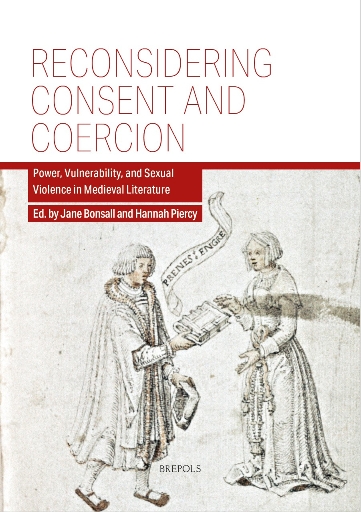
Reconsidering Consent and Coercion
Power, Vulnerability, and Sexual Violence in Medieval Literature
How can contemporary theorisations of consent help us to nuance our understanding of consent and coercion in the Middle Ages? And what can reconsidering medieval attitudes towards consent offer to our own ‘consent culture’? Contemporary feminist approaches have identified consent both as a potent political framework for liberation and as an inherently limited concept that opens out onto other important ethical questions. Proceeding from this moment this book looks in two directions to understand the varied ways in which structural inequalities impact meaningful consent and facilitate coercion in the Middle Ages and today.
Building upon the momentum of ‘medieval consent studies’ as a newly defined field this volume expands the focus beyond rape and raptus assessing more varied representations of consent and coercion through an intersectional consideration of power inequality and sexual violence. The contributions bring together different methodologies cultural contexts and literary traditions to highlight literature’s capacity to reflect otherwise undocumented forms of sexual vulnerability. Offering a compelling case for integrating critical approaches like trans history codicology animal studies ecocriticism and disability studies into this field Reconsidering Consent and Coercion demonstrates the vital necessity of a nuanced and inclusive understanding of the past for our present discourses of consent.

Rhetoric, Persuasion, and Teaching the Emotions in the Early Modern English Sermon, 1600–1642
The early seventeenth-century English sermon was the bestselling print genre of its time and church preaching was more widely attended than any play. Jennifer Clement argues here that a major aim of these sermons was to teach people how to feel the right emotions — or as preachers would have said at the time the passions or affections — to lead a good Christian life. In the process preachers took a primarily rhetorical approach to the emotions; that is they used their sermons to define emotions and to encourage their listeners and readers actively to cultivate and shape their emotions in line with Scripture.
This study offers an overview of five key emotions — love fear anger grief and joy – in the sermons of key preachers such as John Donne Richard Sibbes Joseph Hall Launcelot Andrewes and others. It shows how these preachers engaged with contemporary treatises on the emotions as well as treatises on preaching to highlight the importance of the rhetorical as opposed to the humoral approach to understanding the emotions in a religious context. In addition Clement reads sermons next to early seventeenth-century religious poetry by writers such as Donne George Herbert Amelia Lanyer and Henry Vaughan to show how the emotional concerns of the sermons also appear in the poetry reverberating beyond the pulpit.
Bringing together rhetorical theory sermon studies and the history of the emotions Clement shows how the early seventeenth-century English sermon needs to inform our thinking about literature and its engagement with emotion in this period.
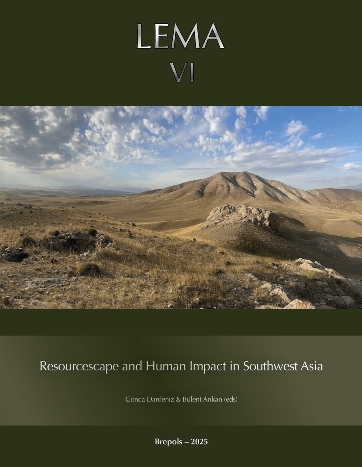
Resourcescape and Human Impact in Southwest Asia
Landscape archaeology has in recent years expanded as a discipline to include various aspects of human-environment interactions in the past. In line with this trend this volume offers a comprehensive perspective on three topics: theoretical and textual approaches to landscape which provides an important framework for interdisciplinary research; the use of land and resources which while a popular topic in Southwest Asian archaeology remains relatively understudied in connection to ancient technologies; and human impact on the highlands. The contributions gathered in this volume cover topics as diverse as agricultural practices metallurgy trade and environmental research and draw together evidence from both textual and material evidence to shed light on different places and periods from the Bronze Age through to the Roman era. Together these varied case studies offer new insights into how different methods can be utilized to assess unique patterns in human-environment interactions in Southwest Asia.
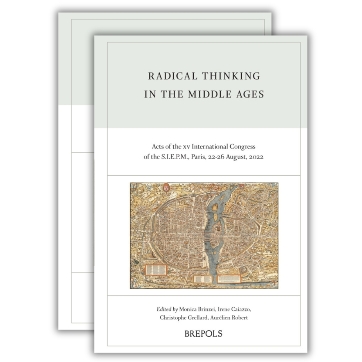
Radical Thinking in the Middle Ages: Acts of the XVth International Congress of the SIEPM, Paris, 22-26 August 2022
These volumes present a selection of papers delivered in Paris at the XV International Congress of the Société Internationale pour l’Étude de la Philosophie Médiévale August 22-26 2022. The appearance of the term radix positionis in medieval debates inspired the contributors to investigate whether there was something that could be considered radical thought in the Middle Ages and if so what the roots of this radical thought were in the different philosophical traditions in various geographical cultural religious and linguistic contexts (Arabic Greek Hebrew Latin).
Medieval philosophy often engaged in a quest for origins but it could also be radical in its methodology or in its attitude when it refused any compromise on its principles or basic concepts be they innovative or rediscovered. Radicalism could be conceived as extremism in pushing a hypothesis procedure or line of inquiry to its limits leading to extreme positions. Radical thought could mean being intellectually inflexible on principles obstinate in embracing theses that broke from tradition progressive but also extremist. The contributions in these volumes thus analyse case-studies of doctrinal conflict dogmatic struggle and condemnation by religious or academic institutions presenting examples of both intellectual courage and philosophical intransigence.
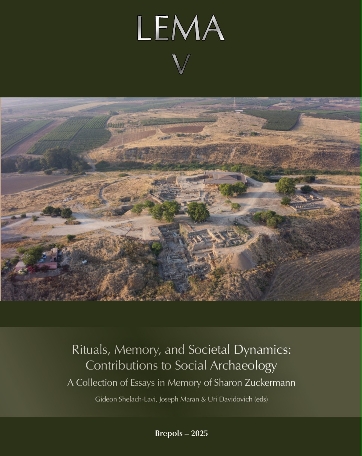
Rituals, Memory, and Societal Dynamics: Contributions to Social Archaeology
A Collection of Essays in Memory of Sharon Zuckerman
Thanks largely to the introduction of new methods of recovery and analysis archaeology is increasingly treated as a science. Yet it should continue to ask questions that are founded in the humanities. This is especially true of social archaeology which forms the core of this volume. Being based on the notion that ‘the social’ permeates all areas of life the chapters gathered here give priority to archaeological data and contexts which in turn form the prerequisite for analyzing how at particular times and places people negotiated or reaffirmed the society around them. Case studies from the Levant and the Eastern Mediterranean sit alongside selected comparative cases from other parts of the world and assess issues such as the development of cultural characteristics of societies societal continuity and collapse religious beliefs and rituals and the role of social memory as well as interactions within and between societies. The volume is dedicated to the memory of our colleague and friend Dr. Sharon Zuckerman who embraced the quest for ‘the social’ throughout her career.
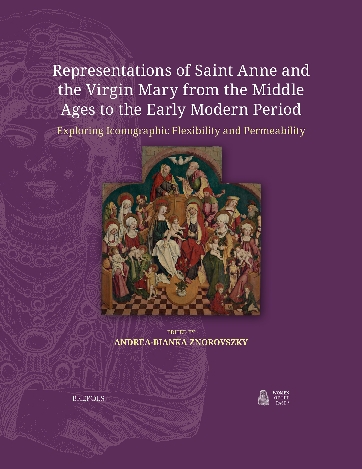
Representations of Saint Anne and the Virgin Mary from the Middle Ages to the Early Modern Period
Exploring Iconographic Flexibility and Permeability
Between the thirteenth and the sixteenth centuries the cult of the Virgin Mary underwent significant changes a shift clearly revealed by an increase in artistic representations of Mary as well as a flourishing devotional literature in her honour written in both Latin and the vernacular. One aspect of this change was a broader attention to Mary’s genealogical line and in particular to her relationship with St Anne. The result was not only a renewed focus on the vita Annae but also a significant overlap in how these two women were represented juxtaposed and perceived.
This volume traces the often significant iconographic flexibility in terms of both how the Virgin Mary and Saint Anne were presented and perceived and what can be termed a permeability between visual representations of the two saints. Focusing on the multiple readings layers of meaning and the visual interplay between the vita Mariae and the vita Annae the chapters gathered here explore the overlap and influence between different iconographic motifs and how these were used to advance political religious and social ideologies at the time of their creation as well as exploring representations across a range of different media from sculptures and frescoes to panel paintings and manuscript illuminations.
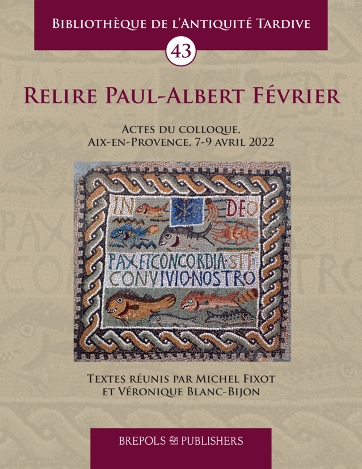
Relire Paul-Albert Février
Actes du colloque, Aix-en-Provence, 7-9 avril 2022
Par ses publications Paul-Albert Février a été un auteur majeur de la seconde moitié du xx e siècle. Ses apports et ses questionnements ont provoqué des prises de conscience décisives dans le domaine de l’archéologie et de l’histoire des deux rives de la Méditerranée entre Sud de la France et Maghreb à la fin de l’Antiquité sans compter le détour italien et un intérêt marqué pour le Patrimoine. Il a été à l’origine d’un processus d’entraînement intellectuel dont il a fait bénéficier étudiants et collègues. Trente ans après sa disparition prématurée en 1991 à l’âge de soixante ans le besoin a été ressenti de faire le point sur les directions de recherche qu’il avait abordées et sur les diverses perspectives qu’il avait ouvertes. La personnalité de l’enseignant et du chercheur était telle que la démarche scientifique était inséparable du rayonnement humain. Le présent ouvrage a été conçu comme un état de la recherche en écho à celui dans lequel dès après sa mort ont été rassemblés ses principaux articles (La Méditerranée de Paul-Albert Février 2 vol. CEFR 225). Les deux livres pourront être ouverts en regard l’un de l’autre.

Redefining Ancient Epirus
Ancient Epirus ‘the Mainland’ of the Odyssey has meant different things at different times. Covering a region that today spans parts of south Albania and north-west Greece Epirus was an important crossroad in antiquity a meeting place of different peoples and cultures. Yet while the history of the region is well-known thanks to a combination of historical studies and major Greek myths its archaeology has remained relatively little studied. Now derived from a larger project based at Oxford University entitled ‘Beyond the Borders’ this volume for the first time offers a reliable and up-to-date account of the archaeology of Epirus.
The contributions gathered here written by some of the most influential international scholars currently involved in archaeological research in Epirus aim to offer a balanced synthesis of the different cultural and historical phenomena at play in the region. Chapters span the Archaic period to Roman Imperial times and starting from the material record touch upon a wide range of subjects: landscape studies urbanization fortifications and defence ritual sanctuaries burial practices relationships between mother cities and colonies and borders and borderlands. Through this approach the volume effectively moves Epirus from the border to the centre of the map of current archaeo-historical research as well as offering a starting point for further historical investigations in the field.
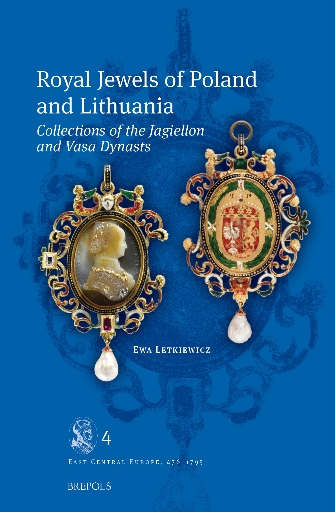
Royal Jewels of Poland and Lithuania
Collections of the Jagiellon and Vasa Dynasts
This volume delves into the rich histories of the Jagiellon and Vasa dynasties shedding light on the profound interplay between jewellery and socio-political forces. Readers are invited into an era where jewellery bore multifaceted significance from symbolising power and piety to facilitating economic engagements. The royal perception of value extended beyond traditional treasures with a keen interest in animal-derived artefacts. These unconventional items such as elk hooves or eagle stones were highly esteemed reflecting both luxury’s diverse nature and the era’s cultural and mystical beliefs. Rather than merely cataloguing these artefacts this study animates them intertwining narratives of monarchs nobles craftsmen and the lands from which these treasures emerged. It delves into a world where a gem’s glint signifies might gold hints at empires’ expanse and a narwhal’s horn could determine kingdoms’ destinies. Jewellery has long held a central position in history particularly among the elite. These pieces were not simply decorative; they conveyed prestige societal position and authority. They symbolised both worldly and spiritual prominence enriched with a complex symbolism. Beyond showcasing wealth jewellery played crucial roles in diplomacy and politics. What meanings did these unique gems carry for their initial owners? This book uncovers the tales magnetism and mystery surrounding these jewellery collections. It paints a picture where jewellery transcends mere ornamentation serving as a powerful testament to influence devotion and grandeur.
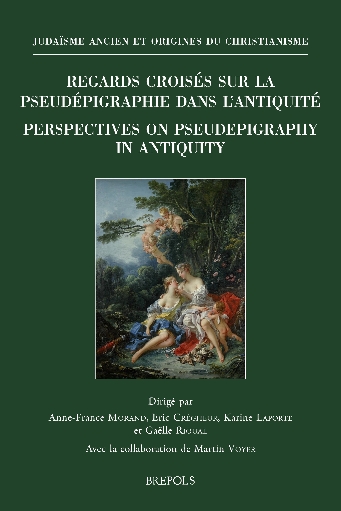
Regards croisés sur la pseudépigraphie dans l’Antiquité
Perspectives on Pseudepigraphy in Antiquity
Qu’il s’agisse d’écrire sous le nom de Pythagore d’Orphée de la Pythie ou encore de Paul de Tarse ou d’Énoch les Anciens usaient de noms d’emprunt célèbres pour s’exprimer. Phénomène fondamental de l’Antiquité la pseudépigraphie n’a cependant fait l’objet d’aucune monographie avant les années 1970 avec le livre de Wolfgang Speyer Die literarische Fälschung im heidnischen und christlichen Altertum (1971) et les Entretiens de la Fondation Hardt Pseudepigrapha I. Pseudopythagorica – Lettres de Platon – Littérature pseudépigraphique juive (1972). Le sujet a alors suscité les critiques de plusieurs savants. Plus récemment la somme que Bart Ehrman a consacrée à la question Forgery and Counterforgery (2013) par les vives réactions qu’elle a provoquées – parfois critiques parfois élogieuses – a contribué à relancer le débat. Le présent volume se propose de revenir sur ces importantes synthèses en les abordant sous l’angle de figures précises ainsi que d’époques de langues et de régions diverses. Il vise aussi à élargir la recherche en mettant à l’épreuve les différentes théories énoncées dans la littérature savante. Il est désormais devenu essentiel d’étendre et de remodeler cette notion de pseudépigraphie qui touche également à celles d’« auctorialité » d’inspiration poétique d’intention des auteurs antiques et de genres littéraires.
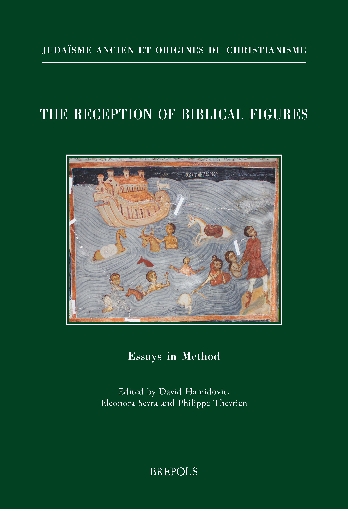
The Reception of Biblical Figures
Essays in Method
This volume explores the reception of biblical figures in Judaism Christianity and Islam with a particular focus on Antiquity and incursions in the Middle Ages and modernity. The contributions included here offer a glimpse of the complexity of the mechanics of transmission to which these figures were subjected in extra-biblical texts either concentrating on one author or corpus in particular or broadening the scope across time and cultural contexts. The volume intends to shed light on how these biblical figures and their legacies appear as channels of collective memory and identity; how they became tools for authors to achieve specific goals; how they gained new and powerful authority for communities; and how they transcend traditions and cultural boundaries. As a result the vitality and fluidity of the developments of traditions become clear and prompt caution when using modern categories.
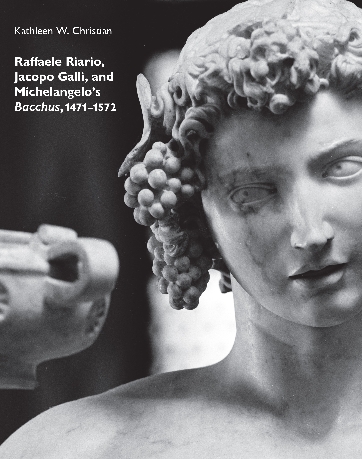
Raffaele Riario, Jacopo Galli, and Michelangelo’s Bacchus, 1471–1572
On Michelangelo’s first day in Rome in June 1496 Cardinal Raffaele Riario asked him if he could create ‘something beautiful’ in competition with the antique. The twenty-one-year old sculptor responded to this unique challenge with the statue of Bacchus now in the Bargello museum. This statue as well as the Sleeping Cupid which first brought Michelangelo to Riario’s attention have long been shrouded in mystery and the Bacchus as well as its patron have long suffered from critical censure.
Through a comprehensive analysis of overlooked and previously-unpublished sources this study sheds new light on the Sleeping Cupid the Bacchusand a fascinating period in the history of Renaissance Rome when the careers of Riario Galli and Michelangelo were closely intertwined. It considers the rise of the Riario dynasty starting with the election of Pope Sixtus IV in 1471 Riario’s partnership with Jacopo Galli in the reconstruction of the palace now known as the Palazzo della Cancelleria the attempted sale of Michelangelo’s Sleeping Cupid in Rome as an antiquity Riario’s patronage of the Bacchus and the Bacchus’s displayin the house of the Galli up until its sale to the Medici in 1572. Taking a broad interdisciplinary perspective it offers a fundamental reassessment of Cardinal Riario’s career as a patron of Jacopo Galli’s role as an intermediary for both Riario and Michelangelo and of Michelangelo’s collaboration with Riario and Galli.
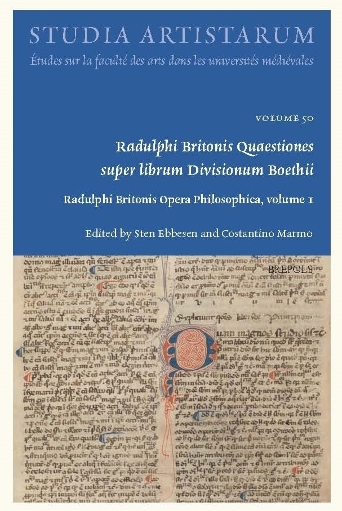
Radulphi Britonis Quaestiones super librum Divisionum Boethii
Radulphi Britonis Opera Philosophica, vol. 1
Boethius’ De divisione or Liber divisionum was the authoritative book on mereology in medieval scholasticism. Together with other Boethian works it formed part of the Ars vetus the core of which was constituted by Porphyry’s Isagoge and Aristotle’s Categories and Peri hermeneias but after c. 1250 the Boethian works were but rarely taught in university. One master who did do courses on De divisione was Radulphus Brito (c. 1270 – 1320/21) who taught in the Parisian Faculty of Arts in the 1290’s and possibly some years into the 1300’s after having become a student of theology about 1299.
Radulphus was an innovative thinker with a considerable impact on the philosophical de-bate in his lifetime and he continued to be considered relevant till the end of the 15th century. He left a vast amount of writings most of them from his days as a teacher of the arts. Among those preserved are quaestiones on the whole of the Ars vetus and Ars nova Parva naturalia Physics De anima Metaphysics and Ethics as well as Priscianus minor.
Radulphus taught some courses more than once and each time revised the text of his lectures leaving us with two or more versions of the relevant questions. On De divisione there are even two completely different sets of questions both of which are edited for the first time in the present volume. The introduction contains a detailed study of the way Brito’s question commentaries developed over time.

Résistance sans frontières
À propos de moines espions, de lignes d'évasions et du 'Hannibalspiel', 1940-1943
Le 9 octobre 1943 neuf membres de la résistance belge et néerlandaise étaient exécutés à Rhijnauwen (près d’Utrecht). Parmi eux deux moines de l’abbaye du Val-Dieu. En suivant le parcours de ces deux ecclésiastiques le livre retrace de façon précise l’histoire des groupes d’espionnage et des lignes d’évasion. Ces lignes de secours étaient utilisées par des prisonniers de guerre évadés par des pilotes alliés abattus par des personnes d’origine juive et des ressortissants néerlandais en fuite vers l’Angleterre. La ligne d’évasion partait d’Allemagne et des Pays-Bas pour rejoindre Eijsden puis Mouland et Visé. Une fois arrivés au pays de Herve ou de Liège les réfugiés étaient conduits à Givet ou à Bruxelles où d’autres groupes de résistance les prenaient en charge. En 1942 le contre-espionnage allemand infiltre les groupes au départ de Groningue et de Liège : l’Hannibalspiel. L’issue sera dramatique.
En cherchant à comprendre pourquoi dans la région de Liège ces deux moines se décident à entrer en résistance l’enquête met en lumière le rôle joué par l’Église et par l’abbaye du Val-Dieu mais aussi par leurs familles.
Résistance sans frontières est la première recension ayant trait à la résistance de chaque côté de la frontière belgo-néerlandaise pendant la deuxième guerre mondiale.
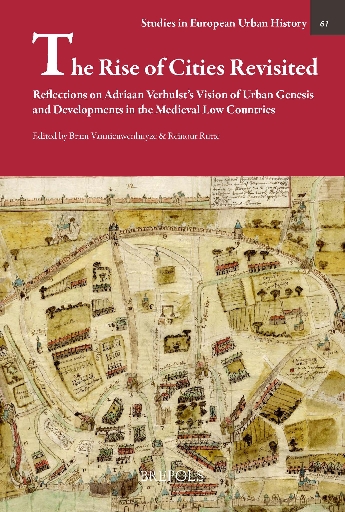
The Rise of Cities Revisited
Reflections on Adriaan Verhulst's Vision of Urban Genesis and Developments in the Medieval Low Countries
Adriaan Verhulst's The Rise of Cities in North-West Europe (1999) is the last comprehensive work written by a single author on the urban genesis and spatial developments of cities in the medieval Low Countries. Since then monographs specialised studies and articles have been published on various cities and towns while urban archaeologists have carried out numerous excavations. Much new knowledge has been gained yet many gaps and the need for comparative overviews remain.Twenty-five years after Verhulst’s synthesis The Rise of Cities Revisited takes a fresh look at the origins and developments of cities and towns in the Low Countries between the tenth and the sixteenth centuries critically assesses progress made in scholarship and outlines future directions for research. The chapters of the book are written by senior and junior specialists from various fields including medieval history historical geography economic history archaeology and building history. The Rise of Cities Revisited presents a state of the art and provides scholars with tools to study this complex subject in future.
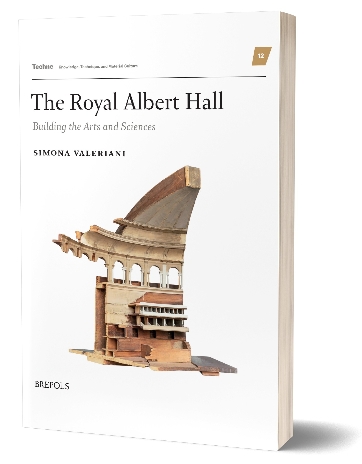
The Royal Albert Hall
Building the Arts and Sciences
This groundbreaking study takes one of London’s most iconic buildings and deconstructs it to offer new insights into the society that produced it. As part of the new cultural quarter built in South Kensington on the proceeds from The Great Exhibition of 1851 the Royal Albert Hall was originally intended to be a ‘Central Hall of Arts and Sciences’. Prince Albert’s overarching vision was to promote technological and industrial progress to a wider audience and in so doing increase its cultural and economic reach.Placing materiality at its core this volume provides an intellectual history of Victorian ideas about technology progress and prosperity. The narrative is underpinned by a wealth of new sources – from architectural models and archival materials to 19th century newspapers. Each chapter focuses on a particular element of the Royal Albert Hall’s construction chronicling the previously overlooked work of a host of contributors from all walks of life including female mosaic-makers and the Royal Engineers.Lighting ventilation fireproofing ‘ascending rooms’ cements acoustics the organ the record-breaking iron dome and the organisation of internal spaces were all attempts to attain progress - and subject to intense public scrutiny. From iron structures to terracotta from the education of women to the abolition of slavery in the making of the Royal Albert Hall scientific knowledge and socio-cultural reform were intertwined.This book shows for the first time how the Royal Albert Hall’s building was itself a crucible for innovation. Illustrious techniques from antiquity were reimagined for the new mechanical age placing the building at the heart of a process of collecting describing and systematising arts and practices. At the same time the Royal Albert Hall was conceived as a ‘manifesto’ of what the Victorians thought Britain ought to be at a crucial moment of its socio-economic history: a symbolic cultural hub for the Empire’s metropole.This is the Royal Albert Hall: a central piece of the puzzle in Britain’s march towards modernity.
Re-Thinking Late Antique Armenia: Historiography, Material Culture, and Heritage
This book questions the place of Armenian visual and material culture in the period known as Late Antiquity at a time when Armenia is usually presented as an in-between space defined by surrounding external entities: the Roman and the Persian and later Arab world. The volume includes articles that confront this notion both from the perspective of art history architecture and archaeology and from a historiographical point of view which examines the reception of Armenian arts by scholars from Italy Russia and France. The articles in this richly illustrated volume aim to reposition Armenia as one of the forces of artistic creation and mediation to be reckoned with within the Mediterranean and Eurasian space of Late Antiquity. This project draws on the papers presented at the conference “Re-Constructing Late Antique Armenia (2nd–8th Centuries CE). Historiography Material Culture Immaterial Heritage” that took place in February 2022 at the Center for Early Medieval Studies in Brno Czech Republic.

Repertorio di letteratura biblica in italiano a stampa (ca 1462-1650)
This catalogue collects Italian biblical works issued from the beginning of print to the middle of the 17th century. The abundant literature had multiple uses: the transmission of the sacred text its interpretation preaching religious education and devotional uses (meditation and prayer). It was also used as a foundation of learning and general knowledge ethics professional practices (i.e. in medecine and politics) domestic piety and everyday life as well as literary and theatrical entertainment. This catalogue will help to reconstruct the access to the Bible by Italian lay people. It contributes to the historiographical debate on how Italians could read the Bible after the ban of biblical translations. It represents an extremely rich source of information for future research about authorship readership and the very nature and use of this production shedding light on forgotten bestsellers of Italian Renaissance.

Remembering the Dead
Collective Memory and Commemoration in Late Medieval Livonia
Medieval memoria - the commemoration of the dead - was both a form of collective memory and a social practice present in every sphere of life. It shaped identities and constituted groups and thus the study of commemorative practices can tell us a great deal about medieval communities. This study shows the importance of memoria as a form of collective memory for different groups and institutions: city government and guilds the Teutonic Order bishops and cathedral chapters and monastic communities in late medieval Livonia (present-day Latvia and Estonia).

Représenter et nommer la Grèce et les Grecs (xiv e-xvi e siècle)
Que représente la Grèce et les Grecs pour les auteurs et les artistes des xiv e au xvi e siècle en Europe occidentale ? Le présent volume explore cette question du point de vue de la perception et de l’imagination spatiales et géographiques. Il porte ainsi sur les représentations de l’espace grec ancien et « moderne » du xiv e au xvi e siècle. En privilégiant des œuvres latines françaises et italiennes écrites principalement en Italie en France dans les Pays-Bas bourguignons et en Grèce il étudie comment les auteurs et les artistes figurent textuellement et visuellement la géographie de la Grèce / de l’espace ou des espaces grec(s). Les difficultés pour définir nommer et représenter la Grèce comme entité territoriale sont nombreuses durant ces siècles marqués par de très profonds bouleversements avec du côté grec l’effondrement de l’empire byzantin et du côté de l’Europe occidentale des évolutions nombreuses dans les connaissances géographiques historiques et aussi linguistiques ainsi que dans les formes d’expression textuelles et iconographiques. La perception d’une identité spatiale géographique de la Grèce est d’autant plus délicate que plusieurs temporalités sont en jeu celle de la Grèce ancienne celle de la Grèce contemporaine aux auteurs celle aussi de la Grèce médiévale antérieure au xiv e siècle. Les études réunies s’interrogent sur les différentes perceptions et représentations de l’espace grec dans son unité et/ou sa diversité qui s’expriment et se renouvellent durant ces trois siècles ainsi que sur la nomination des lieux grecs et de la Grèce qui les accompagnent.