


Browse Books
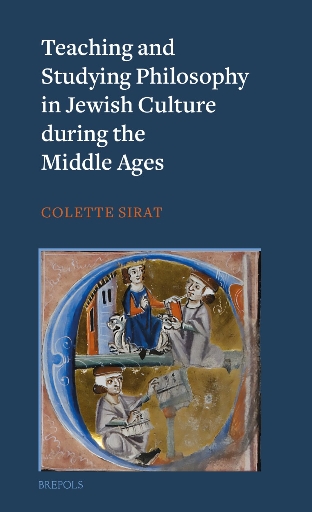
Teaching and Studying Philosophy in Jewish Culture during the Middle Ages
This book offers the first survey of philosophical pedagogy in Jewish culture during the Middle Ages with a focus on Northern France the Provence Italy and Spain. By examining not only the discourse of renowned philosophers such as Maimonides and Gersonides but also oft-neglected manuscript evidence of educational practices and students’ notes the book offers a nuanced understanding of the medieval Jewish intellectual landscape and shows how Jewish educators brought intricate debates on metaphysics ethics and epistemology into the classroom. The book also sheds light on the broader societal and cultural contexts that influenced these philosophical pursuits.
An essential read for anyone interested in the history of philosophy Jewish studies or medieval intellectual culture this book celebrates the enduring legacy of Jewish philosophical thought and its pivotal role in shaping the intellectual currents of the Middle Ages.
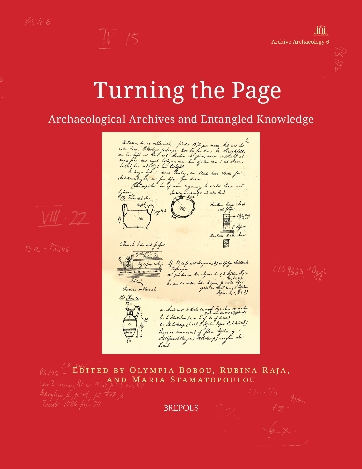
Turning the Page
Archaeological Archives and Entangled Knowledge
Throughout the nineteenth and for much of the twentieth century archives were considered to be containers of knowledge holding material that was deemed to be objective and unbiased. In more recent years however as scholars have begun to engage more with archival material this perception has changed and archives have increasingly been recognized as sites of contention holding curated historical documents — a re-evaluation that in turn has led to a new understanding of the role and significance of both archives and archiving practices as well as to revived interest in their contents.
Taking renewed scholarly interest in archives as its starting point this volume highlights the importance of archival material both as a source of study and as a way of unleashing hitherto ‘lost’ knowledge. The chapters gathered here present previously unpublished material for the first time as well as offer new insights into archival and curatorial practices. Through this approach the authors not only reveal unknown aspects and histories of both past and ongoing excavations but also shed light on the creation processes of an archive an element that is typically lost by the time the material is designated as an archive by those who study it. The result is a volume that can shape best archival practices and approaches for the future.
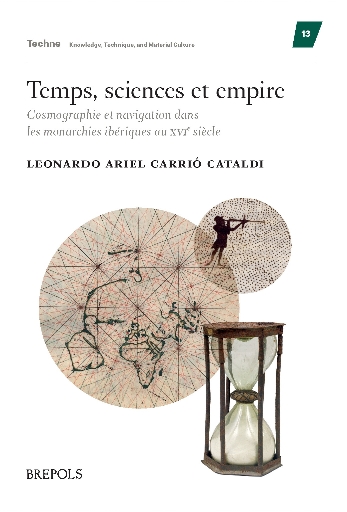
Temps, sciences et empire
Cosmographie et navigation dans les monarchies ibériques au xvi e siècle
Dès la fin du xve siècle les monarchies portugaise et espagnole se lancent au grand large dans un élan de construction impériale qui saisit le globe. Une diversité d’acteurs et de savoirs dont la cosmographie et la navigation sont porteurs de ce processus. Ce dernier transforme à jamais l’image et le concept de la Terre comme espace de l’habitat humain retravaillant les liens entre espace et temps. Pilotes et cosmographes contribuent alors à une reconceptualisation des temporalités et des temps de la Terre. Quels textes ont-ils rédigés et lus quels instruments ont-ils manipulés à cette fin ?
En explorant ces dynamiques à partir d’une pluralité de matériaux le livre embarque le lecteur sur des bateaux naviguant vers les Indes l’invite dans des Casas et des entrepôts portuaires ou dans des universités où résonnent les échos d’une mer transformatrice des connaissances. La création de la chaire de cosmographie à la Casa de la contratación (Séville 1552) et la trajectoire de son premier détenteur Jerónimo de Chaves (1523-1574) servent de « laboratoire » privilégié d’où observer ces problématiques.
Le livre élargit ainsi la manière de comprendre la cosmographie au xvie siècle souvent réduite à son rapport à la cartographie à l’intersection de plusieurs pratiques et savoirs (histoire naturelle théologie astrologie astronomie navigation) et au-delà du clivage « Anciens-Modernes ». En embrassant d’un regard les monarchies ibériques l’ouvrage ancre dans l’Europe méridionale la question plus large de la production des techniques et des sciences à l’époque moderne inscrivant l’espace ibérique dans une première globalisation.
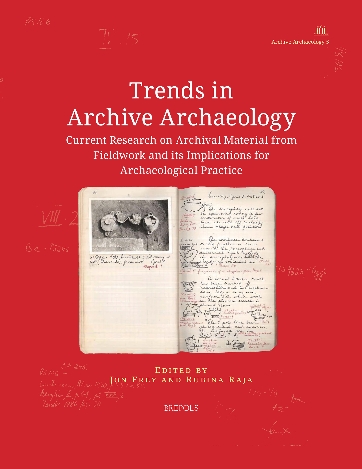
Trends in Archive Archaeology
Current Research on Archival Material from Fieldwork and its Implications for Archaeological Practice
Archive archaeology has in recent years become increasingly acknowledged as an important component of archaeological research. However the vast amounts of empirical data contained in such archives — among them fieldwork diaries working notebooks finds sheets and photographs — together with a sense that the field is often skewed towards ‘one’s own data’ have made it difficult to develop a clear methodological approach that fits all eventualities. The result is that archive archaeology is still not always recognized for what it can bring to the discipline of archaeology as a field of study that focuses on the contexts within which humanity developed.
This volume draws together contributions from scholars who work with archives in a variety of capacities: as fieldwork directors of decades-long excavations; as archivists interested in the history of collections; as specialists focusing on certain object groups or regions; and as researchers broadly interested in what archival material brings to the table in terms of new knowledge about archaeological situations. In showcasing contributions of work in progress the chapters published here bring to the fore knowledge about archives that has long been overlooked and examine how archival archaeology should be shaped in the future so that it can become more firmly integrated within archaeological practice.

Touring Belgium
A Nation’s Patrimony in Print (1830–1920)
Touring Belgium presents a wide range of printed media – from travel guides and collected letters to albums from picture postcards to bibliographies and war-time propaganda – to explore how the print culture developing in the wake of travel and tourism helped to establish a national architectural heritage. Covering material from the period of Belgian independence through the aftermath of World War I eight historians of art and architecture each situate one main publication against a dazzling background of nineteenth and early twentieth-century cultural discourses revolutions in image reproduction and emerging heritage management.
Reproductions in the middle part of the book present the core publications as material objects. These printed artifacts bring into view a nascent heritage that ranges from gothic town halls and dead cities to modern factories and railroad infrastructure; often there is little distinction between what threatens or enshrines the national patrimony. Writers like Schnaase and Hugo museum conservators like Schayes and Kervyn de Lettenhove symbolist painters like Hannotiau innovative lithographers like Simonau and publishers like Géruzet or the Touring-club de Belgique all bring their concerns to bear on what they see as Belgian heritage. Their preoccupations with patrimony help to craft Belgium as a nation with a history at the crossroads of Europe – historic architecture becomes a reality embedded in the territory as much as an imagery fabricated in print.

The Poor Caitif
A Modern English Translation with Introductory Essays and Notes
The Pore Caitif is a popular late-fourteenth-century carefully crafted compilation of biblical catechetical devotional and mystical material drawing on patristic and medieval sources in Middle English consisting of a Prologue and a variable number of sections of differing lengths according to each manuscript assembled probably by a clerical writer for an increasing literate lay readership/audience.The Prologue sets out the reason for writing and its overall structure as an integrated ladder leading the reader to heaven. The text begins with basic catechetical instruction modelled on John Peckham’s Lambeth Constitutions of 1281 before continuing with more affective material meditating for example on the Passion and concludes with a treatise on virginity leading the reader from an active to a contemplative way of life.
The Pore Caitif was written about the time the Lollards were starting to propagate their programme of universal vernacular education. The writer believes in the need to educate his readers in the truths necessary for salvation without necessarily subscribing to Lollard positions.
Although referred to in a number of secondary articles and books and serving as the focus of three doctoral dissertations an edition of the work was not published until 2019. Penkett's publication is the first Modern English translation based on the 2019 publication and is in a readily accessible format for the modern reader accompanied by a series of ground-breaking essays.

Traumas of 1066 in the Literatures of England, Normandy, and Scandinavia
1066 is one of the most well-known dates in English history: but how far do we understand the mental and emotional lives of those who experienced it? In just over a month England was rocked by two separate invasions multiple pitched battles and the deaths of thousands. The repercussions of these traumatic events would echo through the history and literature of northern Europe for centuries to come.
Drawing on studies of trauma and cultural memory this book examines the cultural repercussions of the year 1066 in medieval England Normandy and Scandinavia. It explores how writers in all three regions celebrated their common heritage and mourned the wars that brought them into conflict. Bringing together texts from an array of languages genres and cultural traditions this study examines the strategies medieval authors employed to work through the traumas of 1066 narrating its events and experiences in different forms. It explores the ways in which history and memory interacted through multiple generations of writers and readers and reveals how the field of trauma studies can help us better understand the mental and emotional lives of medieval people.

Travelling Matters across the Mediterranean
Rereading, Reshaping, Reusing Objects (10th–20th centuries)
In the last two decades objects have become increasingly relevant to historical studies as the primary focus of research discussing cross-cultural relations. Objects are produced used modified preserved and destroyed according to historically specific political and cultural settings thus providing researchers with information and insights about their original background. However they can also throw light on a large array of cross-cultural encounters when their mobility is put to the fore. Objects can move by being bought gifted bartered and sold borrowed or stolen collected and dispersed just as they can be modified repaired reshaped repurposed and destroyed in the process.
The Mediterranean as a barrier and as a meeting place for different polities and communities and as the setting of conflicted experiences of cultural political economic and social transformation easily lends itself to this kind of historical analysis. Featuring articles on Byzantine imperial silks and bronze doors from southern Italy eastern luxuries in Istanbul and African bolsas from the Canary Islands Arabic geographies and Hebrew religious texts travelling from shore to shore and from manuscript to the press and the ‘dead’ bodies of holy women and men this volume intends to tackle objects as sources and subjects of the history of cross-cultural encounters in innovative ways: focusing on the ‘second-handedness’ of displaced objects across the Mediterranean the volume intersects different chronologies — from antiquity to the present-day — and varying scales from the individual objects to the much larger one of the histories of their reinterpretation and repurposing.

Through Words, Not Wounds
History and Theology in the Chronicle of Henry of Livonia
The chronicle of Henry of Livonia has long been recognized as the single most important source on the early history of Livonia and Estonia in the late twelfth and early thirteenth centuries.
The chronicler describes in great detail how the people of the region were subjected to intense campaigns of crusading and mission from the 1180s until the 1220s primarily at the hands of ecclesiastical and secular powers of Northern Germany (Saxony) Denmark and Sweden. The chronicler himself a German cleric named Henry (Henricus) was not only active in recording the events that happened around him. He also took a very active role as a missionary and interpreter among the indigenous population as well as joining the armies of crusaders on campaign making this chronicle both a first-hand account and a very intriguing narrative. Papal missionary politics and theological ideas are intermingled in the chronicle with detailed descriptions of military campaigns raids and sieges making the entire chronicle a fascinating read.
The aim of this book is to clarify the ways in which Henry construes the historical events that he describes portraying them as the continuation of a form of sacred history that was initiated by God in biblical times and continued by clerics and crusaders among Henry’s own peers.
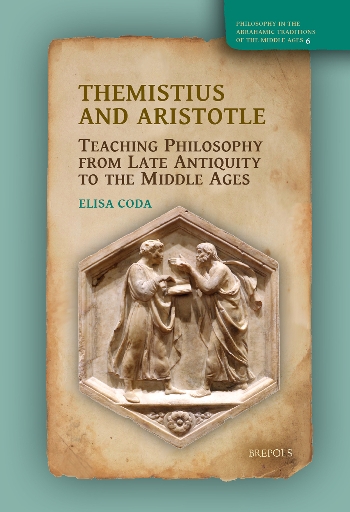
Themistius and Aristotle
Teaching Philosophy from Late Antiquity to the Middle Ages
This is the first book length examining closely Themistius’ philosophical thought and his understanding of Aristotelian philosophy. Themistius well known as an eloquent orator and political personality of Constantinople during the fourth century ad is an influential commentator on works of Aristotle. By assessing both of these aspects of Themistius’ intellectual accomplishments the present work explores and contextualizes his thought in both his paraphrases of the works of Aristotle and in his orations. Themistius’ interpretation of Aristotelian thought deeply influential in both the Arab and Latin worlds and his strategy for teaching Aristotle even outside the professional schools of philosophy are major foci of this study.
In particular this work explicates Themistius’ understanding of the nature and causality of the First Principle of the cosmic order and of the human soul and intellect. It argues that Themistius’ approach reflects not only the systematization imparted by Alexander of Aphrodisias to the doctrines of Aristotle but also the increasing though oftentimes silent influence of Plotinus. This is evident in the consideration of the three philosophical issues of God cosmos and soul analysed in Themistius which reveal the preponderance of Plotinus’ philosophy reflected in the Themistian orations. Concomitantly it explores how Themistius’ teachings proved decisive in the medieval understanding of Aristotle both among Arabic and Hebrew readers as well as in the universities of Latin Europe. As such this study challenges our understanding of philosophy in fourth-century Constantinople.
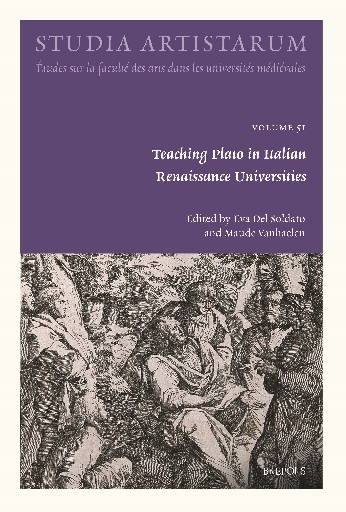
Teaching Plato in Italian Renaissance Universities
During the Renaissance the Arts curriculum in universities was based almost exclusively on the teaching of Aristotle. With the revival of Plato however professors of philosophy started to deviate from the official syllabus and teach Plato’s dialogues. This collection of essays offers the first comprehensive overview of Platonic teaching in Italian Renaissance universities from the establishment of a Platonic professorship at the university of Florence-Pisa in the late 15th century to the introduction of Platonic teaching in the schools and universities of Bologna Padua Venice Pavia and Milan in the 16th and 17th centuries. The essays draw from new evidence found in manuscripts and archival material to explore how university professors adapted the format of Plato’s dialogues to suit their audience and defended the idea that Plato could be accommodated to university teaching. They provide significant and fundamental insight into how Platonism spread during the 16th and 17th centuries and how a new interpretation of Plato emerged distinct from the Neoplatonic tradition revived by Marsilio Ficino.
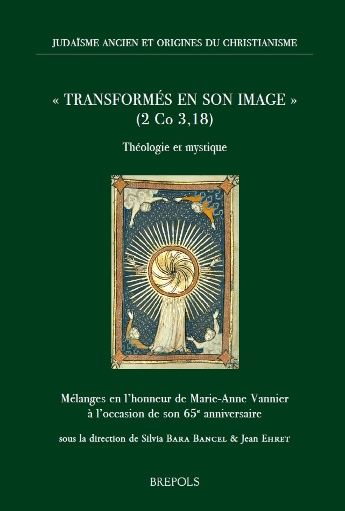
« Transformés en son image » (2 Co 3,18) – Théologie et mystique
Mélanges en l’honneur de Marie-Anne Vannier à l’occasion de son 65e anniversaire
Cet ouvrage qui se réalise en l’honneur de la professeure Marie-Anne Vannier dans une perspective interdisciplinaire réunit les experts sur les grands thèmes qu’elle a parcourus : les Pères de l’Église les mystiques rhénans et Nicolas de Cues les études juives et orthodoxes l’histoire de la mystique et la réflexion systématique sur la relation entre théologie et mystique en centrant les propos autour de la conformation au Christ. L’ouvrage prend en compte des recherches récentes et se déploie comme une étude originale de théologie mystique structuré comme un parcours historique qui s’étend des origines judéo-chrétiennes à nos jours et se termine par des réflexions systématiques sur la relation entre théologie et mystique.
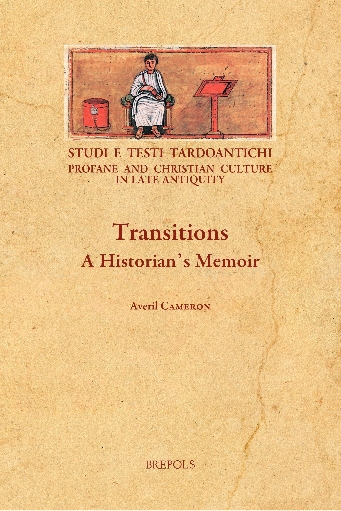
Transitions
A Historian’s Memoir
The transitions of the title are those in the life and intellectual development of one of the leading historians of late antiquity and Byzantium. Averil Cameron recounts her working-class origins in North Staffordshire and how she came to read Classics at Oxford and start her research at Glasgow University before moving to London and teaching at King’s College London. Later she was the head of Keble College Oxford at a time of change in the University and its colleges. She played a leading role in projects and organisations even as the flow of books and articles continued in an array of publications that have been fundamental in shaping the disciplines of late antiquity and Byzantine studies in the twentieth and twenty-first centuries.
Théodulf d’Orléans (vers 760-821)
Histoire et mémoire d’un évêque carolingien
Parmi les lettrés entrés au service de Charlemagne à la fin du VIIIe siècle Théodulf est une figure à la fois représentative et singulière. Par ses productions et ses fonctions de missus d’évêque d’abbé il contribue à l’élaboration et à la mise en œuvre des réformes et fait partie des proches du souverain. Sa déposition en 818 jette cependant une ombre sur sa carrière et sur ce qu’il est possible d’en reconstituer. À partir de l’étude de son œuvre et des variations de son image dans les sources du premier Moyen Âge y compris manuscrites cet ouvrage examine les différentes facettes de son action et de son parcours comme lettré et comme prélat et met en lumière le jeu d’échelles qui caractérise les réformes carolingiennes. Grâce à l’analyse de son environnement relationnel la participation de Théodulf à la révolte de Bernard d’Italie et sa disgrâce font l’objet de nouvelles hypothèses.
Translation Automatisms in the Vernacular Texts of the Middle Ages and Early Modern Period
The volume deals with the issue of translation automatisms in early vernacular texts predating 1650. It introduces the novel concept of ‘translation clusters’ first defined in machine translation theory but equally considering a wider array of situations that involve ‘translation units’ ‘language automatisms’ ‘culturemes’ and ‘formulaic borrowings’ in vernacular texts. Contrary to contemporary languages where translation units clusters and automatisms appear frequently due to the influence of standard language varieties or dialects the vernacular idioms of the Middle Ages and Early Modern period are often pluricentric. Consequently automatisms are limited to specific cases where diachronic diatopic diastratic and diaphasic variants align similarly in two otherwise different translations. This is a crucial topic for philology as it can explain accidents that ecdotic methods tend to mistake for variant readings of a single ‘redactio’. The volume aims to determine the organic interplay between three primary situations in which common coincidences between translations or texts occur. Firstly the volume explores the shared elements resulting from the transfer of textual units between multiple translations or adaptations (quotations corrections formulas). Secondly chapters study the shared elements arising from the existence of a common source text (translation clusters based on translation units); and lastly the volume questions the fixed inherent and unchangeable aspects of the target language (language automatisms often coinciding with translation units). The chapters of this volume focus on numerous vernacular languages and a multitude of case studies with a particular emphasis on biblical translation—a cornerstone of contemporary translation studies. The chapter format encourages diverse perspectives to push the boundaries of philology translation studies and “vernacular theologies”.

True Warriors? Negotiating Dissent in the Intellectual Debate (c. 1100–1700)
Dissent polemics and rivalry have always been at the centre of intellectual development. The scholarly Streitkultur was given a fresh impetus by the newly founded universities in the High Middle Ages and later turned into a quintessential part of early modern intellectual life with the emergence of the Protestant Reformation creating a new momentum. It was not only mirrored in various well-known intellectual disputations and controversies but also embodied in numerous literary genres and non-literary modes of expression as well as discursive or political strategies. Moreover the harsh debates notwithstanding consensus was also actively searched for both within particular disciplines and within society as a whole.
This volume collects thirteen contributions offering a very rich variety of topics with regard to the negotiation of disagreements from the twelfth till the eighteenth centuries. They reflect inter alia upon the rules and conventions of the intellectual debate upon the media used to negotiate dissent as well as upon the role of formal institutions created to judge and decide in cases of dissent. The contributions are offered by scholars from fields as diverse as history of literature political history history of philosophy history of Church and theology and legal history.
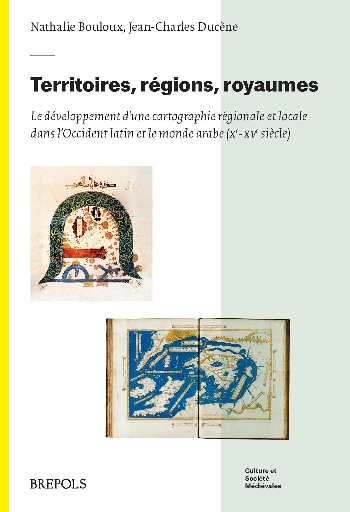
Territoires, régions, royaumes
Le développement d’une cartographie régionale et locale dans l’Occident latin et le monde arabe (x e-xv e siècle)
Pendant longtemps les travaux sur la cartographie ont surtout porté sur les mappemondes aussi bien dans le monde latin que dans le monde arabo-musulman. Les représentations cartographiques des espaces locaux et régionaux ont suscité un intérêt plus modéré même si les études sur la cartographie à grande ou à moyenne échelle des xii e-xv e siècles connaissent depuis quelques années un renouveau notable tant dans le domaine latin que dans le domaine arabe.
La publication des actes du colloque international qui s'est tenu à Tours en juin 2018 rassemble quinze études consacrées à la représentation cartographique du territoire et plus généralement à la cartographie des espaces régionaux et locaux qui émerge dès le x e siècle dans le monde arabo-musulman et à partir du xii e siècle dans l’Occident latin pour connaître un essor remarquable dans les deux derniers siècles du Moyen Âge. Le livre réunit des articles de synthèse et des études de cas abordant les questions complexes de l'émergence de cette cartographie de ses formes et de ses usages dans le monde arabo-musulman et dans l'Occident latin.

The Tables of 1322 by John of Lignères
An Edition with Commentary
Medieval astronomers used tables to solve most of the problems they faced. These tables were generally assembled in sets which constituted genuine tool-boxes aimed at facilitating the task of practitioners of astronomy. In the early fourteenth century the set of tables compiled by the astronomers at the service of King Alfonso X of Castile and León (d. 1284) reached Paris where several scholars linked to the university recast them and generated new tables. John of Lignères one of the earliest Alfonsine astronomers assembled his own set of astronomical tables mainly building on the work of previous Muslim and Jewish astronomers in the Iberian Peninsula especially in Toledo. Two major sets had been compiled in this town: one in Arabic the Toledan Tables during the second half of the eleventh century and the Castilian Alfonsine Tables under the patronage of King Alfonso.
This monograph provides for the first time an edition of the Tables of 1322 by John of Lignères. It is the earliest major set of astronomical tables to be compiled in Latin astronomy. It was widely distributed and is found in about fifty manuscripts. A great number of the tables were borrowed directly from the work of the Toledan astronomers while others were adapted to the meridian of Paris and many were later transferred to the standard version of the Parisian Alfonsine Tables. Therefore John of Lignères’ set can be considered as an intermediary work between the Toledan Tables and the Parisian Alfonsine Tables.

Trans-mission. Création et hybridation dans le domaine d’oc
Nouvelles perspectives de la recherche en domaine occitan
Ce volume est le fruit des échanges et de la collaboration entre de jeunes chercheurs de tous horizons qui consacrent leurs études à la langue la littérature et la culture occitanes dans une optique diachronique et multidisciplinaire. Le récueil comprend 22 travaux conçus dans le cadre de projets étudiants de master de thèses doctorales en cours ou récemment achevées ainsi que d’études post-doctorales. Les contributions sont menées avec une approche scientifique rigoureuse et innovatrice et une méthode visant à l’interdisciplinarité. Elles portent sur des sujets nombreux et fort variés : des analyses géolinguistiques et sociolinguistiques réalisées dans une perspective diachronique ou synchronique sur les parlers occitans et sur des variétés intimement liés à ceux-ci comme le catalano-valencien et les dialectes du nord-ouest de l’Italie ; les politiques et la sauvegarde de la langue occitane ; des relectures critiques de textes médiévaux ou modernes ; des études sur l’évolution de la culture occitane en France et en Europe. Afin d’organiser les travaux dans cet ouvrage collectif ils ont été répartis en trois blocs en fonction de la période concernée : Moyen Âge ; Réception du Moyen Âge et études savantes ; Époques moderne et contemporaine. Le but principal du recueil est d’offrir une vue d’ensemble sur les travaux les plus récents qui s’inscrivent ou touchent au domaine occitan et d’attirer l’attention sur les nouvelles tendances d’une recherce qui a enfin franchi les confins chronologiques et thématiques traditionnellement imposés par les sujets et les secteurs disciplinaires. En même temps la publication veut mettre l’accent sur la vitalité la richesse et la fertilité des études en langue d’oc qui continuent à se développer et à se diffuser au niveau international malgré les difficultés du monde de la recherche à l’heure actuelle.

Trilingual Learning
The Study of Greek and Hebrew in a Latin World (1000-1700)
In 1517 the Brabant city of Louvain witnessed the foundation of the Collegium Trilingue (Three Language College). Funded by means of the legacy of the humanist and diplomat Jerome of Busleyden (d. 1517) and steered by guiding spirit Erasmus of Rotterdam this institute offered courses in the three so-called sacred languages Hebrew Greek and Latin which students could attend for free. However this kind of initiative was not unique to Louvain in the early 16th century. In a time span of barely twenty years Greek and Hebrew were also offered in Alcalá de Henares (near Madrid) Wittenberg and Paris among other places. It would not take long before these ‘sacred’ languages were also on the educational agenda at universities throughout the whole of Europe.
The present volume examines the general context in which such polyglot institutes emerged and thrived as well as the learning and teaching practices observed in these institutes and universities. Devoting special attention to the study of the continuity or rather the discontinuity between the 16th-century establishment of language chairs and the late medieval interest in these languages it brings together fifteen selected papers exploring various aspects of these multilingual undertakings focusing on their pedagogical and scholarly dimensions. Most of the contributions were presented at the 2017 LECTIO conference The Impact of Learning Greek Hebrew and ‘Oriental’ Languages on Scholarship Science and Society in the Middle Ages and the Renaissance which was organized at the occasion of the 500th anniversary of the foundation of the Louvain Collegium Trilingue.