


Browse Books
Spectacle benefaction and the politics of appreciation
Case studies from Italy, Gallia Narbonensis and Africa Proconsularis
In the remotest corners of the Roman Empire large crowds were as beguiled by spectacles as their Roman counterparts. Provincial spectacles however did not share the technical wonders of flying machines elephant dressage and synchronised swimming seen at imperial extravaganzas. Is it this lack of the sensational that accounts for the relative paucity of scholarly attention paid to regional spectacles and in particular their sponsors?
When spectacles are viewed purely as entertainment the messy realities of institutionalized social economic and political power that regulated them are obscured. A clearer understanding of the spectacle can therefore be achieved by contextualizing it in the big picture of regional and provincial life against the backdrop of Roman power and control. The spectacle itself was highly political in its aims and intent. Access to sponsorship of a spectacle similarly relied on hierarchies of political power and privilege and consequently required strategic negotiation of candidacy promises expenditure and recognition. Rivalry competition and emulation was endemic.
This epigraphic analysis focusing on the western Roman Empire (Italy Gaul and North Africa) during the Imperial period identifies the milieux of provincial sponsors their strategies and quest for public honours.
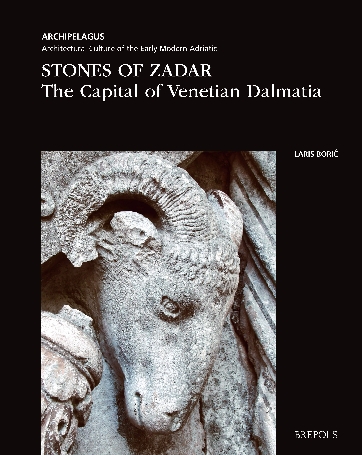
Stones of Zadar
The Capital of Venetian Dalmatia
The book investigates the transformation of the architectural and visual language in Zadar eastern Adriatic town at the dawn of the early modern era when the mighty mediaeval commune was being transformed by the emerging governmental structures of the Republic of Venice. These events coincided with the Ottoman Empire's takeover of the hinterland of Dalmatian cities transforming Zadar into a city on the brink of two worlds.
A highly autonomous mediaeval commune was a lively trans-Adriatic artistic centre a network of builders painters and sculptors from Dalmatia Venice Marche and Lombardy so with the early adoption of humanist concepts by the local elite this practice continued. However the transformations the governmental structure and economic policies steadily limited its community autonomy and commercial sources. The crisis worsened in the 16th century when the local elites lost a large portion of their revenue from the fertile hinterland captured by the Ottoman Empire.
This launched an ongoing militarisation of social structures and fortifying the town. These events were reflected in the fields of architecture and art. The process of adopting a new architectural and artistic language began in the second half of the 15th century as demonstrated by motifs in architectural decoration and sculpture with impulses from important Dalmatian sculptural and stonemasons’ circles as well as Venetian models from the circles of Pietro Lombardo and Mauro Codussi. When the new classical language of architecture began spreading in the middle of the 16th century it expressed mostly in the renovation of administrative structures with occasional departures from the stylistic canons of artistic centres.
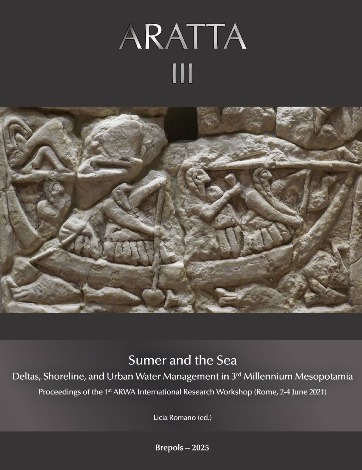
Sumer and the Sea
Deltas, Shoreline, and Urban Water Management in 3rd Millennium Mesopotamia. Proceedings of the 1st ARWA International Research Workshop (Rome, 2–4 June 2021)
From the Chalcolithic onwards the culture and society of Sumer flourished along the banks of the Tigris and Euphrates Rivers with communities living close to the ancient shoreline in an environment that was closely linked to the exploitation of fluvial systems the sea and the unique marshlands of the area. This volume gathers together research first presented as part of a workshop entitled Sumer and the Sea: Deltas Shoreline and Urban Water Management in 3rd Millennium Mesopotamia to explore the interaction between Sumerians and their water-dominated environment. The chapters gathered here offer updates on methodologies and the most recent research from the field to provide new understanding and fresh insights into how the Sumerians adapted to the world in which they lived.
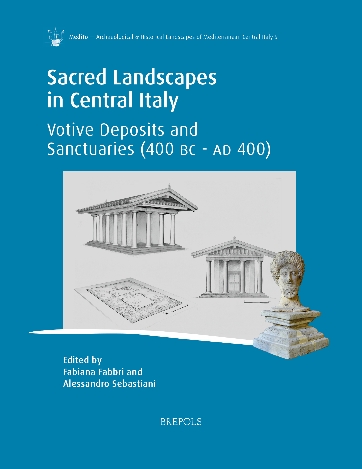
Sacred Landscapes in Central Italy
Votive Deposits and Sanctuaries (400 bc – ad 400)
Veneration of the supernatural was in ancient times interwoven into the fabric of the surrounding landscape. Caves rivers lakes mountains and water springs all formed conduits for a relationship between divinity and nature and sanctuaries were established as dedicated sites of worship. Taking Central Italy as its main focus this volume unravels layers of history and archaeology in order to shed light on the religious practices sacred sites and profound connections that have long existed between landscapes and religious places in this region. Through a synthesis of archaeological evidence and scholarly analysis the chapters gathered here unveil the significance of temples sanctuaries ex-votos religious productions and ritual spaces and provide a comprehensive understanding of how Etruscan and Roman societies engaged with their sacred surroundings. The result is an important reassessment of the religious dimensions that helped to shape the antique landscape of Central Italy.
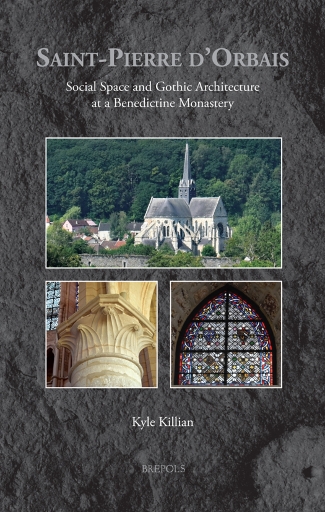
Saint-Pierre d’Orbais
Social Space and Gothic Architecture at a Benedictine Monastery
The fragmentary remains of the Benedictine monastery of Saint-Pierre d'Orbais in northwest Champagne preserves a particular iteration of Gothic style and technological achievement as well as the built environment of a community deeply embedded in the world around them. Through their architecture successive generations of monks of Orbais whose institutional life stretched from the end of the seventh century to end of the eighteenth century were constantly seeking to clarify their position in the changing physical and social landscapes they inhabited. Although connected by a shared site the architectural evidence from Orbais preserves remnants from several episodes of use and reuse. The site is treated thematically starting with the boundaries that define the site then the resources that shaped monastic life in this particular location followed by the monastic landscapes that shaped the community as an institution. These categories reflect both the nature of our evidence for the contexts of building construction and the types of landscapes that were most active for the monastic community at Orbais over the long life of the site. The final chapter resituates the architectural history of the monastic church in light of these interrelated landscapes contextualizing existing scholarship that treats it as a specifically Gothic monument and providing lines of connection to medieval built environments more broadly.
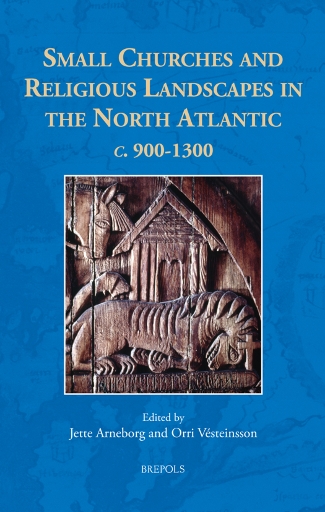
Small Churches and Religious Landscapes in the North Atlantic c. 900–1300
In recent years archaeologists working at Norse sites across the North Atlantic have excavated a number of very small churches with cemeteries often associated with individual farms. Such sites seem to be a characteristic feature of early ecclesiastical establishments in Norse settlements around the North Atlantic and they stand in marked contrast to church sites elsewhere in Europe. But what was the reason behind this phenomenon?
From Greenland to Denmark and from Ireland to the Hebrides Iceland and Norway this volume presents a much-needed overview of small church studies from around the North Atlantic. The chapters gathered here discuss the different types of evidence for small churches and early ecclesiastical landscapes review existing debates and develop a synthesis that places the small churches in a broader context. Ultimately despite the varied types of data at play the contributions to this volume combine to offer a more coherent picture of the small church phenomenon pointing to a church that was able to answer the needs of a newly converted population despite the lack of an established infrastructure and throwing new light on how people lived and worshipped in an environment of dispersed settlements.
Sur la route du devoir
Le καθῆκον dans la pensée des stoïciens romains
Qu’y a-t-il à l’origine du devoir une idée d’une importance capitale dans l’histoire intellectuelle de l’Occident ? Parmi ses premières incarnations il faut reconnaître le καθῆκον stoïcien « ce qui est convenable » latinisé en officium « devoir ». Cette notion a été développée par les stoïciens hellénistiques mais les témoignages les plus amples à ce sujet proviennent des représentants de l’école ayant vécu à l’époque de l’Empire romain à savoir Sénèque Musonius Rufus Épictète Hiéroclès et Marc Aurèle. Dans ce livre nous essayons de reconstruire une histoire aussi complète que possible du καθῆκον à travers une analyse exhaustive des sources disponibles.

The Sanctuary of Parthenos at Ancient Neapolis (Kavala), Volume i
Incised and Painted Ceramic Inscriptions from the Sanctuary and in Aegean Thrace
The ancient city of Neapolis (modern Kavala Greece) was founded by Thasos in the seventh century bce at a strategic location where the Thracian hinterlands meet the Aegean Sea. The patron deity of this North Aegean polis was Parthenos (the Maiden) known to us through epigraphic and archaeological evidence. Her sanctuary came to light in the twentieth century during rescue excavations and yielded numerous finds most of which date from the Archaic period.
This monograph provides a discussion of the history of excavations at this sanctuary as well as a contextual examination of the material leading to a new interpretation of Parthenos’ identity. Among the wealth of finds from the site the corpus of incised and painted ceramic inscriptions stands out as it offers a unique glimpse into the history of the cosmopolitan temenos and the dedicatory practices and rituals that took place there. The inscribed vessels carry dedications numerical and other graffiti and dipinti as well as the initials of the goddess which designate them as sacred equipment. When considered in the context of the ceramic inscriptions from sanctuaries across Aegean Thrace they further underscore the important role of Neapolis and the Sanctuary of Parthenos in the commercial networks and cultural dynamics of the Aegean both in the early stages of Greek colonization and in the centuries that followed.
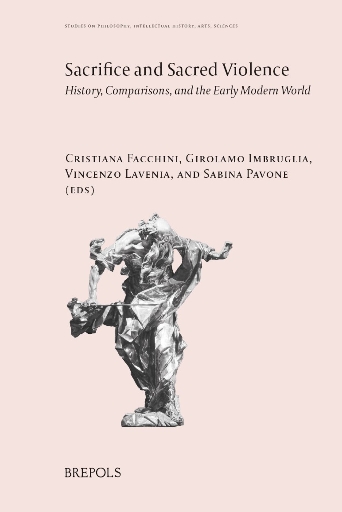
Sacrifice and Sacred Violence
History, Comparisons, and the Early Modern World
Sacrifice has long been a central topic in scholarly debate. Since the publication of Marcel Mauss and Henri Hubert's groundbreaking work in 1898-99 the concept has gained prominence as a distinct theme in comparative religion anthropology and the history of religions. Throughout the twentieth century many distinguished scholars and intellectuals examined the meaning and function of sacrifice to better understand various aspects of human cognition and social interactions. While some explored its connections to violence—particularly forms of self-inflicted violence such as martyrdom—others sought to disentangle the concept from violent practices altogether.
Building on this rich tradition this collection of articles gathers contributions from leading scholars who explore the theme of sacrifice examining its diverse meanings and roles across various religious traditions. While the book places particular emphasis on the history of Christianity and the early modern period it also provides valuable insights into a broad spectrum of religious traditions including Judaism Islam Greek and ancient religions as well as Japanese religions. Its geographical scope spans regions such as India China Africa and Brazil offering a truly global perspective.By mapping the varied interpretations and transformations of sacrifice in the early modern period this book seeks to illuminate its evolving significance. It also strives to offer a comparative framework that highlights the concept's complexity and adaptability across cultural and historical contexts.
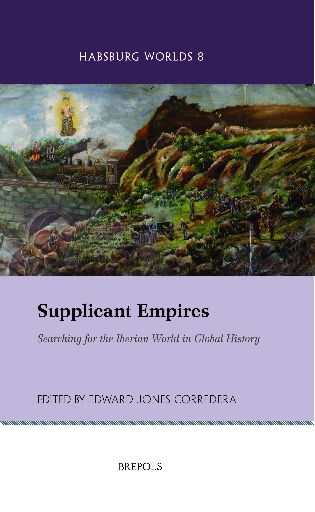
Supplicant Empires
Searching for the Iberian World in Global History
This volume is a collection of reflections from leading senior and junior historians regarding the merits of historical comparativism in the field of Iberian history. The first purpose of the book is to encourage a dialogue between scholars of the Iberian Empires and to foster a reconsider how they see the broader history of the early modern world in light of recent historiography. The second aim of the book is to prompt scholars of other regions in global history to consider the recent literature on the Iberian Empires anew to move beyond the tropes of the Black Legend and narrative of growth splendour and decline and to study those imbrications had connected disparate parts of the world and which the postcolonial turn has unearthed. In a series of articles and interviews contributors were encouraged to consider the role of linguistic divides in the growth of historiographical strands and to speak plainly about the possible siloes that have emerged in the field. Contributors discuss the Atlantic turn corporate cultures the Catholic adoption of Protestant ideals gender and race all while drawing on insights from scholars who work on early modern nuns the material history of sugar and coffee or those who are exploring the uses of the concept of barbarity in borderlands.
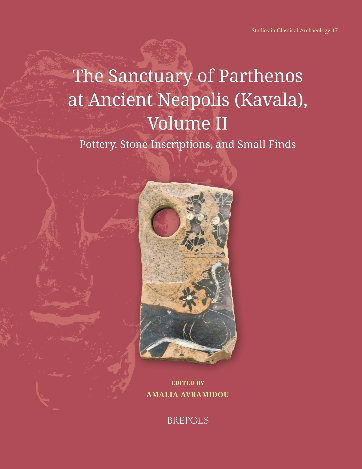
The Sanctuary of Parthenos at Ancient Neapolis (Kavala), Volume ii
Pottery, Stone Inscriptions, and Small Finds
The ancient city of Neapolis (modern Kavala Greece) was founded by Thasos in the seventh century BCE at a strategic location where the Thracian hinterlands meet the Aegean Sea. The patron deity of this North Aegean polis was Parthenos (the Maiden) a goddess often associated with Artemis and known to us through epigraphic and archaeological evidence. Her sanctuary came to light in the twentieth century during rescue excavations and yielded numerous finds most of which date from the Archaic period.
This edited volume draws together the material evidence from the Sanctuary of Parthenos with a particular focus on the ceramic wares stone inscriptions and small finds from the site. Published as a counterpart to an earlier publication in this series Amalia Avramidou’s monograph The Sanctuary of Parthenos at Ancient Neapolis (Kavala): Incised and Painted Ceramic Inscriptions from the Sanctuary and in Aegean Thrace the essays gathered here nonetheless form a stand-alone volume that sheds light on both the importance of the site as a place of cult and more broadly the role that it played within the commercial networks and cultural dynamics of the Aegean.
Sacred Places
Devotional Practices and Space Organization in Early Medieval Monasteries (5th-10th centuries)
The body or relics of a saint could attract divine protection on the community and the place where they were kept. If in some cases the monasteries were structures of assistance to sanctuaries of certain notoriety starting from the 7th century they increasingly played the role of protagonists autonomously managing the devotional activities derived from the acquisition or translation of relics. The need to preserve the isolation of the 'clausura' and to manage at the same time an increasing flow of pilgrims led these monasteries to build new spaces for prayer communion and assistance.
This book includes the Proceedings of the International Conference held in Naples (Italy) on November 28-29 2022. The Conference - organized as part of a Marie-Curie research project by the Fondazione San Bonaventura with the contribution of the Italian Ministry of Culture - brought together historians archaeologists and art historians to discuss the theme of spatial articulation of monasteries chosen as places of pilgrimage during the Early Middle Ages in Western Europe. From this interdisciplinary discussion exciting insights have emerged on aspects of particular relevance such as the organization of the funerary space and interaction between monks and laypeople the elements of balance or clash between 'clausura' and hospitality and the comparison between male and female monasteries as devotional centers.
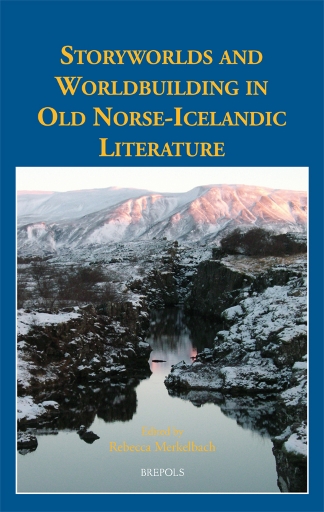
Storyworlds and Worldbuilding in Old Norse‑Icelandic Literature
The storyworlds of Old Norse-Icelandic literature are multifaceted and variable ranging from the worlds of heroic poetry and popular romance to the recognizable narrative universe built by the Sagas of Icelanders. Despite this they have rarely been explored and narratological theories of storyworlds or fantasy scholarship have had little impact on the field. Yet given that every story creates its own storyworld it can be assumed that Old Norse-Icelandic literary texts too build worlds — and these worlds are diverse and complex as shown by the contributors in this volume: they constantly engage with one another exploring shaping and expanding while also entering into a dialogue with the primary world from which they draw.
This volume brings together scholars from different areas of Old Norse-Icelandic studies to explore questions related to not only the storyworlds of medieval Icelandic literature but also those of legal and learned texts and to the way that they are built. Together they inquire into the nature of these worlds into their preservation and transmission in manuscripts their transmediality transnarrativity and reception. In doing so these inquiries showcase the breadth of new perspectives on medieval Icelandic literature made possible by the application of narratological theory in its study.
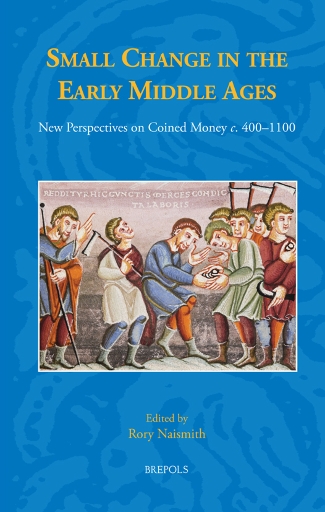
Small Change in the Early Middle Ages
New Perspectives on Coined Money, c. 400–1100
Coined money is a familiar part of day-to-day life and has been for millennia in many societies. In the early Middle Ages however it worked rather differently. People across the former Roman Empire and beyond continued to think in terms of monetary units of account but the supply and use of actual coin became highly uneven. Access to low-value coinage small change was particularly attenuated in western Europe where gold and silver pieces predominated. This volume explores how people and societies dealt with changes to monetary systems. It looks at the experiences of different groups in society from those who struggled with regimes that used only high value coins to the elites who tended to benefit from those same conditions. The ten contributions to this volume consider diverse geographical areas from Byzantine Egypt to Italy Francia and Britain identifying parallels and divergences among them. The chapters draw on cutting-edge archaeological and historical research to give a panorama of the latest thinking on early medieval money and coinage.
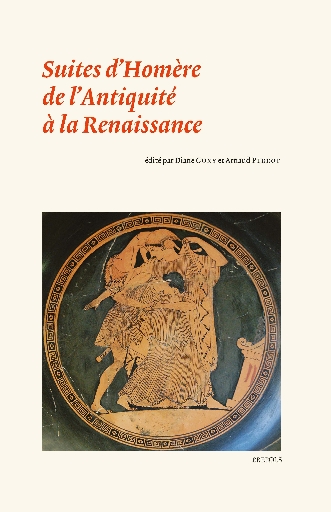
Suites d’Homère de l’Antiquité à la Renaissance
This book is the result of an international conference organized by the University of Tours in May 2021. It sets out to explore the notion of sequel in literature by examining the Homeric poems. While Gérard Genette evoked Homer in a considerable number of pages of his essay Palimpsestes he however paid particular attention to forms of continuity from the front from the back and from the sides afterwards and sideways which seem to make Homeric material the first victim of the cyclical additions that appear to constitute the ineluctable future of the great epics. In recent decades however these positions have been strongly nuanced and the time was ripe therefore for diachronic reflection on the validity of the notion of the ‘Homeric sequel’ by testing the meaning it has in various geographical and cultural contexts from Antiquity to the Middle Ages and the Renaissance.
The authors of this volume contribute to the discussion of the literary concept of ‘continuation’ and offer a wide panorama of the poet's fruitful reception over time; they do so without neglecting the phenomena of transformation made possible by the survival of a mythology of Homeric origin which exists despite the absence of a direct reading of the Greek texts.
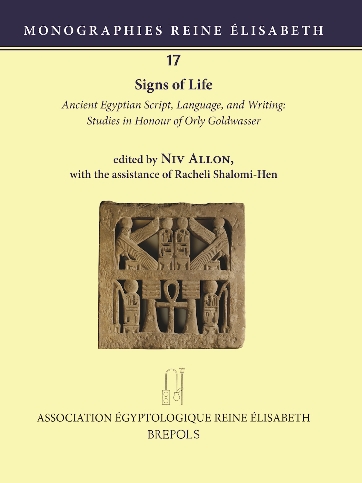
Signs of Life
Ancient Egyptian Script, Language, and Writing Studies in Honour of Orly Goldwasser
In recent decades the Ancient Egyptian realm of pictorial script and meta-textuality has been the focus of many research projects. Foremost among them is the innovative and ground-breaking sub-field that was helmed by Prof. Orly Goldwasser exploring the study of classifiers and the ways in which Ancient Egyptian Hieroglyphs mirror the Ancient Egyptian mind. Taking Goldwasser’s pioneering work as its inspiration this volume draws together contributions from some of the leading voices in Egyptology and neighbouring fields to illuminate different aspects of the use of Ancient Egyptian Hieroglyphs their semiotic value and of the language that they record as well as looking more broadly at the use of signs pictorial systems script learning processes and classifications. Together these chapters offer a unique and multi-layered picture of the ways in which Ancient Egyptian language and Hieroglyphs emerged within Ancient Egyptian culture and the means by which they interacted with other script systems and languages.

The Sisterbook of Master Geert’s House, Deventer
The Lives and Spirituality of the Sisters, c. 1390‑c. 1460
The Sisterbook of Master Geert’s House contains the lives of sixty-four Sisters of the Common Life who died between 1398 and 1456. Founded as an alms-house for destitute women in 1374 by the end of the fourteenth century Master Geert’s House had become a home for women desiring to live a life of humility and penitence as well as in community of goods without vows. The Sisterbook was likely written sometime between 1460 and 1470 at a time when the religious fervour that had characterized the earlier Sisters had begun to wane. It was to incite the readers and hearers of the Sisterbook which would have been read in the refectory during mealtimes to imitate the earlier Sisters who are portrayed as outstanding examples of godliness and Sisters of the Common Life. The opening sentence of the Sisterbook succinctly sums up the author’s reason for writing it: ‘Here begin some edifying points about our earlier Sisters whose lives it behoves us to have before our eyes at all times for in their ways they were truly like a candle on a candlestick’ and who by implication could still illumine the way for her own generation of Sisters. The first foundation of Sisters of the Common Life Master Geert’s House became the ‘mother’ house of numerous other houses in the Low Countries and Germany directly as well as indirectly and served as an inspiration for others.
This book provides a study of the Sisterbook and its significance in the Devotio Moderna and late medieval female religiosity while the accompanying translation introduces this important source to an English audience.

Saints’ Lives for Medieval English Nuns, II
An Edition of the ‘Lyves and Dethes’ in Cambridge University Library, MS Additional 2604
Cambridge University Library MS Additional 2604 contains a unique collection of prose saints’ lives evenly divided into eleven universal and eleven native saints (predominantly culted at Ely). Clearly intended for the devotional life of nuns presumably in an East Anglian convent the volume comprises nineteen female figures all of whom are virgins martyrs or nuns and three male saints (two apostles and a hermit). These late Middle English lives are translated from a variety of Latin sources and analogues including material by Jacobus de Voragine John of Tynemouth and others. The collection demonstrates an interest in showcasing native saints alongside their universal sisters. Luminaries of the English Church such as Æthelthryth of Ely and her sister Seaxburh are found in the company of notable virgin martyrs like Agatha and Cecilia. Famous saints like John the Evangelist and Hild of Whitby feature alongside others such as Columba of Sens and Eorcengota. Fully analysed and contextualised in its companion volume Saints’ Lives for Medieval English Nuns I: A Study of the ‘Lyves and Dethes’ in Cambridge University Library MS Additional 2604 these texts are edited here for the first time. Alongside the edition of the twenty-two saints’ lives and full textual apparatus there are extensive overviews and commentaries providing details of the sources and analogues as well as explanatory historical and literary notes. The edition concludes with three appendices a detailed select glossary and a bibliography of works cited.
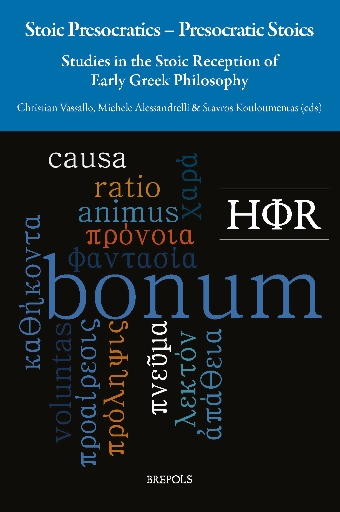
Stoic Presocratics – Presocratic Stoics
Studies in the Stoic Reception of Early Greek Philosophy
The volume provides for the first time in scholarship a comprehensive and in-depth analysis of the relationship between Stoicism and early Greek philosophy from Orphism to the Monists and the Pluralists. Going beyond the common assumption that the Stoics refer exclusively to Heraclitus it is shown that almost the entire Presocratic tradition (sometimes mediated decisively by Plato and Aristotle) has made a fundamental contribution to the construction of Stoic thought especially in the field of physics (i.e. cosmology ontology and theology).
The Septuagint of Ruth
Translation Technique, Textual History, and Theological Issues
For many years the Septuagint of Ruth (LXX-Ruth) has been considered a literal translation. Several authors have emphasized the similarities between the Greek text and the Masoretic Text while others have also noted the divergences. In the wake of this second stream this book seeks to answer the crucial question: How can we nuance the definition of “literalism” for LXX-Ruth and which innovations and specifics can be detected in this text? A fresh analysis of the Greek rendering of the Hebrew proper names toponyms hapax legomena as well as legal aspects makes it possible to develop new perspectives on the translation technique of LXX-Ruth and to highlight several characteristics of this text. This volume moreover extends the discussion by including the analysis of the theological accents of LXX-Ruth and an up-to-date presentation of its textual history including the fragments of the book in the Dead Sea Scrolls. Overall this volume enhances our understanding of the linguistic and literary background of the LXX as well as its specific features.