


Browse Books
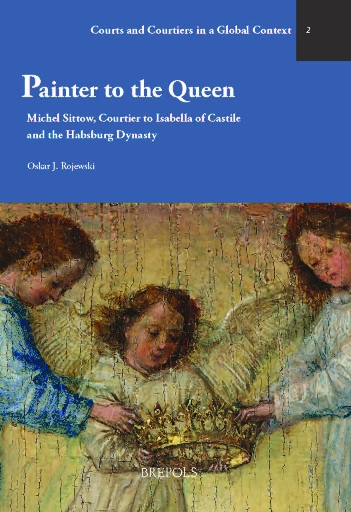
Painter to the Queen
Michel Sittow, Courtier to Isabella of Castile and the Habsburg Dynasty
Michel Sittow was born in Reval c. 1469 today the Estonian capital city of Tallinn. Possibly trained in the workshop of Hans Memling in Bruges he subsequently moved to work in the Iberian Peninsula where he first held the position of court painter. This monograph undertakes research on this phase of his career. In the Kingdom of Castille Michel Sittow was appointed painter to Queen Isabella and became a member of her household with an impressive annual salary. Thanks to the analysis of archival documents and formal and iconographical studies on Sittow’s paintings it is possible to explain the court painter’s life circumstances and describe the benefits he enjoyed and the difficulties he faced. The Castilian period was crucial for Michel Sittow’s career since over the course of his professional life he also resided at the courts of Philip the Fair Margaret of Austria Christian II of Denmark and Charles V all relatives of his first royal patron. While serving European monarchs he transferred Memling’s techniques and visual language beyond the Low Countries and developed his artistic practice and style. The analysis of the various contexts Michel Sittow worked in sheds light on his oeuvre and his possible privileged status as a courtier which provided opportunities to establish a flourishing and ambitious career in northern and southern Europe.
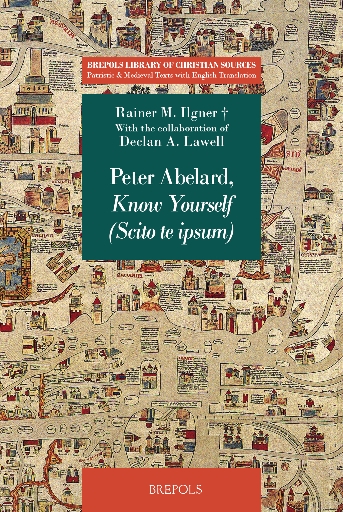
Peter Abelard, Know Yourself (Scito te ipsum)
Peter Abelard (1079-1142) famous for his unhappy love story with Heloise which he wrote down in his autobiographical work Historia calamitatum was among the most respected scholars of his time. Brilliant as a philosopher and theologian he was one of the co-founders of scholasticism seeking to elucidate theological facts through logic.Scito te ipsum is one of the most important texts of the twelfth century. Only in the later phase of his life and work did Abelard decide to separate moral themes from his overall theological schema and to dedicate a monograph to them under the guiding concepts of "sin" (First Book) and "obedience before God" (Second Book unfinished). As Ethica nostra it was intended to provide a Christian conception alongside a philosophical ethics and to summarise the results of his previous studies.
Along with Abelard’s entire theology this treatise was also condemned as heretical by Pope Innocent II and was long considered lost. Since its rediscovery in the 18th century it has met with lively interest both from a theological and also from a philosophical point of view. The historical aspects of the work and its integration into Abelard’s complete works receive special attention in the introduction to this volume which presents the Latin text from the Corpus Christianorum (CC CM 190) with a new English translation.
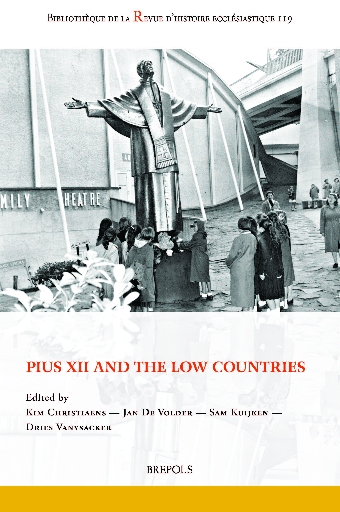
Pius XII and the Low Countries
The opening of the different Vatican Archives for the pontificate of Pius XII (1939-1958) in March 2020 sparked the interest of scholars across different disciplines worldwide. It invigorated tendencies to revisit the history of the 1940s and 1950s beyond the established narratives and sources and nourished hopes to address both longstanding and emerging questions and to discover innovative themes and approaches. Three years after the opening of these archives a multidisciplinary group of scholars from Belgium and the Netherlands convened at a scientific conference in Rome organized by the editors of this volume to study the impact of the archival access on diverse research domains. This publication presents new research based on documentation unearthed in the Vatican archives spanning both the Second World War and the postwar period and challenges existing scholarship not only on the history of the Catholic Church but also on broader themes in the Low Countries.
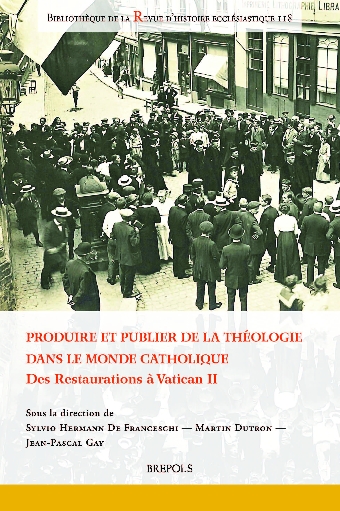
Produire et publier de la théologie dans le monde catholique
Des Restaurations à Vatican II
Issu d’un colloque organisé en septembre 2020 ce volume part de la nécessité de faire dialoguer histoire de la théologie et histoire des savoirs. Il se concentre plus particulièrement sur les lieux académiques de la production de la théologie sur son rapport à d’autres disciplines et son séquençage en sous-disciplines sur sa circulation dans des espaces plus vastes et sur le rapport aux éditeurs. Les 16 contributions ici rassemblées rompent avec l’écriture classique de l’histoire de la théologie qui est restée à grande distance des questions et des méthodes de l’histoire des savoirs ils rompent également avec la réticence des historiens des savoirs à appréhender l’objet-théologie malgré son importance dans les universités européennes des deux derniers siècles. Ce volume s’inscrit dans un agenda renouvelé d’historicisation des conditions et de la production des savoirs théologiques dans le monde catholique depuis les restaurations européennes du 19e siècle jusqu’à Vatican II.

The Power of Words in Late Medieval Devotional and Mystical Writing
Essays in Honour of Denis Renevey
This volume honours Denis Renevey's contribution to late medieval devotional and mystical studies via a series of essays focusing on a topic that has been of central relevance to Denis's research: the power of words. Contributors address the centrality of language to devotional and mystical experience as well as the attitudes towards language fostered by devotional and mystical practices. The essays are arranged in four sections: 'Other Words: Figures and Metaphors: treating the application of the languages of romantic love medicine and travel to descriptions of devotional and mystical experience; 'Iconic Words: Images and the Name of Jesus; considering the deployment of words and the Word (Jesus) as powerful images in devotional practice; 'Testing Words: Syntax and Semantics; exploring the ways in which medieval writers stretch the conventions of language to achieve fresh perspectives on devotional and mystical experiences; and 'Beyond Words: The Apophatic and The Senses; offering novel perspectives on a group of texts that address the difficulty of expressing God and visionary experience with words.
The volume's global purpose is to demonstrate the attractions of an explicitly philological approach for scholars studying the Christian tradition.
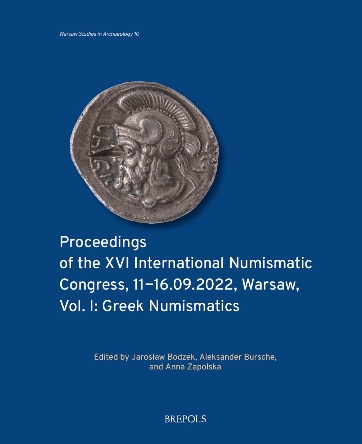
Proceedings of the XVI International Numismatic Congress, 11–16.09.2022, Warsaw, Vol. i: Greek Numismatics
The XVI International Numismatic Congress held in Warsaw Poland in September 2022 was a landmark event drawing the largest number of participants in its history. With over 550 papers presented during thematic sessions and round tables this congress showcased the latest advancements and research in the field of numismatics from leading experts and scholars in their field.
A curated selection of papers from the conference have now been drawn together into peer-reviewed conference proceedings representing a comprehensive spectrum of numismatic studies from antiquity to modern times. Each paper is meticulously illustrated with high-quality images often of unique specimens along with detailed diagrams maps and die/typological chains. Topics covered include coins and coin finds medals tokens banknotes the history of collections and collecting and cutting-edge chemical analyses and technologies used in coin examination.
This volume the first in four thematic volumes focuses on Greek numismatics and comprises fifty-nine chapters exploring different elements of Greek coinage as well as touching on coins from ancient India.
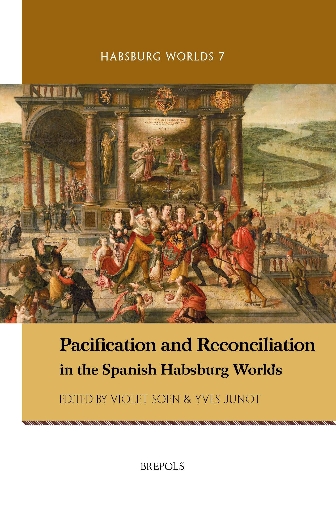
Pacification and Reconciliation in the Spanish Habsburg Worlds
This is the first volume to analyze pacification strategies within the Spanish Monarchy on a global level. It deals with the development and aftermath of the many early modern revolts on the Iberian and Italian Peninsula the Sicilian and Sardinian islands the cities along the North Sea and the Spanish Americas. These comparative studies uncover the different ways in which the Spanish Monarchy dealt with rebellion from cities and constituencies ranging from military responses and repression to offers for negotiation and reconciliation. They also point out common characteristics of these pacification processes such as the promises of pardon the granting of grace and the instruction of peace envoys. The different chapters each accompanied by an edition of sources show how the reconciliation and reincorporation into the Spanish Habsburg orbit proved to be a painstaking process with an unpredictable outcome.
Proceedings of the XVI International Numismatic Congress, 11–16.09.2022, Warsaw, Vol. ii, Roman Numismatics
The XVI International Numismatic Congress held in Warsaw Poland in September 2022 was a landmark event drawing the largest number of participants in its history. With over 550 papers presented during thematic sessions and round tables this congress showcased the latest advancements and research in the field of numismatics from leading experts and scholars in their field.
A curated selection of papers from the conference have now been drawn together into peer-reviewed conference proceedings representing a comprehensive spectrum of numismatic studies from antiquity to modern times. Each paper is meticulously illustrated with high-quality images often of unique specimens along with detailed diagrams maps and die/typological chains. Topics covered include coins and coin finds medals tokens banknotes the history of collections and collecting and cutting-edge chemical analyses and technologies used in coin examination.
This volume the second in four thematic volumes focuses on Roman coinage. Divided into two separate volumes covering respectively forty-three chapters on coinage and forty-one on circulation the contributions gathered here explore not only Rome and the imperial mints but also local phenomena from Spain to Asia Minor including graffiti imitations and copies of Roman coinage.
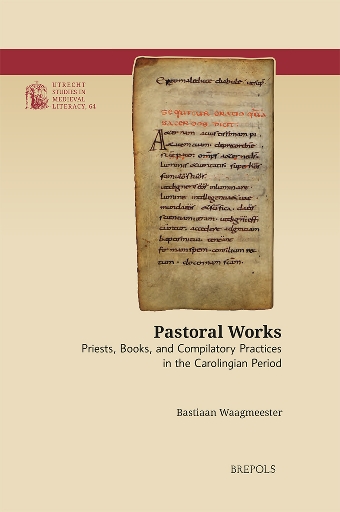
Pastoral Works
Priests, Books, and Compilatory Practices in the Carolingian Period
Much of the Christian empire established by the Carolingians in the eighth century was not only built through royal initiative but also through the work of local priests. Living among the laity these clerics provided pastoral care and religious instruction. Yet despite their vital contribution to the development of Christianity in Western Europe these clergymen and the communities they served remain understudied.
This book investigates the manuscripts they used offering a glimpse into everyday life around the local church. Far from being poor and illiterate priests had access to texts specifically adapted to their needs. By examining how these materials were compiled this study reveals what mattered most in the early medieval countryside. Drawing on excerpts from collections of liturgy canon law and patristic expositions — often preserved in the great monastic and court libraries — it uncovers the diversity of local religious practice. These texts reflect how the efforts instigated by Carolingians to foster ‘good Christianity’ were interpreted and implemented outside the centres of power. In exploring these seemingly modest manuscripts this study opens new pathways into the world of the Carolingian local church and the people who inhabited it.
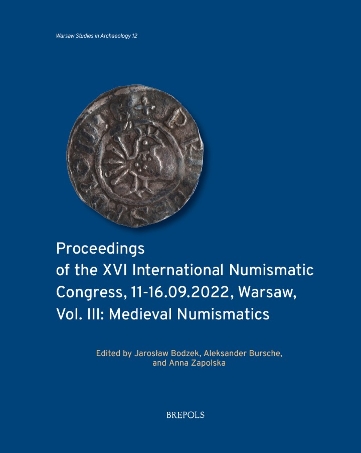
Proceedings of the XVI International Numismatic Congress, 11–16.09.2022, Warsaw, Vol. iii: Medieval Numismatics
The XVI International Numismatic Congress held in Warsaw Poland in September 2022 was a landmark event drawing the largest number of participants in its history. With over 550 papers presented during thematic sessions and round tables this congress showcased the latest advancements and research in the field of numismatics from leading experts and scholars in their field.
A curated selection of papers from the conference have now been drawn together into peer-reviewed conference proceedings representing a comprehensive spectrum of numismatic studies from antiquity to modern times. Each paper is meticulously illustrated with high-quality images often of unique specimens along with detailed diagrams maps and die/typological chains. Topics covered include coins and coin finds medals tokens banknotes the history of collections and collecting and cutting-edge chemical analyses and technologies used in coin examination.
This book the third in four thematic volumes explores medieval coinage. Research presented in forty-two different chapters ranges from the early Byzantine period through to the late Middle Ages including Asiatique and Islamic coinages and medieval tokens.
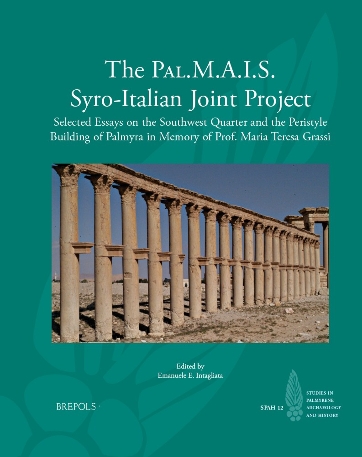
The Pal.M.A.I.S. Syro-Italian Joint Project
Selected Essays on the Southwest Quarter and the Peristyle Building of Palmyra in Memory of Prof. Maria Teresa Grassi
The Pal.M.A.I.S. Syro-Italian joint project at Palmyra established in 2007 aimed to shed light on private housing in the Roman East. Through excavations in Palmyra’s southwest quarter the remains of a residential complex the ‘Peristyle Building’ were uncovered; this site was built in the Roman period but was inhabited up to the eighth century ad.
This volume dedicated to Prof. Maria Teresa Grassi (Università degli Studi di Milano) who co-directed the project together with Dr Waleed al-As‘ad (Museum of Palmyra) presents selected studies stemming from the Pal.M.A.I.S. project. It draws together contributions dedicated to the topography of the southwest quarter the excavation of the Peristyle Building and selected classes of material. Through detailed analysis and the presentation of fresh data this volume sheds new light on a relatively unexplored sector of a threatened UNESCO World Heritage site.
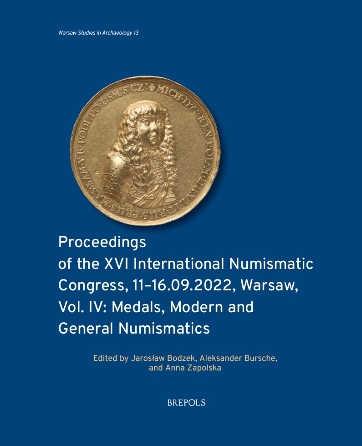
Proceedings of the XVI International Numismatic Congress, 11–16.09.2022, Warsaw, Vol. iv: Medals, Modern and General Numismatics
The XVI International Numismatic Congress held in Warsaw Poland in September 2022 was a landmark event drawing the largest number of participants in its history. With over 550 papers presented during thematic sessions and round tables this congress showcased the latest advancements and research in the field of numismatics from leading experts and scholars in their field.
A curated selection of papers from the conference have now been drawn together into peer-reviewed conference proceedings representing a comprehensive spectrum of numismatic studies from antiquity to modern times. Each paper is meticulously illustrated with high-quality images often of unique specimens along with detailed diagrams maps and die/typological chains. Topics covered include coins and coin finds medals tokens banknotes the history of collections and collecting and cutting-edge chemical analyses and technologies used in coin examination.
This volume the last in four thematic volumes comprises fifty-five chapters that explore modern numismatics as well as medal making and tokens. It also includes discussions that touch more broadly on the general field of numismatics among them digital numismatics counterfeit coins coin finds and the history of coin collecting.
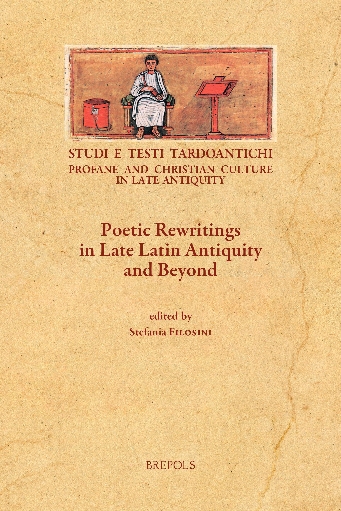
Poetic Rewritings in Late Latin Antiquity and Beyond
‘Rewriting’ as the reworking of narrative material based on conscious strategies of composition plays a significant role in much of the Latin poetry of Late Antiquity. This book resulting from the conference Riscritture poetiche nell’Occidente latino tra tarda antichità e medioevo which was held on 9-11 May 2022 at the Department of Human Sciences (DSU) of the University of L’Aquila looks at the range of practices and purposes that inform this procedure with particular regard to the processes of transcodification enacted – in different historical and cultural contexts – by the recasting of authoritative prose texts into a classicising poetic idiom. The contributions present a multifaceted approach to rewriting cover a variety of authors genres and texts and cast a glance also at medieval Latin literature. In short the essays in this collection by reflecting on the interpretative contribution of the critical category of ‘rewriting’ not only add further tesserae to the mosaic of literary studies on Late Latinity they also invite to grasp the difference between secular and Christian rewritings.
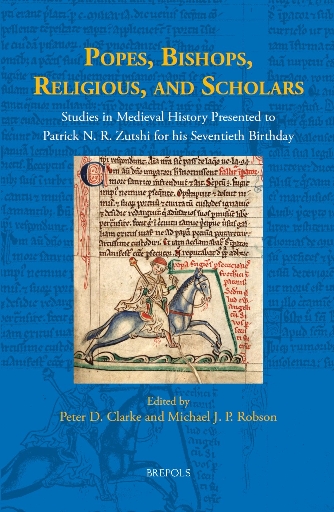
Popes, Bishops, Religious, and Scholars
Studies in Medieval History Presented to Patrick N. R. Zutshi for his Seventieth Birthday
Patrick Zutshi is a leading authority on the later medieval Western Church and papacy and internationally recognised as an expert in papal diplomatic and the Avignon Curia. This volume brings together essays by over twenty of Patrick’s colleagues and friends all distinguished scholars in medieval history to celebrate his 70th birthday. The volume reflects both Patrick’s wide scholarly interests ranging from the administration of the papal curia to intellectual and legal history and the mendicant orders and his extensive network of colleagues and collaborators in different countries including Germany Italy Ireland Switzerland Finland Australia USA and UK. This collection of essays also engages with important themes in later medieval history of wide interest to university students their teachers and other researchers in the field comprising: Mendicants and the Religious Life; University and Intellectual History; Bishops and Secular Clergy; and the Papal Curia between Avignon and Rome. All the essays draw on original research reflecting Patrick’s own research and editing of manuscript and archival sources.
Pascal Payen
L’Antiquité et ses réceptions : un nouvel objet d’histoire
Les vingt-six articles rassemblés dans ce volume témoignent à la fois de la riche activité scientifique de Pascal Payen durant une vingtaine d’années mais aussi de la manière dont il a contribué de façon décisive à construire et faire connaître un nouvel objet d’histoire : la réception ou plutôt les réceptions de l’Antiquité. En partant d’Hérodote de Thucydide et de Plutarque il a embrassé les innombrables ramifications des processus d’appropriation ou de rejet de traduction ou d’adaptation voire de recréation des auteurs anciens de l’écriture de l’histoire de la pensée politique. Ce recueil montre ainsi que la constitution de l’Antiquité en « tradition » en « patrimoine » s’inscrit dans la longue durée et procède d’un va-et-vient polymorphe et fécond constitutif de toute herméneutique entre le passé de l’œuvre et les présents de ses publics successifs.
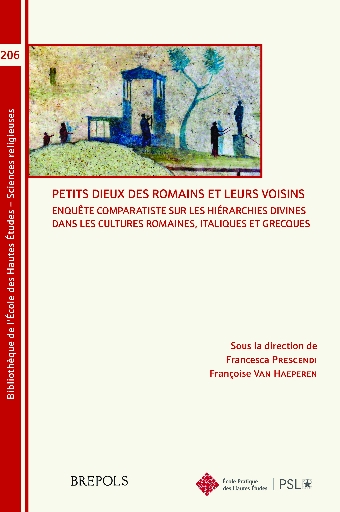
Petits dieux des Romains et leurs voisins
Enquête comparatiste sur les hiérarchies divines dans les cultures romaines, italiques et grecques
La formule « petites divinités » qui désigne dans ce volume toutes les puissances revêtant des pouvoirs limités ou une position inférieure dans une configuration divine donnée est utilisée ici comme un concept exploratoire dont le caractère opérationnel est testé collectivement en l’appliquant au monde romain et en le comparant aux cultures voisines grecques et italiques. Si l’étiquette « petites divinités » peut étonner elle repose cependant sur des catégories antiques. Dans quelques textes latins en effet les dieux se définissent eux-mêmes – ou sont définis – comme inférieurs aux autres. Le concept de petites divinités est donc éminemment relationnel mais également contextuel. Les articles réunis dans ce volume abordent ainsi la question des classifications et des hiérarchies divines à partir de sources et de contextes spécifiques plus ou moins larges mettant en jeu des panthéons configurations ou réseaux divins plus ou moins structurels ou conjoncturels. Si dans le contexte romain la hiérarchie est une clé pour organiser les groupes des dieux en se déplaçant vers d’autres contextes culturels au contraire les rapports entre divinités semblent plutôt fondés sur des liens de complémentarités entre les dieux.
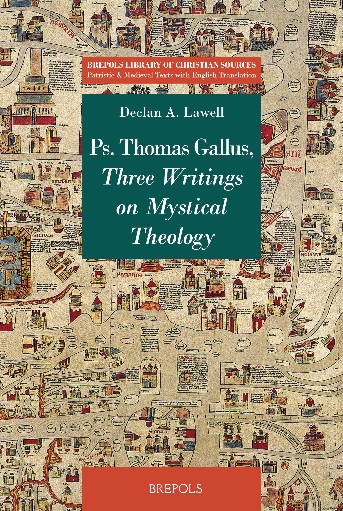
Pseudo-Thomas Gallus, Three Writings on Mystical Theology
This volume contains a newly-edited exposition on the Mystical Theology contained in MS UV6 of the Biblioteca degli Intronati in Siena. The MS attributes the work to the abbot of Vercelli (Thomas Gallus) but this is shown to be a false attribution. A commentary on the Canticle of Canticles has also been attributed to Thomas Gallus but argued against by J. Barbet in Brepols' SRSA volume 10 (2005). This commentary is reprinted and accompanied with the first ever English translation. A treatise on the Seven Steps to Contemplation in Latin with an English translation is the third text. An introductory critical study evaluates all three works and argues that they all belong to the same author pseudo-Thomas Gallus.
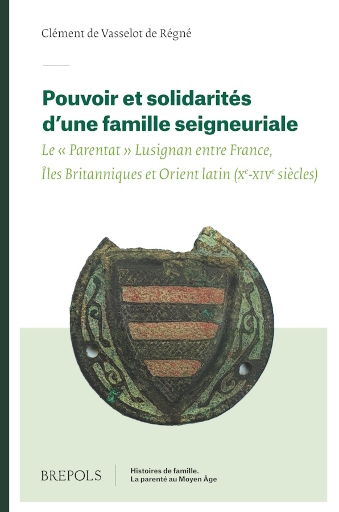
Pouvoir et solidarités d'une famille seigneuriale
Le « Parentat » Lusignan entre France, Îles Britanniques et Orient latin (x e-xiv e siècles)
La famille châtelaine de Lusignan est un excellent exemple du phénomène de diffusion dynastique de l'aristocratie française. Elle connaît à la fin du xii e siècle et surtout au début du xiii e siècle une ascension fulgurante étendant son emprise sur le Haut puis le Bas-Poitou s'emparant du comté de la Marche puis de celui d'Angoulême imposant sa domination sur le nord du duché d'Aquitaine. Une série de mariages ajoute au patrimoine de ses membres le comté d'Eu en Normandie celui de Penthièvre et les seigneuries de Fougères et de Porhoët en Bretagne ainsi que dans les îles Britanniques les honneurs de Hastings et de Tickhill l'évêché de Winchester les comtés de Pembroke et de Wexford. La couronne de Jérusalem et son substitut le trône chypriote reste leur plus marquante acquisition d'autant qu'elle est directement liée à la perte de la ville sainte.
Cet ouvrage est né d’une interrogation sur le potentiel politique que pouvait constituer un tel ensemble familial pourvu que les liens du sang perdurent. De fait la famille de Lusignan forme un groupe cohérent structuré par les liens de la parenté dont les membres partagent une identité entretenue par un certain nombre de repères communs ainsi qu’un réseau de coopération et de soutien mutuel. Leur union constitue une véritable puissance politique et territoriale qui transcende les limites des royaumes et des principautés. Le concept de « parentat » a été forgé à partir d’un vocable latin emprunté à une chronique médiévale pour saisir de manière holistique ce pouvoir politique réticulaire fondé sur la solidarité des membres d’une même famille ayant rassemblé au fil des générations une grande diversité de principautés et de seigneuries parfois voisines parfois très dispersées.
Cette étude du parentat Lusignan s’intéresse à sa propagation transrégionale au pouvoir exercé à l’échelle de l’individu comme à celle du groupe familial sur les hommes et les biens aux pratiques de gouvernementalité aux procédés de matérialisation du pouvoir comme aux modes de sa contestation ainsi qu’aux dynamiques familiales qui concourent à structurer le parentat politiquement et socialement qui entretiennent sa cohésion forgent sa mémoire construisent son identité et affermissent son unité.
Polyhistor Europaeus
Études sur l’âge classique offertes à Chantal Grell
Le vieux mot grec polyhistor désignait jusqu’au XVIIe siècle à la fois un savant aux multiples compétences et un vade-mecum bibliographique embrassant tout le champ des savoirs.
C’est le cas de Chantal Grell qui au fil de sa carrière a exploré tout l’âge classique en Europe dans ses domaines les plus divers de l’Espagne à la Pologne avec Versailles pour centre de gravité.
C’est aussi le cas du présent recueil où soixante-quatre chercheurs ont rassemblé en deux volumes des contributions de haut niveau scientifique sur ses thèmes de prédilection.
Le tome I traite des antiquités et de l’historiographie d’histoire des savoirs et des idées le tome II des cours et de la diplomatie des arts et des collections.

Power in Numbers
State Formation and Christianization on the Eastern Edge of Europe
Around the turn of the first millennium the political and religious landscape of Central Europe began to change dramatically. As the decentralized pagan societies along its borders became Christian the polity that later became the Holy Roman Empire began to expand significantly according to the principles of the Imperium Christianum — an idea that first originated with Charlemagne but that was consciously revived by Emperor Otto I and his predecessors as a way of extending power and authority into the Empire’s newly converted eastern fringes. This acculturation was effective and societies began to actively adopt the new ideology and social order on their own initiative.
Drawing on material first presented at conferences held in the Department of Archaeology at Charles University Prague this volume draws together researchers working on different yet connected events along the Empire’s eastern frontier and the often-overlooked part of society who nevertheless participated in these events in particular commoners and the rural population. The papers gathered here cover affairs of the early state and church networks of archaeological and historical heritage and archaeological historical and digital investigations to offer a blend of both synthetic archaeological and historical overviews and more focused geographical and thematic case studies that explore the role of Christianization in the centralization processes that occurred at the edge of the Ottonian-Salian world. The result is a forward-looking volume that seeks to explore new approaches to historical narratives in particular by emphasizing the importance of archaeological material in examining early state formation and religious change. Moreover it is the first synthetic study to directly compare the north-east and south-east peripheries of the later Holy Roman Empire making it possible to shed new light on these lands at the periphery of Western Christendom.