


Browse Books
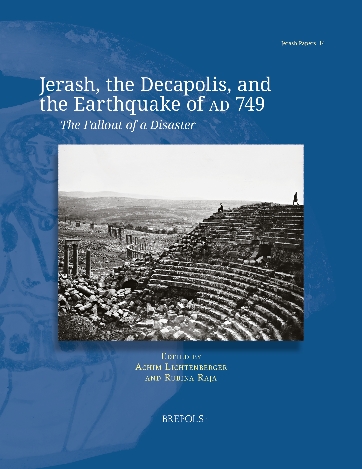
Jerash, the Decapolis, and the Earthquake of ad 749
The Fallout of a Disaster
Gerasa/Jerash and the Decapolis are located along the seismically active area of the Dead Sea Rift a point where four tectonic plates meet to create the 110 km-long fault known as the Dead Sea Transform. It was activity along this fault that led in ad 749 to a famously devastating earthquake in the region. Measuring at least 7.0 on the Richter scale this quake not only had a profound physical impact on the Decapolis Galilee Caesarea and Jerusalem causing widespread destruction and reshaping urban landscapes but also led to a clear shift in socio-economic dynamics through a combination of economic decline and population displacement. It thus stands as a clear watershed moment in Late Antiquity. In its aftermath some cities struggled to regain prominence while others declined and were abandoned. Taking the ad 749 earthquake as its starting point this volume aims to provide a nuanced understanding of the quake’s effects questioning its role as a sole watershed moment and exploring the various other factors at play that influenced urban change. The contributions gathered here which clearly recognize earthquakes as non-human actors in this process clearly highlight the diverse impacts that this seismic event had on the city life in the southern Levant and the fallout in the decades that followed.
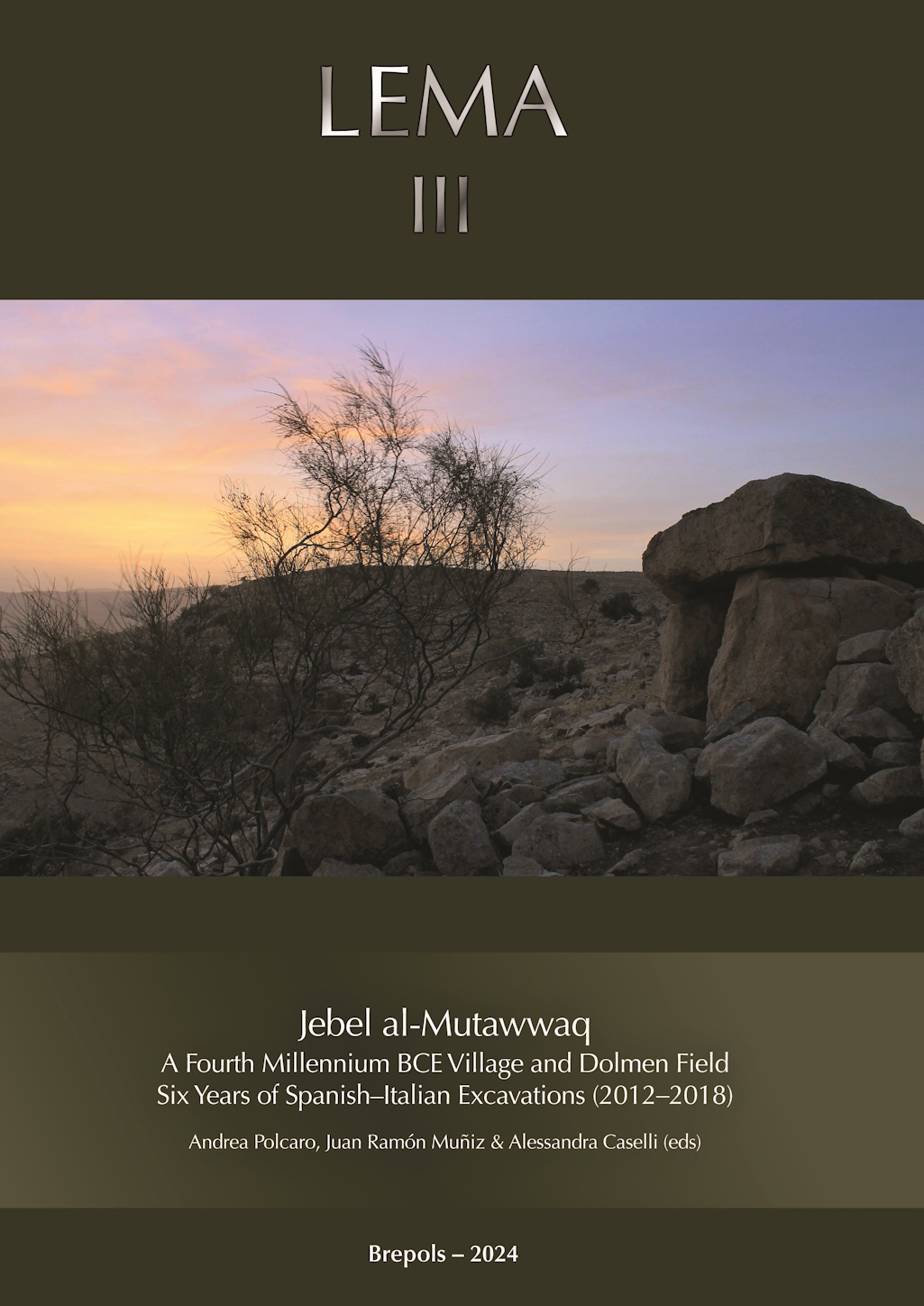
Jebel al-Mutawwaq
A Fourth Millennium bce Village and Dolmen Field. Six Years of Spanish-Italian Excavations (2012–2018)
The Early Bronze Age site of Jebel al-Mutawwaq located on a hill overlooking the Zarqa River in Jordan was a thriving centre of population from the second half of the fourth millennium into the third millennium bce. During this time the settlement developed both in population and social complexity undergoing the beginnings of an urbanization process that fundamentally changed the relationship between this community of the Transjordanian Highlands with the surrounding landscape until it was completely abandoned around 2900 bce. This volume offers a new assessment of the site by combining data from the first surveys of the site under a Spanish team led by J. A. Fernandez-Tresguerres with the new results from six seasons of excavations led by teams from Perugia in Italy and San Esteban in Spain. In doing so this work sheds new light on this walled settlement and its huge megalithic necropolises and offers a fresh understanding of the site.
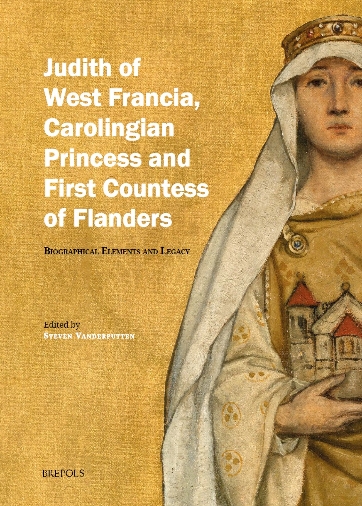
Judith of West Francia, Carolingian Princess and First Countess of Flanders
Biographical Elements and Legacy
Judith of West Francia is one of the most enigmatic of Charlemagne’s early descendants. The daughter of the king of West Francia and future emperor Charles the Bald and his wife Ermentrude she was one of only a handful of Carolingian princesses who were destined for marriage. Over the course of her teenage years she married two successive kings of Wessex became the first consecrated queen of England was widowed twice returned to Francia with an immense dowry and sparked a major diplomatic incident when she eloped with a nobleman from Flanders called Baldwin. Eventually she married Baldwin in early 864 and together they established the dynasty of the counts of Flanders. In doing so the couple laid the groundwork for what would become one of the mightiest and most prestigious territorial principalities in north-western Europe in the tenth and eleventh centuries. But even in the tenth century exceedingly few written memories of Judith’s life survived. This explains why she was never the subject of a biography in the medieval or early modern eras and why scholarship’s understanding of her life and legacy remains highly fragmented. This volume sets the record straight offering an accessible and interdisciplinary discussion of all relevant and documented aspects of Judith’s life and legacy.
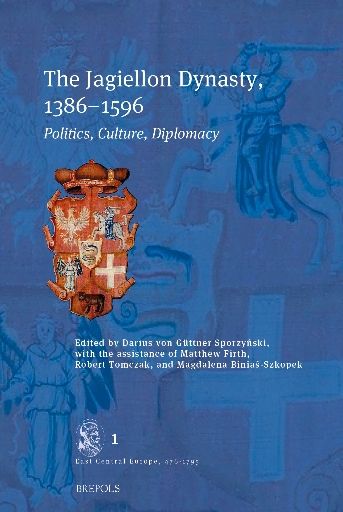
The Jagiellon Dynasty, 1386‑1596
Politics, Culture, Diplomacy
The volume offers a re-examination of the rise of the Jagiellon dynasty in medieval and early modern Central Europe. Originating in Lithuania and extending its dominion to Poland Hungary and Bohemia the Jagiellon dynasty has left an enduring legacy in European history. This collection of studies presents the Jagiellons as rulers with dynamic and negotiated authority. It begins with the dynasty’s origins and its dynastic union with Poland milestones that have shaped the political and cultural trajectory of the dynasty’s reign. The volume places significant emphasis on the role of royal consorts thereby broadening traditional gender-focused perspectives. Far from being mere accessories queens had a considerable influence on governance economic matters and diplomacy. The cultural impact of Jagiellon rule is analysed through interactions with humanists and the intellectual milieu of the court. The performative aspects of Jagiellon power including the use of words gestures and even intentional silences are examined as powerful tools of articulation. Emotional factors that influence governance and intricate dynastic relationships are explored revealing how political decisions especially constitutional reforms are made more rapidly when faced with perceived dynastic vulnerabilities. In Poland the rise of parliamentary institutions under the earlier Jagiellon monarchs epitomises the concept of negotiated authority underscoring the growing political role of the nobility. This volume thus provides a multi-faceted and nuanced understanding of the Jagiellon dynasty’s legacy in political cultural and gender-related spheres enhancing understanding of European history.
The Johannine Tradition in Late Antique and Medieval Poetry
The Johannine Tradition in Late Antique and Medieval Poetry proposes to examine the impact of the Gospel of John which is fundamental from the point of view of the history of Christian doctrines on ancient poetic production with some forays into the Middle Ages. The critical literature on these aspects is particularly abundant but hitherto an overall view of the presence and importance of the Johannine tradition in the evolution of Christian poetry was lacking. Based on the Strasbourg colloquium that took place on 16-17 September 2021 the present volume aims to fill this gap with contributions highlighting not an episodic presence of Johannine texts in poetic compositions but a structuring function in the definition of the poetic choices of the various authors. The focus of attention could therefore only be on the genre of biblical rewritings which derive their particular significance from their organic attempt to “remake” the biblical text in accordance with very precise cultural objectives and the expectations of a select audience.
John Gower’s Rhetoric
Classical Authority, Biblical Ethos, and Renaissance Receptions
This is the first book-length study in decades to offer in-depth readings of a variety of late medieval poems across Gower’s trilingual corpus. Identifying Gower’s rhetorical cornerstones in Aristotelian pathos the theology of the Word and the execution of a plain style it provides fresh interpretations of poems in Latin French and Middle English that arise from an enhanced understanding of Gower’s literary methods. It explores the classical and medieval rhetorical traditions that informed Gower’s craft the biblical personae through which the poet achieved his rhetorical aims and the Renaissance publishers and authors who valued and imitated his strategies for composition. Gower adapted his rhetorical theory from the principles of Aristotelian texts Augustinian theology exemplars of Ciceronian style and the dictates of various artes poetriae; from the latter John of Garland’s Parisiana Poetria is especially important for outlining practices of Marian rhetoric. Modelling virtuous female speakers on the Virgin and prophetic narrators on John the Baptist and John the Evangelist Gower gave extra-scriptural voice to members of the extended Holy Family and in so doing achieved unimpeachable expressions inside classically informed structures of discourse. The epistolary structure proceeding from Ciceronian rhetoric and the artes dictaminis is one among Gower’s favoured rhetorical forms for projecting singular voices. His straightforward reiterative style in Middle English and his virginal speakers compelled Renaissance publisher Thomas Berthelette and celebrated authors Ben Jonson and William Shakespeare to praise Gower’s rhetoric in prefaces and imitate it on the stage.
Johann Schreck Terrentius, SJ
His European Network and the Origins of the Jesuit Library in Peking
A thorough analysis of the sinuous ‘peregrinatio academica’ of Johann Terrentius Schreck (1576-1630) between 1600-1618 through (South- Central- and NW-) European universities academies and courts (at Freiburg /Br.; Paris; Rome; Basel; Padua; Strasbourg Prague Kassel etc.) and his rich correspondence displays a widespread network of contacts covering a broad range of domains from medicine to alchemy pharmacy botany and through engineering to (pure and applied) mathematics and calendar making. In all these domains of the contemporary ‘Republic of Letters’ this former student of François Viète (Paris) Galileo (Padua) and ex-Lincean adept of Copernicus and Paracelsus showed himself to be a passionate scholar with multi-faceted and versatile talents. After 1611 with this very rich experience he entered the Society of Jesus and shortly afterward he was appointed as companion of Nicolas Trigault who was touring through
Europe (1615-1618) as procurator on behalf of the fledgling Jesuit Mission in China seeking funds men books and scientific instruments. This second phase of intensive travelling through European centers of scholarship patronage and printing (including Rome; Venice; Basel; Frankfurt; Cologne Antwerp etc.) resulted in an enormous collection of books and instruments which were dispatched to Lisbon from various points in 1617/1618. Shipped to China these materials arrived in Macau in 1619 and in Peking in 1625 becoming the core of the Jesuit libraries mainly in Peking and the basis for the scholarly activities of the Jesuits over the following decades in the domains of mathematics calendar making medicine etc.
John of Garland’s De triumphis Ecclesie
A new critical edition with introduction and translation
This is the first translation in any language of John of Garland’s poem about the historical events of his lifetime (c. 1195- c. 1258) together with revised Latin text introduction and notes. This work gives a vivid picture of Anglo-French relations of studies in Toulouse after the Albigensian Crusade and of the need for faith following Louis’ catastrophic defeat in the Seventh Crusade. John gives us insights into his own life and a stream of stories holy and profane. The translation and notes bring to life for a wide range of medievalists this eye-witness account by an Englishman in France of major events of the age especially 1242-52. They make clear John’s debts to classical authors and to contemporaries especially Alan of Lille and Matthew Paris. Through re-ordering the lines this edition now generates clarity from the single manuscript. It also offers fresh insights and a new perspective on John of Garland himself.
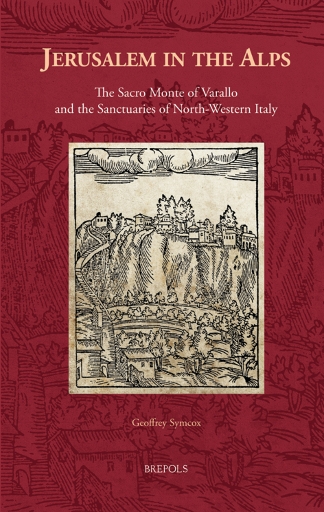
Jerusalem in the Alps
The Sacro Monte of Varallo and the Sanctuaries of North-Western Italy
The Sacro Monte (Holy Mountain) at Varallo is a sanctuary in the Italian Alps west of Milan. It was founded in the late fifteenth century by a Franciscan friar with the support of the town’s leading families. He designed it as a schematic replica of Jerusalem to enable the faithful to make a virtual pilgrimage to the Holy City if they could not undertake the perilous journey to visit it physically. The Sacro Monte consists of a sequence of chapels containing tableaux of life-size painted terra-cotta figures with fresco backgrounds recounting the life and Passion of Christ. A century later in the era of the Counter-Reformation a ‘second wave’ of Sacri Monti was constructed in the north-western Alps modelled on Varallo but dedicated to other devotional themes like the Rosary or the life of St Francis. All these sanctuaries like Varallo were the result of local initiatives initiated by the clergy and the leaders of the communities where they were situated. Like Varallo they were the work of artists and craftsmen from the alpine valleys or from nearby Lombardy. Long dismissed as folk art unworthy of serious critical attention the Sacri Monti are now recognised as monuments of unique artistic significance. In 2003 UNESCO listed nine of them in its register of World Heritage Sites. This book studies their development as the products of the religious sensibilities and the social economic and political conditions of the mountain communities that created them.
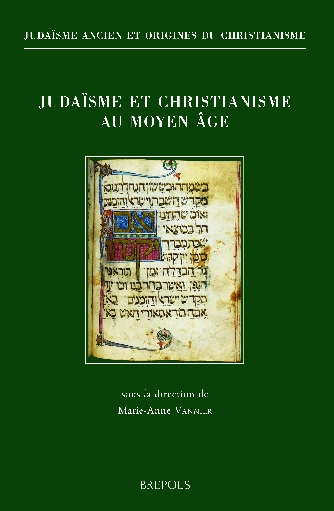
Judaïsme et christianisme au Moyen Âge
Les rapports entre Judaïsme au Moyen Âge ont été souvent présentés comme conflictuels. Or il n’en a pas toujours été ainsi. Aussi cet ouvrage s’attache-t-il à mettre en évidence la synergie entre Judaïsme et christianisme à cette époque. Des auteurs comme Maïmonide et Eckhart ont sur ce plan un rôle décisif.

Jews and Muslims under the Fourth Lateran Council
Papers Commemorating the Octocentenary of the Fourth Lateran Council (1215)
The Fourth Lateran Council (1215) was groundbreaking for having introduced to medieval Europe a series of canons that sought to regulate encounters between Christians and Jews and Muslims. Its canon 68 demanded that Jews and Muslims wear distinguishing dress in order to prevent Christians from entering into illicit sexual relations with them restricted the movement of Jews in public spaces during Holy Week and exhorted secular authorities to punish Jews who in any way “insult” or blaspheme against Christ himself. Other canons sought to exercise greater control over moneylending to provide relief to Christian borrowers to extract tithes from Jews who held Christian properties as pledges and prohibited Jews from exercising power as public officials over Christians. The canons condemned converts who preserved elements from their former religion promoted a fifth Crusade to the East exempted Crusaders from taxes and from interest payments to Jewish moneylenders restricted trade with Muslims or Saracens and condemned Christians who provided arms or assistance to Saracens. The Council’s canons affected the missionary efforts of the late medieval Church and its attempts to convert Jewish and Muslim minorities and established essential guidance on minority relations not to be surpassed until Vatican II in the 1960s.
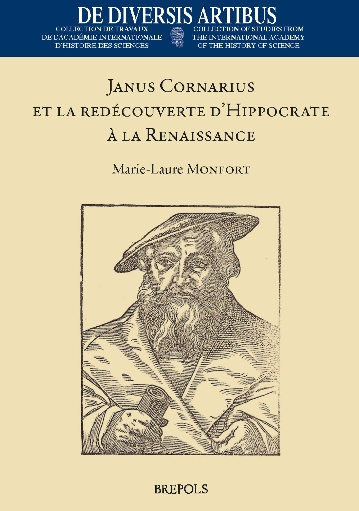
Janus Cornarius et la redécouverte d'Hippocrate à la Renaissance
Johann Haynpol de Zwickau dit Janus Cornarius (ca.1500-1558) a publié près d’une cinquantaine d’ouvrages qui sont pour l’essentiel des traductions latines des grands auteurs médicaux grecs Hippocrate Galien Aetius d’Amida Paul d’Egine Dioscoride entre autres ainsi que des Pères grecs comme Basile de Césarée ou Epiphane et même des Platonis opera omnia posthumes tous d’une telle qualité philologique que les éditeurs scientifiques actuels tâchent désormais d’intégrer ses leçons à leurs travaux. Sa traduction latine de l’œuvre intégrale d’Hippocrate parue en 1546 était cependant l’activité à laquelle il attachait le plus de prix et représente en effet sa principale contribution au progrès médical de la Renaissance d’abord parce qu’elle est la première édition moderne des écrits mis sous le nom du médecin de Cos ensuite parce qu’elle répond à une stratégie scientifique typique de l’Humanisme qui demande ici aux sources grecques les outils d’un dépassement du galénisme tardif transmis à l’Europe occidentale par l’intermédiaire d’Avicenne et enfin parce qu’elle soutient une réorganisation originale de la matière médicale autour de la question des fièvres pestilentielles dénommées plus tard maladies infectieuses.
L’étude de son apport à l’édition d’Hippocrate a permis d’accéder à d’autres textes de Janus Cornarius longtemps passés inaperçus dévoilant le rôle de cet érudit médecin discret mais de tout premier rang au sein de la rénovation scientifique que symbolise à présent le nom de Copernic. Etudiant à Wittenberg proche des milieux ayant suscité la publication du De revolutionibus orbium cœlestium en 1543 Janus Cornarius est probablement le ‘fou’ (der Narr) dénoncé par Luther pour être à l’origine de cet événement et correspond sans doute aussi au modèle historique du personnage de Panurge créé par Rabelais en 1532. L’ouvrage présente les premières données textuelles conduisant à ces deux découvertes significatives pour l’histoire intellectuelle et scientifique de la Renaissance européenne et les situe dans la perspective de l’histoire médicale alors à peine dégagée de la polémique astrologique. Il offre en outre la première bibliographie exhaustive des éditions cornariennes et la traduction des principaux écrits de Janus Cornarius ayant trait à Hippocrate.
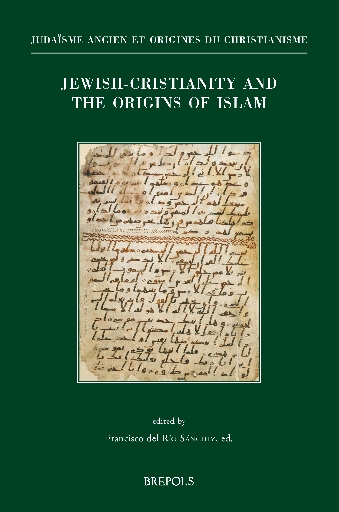
Jewish Christianity and the Origins of Islam
Papers presented at the Colloquium held in Washington DC, October 29-31, 2015 (8th ASMEA Conference)
Among all the different theories that currently explore the religious milieu of Late Antiquity to elucidate the origins of the Islamic religion there is a group of scholars supporting that Jewish Christianity must have played a role in its formation reviving the question of a potential link between Early Islam and the beliefs and practices of those followers of Jesus that maintained or adopted certain Jewish beliefs and practices either Jews that believed in the messianism and/or the prophecy of Jesus groups whose existence and nature is still a matter of debate. In any case the question is still subject of passionate debate among specialists. This volume collects the papers of a two-day colloquium held in Washington DC in October 2015 about the question of Jewish Christianity and Early Islam and highlights the vitality of this field of studies. The contributions included here cover a broad range of topics and they offer new ideas interpretations and understandings of the question.
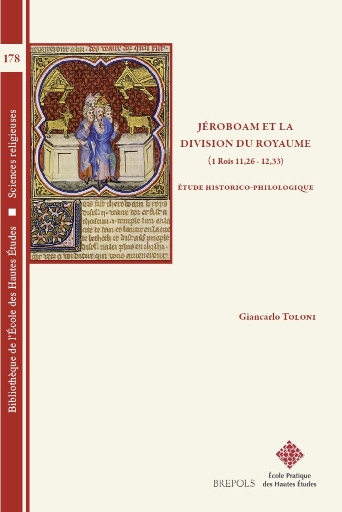
Jéroboam et la division du royaume
Étude historico-philologique de 1 Rois 11, 26 - 12, 33
La figure de Jéroboam tracée par la Septante est celle d’un homme venu du bas qui parvient à conquérir un niveau social élevé grâce à son ambition et qui ose même se révolter contre Salomon pour supplanter la dynastie davidique et inaugurer un nouveau cursus politique. Il est présenté comme un arriviste sans scrupules un fauteur de troubles prêt à profiter des circonstances en faveur de ses propres ambitions personnelles.
Dans le texte massorétique l’image du roi est plus lumineuse : son ambition est toujours patente mais il est présenté comme le défenseur des demandes légitimes des tribus d’Israël disposées à l’élire comme roi contre une réduction sur les tributs imposés par Salomon et non pas comme fomentateur de conjurations. Jéroboam est traité ici avec plus d’équité bien qu’à la lumière de la sévère idéologie du Deutéronomiste qui fait de lui l’instrument choisi par Dieu pour punir l’idolâtrie de la maison de David.
Lequel des deux portraits est-il le plus fiable ? Le problème exégétique consiste à vérifier si les divergences entre les récits parvenus dans 1 Rois 1126 - 1233 se sont produites au fil de la transmission textuelle - n’oublions pas la réélaboration libre du grec conservée dans 1224a-z de fait une troisième version des événements - ou si elles remontent à des traditions plus anciennes.
L’examen du texte antiochien de la Septante est particulièrement significatif. En effet les variantes des manuscrits lucianiques quand elles sont confirmées par la Vetus Latina et par la réélaboration historiographiques de Flavius Josèphe peuvent attester le « protolucianique » texte très proche de la Septante ancienne et donc nous reporter à une forme plus proche de l’original.
L’apport de la critique littéraire mérite aussi une attention particulière. En effet la relecture théologique des rédacteurs deutéronomistes a fait de Jéroboam l’archétype de l’apostasie pour avoir impliqué le peuple dans son péché et avoir été imité par ses successeurs. Il s’agit donc d’une historiographie idéologisée qui relit les événements à la lumière de certains présupposés théologiques avec une vision ciblée qui produit souvent une historiographie « à thèse » à vérifier minutieusement à chaque cas.
Journeying along Medieval Routes in Europe and the Middle East
Focusing on routes and journeys throughout medieval Europe and the Middle East in the period between Late Antiquity and the thirteenth century this multi-disciplinary book draws on travel narratives chronicles maps charters geographies and material remains in order to shed new light on the experience of travelling in the Middle Ages.
The contributions gathered here explore the experiences of travellers moving between Latin Europe and the Holy Land between southern Italy and Sicily and across Germany and England from a range of disciplinary perspectives. In doing so they offer unique insights into the experience conditions conceptualization and impact of human movement in medieval Europe. Many essays place a strong emphasis on the methodological problems associated with the study of travel and its traces and the collection is enhanced by the juxtaposition of scholarly work taking different approaches to this challenge. The papers included here engage in cross-disciplinary and interdisciplinary dialogue and are supported by a discursive contextualizing introduction by the editors.

Jews and Christians in Medieval Europe
The historiographical legacy of Bernhard Blumenkranz
The name of Bernhard Blumenkranz is well known to all those who study the history of European Jews in the Middle Ages and in particular the history of Jewish-Christian relations. Blumenkranz was born in Vienna in 1913; he left for Switzerland during the war and obtained a doctorate at the University of Basel on the portrayal of Jews in the works of Augustine. He subsequently moved to France where his numerous publications revived and renovated the field of Jewish studies. The international group of scholars who wrote the fifteen essays in this volume beyond paying homage to Blumenkranz’s work trace the trajectories of various lines of inquiry that he initiated: Christian theology of Judaism problems of conversion and proselytism geography and topography of Medieval Jewish communities the representation of Jews in Christian art. These essays provide both an assessment of Blumenkranz’s intellectual legacy and a snapshot of the evolution of the field over the last sixty years.
Judaïsme et christianisme chez les Pères
Cet ouvrage qui reprend les Actes du colloque sur Les rapports entre judaïsme et christianisme dans l’Antiquité tardive qui s’est tenu à Metz les 21 et 22 octobre 2014 en synthèse du projet : Judaïsme et christianisme chez les Pères (MSH Lorraine). Il s’inscrit dans un domaine en plein renouvellement : celui des frontières entre judaïsme et christianisme dans les premiers siècles. Il présente les recherches les plus récentes sur la question dont celles de Simon Claude Mimouni de José Costa d’Emmanuel Friedheim de Régis Burnet… qui nous amènent à voir que les Pères de l’Église ont principalement discuté avec le judaïsme synagogal et non pas tellement avec le mouvement rabbinique. Ce livre prend en compte les travaux du Groupe CNRS de la Bible d’Alexandrie qui montrent comment une différence de traduction induit une différence d’interprétation. Un travail de première main est également réalisé pour préciser comment les Pères dont Ignace Ambroise Augustin… se sont situés par rapport au judaïsme.
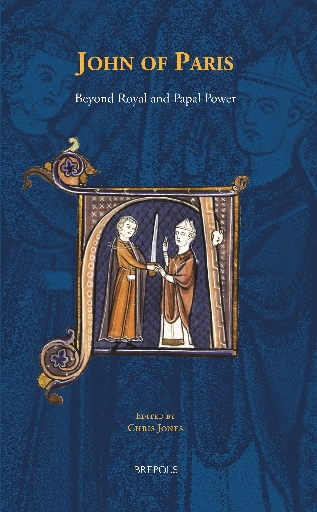
John of Paris
Beyond Royal and Papal Power
The Dominican scholar John of Paris was one of the most controversial members of the University of Paris in the later Middle Ages. The author of over twenty works he is best known today for On Royal and Papal Power a tract traditionally linked to the explosive confrontation that took place between the French king Philip IV and Pope Boniface VIII in the early years of the fourteenth century. Although his role as a royal apologist has been questioned in recent years John’s tract is often considered the first great defence of the independence of nation-states in the face of the claims to universal authority made by popes and emperors.
Bringing together a team of international scholars with a wide range of expertise this volume offers the first collection of essays in any language to be dedicated to an exploration of John’s thought. It re-examines his view of the relationship between Church and state and his conception of political organization. It considers the role played by John’s background as a member of the Dominican order in shaping his ideas and breaks new ground in exploring the relationship between his various works the origins of his thought its development and its legacy.
Jacques de Vitry (1175/1180-1240)
Entre l'Orient et l'Occident : l'évêque aux trois visages
Jacques de Vitry né dans le troisième quart du XII e siècle et mort à Rome en 1240 est issu de la génération qui au tournant du siècle fut acteur et témoin des transformations intervenues en Occident chrétien et dans l'Église en particulier.
Homme de savoir et d'action Jacques nous a laissé dans des écrits variés et nombreux le témoignage de ses expériences : l'étudiant parisien le chanoine régulier du prieuré d'Oignies le prédicateur de la croisade contre les Albigeois et les Sarrasins l'évêque d'Acre acteur de la cinquième croisade le cardinal de l'Église romaine.
On découvre ainsi une personnalité complexe et attachante chez laquelle trois traits de caractère ne cessent de se répondre : la passion de l'étude associée à l'acuité du regard ; l'ambition de servir ; la recherche d'une voie spirituelle patiemment explorée au fil de l'expérience et de l'âge.
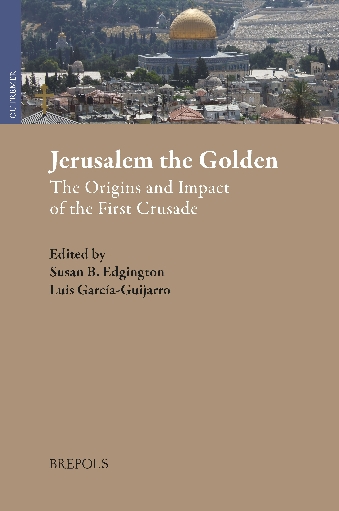
Jerusalem the Golden
The Origins and Impact of the First Crusade
This collection brings together new work by an international cast of distinguished scholars who explore areas as diverse as the military and ecclesiastical aspects of the First Crusade; its representation in contemporary sculpture; and the way it has been portrayed in modern fiction and film. Further contributions analyse and compare primary sources and historiography and yet others consider the crusade in its Mediterranean context which is sometimes overlooked. These definitive studies of established areas of research are augmented by the ground-breaking work of a number of early-career academics who are working in relatively new areas: the ‘emotional language’ used in the narrative sources; the memorialization of the crusades; and the use of literary sources for crusade studies: notably there are complementary papers on the heroes and villains depicted in the Old French poetic accounts of the First Crusade. In these twenty-one essays every historian and interested reader of medieval history will find illumination and food for thought.
Susan B. Edgington is a teaching and research fellow at Queen Mary University of London. She is an authority on the sources for the First Crusade and the early history of the kingdom of Jerusalem.
Luis García-Guijarro is reader in Medieval History at the University of Zaragoza. His many books and articles deal with crusades military orders church history socio-economic history and Iberia in the central Middle Ages.