


Browse Books

Uist Unearthed
5000 Years of Prehistory and History Told through the Interactive Exploration of Five Archaeological Sites
People have been living in Uist’s island landscapes for millennia; shaping and shaped by the unique environments of machair and moorland we see today. Uist Unearthed tells the story of 5000 years of the islands’ prehistory and history through five key archaeological sites.
Based on the award-winning Uist Virtual Archaeology Project this interactive book brings Uist’s past to life. Readers are invited to dig deeper and discover Uist’s unique archaeology through colourful and creative mixed media including illustrations infographics and photography enhanced with state-of-the-art augmented reality.
This book provides an excellent introduction to Uist’s archaeology for novices and professionals alike. It discusses the importance of Gaelic language and culture in our interpretation and understanding of archaeological landscapes. It is for all those interested in exploring alternative ways of reimagining interpreting and presenting the past through digital storytelling.

Ugo di San Vittore, Sull’inanità delle cose mondane e Dialogo sulla creazione del mondo
Introduzione, traduzione e note
Il De vanitate rerum mundanarum e il Dialogus de creatione mundi sono due opere fortemente legate l’una all’altra: in un primo momento unite e poi separate testimoniano il gusto ugoniano per la pratica della riscrittura segno di un pensiero in continuo movimento che progredisce e si evolve tornando su sé stesso. Il De vanitate si presenta come un dialogo tra due personaggi Anima e Ratio volto a dimostrare come chi ripone tutte le proprie aspettative e speranze nel mondo senza guardare a quello che è il vero bene e fine ultimo di ogni esistenza Dio sia destinato a vivere un’esistenza di frustrazione e infelicità. Il Dialogus che invece vede come protagonisti un Discipulus e un Magister dopo un dettagliato racconto della creazione del mondo si concentra sulla trattazione della natura dell’uomo del peccato della redenzione e dei sacramenti. Questa è la prima traduzione del testo criticamente curato da Cédric Giraud (CC CM 269).
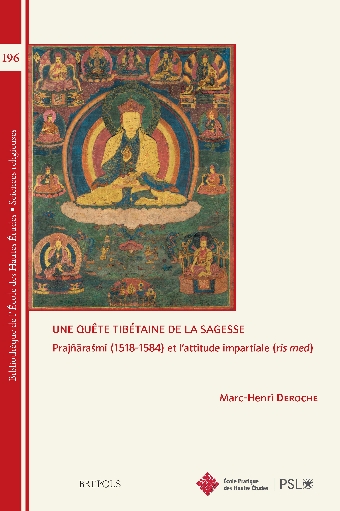
Une quête tibétaine de la sagesse
Prajñāraśmi (1518-1584) et l’attitude impartiale (ris med)
Prajñāraśmi (1518-1584) ou « Lumière de Sagesse » est le nom de plume sanskrit d’un auteur tibétain qui vécut durant une période de crise politico-religieuse située entre la pleine assimilation du bouddhisme indien par les Tibétains et l’instauration du régime des Dalaï-Lamas. Dans ce contexte d’instabilité Prajñāraśmi se distingua par une formation éclectique exceptionnelle et un enseignement qui centré sur l’idée de sagesse – ou gnose – chercha à montrer l’unité des différentes traditions du bouddhisme au Tibet.
Ses grands textes sont présentés et traduits dans cet ouvrage notamment l’Ambroisie de l’étude de la réflexion et de la méditation et la Lampe qui illumine les deux vérités qui traite de la philosophie de la voie du milieu (Madhyamaka). Sa biographie ainsi que l’étude de son oeuvre et de son héritage révèlent une filiation entre les renouveaux de l’école des Anciens (Rnying ma pa) durant la réunification du Tibet sous le Ve Dalaï-Lama (xvii e s.) la nouvelle révélation de ’Jigs med gling pa (xviii e s.) et la floraison du mouvement « impartial » (ris med xix e siècle) avec la collection transsectaire du Trésor des instructions spirituelles.
Il se dessine ici une quête tibétaine de la sagesse qui conjuguant l’histoire des traditions le discours philosophique le yoga et la contemplation visait à une liberté intérieure conçue au-delà de tout parti pris « intention unique » de tous les enseignements du Bouddha ou selon sa propre lignée de la Grande Perfection (Rdzogs chen) « sphère de la libération ».
ut pictura poeta
Author Images and the Reading of Ancient Literature / Autorbilder und die Lektüre antiker Literatur
The leitmotif of this volume is the concept of “author images” which is used in modern literary studies to describe processes of production and reading of literary works and is here applied for the first time to the study of ancient works. As a means of analysing ancient literature it captures the aspect of personification which is characteristic of ancient author concepts and at the same time points to the fact that there is a difference between “image” and “author” and that it is only an image and not the author himself that can be seen and grasped by readers.
This makes the “author image” particularly suitable for examining the intersections of material rhetorical and mental representations of literary authorship that form the subject of this volume. Using selected examples from Latin and Greek literature the contributors explore the fields of cultural experience that nourish authorial images. They discuss the manifold possibilities of visualising and representing a person’s quality of being an author in general or being an author of specific works be it physically through artworks or pictures metaphorically through evoked authorial figures through thematised representations of authors in a text or through the combination of authorial images and texts.
These issues are addressed in four overlapping sections each focusing on different areas of the metaphor’s application namely material images in the form of artworks knowledge about persons textual images as authorial strategies and images in reception.
Un platonisme original au XIIe siècle
Métaphysique pluraliste et théologie trinitaire dans le De unitate et pluralitate creaturarum d’Achard de Saint-Victor
Achard de Saint-Victor (†1171) est un représentant moins connu de l’école de Saint-Victor élève d’Hugues chanoine régulier maître abbé de Saint-Victor à Paris (1155-1161) évêque d’Avranches (1161-1171). Son œuvre principal le De unitate et pluralitate creaturarum consiste en deux parties qui portent sur la doctrine trinitaire et sur la doctrine de la pluralité des raisons éternelles dans le Verbe de Dieu.
Cette recherche entend rétablir les thèses principales exposées par Achard de Saint-Victor dans son livre De unitate et pluralitate creaturarum pour montrer que les capacités métaphysiques de ce penseur ne le cèdent pas aux philosophes plus connus de son époque. Notamment l’autrice étudie la façon dont le De unitate recourt aux doctrines médio et néoplatoniciennes pour résoudre la question d’une coexistence de l’unité et de la pluralité en Dieu et dans les créatures. L’enjeu est de mieux comprendre la place de la métaphysique platonicienne dans l’école de Saint-Victor et ce malgré la rareté des sources au XIIe siècle en particulier des œuvres de Platon ou de ses disciples grecs.
Le présent ouvrage contribue à résoudre deux problèmes de l’histoire de la philosophie : quels éléments et sources platoniciens ont été reçus au XIIe siècle et quelle place la pensée victorine fait à l’héritage platonicien. Les problèmes philosophiques soulevés sont la multiplication des objets intelligibles et sensibles la définition de la chose et l’identité des êtres.

Un âge d’or des chapitres nobles de chanoinesses en Europe au xviii e siècle
Le cas de la Franche-Comté
S’il est difficile d’ignorer les chapitres nobles lorsqu’on aborde l’histoire des noblesses européennes au xviii e siècle notamment dans les rapports qu’elles entretenaient avec l’Église ces instituts restent toutefois peu étudiés. Plus marqué que pour les chapitres nobles masculins le dynamisme de ceux de femmes intrigue. Le cas des chapitres nobles de chanoinesses de Franche-Comté demeurés réguliers en un siècle qui ne passe pas pour avoir été favorable à l’Église régulière comme le confirme la sécularisation d’un certain nombre de ces compagnies est très éclairant sur les raisons de leur faveur. Celle-ci ne réside pas dans cette fonction d’asile et de secours matériel à destination d’une ancienne noblesse paupérisée que décrivaient leurs contemporains mais dans leurs réponses précoces aux attentes de reconnaissance d’un groupe social convaincu de son déclin ainsi que dans leur aptitude à contenter une spiritualité en phase avec celle des Lumières et adaptable à la personnalité de chaque dame noble. L’effort accompli par les chapitres de chanoinesses à l’apogée de la Réforme post-tridentine pour conserver et développer leur spécificité en dépit de l’hostilité du clergé nous conduit par ailleurs à relativiser le concept de « Dorsale catholique » toujours très débattu chez les historiens la plupart de ces établissements étant pourtant implantés dans ce front de catholicité identifié par René Taveneaux reliant les anciens Pays-Bas à l’Italie du Nord.
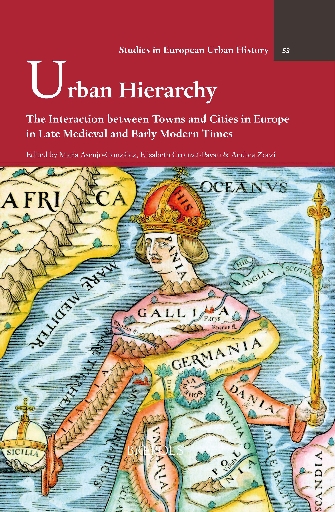
Urban Hierarchy
The Interaction between Towns and Cities in Europe in Late Medieval and Early Modern Times
Urban hierarchy means a new study approach that focuses on the reciprocal concurrence of relationships between urban centers their complementarity opposition support and ongoing collaboration. The goal is to go beyond the single analysis of a city and focus on the interaction between towns and cities and to distinguish their dynamics and the degree of specialization within a political framework. The final objective is to provide a comprehensive historical analysis as urban history requires open to the advantages of interdisciplinarity and the contributions of the international researchers that will take part in the session. The processes of urban hierarchization are not only vital for observing the dynamics of cities but also for studying in depth the response capabilities of the urban systems in the face of new challenges and stimuli. These aspects of the historical analysis of cities are still quite unexplored and therefore they will receive a great deal of attention in the book. The initial regional frameworks will not exclude small towns and rural centers since even though they may look less potentially relevant they might display greater specific development. Thanks to a renewed methodology and special attention to the empirical basis it is possible to improve our knowledge of the urban systems of European regions at the end of the Middle Ages and the beginning of the Early Modern Era shedding light on some aspects of the medieval past that will also influence other scientific areas of humanities.
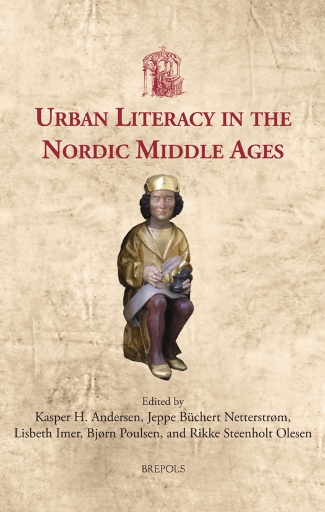
Urban Literacy in the Nordic Middle Ages
This volume is about literacy in the medieval towns of Denmark Norway Sweden and Finland and aims to understand to what extent these medieval urban societies constituted a driving force in the development of literacy in Nordic societies generally.
As in other parts of Europe two languages - Latin and the vernacular - were in use. However the Nordic area is also characterised by its use of the runic alphabet and thus two writing systems were also in use. Another characteristic of the North is its comparatively weak urbanization especially in Finland Sweden and Norway.
Literacy and the uses of writing in medieval towns of the North is approached from various angles of research including history archaeology philology and runology. The contributions cover topics related to urban literacy that include both case studies and general surveys of the dissemination of writing all from a Northern perspective. The thematic chapters all present new sources and approaches that offer a new dimension both to the study of medieval urban literacy and also to Scandinavian studies.
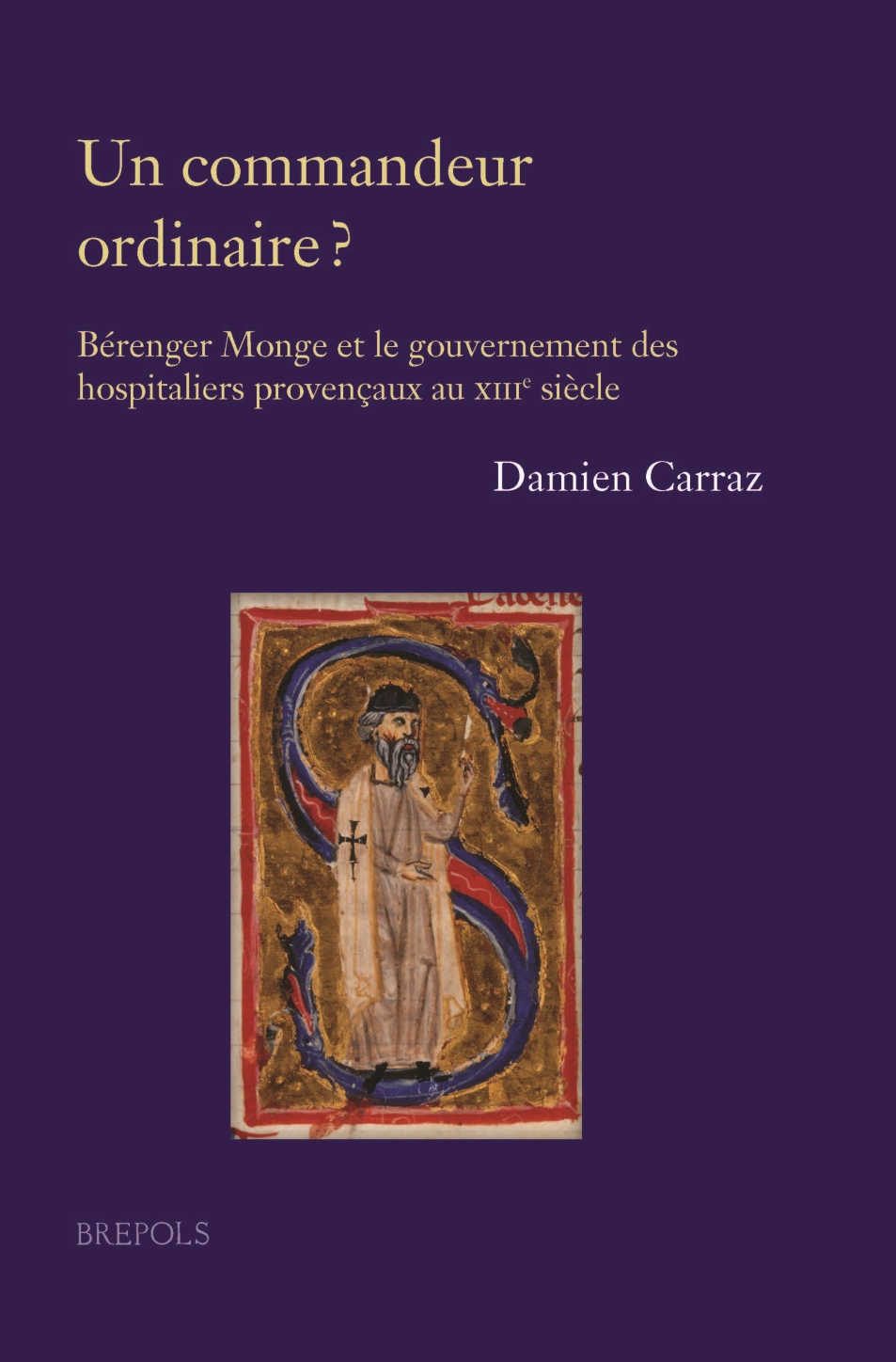
Un commandeur ordinaire ?
Bérenger Monge et le gouvernement des hospitaliers provençaux au xiiie siècle
Bérenger Monge fut commandeur des maisons de l’Hôpital d’Aix et de Manosque pendant toute la seconde moitié du XIIIe siècle. Chef respecté de ces deux importantes communautés régulières élargies à la familia seigneur de l’une des principales villes de Haute-Provence maître d’ouvrage de deux constructions majeures lieutenant du prieur de Saint-Gilles ce dignitaire bénéficia d’un rayonnement dont témoigne le corpus documentaire rassemblé autour de sa personne. Exceptionnel par sa personnalité comme par sa longévité ce commandeur n’en fut-il pas moins ordinaire dans sa fonction statutaire ? Se pose en effet la question de la représentativité non seulement de cet acteur principal mais encore de toute une galerie de personnages et de statuts auxquels celui-ci s’est trouvé lié : prieurs de Saint-Gilles bayles de Manosque experts en droit et en écritures entourages princiers… De fait loin de s’enfermer dans un récit de vie linéaire l’approche par le singulier est susceptible de dévoiler des techniques de gouvernement des configurations sociales des stratégies de carrière ou encore des affinités personnelles ou spirituelles. En définitive la mise en intrigue autour de Bérenger Monge et des différents cercles de son entourage - du lignage à l’institution en passant par les autorités politiques du temps - offre un éclairage inédit sur « une vie de commanderie » c’est-à-dire la cellule de base d’un ordre militaire envisagée comme une institution totale. L’échelle de la vie humaine permet finalement d’articuler le cycle intermédiaire de la génération à des temporalités propres aux différentes mémoires sociales - dont la mémoire des archives appréhendées dans leur dimension processuelle.
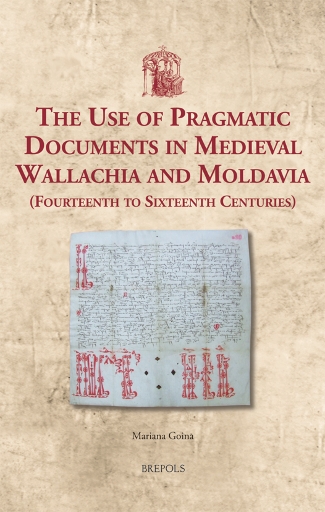
The Use of Pragmatic Documents in Medieval Wallachia and Moldavia (Fourteenth to Sixteenth Centuries)
In the region that was to become Moldavia and Wallachia there are almost no traces of the use of writing for the millennium after the Roman Empire withdrew from Dacia. Written culture surfaces only by the second half of the fourteenth century after the foundation of state institutions. This book surveys the earliest extant documents their issuers and the motives that triggered the development of documentary culture in Moldavia and Wallachia. By the fifteenth century Moldavians were already accustomed to the use of charters. In Wallachia noblemen also appealed to written records but at that stage mainly in extraordinary circumstances. Women could not inherit land and noblemen requested princely charters confirming a legal fiction that turned their daughters into sons. After the mid-sixteenth century Wallachia experiences a steep growth in the number of charters issued. In this period of economic and social upheaval charters proved an extraordinary means for the protection of landed property. Yet neither principality held secular archives - the storage of documents for later use in private hands suggests an early stage in the development of documentary culture.
By covering the ‘birth’ and spread of pragmatic literacy in medieval Moldavia and Wallachia this book thus fills an important lacuna in what is known about the development of literacy in the later Middle Ages.
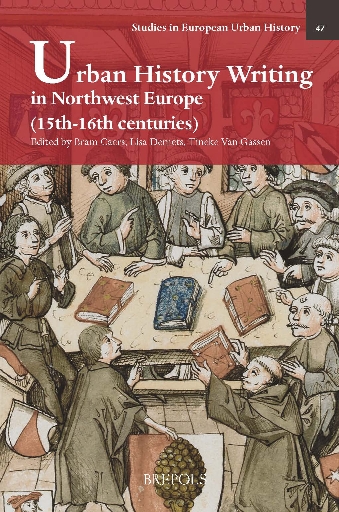
Urban History Writing in North-Western Europe (15th–16th centuries)
This volume aims at taking the first steps towards a revaluation of urban historiography in Northwest Europe including rather than excluding texts that do not fit common definitions. It confronts examples from the Low Countries to well-studied cases abroad in order to develop new approaches to urban historiography in general. In the authors' view there are no fixed textual formats social or political categories or material forms that exclusively define ‘the urban chronicle’. Urban historiography in pre-modern Western Europe came in many guises from the dry and modest historical notes in a guild register to the elaborate heraldic images in a luxury manuscript made on commission for a patrician family to the legally founded political narrative of a professional scribe in an official town chronicle. The contributions in this volume attest to the diversity of the ‘genre’ and look more closely at these texts from a broader comparative perspective unrestrained by typologies and genre definitions. It is mainly because of these hybrid guises that many examples of urban historiography from the Low Countries for instance succeeded in going unnoticed for a considerable amount of time.
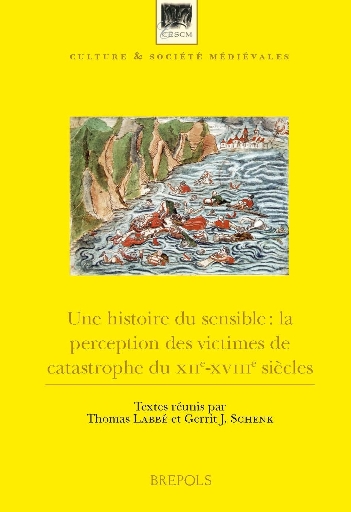
Une histoire du sensible : la perception des victimes de catastrophe du xii e au xviii e siècle
Actes du colloque international tenu à Lorsch (Allemagne, Hesse) du 11 au 14 décembre 2014
Cet ouvrage se propose de réfléchir à la construction historique de la condition de victime en relation avec les événements traumatiques dans l'Europe médiévale et moderne. Dans le contexte contemporain le discours et la gestion des situations de catastrophe ou de mort de masse s'organisent en priorité autour de la place des victimes dans la fabrique événementielle. Cette attitude de la société contemporaine face à la dévastation qualifiée tantôt de « compassionnelle » tantôt « d'humanitaire » ou bien encore de « tragique » reflète une forme de sensibilité qui définit en premier lieu la réalité catastrophique comme un drame.
Une telle approche de la souffrance possède-t-elle cependant une histoire ou constitue-t-elle une constante anthropologique de la société occidentale ? Quel regard les sociétés médiévales et modernes ont-elles posé sur cet aspect autant éthique que social du réel ? Les essais réunis dans ce volume proposent d'offrir quelques pistes de réflexion. À la lecture ambiguë de la victime au Moyen Âge entre souffrance et responsabilité la Renaissance semble commencer à proposer une vision plus « tragique » des individus souffrants. Les victimes peuvent dès lors entrer progressivement dans une politique des émotions qui triomphe au xviii e siècle.
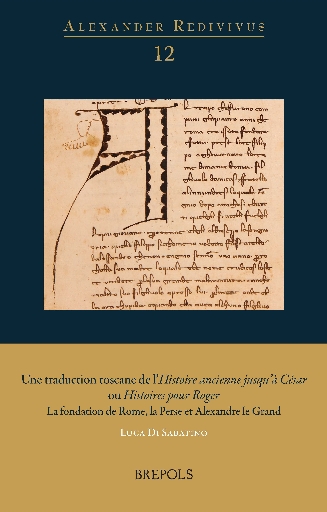
Une traduction toscane de l’Histoire ancienne jusqu’à César ou Histoires pour Roger
La fondation de Rome, la Perse et Alexandre le Grand
L’Histoire ancienne jusqu’à César première histoire universelle écrite en prose française au début du XIIIe siècle a joui d’une grande fortune en Italie comme le montrent les manuscrits copiés dans les ateliers transalpins les traductions les citations et les réemplois jusqu’à la première moitié du XIVe siècle. Les traductions italiennes ou volgarizzamenti se divisent en deux groupes : les versions toscanes et les vénitiennes. Parmi les traductions toscanes nous trouvons celle contenue dans trois manuscrits du Trecento rédigée probablement entre la fin du XIIIe siècle et le début du XIVe. Le plus récent de ces codices le manuscrit II I 146 de la Biblioteca Nazionale Centrale de Florence est le seul témoin de l’Histoire ancienne en italien qui présente la section alexandrine ; il est utilisé comme base pour l’édition proposée ici qui offre le récit sur Rome (depuis la fondation jusqu’aux guerres contre les Samnites) la Perse Philippe II de Macédoine Alexandre le Grand et les guerres des diadoques. Cette traduction toscane représente probablement l’une des plus anciennes versions italiennes de l’histoire d’Alexandre.
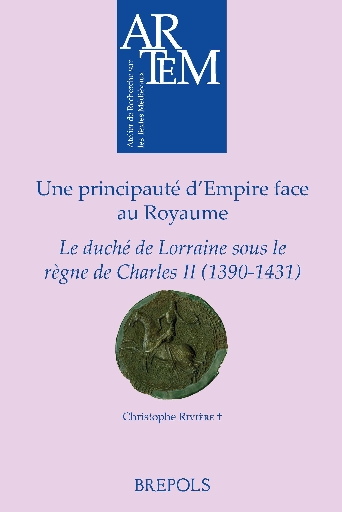
Une principauté d’Empire face au Royaume : le duché de Lorraine sous le règne de Charles II (1390-1431)
Précédant de peu Jeanne d’Arc et le duc René II figures emblématiques d’un Moyen Âge lorrain flamboyant Charles II apparaît comme un prince de second rang. Son règne (1390-1431) est associé non sans raison aux temps les plus sombres de l’histoire de la Lorraine devenue l’épicentre douloureux d’une Europe qu’embrasait par le jeu des alliances le conflit franco-anglais de la Guerre de Cent Ans. Pourtant s’en tenir là serait oublier que Charles II fut l’instigateur de la réunion des duchés de Lorraine et de Bar et qu’il posa les bases de l’État princier en Lorraine.
Rassemblant patiemment une documentation dispersée au gré des aléas de l’histoire délaissant les impasses d’une historiographie longtemps préoccupée par la question de l’État-nation et prisonnière de l’antagonisme exacerbé entre la France et l’Allemagne Christophe Rivière réévalue ici un règne trop longtemps méconnu et trop facilement renvoyé à ses archaïsmes. Son enquête prosopographique livre les contours d’une société politique originale ; il analyse le dialogue qu’elle entretient avec le prince dans un espace politiquement morcelé au sein duquel se rencontrent et s’affrontent les influences venues du royaume de France et de l’Empire ; empruntant aux ethnologues les concepts d’ « acculturation » et de « métissage » il éclaire les valeurs qui cimentent cette société nobiliaire valeurs par lesquelles elle se rapproche ou se distingue tour à tour des principautés voisines pour faire progressivement place à l’affirmation de la souveraineté ducale.
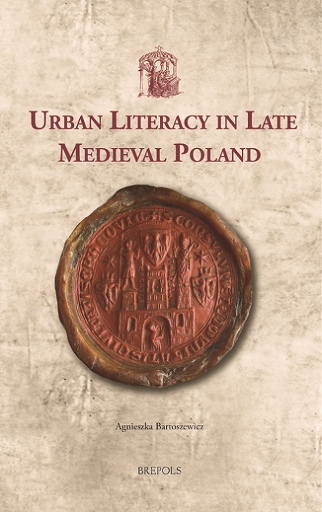
Urban Literacy in Late Medieval Poland
From the end of the thirteenth century onwards European towns exhibited a significant increase in the use of writing as a tool for administrative and economic purposes as well as for social communication. The medieval towns of Poland are no exception to this pattern.
This book surveys the development of the literacy of Polish burghers in the fourteenth and fifteenth centuries revealing socio-economic and cultural processes that changed the life of Polish urban society. Polish urban literacy is examined according to the reception of Western European urban culture more generally. Town networks in medieval Poland are explained and the literacy skills of the producers and users of the written word are discussed. Literacy skills differed greatly from one social group to another it is shown due to the variety of town dwellers (clerics and lay people professionals of the written word occasional users of writing and illiterates). Other issues that are discussed include the cooperation between agents of lay and church literacy the relationship between literacy and orality and the difference between developing literacies in Latin and in the vernacular languages.
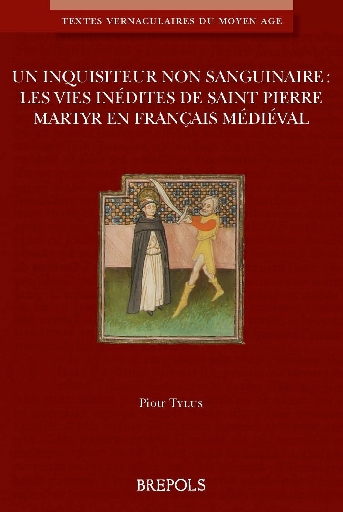
Un inquisiteur non sanguinaire : les vies inédites de saint Pierre Martyr en français médiéval
Pierre naît à Vérone au tournant du XIIe et du XIIIe siècle d’une famille cathare. Il est dit « de Vérone » ou « Martyr ». Il étudie à Bologne où il rencontre les frères prêcheurs et entre dans l’ordre en recevant l’habit probablement des mains de saint Dominique lui-même vers 1220 ou 1221. Son activité essentielle est celle de prédicateur itinérant. Il prêche à Rome à Florence dans la Romagne et la Marche d’Ancône à Venise et en Toscane et peut-être même à Paris. En juin 1251 Innocent IV le charge d’une mission contre les hérétiques de Crémone. Quelques mois plus tard en septembre 1251 il devient inquisiteur pontifical à Milan à Côme et dans leurs districts. Il assume cette tâche pendant les derniers mois de sa vie. Le 6 avril 1252 il est tué sur le chemin de Côme à Milan par un tueur à gages loué par les hérétiques. Pierre est canonisé le 9 mars 1253.
Le présent livre contient neuf versions de sa légende rédigées en français ancien (XIIIe-XVe siècles) par des auteurs anonymes. Les textes qui procèdent du chapitre 61 de la Légenda aurea de Jacques de Voragine n’ont jusqu’à présent jamais été édités. Dans la majorité des cas on a affaire à des adaptations libres parfois très libres de la vita contenue dans la Legenda aurea pour lesquelles celle-ci n’est qu’un point de départ. Il s’agit de textes autonomes : chacun des auteurs a exploité sa source à sa propre façon ; ce sont des jeux de la variante tellement caractéristiques de la littérature médiévale.
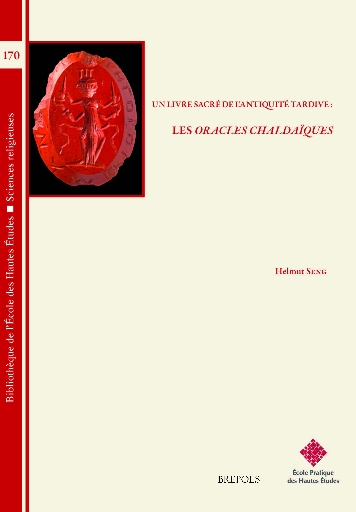
Un livre sacré de l'Antiquité tardive : les Oracles Chaldaïques
La définition devenue classique des Oracles Chaldaïques comme « une sorte de bible des derniers néo-platoniciens » résume la signification de ce texte médio-platonicien qui n’a été conservé que sous forme de fragments et n’en est que plus difficile à comprendre. La tâche est compliquée par le fait que son langage poétique regorge d'images et de métaphores et que ses exégètes antiques ainsi que ses principaux témoins en ont fait un usage créatif. Le présent volume offre une synthèse de la tradition de la réception et de l’histoire de la recherche ainsi que l’interprétation de la plupart des fragments et de nombreux témoignages dans le cadre d’une reconstruction systématique des conceptions philosophiques proposées dans les Oracles Chaldaïques. L’un des principaux thèmes abordés sera celui des idées cosmologiques liées à une hiérarchie des êtres résumée par la formule « âme-homme-salut » cela à la lumière des informations glanées sur la pratique rituelle théurgique.
Understanding Emotions in Early Europe
This book investigates how medieval and early modern Europeans constructed understood and articulated emotions. The essays trace concurrent lines of influence that shaped post-Classical understandings of emotions through overlapping philosophical rhetorical and theological discourses. They show the effects of developments in genre and literary aesthetic and cognitive theories on depictions of psychological and embodied emotion in literature. They map the deeply embedded emotive content inherent in rituals formal documents daily conversation communal practice and cultural memory. The contributors focus on the mediation and interpretation of pre-modern emotional experience in cultural structures and institutions - customs laws courts religious foundations - as well as in philosophical literary and aesthetic traditions.
The volume thus represents a conspectus of contemporary interpretative strategies displaying close connections between disciplinary and interdisciplinary critical practices drawn from historical studies literature anthropology and archaeology philosophy and theology cognitive science psychology religious studies and gender studies. The essays stretch from classical and indigenous cultures to the contemporary West embracing numerous national and linguistic groups. They illuminate the complex potential of medieval and early modern emotions in situ analysing their involvement in subjects as diverse as philosophical theories imaginative and scholarly writing concepts of individual and communal identity social and political practices and the manifold business of everyday life.
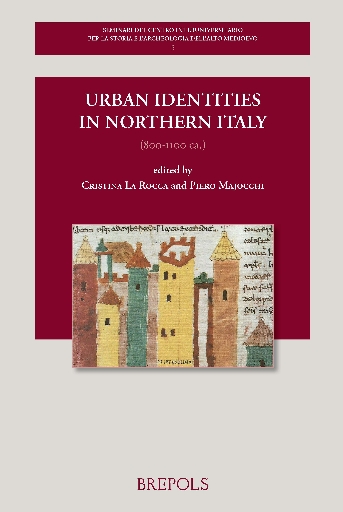
Urban identities in Northern Italy, 800-1100 ca.
The book aims to reflect on the characteristics of urban centers of the kingdom of Italy between the ninth and the eleventh centuries filling a noticeable historiographical gap. The cities in Northern Italy in this period have not yet been analysed with a multidisciplinary approach able to outline their specific and distinctive characteristics and to pose this ages in relation to the post-Roman past and also to the following 'Communal' phase. Urban identities are examined from different points of view: from a political perspective in relation to the dialectic between center and periphery and to the border areas of the kingdom; from an institutional and territorial standing point analyzing the structures of local power and public territorializations; according to social and military history approaches highlighting the continuities and transformations in comparison with former and following centuries. The issue of urban identities is also archaeologically investigated in relation to urban development and to topographic transformations and culturally explored examining mutual exchanges between the cities of the kingdom. Another aspect rarely addressed by previous literature is ultimately to compare the results of this research on the Italic kingdom with studies on the Transalpine Carolingian and post-Carolingian empire and kingdoms outlining common trends but also specific peculiarities.
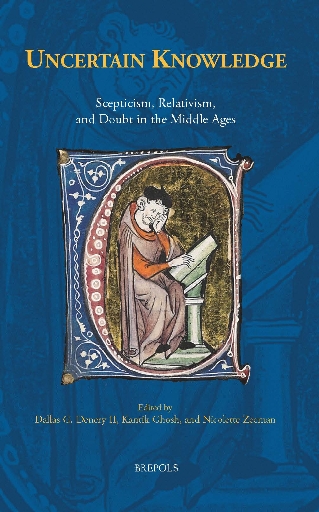
Uncertain Knowledge
Scepticism, Relativism, and Doubt in the Middle Ages
What are the forms in which later medieval thinkers articulate epistemological scepticism relativism and doubt? Is it possible to voice different forms of uncertainty in different institutional contexts and languages? Bringing together specialists in philosophy theology history and literature this book undertakes an interdisciplinary investigation of some of the ways in which the problem of knowledge was explored in the Middle Ages. This is a topic of central intellectual importance and has large cultural consequences. The Middle Ages are often still treated by non-medievalists as a time of naive epistemological self-confidence and we hope that ultimately this revisionist project will have impact beyond medieval studies illustrating the extent to which this was a period in which many thinkers were intrigued by and comfortable with uncertainty.