


Browse Books
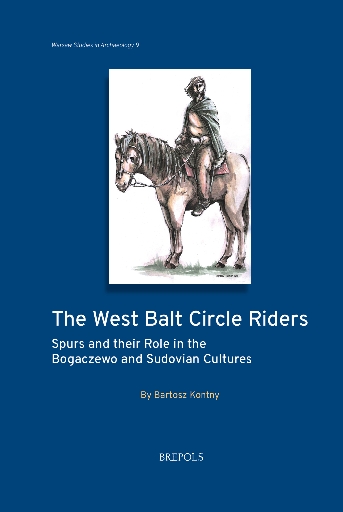
The West Balt Circle Riders
Spurs and their Role in the Bogaczewo and Sudovian Cultures
The spurs of horse riders have long been acknowledged as an important item of grave furniture in the Late Roman and Migration period burials of Poland a reflection of the high social position held by the deceased. Yet while spurs have been studied at a general level and typo-chronological studies have been conducted on spurs found in southern and central Poland no such research has so far been conducted on finds from the West Balt Circle in north-eastern Poland. This volume is an attempt to rectify the situation by offering a thorough examination of finds attributed to the Bogaczewo and Sudovian Cultures. The author here offers a comprehensive assessment of surviving materials from the period many of which are scattered through museums across Europe together with an in-depth analysis of archival sources (included among them the private inventories of archaeologists working in the pre-war period) in order to reconstruct our understanding of the furnishings and data relating to spurs. This detailed research carefully contextualized against our wider understanding of Barbarian Europe offers an important new reference for our understanding both of the West Balt Circle and its inter-cultural relations with surrounding regions as well as of the symbolic meaning of spurs and their significance in burial rites.
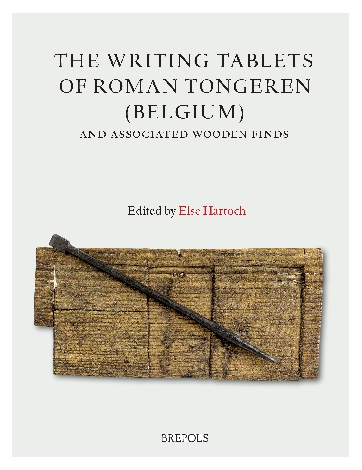
The Writing Tablets of Roman Tongeren (Belgium)
And Associated Wooden Finds
Roman wooden writing tablets known in Latin as tabulae ceratae have been found by archaeologists in various locations around the former capital of the civitas/municipium Tungrorum or Roman Tongeren (now the Belgian city of Tongeren-Borgloon). These rare and delicate finds are remarkable not only due to the excellent state of their preservation but also because they are inscribed with the remnants of texts once etched into an overlying wax layer that can to the discerning eye still be deciphered. The tablets not only provide concrete information about religious judicial and administrative practices but they also enhance our understanding of the complex processes of Romanisation and Latinisation in the northwestern civitates and municipia of the Roman Empire.
Unearthed in the first half of the twentieth century with a second group discovered in 2013 the Roman tablets housed in the Gallo-Roman Museum of Tongeren-Borgloon and in the city’s municipal heritage depository became the object of an in-depth study by an international team of specialists piloted by the Gallo-Roman Museum. It is the results of this project that are presented here in this volume for the first time. The painstaking process of deciphering and interpreting the script marks and text fragments is explored via analysis of palaeography philology and onomastics along with key scientific techniques such as wax analysis wood species identification and script visualisation by Multi-Light Reflectance Imaging. Rich detail is also provided about other associated wooden finds that shed light on how and where the tablets were produced.
The result is a beautifully illustrated and insightful volume that introduces the lost world of Roman Tongeren and its writing tablets to professionals and the general public alike.
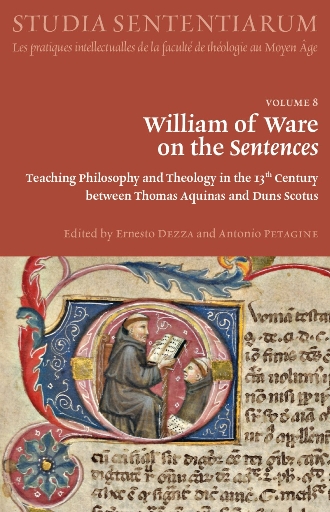
William of Ware on the Sentences
Teaching Philosophy and Theology in the 13th Century between Thomas Aquinas and Duns Scotus
The Franciscan William of Ware – the Magister Scoti – flourished as a theologian at the end of the thirteenth century. Although he wielded significant influence on fourteenth-century theological and philosophical debates his thought remains little known and even less studied than it deserves. A major cause for this situation lies in the difficulty of accessing the text of his Questions on the Four Books of the Sentences which is largely unedited.
This volume is the first entirely devoted to William of Ware. It aims to promote a renewed knowledge of his texts and doctrines. The book includes updated information on studies and editions of Ware's texts and specific studies on crucial aspects of his doctrines such as theology metaphysics physics epistemology Christology and anthropology. Additionally the volume presents previously unpublished questions from his Commentary on the Sentences.
Overall the volume serves as an essential reference for the thought and texts of William of Ware and provides a new and illuminating perspective on scholastic culture during the turn from the thirteenth to the fourteenth century.
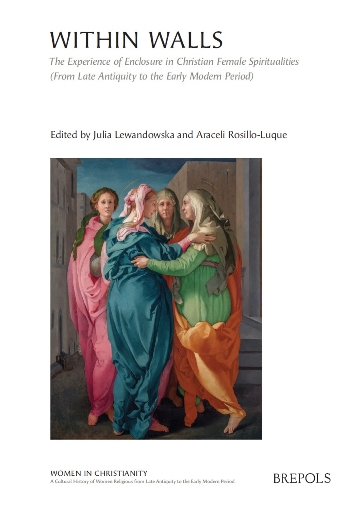
Within Walls
The Experience of Enclosure in Christian Female Spiritualities (From Late Antiquity to the Early Modern Period)
What different mechanisms did women religious use to interpret the communal and individual aspects of enclosure throughout history? To what extent was enclosure a pivotal feature of Christian spiritual social and cultural life? How did social and political contexts shape the strategies of nuns and beatas in accepting or rejecting strict enclosure?
Within Walls explores the diverse experiences of enclosure within female Christian spiritualities presenting it as a crucial concept for a deep understanding of the history of women religious. The volume primarily aims to show the different ways in which women religious lived negotiated and redefined enclosure in its material and symbolic dimensions. Covering the period from the New Testament era to the late sixteenth century and spanning regions from the Holy Land and Egypt to Western Europe and colonial Mexico it explores the evolving meanings and uses of the confined life as experienced and shaped by women religious in Christianity.
The case studies presented in this volume—from the strategies of seclusion of early Christian anchoresses to the plethora of voices of Mediaeval and Early Modern female communities and the authority wielded by individual nuns pilgrims prioresses reformers and mystics—argue that there was by no means a single form of enclosure in female Christian religious life. Instead inspired by Philip Sheldrake’s interpretation of sacred spaces as polyphonic this volume stresses the multivocality and multilocality of the term. Adopting an interdisciplinary approach that integrates microhistory human geography the cultural analysis of materiality literary studies feminist and gender studies indigenous methodologies art studies postcolonial anthropology and the philosophy of religion and spirituality Within Walls provides fresh perspectives on the most intricate dimension of religious life in history.
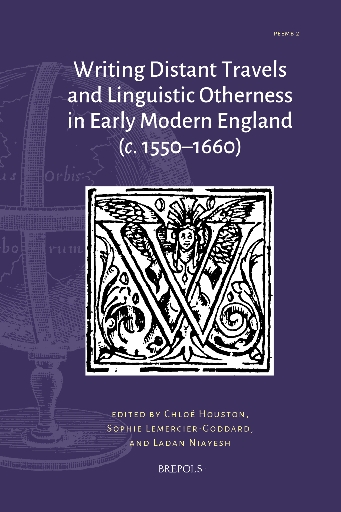
Writing Distant Travels and Linguistic Otherness in Early Modern England (c. 1550–1660)
As Britain’s global interests expanded from the mid-sixteenth century geographic mobility encouraged many forms of multilingual practices in English writings. Translations lexical borrowings and records of exchanges between travellers and far-off lands and peoples diversely registered communicated engaged and politicised encounters with alterity. Meanwhile earlier continental European translations also influenced and complicated the reception of distant otherness entailing questions of linguistic hybridity or pluralism.
This volume explores some of the practices and strategies underpinning polyglot encounters in travel accounts produced translated or read in England as well as in artistic and educational materials inflected by those travels. Drawing on linguistic lexicographic literary and historical methodologies the twelve chapters in this volume collectively look into the contexts and significances of textual contact zones. Particular attention is paid to uses of multilingualism in processes of identity construction defining and promoting national or imperial agendas appropriating and assimilating foreign linguistic capital or meeting resistance and limits from linguistic and cultural otherness refusing to lend itself to a subjected or go-between status. Treating of indigenous languages newly anglicized words and new artistic and instructional materials the volume makes the case for the vibrancy and influence of early modern English engagements with polyglossia and the need for multiple scales of approach to – and interdisciplinary perspectives on – the subject.
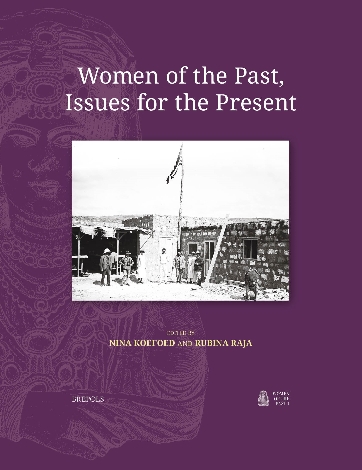
Women of the Past, Issues for the Present
The roles played by women in history and even the very idea of what it is to be female have always been in flux changing over centuries between cultures and in response to diverse social and economic parameters. Even today women’s roles and women’s rights continue to face changes and pressures. In establishing the series Women of the Past: Testimonies from Archaeology and History the ambition is to build on the profound theoretical and empirical developments that have taken place over the last fifty years of gender-focused research and to explore them in a contemporary context.
The aim of this series is to shed light on not just the outstanding and extraordinary women who were trendsetters of their time but also the not quite so outstanding women often overshadowed by outstanding men and the ordinary women those who simply went about their everyday life and kept their world turning in their own quiet way. This edited volume Women of the Past Issues for the Present is the inaugural volume of the series and shows the wide span of the series chronologically geographically and socially in terms of the research presented. From Roman slaves to Viking women and from medieval wet-nurses to the nineteenth-century wives who supported their archaeologist husbands on excavation this groundbreaking volume opens a new vista in our understanding of the past.
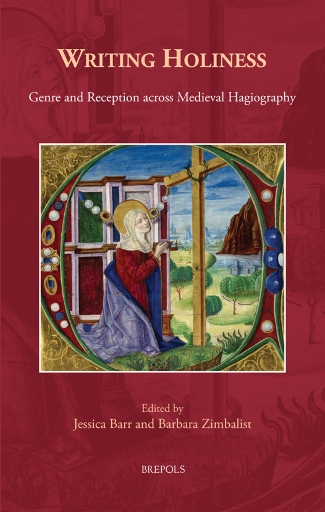
Writing Holiness
Genre and Reception across Medieval Hagiography
Writing Holiness contributes to exciting new critical conversations in the study of medieval hagiography in Western Christianity. Recent years have seen innovative approaches to the literatures of sanctity through emergent theoretical discourses such as disability studies and trans theory. At the same time traditional methodologies such as manuscript studies and reception history continue to generate new perspectives on the production circulation and reception of the sacred textual canon.
Through ten unique contributions that draw from both new and established theories and methodologies this volume charts the development movement and reception of Christian hagiographic texts in localities ranging from the Iberian Peninsula to the Scandinavian Archipelago from the early to the late Middle Ages. Each chapter traces hagiographic development over generic temporal cultural and linguistic boundaries and considers the broader contours of the sacred imaginary that come into view as a result of such critically intersectional inquiry.
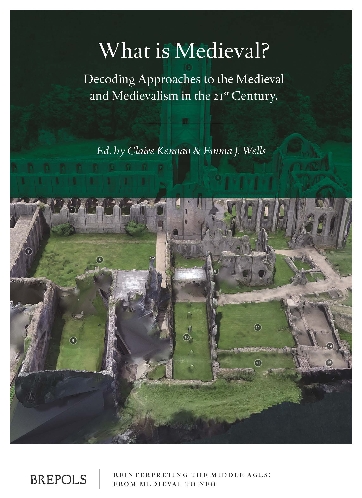
What is Medieval?
Decoding Approaches to the Medieval and Medievalism in the 21st Century
The Middle Ages and Medievalism have been used and abused throughout history–and this continues. This narrative deserves a reassessment. But what is Medieval? This is the central question that unifies the contributions in this volume.
‘Medievalism’ or the study of the Middle Ages in its broadest sense refers to the perception conceptualisation and movement towards the era post the fifteenth century. Its study is therefore not about the period otherwise referred to as the ‘Middle Ages’ but rather the myriad ways it has since been conceived. And the field of medievalism is still in its relative infancy which has led to the emergence of various existential questions about its scope remit theoretico-methodological and pedagogical underpinnings interpretation periodization and its relationship to established disciplines and more emerging subdisciplines and specialised fields—both within and without the academy.
In turn neomedievalism has allowed insight into and a response to the medieval often dominated by the modern. This has provoked debate over the nature of neomedievalism as a discipline subdiscipline genre field or offshoot in direct or contrasting relation to the more traditional medievalism.
Featuring interdisciplinary contributions from academics educational practitioners as well as museum digital and heritage professionals this volume provides a fresh reflection on past methods to emerging pedagogies as well as new avenues of enquiry into the ways we think about the medieval. It is by reconciling these seemingly disparate forms that we can better understand the continual interconnected and often politicised reinvention of the Middle Ages throughout cultures and study.
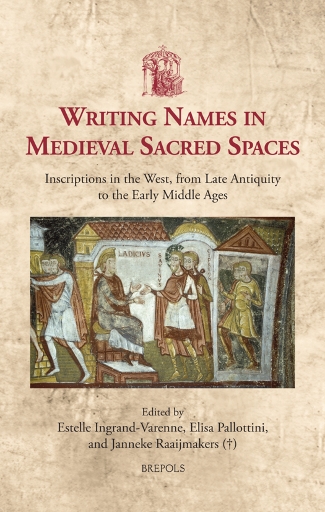
Writing Names in Medieval Sacred Spaces
Inscriptions in the West, from Late Antiquity to the Early Middle Ages
This volume proposes a framework for reflection on practices of writing personal names in medieval sacred spaces uniting historians art historians and specialists in written culture (both epigraphers and palaeographers). It traces the forms and functions of names that can be found within the space of early medieval churches and cemeteries focusing mainly but not solely on inscriptions. By examining names written in various kinds of media from liturgical books to graffiti and more formal inscriptions the contributors investigate the intentions and effects of the act of writing one’s own name or having one’s name written down. Their interest resides less in the name itself than the interactions it had with its spatial iconographic linguistic ritual and cultural context and what this indicates about medieval graphical practices. What is a name from a graphic point of view? What are the specificities of the epigraphic manifestations of names? By whom were names written and for whom were they intended (if they were even meant to be accessed)? Addressing these and other questions this volume shows the importance of inscriptions as historical sources and the contribution they give to the study of medieval societies at the intersection of history anthropology archaeology linguistics and semiology.
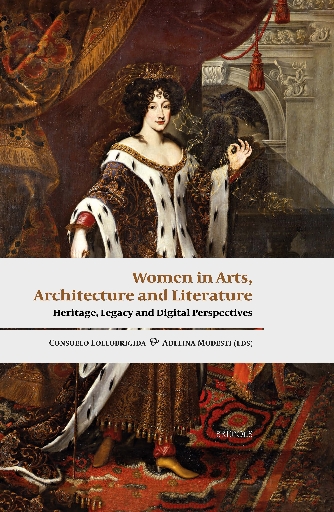
Women in Arts, Architecture and Literature: Heritage, Legacy and Digital Perspectives
Proceedings of the First Annual International Women in the Arts Conference Rome, 20–22 October 2021
In the last few decades the study of women in the arts has largely increased in terms of scholars involved in research and investigation with the reception of the outcomes especially acknowledged by museums which are dedicating part of their mission to organizing exhibitions and/or acquiring the works of women. The Annual International Women in Arts Conference seeks to advance contemporary discussions on how female creativity has helped shape European culture in its heterogeneity since the Middle Ages. This volume collects the proceedings of the first conference organised in Rome in October 2021. It focuses on the role of women in literature art and architecture. Throughout history these domains were often seen as very masculine. Yet there have been many women who have made their mark as writers illuminators artists and architects or have played a decisive role as patrons and supporters in these arts. This collection of essays aims to bring these women to the fore and sheds a new light on the heritage and legacy of women in the creative arts and architecture from the Middle Ages until the 20th century.
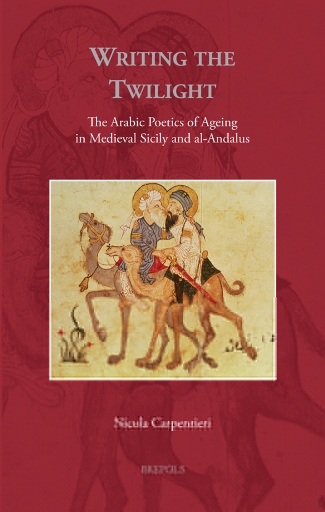
Writing the Twilight
The Arabic Poetics of Ageing in Medieval Sicily and al-Andalus
In the eleventh century as Muslim sovereignty in the Western Mediterranean was eroded by both internal divisions and external attacks Sicily fell to the Normans. At the same time al-Andalus fragmented into a series of small kingdoms that were then picked off by powerful conquerors. Against this backdrop Arabic poets made use of their craft to try and explain the changes in their world. Among them were the Andalusian Abū Ishāq and the Sicilian Ibn Hamdīs both of whom wrote vividly about their own ageing and mortality as well as about the broader twilight of the worlds they knew.
Taking these two protagonists as its starting point this extraordinary volume explores how Abū Ishāq and Ibn Hamdīs despite their different locations both made use of poetry. For them it was a tool to confront their mortality lament their own physical decay and appeal to their age and experience as well as a way of juxtaposing their concerns with the political and social dismemberment of their wider societies and the need for a restoration of world order. The result is also a broader discussion of the relationship between poetry and politics in Maghribī Islam and a reminder of poetry’s importance as a medium to engage with the world.
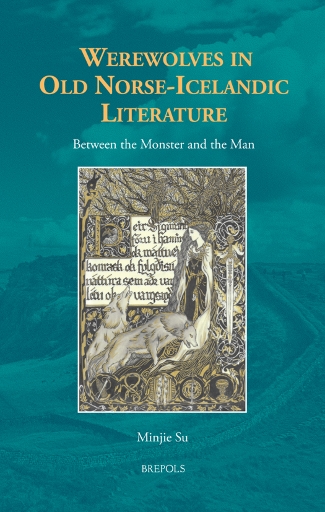
Werewolves in Old Norse-Icelandic Literature
Between the Monster and the Man
At the heart of any story of metamorphosis lies the issue of identity and the tales of the werwulf (lit. ‘man-wolf’) are just as much about the wolf as about the man. What are the constituents of the human in general? What symbolic significance do they hold? How do they differ for different types of human? How would it affect the individual if one or more of these elements were to be subtracted?
Focusing on a group of Old Norse-Icelandic werewolf narratives many of which have hitherto been little studied this insightful book sets out to answer these questions by exploring how these texts understood and conceptualized what it means to be human. At the heart of this investigation are five factors key to the werewolf existence - skin clothing food landscape and purpose - and these are innovatively examined through a cross-disciplinary approach that carefully teases apart the interaction between two polarizations: the external and social and the interior and psychological. Through this approach the volume presents a comprehensive new look at the werewolf not only as a supernatural creature and a literary motif but also as a metaphor that bears on the relationship between human and non-human between Self and Other and that is able to situate the Old-Norse texts into a broader intellectual discourse that extends beyond medieval Iceland and Norway.
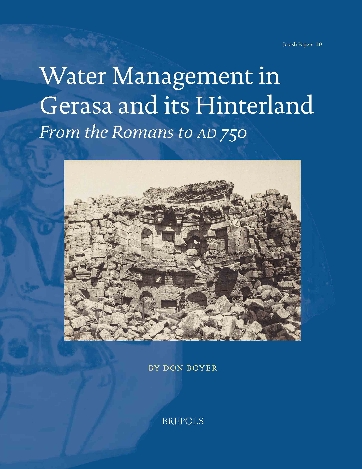
Water Management in Gerasa and its Hinterland
From the Romans to ad 750
The Decapolis city of Gerasa has seen occupation since the Bronze Age but reached its zenith in the Roman to early Islamic period as a population centre and trading hub. Located in a fertile valley in the limestone foothills of the Ajlun mountains the city benefitted from a benign climate and an excellent local water supply from karstic springs and perennial streams. By the Roman-Early Byzantine period these water sources were harnessed and managed by extensive aqueduct and distribution networks that satisfied the broad range of water needs of both urban and rural dwellers.
This volume offers an up-to-date comprehensive and multidisciplinary analysis of the water management system employed in both Gerasa and its hinterland from the time of Roman occupation to the devastating earthquakes that struck the city at the end of the Umayyad period. Drawing on archaeological evidence from the author’s field research together with a critical and detailed analysis of the evidence of water installations and the results of a radiocarbon dating study this insightful book offers the first diachronic interpretation of Gerasa’s water distribution setting the city in its geoarchaeological historical and landscape contexts and contributing to the broader understanding of its archaeological history.
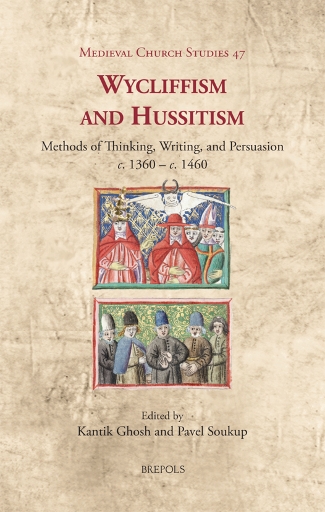
Wycliffism and Hussitism
Methods of Thinking, Writing, and Persuasion c. 1360 – c. 1460
John Wyclif (d. 1384) famous Oxford philosopher-theologian and controversialist was posthumously condemned as a heretic at the Council of Constance in 1415. Wyclif’s influence was pan-European and had a particular impact on Prague where Jan Hus from Charles University was his avowed disciple and the leader of a dissident reformist movement. Hus condemned to the stake at Constance gathered around him a prolific circle of disciples who changed the landscape of late medieval religion and literature in Bohemia just as Wyclif’s own followers had done in England.
Both thinkers and the movements associated with them played a crucial role in the transformation of later medieval European thought in particular through a radically enlarged role of textual production in the vernaculars (especially Middle English and Old Czech) as well as in Latin in the philosophical theological and ecclesiological realms.
This interdisciplinary volume of essays brings together cutting-edge research from scholars working in these and contiguous fields and asks fundamental questions about the methods that informed Wycliffite and Hussite writings and those by their interlocutors and opponents. Viewing these debates through a methodological lens enables a reassessment of the impact that they had and the responses they elicited across a range of European cultures from England in the west via France and Austria to Bohemia in the east.
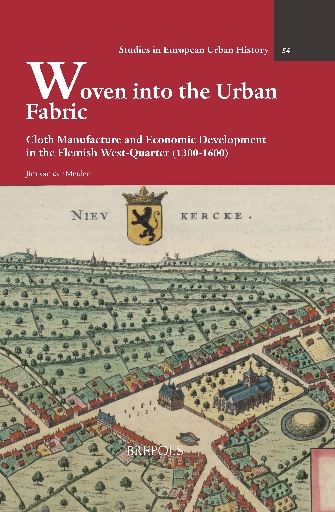
Woven into the Urban Fabric
Cloth Manufacture and Economic Development in the Flemish West-Quarter (1300-1600)
This regional study focuses on the socio-economic development of the so-called West-Quarter of the county of Flanders during the period 1300-1600. Through the expansion of potent textile industries in the countryside from the fourteenth century onwards this region gradually attained distinctly ‘urban’ characteristics in terms of production scale specialisation product quality and the aim for external markets. By the middle of the sixteenth century the West-Quarter had even become one of Flanders’s main production regions of woolen cloth. This book assesses how and why this economic expansion took place why it happened at that particular moment and why in this region. The broader aims of the research are twofold: first to offer a contribution to the debate on Europe’s transition from a ‘feudal’ to a ‘capitalist’ or market economy by looking at the influence of specific social structures and institutional frameworks on the economic development of pre-industrial societies. Secondly this book contributes to the debate about the divide between town and countryside in pre-industrial Europe combining the outlooks and methods of both urban and rural historians in order to qualify this supposed dichotomy.
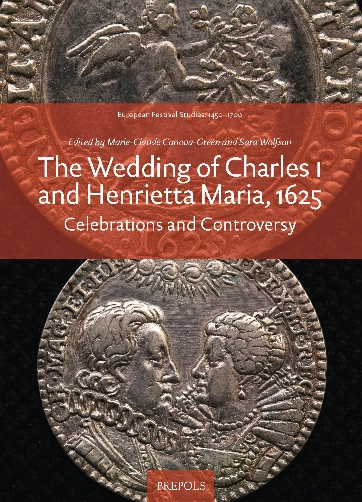
The Wedding of Charles I and Henrietta Maria, 1625
Celebrations and Controversy
On 11 May 1625 Charles I married Henrietta Maria the youngest sister of Louis XIII of France. The match signalled Britain’s firm alignment with France against Habsburg Spain and promised well for future relations between the two countries. However the union between a Protestant king and a Catholic princess was controversial from the start and the marriage celebrations were fraught with tensions. They were further disrupted by the sudden death of James I and an outbreak of the plague which prevented large-scale public celebrations in London. The British weather also played its part. In fact unlike other state occasions the celebrations exposed weaknesses in the display of royal grandeur and national superiority. To a large extent they also failed to hide the tensions in the Stuart-Bourbon alliance. Instead they revealed the conflicting expectations of the two countries each convinced of its own superiority and intent on furthering its own national interests. Less than two years later Britain was effectively in a state of war against France.
In this volume leading scholars from a variety of disciplines explore for the first time the marriage celebrations of 1625 with a view to uncovering the differences and misunderstandings beneath the outward celebration of union and concord. By taking into account the ceremonial political religious and international dimensions of the event the collection paints a rounded portrait of a union that would become personally successful but complicated by the various tensions played out in the marriage celebrations and discussed here.
Contributors: R. Malcolm Smuts Lucinda H. S. Dean J. R. (Ronnie) Mulryne Karen Britland Marie-Claude Canova-Green Erin Griffey Margaret Shewring Sara J. Wolfson Sara Trevisan Kevin Laam Sydney Anglo Margaret M. McGowan John Peacock Gordon Higgott Ella Hawkins .
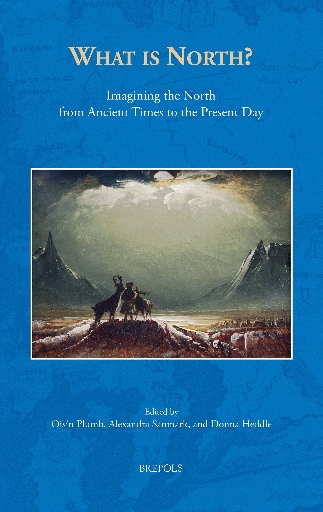
What is North?
Imagining the North from Ancient Times to the Present Day
The British Isles Scandinavia Iceland Greenland and Eastern Canada alongside many small islands form a broken bridge across the northern extremities of the Atlantic Ocean. This ‘North Atlantic World’ is a heterogeneous but culturally intertwined area ideally suited to the fostering of an interest in all things northern by its people. For the storytellers and writers of the past each more northerly land was far enough away that it could seem fabulous and even otherworldly while still being just close enough for myths and travellers’ tales to accrue. This book charts attitudes to the North in the North Atlantic World from the time of the earliest extant sources until the present day. The varied papers within consider a number of key questions which have arisen repeatedly over the centuries: ‘where is the North located?’ ‘what are its characteristics?’ and ‘who or what lives there?’. They do so from many angles considering numerous locations and an immense span of time. All are united by their engagement with the North Atlantic World’s relationship with the North.
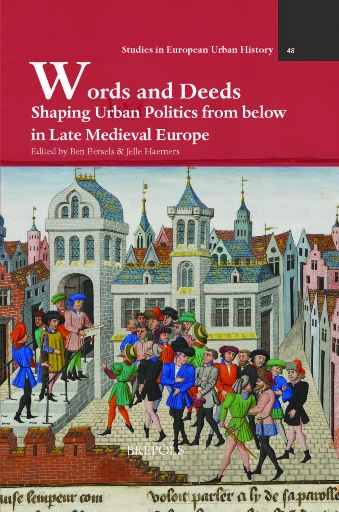
Words and Deeds
Shaping Urban Politics from below in Late Medieval Europe
This book focuses on the city and urban politics because historically towns have been an interesting laboratory for the creation and development of political ideas and practices as they are also today. The contributions in this volume shed light on why how and when citizens participated in the urban political process in late medieval Europe (c. 1300-1500). In other words this book reconsiders the involvement of urban commoners in political matters by studying their claims and wishes their methods of expression and their discursive and ideological strategies. It shows that in order to garner support for and establish the parameters of the most important urban policies medieval urban governments engaged regularly in dialogue with their citizens. While the degree of citizens’ active involvement differed from region to region and even from one town to the next political participation never remained restricted to voting for representatives at set times. This book therefore demonstrates that the making of politics was not the sole prerogative of the government; it was always to some extent a bottom-up process as well.
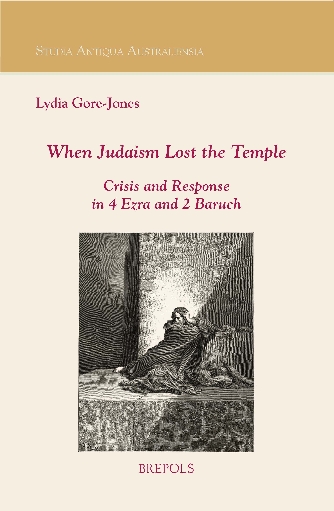
When Judaism Lost the Temple
Crisis and Reponse in 4 Ezra and 2 Baruch
This book presents a study of religious thought in two Jewish apocalypses 4 Ezra and 2 Baruch written as a response to the destruction of the Jerusalem Temple by the Romans in 70 CE. The true nature of the crisis is the perceived loss of covenantal relationship between God and Israel and the Jewish identity that is under threat. Discussions of various aspects of thought including those conventionally termed theodicy particularism and universalism anthropology and soteriology are subordinated under and contextualized within the larger issue of how the ancient authors propose to mend the traditional Deuteronomic covenantal theology now under crisis.Both 4 Ezra and 2 Baruch advocate a two-pronged solution of Torah and eschatology at the centre of their scheme to restore that covenant relationship in the absence of the Temple. Both maintain the Mosaic tradition as the bulwark for Israel’s future survival and revival. Whereas 4 Ezra aims to implant its eschatology into the Sinaitic tradition and make it part of the Mosaic Law 2 Baruch extends the Deuteronomic scheme of reward and retribution into an eschatological context making the rewards of the end-time a solution to the cycle of sins and punishments of this age. Considerable emphases are also placed on the significance of the portrayals of the pseudonymous protagonists Ezra and Baruch the use of symbolism in the two texts as scriptural exegesis as well as their relationship with each other and links with the Hebrew Bible and other Jewish and Christian writings.
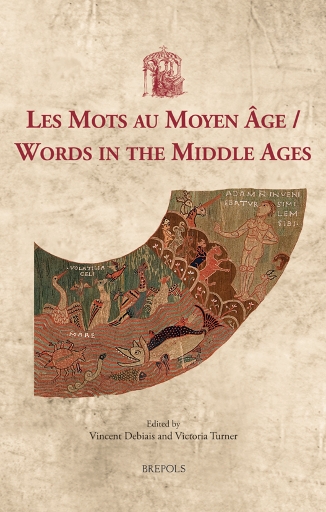
Words in the Middle Ages / Les Mots au Moyen Âge
This collection of essays is a return to words of the Middle Ages in and of themselves uniting philologists historians epigraphers palaeographers and art historians. It probes the intellectual technical and aesthetic principles that underpin their use and social function in medieval graphical practices from epigraphy and inscriptions to poetics ‘mots’ and ‘paroles’. By analysing the material and symbolic properties of a particular medium the conditions in which texts become signs and scribal expertise the contributors address questions that initially seem simple yet which define the very foundations of medieval written culture. What is a word? What are its components? How does it appear in a given medium? What is the relationship between word and text word and letter word and medium word and reader? In a Middle Ages forever torn between economic and extravagant language this volume traces the status of the medieval word from ontology to usage encompassing its visual acoustic linguistic and extralinguistic forms.