


Browse Books
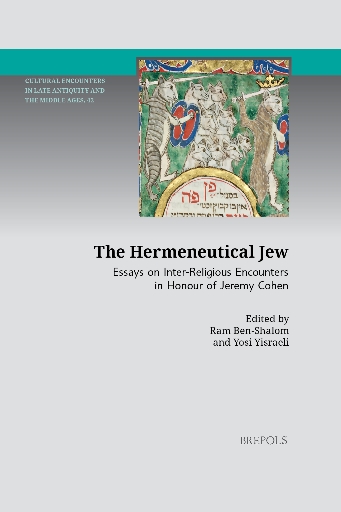
The Hermeneutical Jew
Essays on Inter-Religious Encounters in Honour of Jeremy Cohen
The interconnected histories of Judaism and Christianity are explored in this compelling volume honouring the influential work of Jeremy Cohen. Cohen’s pioneering studies have reshaped our understanding of these religious traditions emphasizing the crucial role of cross-religious engagements in forming their self-perceptions and identities.
Comprising fifteen chapters the book is organized into four thematic sections. The first section Literary Mirrors and Inter-Religious Representations explores patterns of internalizations (mis)representations and appropriations between competing religious traditions. The second section Physical and Figurative Encounters addresses the roles played by visible and physical markers in setting interreligious boundaries and exchanges. The third section Agents of Anti-Jewish Discourse focuses on Christian thinkers of the late Middle Ages who propagated anti-Jewish measures or prejudices across different genres and causes. The final section The Transformability of the Jews and the Hermeneutics of Inter-Religious Conversion examines the cultural and intellectual impact of different efforts to convert Jews and Jewishness.
This collection of new studies by leading medievalists serves as a fitting tribute to Jeremy Cohen’s groundbreaking contributions and offers readers an insightful look into the complex world of medieval and early modern religious identity.
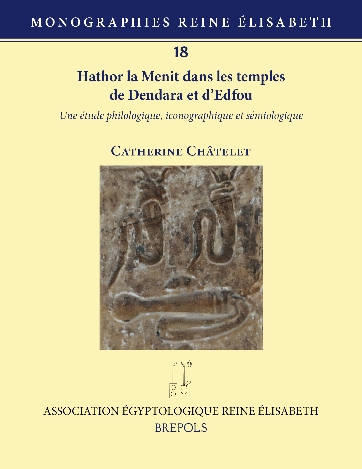
Hathor la Menit dans les temples de Dendara et d’Edfou
Une étude philologique, iconographique et sémiologique
Cette recherche se positionne dans la continuité d’une première étude portant sur le collier-menit dans les temples ptolémaïques et publiée dans la collection Monographies Reine Élisabeth. Ce collier qui est un des objets sacrés d’Hathor porte également le nom de l’entité divine du même nom forme d’Hathor de Dendara et d’Edfou dont cette étude fait l’objet. En tant que forme d’Hathor quels sont les termes les parures les actions la gestuelle qui pouvaient la différencier de la grande Hathor si toutefois cela est envisageable ces deux divinités étant intimement associées ?
Une partie de cette recherche porte sur l’étude de la chapelle du collier-menit. Les textes et les épithètes de la déesse ont été ici analysés d’un point de vue stylistique afin d’essayer de comprendre la démarche des hiérogrammates et la raison d’être d’une telle chapelle dédiée à Hathor la Menit sachant que pour les deux autres formes secondaires d’Hathor : « Hathor-chef-du-grand-siège » et « Hathor-uraeus » il n’en existe point.
Hathor la Menit est la récipiendaire de nombreuses offrandes qui ont été étudiées et contextualisées afin de comprendre son implication dans chacune de ces scènes et de cerner au mieux la personnalité de cette déesse. Son étude dans le temple d’Edfou s’imposait afin de comprendre comment elle était perçue dans ce temple apollonopolitain.
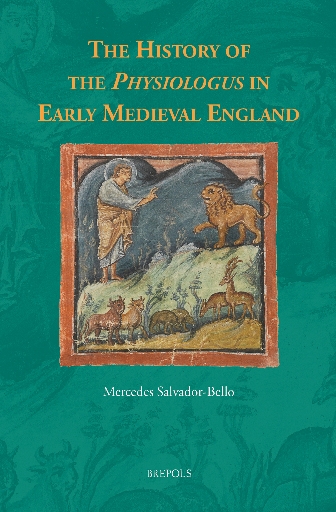
The History of the Physiologus in Early Medieval England
The Physiologus is the ancestor of the bestiary a collection of chapters describing animal qualities and behaviours usually with an allegorical meaning which proliferated especially in England in the late Middle Ages. While much scholarly attention has been directed to the bestiary the history of the transmission of the Physiologus has hardly been investigated. Evidence of the circulation of this treatise in the early medieval period is certainly scanty since only two brief versions dating from this period have been preserved one in Old English and another one in Latin. However this monograph shows further proof of the knowledge of the Physiologus in Anglo-Saxon England. It also reveals the relationship of the only two surviving texts and their connection to the main Continental recension of the time. This study therefore demonstrates that the popularity of bestiaries in the later Middle Ages was largely due to the prominence that its predecessor the Physiologus enjoyed in the preceding period.
Hagiografía hispana de los siglos ix-xiii en los reinos de Aragón y Castilla y León
Vidas de santos, hallazgos y traslaciones de reliquias, libros de milagros, himnos
Este libro reúne las traducciones anotadas de las obras hagiográficas latinas publicadas en el volumen Hagiographica hispana regnorum Aragonum et Castellae Legionisque saeculorum IX-XIII (Corpus Christianorum Continuatio Mediaeualis vol. 310) publicado en 2022. Se trata de las más importantes Vidas traslados de reliquias y colecciones de milagros compuestas en la Edad Media en los monasterios de San Juan de la Peña San Millán de la Cogolla y San Zoilo de Carrión en honor de san Indalecio (uno de los siete míticos evangelizadores de Hispania); dos santos de época visigoda san Felices de Bilibio (maestro de San Millán) y el propio san Millán; y dos santos medievales: san Voto y san Félix de Zaragoza (fundadores de lo que más tarde sería San Juan de la Peña). Los otros dos escritos del volumen son dos Vidas dedicadas a san Urbez (eremita aragonés de posible origen francés) y sobre todo al famoso patrón de la ciudad de Madrid san Isidro Labrador. La mayoría de estas traducciones son las primeras que se han realizado en una lengua moderna.
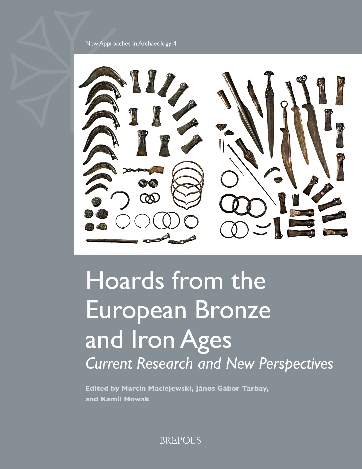
Hoards from the European Bronze and Iron Ages
Current Research and New Perspectives
Hoards are among the most enigmatic of archaeological finds. The term ‘hoard’ itself has been applied to different assemblages across space and time from the Stone Age into the modern era with an inventory that typically includes artefacts made of valuable raw materials to which significant symbolic meanings can also be assigned. Archaeologists have been trying to understand this phenomenon for much of the last century sometimes emphasizing the universal nature of hoards but more typically focusing on specific regions chronologies and finds. They have for the most part used results derived from typolo-chronological methods. Contemporary archaeology has however developed a broad spectrum of paradigms and methods and hoardresearch in the twenty-first century draws on an increasingly wide range of approaches.This volume presents examples of research that make use of these multi-faceted approaches through a focus on European hoards of metal objects dating to the Bronze and Iron Ages. The contributors to this volume make use of diverse methods among them archaeometallurgical analyses studies of use- and production-wear destruction patterns and landscape archaeology but together their common denominator is the search for a methodological toolkit that will allow researchers to better understand the phenomenon of hoard-deposition more broadly.
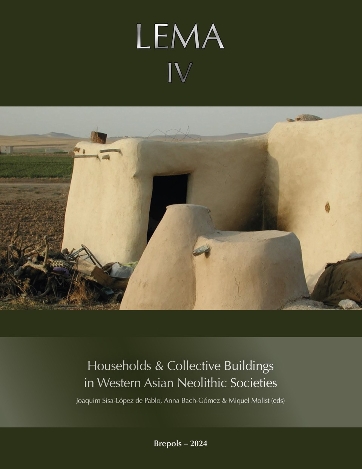
Households & Collective Buildings in Western Asian Neolithic Societies
Architecture and the layout of settlements are key elements of archaeological research that enable an understanding of past societies. In studying the built environment and the articulation of social spaces it is possible to shed light on the social relations of communities and on the ideology economy and cultural and social practices that underpinned how people lived. Taking a study of the built environment as its starting point this volume draws together contributions focusing on the Neolithic transition in south-western Asia. Covering a period that extends from the Early Pre-Pottery Neolithic through to the Late Neolithic (c. 10000–5500 BCE) the chapters gathered here explore the built environment from different regions perspectives and methodologies and draw on new theoretical and analytical approaches in order to expand our knowledge of the emergence of the Neolithic through the lens of architectural and settlement analysis.
History, Landscape, and Language in the Northern Isles and Caithness
‘A’m grippit dis laand’. A Gedenkschrift for Doreen Waugh
Doreen Waugh was a native Shetlander and a well-renowned scholar of Old Norse and Gaelic place-names in Northern Scotland and the Northern Isles. Not only did Waugh’s research significantly advance scholarly understanding of the ‘Viking’ settlement of the North Atlantic her generosity with both her time and knowledge inspired and motivated a wide range of scholars from a variety of disciplines from archaeology and history to historical geography linguistics and place-name studies.
Based on - and written in tribute to - Waugh’s work this interdisciplinary volume draws together essays covering Northern Scotland the Northern Isles and beyond both during and after the early medieval period. The contributions gathered here draw on Waugh’s wider-ranging research interests to offer a range of novel insights into the many communities cultures and customs that have characterized and connected the Northern Isles and their North Atlantic neighbours.
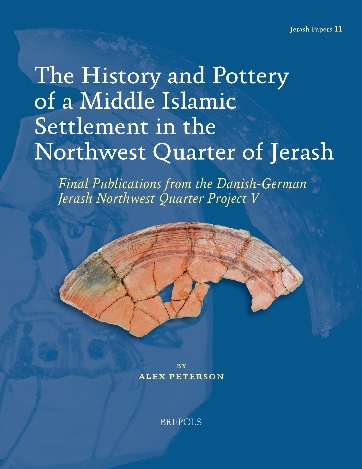
The History and Pottery of a Middle Islamic Settlement in the Northwest Quarter of Jerash
Final Publications from the Danish-German Jerash Northwest Quarter Project V
In 2015 the Danish-German Northwest Quarter Project working in Jerash uncovered a Middle Islamic farmstead. Subsequent excavations revealed that this settlement far from marking a decline at the site is in fact indicative of a broader active and dynamic rural community living within the ancient urban landscape of Jerash.This volume offers an in-depth focus on this Islamic settlement with a particular focus on the ceramic material yielded by the site which is here fully quantified and contextually analysed alongside historical sources. Through this approach the author has reconstructed a new synthesis of Middle Islamic settlement history shedding new light on the economic and social structures of a rural community in northern Jordan as well as establishing a typology that can be used to refine the chronologies of Middle Islamic Jerash.
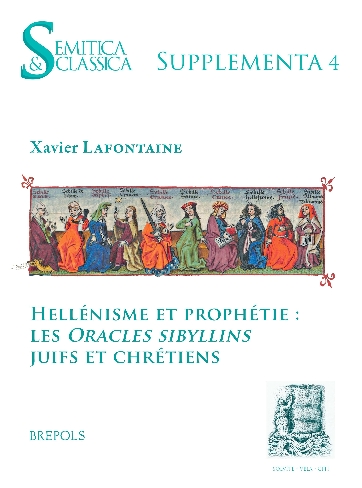
Hellénisme et prophétie
Les Oracles sibyllins juifs et chrétiens
The formal study of the collection of Jewish and Christian texts transmitted under the name of Sibylline Oracles highlights the continuity of the model of biblical prophecy while underlining the heritage of Greek didactic poetry. The interest of this approach is to situate the Sibylline Oracles as a literary work in the context of contemporary Greek versified literary production which implies on the part of their successive editors a familiarity with Greek poetic forms related to a common scholar background.
The study of the retelling of biblical episodes aims at identifying the passages where the fictitious Sibyl claims to announce the events of the biblical past and confronting these narrative sequences with contemporary rhetorical theories of paraphrase in order to highlight the formal technique that runs through them and the interpretation of the biblical hypotext that it presumes. Most of the rewritings preserved in the corpus are compatible with the prevailing doctrine of the third century ce.
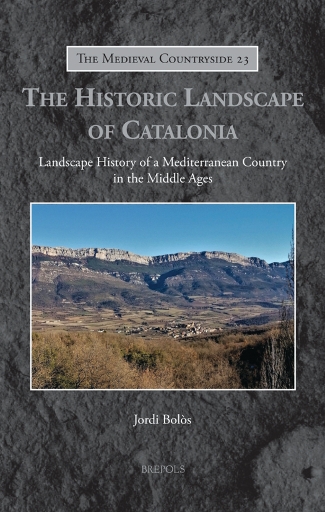
The Historic Landscape of Catalonia
Landscape History of a Mediterranean Country in the Middle Ages
The landscape around us is largely the result of man-made transformations. It consists of villages farmsteads cities fields ditches and roads. This book examines how the landscape of the Mediterranean country of Catalonia was created and transformed. Although Catalonia’s history goes back before the Middle Ages it was during the medieval period that it saw significant development which has continued ever since. Understanding the landscape helps us understand political social economic and cultural changes. In this book we discover how the settlements built around a castle or a church were created and what the open villages and new towns were like both in Catalonia and in neighbouring territories. The book also explores the formation of cities and towns as well as the significance of hamlets and farmsteads based on data provided by written documents and archaeological excavations. It also explores the formation of fields ditches and irrigated areas and shows the importance of understanding the boundaries and demarcations that enclose valleys villages castles and parishes. Finally special attention is devoted to place names and cartography as these shed light on numerous historical realities.
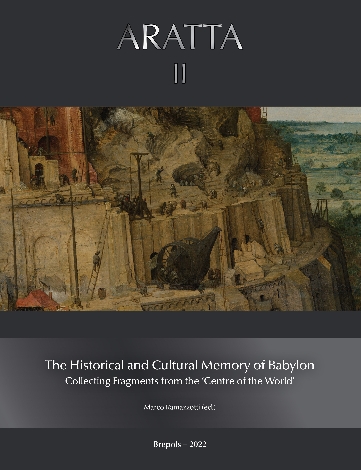
The Historical and Cultural Memory of the Babylonian World
Collecting Fragments from the 'Centre of the World'
In the study of the ancient world Babylon can be considered as the most impressive representation historically archaeologically and in literature of urbanism in the Near East. This first example of an urban centre and its cultural heritage - both tangible and intangible - provides a focal point for discussions of historical and cultural memory in the region. The eleven contributions gathered here draw together multidisciplinary research into Babylonian culture exploring the epistemic foundations contacts resilience and cultural transmission of the city and its milieu from ancient times up until the modern day. Through this approach this volume is able to support conversations concerning the historical and cultural memory of Babylon and promote a dialogue that cuts across and unites both cultures and academic disciplines.
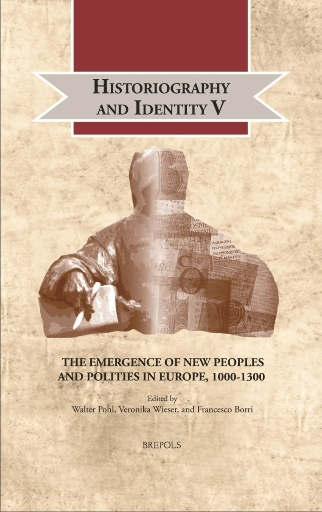
Historiography and Identity V
The Emergence of New Peoples and Polities in Europe, 1000–1300
In many countries in Northern and Eastern Europe the period after 1000 saw the emergence of new Christian kingdoms. This process was soon reflected in works of historiography that traced the foundation and development of the new polities. Many of these texts had a lasting impact on the formation of political ethnic and religious identities of these states and peoples.
This volume deals with some of these earliest histories narrating the past of the new polities that had emerged after 1000 in Northern East Central and Eastern Europe as well as in the Adriatic regions. They have often been understood as ‘national histories’ but a closer look brings out the differences in their aims and construction. One question addressed here is to what extent these historians built on models of identification developed in earlier historiography. The volume provides an overview of several fundamental texts in which identities in the new Christian kingdoms were negotiated and of recent research on these texts.
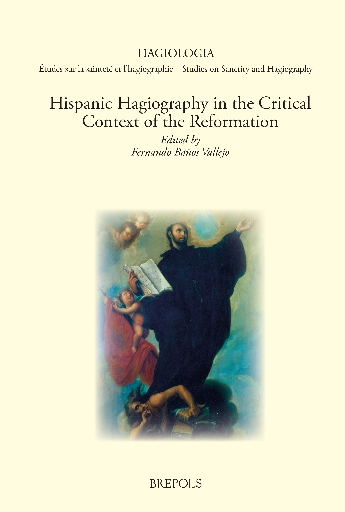
Hispanic Hagiography in the Critical Context of the Reformation
The sixteenth century was a time of great religious turmoil in Europe during which the critical positions within the Catholic Church led to a definitive break between Christians. One of the major controversies pertained to the cult of the saints since in 1523 Martin Luther denied the mediating role of the saints and repudiated what he considered excesses in their devotions.
The studies presented in this volume examine the impact of the Reformation on hagiography in the Hispanic sphere. They investigate how theological positions and controversy were projected onto literature and how literature incorporated theological discourse explicitly or implicitly. Unsurprisingly the Catholic Church reaffirmed the hagiographical tradition but to what extent was hagiographical literature specifically Hispanic literature affected by reformist approaches? This book explores issues less evident and hitherto neglected: for example Hispanic Catholic authorities and authors influenced by the denunciations of the excesses of the cult of saints and hagiographical “fables” publicly declared the purging of apocryphal elements in saints’ lives; in practice however they grappled with the difficulty of applying theoretical criteria to such an enormous subject. As a result certain contradictions arose between these criteria and the commitment to the hagiographical tradition which some even sought to expand and update. This complex tension is brought out by the studies gathered here in the fields of hagiographical prose in Catalan Portuguese and Spanish in Iberia and in America without neglecting the role of the theater in the dissemination of saints’ legends.

The Heresy of the Brothers, a Heterodox Community in Sixteenth-Century Italy
Around the mid-sixteenth century one of the largest Italian heterodox communities developed in Modena: the community of ‘Brothers’. At the beginning of the century a flourishing humanistic tradition had inspired protests against the authority of the Church and had led many of the city’s prominent figures to sympathize with Luther and the Reformation. Over the following decades such positions became more extreme: most of the ‘Brothers’ held radical convictions ranging from belief in predestination to contestation of the Antichrist pope. In some cases the ‘Brothers’ even went so far as to deny the value of baptism.
This heterodox community in Modena created a hidden network for the free expression of its reformed faith. Within twenty years however the election of Pope Pius V (1566-1572) and the consolidation of the Holy Office led to a harsh campaign to disperse dissenters in the city. Despite the protection of illustrious members of the Roman Catholic hierarchy the bishops of Modena and the dukes of Ferrara the Holy Office succeeded in repressing the community. The history of the ‘Brothers’ of Modena therefore provides a case study for understanding how the Inquisition influenced the balance of religious Italy changing the face of the Peninsula forever.

How the Secularization of Religious Houses Transformed the Libraries of Europe, 16th-19th Centuries
The closure of religious houses in varying circumstances affected all of Europe at some point between the sixteenth and nineteenth century. At different times and in different countries the consequences were widely varied in some cases preserving medieval and early modern collections intact in others abandoning books to their fate or transferring them piecemeal into new ownership to serve different cultural purposes. Integral preservation or dispersal may each be viewed in positive or negative terms. For religious and political history there are many and bigger factors involved and the effects of secularization worked on many things beside libraries and books. None the less by focusing on books and libraries through these changes a particular narrative emerges of great cultural importance. It is the most important book-historical story for the survival and accessibility of Europe's heritage of the written word one that interacts with major historical themes and still connects with future issues for the continuing role of books and libraries in the European heritage.
A conference held in Oxford in 2012 brought together thirty experts in different aspects of this process or with knowledge of its impact in different countries and at different periods. The result was to bring together and share for the first time the similar and different experiences of different European countries from Portugal and Spain in the west to Poland and Ukraine in the east from Finland and Sweden in the north to Naples in the south with ramifications stretching to North and South America. While reading this volume of collected essays the reader may notice a disparity in the evidence that each author has been able to bring to bear upon their subject. Provenance research is well advanced in some territories less so in others. In the decade since the conference and this publication there have been some attempts to bridge certain gaps. But in general there has been little new work in the years since the conference took place. The editors anticipate that this publication will stimulate further research bridging some of the gaps visible in the evidence presented in this volume. Multiple avenues for further investigation open up indeed in historical and cultural studies such as the impact of the secularization on nonreligious libraries and the change in attitude with respect to certain disciplines and even to erudition itself.
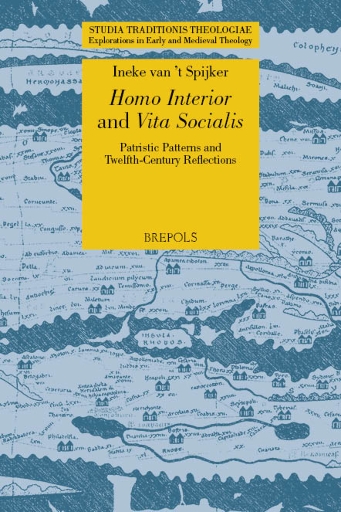
Homo Interior and Vita Socialis
Patristic Patterns and Twelfth-Century Reflections
Just as apparently universal ideas of inwardness are different over time so the idea of the self in relation to others is subject to historical change and dependent on different contexts. Against a shared background of late antique and early medieval Christianity the thinkers who are the subject of this book develop their thoughts of a relational self within their wider concerns. Augustine is the thinker of interiority but also of the social life. For Augustine the opacity of others even of oneself and how to overcome it is a main concern. Cassian writes about the ideal of solitude yet neither the abbas who are the subject of his Conversations nor his readers can avoid the company of others. For Cassian human fellowship is instrumental in reaching the desired virtues of detachment which then enables love for others. Gregory the Great searches for the right balance of the contemplative and the active life but even the contemplative is not a separate individual. Gregory’s instruction of the leaders of the Church emphasises the need to widen in compassion against the constant danger for the preachers of hypocrisy and the swollenness of pride and arrogance. These three authors were among the most influential sources in later ages. Their echoes resonated in the twelfth century when a renewed interest in interiority raises the question how the twelfth-century ‘inner man’ relates to others. Hugh of Saint-Victor Abelard and Heloise are among the writers in whose thoughts we see patristic thought reflected and changed in various ways.
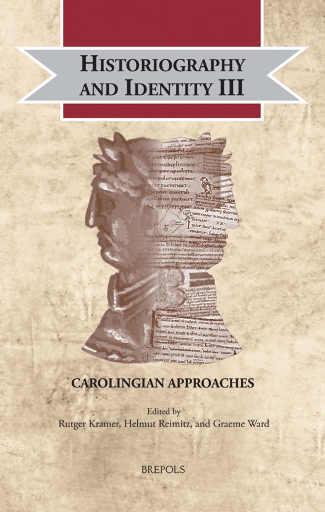
Historiography and Identity III: Carolingian Approaches
This volume explores the extent to which the reinstitution of the Empire in Western Europe brought about new ways of reconciling the multitude of post-Roman identities with the way the past was shaped in historiographical narratives. From universal histories to local chronicles and from narratives that support Carolingian rule to histories with a more local focus the centralization of power and authority in the course of the eighth and ninth centuries forced those who engaged with their own past and that of their community to acknowledge the new situation and situate themselves in it. The contributions in this volume each depart from a single source event or community and relate their findings to the broader issue of whether the rise of the multi-ethnic Carolingian court allowed for more inclusive narratives to be created or if their self-proclaimed place at the centre of the Frankish world actually created a context in which local communities were given new tools to assert themselves.
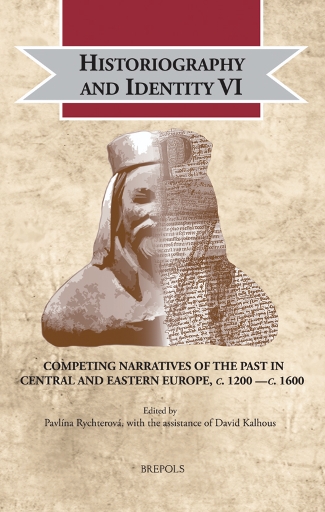
Historiography and Identity VI: Competing Narratives of the Past in Central and Eastern Europe, c. 1200 —c. 1600
The volume discusses Central European and Eastern Central European historiographies of the High and Late Middle Ages. It deals with histories written in a time which brought about a profound differentiation of medieval societies in these regions. As new social classes achieved economic and political power the demand for reassuring identifications grew more pressing. Narratives of the past were tailored specifically for distinct social groups often using vernacular languages instead of the universal language of elite education Latin.
The volume pays attention to the interplay between languages and focuses on the strategies that individual works developed in order to balance the many alternative modes of identification. Filling a significant scholarly gap the volume offers important insights into narratives of identification written in Latin and in the various vernaculars emerging as the new political languages of the period.

Historiography and Identity IV
Writing History across Medieval Eurasia
Historical writing has shaped identities in various ways and to different extents. This volume explores this multiplicity by looking at case studies from Europe Byzantium the Islamic World and China around the turn of the first millennium. The chapters in this volume address official histories and polemical critique traditional genres and experimental forms ancient traditions and emerging territories empires and barbarians. The authors do not take the identities highlighted in the texts for granted but examine the complex strategies of identification that they employ. This volume thus explores how historiographical works in diverse contexts construct and shape identities as well as legitimate political claims and communicate ‘visions of community’.
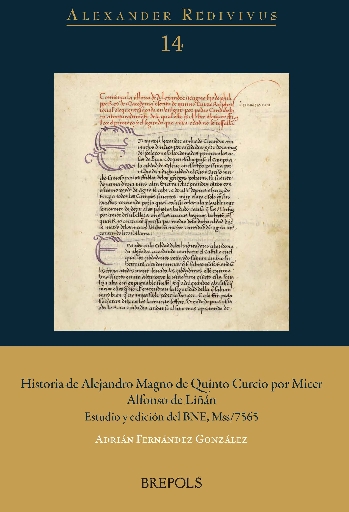
Historia de Alejandro Magno de Quinto Curcio por Micer Alfonso de Liñán
Estudio y edición del BNE, Mss/7565
Interesado en las hazañas de los grandes caudillos de la Antigüedad el aragonés Alfonso de Liñán (†1468) tradujo las Historiae Alexandri Magni de Quinto Curcio al castellano a partir de la versión italiana de Pier Candido Decembrio. El texto se conserva todavía en la Biblioteca Nacional de España bajo la signatura BNE Mss/7565. Testimonio valioso para el estudio de la traducción medieval y sus funciones el códice recuerda sobre todo la fascinación de aquel lectorado por Alejandro Magno ya conocido en la literatura castellana desde el Libro de Alexandre. En los albores del Renacimiento el macedonio va a ser un modelo para una nobleza que debe definirse bajo nuevos criterios. El presente volumen ofrece el estudio y la edición de esta traducción y desvela los intereses de un noble aragonés por la figura alejandrina.