


Browse Books
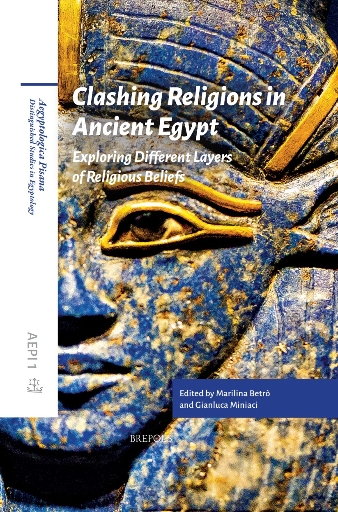
Clashing Religions in Ancient Egypt
Exploring Different Layers of Religious Beliefs
What did ‘religion’ mean for the Ancient Egyptians? Was the state involved in acting as a unifying and founding force for Egyptian religion or can we still identify some clashes between different religious practices? To what extent did different rituals practices and beliefs intersect and merge across time and space? Such questions have long preoccupied scholars working in the field but they have often only been considered through the lens of official ‘centralized’ texts. Yet increasingly there is an acknowledgement that such texts require calibration from archaeological data in order to offer a more nuanced understanding of how people must have lived and worshipped.
The chapters gathered in the volume aim to offer a thorough exploration of Egyptian cultural and religious beliefs and to explore how these impacted on other areas of daily life. Contributors explore the connection between religion and central power the paradigms around burial and access to the afterlife the interconnections between religion demonology magic and medicine and the impact of multicultural interaction on the religious landscape. What emerges from this discussion is an understanding that the only truly identifiable clash is that between modern Eurocentric perspectives and the views of the ancient Egyptians themselves.
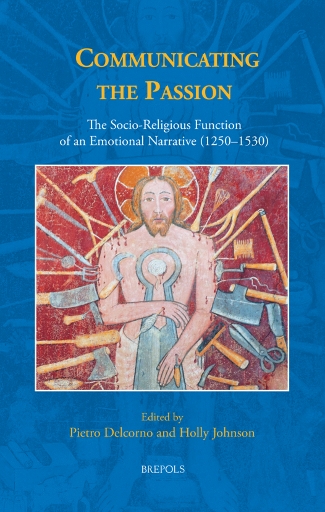
Communicating the Passion
The Socio-Religious Function of an Emotional Narrative (1250–1530)
This volume investigates the vivid and emotionally intense commemoration of the Passion of Christ as a key element in late medieval religious culture. Its goal is to shed light on how the Passion was communicated and on its socio-religious function in late medieval Europe. By adopting a multidisciplinary approach the volume analyses the different media involved in this cultural process (sermons devotional texts lively performances statues images) the multiple forms and languages in which the Passion was presented to the faithful and how they were expected to respond to it. Key questions concern the strategies used to present the Passion; the interaction between texts images and sounds in different media; the dissemination of theological ideas in the public space; the fashioning of an affective response in the audience; and the presence or absence of anti-Jewish commonplaces.
By exploring the interplay among a wide range of sources this volume highlights the pervasive role of the Passion in late medieval society and in the life of the people of the time.

Chanter par le Si en France au xvii e siècle
Pionniers et prémisses du solfège moderne
En 1666 la « Methode facile pour apprendre à chanter la musique » (Paris Ballard) est le premier ouvrage imprimé en France à recommander l'utilisation du Si. Cette septième syllabe de solmisation permet de s’affranchir du solfège ancien des hexacordes et des muances. La gamme du Si ou gamme française s'impose comme une nouvelle norme parallèlement à une actualisation du discours sur les échelles musicales prélude à l’énonciation des principes de la tonalité.
Pourtant depuis la fin du XVIe siècle des solmisations heptacordales essaiment ailleurs de l’Italie au Danemark. La France semble à rebours du reste de l’Europe : elle tarde à réagir à ce nouveau modèle et s’avère finalement être le seul pays où le Si est intégré durablement. Quel fut le cheminement de ces idées et pratiques ? Que disent-elles des représentations de l’espace sonore qui coexistent et s’anamorphosent au XVIIe siècle isthme entre Humanisme et Lumières ? Ces questions serpentent dans la littérature depuis que Brossard Montéclair ou Rousseau s’en sont emparés.
L’étude de sources essentiellement manuscrites permet aujourd’hui de préciser les jalons de cette histoire en France de mettre en lumière des pionniers autant que des détracteurs du Si. Leurs témoignages sont issus de l'entourage scientifique de Mersenne des sphères huguenotes et mauristes des chapelles musicales parisiennes et finalement des méthodes destinées aux amateurs. C’est en questionnant ces pionniers leurs écrits et les contextes dans lesquels ils ont évolué que ce pan de l’histoire du solfège est ici mis en perspective et d’une certaine manière humanisé.
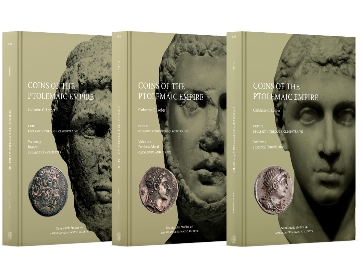
Coins of the Ptolemaic Empire, Part 2: Ptolemy V through Cleopatra VII
Volume 1: Historical Introduction, Volume 2: Catalogue of Precious-Metal Coins, Volume 3: Catalogue of Bronze Coins
Thirty years in the making Coins of the Ptolemaic Empire Part II by Catharine C. Lorber is the long-anticipated second half of the Coins of the Ptolemaic Empire (CPE) project featuring the coins struck by Ptolemy V–Cleopatra VII. As with Part 1 Lorber essentially rewrites the sections on these rulers in J. N. Svoronos’ classic but now much out-of-date Ta Nomismata tou Kratous ton Ptolemaion (1904). The body of coinage catalogued by Svoronos is enlarged by hundreds of additional emissions in precious metal and bronze recorded from subsequent scholarship from hoards from commercial sources and from private collections. Lorber’s attributions dates and interpretations rest on numismatic research conducted after Svoronos or on the latest archaeological and hoard information. She also provides extensive historical and numismatic introductions that give the coins deeper context and meaning.

Cultivating the Earth, Nurturing the Body and Soul: Daily Life in Early Medieval England
Essays in Honour of Debby Banham
How did food impact social relationships in early medieval England? What cultivation practices were followed to produce the best possible food supplies? What was the cultural significance of bread? How was the human body nourished? When sickness inevitably occurred where did one go and who was consulted for healing? And how was spiritual health also protected? The essays gathered together in this exciting volume draw on a range of different disciplines from early medieval economic and social history to experimental archaeology and medieval medicine to offer a unique overview into day-to-day life in England nearly two millennia ago.Taking as their starting point the broad research interests of the volume’s honorand Dr Debby Banham contributors here offer new insights into the reproduction and ritual use of vernacular charms examine the collation and translation of medieval medicine elucidate monastic economies and production and uncover the circumstances behind the production and transmission of medical manuscripts in early medieval England. Presenting new insights into agricultural practices and animal husbandry monastic sign language and materia medica plant knowledge and medical practices the chapters within this volume not only offer a fitting tribute to Banham’s own groundbreaking work but also shed new light on what it meant to nurture both body and soul in early medieval England.
The Co-production of Judaism, Christianity, and Islam
Artefacts, Rituals, Communities, Narratives, Doctrines, Concepts
Judaism Christianity and Islam have always formed re-formed and transformed themselves in conversation. That is these religions have come to exist in all their varieties by interacting with thinking about and imagining each other. In this sense they are co-produced linked by a dynamic and ongoing inter-dependence. The fifteen essays collected in this volume explore moments of such religious coproduction from the second to the twenty-first century from early pilgrimage sites to social media. The case studies range across textual and material cultures showing how a variety of artefacts coins rituals communities narratives theological doctrines and scholarly concepts were all co-produced across the three religious traditions. In so doing they present a panorama of possibilities from the past as well as a taxonomy that can help us think about the future of religious co-production. An introductory essay describes the advantages of approaching the past present and future of these religions through the lens of co-production and reflects on crucial methodological issues related to the understanding of Judaism Christianity and Islam as co-produced religions.

Cultural Models for Emotions in the North Atlantic Vernaculars, 700–1400
While the medieval regions that form modern-day Britain Ireland Iceland and the Scandinavian states were very much like today home to diverse ethnic and linguistic groups it is evident that the peoples who inhabited the north-western Atlantic seaboard at this time were nonetheless connected by key cultural environmental historical and ideological experiences that set them apart from other regions of Europe. This volume is the first to focus specifically on these cultural and linguistic connections from the perspective of the history of emotions. The contributions collected here examine cultural encounters among medieval North Atlantic peoples with regard to the gradual development of shared emotional models and the emergence of early cross-cultural emotional communities in this region. The chapters also explore how the folk psychologies illustrated in the oldest European vernacular writing traditions (Irish English and Scandinavian) bear witness to cultural models for emotions that first took shape in pre-Christian times.
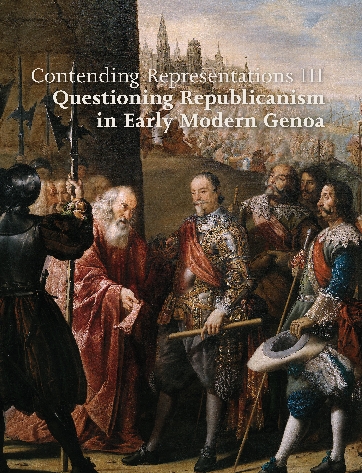
Contending Representations III: Questioning Republicanism in Early Modern Genoa
Several studies have been devoted to the flowering of the republic of Genoa during the so-called ‘siglo de los Genoveses’ when Genoa became the hub of European trade and an important center of artistic and literary production. Yet little attention has been granted to the political and cultural crisis that followed starting in 1559 and culminating in 1684 when the French bombed Genoa. Addressing this chronological gap the volume explores how the image of the Genoese Republic was shaped exploited or contested in the long seventeenth century. How did Genoese politicians and men of letters represent their homeland? How was Genoa represented in Spain or in the Low Countries? How was its political system conceived by Italian and foreign political writers and how did the prevailing absolutist model influence such ideas? In order to answer these questions the volume gathers contributions from art historians literary scholars political and cultural historians thus adopting a comparative multidisciplinary approach.
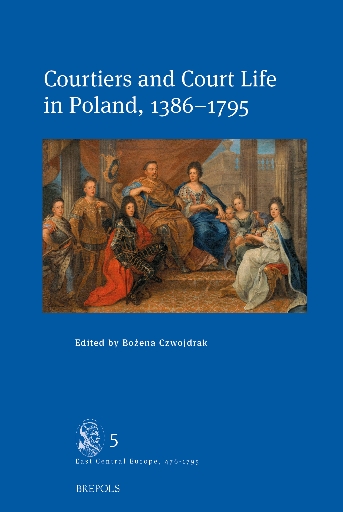
Courtiers and Court Life in Poland, 1386–1795
This collection of studies explores the complexities of the royal courts of Poland from the late medieval period to the cusp of modernity. Drawing on pioneering research and primary sources the volume authors dissect the multifaceted roles and dynamics of courtiers positioning them within the broader socio-political and cultural paradigms of their time. From the distinct cultural imprints of the Jagiellon dynasty to the challenges faced by monarchs elected during the eighteenth century each study within this collection provides a rigorous examination of courtly structures influences and transformations.
The volume examines the symbiotic relationships between courtiers and monarchs the changing ideals of courtly service and the impact of both domestic traditions and foreign influences on the Polish courts. It offers invaluable insights for scholars of court culture bringing to the world stage evidence from the archives of Poland and seeking to understand the evolution of court life and its implications for the broader historical narratives of Poland throughout the entire existence of this composite monarchy.
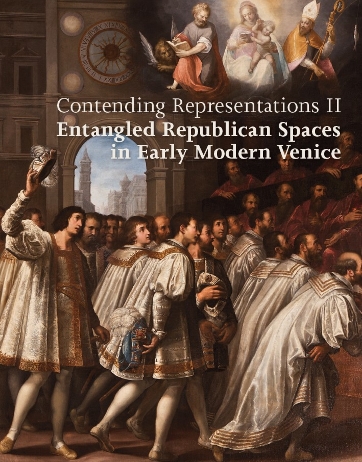
Contending Representations II: Entangled Republican Spaces in Early Modern Venice
This bookaddresses the issue of political celebration in early modern Venice. Dealing with processional orders and iconographic programs historiographical narratives and urbanistic canons stylistic features and diplomatic accounts the interdisciplinary contributions gathered in these pages aim to question the performative effectiveness and the social consistency of the so called ‘myth’ of Venice: a system of symbols beliefs and meanings offering a self-portrait of the ruling elite the Venetian patriciate. In order to do so the volume calls for a spatial turn in Venetian studies blurring the boundaries between institutionalized and unofficial ceremonial spaces and considering their ongoing interaction in representing the rule of the Serenissima. The twelve chapters move from Ducal Palace to the Venetian streets and from the city of Venice to its dominions thus widening considerably the range of social and political actors and audiences involved in the analysis. Such multifocal perspective allows us to challenge the very idea of a single ‘myth’ of Venice.
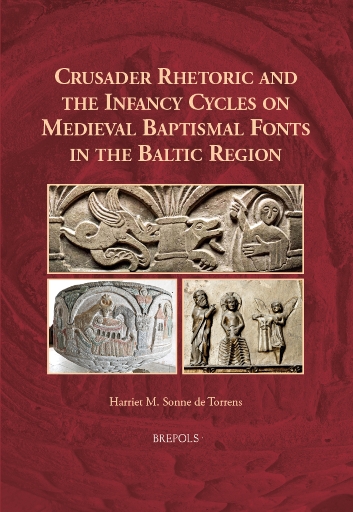
Crusader Rhetoric and the Infancy Cycles on Medieval Baptismal Fonts in the Baltic Region
This is the first comprehensive interdisciplinary analysis to demonstrate that the representation of Infancy cycles on twelfth-and-thirteenth-century baptismal fonts was primarily a northern predilection in the Latin West directly influenced by the contemporary military campaigns. The Infantia Christi Corpus a collection of approximately one-hundred-and-fifty fonts verifies how the Danish and Gotland workshops modified and augmented biblical history to reflect the prevailing crusader ideology and rhetoric that dominated life during the Valdemarian era in the Baltic region. The artisans constructed the pictorial programs according to the readings of the Mass for the feast days in the seasons of Advent Christmas and Epiphanytide. The political ambitions of the northern leaders and the Church to create a Land of St. Peter in the Baltic region strategically influenced the integration of Holy Land motifs warrior saints militia Christi and martyrdom in the Infancy cycles to justify the escalating northern conquests.
Neither before nor after in the history of baptismal fonts have so many been ornamented with the Infancy cycle in elaborate pictorial programs. A brief revival of elaborate Infancy cycles occurs on the fourteenth and fifteenth century fonts commissioned for sites previously located in the Christian borderlands east of the Elbe River with the rise of the Baltic military orders and the advancement of the Church authority. This extraordinary study integrates theological liturgical historical and political developments broadening our understanding of what constituted northern crusader art in the twelfth and thirteenth centuries.
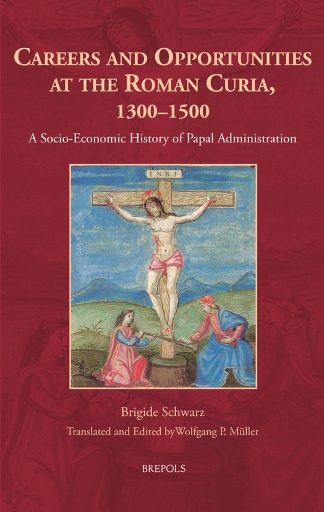
Careers and Opportunities at the Roman Curia, 1300–1500
A Socio-Economic History of Papal Administration
Brigide Schwarz (1940–2019) a leading German historian of the Renaissance papacy is presented here for the first time in a dossier of ten previously untranslated scholarly studies.
The volume brings the mechanisms of late medieval career building back to life. Success among churchmen was measured in access to ever more lucrative ecclesiastical endowments (or benefices). As the fifteenth century progressed their treatment assumed highly monetized and abstract dimensions. Guided by Dr Schwarz economic historians can discern many transactions that foreshadow the asset management of present-day Wall Street.
From the 1400s administrative positions at the papal court (or Curia) were increasingly auctioned off. This created a marketplace for bidders expecting returns by way of ‘creative’ fee regulations or through the cornering of services in monopolies.
Only recently scholarship has begun to question older depictions of the late medieval Church as one of decay and moral corruption. Dr Schwarz points to the ‘modernity’ of the fiscal arrangements which nation states like France soon copied as an efficient model of public financing.
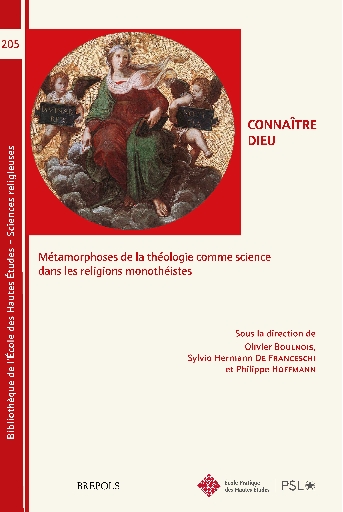
Connaître Dieu
Métamorphoses de la théologie comme science dans les religions monothéistes
La théologie est née comme science métaphysique. Dès Aristote la science la plus haute se présente comme une discipline philosophique qu’il appelle épistémè théologikè « science théologique ». Ce que nous appelons aujourd’hui « métaphysique » c’est ce que les traductions latines d’Aristote appellent scientia divina « science divine ». Or cette « science divine » aristotélicienne ne porte pas sur les dieux de la religion. Aristote emploie d’ailleurs un terme tout à fait différent pour désigner le discours mythique et religieux sur les dieux : il parle alors de theologia ; la theologia est une autre sorte de discours celui des mythologies sur les dieux tandis que la « science divine » du philosophe porte sur une substance première séparée du monde sensible et principe de son mouvement soit le premier moteur. Ce principe n’opère aucun salut. Il ne faut donc pas confondre le discours scientifique (la « science théologique » ou « science divine » sur le premier moteur) et le discours religieux. La difficulté est alors de comprendre quand comment et pourquoi cette discipline philosophique suprême la science théologique s’est orientée vers les religions vécues par les hommes. Quand le mur séparant la theologia de la « science théologique » a-t-il été abattu ? Le présent volume s’est donné pour visée de se confronter à la nécessité d’une prise en compte non seulement du fait religieux mais aussi de la rationalité religieuse. Le terme « théologie » est ambigu. Il désigne tantôt la compréhension d’une religion par elle-même tantôt la compréhension du divin par un discours rationnel. C’est pourquoi une étude comparée de la théologie comme science dans les monothéismes a un double objet : il s’agit d’abord d’étudier comment la spéculation métaphysique sur les dieux le divin et Dieu s’est transformée en « science théologique » ; il convient ensuite de montrer comment les religions monothéistes se sont construites en théologies sur les canons de la rationalité grecque.

Cinismo e Cristianesimo delle origini
Gesù era Cinico? I suoi discepoli? E Paolo? Queste domande che rientrano nel più generale tema della possibile influenza del Cinismo sul Cristianesimo delle origini costituiscono un importante capitolo storiografico nato in Germania nel primo Novecento e ampiamente sviluppatosi più tardi soprattutto negli Stati Uniti d’America.
A questi problemi è dedicato il presente volume che partendo da un’analisi sempre attenta alle evidenze testuali intende vagliare da una prospettiva storico-filosofica la possibilità che Gesù e il Cristianesimo delle origini siano stati influenzati dal Cinismo e da tale tradizione filosofica abbiano ricevuto sollecitazioni o stimoli. Lo studio è rivolto a testi quali i Vangeli Sinottici e le Lettere Paoline (nello specifico la Prima Lettera ai Corinzi) in cui i fautori della Cynic Jesus Hypothesis hanno ritenuto di poter rinvenire elementi definibili come ‘cinici’.
Tale analisi si presta in maniera singolare a gettare luce non solo su autori importanti e temi della tradizione cinica particolarmente discussi ma anche sui rapporti tra la tradizione ellenica e le origini del Cristianesimo.
Tema quest’ultimo di interesse non solamente storico-filosofico e teologico ma anche schiettamente teoretico perché tocca la questione viva e dibattuta ancora oggi seppure talvolta sotto forme diverse delle relazioni tra la riflessione filosofica e il credo religioso tra fides e ratio.
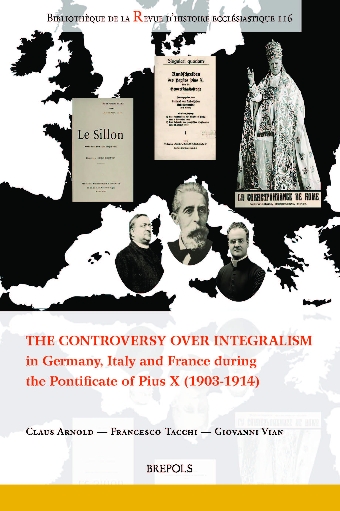
The Controversy over Integralism in Germany, Italy and France during the Pontificate of Pius X (1903-1914)
In the years after 1900 the autonomous activity of the Catholic laity in politics culture and society was opposed by ‘integralists’ in theological circles in the laity as well as in the clergy and last but not least in the Roman Curia. The integralists favoured a strict confessionalism and hierarchical control over all fields of Catholic life. Pope Pius X enforced this position in Italy and in France by solemnly condemning the autonomist Christian Democracy of Romolo Murri and the ‘Sillon’ movement of Marc Sangnier. In Germany however compromises with the Roman authorities were possible on all fields of contention: concerning the interdenominational character of the Christian trade unions the independence of the Centre Party from the hierarchy and also during the controversy over the ‘Catholic belles-lettres’. Finally in the papal encyclical ‘Singulari quadam’ (1912) the interconfessional Christian trade unions were at least ‘tolerated’. The present volume analyses these struggles in a comparative perspective and by evaluating the entire accessible archival documentation it reconstructs for the first time the respective internal decision-making processes of the Roman Curia. The result of this entire research is a profiling of three important European Catholicisms in the controversy over integralism. This conflict had a decisive bearing on the long-term positioning of French German and Italian Catholicism within their respective national societies.
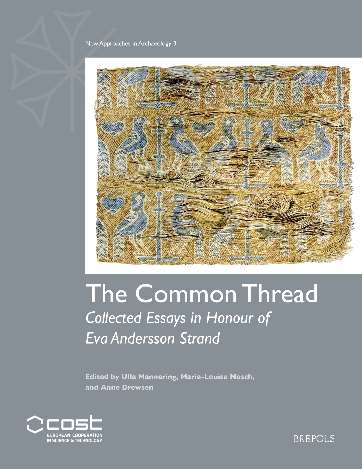
The Common Thread
Collected Essays in Honour of Eva Andersson Strand
The Ancient Egyptians used it for both the living and the dead the Greeks and Romans used it to signal their status and it aided the Vikings in reaching the far shores of Europe and Eurasia. Textiles have surrounded us literally and figuratively for millennia but this common thread has long been ignored in scholarly research. With the inception of the Centre for Textile Research at the University of Copenhagen in 2005 however this approach changed fundamentally and today every type of research discipline comes together to begin unravelling the stories told by textiles. How do we understand textiles and how do we talk about them? Who produced textiles where and for what purposes? How do we conduct research into the origins of materials? How did cultivating flax or raising sheep change the ancient landscape? How have we researched textiles so far? What can we learn from textiles about society gender and production? This volume engages with these questions and explores how the fabric of society has changed through researching textiles in all its facets from archaeology and history to natural sciences. Taking as its starting point the research interests and career of its honorand Eva Andersson Strand this meticulously researched volume consists of three parts covering the tools and techniques that form the basis of all research explores; how craftspeople made use of tools and techniques; and how textiles have been used over millennia to signify identity and status.
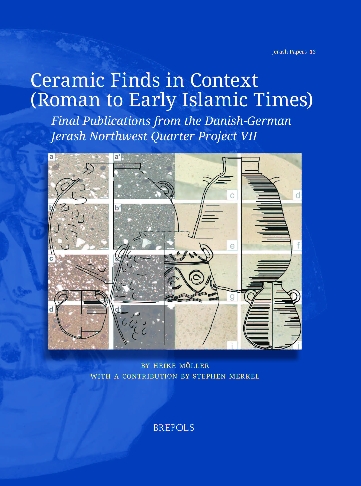
Ceramic Finds in Context (Roman to Early Islamic Times)
Final Publications from the Danish-German Jerash Northwest Quarter Project VII
The Decapolis city of Jerash has long attracted attention from travellers and scholars due both to the longevity of the site and the remarkable finds uncovered during successive phases of excavation that have taken place from 1902 onwards. Between 2011 and 2016 a Danish-German team led by the universities of Aarhus and Münster focused their attention on the Northwest Quarter of Jerash — the highest point within the walled city — and this volume is the seventh in a series of books presenting the team’s final results.This volume provides an in-depth analysis into the ceramic materials found in Jerash’s Northwest Quarter much of which comes from largely undisturbed contexts. The ceramic finds presented in this volume are typo-chronologically evaluated and contextually analysed. The authors then use this dataset as a starting point to explore the micro- and macro-networks that existed in ancient Gerasa from Roman to Early Islamic times more broadly examining how finely meshed exchange could take place on a micro-regional level and assessing what conditions were required in order for trade to occur.
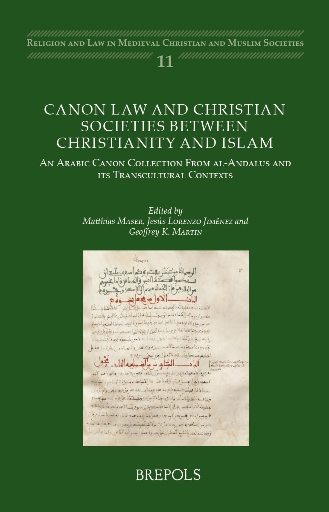
Canon Law and Christian Societies between Christianity and Islam
An Arabic Canon Collection from al-Andalus and its Transcultural Contexts
The unique Arabic version of the Iberian canon law code 'Collectio Hispana' preserved in a mid-eleventh-century manuscript of the Royal Library of El Escorial has been deemed “the most distinguished and characteristic” work of medieval Andalusi Christian writing. It represents an exceptional source witness to the internal legal organisation of Christian communities in Muslim-dominated al-Andalus as well as to their acculturation to Islamicate environments. Yet the Arabic collection has received only little scholarly attention so far. This volume presents the results of a recent interdisciplinary research project on the Arabic canon law manuscript flanked by contributions from neigbouring fields of research that allow for a comparative assessment of the substantial new findings. The individual chapters in this volume address issues such as the origins of the Arabic law code and its sole transmitting manuscript its language and translation strategies its source value for both the persistence and transformation of ecclesiastical institutions after the Muslim conquest or the law code's position in the judicial practice of al-Andalus. The volume brings together the scholarly expertise of distinguished specialists in a broad range of disciplines e.g. history Arabic and Latin philology medieval palaeography and codicology archaeology coptology theology and history of law.
The Craft of History
Turning History into a Discipline in the Twelfth and Thirteenth Centuries
History is today an established academic discipline characterized by the use of footnotes and references to support claims. However attempts to codify history and impose disciplinary rigour were made in the Middle Ages even before the introduction of the modern apparatus. One such attempt was the use of the source mark a precursor of the modern footnote. Initially used in the works of lawyers and theologians the source mark indicated that a text and its ideas belonged to a named authority. The application of the source mark to historical writings marked a change in the way history was perceived.
This volume explores how history was transformed into a discipline by focusing on four key twelfth-and thirteenth-century sources: the anonymous Status Imperii Iudaici the Chronicle of Hélinand of Froidmont the Chronicle of Alberic of Trois-Fontaines and Vincent of Beauvais’s Speculum Historiale. By focusing on these four texts and examining the influences of surrounding disciplines such as law and theology the author explores how these historical writers drew on a wide range of different sources of information to provide a truthful account of the past. Furthermore the aim of producing a reliable narrative was combined with an awareness of the status of the author. Through these case studies this volume offers a fascinating reassessment of our modern understanding of the origins of the study of history.
Cult, Devotion, and Aesthetics in Later Byzantine Poetry
Public religious ritual and private devotional practice together occasioned much of the production of Byzantine poetry. This includes not only hymns an integral part of the liturgy since Late Antiquity but also versified texts with a specific liturgical function (synaxaria calendars metrical prefaces) metrical hagiography epigrams (inscribed on church buildings icons religious objects books) or poems with a more personal character such as versified prayers catanyctic poems (i.e. poems of contrition) and self-addressed poems (eis heauton). These texts often have much in common well beyond their metrical form: from their contexts of performance and reception to the themes literary motifs and rhetorical devices they contain. It was not uncommon for a single author to write in a variety of the aforementioned genres; and yet these texts are rarely studied together (not least due to the specialized nature of the expertise of individual scholars). Later Byzantium offers us a particularly rich spectrum of sacred poetry which has only recently started to arouse significant interest. While most of its poetic genres have a long history in Byzantine literature their metamorphoses in this period – connected to changes in socio-political cultural and religious conditions – deserve closer study. It is the purpose of this volume to propose a broader scholarly approach to the aesthetics of Byzantine poetry taking into consideration the contexts of religious practice and devotion from c. the 11th to the 15th centuries.