


Browse Books
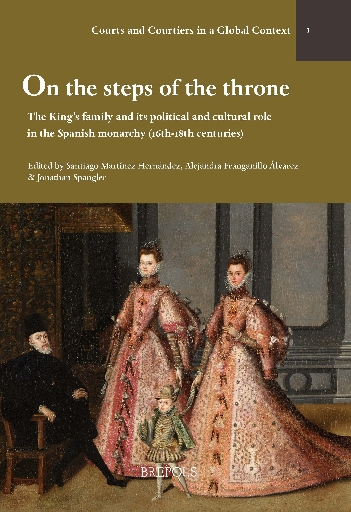
On the steps of the throne
The King’s family and its political and cultural role in the Spanish monarchy (16th-18th centuries)
The aim of this book is to forge a new critical perspective on the Spanish Habsburgs’ family networks by studying the roles performed by princes and princesses of the blood of different ranks and status in the service of the Spanish monarchs. The chapters included draw on a range of case studies in order to rethink the dynastic and political role assigned to the king’s relatives. They also analyse the problematic issues generated by the court ceremonial diplomatic dynastic and governmental duties undertaken by these political actors. In doing so these studies forge a deeper understanding of the conflicts prompted by the administration of the extensive transnational community of Spanish Habsburg interests and allegiances. The innovative and insightful studies included in this volume are drawn from both unpublished doctoral theses as well as ongoing research projects. In this sense it seeks to contribute to the evolving historiographical debate on the role played by a range of agents who have not been studied in depth by historians above all with a focus on the construction of the Spanish Habsburg monarchy in the early modern period. The approach we have adopted has been to prioritize little-known and less-studied agents contexts and periods from the Spanish Habsburg sphere which are nonetheless highly relevant for developing a deeper knowledge of the potential and expectations assigned to the king’s extended family whether legitimate or illegitimate. Furthermore this book addresses the problematic issues and conflicts that were prompted by these political agents in undertaking various diplomatic dynastic and governmental roles.
Ordres et désordres dans les chaînes exégétiques grecques
Amoncellement de fragments ? catalogue d’extraits ? tapisserie exégétique ? Les chaînes ont pour premier principe d’organisation le texte biblique qu’elles commentent en le suivant pas à pas. Mais comment les différentes scholies sont-elles classées entre elles si elles le sont ? Jusqu’à présent la question de l’organisation interne des chaînes a fait l’objet de remarques rapides en marge de l’étude de telle ou telle collection mais rarement d’un examen approfondi. C’est pourtant un aspect essentiel pour comprendre ce genre en préciser les différentes formes et saisir l’enjeu de ces entreprises byzantines : conserver un maximum de textes favoriser la consultation la mémorisation ou la confrontation de différentes exégèses composer un commentaire continu etc. Cet ouvrage collectif rassemble des enquêtes originales portant aussi bien sur les chaînes de l’Ancien que du Nouveau Testament. Sont explorés différents phénomènes structurants relatifs à la connexion entre texte biblique et commentaire au classement des sources à l’enchaînement des contenus exégétiques à la disposition des scholies sur la page. On met au jour la méthode de travail d’un caténiste ou les étapes de l’élaboration d’une compilation ; une place est accordée au désordre et à ses causes notamment en lien avec les phénomènes de transformation et de combinaison de différentes collections. Premier tour d’horizon permettant déjà de découvrir des situations très diverses ce volume ouvre la voie à une approche comparative des chaînes nécessaire pour mieux comprendre cette pratique de compilation byzantine.
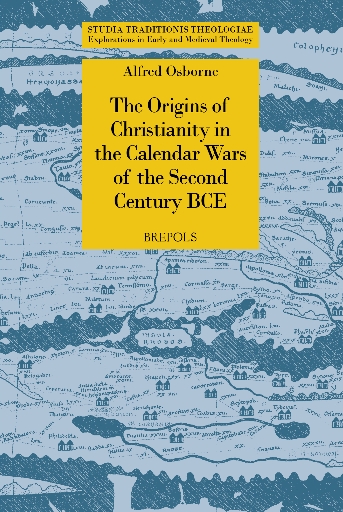
The Origins of Christianity in the Calendar Wars of the Second Century bce
In the Gospels Jesus is called a ‘Nazarene’ or ‘Nazoraean’. Does this mean he came from Nazareth? Basing himself on Lidzbarski’s analysis of the Hebrew/Aramaic origins of the Greek terms Nazarênos and Nazôraios Dr Osborne proposes that these epithets indicate that Jesus was a nôṣrî a ‘(Strict) Keeper/Guardian (of the Law)’. This meant he was a follower of the 364-day liturgical calendar known to us from 1 Enoch Jubilees and Qumran. An examination of the passages where these terms appear shows that this hypothesis leads to a deeper understanding of the circumstances in which the first Christian communities arose and clarifies greatly the background of Jesus’ crucifixion as Yēšû ha-Nôṣrî.
The book then traces the influence of the nôṣrîm on the history of Israel from their origin in the ‘calendar wars’ that tore apart the Jewish nation from 172-163 BCE. These broke out after the lunisolar calendar was introduced into the temple liturgy by Menelaus the high priest and only came to an end when the 364-day calendar was reintroduced under his successor Alcimus. In 151 BCE however Jonathan Maccabaeus was appointed high priest and reintroduced the lunisolar calendar. The nôṣrîm were suppressed and forced to emigrate or go underground. They reappear as leaders of Jewish resistance to Roman occupation after Pompey incorporated Judaea into the empire in 63 BCE. Eventually they became the chief instigators of the revolt against Rome that led to the destruction of Jerusalem in 70 CE. Osborne argues that the nôṣrîm thought to have been included in the Twelfth Benediction of the Amidah at Yavneh around 90 CE are these same ‘(Strict) Keepers/Guardians (of the Law)’.
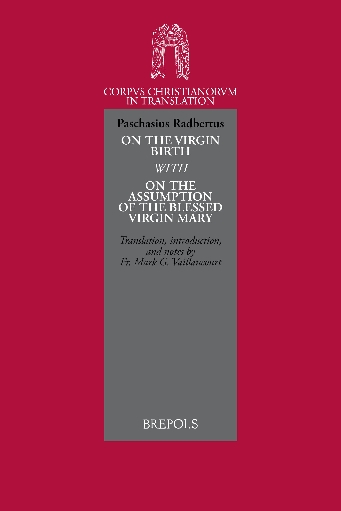
On the Virgin Birth and On the Assumption of the Blessed Virgin Mary
On the Virgin Birth and On the Assumption of the Blessed Virgin Mary are two key Mariological treatises by the ninth-century Carolingian theologian Paschasius Radbertus. Written at a time when scholarship and erudition during the Carolingian Renaissance were at their height and prominence in the great monastery of Corbie these two works offer important insights into ninth-century reception of the doctrines of Mary’s perpetual virginity and her assumption into heaven. Written for the nuns of the monastery of Notre-Dame de Soissons they also provide important source material for the study of female spirituality during the Carolingian Reformation era.
This work presents for the first time an English translation with introduction and commentary of these texts based on the critical editions found in Corpus Christianorum Continuatio Mediaevalis (CC CM 56C). References to the corresponding pages of the Corpus Christianorum edition are provided in the margins of this translation.
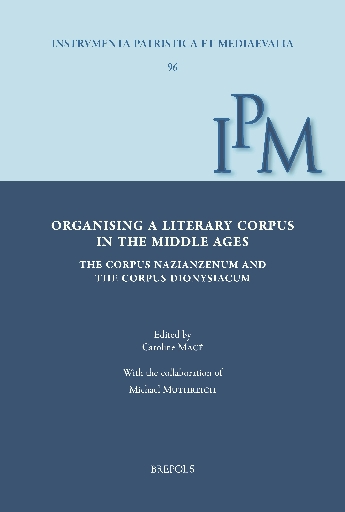
Organising a Literary Corpus in the Middle Ages
The Corpus Nazianzenum and the Corpus Dionysiacum
Through the word corpus the metaphor of the body is applied to a collection of works by the same author that are transmitted together. These works not only share the same skin the manuscript but also function organically thanks to a complex system of paracontents. It is possible to see this system at work in the case of only a very few medieval authors throughout history cultures and languages; the Corpus Nazianzenum and the Corpus Dionysiacum are such instances.
Both Gregory of Nazianzus and Dionysius the Areopagite are super-authors who forged their own literary identity as much as they shaped the body of their writings. This sets both corpora apart from other collections of patristic works. They are also exceptional because of the large scale and enduring character of their cultural impact in the different cultures in which the corpora were translated commented and annotated. By confronting these two exceptional cases it is possible to gain some new light on the intellectual and book-historical aspects of literary creation and reception in Late Antiquity and the Middle Ages.
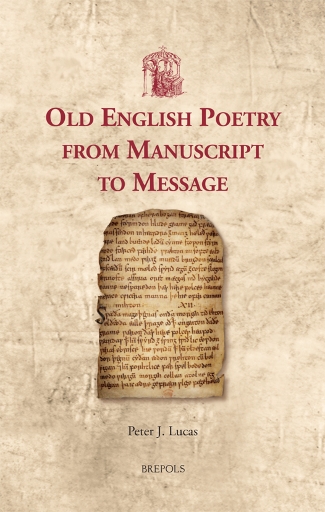
Old English Poetry from Manuscript to Message
By comparison with Latin Europe Anglo-Saxon civilization is notable for the amount of literature preserved in contemporary manuscripts in the vernacular language formerly called ‘Anglo-Saxon’ but now more usually called ‘Old English’. This literature includes some remarkable poetry which is the subject of the present collection of essays. Some of the earliest poems may well have been written at a time when northern England held the intellectual leadership of Europe. The approach is holistic investigating important issues in the manuscripts that affect the integrity of the texts to be studied or the way they relate to each other examining metrical issues that affect the way the poems are appreciated for their compositional skill studying particular textual problems that require elucidation or even emendation to make the meaning clear and finally offering readings of particular poems focussing on themes that are central to Old English poetry. A postscript examines Lewis Carroll’s Jabberwocky which is presented as a ‘Stanza of Anglo-Saxon Poetry’.
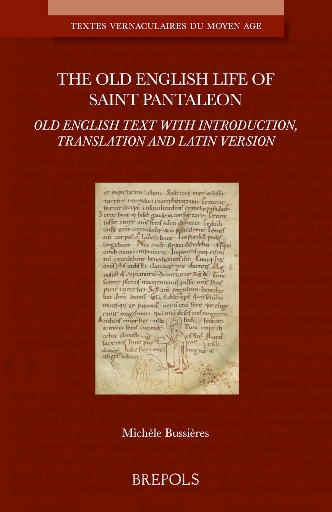
The Old English Life of Saint Pantaleon
British Library MS Cotton Vitellius D. xvii
The Old English Life of Saint Pantaleon survives in one eleventh century manuscript: it appears here for the first time in an easily available edition. This edition is based both on independent research and on the work of previous scholars. It is a challenging text from a much-damaged manuscript but well worth reading: it is interesting both from a linguistic point of view as a testimony of late Anglo-Saxon language and also as a sign of continental influence on Anglo-Saxon culture and of a change in literary taste in England on the eve of the Norman Conquest. It is preceded by a full introduction dealing with the history of the text from Greece to Western Europe and the context of its translation into Old English. The text is accompanied by copious notes dealing with difficult passages and it is made more accessible by a Modern English translation. The edition is completed by a 12th century Latin version which seems to be the closer to its Old English counterpart. The edition is completed by an Anglo-Saxon glossary.
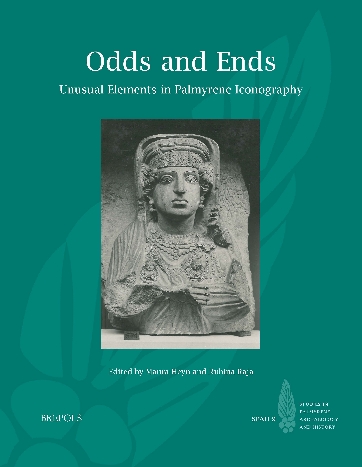
Odds and Ends
Unusual Elements in Palmyrene Iconography
The funerary art that was produced in Roman Palmyra a caravan city in the Syrian steppe desert is rightly world-renowned. The frontal depictions of the deceased featured in torso-length portraits and the large-scale banqueting scenes are iconic and lent an added mystique by the absence of any literary sources that might aid in their interpretation. But while from a distance these exquisite portraits might seem rather formulaic when examining more closely it is clear that these scenes reveal a surprisingly rich and varied funerary décor. Alongside the more popular iconographic choices are singular scenes motifs and elements that deviate from the norm while new patterns and connections between Palmyra and its surroundings are identifiable.
This volume which draws on the vast materials gathered under the auspices of the Palmyra Portrait Project directed by Professor Rubina Raja explores the ‘oddities’ raised by the Palmyrene corpus; it examines one-off scenes or elements and unusual or unparalleled iconographical choices and questions how and why such unusual choices should be interpreted. The chapters gathered here not only focus on these visual ‘hapax legomena’ in Palmyra but also explore the city’s connections with the art of Roman centres to the west as well as the nearby Hellenistic city states regional centres of production and Parthian and Persian sites to the east. Through this approach the authors engage with the visual richness and sheer amount of choice that existed in Palmyrene funerary art while also providing unique insights into the knowledge culture that existed within Palmyrene society.
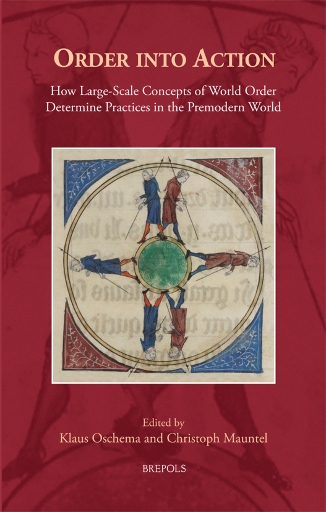
Order into Action
How Large-Scale Concepts of World-Order determine Practices in the Premodern World
The construction (and application) of models that order complex phenomena such as ‘the world’ is not a ‘neutral’ activity: theoretical models and ideas help us to perceive and categorize the information conveyed by experience and tradition alike; in turn they also influence the behaviour and actions of individuals and groups.
Collecting a global series of case studies on premodern societies this volume proposes new research into premodern models of world-order and their effects. With its focus on the period between c. 1300 and 1600 it seeks to open up fresh perspectives for premodern Global History and the analysis of phenomena of transcultural contact and exchange.
Focussing on religious political and geographical ideas and models the contributions explore whether and how large-scale concepts influenced or even determined concrete actions. The examples include socio-religious concepts (Christianity terra paganorum dār al-harb) political concepts (empire) and geographical notions. A special section is dedicated to comparative insights into societies in Sub-Saharan Africa Australia and pre-Columbian America. Taken together the contributions underline the importance and effects of historically shaped cultural traits in the long term.
Orthodox Christianity and Modern Science: Past, Present and Future
The relationship of Orthodox Christianity to the modern sciences has received scant attention in the last fifty years. While important contributions have been made in history theology and philosophy there have been very few attempts to highlight the importance and fruitfulness of the field for an international audience. This volume brings together contributions from scholars of different disciplines to discuss the past present and future of the relations between Orthodox Christianity and the sciences. The topics covered range from theological discussions of miracles to the importance of seminary work on science and religion and from a practitioner’s view of addressing medical suffering to a historical discussion of the Scientific Revolution in Orthodox spaces. The volume is addressed to historians philosophers theologians scientists and members of the clergy but also to any scholar that is interested in discovering the vibrancy of the emerging field of Science and Orthodox Christianity Studies.
Omnium expetendorum prima est sapientia
Studies on Victorine thought and influence
Founded at the beginning of the twelfth century on the outskirts of Paris the Parisian school of Saint-Victor soon became an intellectual centre on a European scale: through the international recruitment of its masters; through the wide handwritten dissemination of their works in particular those of Hugh and Richard; and finally through the extent of its doctrinal contribution to a common European culture on a large number of points: the importance of acquiring a "general culture"; the need for a rigorous historical approach to biblical texts open to rabbinic exegesis; a contagious interest in the writings and thought of the pseudo-Dionysius Areopagita; a major contribution to the constitution of a theological discipline; an effort to reconcile fervour in spiritual life and psychological finesse in the analysis of contemplation and its stages. In short a curiosity for all fields of knowledge and at the same time an effort to unify them into a universal and unified wisdom.
The Book gathers new studies on original sources concerning Hugh of St. Victor as the intellectual founder or the Victorine school; several of his Victorine brothers and disciples: Richard Achard Andrew Godfrey Absalon up to late and little known Victorine masters as Pierre Leduc and Henri le Boulangier at the time of the Great Schism (with critical edition of inedited texts); their influences on twelfth century texts as Ysagoge in theologiam or Speculum Ecclesiae on Franciscan authors including Antony of Padua Bonaventure Rudolf of Biberach and Duns Scotus on romance literature of troubadours on Carmelite authors of the sixteenth centruy and - a still uncharted territory - on Polish culture from Middle Ages to contemporary times.
Orthodox Christianity and Modern Science
Theological, Philosophical, Scientific and Historical Aspects
Orthodox Christian theology is based on a living tradition that is deeply rooted in Greek Patristic thought. However few systematic proposals about how this theology can respond to questions that arise from modern science have yet appeared. This volume consisting of eleven essays by different authors about how this response should be formulated therefore represents a significant contribution to Orthodox thinking as well as to the broader science-theology dialogue among Christians. The variety of approaches in the essays indicates that there does not yet exist among Orthodox a consensus about the methodology that is appropriate to this dialogue or about how the questions that arise from specific scientific insights should be answered. Nevertheless they indicate the ways in which Orthodox approaches to science differ significantly from most of those to be found among Western Christian scholars and in this way they point to an underlying unity of perspective that is rooted in the Orthodox Tradition.
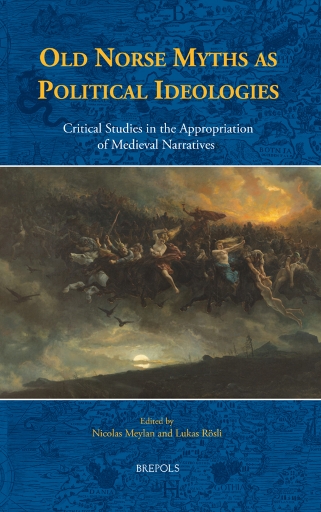
Old Norse Myths as Political Ideologies
Critical Studies in the Appropriation of Medieval Narratives
The mythology of the Norse world has long been a source of fascination from the first written texts of thirteenth-century Iceland up to the modern period. Most studies however have focused on the content of the narratives themselves rather than the broader political contexts in which these myths have been explored. This volume offers a timely corrective to this broader trend by offering one of the first in-depth examinations of the political uses of Norse mythology within specific historical contexts. Tracing the changing interests and usages of Norse myths from the medieval period via the nineteenth century and the importance of ancient Norse beliefs to both the Romantic and völkisch movements up to the co-option of mythology and symbolism by political groups across the twentieth and early twenty-first centuries the papers gathered here offer new and critical insights into the changing nature of historiography and the political agendas that Old Norse myths are made to serve as well as shedding new light on the way in which ‘myths’ are conceptualized.
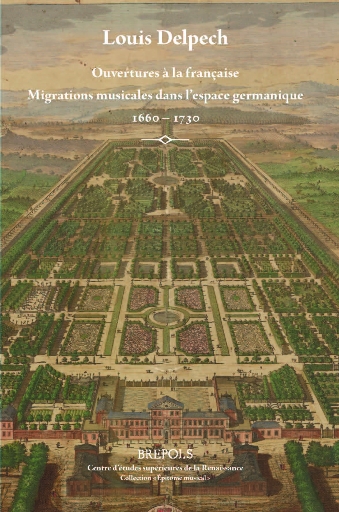
Ouvertures à la française: migrations musicales dans l’espace germanique 1660 – 1730
"Une musique indéchiffrable pour toute autre nation." Depuis Rousseau la musique française d’Ancien Régime est vue comme une étrange exception culturelle dans une Europe baroque toute acquise à la musique italienne. Cependant les nombreux exemples d’acclimatation du style français dans l’espace germanique entre 1660 et 1730 de Georg Muffat à Johann Sebastian Bach en passant par Johann Sigismund Kusser et Georg Philipp Telemann nous invitent à ouvrir les yeux sur un phénomène trop longtemps méconnu. La migration de nombreux musiciens français dans l’Empire leur engagement dans de prestigieuses chapelles ducales et princières la circulation de sources musicales manuscrites et imprimées sont autant de phénomènes essentiels que ce livre aborde pour la première fois de façon conjointe et systématique. À la croisée de l’histoire des migrations de l’anthropologie historique et de la musicologie il déploie les routes empruntées par la musique et les musiciens français dans l’espace germanique parcourt leur destin et reconstruit leur vie quotidienne dans ce nouvel environnement. L’ouvrage s’organise en cinq grands chapitres consacrés à l’Europe galante comme marché du travail à l’administration de la musique française aux carrières et aux mobilités des musiciens à la circulation des sources musicales et à l’invention allemande du style français.
The Origin and Nature of Language and Logic.
Perspectives in Medieval Islamic, Jewish, and Christian Thought
The annual colloquium of the SIEPM in Freiburg Germany was groundbreaking in that it featured a more or less equal number of talks on all three medieval cultures that contributed to the formation of Western philosophical thought: the Islamic Jewish and Christian traditions. Indeed the subject of the colloquium ‘The Origin and Nature of Language and Logic in Medieval Islamic Jewish and Christian Thought’ lent itself to such a cross-cultural approach. In all these traditions partially inspired by ancient Greek philosophy partially by other sources language and thought semantics and logic occupied a central place. As a result the chapters of the present volume effortlessly traverse philosophical religious cultural and linguistic boundaries and thus in many respects open up new perspectives. It should not be surprising if readers delight in chapters of a philosophical tradition outside of their own as much as they do in those in their area of expertise.
Among the topics discussed are the significance of language for logic; the origin of language: inspiration or convention; imposition or coinage; the existence of an original language; the correctness of language; divine discourse; animal language; the meaningfulness of animal sounds; music as communication; the scope of dialectical disputation; the relation between rhetoric and demonstration; the place of logic and rhetoric in theology; the limits of human knowledge; the meaning of categories; the problem of metaphysical entailment; the need to disentangle the metaphysical implications of language; the quantification of predicates; and the significance of linguistic custom for judging logical propositions.
On the Body and the Blood of the Lord, with the Letter to Fredugard
The De corpore et sanguine Domini by Paschasius Radbertus was the first monograph ever written solely on the Eucharist. This English translation of the De corpore along with its companion piece the Letter to Fredugard make an important contribution to our understanding of the development of Eucharistic theology in the Carolingian era and after. Because of their place in history and the nature of their doctrine these works give an important witness to the received tradition on the Eucharist as well as demonstrate an early substantial change theory that contributed to the development of the doctrine of transubstantiation. The translation along with its extensive commentary and notes makes this volume in the Corpus Christianorum in Translation series an important resource for the study of Eucharistic theology. The source text of this volume appeared in Corpus Christianorum Continuatio Mediaeualis as Pascasius Radbertus - De corpore et sanguine Domini cum appendice Epistola ad Fredugardum (CCCM 16). References to the corresponding pages of the Corpus Christianorum edition are provided in the margins of this translation.
On the Sacraments
A Selection of Works of Hugh and Richard of St Victor, and of Peter of Poitiers
The Canons Regular of St Victor were important contributors to the theology of the sacraments in the twelfth century. This volume introduces and translates much of Hugh’s treatment on the Christian Sacraments as contained in De sacramentis 1.9 and 2.5-9 11-12 and 14 as well as his treatise on the Virginity of the Blessed Virgin two treatises on penance by Richard of St Victor and the penitential of Peter of Poitiers. The historical introductions and annotated translations make this volume suitable for courses on the development of the theology of the sacraments through the twelfth century.
Occasionalism
From Metaphysics to Science
Traditionally interpreted as an outcome of Cartesian dualism in recent years occasionalism has undergone serious reassessment. Scholars have shifted their focus from the post-Cartesian debates on the mindbody problem to earlier discussions of bodybody issues or even to the problem of causation as such. Occasionalism appears less and less a cheap solution to the mind-problem and more and more a family of theories on causation which share the fundamental claim that all genuine causal powers belong to God. So why did the most spectacular emergence of occasionalism take place precisely in the post-Cartesian era? How did the scientific revolution and the need to fight back against the early modern resurgence of naturalism contribute to the success of occasionalist doctrines?
This book provides a historical and theoretical map of occasionalism in all its various forms with a special focus on its seventeenth-century supporters adversaries and polemical targets. These include not only canonical authors such as Cordemoy La Forge Malebranche Spinoza and Leibniz but also less explored figures such as Clauberg Clerselier Fnelon Fernel Rgis and Regius. Furthermore the book covers the earlier Arabic and Scholastic sources of occasionalism and its later developments in Berkeley Wolff and Hume.
Orthodox Christianity and Modern Science
Tensions, Ambiguities, Potential
The first volume of the new series “Science and the Orthodox Christianity” focuses on the nature of the relationship between modern science and Orthodox Christianity with its centuries-old tradition. Orthodoxy today shares a variety of - sometimes ambiguous - attitudes towards modern science shaped by the texts of the Church Fathers medieval and modern theologians and scholars as well as contemporary social realities. On the other hand modern science which sprung from the quest by West European scholars for a better knowledge of the world is faced with crucial and uneasy questions about the meaning of life and the position of humankind within the natural world.
The main goal of this volume is to define the patterns of the science-religion relationship in the Orthodox world especially in the light of the most recent trends in both science and theology. Is this a relationship of dialogue or conflict? Of integration or independence? What is the impact of the revival of patristic studies and new theological currents on the relationship? But also what is the relevant impact of new scientific discoveries on the image of the human and the universe? Has the modern science-religion dialogue in the West influenced Orthodox Christianity in its effort to create new perspectives and concepts in response to new challenges? These questions are crucial for understanding and mapping the current science-religion dialogue in the Orthodox world and apart from recording given views and opinions.