


Browse Books
Varietate delectamur: Multifarious Approaches to Synchronic and Diachronic Variation in Latin
Selected Papers from the 14th International Colloquium on Late and Vulgar Latin (Ghent, 2022)
The focus of the Latin Vulgaire – Latin Tardif book series lies on the complex and multifaceted problem of late and so-called vulgar Latin. Specifically starting out from a wide range of methodological approaches involving all levels of language the series’ main purpose is to investigate how Classical Latin (i.e. the language used in the period from ca. 100 BC to AD 100 by authors such as Cicero Horace and Vergil) underwent the changes during the late period (i.e. mainly between the 3rd and the 7th century AD) that resulted in (the early stages of) the Romance languages. To this purpose three main types of linguistic sources are taken into consideration. First direct Latin sources which include for instance texts written by people with a lesser level of literacy (e.g. inscriptions soldiers’ letters) or by fully literate authors reproducing colloquial language deliberately (e.g. Petronius Apuleius). Second indirect Latin sources which consist of metalinguistic testimonies of ancient authors (mainly but not exclusively grammarians) dealing with the language variation typical of their time and region. And third the Romance idioms themselves: by comparing sources in at least two Romance varieties one may reconstruct Latin words or forms which were used widely in spoken usage but for different reasons are not attested in any extant source.
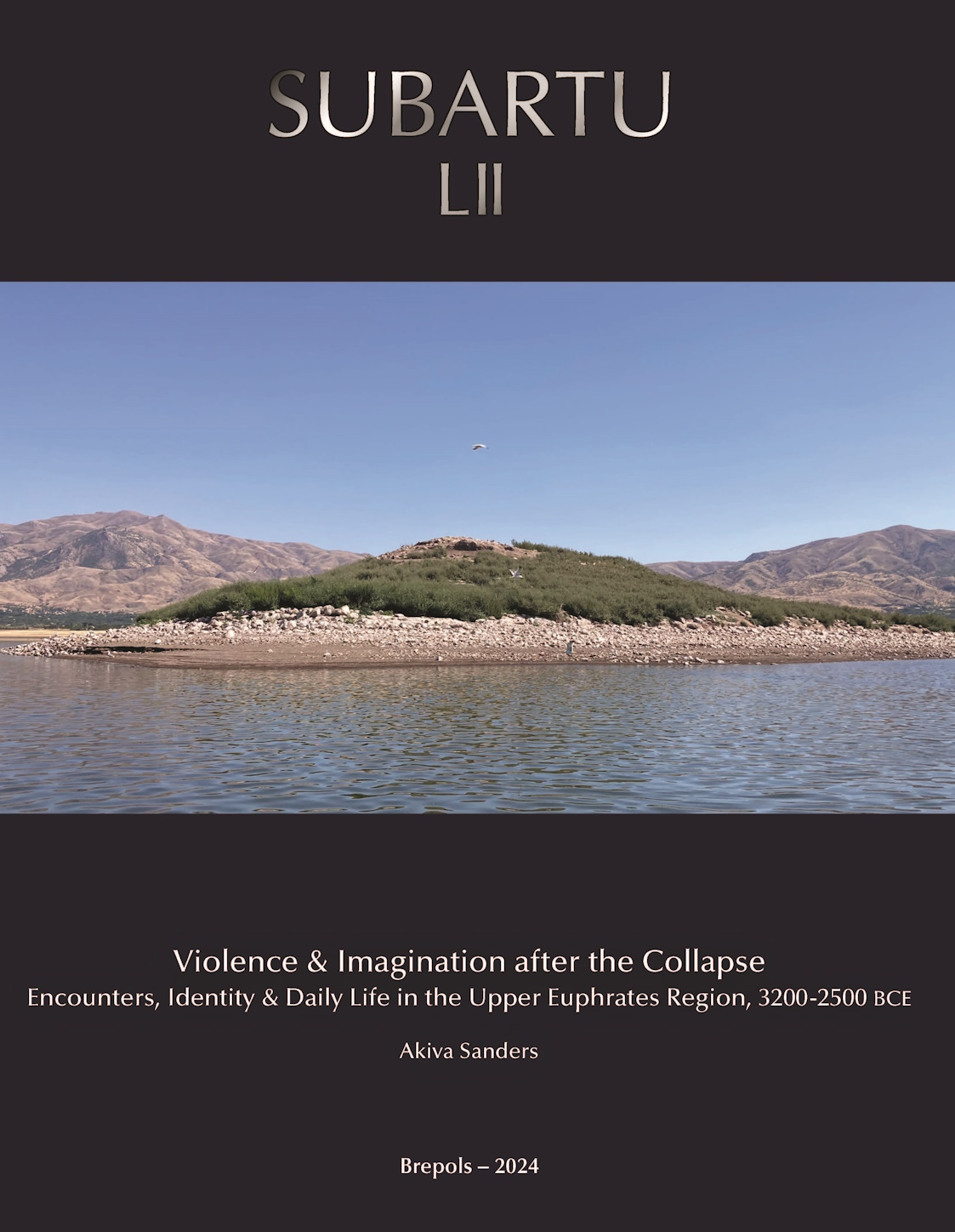
Violence and Imagination after the Collapse
Encounters, Identity and Daily Life in the Upper Euphrates Region, 3200-2500 BCE
In the late fourth millennium BCE the villages temples and palace of the Upper Euphrates region stood between two social worlds: the comparatively hierarchical centrally organized Mesopotamian social tradition to the south and the comparatively egalitarian decentralized Kura-Araxes social tradition to the north. Over the next seven centuries this positioning and the interactions it sparked fed into reactions among the region’s inhabitants that ranged from cataclysmic violence to a flowering of innovation in visual culture and social arrangements. These events had a wide array of short-term and long-term impacts some limited to a single house or settlement and some like the innovation of the Warrior Tomb template that transformed societies across West Asia. With an eye towards detail a theoretical approach emphasizing personal motivation and multiple scales of analysis this book organizes previously unpublished data from six sites in the region Arslantepe Ta kun Mevkii Pulur Nor untepe Tepecik and Korucutepe dating to this dramatic and transformative period.
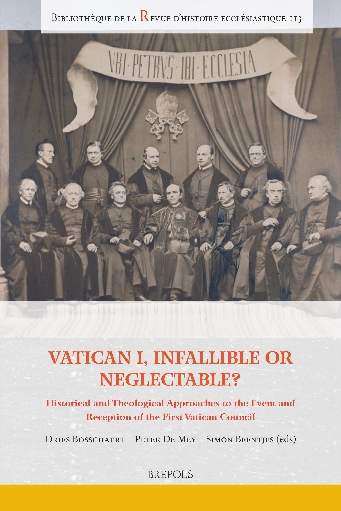
Vatican I, Infallible or Neglectable?
Historical and Theological Approaches to the Event and Reception of the First Vatican Council
On 20 October 1870 pope Pius IX adjourned the First Vatican Council because of the Italian Rissorgimento troops approaching the city of Rome. Given that the Council had only opened less than a year prior on 8 December 1869 the act was emblematic. The council as the Catholic Church’s protective response against all things new – rationalism liberalism naturalism materialism and pantheism – was overtaken by history. Given its premature end not all documents prepared were completed and those that were promulgated became among the most controversial documents in the nineteenth and twentieth-century Catholic Church strongly defining its relations to other Christian confessions and modernity. Similarly around one hundred years after the suspension of the First Vatican Council its historical and theological study was overtaken by the event of the Second Vatican Council known for its rapprochement to the modern world. The history and results of the First Vatican Council were either forgotten or reinterpreted in light of this subsequent council’s decisions. In light of the 150th anniversary of this council the editors and authors of this volume set themselves the goal of re-examining this tradition of historical and theological reception (and forgetting) of the First Vatican Council.
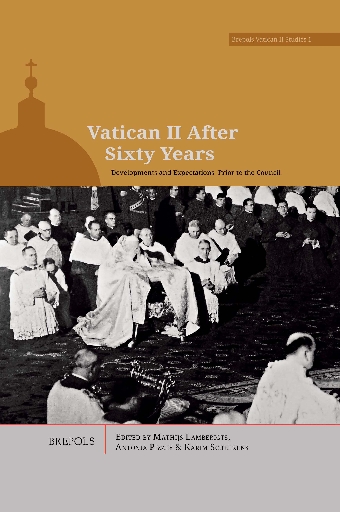
Vatican II After Sixty Years
Developments and Expectations Prior to the Council
This volume is the result of a workshop organized in Leuven within the context of the Australian Catholic University-KU Leuven-Tilburg University project on Vatican II (1962-1965). This volume focuses on the preparatory period of the Council and its broader context for many renewal movements were underway decades before the Council's opening. The preparation of the Council was also a period of intense consultation of bishops and male superiors of religious orders and congregations. Indeed John XXIII aimed at introducing an aggiornamento in the Roman Catholic Church taking into account the wishes and the needs of bishops and superiors. The volume presented here offers new insights about this period on the basis of archives and other materials insufficiently consulted to date. The papers presented are the result of research by both senior scholars and junior researchers. They focus on the following issues: revelation ecclesiology ecumenism and education.
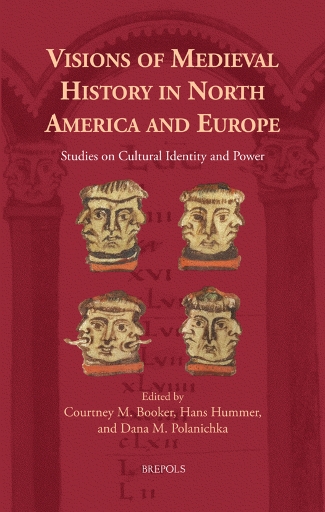
Visions of Medieval History in North America and Europe
Studies on Cultural Identity and Power
In this volume scholars from North America and Europe explore the intersection of medieval identity with ethnicity religion power law inheritance texts and memory. They offer new historiographical interventions into questions of identity but also of ethnonyms conflict studies the feudal revolution gender and kinship studies and local history. Employing interdisciplinary approaches and textual hermeneutics the authors represent an international scholarly community characterized by intellectual restlessness historiographical experimentation and defiance of convention.
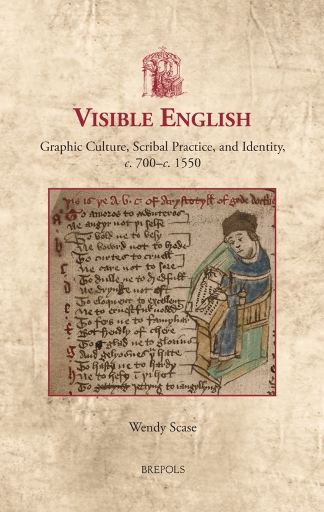
Visible English
Graphic Culture, Scribal Practice, and Identity, c. 700-c. 1550
Visible English recovers for the first time the experience of reading and writing the English language in the medieval period through the perspectives of littera pedagogy the basis of medieval learning and teaching of literate skills in Latin. Littera is at the heart of the set of theories and practices that constitute the ‘graphic culture’ of the book’s title. The book shows for the first time that littera pedagogy was an ‘us and them’ discourse that functioned as a vehicle for identity formation. Using littera pedagogy as a framework for understanding the medieval English-language corpus from the point of view of the readers and writers who produced it Visible English offers new insights on experiences of writing and reading English in communities ranging from those first in contact with Latin literacy to those where print was an alternative to manuscript. Discussing a broad range of materials from so-called ‘pen-trials’ and graffiti to key literary manuscripts Visible English provides new perspectives on the ways that the alphabet was understood on genres such as alphabet poems riddles and scribal signatures and on the different ways in which scribes copied Old and Middle English texts. It argues that the graphic culture underpinned and transmitted by littera pedagogy provided frameworks for the development and understanding of English-language literacy practices and new ways of experiencing social belonging and difference. To be literate in English it proposes was to inhabit identities marked by Anglophone literate practices.
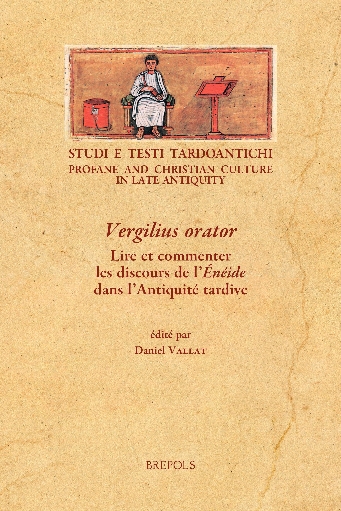
Vergilius orator
Lire et commenter les discours de l’Énéide dans l’Antiquité tardive
En devenant le principal support pédagogique des grammatici l’œuvre de Virgile a joué un rôle central dans la formation intellectuelle de la jeunesse lors de l’Antiquité romaine tardive y compris dans la formation rhétorique : les discours - principalement ceux de l’Énéide - ont fourni aux commentateurs du grand poète l’occasion d’expliquer des notions rhétoriques et d’analyser des exemples précis de situations oratoires. Les contributions du présent volume explorent les différentes facettes de cet art virgilien de la parole tel qu’il a été compris par les professionnels de la littérature et de l’éducation de l’Antiquité tardive.
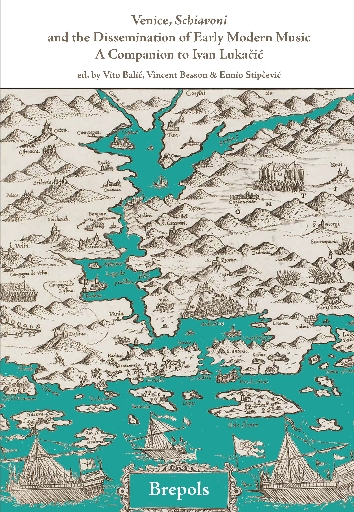
Venice, Schiavoni and the Dissemination of Early Modern Music: A Companion to Ivan Lukačić
Ivan Lukačić (born around 1585 died in 1648) composer Conventual Franciscan long-time “maestro di cappella” of the cathedral in Split is a typical “hero” of local historiography. As early as 1935 the Croatian-American musicologist Dragan Plamenac (real name Karl Siebenschein) prepared a selection from the only known collection of Lukačić’s compositions the Sacrae cantiones (Venice 1620). In the same year Plamenac introduced Croatian Renaissance and Baroque music to the local audience for the first time at a concert held at the Croatian Music Institute. In the aftermath of Plamenac’s emigration to the USA in 1939 it took several decades for new archival stylistic interdisciplinary and international research in Croatian musicology to take place. Despite the availability of earlier material as well as contemporary musical publications of Lukačić’s work (J. Andreis Zagreb 1970; E. Stipčević Padua 1986) it is not an exaggeration to say that Lukačić still remains unknown internationally. For many years a number of studies of Lukačić and the music of his contemporaries from the “other eastern coast of the Adriatic” published almost exclusively in Croatian and thus the international professional public had very limited access to them. This collection of studies dedicated to Lukačić and to the musical and cultural contacts between the two Adriatic coasts is the first volume to be published in both English and Italian. The echoes of the contacts between Italy and Croatia reached the Royal Palace in Portugal shops selling printed music in Denmark and church archives in Slovenia and Poland. The aim of this book is to follow the traces of that cultural dissemination.
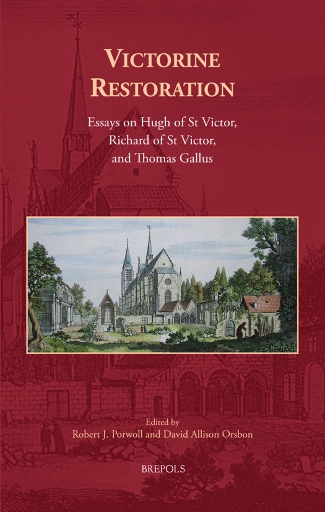
Victorine Restoration
Essays On Hugh Of St Victor, Richard Of St Victor, and Thomas Gallus
The Victorines were scholars and teachers of philosophy liberal arts sacred scripture music and contemplation at the Abbey of Saint-Victor in Paris. This collection focuses on the three greatest Victorines: Hugh (d. 1141) who established the direction of the school; Richard (d. 1173) who developed Victorine contemplation; and Thomas Gallus (d. 1246) who culminated Victorine contemplative thought and transmitted it to other schools especially the Franciscans. They offer an innovative revival of the Christian spiritual and intellectual tradition for their reforming pastoral mission in their urban setting and for the Church.
Their contemporaries saw the Victorines as beacons of spiritual love and intellectual richness. Later reformers and thinkers held their writings as touchstones of contemplative love including for example Bonaventure Thomas Aquinas Jean Gerson Thomas à Kempis the Devotio Moderna and many others. The writings of the Victorines found broad appeal among later medieval readers as well as praise among early modern reformers Protestant and Catholic alike. In recent decades the Victorines have returned to scholarly attention and renewed appreciation. Scholarly studies critical editions and translation projects reveal the treasures of Victorine thought and spirituality.
This volume showcases the findings of recent research and scholarly advances in Victorine studies offering new readers a status quaestionis of the field. It also features new research by eminent experts in Victorine thought that points out promising directions for future research thus offering important new findings for established specialists.
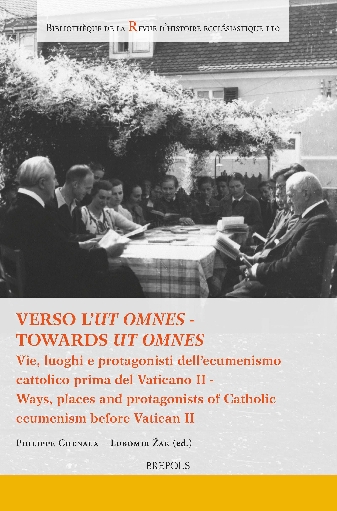
Verso l' Ut Omnes - Towards Ut Omnes
Vie, luoghi e protagonisti dell’ecumenismo cattolico prima del Vaticano II - Ways, places and protagonists of Catholic ecumenism before Vatican II
The studies collected in this volume highlight the rising of an ecumenical consciousness within the Catholic Church in the early twentieth century. The Catholic paths suggested in view of the hoped-for Christian unity before the Second Vatican Council were different but complementary: the path of prayer and liturgy that of theological refl ection that of fraternal witness and that of martyrdom. The text offers valuable contributions on all these paths written by specialists in the history of ecumenism.

Vigilemus et Oremus
The Theological Significance of ‘Keeping Vigil’ in Rome From the Fourth to the Eighth Centuries
Christians have observed vigils in both East and West from earliest times. In the broad liturgical tradition of Christianity the idea of keeping vigil appears to manifest the Church’s eschatological nature. Documentary evidence from the earliest centuries reveals that some Christians kept a night watch at the graves of martyrs and other heroes of the faith as to anticipate that dawn when the rising Sun of Justice would return in fulfilment of his promise. Eventually vigils appear not just for Easter Pentecost and saints’ days but also for Christmas the dedication of a church building and on Saturday evening of the uniquely Roman quarterly Ember Weeks.
Liturgical sources of the sixth seventh and eighth centuries reveal that such practices became relatively standardized with the assignment of specific Mass texts and scriptural readings yet we know very little about the precise elements which comprised a vigil liturgy and of their theological significance. At the same time these vigils were so important that they attracted to themselves the celebration of major sacramental liturgies during them. Hence the Paschal Vigil which existed for centuries as a vigil liturgy of scriptural readings and prayers gradually became the setting for the annual baptismal celebration. This book examines the nature of Roman vigil liturgies in the early centuries of Christianity to unravel the most primitive structure of keeping vigil and to provide a better understanding of the Paschal Vigil which Augustine of Hippo affirms as the ‘mother of all vigils.’
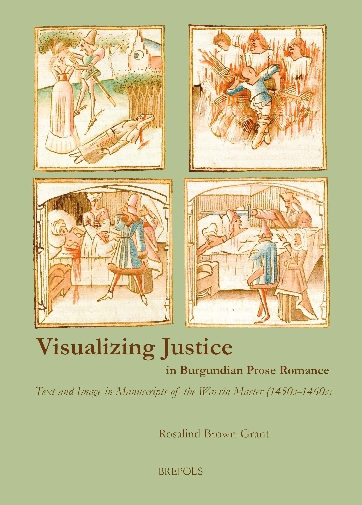
Visualizing Justice in Burgundian Prose Romance
Text and Image in Manuscripts of the Wavrin Master (1450s–1460s)
This is the first monograph devoted to manuscripts illuminated by the mid-fifteenth-century artist known as the Wavrin Master so-called after his chief patron Jean de Wavrin chronicler and councillor at the court of Philip the Good of Burgundy. Specializing in the production of pseudo-historical prose romances featuring the putative ancestors of actual Burgundian families the artist was an attentive interpreter of these texts which were designed to commemorate the chivalric feats of past heroes and to foster their emulation by noble readers of the day. Integral to these heroes’ deeds is the notion of justice their worth being measured by their ability to remedy criminal acts such as adultery murder rape and usurpation. In a corpus of 10 paper manuscripts containing the texts of 15 romances and over 650 watercolour miniatures the stylized expressive images of the Wavrin Master bring out with particular clarity the lessons in justice which these works offered their contemporary audience many of whom from the Burgundian dukes downwards would have been responsible for upholding the law in their territories. Chapters are devoted to issues such as the nature of just war and how it is linked to good rulership; what forms of legal redress the heroines of these tales are able to obtain with or without the help of a male champion; and what responses are available in law to a spouse betrayed by an adulterous partner. The book will be of interest to scholars of medieval art literature legal and cultural history and gender studies.
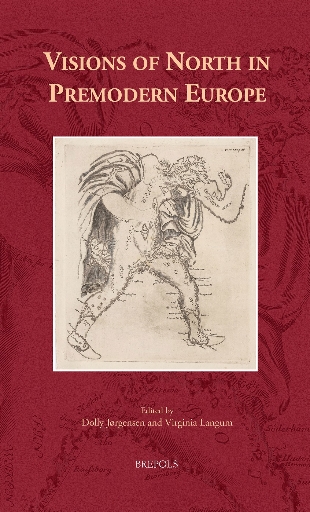
Visions of North in Premodern Europe
The North has long attracted attention not simply as a circumpolar geographical location but also as an ideological space a place that is ‘made’ through the understanding imagination and interactions of both insiders and outsiders. The envisioning of the North brings it into being and it is from this starting point that this volume explores how the North was perceived from ancient times up to the early modern period questioning who where and what was defined as North over the course of two millennia.
Covering historical periods as diverse as Ancient Greece to eighteenth-century France and drawing on a variety of disciplines including cultural history literary studies art history environmental history and the history of science the contributions gathered here combine to shed light on one key question: how was the North constructed as a place and a people? Material such as sagas the ethnographic work of Olaus Magnus religious writing maps medical texts and illustrations are drawn on throughout the volume offering important insights into how these key sources continued to be used over time. Selected texts have been compiled into a useful appendix that will be of considerable value to scholars.
Victorine Christology
The Canons following the Rule of St Augustine at St Victor in Paris were some of the most influential religious writers of the Middle Ages. They combined exegesis and spiritual teaching in a theology that was deeply rooted in tradition but also attuned to current developments in the schools of Paris. The importance of Victorine Christology in this great age of theological speculation is unquestionable. The writings translated in this volume cover the foundational and maturing periods of Victorine Christology during the 1130s to the 1150s when Hugh of St Victor championed the paradigm of the “assumed man” (homo assumptus) and Robert of Melun advanced his Christology into the most comprehensive treatment in the twelfth century.
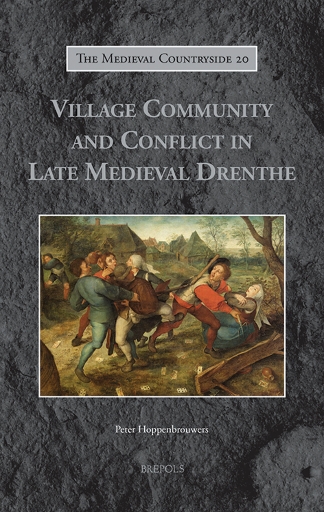
Village Community and Conflict in Late Medieval Drenthe
Village communities were the heart of the medieval countryside. But how did they operate? This book seeks to find some answers to that question by focusing on late medieval Drenthe a region situated in a remote corner of the Holy Roman Empire and part of the prince-bishopric of Utrecht. Drenthe was an overwhelmingly localized rural world. It had no cities and consisted entirely of small villages. The social and economic importance of traditionally privileged sections of medieval society (clergy and nobility) was limited; free peasant landowners were the dominant social class.
Based on a careful reading of normative sources (Land charters) and thousands of short verdicts given by the so-called ‘Etstoel’ or high court of justice in Drenthe this book focuses on three types of conflict: conflicts between villages feud-like violence and litigations about property. These three types coincide with three levels of involvement: that of village communities as a whole that of kin groups and that of households.
The resulting comprehensive analysis provides a rigorous interrogation of generalized notions of the pre-industrial rural world offering a snapshot of a typical peasant society in late medieval Europe.
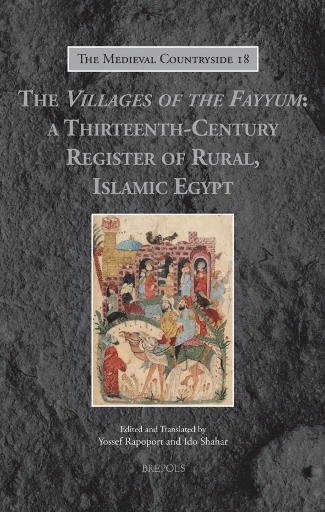
The Villages of the Fayyum, a Thirteenth-Century Register of Rural, Islamic Egypt
Medieval Islamic society was overwhelmingly a society of peasants and the achievements of Islamic civilization depended first and foremost on agricultural production. Yet the history of the medieval Islamic countryside has been neglected or marginalized. Basic questions such as the social and religious identities of village communities or the relationship of the peasant to the state are either ignored or discussed from a normative point of view.
This volume addresses this lacuna in our understanding of medieval Islam by presenting a first-hand account of the Egyptian countryside. Dating from the middle of the thirteenth century Abū ‘Uthmān al-Nābulusī’s Villages of the Fayyum is as close as we get to the tax registers of any rural province. Not unlike the Domesday Book of medieval England al-Nābulusī’s work provides a wealth of detail for each village which far surpasses any other source for the rural economy of medieval Islam. It is a unique comprehensive snap-shot of one rural society at one significant point in its history and an insight into the way of life of the majority of the population in the medieval Islamic world. Richly annotated and with a detailed introduction this volume offers the first academic edition of this work and the first translation into a European language. By opening up this key source to scholars it will be an indispensable resource for historians of Egypt of administration and rural life in the premodern world generally and of the Middle East in particular.
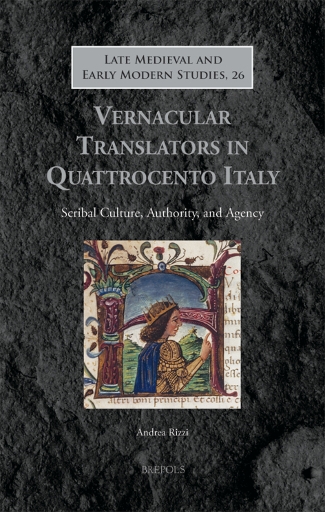
Vernacular Translators in Quattrocento Italy
Scribal Culture, Authority, and Agency
This book provides a richly documented study of vernacular translators as agents within the literary culture of Italy during the fifteenth century. Through a fresh and careful examination of these early modern translators Rizzi shows how humanist translators went about convincing readers of the value of their work in disseminating knowledge that would otherwise be inaccessible to many. The translators studied in this book include not only the well-known ‘superstars’ such as Leonardo Bruni but also little-known and indeed obscure writers from throughout the Italian peninsula.
Rizzi demonstrates that vernacular translation did not cease with the rise of ‘humanism’. Translations from Greek into Latin spurred the concurrent production of ‘new’ vernacular versions. Humanists challenged themselves to produce creative and authoritative translations both from Greek and occasionally from the vernacular into Latin and from Latin into the vernacular. Translators grew increasingly self-assertive when taking on these tasks.
The findings of this study have wide implications: they trace a novel history of the use of the Italian language alongside Latin in a period when high culture was bilingual. They also shed further light on the topic of Renaissance self-fashioning and on the workings of the patronage system which has been studied far less in literary history than in art history. Finally the book gives welcome emphasis to the concept that the creation and the circulation of translations (along with other literary activities) were collaborative activities involving dedicatees friends and scribes among others.
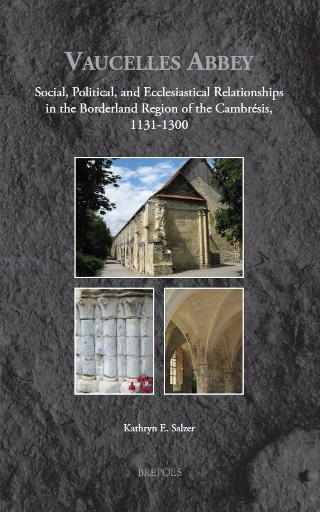
Vaucelles Abbey
Social, Political, and Ecclesiastical Relationships in the Borderland Region of the Cambrésis, 1131-1300
Founded in 1131 by the castellan of Cambrai Vaucelles Abbey thrived in a borderland region where German emperors French kings Flemish counts bishops of Cambrai and the Cistercian Order all had active interests. To understand how Vaucelles flourished we must look at the relationships that the house created and fostered with various international regional and local individuals and institutions. Vaucelles used these connections to protect the vast patrimony that the monks created in the two centuries after its foundation.
This study asserts that three principal factors influenced the foundation and development of Vaucelles. First the abbey was fortunate in its local support beginning with the castellan family and expanding to include numerous regional families and the bishops of Cambrai. Second the abbey was established in a political borderland a geo-political situation that Vaucelles survived and actually turned into a positive feature of its development. And finally Vaucelles was a Cistercian monastery a direct daughter house of Clairvaux. Vaucelles’ Cistercian observance fostered relationships that were particularly significant to the abbey’s development from the late twelfth century onward. These factors offer exceptional tools for demonstrating many features of Vaucelles’ political social and economic life during the twelfth and thirteenth centuries.
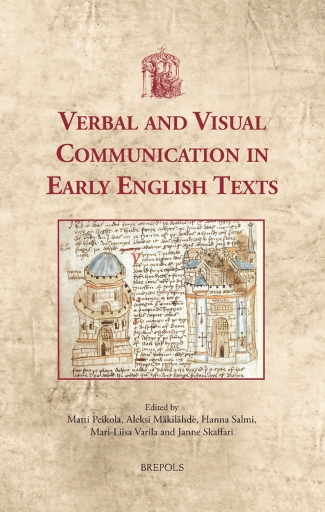
Verbal and Visual Communication in Early English Texts
When reading a text our understanding of its meaning is influenced by the visual form and material features of the page. The chapters in this volume investigate how visual and material features of early English books documents and other artefacts support - or potentially contradict - the linguistic features in communicating the message. In addition to investigating how such communication varies between different media and genres our contributors propose novel methods for analysing these features including new digital applications. They map the use of visual and material features - such as layout design or choice of script/typeface - against linguistic features - such as code-switching lexical variation or textual labels - to consider how these choices reflect the communicative purposes of the text for example guiding readers to navigate the text in a certain way or persuading them to arrive at a certain interpretation. The chapters explore texts from the medieval and the early modern periods including saints’ lives medical treatises dictionaries personal letters and inscriptions on objects. The thematic threads running through the volume serve to integrate book studies with discourse linguistics the medieval with the early modern manuscript with print and the verbal with the visual.
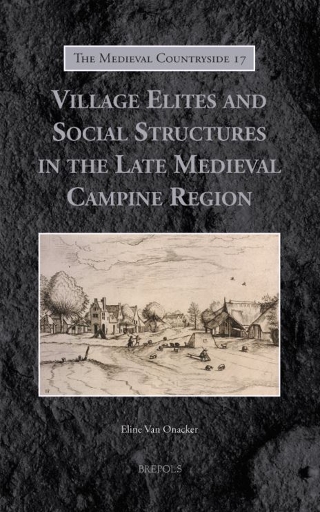
Village Elites and Social Structures in the Late Medieval Campine Region
The economy of the late medieval Low Countries is often portrayed in terms of dynamism and economic growth. However several regions within this larger entity followed an alternate path of development. One example of this is the Campine (Kempen) a communal peasant region situated to the northeast of the sixteenth-century ‘metropolis’ of Antwerp. By contrast with other regions in the Low Countries this area was characterised by a remarkable stability.
By focusing on ‘independent’ peasant elites this study explores the social structures and the characteristics of inequality of this region showing how these factors led to a different more stable mode of economic development. Looking past standard societal measurements such as property distribution this work combines a wide variety of sources to grasp the nuances of inequality in a communal society. It therefore takes into account other economic factors such as control over the commons and market integration. It also focuses on political and social inequality shedding light on aspects of inequality in village politics social life and poor relief.
Thus in contrast to dominant depictions of pre-modern societies on the road to capitalism this book provides a comprehensive portrayal of inequality and elite groups in a communal peasant society.