


Vaucelles Abbey
Social, Political, and Ecclesiastical Relationships in the Borderland Region of the Cambrésis, 1131-1300
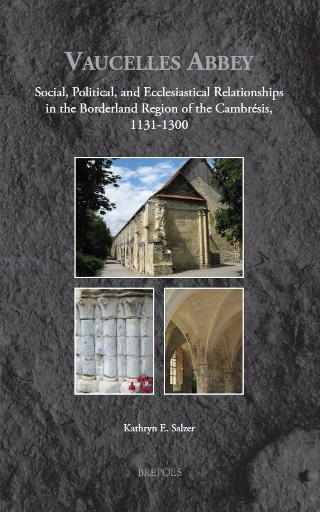
Abstract
Founded in 1131 by the castellan of Cambrai, Vaucelles Abbey thrived in a borderland region, where German emperors, French kings, Flemish counts, bishops of Cambrai, and the Cistercian Order all had active interests. To understand how Vaucelles flourished, we must look at the relationships that the house created and fostered with various international, regional, and local individuals and institutions. Vaucelles used these connections to protect the vast patrimony that the monks created in the two centuries after its foundation.
This study asserts that three principal factors influenced the foundation and development of Vaucelles. First, the abbey was fortunate in its local support, beginning with the castellan family and expanding to include numerous regional families and the bishops of Cambrai. Second, the abbey was established in a political borderland, a geo-political situation that Vaucelles survived and actually turned into a positive feature of its development. And finally, Vaucelles was a Cistercian monastery, a direct daughter house of Clairvaux. Vaucelles’ Cistercian observance fostered relationships that were particularly significant to the abbey’s development from the late twelfth century onward. These factors offer exceptional tools for demonstrating many features of Vaucelles’ political, social, and economic life during the twelfth and thirteenth centuries.
