


Medieval Monastic Studies
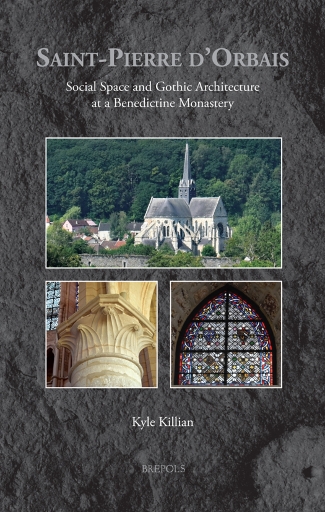
Saint-Pierre d’Orbais
Social Space and Gothic Architecture at a Benedictine Monastery
The fragmentary remains of the Benedictine monastery of Saint-Pierre d'Orbais in northwest Champagne preserves a particular iteration of Gothic style and technological achievement as well as the built environment of a community deeply embedded in the world around them. Through their architecture successive generations of monks of Orbais whose institutional life stretched from the end of the seventh century to end of the eighteenth century were constantly seeking to clarify their position in the changing physical and social landscapes they inhabited. Although connected by a shared site the architectural evidence from Orbais preserves remnants from several episodes of use and reuse. The site is treated thematically starting with the boundaries that define the site then the resources that shaped monastic life in this particular location followed by the monastic landscapes that shaped the community as an institution. These categories reflect both the nature of our evidence for the contexts of building construction and the types of landscapes that were most active for the monastic community at Orbais over the long life of the site. The final chapter resituates the architectural history of the monastic church in light of these interrelated landscapes contextualizing existing scholarship that treats it as a specifically Gothic monument and providing lines of connection to medieval built environments more broadly.

Monastic Communities and Canonical Clergy in the Carolingian World (780–840)
Categorizing the Church
In the years 816-819 a series of councils was held at the imperial palace in Aachen. The goal of the meetings was to settle a number of questions about ecclesiastical organization. These issues were hotly debated throughout the Christian Roman Empire of the fourth and fifth centuries and then reinvigorated by the renewal of empire under Charlemagne and his son Louis the Pious. At the centre of the ensuing debate stood the distinction between monks and monastic communities on the one hand and the so-called clerici canonici and their communities on the other. Many other reforms were proposed in its wake: the position of the episcopacy needed to be renegotiated the role of the imperial court needed to be consolidated and the place of every Christian within the renewed Carolingian Church needed to be redefined. What started out as a seemingly straightforward reorganisation of the religious communities that dotted the Frankish ecclesiastical landscape thus quickly turned into a broad movement that necessitated an almost complete categorization of the orders of the Church. The contributions to this volume each zoom in on various aspects of these negotiations: their prehistory their implementation and their influence. In doing so previously held assumptions about the scope the goals and the impact of the ‘Carolingian Church Reforms’ will also be re-assessed.
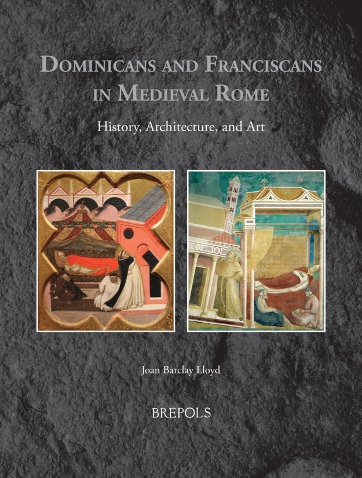
Dominicans and Franciscans in Medieval Rome
History, Architecture, and Art
When Saint Dominic (c. 1174-1221) came to Rome to seek papal approval of the Order of Preachers he founded two houses on the periphery of the city - a nunnery at S. Sisto in structures rebuilt by Pope Innocent III and a priory next to the early Christian basilica of S. Sabina. The Dominicans modified and enlarged the existing buildings according to their needs. Saint Francis of Assisi (c. 1182-1226) also came to consult the Pope but he did not make any foundations in Rome. In 1229 Pope Gregory IX ordered the Benedictine monks of SS. Cosma e Damiano in Mica Aurea to cede to the Franciscans their hospice of S. Biagio in Trastevere where Saint Francis had stayed. The friars built the church and friary of S. Francesco a Ripa there. Later Gregory IX took over the Benedictine monastery itself where he established the Franciscan nunnery of S. Cosimato in 1234. Moving into the more densely inhabited parts of the city the Friars Minor built a new friary and church at S. Maria in Aracoeli on the Capitoline Hill from c. 1248-1252 onwards. The Dominicans in 1266 acquired a convent near the Pantheon where they constructed the Gothic church of S. Maria sopra Minerva. In 1285 the Colonna family established a Franciscan nunnery at S. Silvestro in Capite. In the context of the origin and evolution of the two Mendicant Orders this book traces the history of these thirteenth-century Dominican and Franciscan foundations focussing on their location in Rome the history of each site their architecture and the medieval works of art connected with them. Popes and cardinals members of important families and Franciscan Tertiaries contributed generously to their construction and decoration. The book ends with Saint Catherine of Siena who lived near S. Maria sopra Minerva where she was buried.
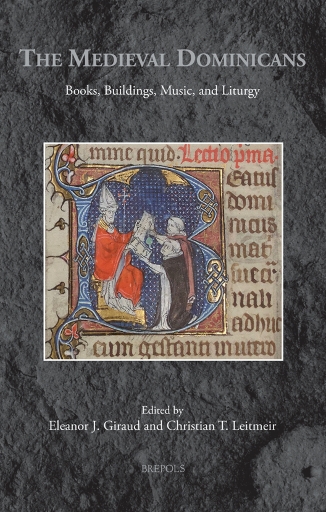
The Medieval Dominicans
Books, Buildings, Music, and Liturgy
The Order of Preachers has famously bred some of the leading intellectual lights of the Middle Ages. While Dominican achievements in theology philosophy languages law and sciences have attracted much scholarly interest their significant engagement with liturgy the visual arts and music remains relatively unexplored. These aspects and their manifold interconnections form the focal point of this interdisciplinary volume.
The different chapters examine how early Dominicans positioned themselves and interacted with their local communities where they drew their influences from and what impact the new Order had on various aspects of medieval life. The contributors to this volume address issues as diverse as the making and illustrating of books services for a king the disposition of liturgical space the creation of new liturgies and a Dominican-made music treatise. In doing so they seek to shed light on the actions and interactions of medieval Dominicans in the first centuries of the Order’s existence.
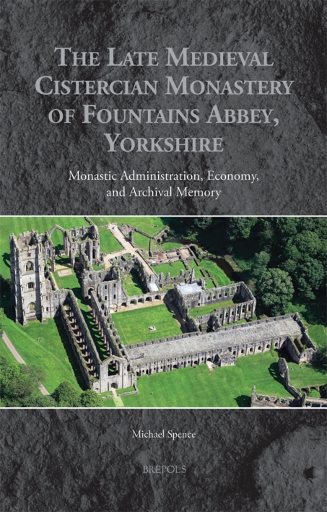
The Late Medieval Cistercian Monastery of Fountains Abbey, Yorkshire
Monastic Administration, Economy, and Archival Memory
Founded in 1132 Fountains Abbey became the wealthiest English Cistercian monastery - yet relatively little analysis has been made of its surviving records to investigate how its wealth was controlled and sustained. This book deals with this secular aspect of the religious community at Fountains investigating in particular the way in which prosaic business records were compiled and redacted. It traces the transmission of data from original charters through successive versions of cartularies and in the process establishes the existence of a previously unknown manuscript. It also reveals how abbots in the fifteenth century interacted with and adapted the records in their care.
In this process two quite different aspects of monastic life are uncovered. First it sheds new light on the history of Fountains Abbey through the fourteenth and fifteenth centuries amongst other things how it responded to the turmoil of the Black Death and discloses for the first time the allegiance of one abbot to the Lancastrian cause during the Wars of the Roses. Second it reveals the worldly skills shown by the community of Fountains that were successfully applied to exploit the monastery’s large landholdings across Yorkshire mainly through wool and agricultural production but also through fisheries tanning mining and metalworking. The economic success of these activities enabled the abbey to become a prosperous institution which rivalled the wealth of the aristocracy.
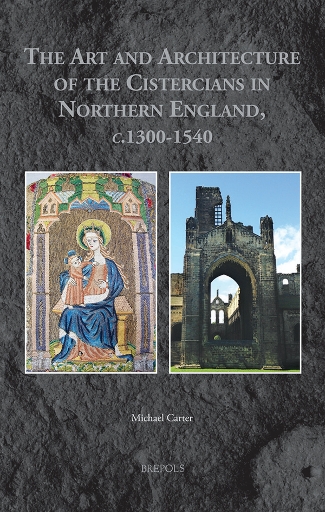
The Art and Architecture of the Cistercians in Northern England, c. 1300–1540
The Cistercian abbeys of northern England provide some of the finest monastic remains in all of Europe and much has been written on their twelfth- and thirteenth-century architecture. The present study is the first in-depth analysis of the art and architecture of these northern houses and nunneries in the late Middle Ages and questions many long-held opinions about the Order’s perceived decline during the period c.1300-1540. Extensive building works were conducted between the fourteenth and sixteenth centuries at well-known abbeys such as Byland Fountains Kirkstall and Rievaulx and also at lesser-known houses including Calder and Holm Cultram and at many convents of Cistercian nuns. This study examines the motives of Cistercian patrons and the extent to which the Order continued to enjoy the benefaction of lay society.
Featuring over a hundred illustrations and eight colour plates this book demonstrates that the Cistercians remained at the forefront of late medieval artistic developments and also shows how the Order expressed its identity in its visual and material cultures until the end of the Middle Ages.
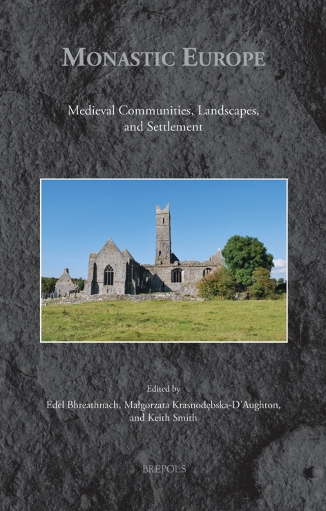
Monastic Europe
Medieval Communities, Landscapes, and Settlements
Monasticism became part of European culture from the early period of Christianity and developed into a powerful institution that had a profound effect on the greater Church on wider society and on the landscape. Monastic communities were as diverse as the societies in which they lived following a variety of rules building monasteries influenced by common ideals and yet diverse in their regionalism while also contributing to the economic and spiritual well-being inside and outside their precincts.
This interdisciplinary volume presents the diversity of medieval European monasticism with a particular emphasis on its impact on the immediate environs. Geographically it extends from the far west in Ireland Scotland and Wales to the east in Romania and the Balkans through the north of Scandinavia to the south of the Iberian Peninsula. Drawing on archaeological art and architectural textual and topographical evidence the contributors explore how monastic communities were formed how they created a landscape of monasticism how they wove their identities with those around them and how they interacted with all levels of society to leave a lasting imprint on European towns and rural landscapes.
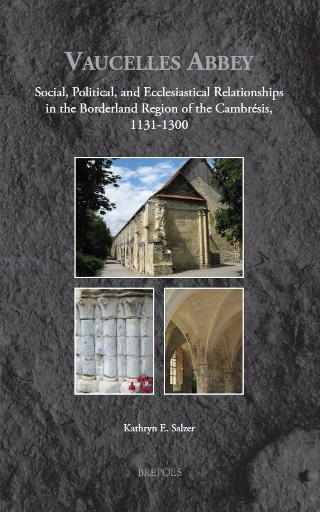
Vaucelles Abbey
Social, Political, and Ecclesiastical Relationships in the Borderland Region of the Cambrésis, 1131-1300
Founded in 1131 by the castellan of Cambrai Vaucelles Abbey thrived in a borderland region where German emperors French kings Flemish counts bishops of Cambrai and the Cistercian Order all had active interests. To understand how Vaucelles flourished we must look at the relationships that the house created and fostered with various international regional and local individuals and institutions. Vaucelles used these connections to protect the vast patrimony that the monks created in the two centuries after its foundation.
This study asserts that three principal factors influenced the foundation and development of Vaucelles. First the abbey was fortunate in its local support beginning with the castellan family and expanding to include numerous regional families and the bishops of Cambrai. Second the abbey was established in a political borderland a geo-political situation that Vaucelles survived and actually turned into a positive feature of its development. And finally Vaucelles was a Cistercian monastery a direct daughter house of Clairvaux. Vaucelles’ Cistercian observance fostered relationships that were particularly significant to the abbey’s development from the late twelfth century onward. These factors offer exceptional tools for demonstrating many features of Vaucelles’ political social and economic life during the twelfth and thirteenth centuries.
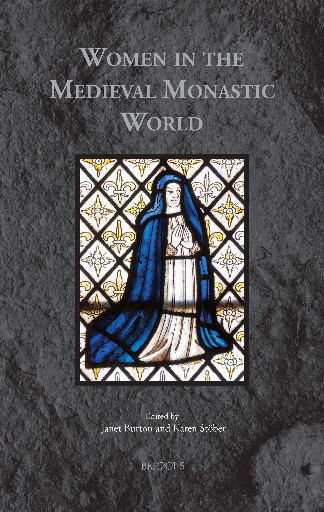
Women in the Medieval Monastic World
There has long been a tendency among monastic historians to ignore or marginalize female participation in monastic life but recent scholarship has begun to redress the balance and the great contributions made by women to the religious life of the Middle Ages are now attracting increasing attention. This interdisciplinary volume draws together scholars from Spain Italy France the Low Countries Germany Transylvania Scandinavia and the British Isles and offers new insights into the history art history and material culture and the religiosity and culture of medieval religious women.
The different chapters within this book take a comparative approach to the emergence and spread of female monastic communities across different geographical political and economic settings comparing and contrasting houses that ranged from rich powerful royal abbeys to small subsistence priories on the margins of society and exploring the artistic achievements the interaction with neighbours and secular and ecclesiastical authorities and the spiritual lives that were led by their inhabitants. The contributors to this volume address issues as diverse as patronage and relationships with the outside world organizational structures the nature of Cistercian observance and identity among female houses and the role of male authority and in doing so they seek to shed light on the divergences and commonalities upon which the female religious life was based.