


Water Management in Gerasa and its Hinterland
From the Romans to ad 750
Abstract
The Decapolis city of Gerasa has seen occupation since the Bronze Age but reached its zenith in the Roman to early Islamic period as a population centre and trading hub. Located in a fertile valley in the limestone foothills of the Ajlun mountains, the city benefitted from a benign climate and an excellent local water supply from karstic springs and perennial streams. By the Roman-Early Byzantine period, these water sources were harnessed and managed by extensive aqueduct and distribution networks that satisfied the broad range of water needs of both urban and rural dwellers.
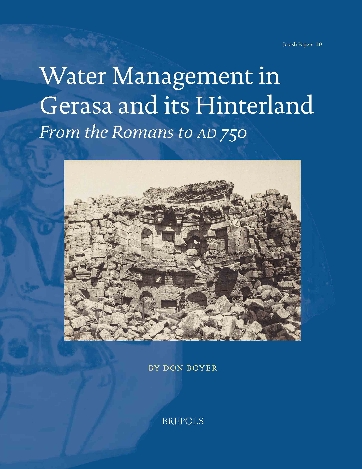
This volume offers an up-to-date, comprehensive, and multidisciplinary analysis of the water management system employed in both Gerasa and its hinterland from the time of Roman occupation to the devastating earthquakes that struck the city at the end of the Umayyad period. Drawing on archaeological evidence from the author’s field research, together with a critical and detailed analysis of the evidence of water installations and the results of a radiocarbon dating study, this insightful book offers the first diachronic interpretation of Gerasa’s water distribution, setting the city in its geoarchaeological, historical, and landscape contexts, and contributing to the broader understanding of its archaeological history.
