


Jerash Papers
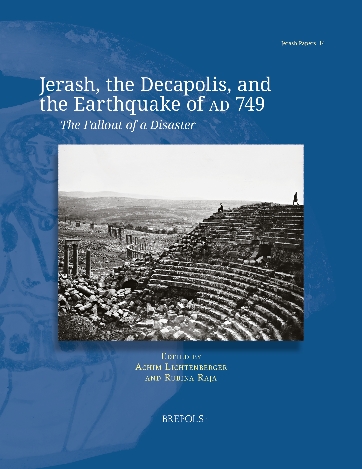
Jerash, the Decapolis, and the Earthquake of ad 749
The Fallout of a Disaster
Gerasa/Jerash and the Decapolis are located along the seismically active area of the Dead Sea Rift a point where four tectonic plates meet to create the 110 km-long fault known as the Dead Sea Transform. It was activity along this fault that led in ad 749 to a famously devastating earthquake in the region. Measuring at least 7.0 on the Richter scale this quake not only had a profound physical impact on the Decapolis Galilee Caesarea and Jerusalem causing widespread destruction and reshaping urban landscapes but also led to a clear shift in socio-economic dynamics through a combination of economic decline and population displacement. It thus stands as a clear watershed moment in Late Antiquity. In its aftermath some cities struggled to regain prominence while others declined and were abandoned. Taking the ad 749 earthquake as its starting point this volume aims to provide a nuanced understanding of the quake’s effects questioning its role as a sole watershed moment and exploring the various other factors at play that influenced urban change. The contributions gathered here which clearly recognize earthquakes as non-human actors in this process clearly highlight the diverse impacts that this seismic event had on the city life in the southern Levant and the fallout in the decades that followed.
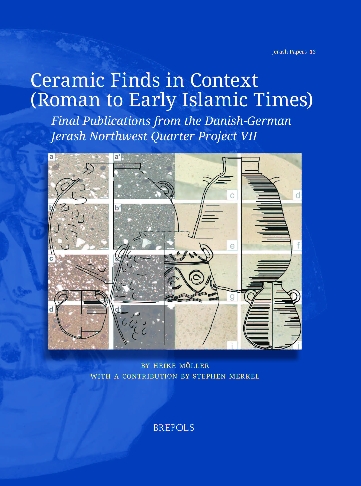
Ceramic Finds in Context (Roman to Early Islamic Times)
Final Publications from the Danish-German Jerash Northwest Quarter Project VII
The Decapolis city of Jerash has long attracted attention from travellers and scholars due both to the longevity of the site and the remarkable finds uncovered during successive phases of excavation that have taken place from 1902 onwards. Between 2011 and 2016 a Danish-German team led by the universities of Aarhus and Münster focused their attention on the Northwest Quarter of Jerash — the highest point within the walled city — and this volume is the seventh in a series of books presenting the team’s final results.This volume provides an in-depth analysis into the ceramic materials found in Jerash’s Northwest Quarter much of which comes from largely undisturbed contexts. The ceramic finds presented in this volume are typo-chronologically evaluated and contextually analysed. The authors then use this dataset as a starting point to explore the micro- and macro-networks that existed in ancient Gerasa from Roman to Early Islamic times more broadly examining how finely meshed exchange could take place on a micro-regional level and assessing what conditions were required in order for trade to occur.
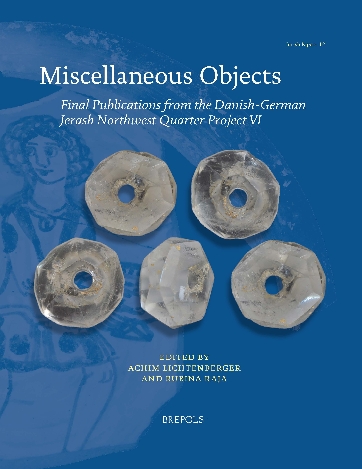
Miscellaneous Objects
Final Publications from the Danish-German Jerash Northwest Quarter Project VI
The Decapolis city of Jerash has long attracted attention from travellers and scholars due both to the longevity of the site and the remarkable finds uncovered during successive phases of excavation that have taken place from 1902 onwards. Between 2011 and 2016 a Danish-German team led by the universities of Aarhus and Münster focused their attention on the Northwest Quarter of Jerash — the highest point within the walled city — and this volume is the sixth in a series of books presenting the team’s final results.
In this volume a wide range of miscellaneous items discovered in the Northwest Quarter are presented ranging from prehistoric lithics to Ottoman pipes. Material finds covered include stone sculpture utensils and inscriptions as well as bone objects spindle whorls and bread stamps while some scientific analyses of jewellery and terracotta figurines complement the studies. These chapters ensure that all finds from the Northwest Quarter — no matter how small — are made available to researchers with the contributions gathered here offering unique new insights into the material groups from Gerasa later Jerash and into the lives of the population of the city from a longue durée perspective.
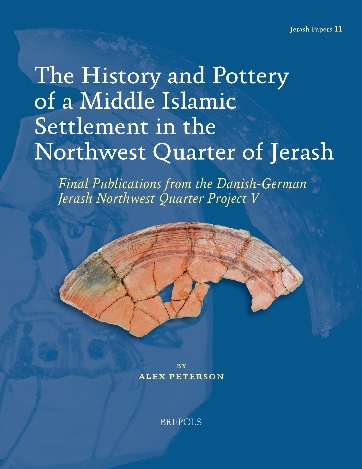
The History and Pottery of a Middle Islamic Settlement in the Northwest Quarter of Jerash
Final Publications from the Danish-German Jerash Northwest Quarter Project V
In 2015 the Danish-German Northwest Quarter Project working in Jerash uncovered a Middle Islamic farmstead. Subsequent excavations revealed that this settlement far from marking a decline at the site is in fact indicative of a broader active and dynamic rural community living within the ancient urban landscape of Jerash.This volume offers an in-depth focus on this Islamic settlement with a particular focus on the ceramic material yielded by the site which is here fully quantified and contextually analysed alongside historical sources. Through this approach the author has reconstructed a new synthesis of Middle Islamic settlement history shedding new light on the economic and social structures of a rural community in northern Jordan as well as establishing a typology that can be used to refine the chronologies of Middle Islamic Jerash.
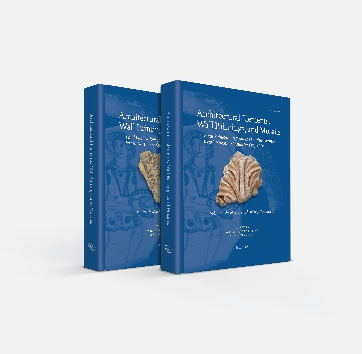
Architectural Elements, Wall Paintings, and Mosaics
Final Publications from the Danish-German Jerash Northwest Quarter Project IV
The Decapolis city of Jerash has long attracted attention from travellers and scholars due both to the longevity of the site and the remarkable finds uncovered during successive phases of excavation that have taken place from 1902 onwards. Between 2011 and 2016 a Danish-German team led by the universities of Aarhus and Münster focused their attention on the Northwest Quarter of Jerash - the highest point within the walled city - and this is the fourth in a series of books presenting the team’s final results.
This two-part set offers a comprehensive presentation of Jerash’s rich building heritage from the Late Hellenistic period up to the city’s destruction in the mid-eighth century ad through a discussion of architectural elements together with analysis of the mosaics wall paintings and building ceramics excavated from the Northwest Quarter. As well as providing a general overview of the city’s changing patterns of habitation the contributions gathered here also include close case- studies and object biographies that shed new light on the intense use reuse and recycling of materials that testify to evolving urban practices and optimization of resources across the Roman Byzantine and Islamic periods.
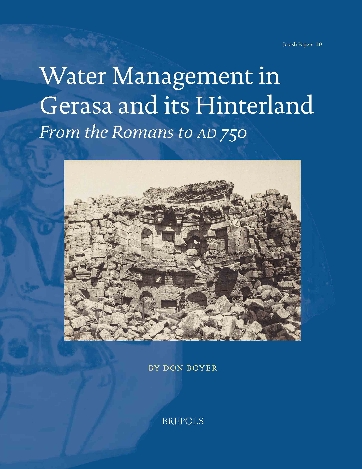
Water Management in Gerasa and its Hinterland
From the Romans to ad 750
The Decapolis city of Gerasa has seen occupation since the Bronze Age but reached its zenith in the Roman to early Islamic period as a population centre and trading hub. Located in a fertile valley in the limestone foothills of the Ajlun mountains the city benefitted from a benign climate and an excellent local water supply from karstic springs and perennial streams. By the Roman-Early Byzantine period these water sources were harnessed and managed by extensive aqueduct and distribution networks that satisfied the broad range of water needs of both urban and rural dwellers.
This volume offers an up-to-date comprehensive and multidisciplinary analysis of the water management system employed in both Gerasa and its hinterland from the time of Roman occupation to the devastating earthquakes that struck the city at the end of the Umayyad period. Drawing on archaeological evidence from the author’s field research together with a critical and detailed analysis of the evidence of water installations and the results of a radiocarbon dating study this insightful book offers the first diachronic interpretation of Gerasa’s water distribution setting the city in its geoarchaeological historical and landscape contexts and contributing to the broader understanding of its archaeological history.
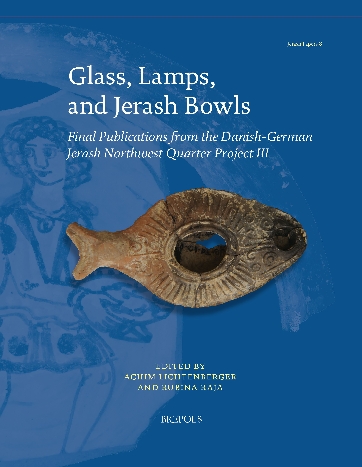
Glass, Lamps, and Jerash Bowls
Final Publications from the Danish-German Jerash Northwest Quarter Project III
The Decapolis city of Jerash has long attracted attention from travellers and scholars due both to the longevity of the site and the remarkable finds uncovered during successive phases of excavation that have taken place from 1902 onwards. Between 2011 and 2016 a Danish-German team led by the universities of Aarhus and Münster focused their attention on the Northwest Quarter of Jerash - the highest point within the walled city - and this volume is the third in a series of books presenting the team’s final results.
The contributions gathered together in this volume provide an in-depth analysis of the glass finds the lamps and the iconography of the Jerash bowls discovered in the Northwest Quarter during the excavations. Together these chapters provide both general overviews and more detailed insights into these important groups of material evidence and also examine their stratigraphic contextualization and chronological spread across the centuries.
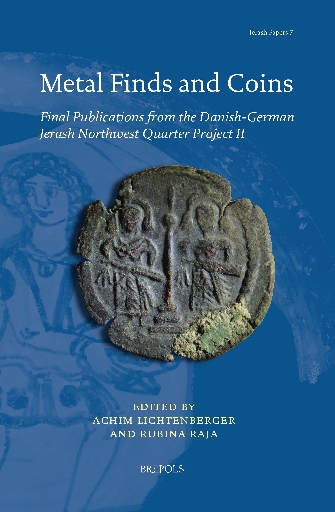
Metal Finds and Coins
Final Publications from the Danish-German Jerash Northwest Quarter Project II
The Decapolis city of Jerash has long attracted attention from both travellers and scholars due both to the longevity of the site and the remarkable finds uncovered during successive phases of excavation that have taken place from 1902 onwards. Between 2011 and 2016 a Danish-German team led by the universities of Aarhus and Münster focused their attention on the Northwest Quarter of Jerash - the highest point within the walled city - and this volume is the second in a series of books presenting the team’s final results.
This volume offers an in-depth analysis of the coins and metal remains found in Jerash during the excavations. The contributions gathered here cover the small metal finds from the Northwest Quarter as well as examining Greek Roman Byzantine and Islamic coins.
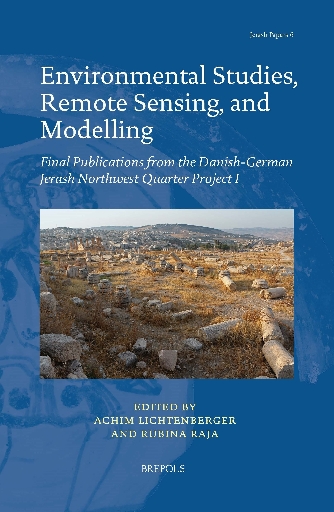
Environmental Studies, Remote Sensing, and Modelling
Final Publications from the Danish-German Jerash Northwest Quarter Project I
The Decapolis city of Jerash has long attracted attention from travellers and scholars due both to the longevity of the site and the remarkable finds uncovered during successive phases of excavation that have taken place from 1902 onwards. Between 2011 and 2016 a Danish-German team led by the universities of Aarhus and Münster focused their attention on the Northwest Quarter of Jerash - the highest point within the walled city - and this volume is the first in a series of books presenting the team’s final results.
Covering different themes and categories of finds this volume focuses on the geophysical survey and other remote-sensing work undertaken in and around the Northwest Quarter and also presents an in-depth discussion of the environmental studies performed at the site. This includes the geoscientific analysis carried out in various contexts as well as radiocarbon dating studies of both human and animal bones and conclusions drawn from the archaeobotanical research.
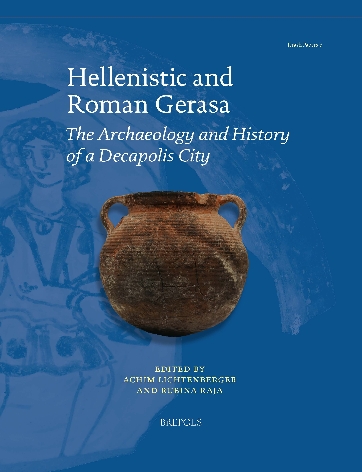
Hellenistic and Roman Gerasa
The Archaeology and History of a Decapolis city
The Graeco-Roman Decapolis city of Gerasa was a flourishing centre of population from the Late Hellenistic up to the Early Islamic period. It was also home to a vibrant ceramics industry. Kilns found throughout the city with a concentration in the Hippodrome suggest that Gerasa was in fact a mass-production centre in the Decapolis region over a number of centuries manufacturing a vast array of material to suit the changing needs of daily life.
Drawing on finds yielded during excavations by the Danish-German Northwest Quarter Project and other archaeological projects as well as the research undertaken within the Ceramics in Context project this volume evaluates the pottery from Gerasa produced in the Late Hellenistic and Roman periods. Typology development over time and variations in the Gerasene pottery are explored and rare examples of imported material are analysed in order to shed light both on the inner workings of the city and on the networks that extended beyond Gerasa’s walls. The contributions gathered here examine the archaeology and history of Gerasa and assess ceramic remains alongside other finds from both the city and neighbouring urban centres. In doing so they seek to contextualize this material in a broader cultural and historical context and to improve our understanding of consumption trading and networks in the wider Decapolis area.