
Full text loading...





Patristics and Byzantine Meta-Images: Molding Belief in the Divine from Written to Painted Theology, Page 1 of 1
< Previous page | Next page > /docserver/preview/fulltext/10.1484/M.STR-EB.5.110574/J.BAIEP.5.107535-1.gif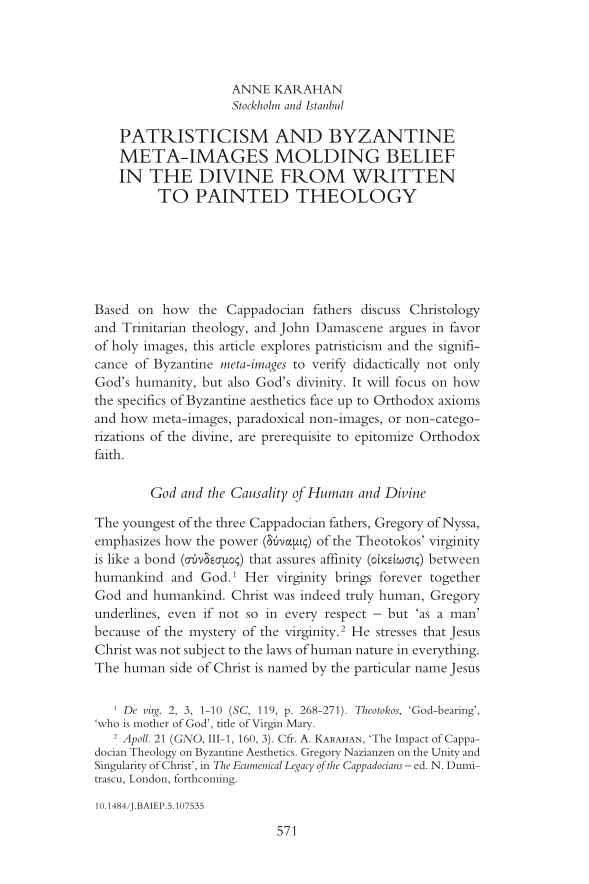
Based on how the Cappadocian fathers discuss Christology and Trinitarian theology, and John Damascene argues in favor of holy images, this article explores patristicism and the significance of Byzantine meta-images to verify didactically not only God’s humanity, but also God’s divinity. The author suggests that the theoretical and methodological code of Byzantine aesthetics is Orthodox Christian faith in God as triune and one, as well as neither exclusively divinely incomprehensible, nor entirely humanly comprehensible. A Byzantine holy image verifies the image of God (εἰκὼν τοῦ θεοῦ), but also God’s triune One-essence. Since, either in writing or in painting, to disregard either God’s humanity or divinity would deviate from established Orthodox faith. The specifics of Byzantine aesthetics, its meta-images, convey faith in God as both human and divine. In this way, a Byzantine holy image promotes verifications ‘of right belief’ (ὀρθόδοξος). What we behold is the prerequisite of lex orandi lex est credendi, worship must use the same terms as the profession of faith.
Full text loading...